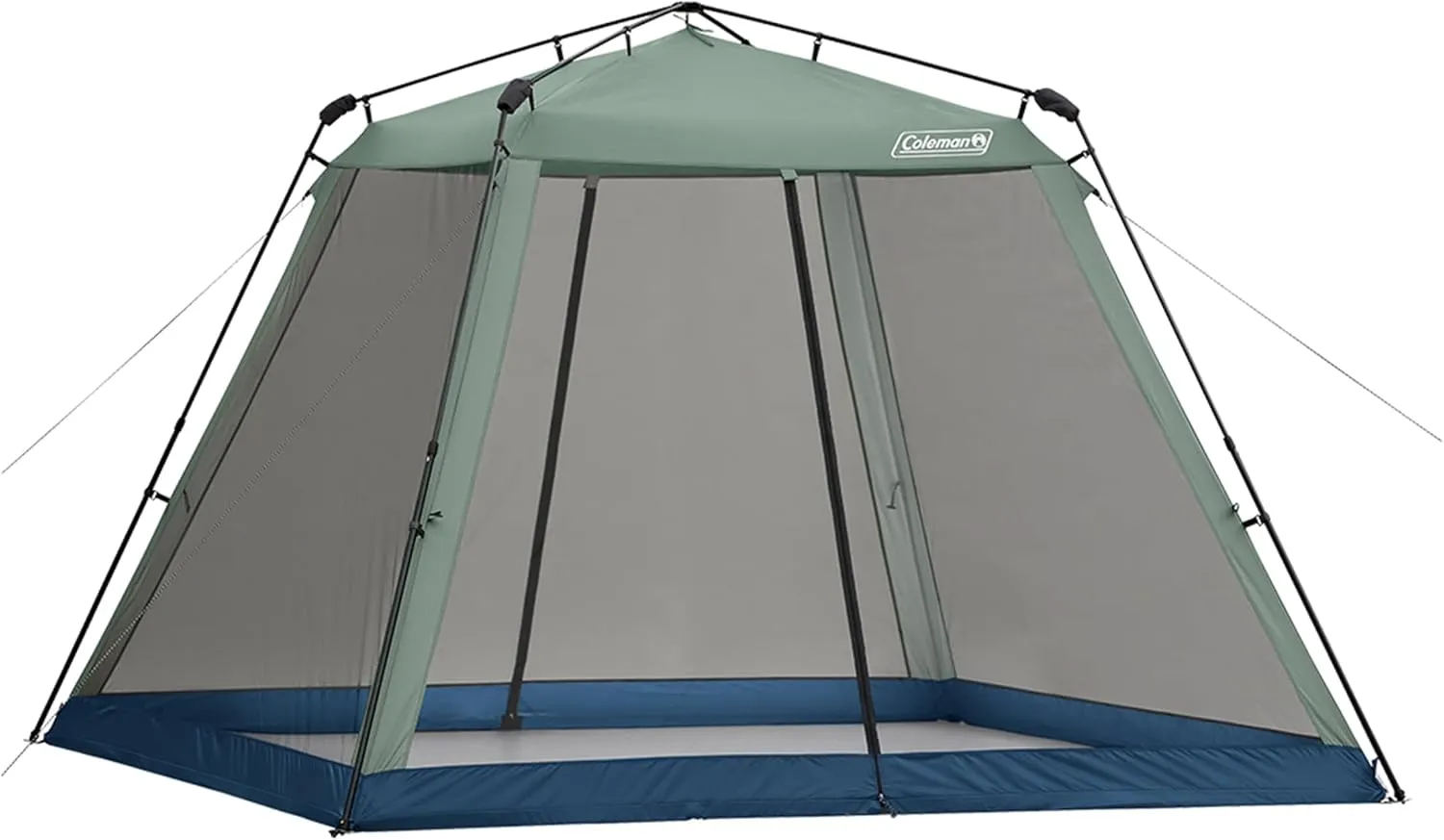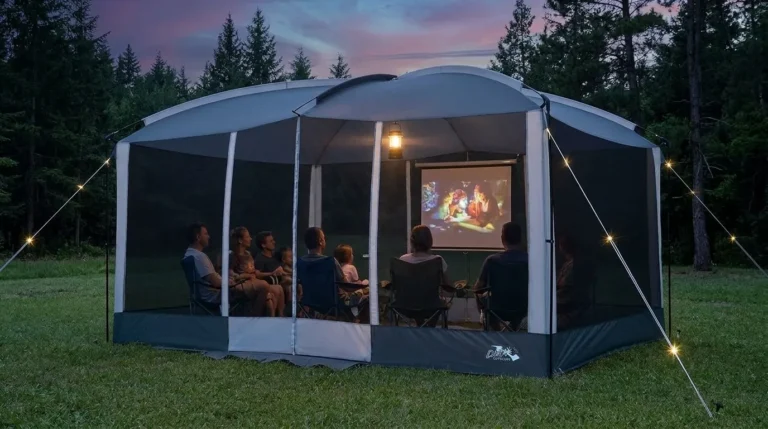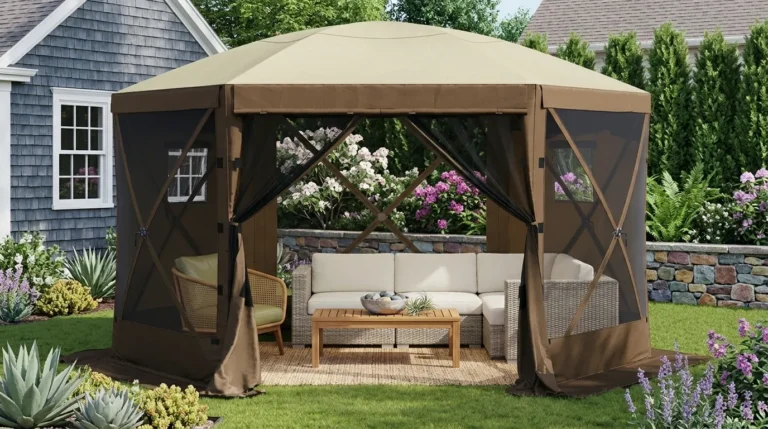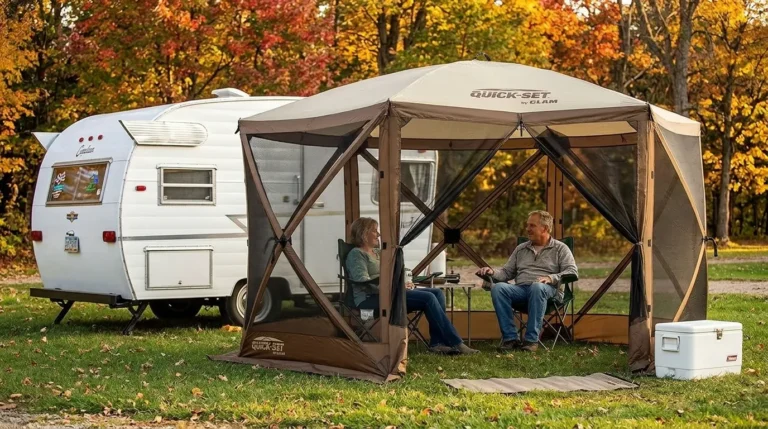

The Coleman Skylodge portable screenhouse earned its spot in my trunk the day I realized I could carry it in one hand while holding a cooler with the other. Following my earlier tests of the Aoxun gazebo, a 37.5-pound steel-frame giant that needed two people to haul, the Skylodge felt almost weightless by comparison. It went to two tailgates, a soccer tournament, and a beach afternoon, and it went up faster than the canopy beside it every time. But there is one design detail tall people will notice immediately, and it is worth knowing before you buy.
This post contains affiliate links. As an Amazon Associate, I may earn commission from qualifying purchases at no extra cost to you.
The Skylodge is a 10×10 instant screen room with pre-attached telescoping legs, enclosed mesh walls, two entryways, and UPF 50+ fabric, sold in a PFAS-free version in Moss green. In my pop up screen tent guide, I picked it for tailgates and quick stops. This review covers why it works so well there, and where a hub shelter is the better choice.
Overall Rating: 4.3/5
| Rating Question | Score (Out of 5) |
|---|---|
| How quickly did the telescoping legs set up? | 4.5 |
| How easy was it to carry in a packed trunk? | 4.6 |
| How well did the mesh keep bugs out? | 4.5 |
| How comfortable was the headroom at the doors? | 3.7 |
| How well did the fabric handle sun and light rain? | 4.4 |
| How steady was it in a breeze once staked? | 4.1 |
| How good is the value for the money? | 4.6 |
What Are the Primary Pros and Cons of the Coleman Skylodge Portable Screenhouse?
The primary pros of the Coleman Skylodge portable screenhouse are its quick telescoping-leg setup, slim carry bag, two entryways, UPF 50+ fabric, and budget price, while the main cons are a 6-foot entry height, sloped walls, and a smaller review history than other big-brand gear. It is the easiest screen room in this hub to bring along on a whim.
Pros
| 1. Pre-attached telescoping legs with pinch-free buttons |
| 2. Slim bag fits a packed trunk |
| 3. Two entryways for easy traffic |
| 4. UPF 50+ fabric for real shade |
| 5. Water-resistant fabric |
| 6. 7-foot center height on a 10×10 footprint |
| 7. Budget price with a 1-year limited warranty |
Cons
| 1. 6-foot entry height means taller people duck |
| 2. Walls slope inward more than hub shelters |
| 3. Under 150 Amazon ratings so far |
| 4. No wind panel option |
| 5. Needs space around it to expand during setup |
| 6. Hook-and-loop closures seal less tightly than zippers |
| 7. First setup takes longer than the advertised minute |
Those lists show a shelter built around convenience. It is light, slim, cheap, and fast, and the two doors make it great for crowds moving between a grill and seating. The headroom and wall slope are the tradeoffs. My best pop up screen tents guide puts it beside the other nine shelters so you can see where it fits.
The Specs of the Coleman Skylodge Portable Screenhouse
| Feature | Specification |
|---|---|
| Brand and model | Coleman Skylodge, model 2208094 |
| Size tested | 10 x 10 ft, Moss, PFAS-Free |
| Floor area | 100 square feet |
| Center height | 7 ft |
| Entry height | 6 ft |
| Capacity | 6 people |
| Weight | About 16 pounds |
| Packed length | About 49 inches |
| Frame | Metal frame with aluminum telescoping legs |
| Setup | Pre-attached telescoping poles, pinch-free buttons |
| Fabric | Polyester, UPF 50+, water resistant |
| Walls | Enclosed mesh walls |
| Entryways | 2, hook-and-loop closure |
| Included | Carry bag |
| Other size | 15 x 13 ft |
| Warranty | 1-year limited |
The specs that matter most are the 7-foot center and the 6-foot entry. Together they describe a canopy-shaped shelter: tall in the middle, lower at the edges and doors.
How Fast Does the Coleman Skylodge Portable Screenhouse Set Up?
The Coleman Skylodge portable screenhouse sets up in a couple of minutes once practiced, using pre-attached telescoping legs that click into place with pinch-free buttons. Coleman bases its one-minute claim on average setup time and notes that the first setup can take longer, which matched my experience exactly.
Pull it from the bag, stand it upright, and walk the frame outward from opposite sides until the scissor sections open. Then raise the legs in stages, two on one side and two on the other, until each clicks at full height. Stake the corner guylines and you are done. My first try took about five minutes; by the third, I was faster than my neighbor with a standard canopy.

If you already own a canopy, the motion will feel natural, and my pop up canopy tent guide covers the same frame family. The difference is that the Skylodge has mesh walls permanently attached, so you skip the sidewall fiddling.
Compared with hub shelters like the Clam Escape screen tent, the Skylodge needs more open space around it while the frame expands outward, so it is easier on an open lawn than a tight campsite. But it weighs less than half as much, and its slim bag is far easier to slide into a full trunk.
How Much Room Is Inside the Coleman Skylodge Portable Screenhouse?
The Coleman Skylodge portable screenhouse gives you 100 square feet with a 7-foot center height, enough for six people in camp chairs around a small table. Because the walls slope inward like a canopy and the entries are 6 feet tall, the usable headroom is best in the middle.
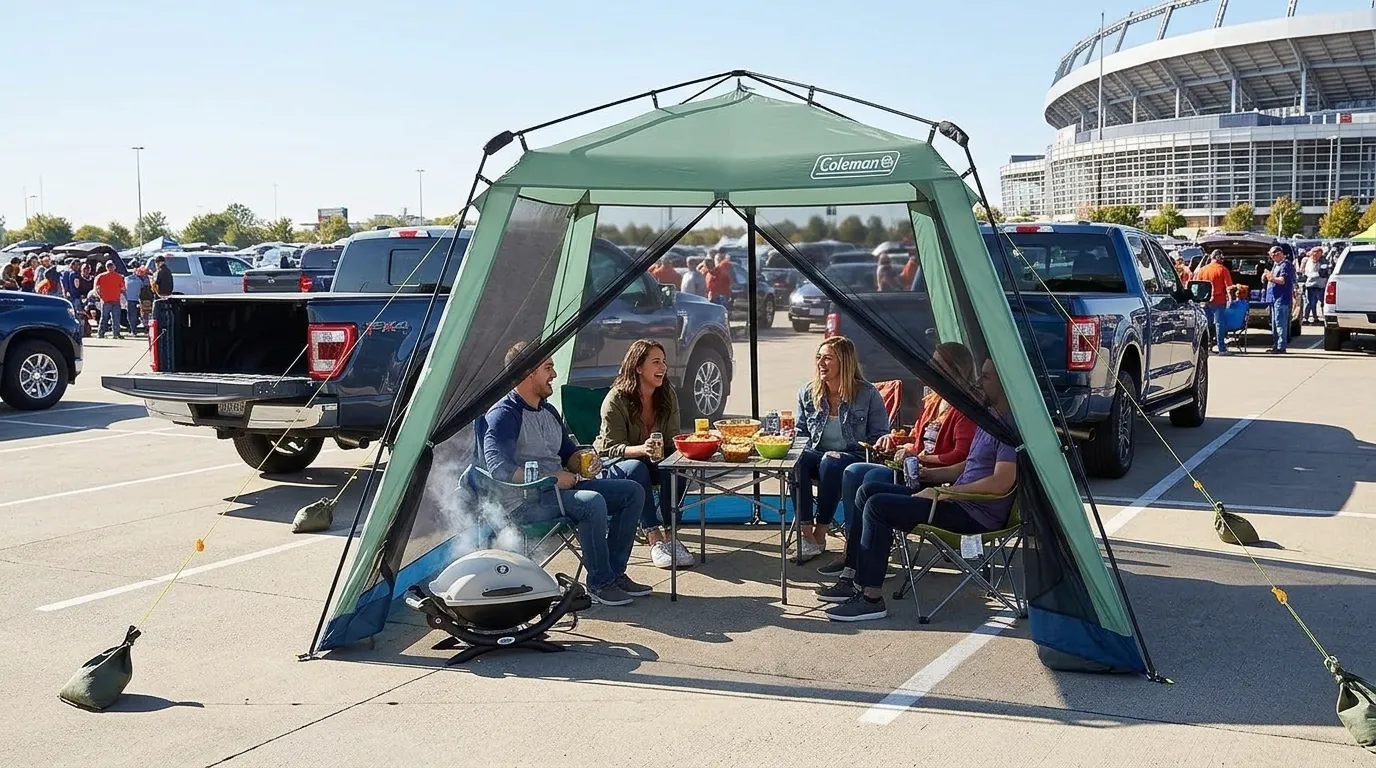
At a tailgate, six folding chairs, a small table, and a cooler fit fine, and the two entryways meant people could flow between the grill and their seats without climbing over anyone. Taller friends did duck at the doorways, which is the Skylodge’s one real ergonomic quirk.
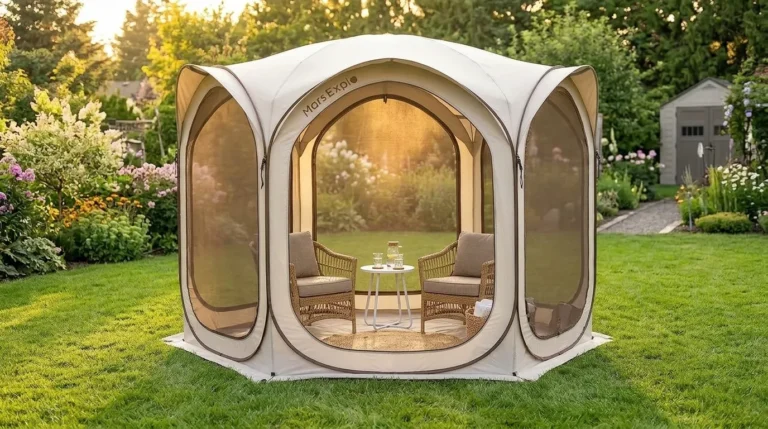
If headroom at the edges matters, vertical-wall rooms like the East Oak screen house tent pop up and the Mars Explo hold their height much closer to the walls, though they are fair-weather spring frames. For big group camps with privacy walls, the 12×12 VEVOR screen tent includes six wind cloths and a 7.5-foot ceiling.
For a long banquet table and a dozen people, the pole-built DMH Outdoors tent is the space leader in this hub. The Skylodge is not trying to compete there; it is built to be the easy grab-and-go room.
How Does the Coleman Skylodge Portable Screenhouse Handle Sun, Bugs and Wind?
The Coleman Skylodge portable screenhouse handles sun and bugs very well and moderate wind well once staked, with UPF 50+ fabric, enclosed mesh walls, and water-resistant material that shrugs off light showers. It is not a storm shelter, and like every canopy-shaped frame, it needs its guylines in a breeze.
Sun was its standout. At an exposed soccer field, the UPF 50+ canopy threw deep shade all afternoon. The Skin Cancer Foundation explains that UPF 50 fabric blocks about 98 percent of the sun’s rays, and that kind of shade made a long day of games far easier on everyone.
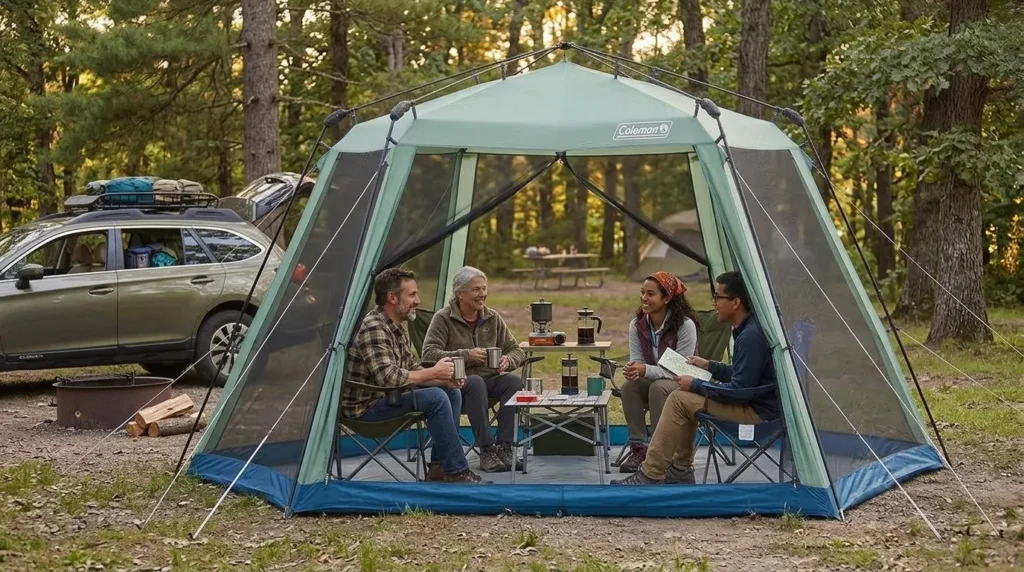
Bugs stayed outside once the hook-and-loop doors were pressed closed along their full length. Those closures seal less tightly than a zipper, so I double-checked them at dusk. Cornell Cooperative Extension notes that the mosquitoes that spread West Nile virus bite mainly between dusk and dawn, so the evening seal matters most.
Wind needs respect. With the corner guylines staked, the Skylodge stayed steady in moderate breezes. As gusts climbed toward the top of a fresh breeze on the National Weather Service’s Beaufort scale, around 19 to 24 mph, I lowered the legs a notch and then folded it down. For heavier rain, the Gazelle G6 has a much stronger roof rating.
How Does the Coleman Skylodge Portable Screenhouse Compare to Other Light Screen Rooms?
The Coleman Skylodge portable screenhouse compares as the budget, trunk-friendly choice among the lighter shelters in this hub, beating the Alvantor screen house on doors and rain resistance, and undercutting the Clam Venture screen tent by a wide margin on price and weight. The Alvantor is lighter still, and the Venture is sturdier in wind.
| Light Screen Room | Frame | Weight | Footprint | Doors | Price Tier |
|---|---|---|---|---|---|
| Coleman Skylodge | Telescoping legs | About 16 lb | 10 x 10 ft | 2 entryways | Budget |
| Alvantor | Spring-open bubble | 12 lb | 10 x 10 ft | 1 door | Budget |
| Clam Venture | 5-sided hub | 26 lb | 9 x 9 ft | 1 door | Premium |
My take: for tailgates, sports days, and beach afternoons, the Skylodge is my top choice because of its slim bag, two doors, and water-resistant fabric. For backyard lounging, the Alvantor’s 360-degree airflow is nicer. For real camping in wind, the Clam Venture or a 12×12 hub shelter like the Aoxun stands up better, though the Aoxun weighs more than twice as much.
Frequently Asked Questions About the Coleman Skylodge Portable Screenhouse
How long does the Coleman Skylodge take to set up?
Coleman advertises a one-minute setup based on average setup time and notes that the first setup may take longer. My first attempt took about five minutes; after a few practice runs, the frame went up in a couple of minutes. Add a few more minutes to stake the corner guylines, which you should always do.
How many people fit in the Coleman Skylodge portable screenhouse?
The 10×10 Skylodge is listed for six people, and six camp chairs around a small table fit comfortably in my testing. The 7-foot center gives good headroom in the middle, but the walls slope inward and the entries are 6 feet tall, so taller people will duck at the doors. Coleman also makes a larger 15 x 13 foot version.
Is the Coleman Skylodge waterproof?
The fabric is water resistant, and it handled light showers well in my testing. It is not designed as a rain shelter for steady downpours or storms, and the mesh walls let blowing rain through. Fold it down when storms approach, and always dry it completely before storing it in the bag.
How much does the Coleman Skylodge weigh?
The 10×10 Skylodge weighs about 16 pounds and packs into a slim carry bag around 49 inches long. That makes it one of the easiest shelters in this hub to carry and pack, especially into a trunk that is already full of chairs and coolers. Only the spring-open Alvantor is lighter.
Does the Coleman Skylodge have a floor?
No, it has an open bottom with a fabric band around the base, which lets it sit over grass, sand, or pavement. For dusty or muddy sites, an outdoor rug or tarp inside works well. At tailgates on pavement, use weights on the guylines instead of stakes.
Helpful Guides
- How to Fold a Pop Up Screen Tent
- How to Set Up a Screen House Tent
- Do Screen House Tents Let Dust In?
- How to Clean Mold from a Tent Screen
- How to Clean a Canopy Tent
Should You Buy the Coleman Skylodge Portable Screenhouse?
Yes, buy the Coleman Skylodge portable screenhouse if you want a light, affordable screen room for tailgates, sports days, picnics, and quick camping stops. It sets up like a canopy, fits a packed trunk, and gives you UPF 50+ shade with two easy entryways.
Skip it if you are tall and hate ducking, want straight walls, or camp in windy places for days at a time. A hub shelter like the Clam Venture or a vertical-wall spring room will suit you better, and my pop up screen tent guide compares every option.