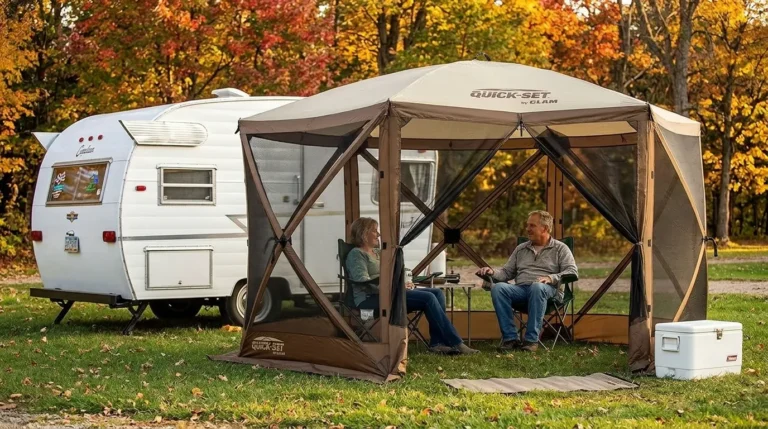


A pop up screen tent earns its keep in one specific moment: the sun drops behind the tree line, dinner hits the picnic table, and a cloud of no-see-ums arrives right on schedule. Without a screened shelter, that is the moment everyone grabs a plate and retreats to the car. With the right one, you keep eating, keep talking, and listen to the bugs bounce off the mesh. After setting up ten of these shelters in my backyard and at campsites, my top picks are the Clam Escape as the best overall camp shelter, the Alvantor Screen House as the best budget and lightest pick, the VEVOR 12×12 Screen Tent for big groups who want privacy walls in the box, and the East Oak Screen House for patios that need the longest warranty in the lineup.
This post contains affiliate links. As an Amazon Associate, I may earn commission from qualifying purchases at no extra cost to you.
I did not just pop these open and take photos. I timed each setup with one person, carried each bag from the car to the site, ran chairs and a full-size camp table inside, and sat through the dusk bug hour with the doors zipped. I also staked and guyed every shelter in a stiff afternoon breeze, because a screen house that turns into a kite is worse than no shelter at all.
The ten pop up screen tent in this guide fall into four build styles: hub-style hexagons and pentagons, spring-loaded fold-flat screen rooms, a straight-leg instant frame, and one pole-built rectangle. Each style changes how fast you are sitting down, how much headroom you get at the walls, and how much wind you can trust it in. If you are coming from my pop up canopy tent guide, think of this as the bug-proof cousin: same quick-shade idea, but with mesh walls that turn an open canopy into a room.
Best Pop Up Screen Tent at a Glance
The best pop up screen tent in 2026 range from 12-pound spring-open screen rooms to 37-pound hub shelters that fit eight people, and the right pick depends mostly on how you set up and how much wind you face. Here is every shelter I tested, side by side, so you can jump straight to the one that fits your trips.
| Pop Up Screen Tent | Setup Style | Footprint | Peak Height | Weight | Standout Feature | Price Tier | Price |
|---|---|---|---|---|---|---|---|
| Clam Escape | 6-sided hub | 11.5 x 11.5 ft | 7.5 ft | 37 lb | Best all-round camp shelter | Premium | Check on Amazon |
| Alvantor Screen House | Spring-open bubble | 10 x 10 ft | 7 ft | 12 lb | Lightest, folds into a flat disc | Budget | Check on Amazon |
| VEVOR 12×12 | 6-sided hub | 12 x 12 ft | 7.5 ft | 32 lb | 6 wind cloths included | Mid | Check on Amazon |
| Gazelle G6 | 6-sided hub | 124 in. across | 7.2 ft | 34 lb | 2000mm waterproof roof, TriTech mesh | Premium | Check on Amazon |
| East Oak Screen House | Spring-open, vertical walls | 10 x 10 ft | 7.5 ft | 23.4 lb | 3-year warranty, doors front and back | Mid | Check on Amazon |
| Mars Explo | Spring-open, vertical walls | 10 x 10 ft | 7.5 ft | 20.9 lb | 3-year warranty, flying-eave look | Mid | Check on Amazon |
| Clam Venture | 5-sided hub | 9 x 9 ft | 6.8 ft | 26 lb | Compact hub for small crews | Premium | Check on Amazon |
| Aoxun 12×12 | 6-sided hub | 12 x 12 ft | 7.5 ft | 37.5 lb | Steel frame plus 6 wind cloths | Budget | Check on Amazon |
| Coleman Skylodge | Straight-leg instant frame | 10 x 10 ft | 7 ft | 16 lb | Telescoping legs, two entryways | Budget | Check on Amazon |
| DMH Outdoors | Pole-built rectangle | 13 x 9 ft | 7.5 ft | 27.8 lb | Magnetic doors, projection screen | Mid | Check on Amazon |
Price tiers reflect what I paid relative to the group: Budget sits under about $150, Mid lands roughly between $150 and $200, and Premium runs near $300. Amazon prices on screen houses swing with the season, so tap through before you decide.
A few patterns jump out of that table. The hub shelters (Clam, Gazelle, VEVOR, Aoxun) are the heaviest pop up screen tents here, but they are also the steadiest once staked and the easiest to fit over a picnic table. The spring-open screen rooms (Alvantor, East Oak, Mars Explo) are lighter and pack into a flat disc, but they need more careful staking because the whole structure flexes like a giant spring.
The Coleman sits in its own lane with a straight-leg frame that feels closer to a canopy than a hub tent. The DMH is the only shelter here that you build with poles rather than pop open, and I kept it in the lineup because it solves a problem none of the others do: a long rectangular room that fits a full banquet table and a dozen people.
How Does a Pop Up Screen Tent Actually Set Up?
A pop up screen tent sets up in one of three ways: you pull out hub panels one wall at a time, you release a spring frame that snaps open on its own, or you extend telescoping legs on a pre-attached frame. All three put a screened room over your head in a few minutes, but the feel in your hands is completely different, and that difference decides which one you will enjoy using on trip ten, not just trip one.

Hub-style shelters (Clam Escape, Clam Venture, Gazelle G6, VEVOR, Aoxun). You unzip the long bag, stand the shelter on its roof hub, and open it like a flower. Then you walk around and pull each wall’s center handle until the panel snaps outward, and finish by pushing the roof hub up from inside. The first time I did it on the Clam Escape, it felt odd, because you start with the roof sitting on the grass. By the third setup I had it standing in about a minute and spent more time on stakes and guylines than on the shelter itself.
Spring-open screen rooms (Alvantor, East Oak, Mars Explo). These come out of a round, flat bag and expand the moment you release the elastic bands. Opening is the easy part. Folding is the skill, because you have to twist the frame back into loops the same way you would a pop up beach shade. If you have ever folded the shelters from my pop up tent guide, you already know the motion. Expect a couple of clumsy attempts before it becomes muscle memory.
Straight-leg instant frame (Coleman Skylodge). The Coleman unfolds like a canopy: spread the frame, lift, and extend the pre-attached telescoping legs until they click. The pinch-free buttons are a nice touch when your hands are cold. It needs more open space around it during setup than a hub shelter, because the frame expands outward before it rises.
Pole-built (DMH Outdoors). The DMH asks you to thread fiberglass poles and seat them in joint protectors, more like a traditional dome tent. It took me noticeably longer than anything else here, and it is easier with a second set of hands. The reward is a straight-sided rectangle with two doors and a ceiling that holds height all the way to the walls.
Every one of these shelters still needs anchoring, and that is where setup time really goes. The hub tents include stakes and tie-down ropes that run from an eyelet at the center of each wall panel to a stake roughly three to four feet out. The spring-open rooms add sandbags for decks and patios where stakes will not go in. Budget an extra five minutes for anchoring on any pop up screen tent for camping, because skipping it is how screen houses end up in the next campsite over.
Which Pop Up Screen Tent Shape Gives You the Most Usable Space?
The pop up screen tent shape that gives the most usable space is a vertical-wall design, because the walls stay close to full height right up to the edge, while dome and bubble shapes lose headroom fast as you move outward from the center. Floor area numbers on a listing only tell half the story. What matters is how much of that floor you can actually stand, sit, and walk on without brushing the mesh.
I tested every shelter with the same setup: a 6-foot folding table, six camp chairs, and a cooler. That simple routine sorted the shapes quickly.
Hexagon and pentagon hubs. The Clam Escape, Gazelle G6, VEVOR, and Aoxun all use six walls that rise fairly straight before the roof slopes in. On the Clam Escape, the walls stand about 6 feet before the roof climbs to 7.5 feet at center, so I could push chairs to the edge without hunching. The 5-sided Clam Venture is the smallest hub in this group and works best for four people, not six.
Bubble and dome screen rooms. The Alvantor is the classic rounded screen bubble. It is fantastic for a loveseat and coffee table in the middle of the room, but the curved walls eat into space near the edges. I still fit six adults inside the 10×10 size, they just sat closer to the center than they would in a hub shelter.
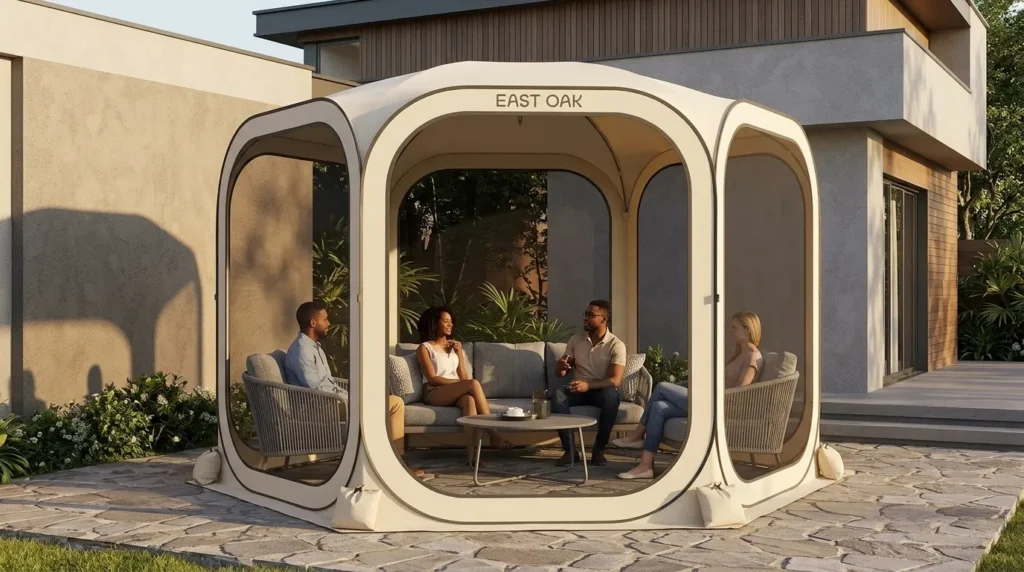
Vertical-wall cubes. The East Oak and Mars Explo both use a squared-off spring frame with arched mesh panels on every face. This is the shape that won my table test among the 10×10 shelters, because the walls stay near vertical before they arch over. The flatter, tighter roof also sheds water instead of letting it pool the way it can on a soft dome.
Straight-leg and rectangle. The Coleman has a 7-foot center but only a 6-foot entry, so taller campers will duck at the doorway. The DMH is the long-table champion: at 13 by 9 feet with a 90-inch center height, it was the only shelter here where a banquet table and twelve chairs fit without anyone being pinned against the screen.
If your main goal is a family dinner room at camp, pair the shape with the size of your crew. My tents for families guide covers the sleeping side of a big-family setup, and a 12×12 hub shelter like the VEVOR or Aoxun makes a natural daytime companion to a large family tent. For two to four people, the Clam Venture or a 10×10 spring-open room is plenty and far easier to carry.
One more shape note: none of these is a pop up screen tent with floor sewn in. Every shelter here has an open bottom with a wide fabric skirt that lies on the ground to block crawling bugs and drafts. Alvantor sells an optional floor separately, and the DMH ships with detachable mud mats at the doors, but on all ten you are setting chairs directly on grass, sand, or deck.
How Much Wind and Rain Can a Pop Up Screen Tent Really Handle?
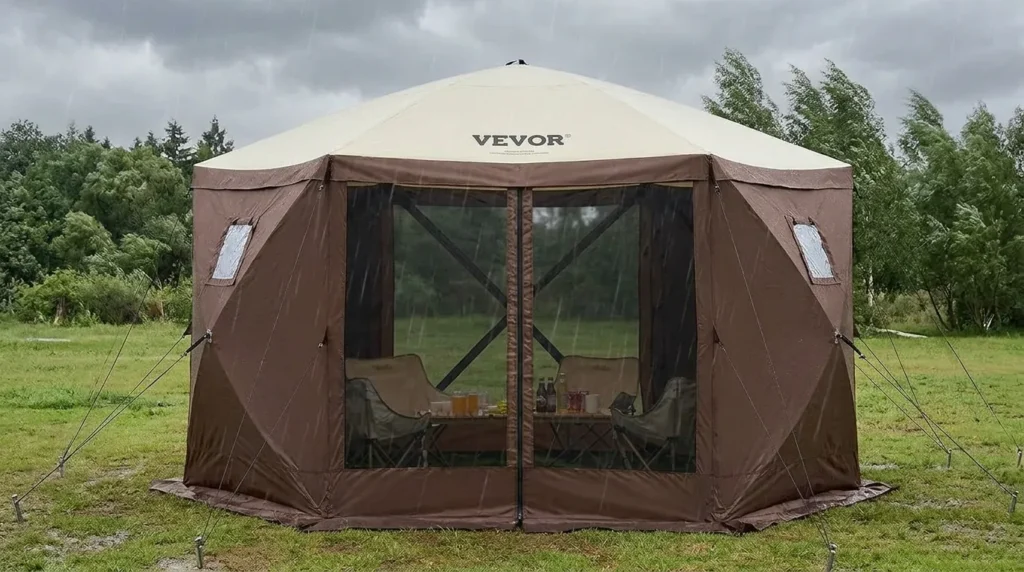
A pop up screen tent can handle a light breeze and passing showers, but most are not built for sustained strong wind or heavy rain, and several brands say so directly in their own instructions. Alvantor, East Oak, and Mars Explo all advise against using their shelters once winds reach about 24 mph, and VEVOR recommends taking its gazebo down during heavy rain or storms. Those warnings are worth taking seriously.
To put 24 mph in context, the National Weather Service’s Beaufort wind scale places 19 to 24 mph at the top of a fresh breeze, the kind of wind that sways small trees and puts whitecaps on a lake. Once you get into a strong breeze above that, I would collapse any spring-open screen room. The hub shelters held up better in my gusty afternoon test, especially once every guyline was out, but no screen house is a storm shelter.
Wind panels change everything, in both directions. Solid side panels block wind and blowing rain, but they also turn the shelter into a sail. The VEVOR and Aoxun include six zip-on wind cloths in the box, each with a small window and an air vent. Clam and Gazelle sell their wind panels separately, and the Gazelle has flaps at the top of each wall designed to secure them. Whenever I zipped panels on, I added every guyline before I sat down.
Rain protection varies more than the listings suggest. Here is how the rain ratings break down across the group:
- Waterproof-rated roofs: The Gazelle G6 lists a 210D Oxford roof waterproof to a 2000mm hydrostatic head rating, the only specific number in this group.
- Water-resistant roofs: The Clam Escape and Clam Venture use 210D poly-oxford fabric with taped roof seams, and the Coleman and VEVOR list water-resistant fabric.
- Shade first, rain second: Alvantor, East Oak, and Mars Explo all list their fabric as not water resistant. Alvantor’s own listing says plainly that its top is not waterproof or rainproof. Treat these as sun and bug rooms.
Rain also comes in sideways through the mesh, whatever the roof is rated. Anything you leave near the walls will get wet in a blowing shower unless you have panels on that side.
Two safety notes I never skip. First, when you hear thunder, a pop up screen tent is not a safe place to wait it out. The National Weather Service’s lightning safety tips are clear that open-sided shelters do not protect you, so head to a hard-topped vehicle or building. Second, if you are tempted to bring a propane heater or fire bowl inside on a chilly evening, the CPSC warns about carbon monoxide from fuel-burning heaters and lanterns in enclosed camping spaces. Keep the panels off and the doors open if you run anything with a flame nearby. My camping in the summer guide covers the hot-weather flip side, including how to keep shaded spaces cool in midday heat.
Is the Mesh on a Pop Up Screen Tent Enough to Keep Bugs Out?
The mesh on a good pop up screen tent is fine enough to stop mosquitoes and even no-see-ums, but bugs still get in through open doors, gaps under the skirt, and anything you carry inside, so the mesh is only one layer of your defense. Every shelter in this guide uses a fine mesh, and the differences come down to weave, durability, and how well the bottom seals to the ground.
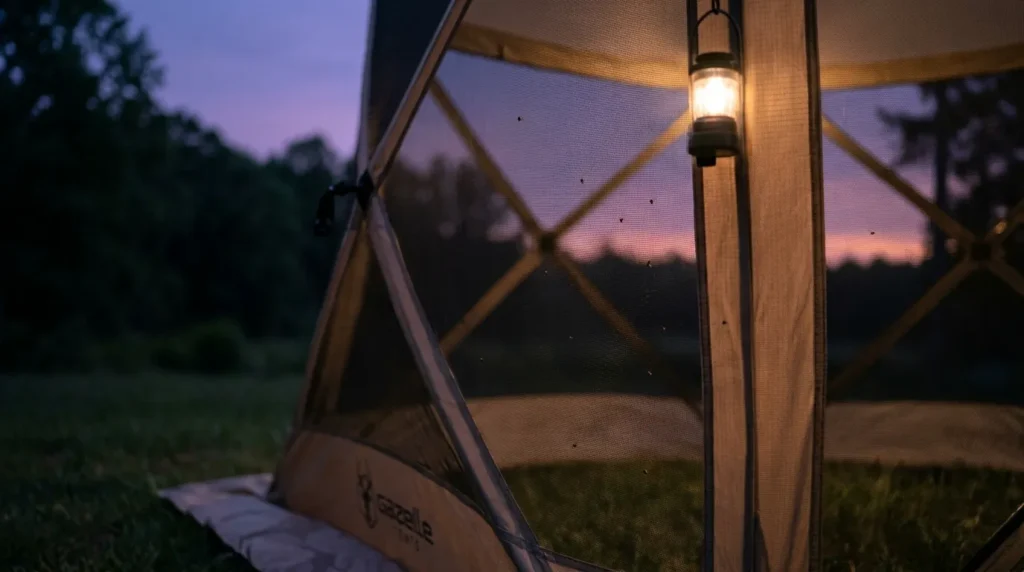
Fine mesh stops mosquitoes, but a pop up screen tent only stays bug-free if the skirt is sealed to the ground.
The Clam shelters use what Clam calls no-see-um mesh with an extra-wide skirt. Gazelle uses its TriTech mesh, a single-filament weave built to resist snags while keeping airflow high. VEVOR, Mars Explo, and East Oak use B3 mesh, and both Mars Explo and Alvantor pair theirs with a coated fabric top that blocks UV. In my dusk tests, all ten kept mosquitoes out with the doors zipped. Where they differed was the skirt.
Seal the skirt, then sit down. On grass, the hub shelters’ wide skirts lay flat once staked. On uneven ground, I used rocks or the included sandbags to close the gaps. The spring-open rooms tended to lift slightly at the corners until I staked every loop, and that is exactly where the gnats found their way in.
Doors matter more than you think. The Coleman’s two entryways and the DMH’s magnetic doors make traffic easier, and the DMH’s doors close themselves behind you, which is a genuine advantage with kids running in and out. Zipper doors seal tighter but only if everyone remembers to close them.
Even inside a screen room, I still use repellent on exposed skin when I am walking to and from the shelter. The EPA’s repellent search tool lets you pick a registered repellent by active ingredient and protection time, which beats guessing at the store. If you want the full list of tactics, my mosquito guide is linked in the Helpful Guides section near the end of this article.
A final mesh tip: brush off leaves and dirt before you fold any pop up screen tent, and never pack it damp. Mesh traps moisture against the fabric, and a screen house folded wet after a dewy morning can grow mildew in the bag within days.
Why Is the Clam Escape My Best Overall Pop Up Screen Tent?
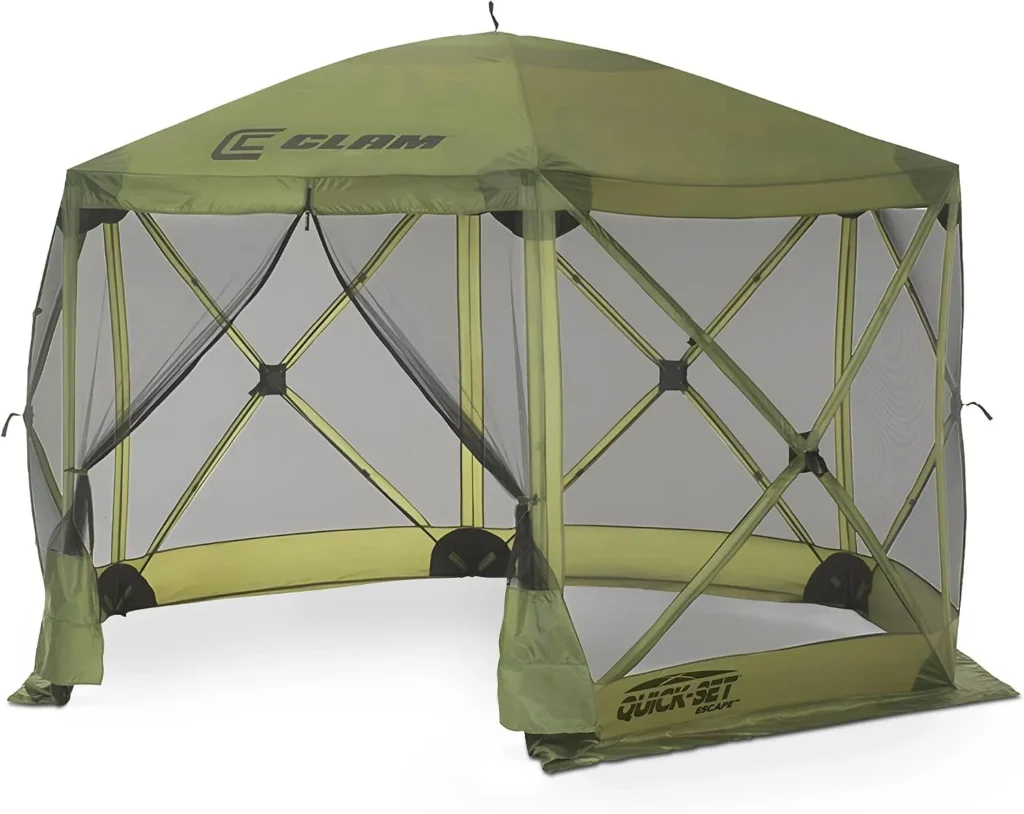
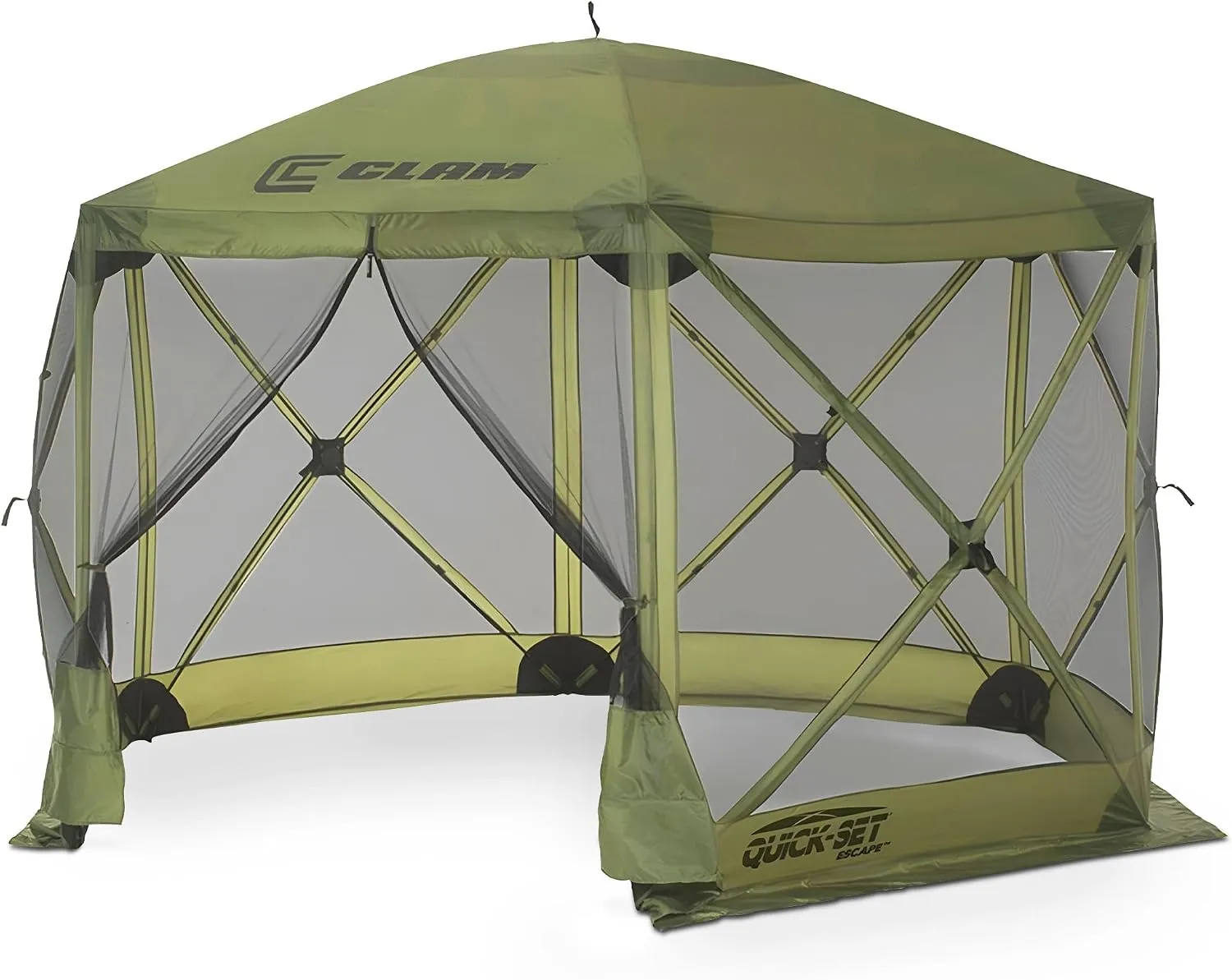
Clam Escape Screen Tent | 11.5 Ft Pop Up Gazebo – Green 6-Person Shelter | Instant Screen Tent for Camping, Patios, Tailgating and Backyard Use with No-See-Um Mesh, Weather Protection, and Room for 6
Pros
| 1. Hub setup takes about a minute once you learn it |
| 2. 11.5-foot hexagon fits a picnic table with room to walk |
| 3. Taped 210D roof and a wide skirt for bugs and light rain |
Cons
| 1. 37 pounds and a long 72-inch bag |
| 2. Wind panels cost extra |
| 3. Premium price for a screen room |
The Clam Escape is the pop up screen tent I would buy again tomorrow for camping. The hub design snaps open with no loose parts, the 140-inch hexagon slips over a standard campground picnic table with room to walk around it, and the walls stand about 6 feet tall before the roof peaks at 7.5 feet. It has a huge following too, sitting at 4.6 stars across more than 1,600 Amazon ratings, which tells me the design holds up across years, not just weekends.
The tradeoff is size in the trunk. At 37 pounds and roughly 6 feet long when packed, it is a two-handed carry from the car. If that is a dealbreaker, the smaller Clam Venture below uses the same idea at 26 pounds. Compared with the spring-open rooms, the Escape felt far steadier in my wind test once its guylines were out, which is why it earns the top spot for campers rather than backyard users.
Read the full review of the Clam Escape screen tent.
Why Is the Alvantor the Best Budget Pop Up Screen Tent?

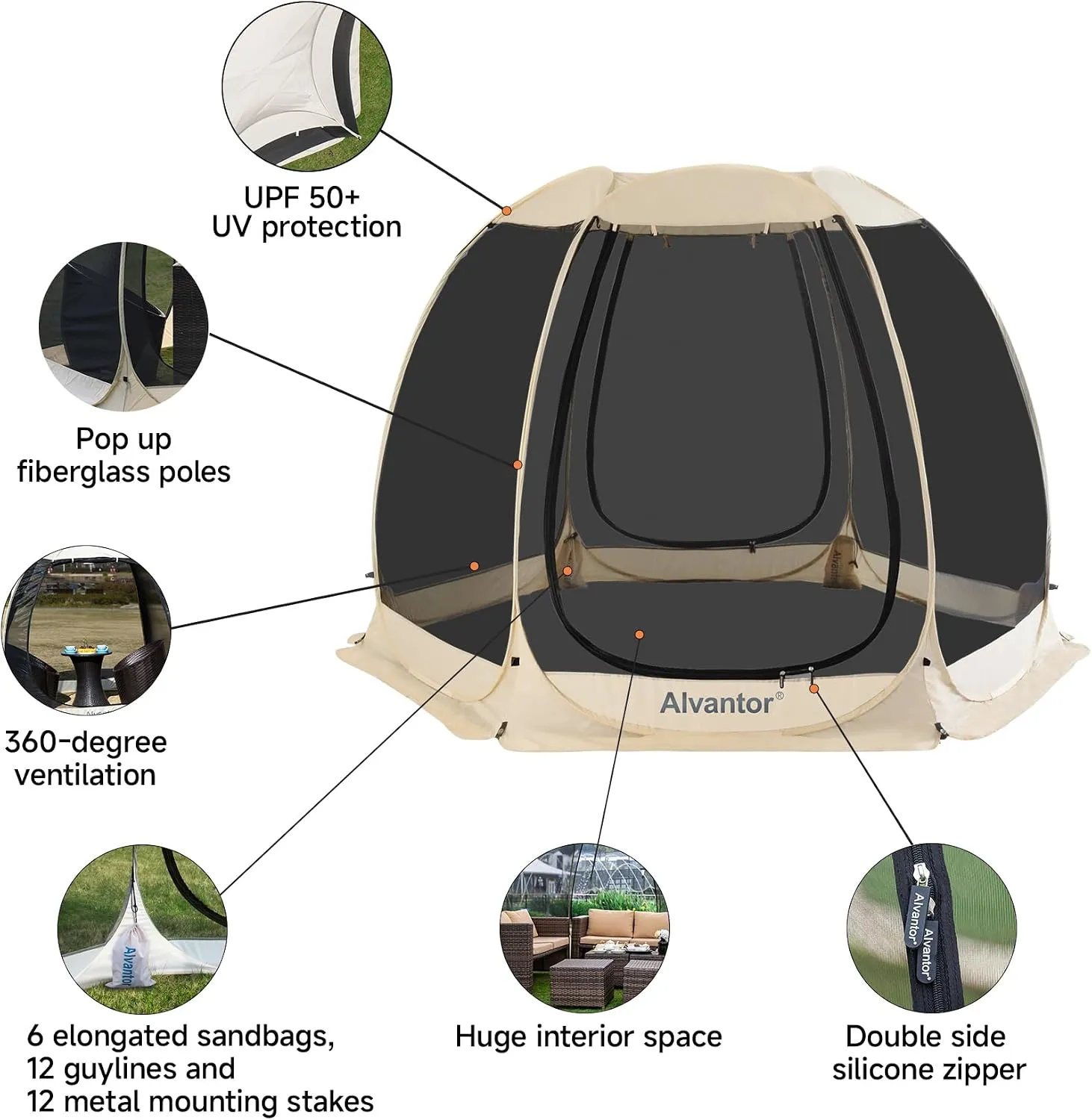
Alvantor Pop Up Screen House Tent, Instant Outdoor Gazebo with Mosquito Netting & UPF 50+ Sun Protection, Portable Canopy Shelter for Patio, Backyard, Camping (2-10 Person)
Pros
| 1. Lightest shelter in this guide at 12 pounds |
| 2. Folds into a flat 39-inch disc |
| 3. UPF 50+ top with 6 sandbags, 12 guylines, and 12 stakes |
Cons
| 1. Not waterproof or rainproof |
| 2. Curved walls reduce edge headroom |
| 3. Folding back down takes practice |
The Alvantor is the screen room most people picture when they think of a pop up tent with screen walls, and there is a reason it has more than 8,000 Amazon ratings. It springs open in seconds, the fiberglass frame keeps it light, and the 10×10 size gives you a 7-foot center that comfortably holds a patio sofa set. Alvantor also offers it in 6×6, 12×6, 12×12, and 15×15 sizes, so you can match the room to your yard.
The honest caveat is weather. Alvantor itself says the fabric top is not waterproof, and the brand advises against using it once winds reach 24 to 30.8 mph. That makes it a sun and bug room first. Next to the East Oak, which uses a similar spring frame, the Alvantor is lighter and cheaper, while the East Oak gives you straighter walls and a longer warranty.
Read the full review of the Alvantor screen house.
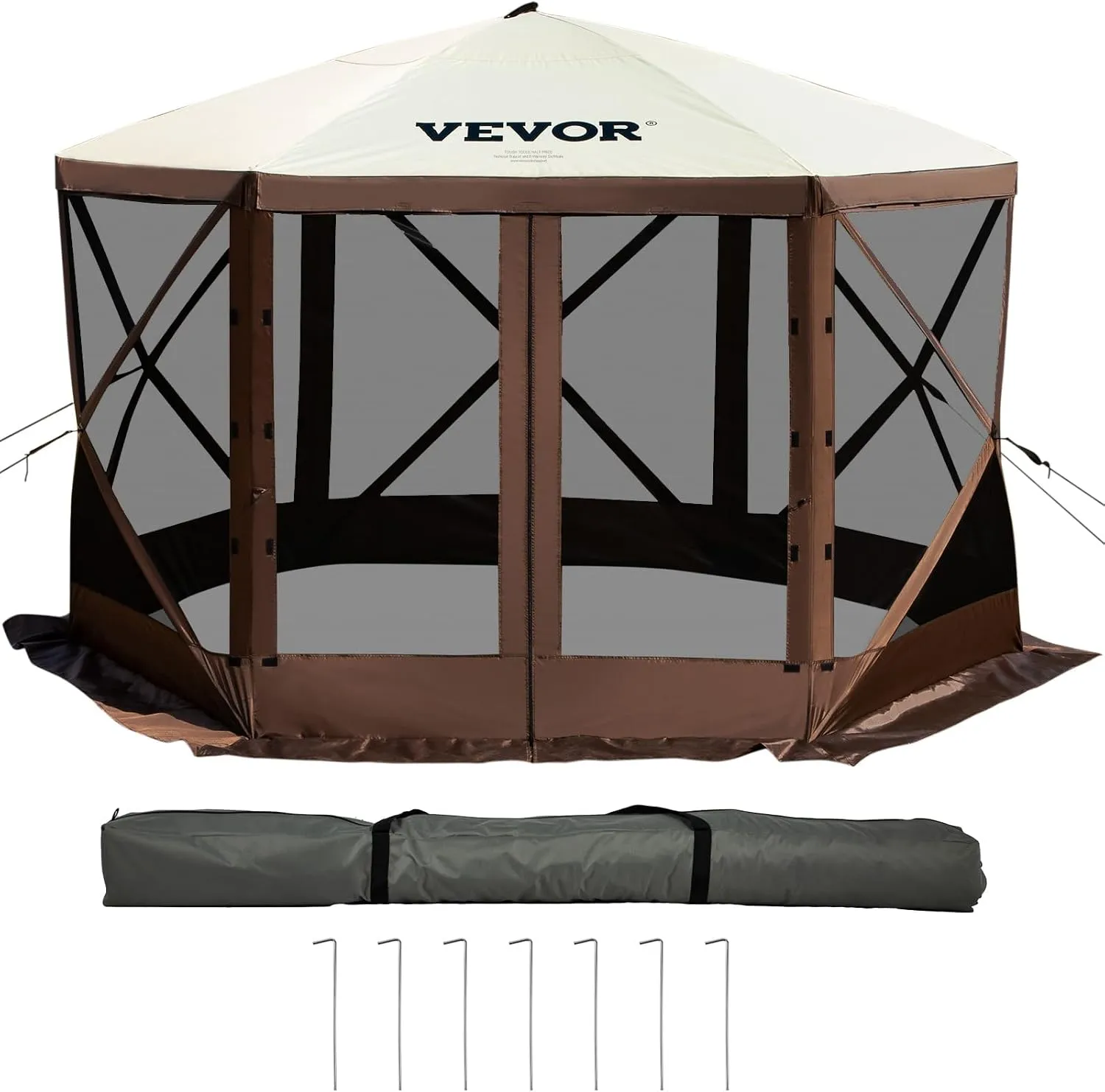
Why Is the VEVOR 12×12 the Best Pop Up Screen Tent for Big Groups?
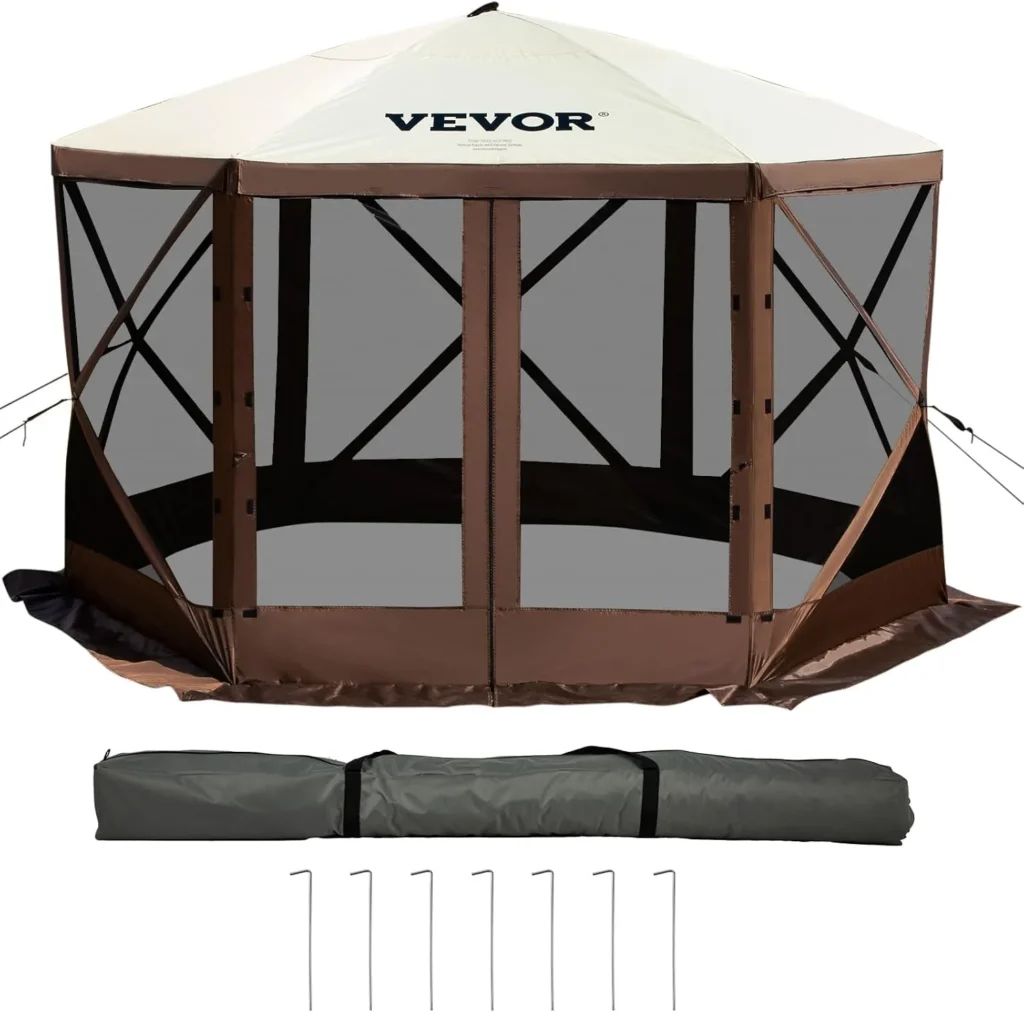
VEVOR 12×12ft Pop Up Gazebo Screen Tent, 6-Sided Camping Canopy Shelter, 6 Removable Privacy Wind Cloths & Full Mesh Mosquito Netting
Pros
| 1. 6 wind cloths with windows included in the box |
| 2. 144 square feet of floor space |
| 3. Steel frame and a 7.5-foot ceiling |
Cons
| 1. 32 pounds before you add the panels |
| 2. Lowest star rating in the group at 4.1 |
| 3. Brand advises taking it down in heavy rain or storms |
The VEVOR is the value play for groups. You get a 12×12 hexagon, six zip-on privacy wind cloths with small windows, ground stakes, guy ropes, and two door frame poles in one box. With all six cloths on, it turns from a breezy screen house into a private room for game night, and the 7.5-foot ceiling keeps it from feeling cramped with eight people inside.
The 4.1-star average across more than 3,200 ratings is lower than the Clam and Gazelle, and in my hands the fabric and hardware felt a step below those premium shelters. It also follows nearly the same frame layout and setup sequence as the Aoxun, so if you are cross-shopping those two, look at price and color first. For a bigger crew on a budget, though, getting the panels included saves you the cost of buying them separately for a Clam.
Read the full review of the Vevor screen tent.
Why Does the Gazelle G6 Pop Up Screen Tent Stand Out for Rain?
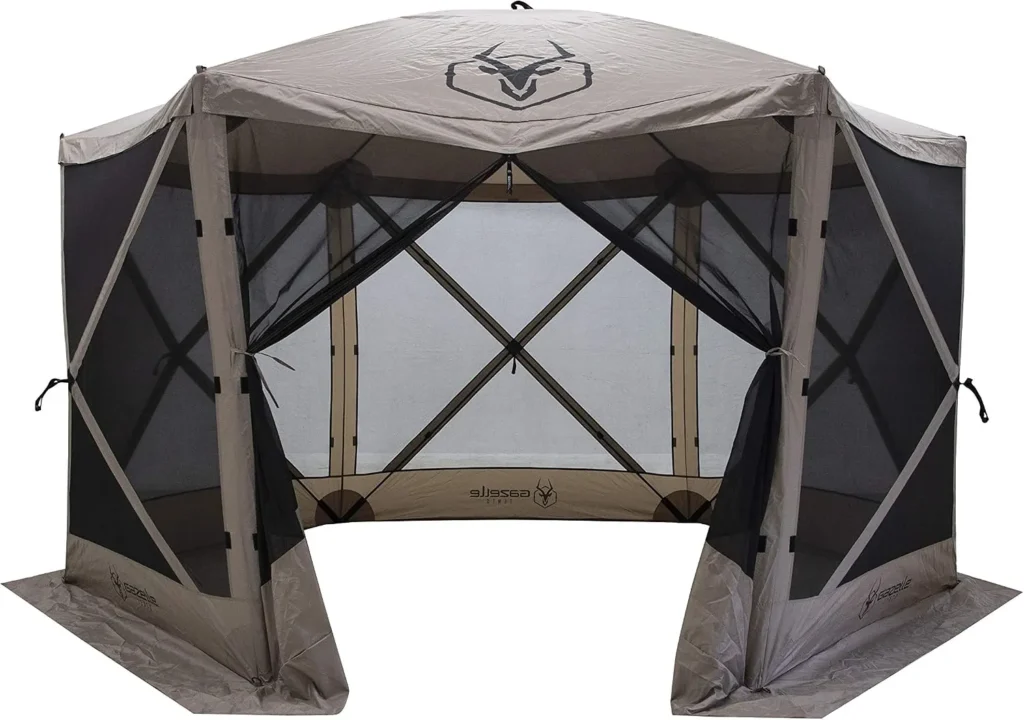
Gazelle Tents™, G6 6-Sided Portable Gazebo, Easy Pop-Up Hub Screen Tent, Durable, TriTech Mesh, Waterproof, UV Resistant, 8-Person & Table, Desert Sand, 86″ x 124″ x 124″, GG602DS
Pros
| 1. Roof rated waterproof to 2000mm with UV50+ |
| 2. TriTech single-filament mesh resists snags |
| 3. Over 7 feet tall at center, room for 8 and a table |
Cons
| 1. 34 pounds and a long cylindrical bag |
| 2. Wind panels sold separately |
| 3. Fewer Amazon ratings than the bigger names |
The Gazelle G6 is the pop up screen tent I would choose if rain is the main worry. Its 210D Oxford roof is the only one in this group that lists a specific 2000mm waterproof rating, and the desert sand hub design stands over 7 feet at center, with a listed maximum ceiling height of 84 inches. The TriTech mesh felt the most durable of the group when I dragged chairs against it.
It costs about the same as the Clam Escape, so the choice comes down to priorities. The Escape gives you a slightly bigger footprint and a long track record, while the G6 gives you the stronger rain rating and tougher mesh. Like the Clam, its wind panels are an add-on, and the top-of-wall flaps that secure them are a smart detail for keeping moisture out.
Read the full review of the Gazelle G6.
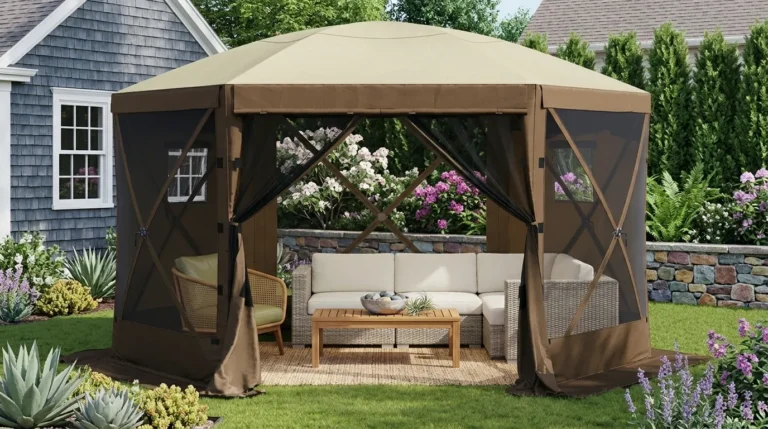
Why Is the East Oak Pop Up Screen Tent My Pick for Backyards and Patios?
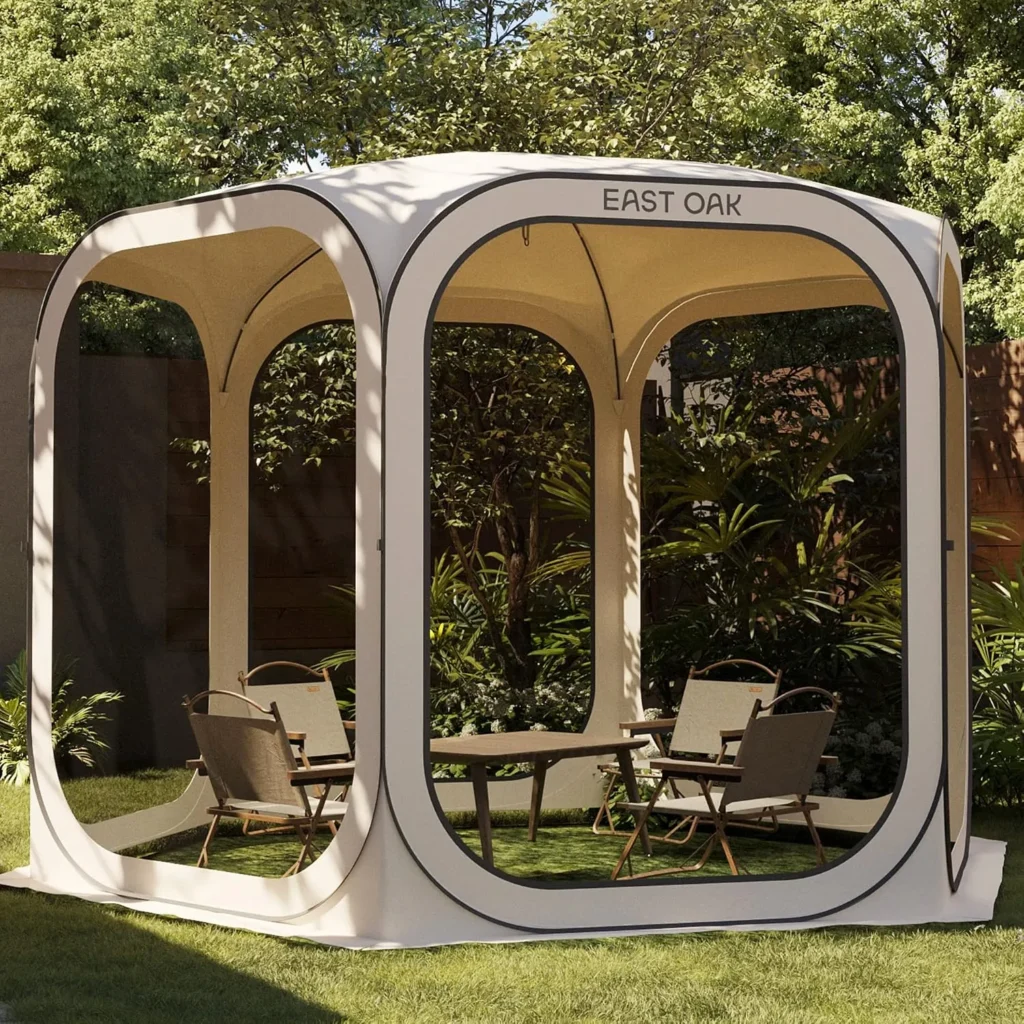
EAST OAK Pop-Up Screen House Tent, Instant Outdoor Gazebo, 10×10 FT, Beige
Pros
| 1. 3-year warranty, the longest in this guide alongside Mars Explo |
| 2. Vertical walls keep headroom to the edges |
| 3. Doors front and back with a lantern hook overhead |
Cons
| 1. Fabric is not water resistant |
| 2. Not recommended in winds over 24 mph |
| 3. Spring fold takes practice |
The East Oak is the screen house tent I would set up on a deck for the whole summer. Its squared-off spring frame keeps the walls nearly vertical, so a 10×10 footprint feels bigger than the Alvantor’s bubble. You get UPF 50+ fabric, doors on the front and back, 12 stakes, 6 guylines, 6 sandbags, and three telescoping poles, and it all folds into a flat round carry bag.
It is rated a strong 4.5 stars across more than 2,000 ratings and sits near the top of Amazon’s screen room rankings. The tradeoffs match the Alvantor: it is a sun and bug room, not a rain shelter, and East Oak advises against using it once wind passes 24 mph. The Mars Explo below uses a nearly identical frame and packed size, so compare those two on looks and price.
Read the full review of the East Oak screen house tent pop up.
Is the Mars Explo Worth It for Style-Focused Patios?
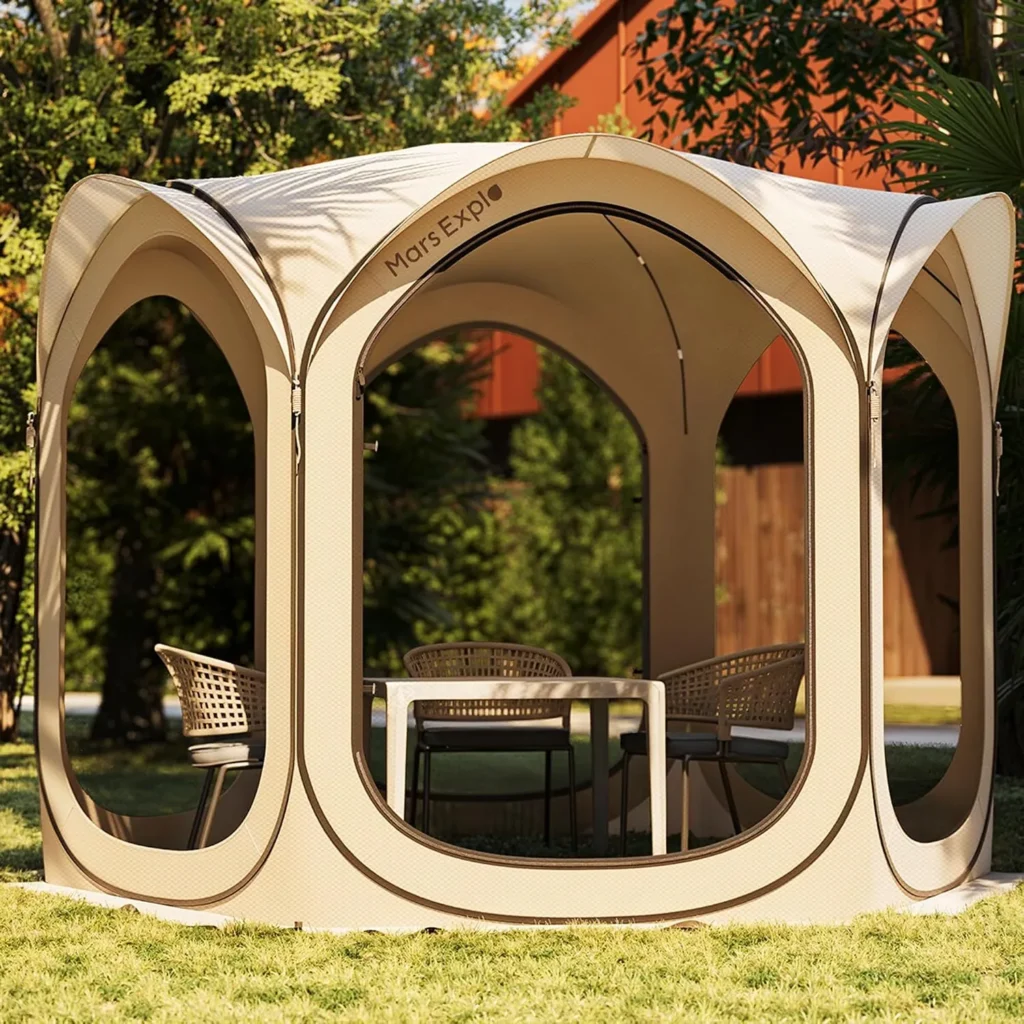
Mars Explo Screen Pop Up House Room Tent, Canopy Sun Shade Shelter for Camping, Patio, Backyard, Deck & Outdoor Activities, Portable Gazebo, 10’x10′
Pros
| 1. Distinctive flying-eave roof with a 7.5-foot center |
| 2. 300D Oxford fabric and B3 mesh with UPF 50+ |
| 3. 3-year warranty |
Cons
| 1. Not water resistant despite the sturdier fabric |
| 2. Not recommended in winds over 24 mph |
| 3. Smallest review history in the group |
The Mars Explo is the best-looking spring-open shelter I tested. The upturned corner eaves give it a pavilion feel on a patio, and the 300D Oxford fabric with triple-stitched edging felt a little heavier-duty than the Alvantor. The extra-wide dual-sided zippers make it easy to step in with a tray of food, and the overhead lantern hook comes in handy after dark.
At 20.9 pounds it is lighter than the East Oak, and the two share a nearly identical frame, fold-flat disc, and wind caveat. The difference is mostly aesthetic, plus the Mars Explo’s shorter track record on Amazon. If you love the look, it is a solid patio room, but like the other spring frames, treat rain and gusty days as reasons to fold it away.
Read the full review of the Mars Explo.
Is the Clam Venture the Best Compact Pop Up Screen Tent?
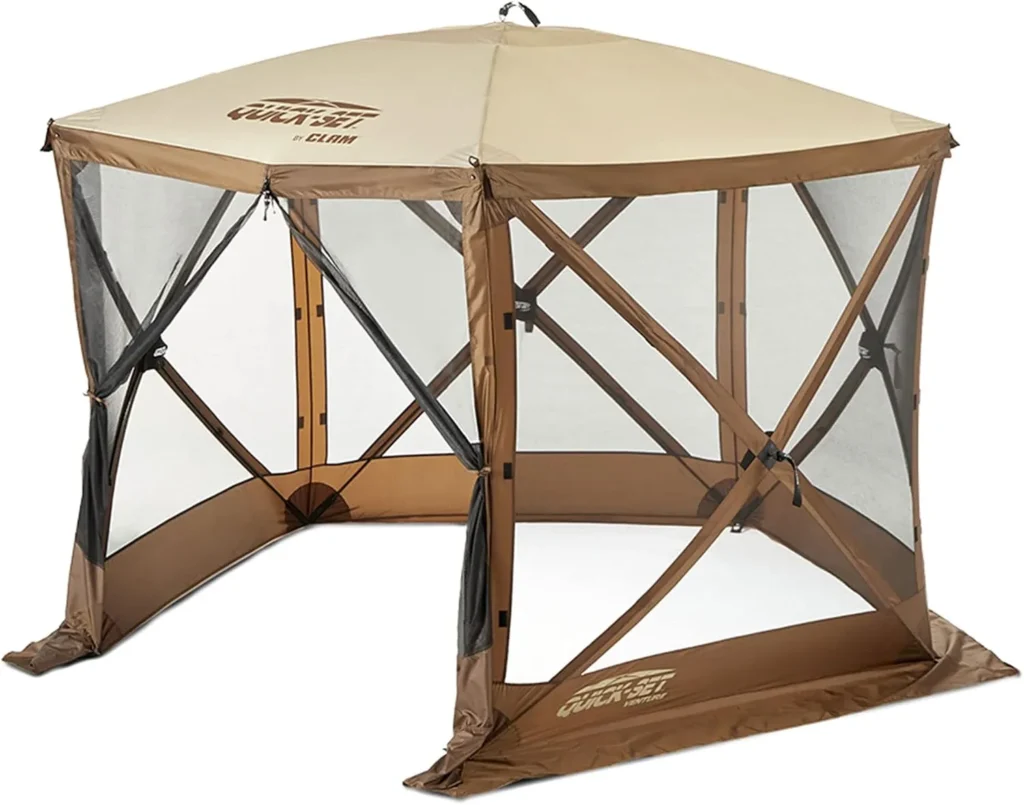
CLAM Venture Screen Tent | 9 x 9 Ft Pop Up Gazebo – Brown 4-Person Shelter | Portable Pop Up Screen Tent for Camping, Beaches, Tailgates and Backyards with No-See-Um Mesh, Weather Cover, and Room for 4
Pros
| 1. Same fast Clam hub setup in a smaller package |
| 2. 26 pounds, the lightest hub shelter here |
| 3. 4.7 stars, the highest rating in this guide |
Cons
| 1. Fits four with chairs, not six |
| 2. 9×9 footprint will not cover a full picnic table with walk-around space |
| 3. Premium price for its size |
The Clam Venture is the Escape scaled down for couples, small families, and tailgates. It uses five walls instead of six, the same taped 210D poly-oxford roof and no-see-um mesh, and it comes in brown, gray, or green. At 26 pounds it is the most manageable hub shelter in this group, and its 4.7-star average across more than 850 ratings is the best in the lineup.
The catch is that you are paying close to Escape money for a 9×9 room. If you regularly host six or more, the Escape or VEVOR is the better value. For a pop up screen tent for camping with two to four people, though, I like how much faster the Venture is to carry and stake than the bigger hubs.
Read the full review of the Clam Venture screen tent.
Is the Aoxun 12×12 a Smart Budget Alternative?

Aoxun 12x12ft Pop Up Gazebo Screen Tent, Camping Canopy Shelter Tent, Brown
Pros
| 1. 6 detachable wind cloths with 2 windows included |
| 2. 300D Oxford fabric, listed as waterproof |
| 3. Amazon’s Choice with strong recent sales |
Cons
| 1. Heaviest shelter here at 37.5 pounds |
| 2. Young listing with fewer than 200 ratings |
| 3. No warranty terms on the listing |
The Aoxun follows the same 12×12 hub layout as the VEVOR, with a 90-inch peak, steel structure, two door frame poles, and six wind cloths in the box. Where it pulls ahead on paper is fabric: 300D Oxford with a waterproof listing and a claim of blocking over 99 percent of UV. In my setup it went up with the same pull-the-hub-strap routine as the VEVOR.
The tradeoffs are weight and track record. At 37.5 pounds it is the heaviest shelter in this guide, and its rating history is short compared with the VEVOR’s thousands of reviews. If you want the included wind cloths and can live with a heavier bag, the Aoxun often comes in cheaper. If you would rather trust a long rating history, pay a bit more for the VEVOR.
Read the full review of the Aoxun gazebo.
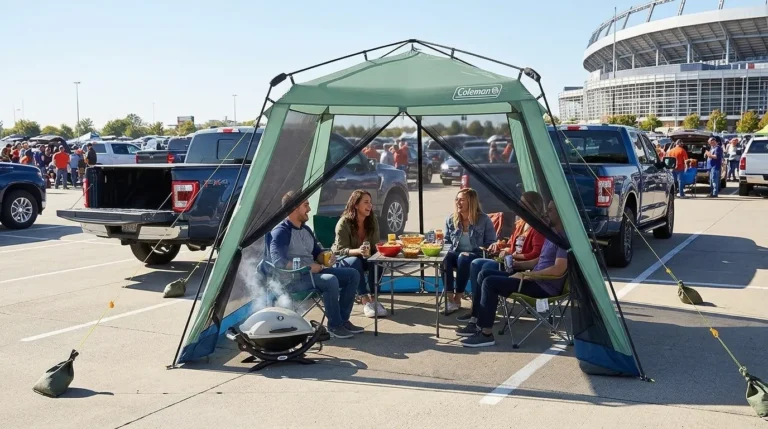
Is the Coleman Skylodge Good for Tailgates and Quick Stops?
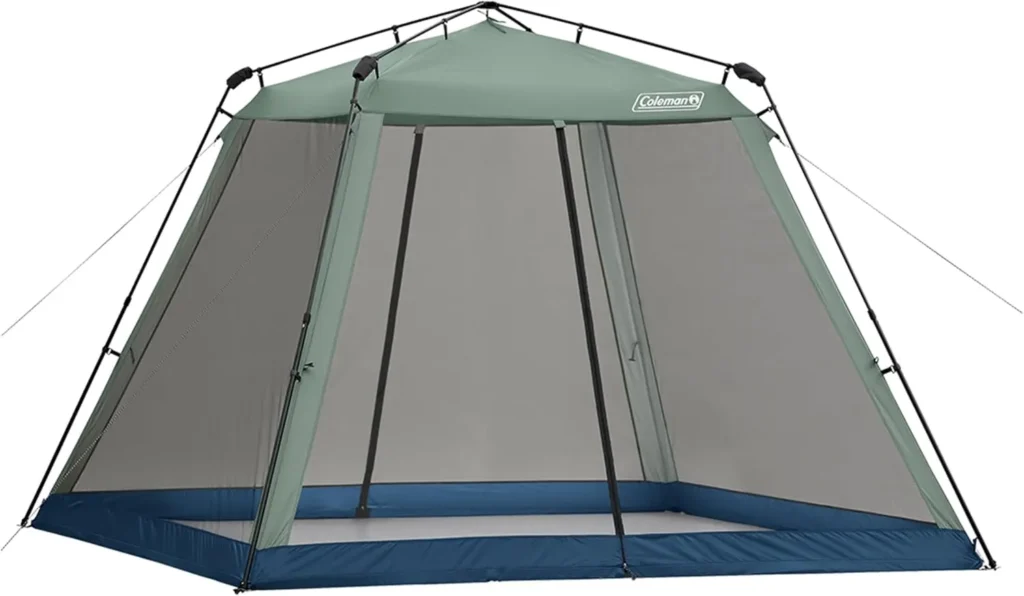
Coleman Skylodge Portable Screenhouse, 1-Minute Setup, 10×10-Foot
Pros
| 1. Telescoping pre-attached legs with pinch-free buttons |
| 2. Two entryways and UPF 50+ fabric |
| 3. Light for its size at about 16 pounds |
Cons
| 1. 6-foot entry height means taller people duck |
| 2. Smaller review history than other big-brand options |
| 3. Steeper wall slope than the hub shelters |
The Coleman Skylodge feels like a canopy that grew mesh walls, and that is exactly why it suits tailgates and beach days. You lift the frame, extend the telescoping legs, and you are done. Two entryways make it easy to run food in and out, and the slim carry bag is far easier to fit in a packed trunk than a long hub-tent bag.
It has a 7-foot center height but only a 6-foot entry, and its walls lean in more than the hub shelters do. If you already own a canopy from my pop up canopy guide, the Skylodge is the one in this lineup that will feel the most familiar. For long camp stays, I would still pick a hub like the Clam Escape for its straighter walls and taller doorway.
Read the full review of the Coleman Skylodge portable screenhouse.
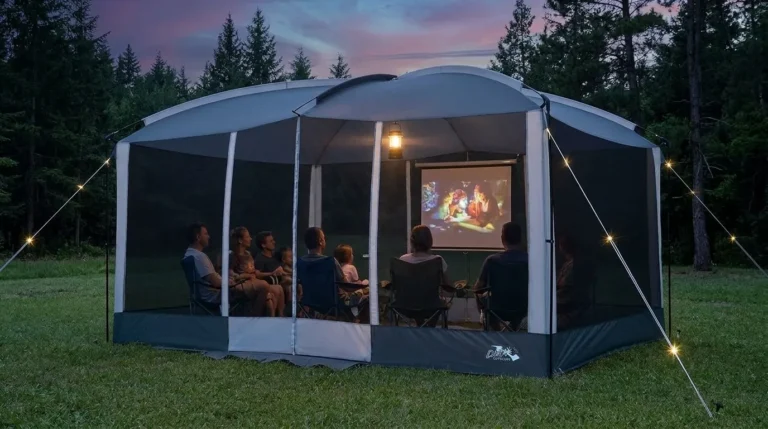
Is the DMH Outdoors Screen House Worth the Extra Setup?
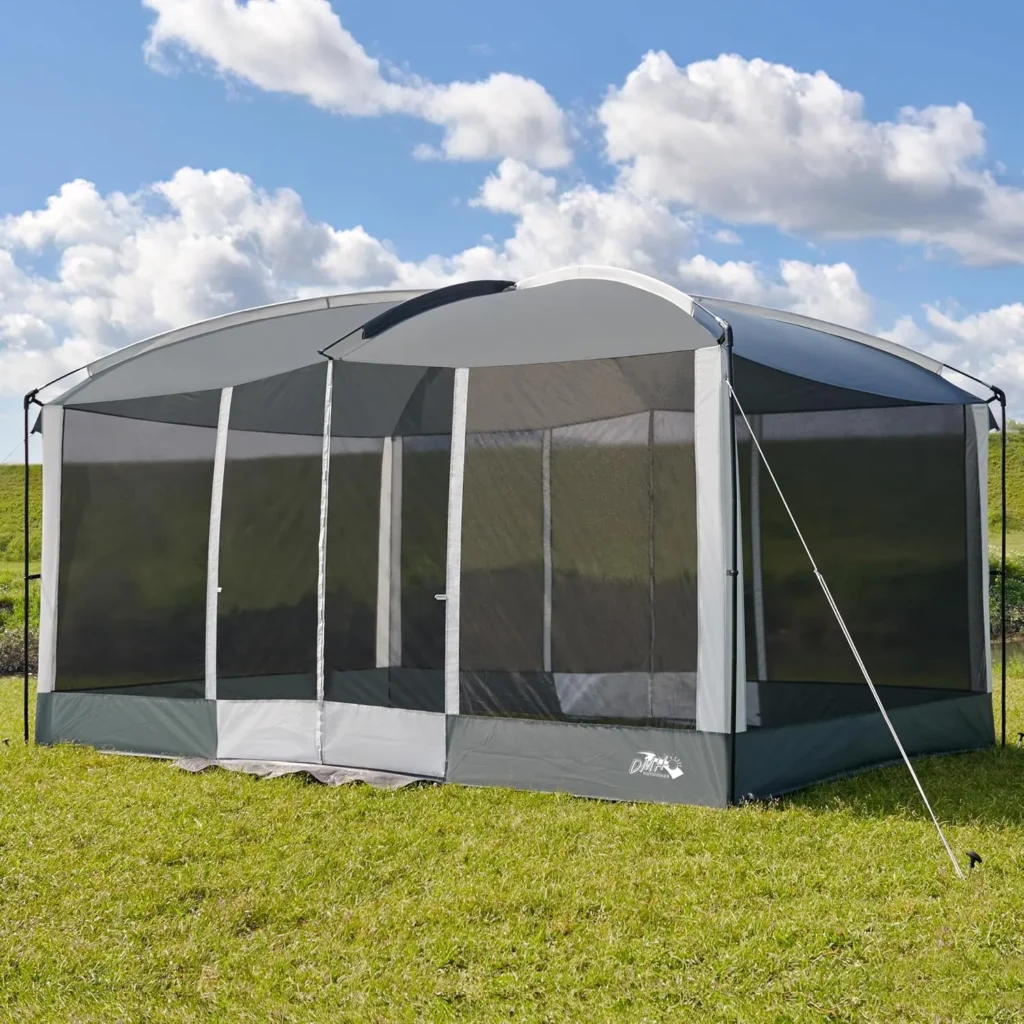
Screen House Tent 13×9 FT with Netting Mesh & 2 Magnetic Doors, Portable Sunshade Screen Room Canopy Shelter with Projection Screen for 12 People, Outdoor Gazebo for Backyard Camping Patio
Pros
| 1. 13×9 rectangle fits a banquet table and 12 people |
| 2. Self-closing magnetic doors front and back |
| 3. Hanging projection screen and mud mats included |
Cons
| 1. Pole-built, so it is not a true pop-up |
| 2. Slowest setup in this guide |
| 3. 27.8 pounds |
The DMH is the odd one out, and I say that with affection. It is a pole-built screen house rather than a true pop-up, so setup takes real time. In exchange, you get a 13×9 rectangle with a 90-inch center, two magnetic doors that close behind you, detachable mud mats, reflective guy ropes, and a hanging projection screen for movie night at camp.
If your group is twelve people and a long table, no hexagon in this guide uses floor space as efficiently. If you want something you can open in a minute after a long drive, pick one of the hub or spring-open shelters instead. I see the DMH as a basecamp room for multi-night stays, not a quick lunch stop.
Read the full review of the DMH Outdoors tent.
Frequently Asked Questions About Pop Up Screen Tent
Do pop up screen tents come with a floor?
None of the ten shelters in this guide has a sewn-in floor. Each one uses an open bottom with a wide fabric skirt that lies on the ground to block crawling bugs and drafts, which is what lets you set them over a picnic table or on a deck. If you want a pop up screen tent with floor coverage, Alvantor sells an optional floor separately for its screen house, and the DMH ships with detachable mud mats at the doors. For everyone else, an outdoor rug or ground tarp inside the shelter does the job and keeps dirt off your feet.
Can you sleep in a pop up screen tent overnight?
You can lay a cot inside one on a calm, dry night, but I do not recommend it as a plan. Without a floor, rainfly, or solid walls, you are exposed to wind, rain, and ground moisture, and most brands advise against using their shelters in high wind or storms. Several of these, including the Alvantor, East Oak, and Mars Explo, are explicitly not water resistant. Use the screen house as your living room and a real tent for sleeping, and you get the best of both.
Will a pop up screen tent fit over a picnic table?
The larger ones will. The Clam Escape’s 11.5-foot hexagon fit over a standard campground picnic table with walking room on every side in my test, and the 12×12 VEVOR and Aoxun hubs do the same. The DMH’s 13×9 rectangle is the best fit for a long banquet table. Smaller 9×9 and 10×10 shelters, like the Clam Venture and the 10×10 spring-open rooms, can technically cover a picnic table but leave you squeezing past the bench ends.
Are pop up screen tents waterproof?
Most are water resistant at best, and some are not rated for rain at all. The Gazelle G6 lists the strongest roof rating in this group at 2000mm, and the Clam shelters use taped roof seams. The Alvantor, East Oak, and Mars Explo all list their fabric as not water resistant, so they are sun and bug rooms. Even with a good roof, rain blows sideways through mesh walls, so add wind panels on the weather side if you expect showers.
How windy is too windy for a pop up screen tent?
Alvantor, East Oak, and Mars Explo all advise against use once winds reach about 24 mph, which sits at the top of a fresh breeze on the Beaufort scale. Hub shelters like the Clam Escape held steadier in my gusty test once every guyline was staked, but no screen house is built for storm-force wind. If gusts are building or you hear thunder, take it down, and remember that adding solid wind panels catches more wind, not less.
Helpful Guides
- How to Fold a Pop Up Screen Tent
- How to Set Up a Screen House Tent
- Do Screen House Tents Let Dust In?
- How to Clean Mold from a Tent Screen
- How to Prevent Mosquito Bites While Camping
- How to Seam Seal a Tent
How Do You Choose the Right Pop Up Screen Tent for Your Needs?
You choose the right pop up screen tent by matching three things: where you will set it up, how many people need to fit inside, and how much wind and rain you realistically face. Get those three right, and every other spec becomes a tiebreaker.
Start with where it lives. For campsites with dirt or grass, hub shelters like the Clam Escape, Gazelle G6, VEVOR, and Aoxun stake down well and stand steadier in wind. For a deck or patio that stays up for weeks, the spring-open East Oak, Mars Explo, or Alvantor rooms look great and include sandbags for surfaces where stakes will not go. For tailgates and quick stops, the Coleman Skylodge and Clam Venture carry and set up with the least fuss.
Size it for your real crowd, then add one. A 10×10 shelter seats four to six adults comfortably, 12×12 hubs handle eight, and the DMH’s 13×9 rectangle is built for a dozen around a long table. Count chairs, a table, and a cooler, not just people. If you regularly host a crowd, the jump from a 10×10 pop up screen tent to a 12×12 is worth the extra weight.
Be honest about weather. If your trips include afternoon showers, lean toward the Gazelle G6 or the Clam shelters with their taped roofs. If you want privacy walls out of the box, the VEVOR and Aoxun include six wind cloths. If your setup is mostly sunny backyards, the not-water-resistant spring rooms are perfectly fine, and the East Oak and Mars Explo back that up with 3-year warranties.
Check the carry. Weights in this guide range from 12 pounds for the Alvantor to 37.5 pounds for the Aoxun, and the hub shelters pack into long bags that need trunk length. If you will be carrying it from a parking lot to a campsite, that matters more than an extra square foot inside.
Plan to anchor every time. Whatever pop up screen tent you choose, set aside time for stakes, guylines, or sandbags on every setup. Most of the failures I see in reviews come from shelters that were never tied down. Do that, and any of these ten will turn the worst bug hour of the day into the best part of camp.
Clam Escape Screen Tent is best suited for campers who want one shelter that does it all
Alvantor Screen House is best suited for budget backyards and easy carrying
VEVOR 12×12 Screen Tent is bet suited for big groups who want privacy walls included