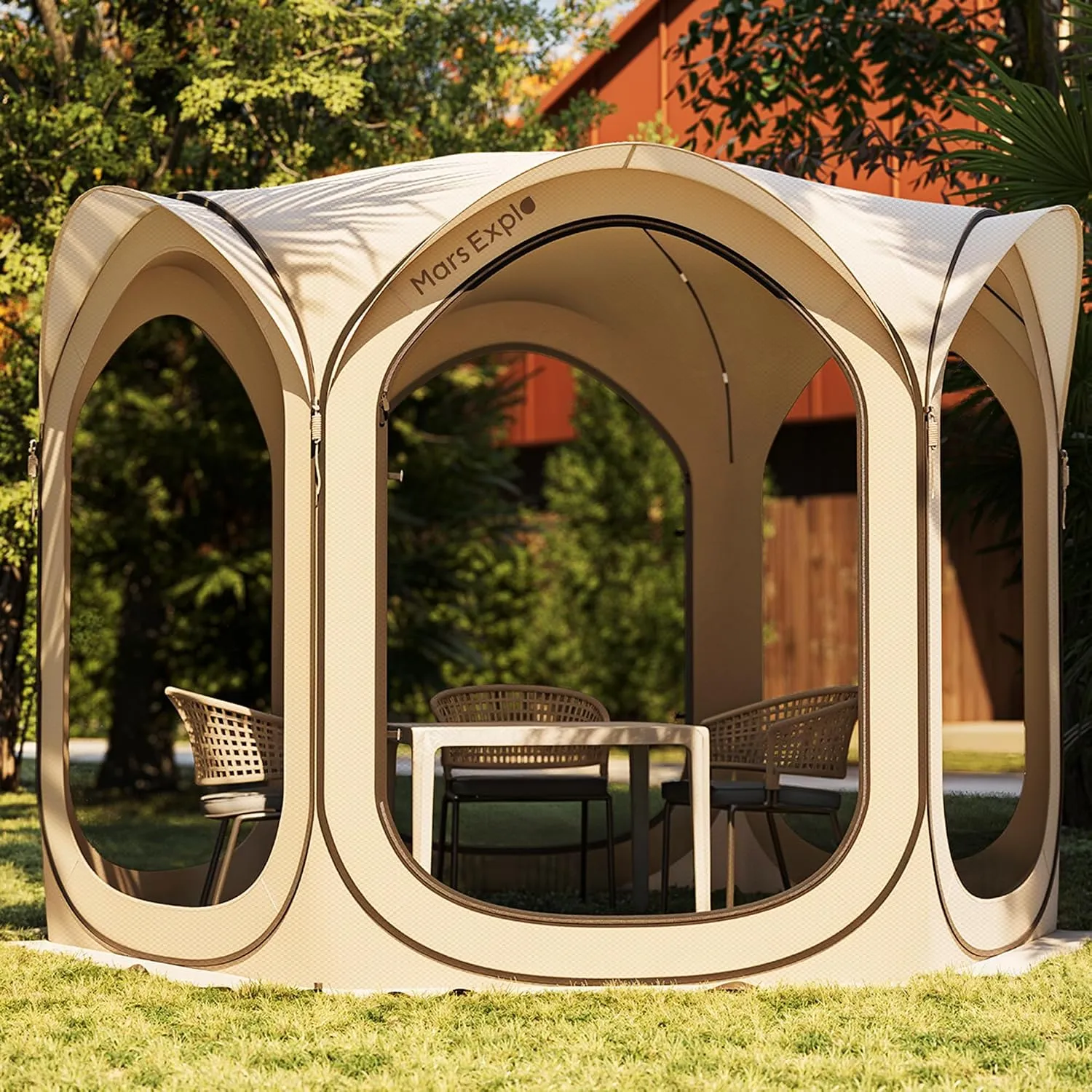
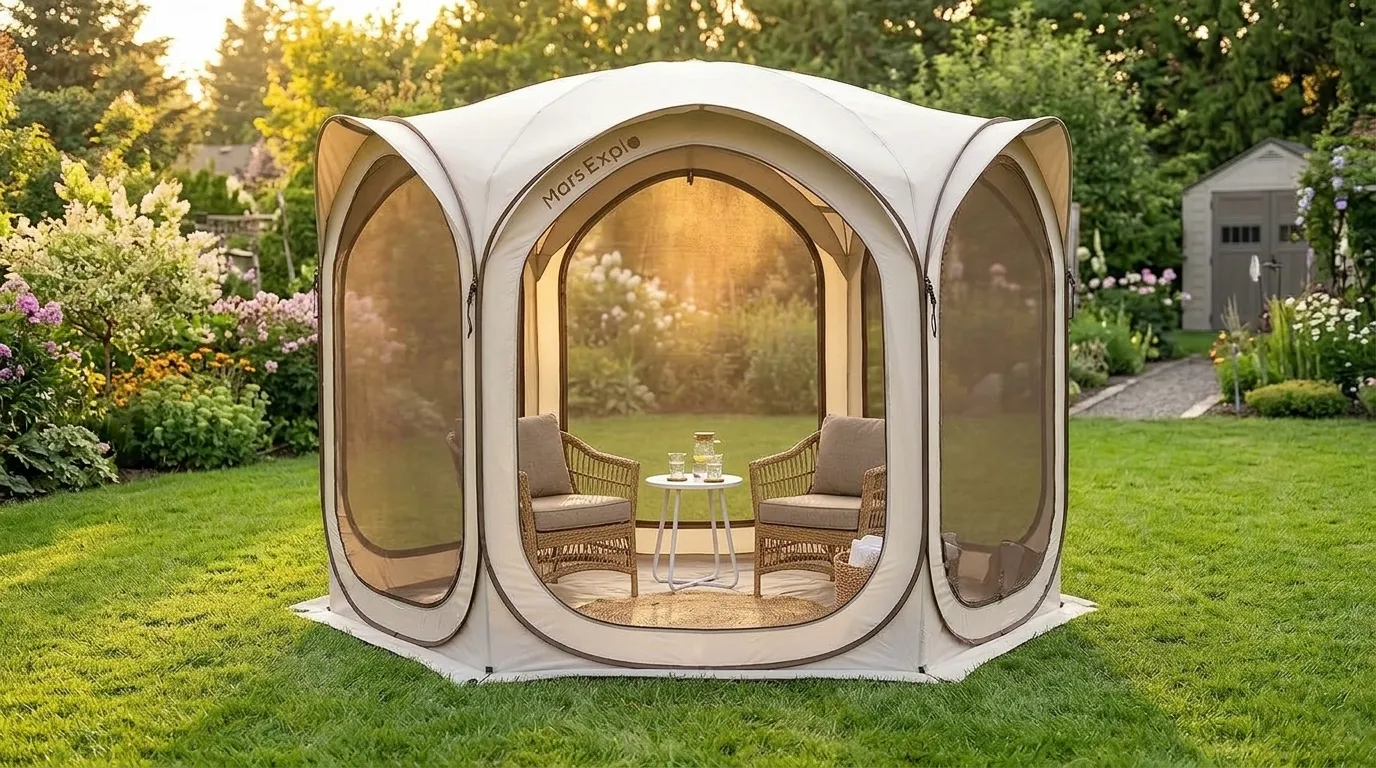

The Mars Explo screen house is the one guests photographed. Something about those upturned corner eaves makes it look less like camping gear and more like a little garden pavilion, and more than one visitor asked where I had bought it. Following my earlier tests of the East Oak screen house tent pop up, the squared-off patio room I ended up using most, I wanted to know whether the Mars Explo’s style came with real substance, or whether it was a pretty face on the same idea.
This post contains affiliate links. As an Amazon Associate, I may earn commission from qualifying purchases at no extra cost to you.
The Mars Explo is a 10×10 spring-open screen house with a vertical frame, 300D Oxford fabric, a fiberglass-reinforced roof, silver-coated B3 mesh rated UPF 50+, and a 3-year warranty. In my pop up screen tent guide, I called it the best-looking spring room I tested. After a summer of backyard dinners and a weekend at a lakeside campground, here is what holds up and what does not.
Overall Rating: 4.3/5
| Rating Question | Score (Out of 5) |
|---|---|
| How quickly did it spring open? | 4.7 |
| How easy was it to fold back down? | 4.0 |
| How much headroom did the walls give? | 4.6 |
| How well did the mesh keep bugs out? | 4.6 |
| How well did it handle a breezy afternoon? | 3.9 |
| How sturdy did the fabric and stitching feel? | 4.5 |
| How confident are you in its track record? | 3.7 |
What Are the Primary Pros and Cons of the Mars Explo?
The primary pros of the Mars Explo are its distinctive flying-eave design, sturdy 300D Oxford fabric with B3 mesh, quick one-person setup, and 3-year warranty, while the main cons are fabric listed as not water resistant, a 24 mph wind limit, and a short rating history. It is a stylish, well-built patio room that still lives within spring-frame limits.
Pros
| 1. Flying-eave corners look great on a patio |
| 2. 300D Oxford fabric with triple-stitched edging |
| 3. Silver-coated B3 mesh with UPF 50+ |
| 4. Springs open in about a minute, solo |
| 5. 7.5-foot center with 6.5-foot walls |
| 6. Extra-wide dual-sided zippers and a lantern hook |
| 7. 3-year warranty |
Cons
| 1. Fabric is listed as not water resistant |
| 2. Not recommended in winds over 24 mph |
| 3. Under 50 Amazon ratings so far |
| 4. Fold takes some practice |
| 5. Two telescoping poles add a setup step |
| 6. No wind panel option |
| 7. Lanterns and light strips sold separately |
Those lists show a shelter that punches above its price on materials. The 300D fabric and triple-stitched edging felt sturdier than the Alvantor’s lighter build, and the zippers were the smoothest of the spring rooms. The cons are mostly the category’s limits plus a short track record. For the full lineup, my best pop up screen tents guide compares all ten shelters.
The Specs of the Mars Explo
| Feature | Specification |
|---|---|
| Brand and model | Mars Explo Portable Screen Room, Beige |
| Size tested | 10 x 10 ft |
| Dimensions | 127.9 x 127.9 x 90.5 inches |
| Center height | 7.5 ft |
| Wall height | 6.5 ft |
| Floor area | 100 square feet |
| Capacity | 4 to 6 people |
| Weight | 20.9 pounds |
| Packed size | Round zip-up bag about 31 inches tall |
| Frame | Rust-resistant steel with fiberglass, spring-loaded |
| Fabric | 300D Oxford with fiberglass-reinforced roof |
| Mesh | Silver-coated B3 mesh, UPF 50+ |
| Water resistance | Not water resistant |
| Included | Tent and elastic bands, zip-up bag, 2 storage bags, 6 guylines, 12 stakes, 2 telescoping poles, manual |
| Other sizes | 6×6 and 12×12 ft |
| Warranty | 3 years |
The 6.5-foot wall height is the hidden standout here. It is taller than any other spring room I tested, and it is why the Mars Explo feels so open inside.
How Fast Does the Mars Explo Set Up?
The Mars Explo sets up in about a minute with one person, because its spring-loaded frame opens on its own once you release the elastic bands. Fitting the two telescoping poles and anchoring the shelter adds a few more minutes, and that anchoring is not optional.
Unzip the round bag, remove the elastic bands, hold the folded frame away from your body, and let go. The Mars Explo snaps into its cube shape with the corner eaves flipping up last. Walk around, straighten any arched panel that did not fully open, then fit the two telescoping poles. Finish by staking the loops and running all six guylines.
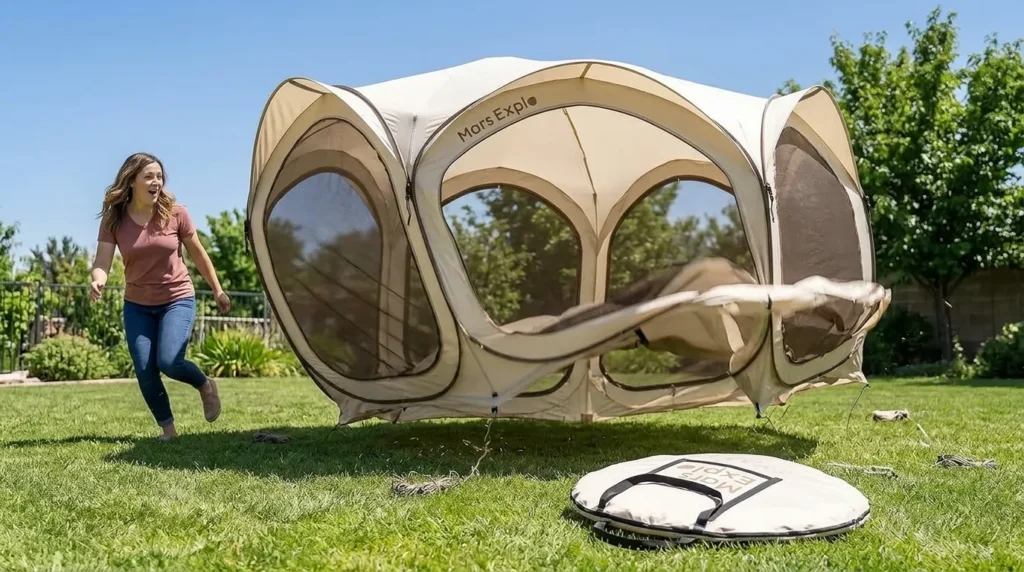
Folding is the usual spring-frame twist: remove the stakes and poles, fold the shelter in half, and twist it into stacked loops until it lies flat. The extra-wide dual-sided zipper helps here, because you can leave a gap open for air to escape as you fold. If you have folded a camping pop-up before, my pop up tent guide covers the same frame family and the motion will feel familiar.
Compared with the hub shelters, the Mars Explo is faster to open but asks for more care in wind and folding. The Clam Escape screen tent takes a little longer to pop out wall by wall, but it never fights you. For a backyard room that stays up for weeks, the Mars Explo’s speed is the bigger advantage.
How Much Room Is Inside the Mars Explo?
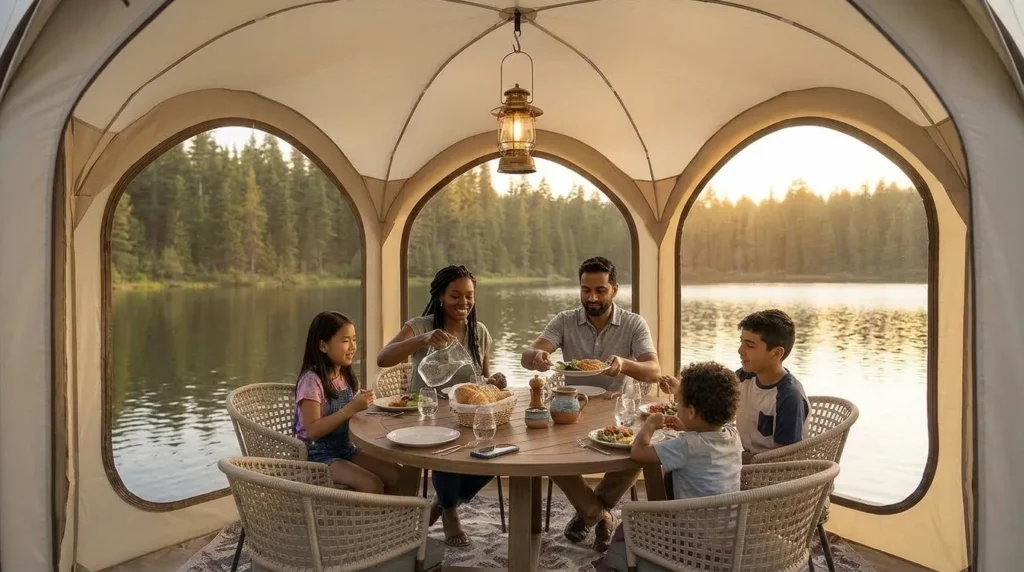
The Mars Explo gives you 100 square feet of floor with a 7.5-foot center and 6.5-foot walls, enough for four to six people around a dining table or a full outdoor sofa set. Those tall, nearly vertical walls make it the roomiest-feeling 10×10 spring shelter I tested.
My dinner test put a round dining table and six chairs inside, with room to walk around. On the patio, a three-seat sofa sat against one wall without anyone’s head touching the mesh. That 6.5-foot wall height really shows here.
If you need more space, Mars Explo makes a 12×12 version rated for eight to ten people. For a camping crowd that wants walls as well, the 12×12 Vevor screen tent and Aoxun gazebo both include six wind cloths, which the Mars Explo cannot add at all. For a couple or small family that camps more than it lounges, the smaller Clam Venture screen tent packs into a hub design that handles wind better.
The overhead hook is perfect for a lantern, and a light strip along the frame looks lovely at night, though both are sold separately. Inside any enclosed shelter, I stick to battery-powered lights, following Maine’s State Fire Marshal guidance on tent safety to keep liquid-fuel lanterns and heaters out of tents.
How Does the Mars Explo Handle Bugs, Sun and Wind?
The Mars Explo handles bugs and sun very well thanks to its silver-coated B3 mesh and UPF 50+ protection, but it is a fair-weather shelter in wind and rain. Its fabric is listed as not water resistant, and it is not recommended for winds over 24 mph.
Bugs were a non-issue. At a lakeside campground with heavy evening midges, nothing got through with the doors zipped and the skirt staked. That matters, because the University of Florida’s guide to biting midges explains that many are under a millimeter long and that regular window screens do not exclude them. Fine mesh is the whole game.
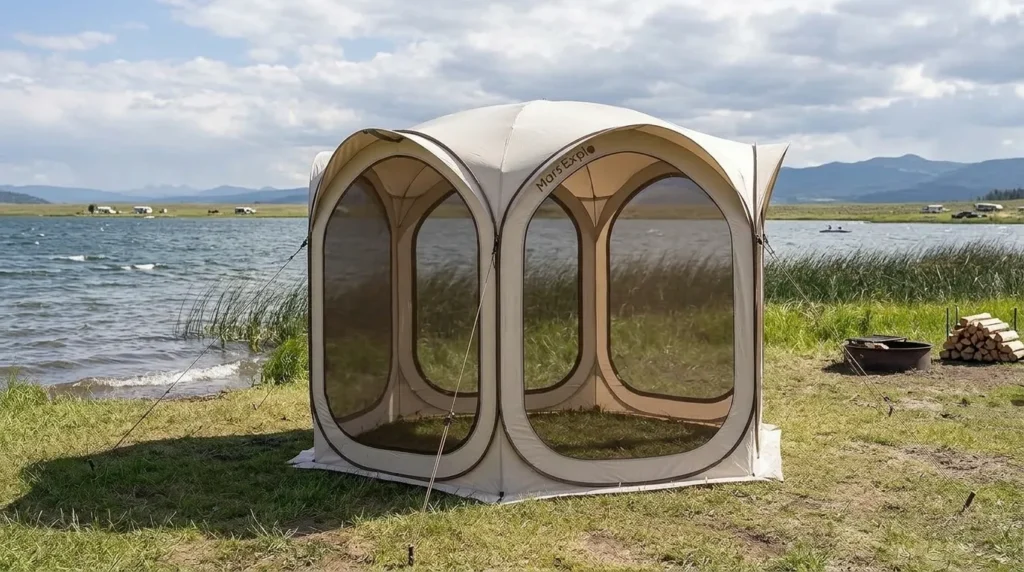
Sun protection was excellent. The coated mesh and fabric threw soft, even shade without making the inside feel closed in.
Wind is where I stay conservative. Fully staked with all six guylines, the Mars Explo stayed steady through moderate breezes, but I folded it whenever gusts were forecast to climb. The National Weather Service’s wind safety guidance is to secure loose outdoor items when a High Wind Watch is issued; for a 21-pound spring room, securing means taking it down.
For rain, look elsewhere. The Gazelle G6 lists a 2000mm waterproof roof, and the hub shelters generally shed showers far better. The Coleman Skylodge portable screenhouse is another lighter option with water-resistant fabric. The Mars Explo is a sun and bug room first.
How Does the Mars Explo Compare to Other Spring Screen Rooms?
The Mars Explo compares as the most stylish and best-built of the spring screen rooms, matching the East Oak’s vertical design and 3-year warranty, while the Alvantor screen house stays far lighter and cheaper with a much longer rating history. All three open the same way and share the same weather limits.
| Spring Screen Room (10×10) | Weight | Wall Height | Fabric | Rating History | Warranty |
|---|---|---|---|---|---|
| Mars Explo | 20.9 lb | 6.5 ft | 300D Oxford | Under 50 at 4.6 | 3 years |
| East Oak | 23.4 lb | Vertical walls, 7.5 ft center | Silver-coated Oxford | 2,000+ at 4.5 | 3 years |
| Alvantor | 12 lb | Curved bubble walls | Fabric top, UPF 50+ | 8,000+ at 4.5 | 1 year |
The Mars Explo and East Oak are close enough in frame, packed size, and wind caveat that the choice comes down to looks, price on the day, and how much you value the East Oak’s longer rating history. For campers who need a large group room with a straight-walled design, the 13×9 DMH Outdoors tent is a pole-built alternative with two magnetic doors.
Frequently Asked Questions About the Mars Explo
Is the Mars Explo waterproof?
No. The fabric is listed as not water resistant, so treat the Mars Explo as a sun and bug shelter rather than a rain shelter. Its fiberglass-reinforced roof and tight structure help with dew and the occasional sprinkle, but fold it before steady rain or storms. Always dry it completely before packing to prevent mildew.
How many people fit in the Mars Explo?
The 10×10 Mars Explo fits four to six people comfortably, whether around a dining table or on a patio sofa set. The 6.5-foot walls let furniture sit near the edges without feeling cramped. Mars Explo also makes a 6×6 size for two or three people and a 12×12 size for eight to ten.
What comes in the Mars Explo box?
The 10×10 package includes the tent with elastic bands, a zip-up round carry bag, two storage bags, six guylines, twelve ground stakes, two telescoping poles, and a user manual. Lanterns and LED light strips are not included. On decks or patios where stakes will not go in, plan to bring your own weights or sandbags.
How windy is too windy for the Mars Explo?
Mars Explo advises against using the shelter once winds exceed 24 mph, and I would fold it before gusts reach that point. Below that, it stayed steady in my testing with every stake and guyline in place. Never leave it up unanchored, even briefly, because light spring frames can lift and tumble in a single gust.
Is the Mars Explo the same as the East Oak screen house?
They are not the same product, but they are closely related in design, with similar vertical spring frames, nearly identical packed sizes, the same 24 mph wind caveat, and 3-year warranties. The Mars Explo stands out with its flying-eave corners, 300D Oxford fabric, and taller 6.5-foot walls, while the East Oak has a much longer rating history and doors front and back.
Helpful Guides
- How to Fold a Pop Up Screen Tent
- How to Set Up a Screen House Tent
- Do Screen House Tents Let Dust In?
- How to Clean Mold from a Tent Screen
- How to Fold a Pop Up Tent
Should You Buy the Mars Explo?
Yes, buy the Mars Explo if you want a stylish, well-built screen room for your patio or backyard that sets up in a minute and comes with a 3-year warranty. Its 300D fabric, B3 mesh, and tall walls make it feel more substantial than its price suggests.
Skip it if you need rain protection, camp in windy places, or prefer a product with a long review history. A hub shelter or the East Oak will suit you better, and my pop up screen tent guide lays out every alternative.