
Learning how to clean mold from a tent screen usually starts with a bad surprise: you unzip the bag for the first trip of spring, catch that sour, earthy smell, and find a constellation of dark spots across the mesh you packed in a hurry last fall. I have opened that bag. The good news is that most mold on screen mesh comes off with patience and gentle cleaners, and the harsh fixes people reach for first are usually the ones that ruin the screen.
This guide is built around the screen houses I tested for my pop up screen tent roundup, because those big mesh walls are exactly where mold hides after a damp pack. The same method works on the mesh doors and windows of a regular camping tent. I cover how to tell mold from dirt, what to wear, a safe step-by-step clean, the bleach question, and the habits that stop it from coming back.
How Do You Know If It Is Mold on Your Tent Screen?
You know it is mold on your tent screen when you see dark or fuzzy spots that do not brush off dry, often with a musty, earthy smell that lingers after airing out. Dirt, pollen, and tree sap can look similar at a glance, so a quick test saves you from scrubbing the wrong problem.
Here is the check I run before I clean anything:
| What You See | Likely Cause | Quick Test |
|---|---|---|
| Gray, white, or light powdery patches | Early mildew on the surface | Brushes off partly, smells musty |
| Black or green speckles that stay put | Established mold | Does not brush off dry, may stain |
| Brown or yellow film | Dust, pollen, or dried mud | Brushes or rinses off easily, no smell |
| Sticky amber dots | Tree sap | Tacky to the touch, no smell |
Mold loves the places where moisture gets trapped: the skirt where it touched wet grass, the folds where mesh meets fabric framing, and the bottom of the bag where condensation pooled. On hub shelters, check around each wall hub; on spring-open rooms, check the fabric sleeves around the frame.

If the whole shelter smells musty but you cannot find spots, you may be dealing with odor from mildew in the fabric coating rather than visible growth. My how to clean a musty tent guide covers deodorizing in more depth. If you do see spots, keep reading, and plan the job for a warm, dry, breezy day so the shelter can dry completely afterward.
What Do You Need to Clean Mold from a Tent Screen Safely?
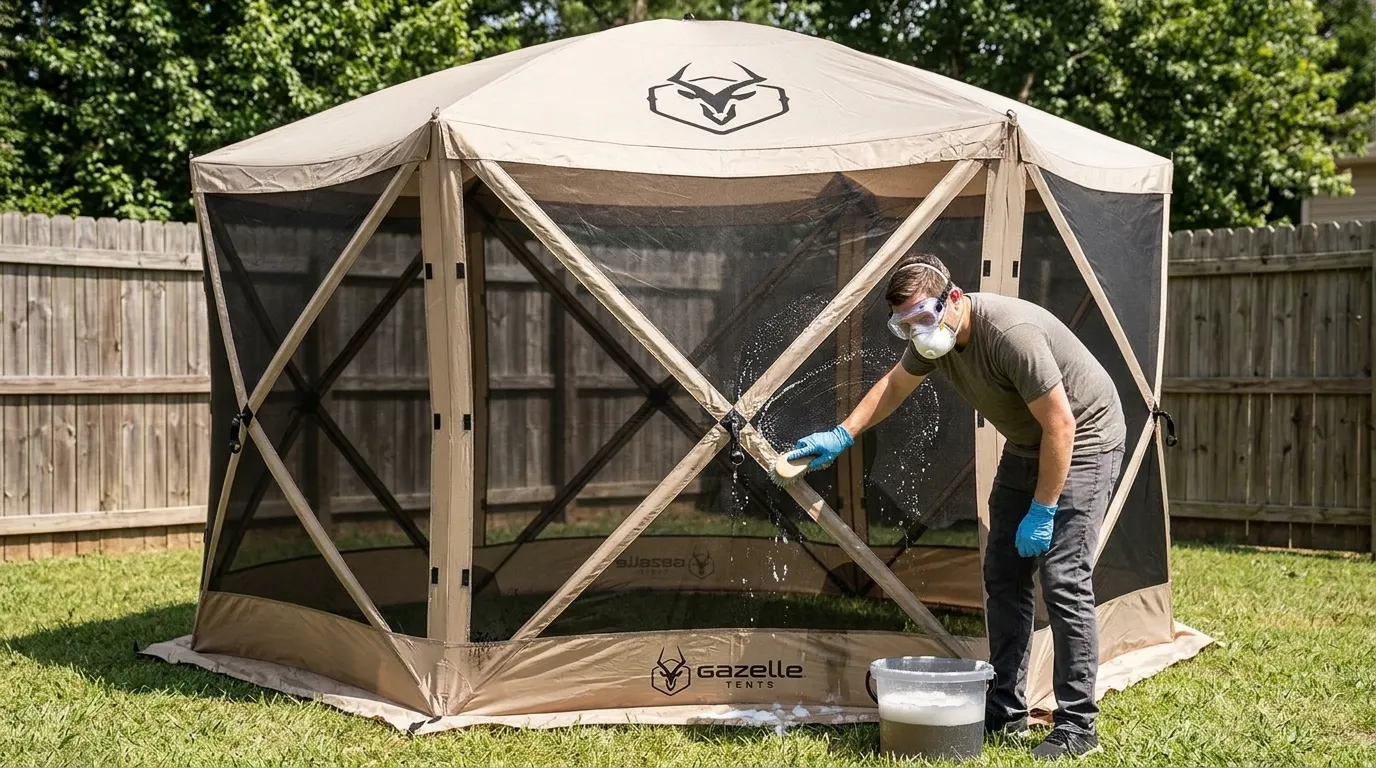
You need basic protective gear, a soft brush, a mild cleaner, clean water, and a sunny spot to dry the shelter. Protective gear comes first, because brushing mold releases spores into the air. The CDC’s mold cleanup guidance recommends at least a NIOSH-approved N95 respirator, non-latex gloves, and goggles that seal around your eyes, and it advises people with asthma, allergies, or weakened immune systems to skip mold cleanup entirely.
Here is my kit and how the common cleaners compare:
| Cleaner | Best For | Caution |
|---|---|---|
| Mild dish soap and lukewarm water | First pass on all mold and mildew | Rinse thoroughly so no residue remains |
| White vinegar diluted in water | Stubborn spots and musty odor | Pretest on a hidden area first |
| Enzyme-based gear cleaner | Odor and organic residue | Follow the label, rinse well |
| Chlorine bleach | Generally skip on tent mesh and coated fabric | Can weaken and discolor; never mix with ammonia |
Gather a soft upholstery brush or a soft-bristle dish brush, two buckets, a sponge, microfiber cloths, and a garden hose with a gentle spray setting. Skip anything abrasive, including stiff wire brushes, scouring pads, and pressure washers, which can tear mesh and strip the coatings on roof fabric.

Two more things to skip: the washing machine and the dryer. Agitators can snag mesh and stretch seams, and dryer heat can damage coatings and melt glued seam tape. Hand cleaning on a pitched shelter is gentler and, honestly, easier with a big screen house.
How Do You Clean Mold from a Tent Screen Step by Step?
You clean mold from a tent screen by pitching the shelter outdoors, dry-brushing loose growth away, washing both sides with a mild soap solution, treating stubborn spots with diluted vinegar, rinsing thoroughly, and drying it completely in sun and breeze. Pitching it first keeps the mesh taut, which makes brushing safer and far more effective.
- Put on your respirator, gloves, and goggles.
- Set up the shelter outdoors on a dry day, away from open windows so spores do not drift inside.
- Dry-brush the affected areas with a soft brush, working from the top down. The University of Georgia Extension’s mildew stain guidance recommends brushing off loose mildew outdoors before any wet treatment.
- Mix a few drops of mild dish soap into a bucket of lukewarm water. Sponge both sides of the mesh, then brush gently in small circles.
- For spots that remain, apply a solution of white vinegar diluted in water, let it sit for a few minutes, then brush again.
- Rinse thoroughly with the hose on a gentle setting, from the top down, until no suds remain.
- Let the shelter dry completely in sun and breeze, ideally for several hours, before folding.

Before step 5, test the vinegar solution on a hidden patch of fabric framing or skirt. The same extension guidance says to always pretest a cleaning agent on an inconspicuous area to check colorfastness, and that matters on dyed roof fabrics and coated skirts.
The EPA’s mold cleanup advice is to scrub mold off hard surfaces with detergent and water and dry them completely, and it warns that porous materials can hold mold in their crevices. Mesh sits somewhere in between. Light growth usually lifts out; deep black staining that has worked into the weave may fade but never fully disappear. Once the live growth is gone, a faint stain is cosmetic.
Should You Use Bleach to Clean Mold from a Tent Screen?
You should generally not use bleach to clean mold from a tent screen, because it can weaken and discolor mesh and fabric coatings, and it is not needed for the light mildew most screens develop. Soap, gentle brushing, diluted vinegar, and thorough drying handle the vast majority of cases.
Public health guidance agrees that bleach is not a routine step. Cornell Cooperative Extension’s mold clean-up basics note that biocides like chlorine bleach are not recommended for routine mold cleanup, and that dead mold can still trigger allergic reactions, so it has to be removed, not just killed. That second point is why scrubbing and rinsing matter more than any chemical.
If a manufacturer’s care instructions specifically allow a diluted bleach solution on a particular fabric, follow their ratio exactly and never exceed the CDC’s limit of 1 cup of bleach per gallon of water. Ventilate well, rinse thoroughly, and never mix bleach with ammonia or any other cleaner, since that combination produces harmful fumes.
For most screen houses, I skip bleach entirely. The mesh panels on several shelters in our hub sit right next to coated, UV-protective roof fabric, and a bleach drip running down from the mesh onto a coated panel is a quick way to leave a pale streak that never comes out.
How Do Different Screen Tent Designs Change the Cleaning Job?
Different screen tent designs change the cleaning job mainly in how easily you can keep the mesh taut and reach every panel. Hub shelters are the easiest to clean while pitched, spring-open rooms need firm anchoring so they do not shift as you scrub, and shelters with removable parts should have those cleaned separately.
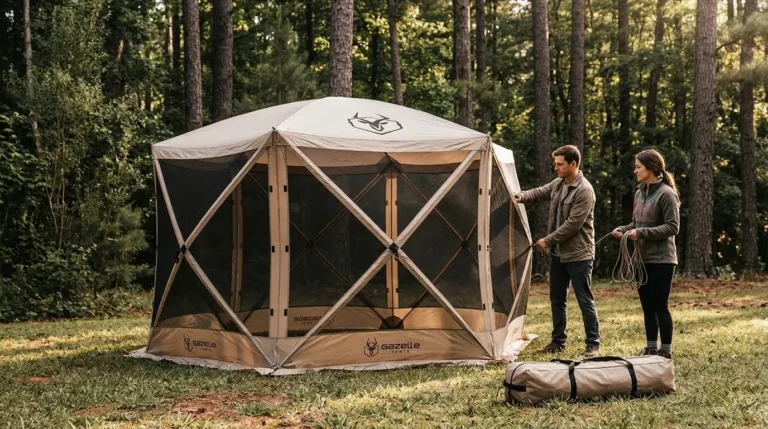
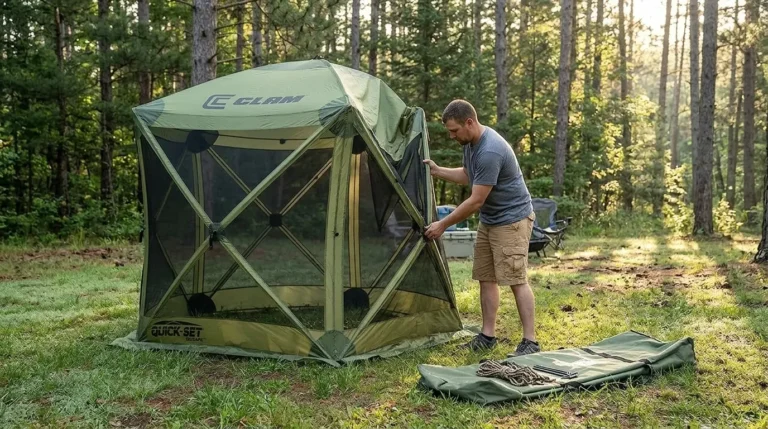
Hub shelters, including the Clam Escape screen tent, the Clam Venture screen tent, and the Gazelle G6, stand rock-solid once staked, so you can brush each wall panel with steady pressure. Pay extra attention around the wall hubs, where fabric layers overlap and moisture lingers. The 12×12 Vevor screen tent and Aoxun gazebo add zip-on wind cloths; unzip those, lay them flat on a clean tarp, and clean them like any coated fabric.
Spring-open screen rooms like the Alvantor screen house, the East Oak screen house tent pop up, and the Mars Explo are lighter, so stake them and add the sandbags before you start scrubbing. Their roofs use UV-protective coated fabric, so keep any vinegar solution on the mesh and rinse the roof with plain water and soap only.
The Coleman Skylodge portable screenhouse has a straight-leg frame with mesh walls hanging from a canopy, so lower the legs a step to reach the upper edge of each wall comfortably. For the DMH Outdoors tent, remove the hanging projection screen and the detachable mud mats first. Mud mats are a common mold spot because they sit on wet ground; wash them separately and dry them flat before reattaching.
How Do You Stop Mold from Coming Back on a Tent Screen?
You stop mold from coming back on a tent screen by drying the shelter completely before storage, storing it somewhere cool and dry in a breathable bag, and airing it out between trips. Mold needs moisture to grow, so moisture control is the whole game.
Drying is non-negotiable. The EPA’s guide to mold and moisture says wet items should be dried within 24 to 48 hours to prevent mold growth, and it recommends keeping indoor humidity below 60 percent, ideally between 30 and 50 percent. I apply both to gear storage: the shelter gets dried within a day of any wet trip, and it lives in a climate-controlled closet rather than a damp basement or a hot shed.
Store it loosely if you can. A breathable cotton storage sack or the original bag left slightly open lets trapped moisture escape. Never seal a screen house inside a plastic tote right after a trip, because any leftover dampness has nowhere to go.
Check the roof too. If your cleaning stripped some water repellency from the roof fabric, restoring it helps the whole shelter shed water and dry faster on the next trip. My how to waterproof a tent guide covers re-treating fabric, and my how to seam seal a tent guide covers refreshing seams, which matters on shelters with taped roof seams.
Finally, open the shelter in the backyard for an hour or two every couple of months during the off-season. That quick airing catches any problem early, while it is still a light mildew wipe instead of a full cleaning project.
How to Clean Mold from a Tent Screen FAQ
Can you clean mold from a tent screen with vinegar?
Yes, diluted white vinegar is one of the most useful tools for stubborn mildew spots and musty smells on tent mesh. Use it after a mild soap wash, let it sit for a few minutes, brush gently, and rinse thoroughly. Always pretest it on a hidden area of the fabric framing or skirt first to check for color changes, and keep it off coated roof fabric where possible. Make sure the shelter dries completely afterward, because leftover dampness invites new growth.
Will mold stains come completely out of tent mesh?
Not always. Light, fresh mildew usually lifts out completely with soap, gentle brushing, and a vinegar treatment. Older black mold that has worked into the weave often fades but leaves a faint shadow. Once the live growth is removed and the shelter is dry, a remaining stain is cosmetic and does not mean the mold is still active. Focus on removing the growth and preventing a return rather than chasing a perfectly spotless mesh.
Can I put a moldy tent screen in the washing machine?
No. Washing machines can snag and stretch mesh, damage seams, and strip water-repellent coatings, and dryers are even worse because heat can damage coatings and seam tape. Hand cleaning on a pitched shelter is gentler and more effective, especially for large screen houses whose panels would not fit in a washer anyway. The only exception is a small removable mesh accessory whose label specifically allows machine washing.
Is mold on a tent screen dangerous?
Mold can trigger allergy symptoms and breathing irritation, especially in people with asthma, allergies, or weakened immune systems. That is why I wear an N95 respirator, gloves, and sealed goggles while cleaning and work outdoors. Anyone with those health conditions should let someone else handle the cleanup. Once the mold is removed and the shelter is dry, it is safe to use again.
How do I prevent mold on a screen house tent between trips?
Dry it completely before storage, ideally within a day of any wet trip, and store it in a cool, dry, climate-controlled space in a breathable bag. Avoid sealed plastic bins and damp basements. Brush off dirt, leaves, and dead insects before folding, since organic debris holds moisture against the mesh. Airing the shelter out every couple of months in the off-season catches problems early.
Helpful Guides
- How to Fold a Pop Up Screen Tent
- How to Set Up a Screen House Tent
- Do Screen House Tents Let Dust In?
- How to Clean a Canopy Tent
When Should You Replace a Tent Screen Instead of Cleaning the Mold?
You should replace a tent screen, or the whole shelter, when mold has weakened the mesh so it tears easily, when coatings are peeling or sticky, or when the musty smell returns within days of a thorough cleaning. At that point the material itself is breaking down, and no amount of scrubbing will bring it back.
For everything short of that, the method in this guide works: protect yourself, brush dry, wash gently, rinse well, and dry completely. Most screen houses that come out of storage with mildew spots go right back into service after one careful afternoon.
If yours is past saving, my best pop up screen tent comparison covers ten current shelters, including which ones use tougher mesh and which roofs are easiest to keep dry. And for full care details on any single shelter, the pop up screen tent reviews hub links to every review.