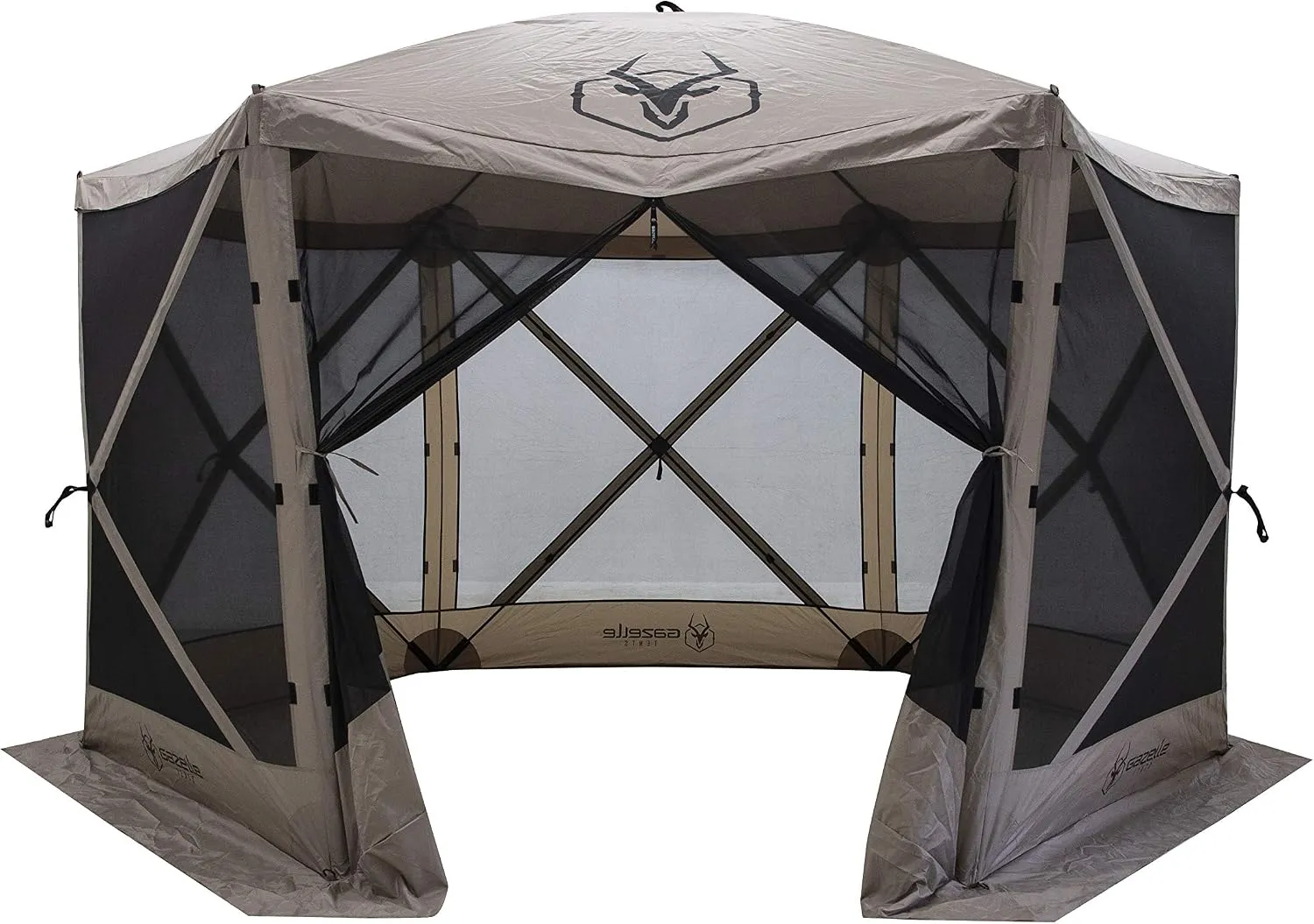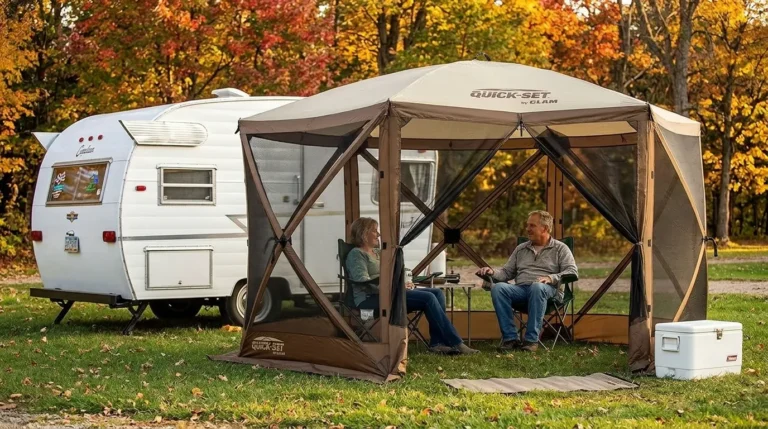


The Gazelle G6 was the shelter I packed for the trip with the worst forecast of the season, and that was not an accident. Following my earlier tests of the VEVOR screen tent, a big value hexagon that VEVOR itself says to take down in heavy rain, I wanted to see whether a premium hub with a specific waterproof rating could actually keep a camp kitchen dry. A line of afternoon showers rolled through right on cue. Under the G6’s roof, the stove stayed dry, the cards stayed playable, and the mesh never sagged.
This post contains affiliate links. As an Amazon Associate, I may earn commission from qualifying purchases at no extra cost to you.
The G6 is a six-sided pop-up hub gazebo from Gazelle Tents in a desert sand color, with a 210D Oxford roof rated waterproof to 2000mm, UV50+ protection, and Gazelle’s TriTech single-filament mesh. In my pop up screen tent guide, it earned the spot as the shelter to choose when rain is your main worry. Here is the full story, including the tradeoffs.
Overall Rating: 4.5/5
| Rating Question | Score (Out of 5) |
|---|---|
| How well did the roof keep rain out? | 4.8 |
| How tough did the mesh feel against snags? | 4.7 |
| How quick was it to set up alone? | 4.6 |
| How much room did it give for a table and chairs? | 4.4 |
| How steady was it in wind once staked? | 4.5 |
| How easy was it to carry and pack? | 4.1 |
| How confident are you in its long-term track record? | 4.2 |
What Are the Primary Pros and Cons of the Gazelle G6?
The primary pros of the Gazelle G6 are its 2000mm waterproof roof, tough TriTech mesh, and fast hub setup with more than 7 feet of center height, while the main cons are its 34-pound weight, premium price, and wind panels sold separately. It is the most weather-capable screen house in this hub, priced like it.
Pros
| 1. 210D Oxford roof rated waterproof to 2000mm |
| 2. UV50+ rated shell and roof |
| 3. TriTech single-filament mesh resists snags |
| 4. Stands over 7 feet tall at center |
| 5. Room for 8 people and a table |
| 6. Hub design pops up fast with no loose poles |
| 7. Top-of-wall flaps help seal optional wind panels |
Cons
| 1. 34 pounds packed |
| 2. Long cylindrical carry bag |
| 3. Premium price, about the same as the Clam Escape |
| 4. Wind panels sold separately |
| 5. Under 50 Amazon ratings so far |
| 6. Floor area of 85 square feet is smaller than it looks |
| 7. Only a 1-year limited warranty |
Those lists add up to a clear identity: the G6 is built for people who camp through weather rather than around it. The 2000mm rating is the only specific waterproof number in this hub, and the TriTech mesh felt the toughest when I dragged chairs against it. The cons are about cost and carry. If you are wondering how the G6 stacks up against every other option, my best pop up screen tents guide puts all ten side by side.
The Specs of the Gazelle G6
| Feature | Specification |
|---|---|
| Brand and model | Gazelle Tents G6, model GG602DS |
| Color | Desert Sand |
| Shape | 6-sided hub gazebo |
| Dimensions | 124 x 124 inches across, 86 inches tall |
| Max ceiling height | 84 inches |
| Floor area | 85 square feet |
| Capacity | 8 people and a table |
| Weight | 34 pounds |
| Roof and shell | 210D Oxford polyester, waterproof to 2000mm HH |
| UV rating | UV50+ |
| Mesh | TriTech single-filament mesh |
| Guylines | 6 |
| Wind panels | Optional, sold separately |
| Warranty | 1-year limited |
The spec I care about most is the 2000mm hydrostatic head rating. Most screen houses simply say water resistant. A 2000mm figure is a real, measurable claim, and in my rainy-weekend test, the roof backed it up.
How Well Does the Gazelle G6 Handle Rain?
The Gazelle G6 handles rain better than any other screen house in this hub, thanks to a 210D Oxford roof rated waterproof to 2000mm. During a series of afternoon showers, the roof stayed dry underneath, water ran cleanly off the hexagon’s edges, and nothing dripped through at the hub seams.
That matters because rain performance varies wildly in this category. Three of the shelters in my test, the Alvantor screen house, the East Oak screen house tent pop up, and the Mars Explo, list their fabric as not water resistant at all. They are excellent sun and bug rooms, but they are not where you want to be when the sky opens. The Aoxun gazebo lists its fabric as waterproof, but without a specific rating.

Two caveats keep this honest. First, the walls are mesh, so wind-driven rain still blows through on the weather side. That is where the G6’s top-of-wall flaps come in: they are designed to secure Gazelle’s optional wind panels and keep moisture from sneaking in over the top. Second, no screen house is a storm shelter. When the showers turned to thunder on day two, we moved to the cars.
After rain, drying matters as much as the roof. I let the G6 stand open in the sun before packing it, because the EPA’s mold and moisture guide says wet items should be dried within 24 to 48 hours to prevent mold growth. If seams on any shelter start to weep with age, my how to seam seal a tent guide covers refreshing them.
How Fast Does the Gazelle G6 Set Up?
The Gazelle G6 sets up in about a minute once you know the hub routine: stand the shelter on its roof, open it, pull each of the six walls out by its center hub, and push the roof up from inside. It is the same pull-the-wall method used by the Clam shelters and the 12×12 hexagons, and it is the most controlled setup style in this hub.
My first setup took around three minutes as I learned which way the roof should face. After that, it was quick and repeatable, even solo. The hubs lock with a satisfying pop, and the shelter stands on its own while you stake it.

Compared with a telescoping frame like the Coleman Skylodge portable screenhouse, which unfolds like a canopy and needs room to expand, the G6 opens in place, which is a real advantage on tight sites. The Coleman is lighter, though, and some people find canopy-style legs more familiar.
Anchoring takes another five minutes. The G6 has six guyline points, one per wall. I stake each one three to four feet out at an angle, and on soft ground I double up stakes on the windward side.
Pick your site with care, too. Leave No Trace’s guidance to camp on durable surfaces applies to screen houses as much as sleeping tents, and the G6’s wide footprint is easiest on established, level tent pads.
How Much Room Is Inside the Gazelle G6?
The Gazelle G6 gives you 85 square feet of floor inside a 124-inch hexagon, with a center height of 86 inches and a listed maximum ceiling of 84 inches, which is enough for eight people seated around a table. The tall walls make the space feel bigger than the floor number suggests.
In my table test, a 6-foot folding table and six camp chairs fit with a comfortable walkway, and eight chairs fit if everyone pulled in close. The walls rise fairly straight before the roof slopes, so chairs can sit near the mesh without anyone ducking.

If your group is bigger, or you want a long banquet table, the 13×9 rectangle of the DMH Outdoors tent uses space more efficiently than any hexagon. If your group is smaller, the 9×9 Clam Venture screen tent gives you a premium hub in a lighter package.
One practical tip: the G6 has a hanging point at the roof center, perfect for a battery lantern. A rug inside on wet weekends kept mud off our boots and out of the cooler.
Bugs were never an issue with the doors zipped and the skirt staked flat. I still used repellent walking to and from the shelter at dusk; the EPA’s repellent finder helps you choose a registered product by active ingredient and protection time.
How Does the Gazelle G6 Compare to the Clam Hub Shelters?
The Gazelle G6 compares closely with Clam’s hub shelters, winning on rain rating and mesh toughness, while the Clam Escape screen tent wins on footprint and rating history and the Clam Venture wins on weight. All three are premium hub designs with optional wind panels, so the decision comes down to weather, group size, and carry.
| Premium Hub | Footprint | Weight | Roof Rating | Mesh | Capacity |
|---|---|---|---|---|---|
| Gazelle G6 | 124 in. across, 85 sq ft | 34 lb | Waterproof to 2000mm | TriTech single-filament | 8 with table |
| Clam Escape | 11.5 x 11.5 ft, 94 sq ft | 37 lb | Water resistant, taped seams | No-see-um | 6 with table |
| Clam Venture | 9 x 9 ft, 63.5 sq ft | 26 lb | Water resistant, taped seams | No-see-um | 4 with chairs |
My take: in a dry, buggy climate, the Clam Escape is the better all-rounder. Where afternoon storms are routine, the Gazelle G6 is the one I would buy. For couples who want a premium hub that is easier to carry, the Clam Venture makes more sense than either.
Frequently Asked Questions About the Gazelle G6
Is the Gazelle G6 waterproof?
The roof is. Gazelle rates the G6’s 210D Oxford roof and shell as waterproof to 2000mm hydrostatic head, and it kept the inside dry through afternoon showers in my testing. The walls are mesh, so blowing rain still passes through on the weather side. Gazelle’s optional wind panels, secured with flaps at the top of each wall, block that when the weather turns.
How many people fit in the Gazelle G6?
The Gazelle G6 is rated for eight people and a table. In practice, six people around a 6-foot folding table fit with a comfortable walkway, and eight fit if everyone pulls their chairs in. The floor area is 85 square feet, but the tall walls and 86-inch center make it feel more spacious than that number suggests.
Does the Gazelle G6 come with wind panels?
No, wind panels for the G6 are sold separately. The shelter does include flaps at the top of each wall that secure the panels and help keep moisture out once they are attached. If you want walls included in the box, the VEVOR and Aoxun 12×12 hexagons each ship with six wind cloths, though they cannot match the G6’s rain rating.
How heavy is the Gazelle G6?
The Gazelle G6 weighs 34 pounds and packs into a long cylindrical carry bag with straps. It is a two-handed carry, similar to other premium hub shelters. If you regularly walk a long way from parking, consider a wagon, or look at lighter shelters like the 26-pound Clam Venture or a spring-open screen room.
Is the Gazelle G6 worth the price?
It is worth it if you camp where rain is common and want a screen house that keeps the inside genuinely dry. The 2000mm roof and tough TriTech mesh are real upgrades over most of the category. If your trips are mostly dry, you can get more space for less money elsewhere, and the Clam Escape offers a longer track record at a similar price.
Helpful Guides
- How to Fold a Pop Up Screen Tent
- How to Set Up a Screen House Tent
- Do Screen House Tents Let Dust In?
- How to Clean Mold from a Tent Screen
- How to Waterproof a Tent
Should You Buy the Gazelle G6?
Yes, buy the Gazelle G6 if rain is a regular part of your camping and you want a fast hub screen house with a roof that genuinely keeps the inside dry. Its 2000mm rating, tough mesh, and tall walls make it the most weather-ready shelter in this hub.
Skip it if your trips are mostly dry, you want wind panels in the box, or you need the lightest carry. In those cases, the Clam Escape, a 12×12 hexagon with included cloths, or a spring-open room is a better fit, and my pop up screen tent guide compares them all.