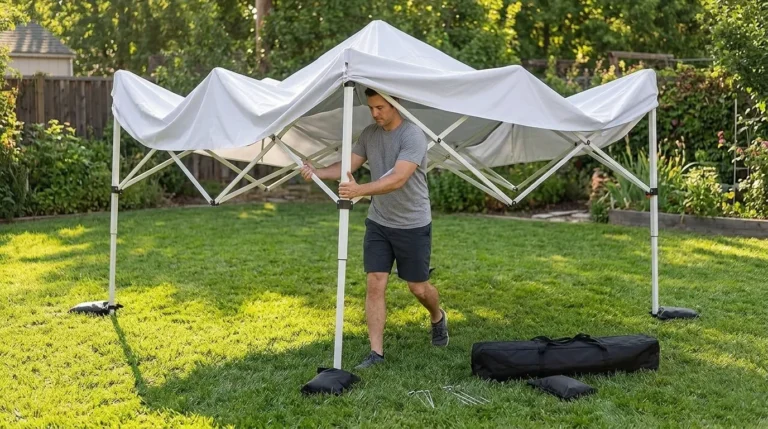


How to fold a pop up tent and why is it the ultimate test of a camper’s patience? I have been that person. You know the one I am talking about. It is Sunday morning, the sun is beating down, and you are in the middle of a crowded campground trying to shove a giant, spring-loaded piece of fiberglass and nylon into a bag that is clearly three sizes too small. You have watched the three-second setup videos and felt like a pro on Friday night, but now that it is time to leave, your tent has transformed into a stubborn, circular beast that refuses to cooperate. The direct answer to why this is so difficult is that a pop up tent stores a massive amount of kinetic energy in its frame. If you do not follow the specific geometric sequence required to release that tension, the tent will simply fight you until something snaps. I have seen more than one frustrated camper leave their half-folded tent in a dumpster because they just could not figure it out.
I am writing this guide because I want to save you from that embarrassment. Folding a pop up tent is not about strength or force; it is about technique and muscle memory. In my years of testing gear for my best pop up tent guide, I have realized that once you understand the figure eight secret, you can pack up your entire camp in under a minute. It is the most valuable skill you can have if you frequently visit music festivals or do quick overnight trips where time is of the essence. We are going to move past the vague instructions printed on the inside of the tent bag and talk about what it actually feels like to wrestle these things into submission.
According to data from outdoor retailers, the number one reason for warranty returns on pop up tents is not manufacturing defects, but damage caused by improper folding. People try to force the poles in directions they were never meant to go, and that is how you end up with a twisted or broken frame. My goal today is to walk you through the process as if we were standing there together. I will be referencing specific models I have reviewed, like the Coleman pop up tent review and the Ayamaya pop up tent review, to show you how different sizes require slightly different approaches. By the time you finish reading this, you will be the person helping your neighbors fold their tents instead of being the one everyone is secretly laughing at from across the field.
How do you actually master the figure 8 fold without breaking your tent poles?
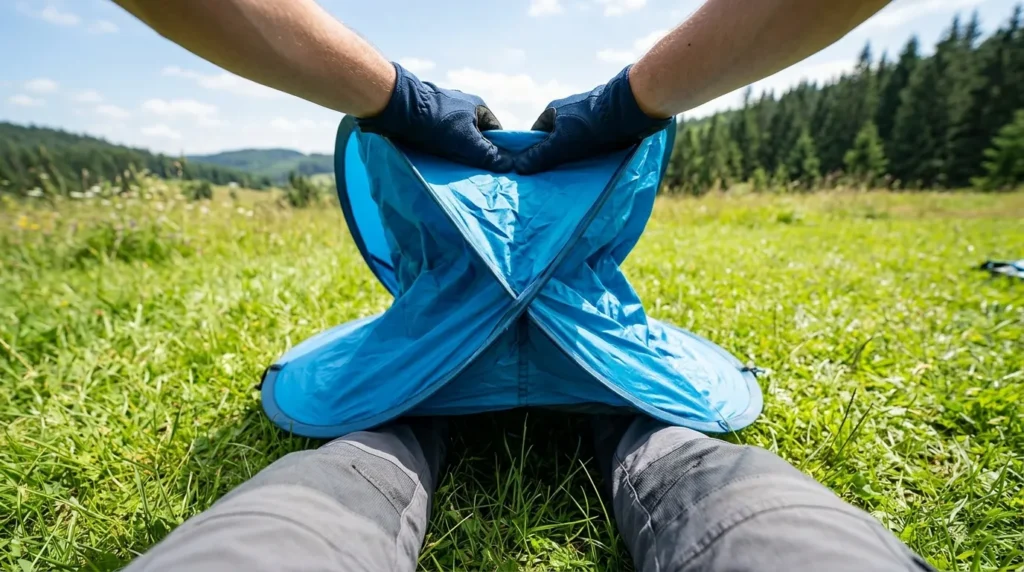
The direct answer to mastering the fold is that you must force the tent into a taco shape before you ever attempt the figure 8 twist. I have spent countless mornings practicing this in my yard, and the biggest mistake I see is people trying to twist the tent while it is still flat on the ground. You have to start by gathering all the top poles together until the tent is folded in half like a giant, nylon taco. Once you have it in that shape, you stand the taco up on its end. This is where the magic happens. You place one hand on the very top of the curve and push it down toward your feet. As the frame begins to resist, you give it a slight inward twist. If you are doing it right, the tent will naturally want to form two overlapping circles. It feels less like a struggle and more like a fluid motion once you get the hang of it.
I found that larger tents, like the one I discussed in my Oileus pop up tent review, can be a bit more intimidating because of the sheer amount of fabric. With a 4-person tent, you really have to use your knees to pin the bottom of the taco to the grass while you work the top. I always tell people to think of it as a dance between you and the fiberglass. If the tent feels like it is about to snap, stop and let it spring back open. You should never have to use 100 percent of your strength. According to the structural guides from many tent manufacturers, these frames are built to withstand high levels of torsion, but they have a specific limit if they are bent the wrong way. If you want to understand more about the materials that allow for this kind of bending, you should read my guide on what is a pop up tent, where I break down the science of spring steel and fiberglass.
One trick I use for the more stubborn hub-style setups, which I covered in my Teton sports vista quick tent review, is to make sure all the air is squeezed out before I start the fold. If there is a pocket of air trapped in the corner, the tent will feel much stiffer than it actually is. I always leave the doors unzipped about halfway to give that air an escape route. As I mentioned in my main guide to the best pop up tent, the circular style tents are much more sensitive to this air pressure than the hydraulic hub models. Once the air is out and you have your figure 8 circles formed, you just slide one circle over the other. At this point, the tent should be a tight, flat disc that fits perfectly into the bag. It is a very satisfying feeling when that last bit of tension releases and the gear finally cooperates with you.
What are the biggest mistakes you need to avoid to keep from ruining your tent frame?
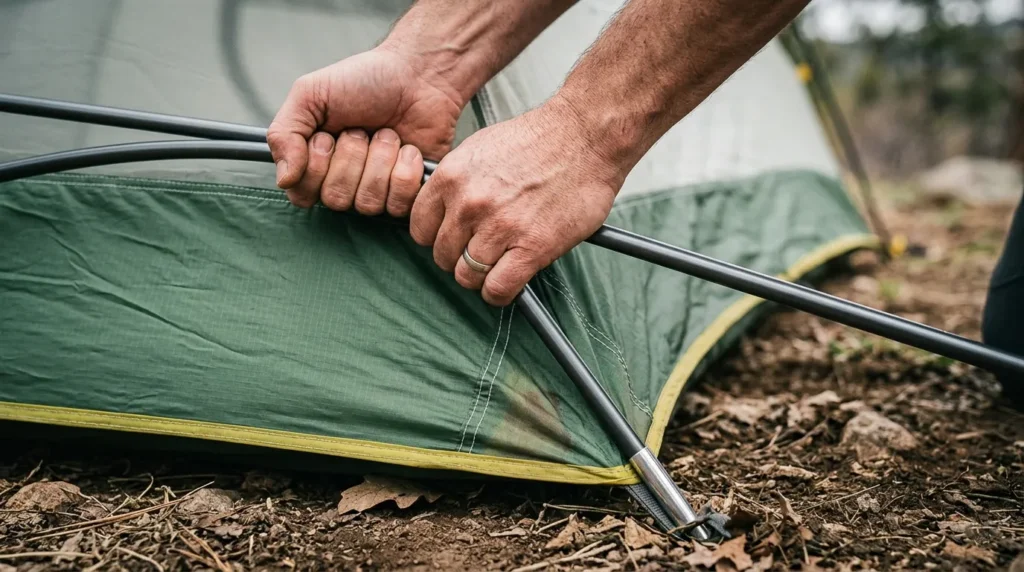
The direct answer to why most people fail at folding is that they try to use raw strength to force the fiberglass in a direction it was never meant to go. I have learned that the frame of a circular tent is remarkably strong but only in specific planes of motion. If you try to fold it like a simple piece of paper, you will likely put too much stress on the joints and cause the fiberglass to splinter or the safety strap to snap. I have seen this happen most often with people who skip the taco fold step and try to jump straight to the figure 8 twist. Another massive mistake is fumbling with the tent while the wind is blowing. A pop up tent is basically a giant kite until it is compressed, so if you are trying to fold it solo during a gusty morning, the wind can actually catch the frame and twist it in a way that causes permanent damage.
I found that ignoring the zippers is another common pitfall. I always tell people in my best pop up tent guide that you must leave your doors at least partially open. If you zip everything shut, you are trapping a giant balloon of air inside. As you try to compress the frame, that air pressure pushes back against you, making the poles feel much stiffer and more brittle than they actually are. According to various gear repair specialists, many reported pole failures are actually caused by the resistance from trapped air rather than a defect in the fiberglass. When I was doing my Toogh tent review, I noticed that the unique hexagon shape requires even more attention to this because it has more corners where air can get stuck.
I also want to warn you about the danger of forcing a stuck joint on the hub style models. If you have moved away from circular tents and are using something like the one I described in my Night Cat pop up tent review, the mistakes are different but just as costly. These hydraulic or manual hubs have specific pivot points. If a piece of fabric gets caught in the hinge and you keep pushing, you can bend the aluminum arms. I always do a quick visual check of each leg before I apply any downward pressure. It only takes one small snag to ruin a high tech hub. The convenience of these tents depends on the mechanism being in perfect shape. If you feel any hard resistance, stop immediately and look for a snag. Guided finesse will always beat brute force when it comes to packing up a campsite.
Why is it essential to check for trapped air and moisture before you zip the bag shut?
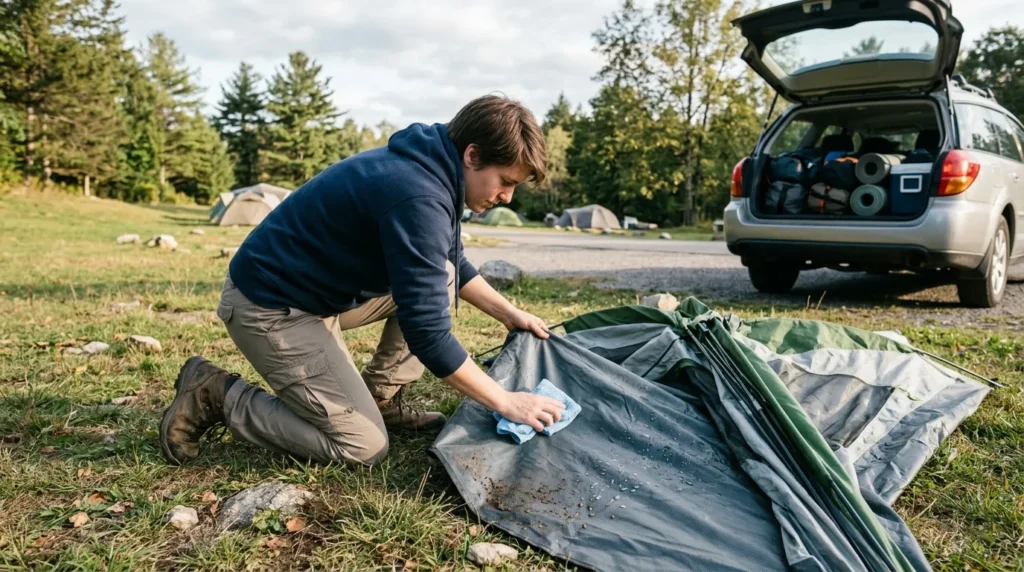
I have seen it countless times where a camper gets the tent folded perfectly but then spends ten minutes wrestling with the zipper on the carry bag. The direct reason for this struggle is almost always moisture or air pockets that have expanded the volume of the tent fabric. When I am out in the field, I make it a habit to kneel on the folded tent for a few seconds before I even try to put it in the bag. This helps squeeze out every last bit of oxygen from the layers of polyester. This is especially important for tents with a lot of mesh, like the one I feature in my Moon Lence pop up tent review, because the mesh can act like a sponge for morning dew. If you pack that moisture inside a tight circular bag, you are basically creating a petri dish for mold and mildew.
I cannot emphasize enough how much damage a little bit of water can do to your waterproof coatings. I’ve mentioned this in my best pop up tent guide, but the polyurethane coatings on budget tents are particularly sensitive to hydrolysis. This is a chemical reaction where water breaks down the bond between the coating and the fabric. If you pack your tent wet and leave it in the trunk of a hot car, you will wake up the next weekend to a tent that feels sticky and smells like old gym socks. Once that happens, the tent is effectively no longer waterproof. According to technical guides on tent maintenance from organizations like the Boy Scouts of America, drying your gear is the single most important step for longevity. Even if it is not raining, the humidity from your breath during the night is enough to cause issues if not aired out.
If you are using a model with a thicker floor, like the one I analyzed in my Hewolf pop up tent review, you really have to be careful about the grit and mud that sticks to the bottom. I always carry a small pack towel or an old rag to wipe down the bathtub floor before I start the folding process. If you fold that mud into the tent, the sharp grains of sand can act like sandpaper against your windows and rainfly while the bag vibrates in your car. It might seem like a lot of extra work when you just want to get home, but taking three minutes to clean and dry your tent will save you hundreds of dollars in the long run. Proper storage starts with a clean fold, and a clean fold starts with making sure you are not packing up half the campground along with your gear.
How does the teardown process change if you are using a teepee or glamping style hub tent?
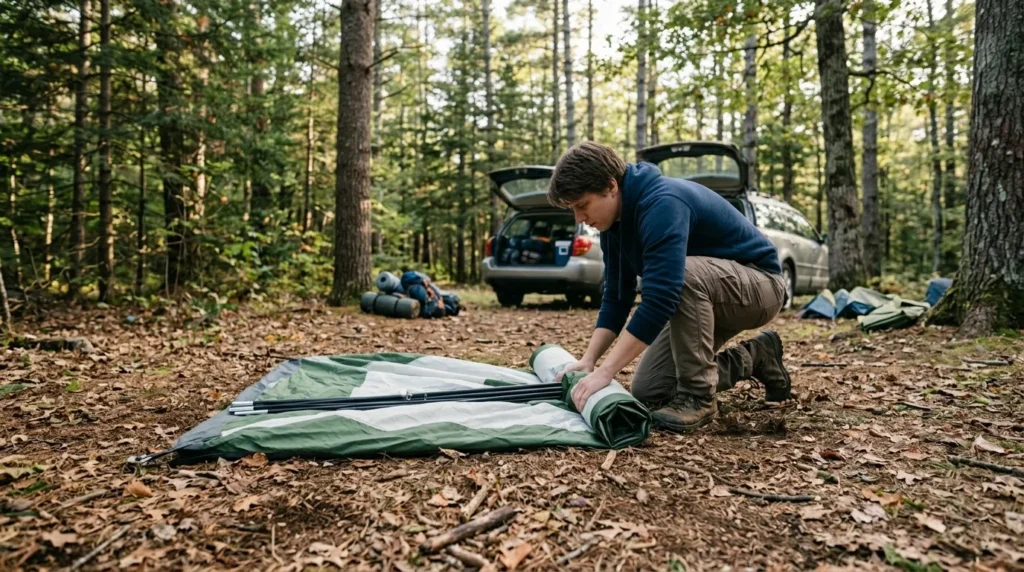
While most of this guide focuses on the circular throw tents that require the figure 8 twist, I want to address the growing category of glamping and teepee style instant tents. I have noticed a massive surge in popularity for these models because they offer way more headroom, but their teardown process is fundamentally different. If you have been following my gear updates, you know I spent some time with the model in my Vidalido tent review, and that specific teepee shape requires a different kind of finesse. You are not dealing with a spring loaded frame here. Instead, you have a central hub that acts like the skeleton of the tent. To fold these, you have to release the tension on the main vertical poles first. If you try to fold the fabric while the hub is still locked, you are going to put massive strain on the hinges.
One expert insight I can share about these taller hub tents is that the fabric management is much more important than with a small dome. Because there is so much more material, you have to be very careful to fold the walls inward toward the central pole. I usually lay the tent flat on its side and roll the fabric as tightly as possible around the bundled poles. This is very different from the taco fold I described for circular tents. If you are using a larger setup for your family, like the one I analyzed in my Bushnell instant tent review, the teardown can be a bit of a workout. These tents often use a heat shield fabric that is quite stiff, so you really have to use your body weight to compress the air out as you roll it toward the bag.
I always tell people that if you find yourself struggling with the mechanics of how these different frames function, you should take a look at my foundational guide on what is a pop up tent. That article breaks down the engineering of the hubs and frames so you can visualize what is happening inside the sleeves while you fold. Whether you are using a stylish teepee or a heavy duty family hub, the rule of thumb remains the same: never force a joint that does not want to move. Most of these high tech frames are designed to be intuitive. If you are sweating and swearing at the hub, you probably missed a small release button or a locking pin. Taking thirty seconds to step back and look at the frame will save you from a very expensive repair bill.
What is the best way to store a large pop up tent in your vehicle without taking up all the space?
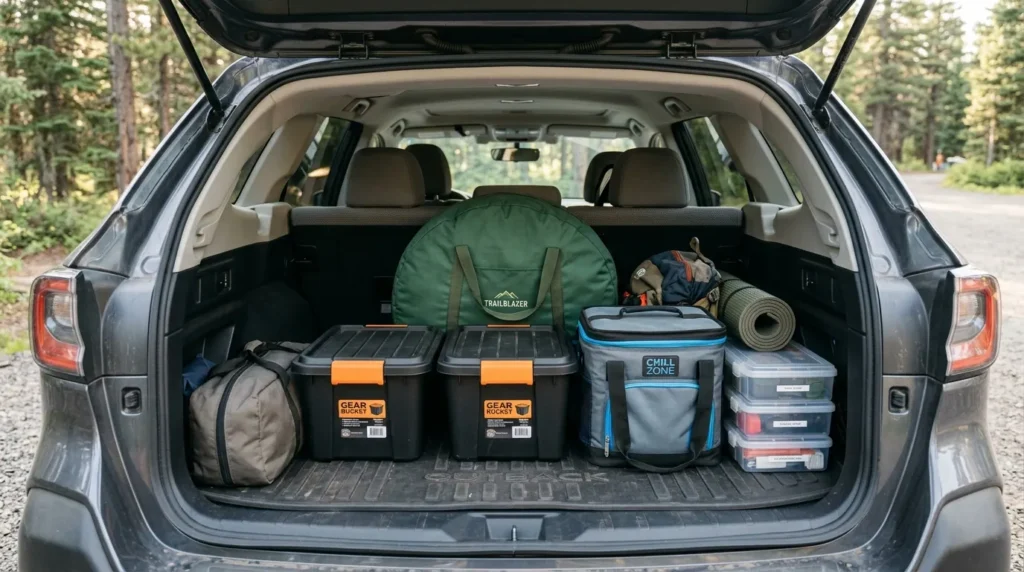
Once you have mastered the figure 8 fold and your tent is finally back in its bag, the next challenge is getting it home. I have spent years trying to organize my car trunk to accommodate these awkward shapes, and I have learned that your packing order is the key to a stress free drive. If you are using a circular throw tent, you have a giant, flat disc to deal with. The direct answer to the storage problem is that your tent should always be the first thing in or the last thing in, never the middle. I prefer to slide my circular tent bag in first, laying it flat on the floor of the trunk. This allows me to stack my heavier gear like coolers, water jugs, and storage bins directly on top of it. Because the fiberglass frame is under tension inside the bag, it is actually quite strong and can handle a surprising amount of weight without deforming.
However, if you have a smaller car, you might find that the flat disc is too wide for the floor. In that case, I suggest sliding the tent bag vertically behind the rear seats. This uses up the dead space that is usually left between your bags and the seat backs. According to professional packing guides for overlanders and car campers, utilizing these vertical gaps is the best way to keep your center of gravity low and your gear organized. If you opted for a cylindrical hub tent instead of a circular one, your life is going to be much easier. These can be tucked into the side of the trunk or even strapped to a roof rack if you are out of room inside.
I’ve discussed the trade offs of these different shapes in my main best pop up tent guide, and the pack size is often the deciding factor for most people. I always recommend doing a dry run in your driveway before you head out on a trip. There is nothing worse than finishing a great weekend and realizing your gear no longer fits in the car because you did not fold the tent as tightly as the factory did. If you find that the tent bag is bulging, go back to the figure 8 method and try to get a tighter twist. Every inch you save in the fold is an inch of extra visibility in your rearview mirror on the way home. Proper storage is not just about convenience; it is about safety and making sure your expensive gear does not get crushed or torn by other heavy items in your trunk.
Frequently Asked Questions: Mastering the fold and tent maintenance.
Can a pop up tent pole be repaired if it snaps during a bad fold?
The honest answer is that it is very difficult because the poles are sewn into the fabric sleeves. If a fiberglass pole in a circular throw tent snaps, it often splinters, which can easily tear the tent walls or the rainfly. I have seen people use heavy duty duct tape and a small splint to get through a weekend, but the tent will never fold correctly again once a pole is compromised. If you are using a hub style tent, you can sometimes order replacement pole segments from the manufacturer, but for the budget throw tents, a snapped pole usually means the tent has reached the end of its life. This is why I am so obsessive about teaching the proper technique so you do not put that kind of stress on the frame.
Is it easier to fold a hub style tent than a circular throw tent?
In my experience, yes, it is much more intuitive. A hub style tent functions almost exactly like an umbrella. You release the locks and the poles fold at the joints. There is no confusing twist or figure 8 motion required. However, hub tents are usually bulkier and heavier because of the mechanical joints. Circular throw tents are the ones that cause the most frustration for beginners, but once you have the muscle memory for the twist, they can actually be faster to pack away than a hub tent. If you are someone who hates gear puzzles, I would definitely suggest looking at the hub models I feature on my site.
How many times should I practice folding my tent before my trip?
I always tell people to practice at least five times in their backyard or a local park. You do not want your first time folding a spring loaded tent to be in a crowded campground while people are watching you. The goal is to reach a point where you do not have to think about the steps. You want that figure 8 twist to be a natural motion. According to learning science, muscle memory for physical tasks like this usually sets in after a few dozen repetitions. If you can fold it three times in a row without fumbling, you are ready for the field.
What should I do if the tent absolutely will not fit back into the bag?
This is almost always caused by trapped air. If your tent is bulging and the zipper on the bag will not close, take the tent back out and unroll it. Make sure all the doors and windows are open halfway. Lay the tent flat and crawl across it with your knees to push the air toward the openings. Once the fabric is flat and lifeless, try the fold again. I have found that taking those extra two minutes to purge the air makes the difference between a tent that slides into the bag and one that you have to fight with for twenty minutes.
Can sand or dirt in the hydraulic hub prevent the tent from folding?
Absolutely. This is a common issue with tents like the ones in my Night Cat or Hewolf reviews. The hydraulic hubs have tight tolerances, and a few grains of abrasive sand can jam the mechanism or prevent the poles from clicking into their folded position. If you have been camping at the beach, I always recommend using a can of compressed air or a soft brush to clean out the hub before you try to close it. Never force a hydraulic hub if it feels gritty or stuck, as you can easily bend the internal piston or snap a plastic casing.
Why mastering the fold is the best gift you can give your future self
At the end of the day, the magic of a pop up tent is only as good as your ability to pack it back up. I have spent a lot of time talking about the figure 8 secret because I truly believe it is the difference between loving your gear and hating it. When you can roll into a campsite, set up in seconds, and then pack up just as fast on Sunday morning, you are maximizing the time you spend actually enjoying the outdoors. That is the whole point of camping, right? We want to spend less time fumbling with gear and more time around the fire or on the trail.
The direct answer to whether you should master these techniques is that it protects your investment and your sanity. A well folded tent lasts longer, stays drier, and takes up less room in your car. If you are still on the fence about which setup to buy, I highly suggest going back to my best pop up tent guide to see which mechanism fits your style. Whether you go with the classic Coleman or a high tech hub, the information in this guide will ensure you are never the person struggling in the parking lot.
I am going to continue adding more specific tips and reviews to the site, so make sure to check back for my upcoming deep dives into individual models. Camping should be about freedom and ease, and once you master the fold, a pop up tent is the ultimate tool for that lifestyle. I will see you out there on your next stress free adventure.