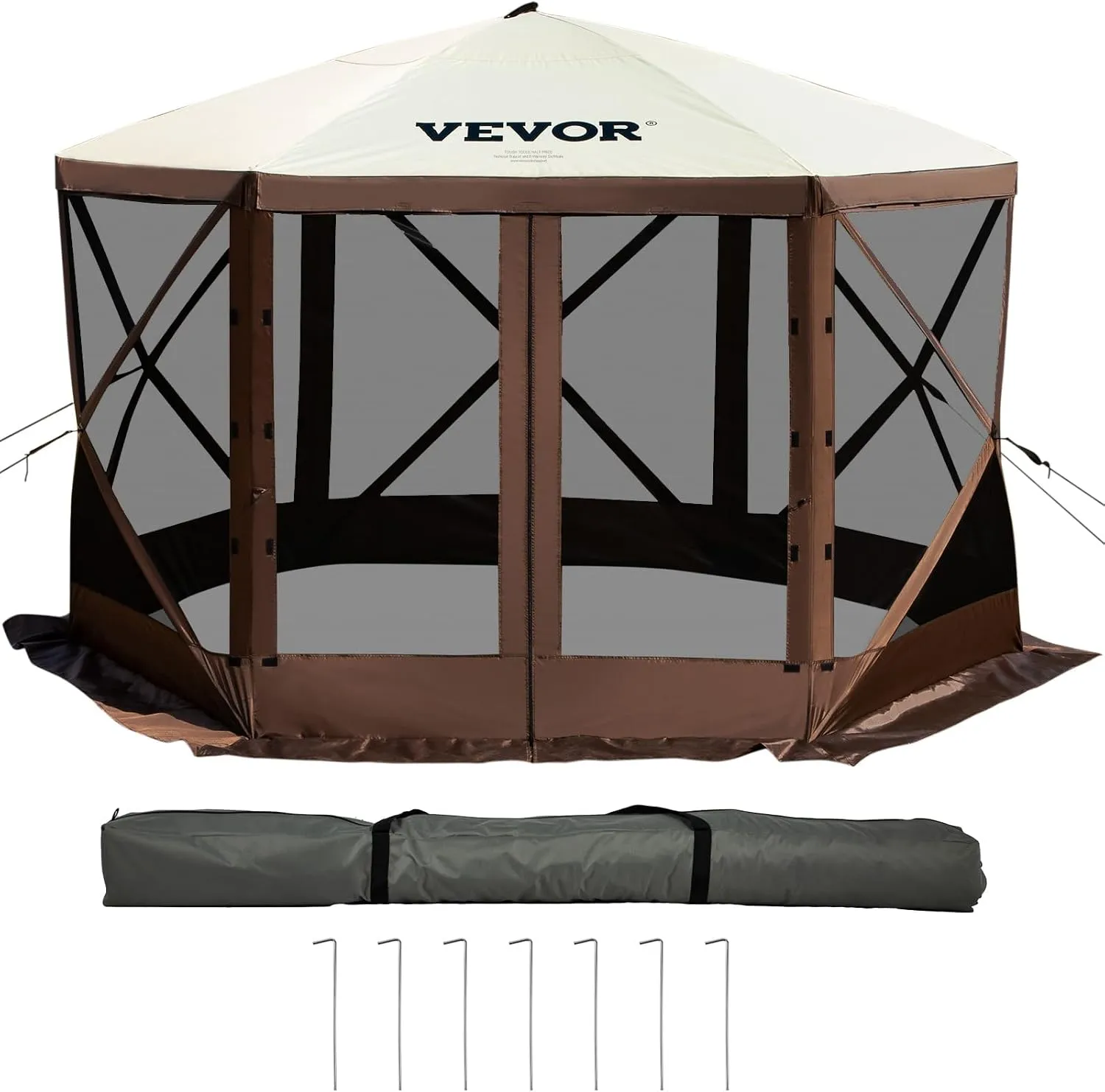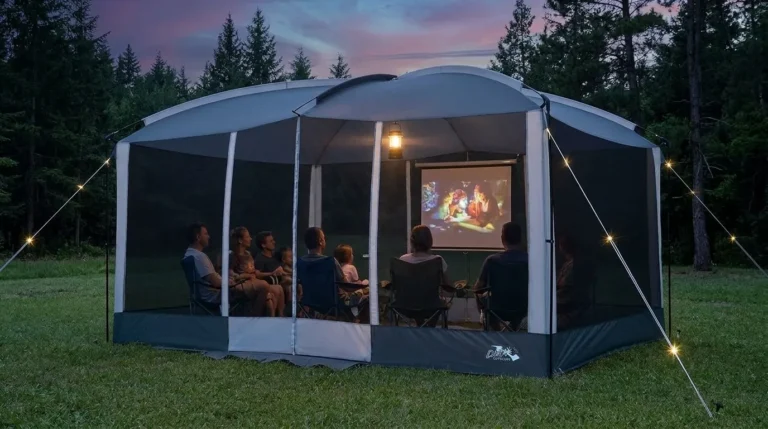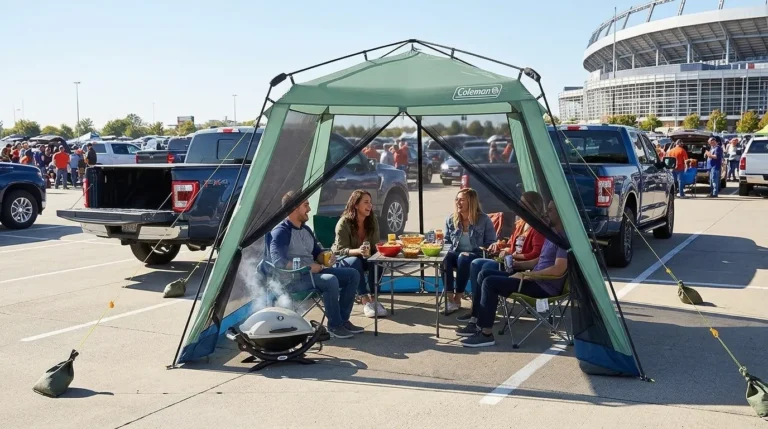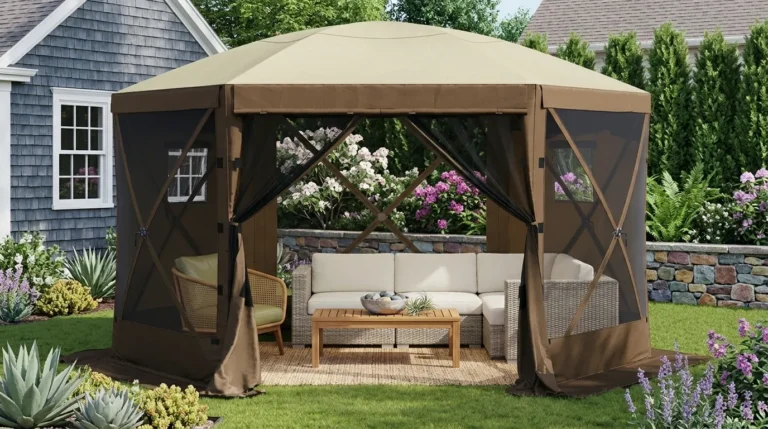
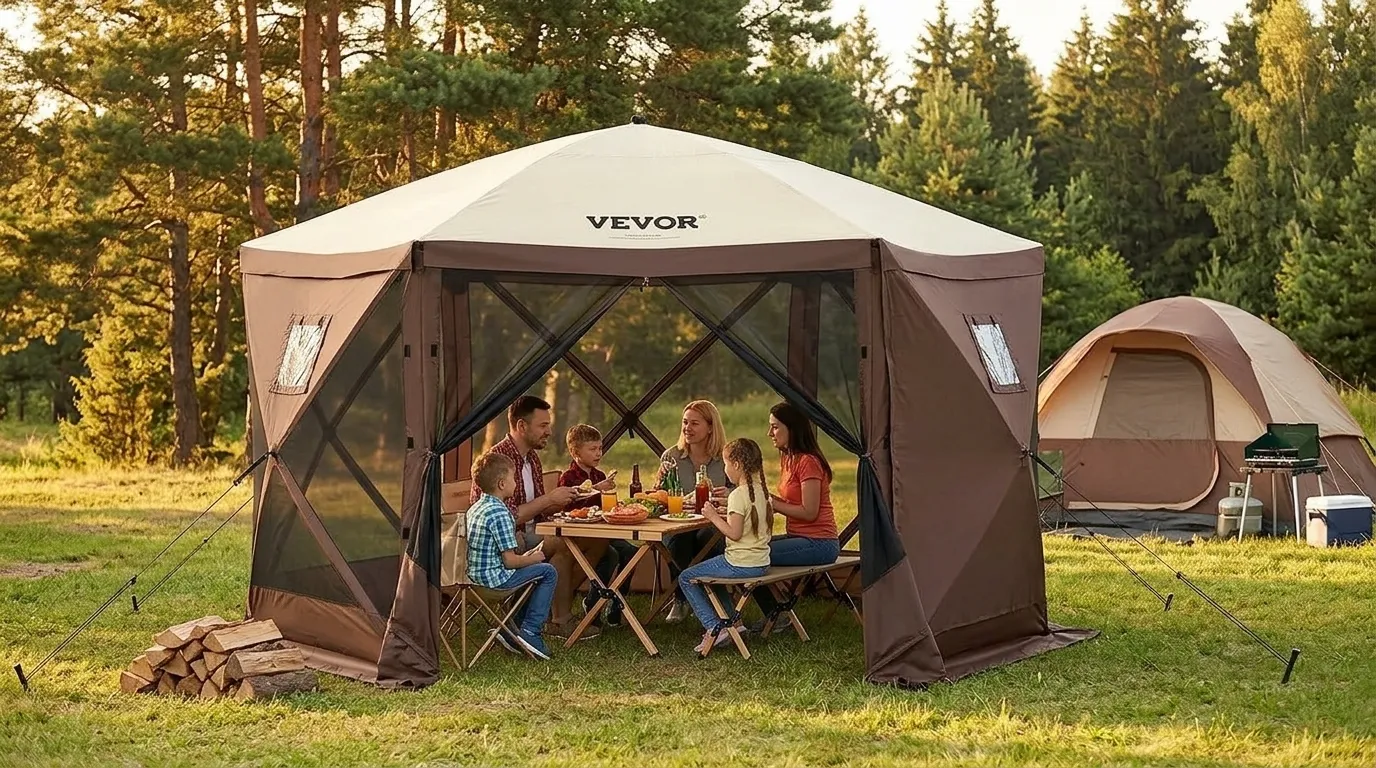

The VEVOR screen tent arrived in a box heavy enough that my delivery driver asked if I had bought a grill. Inside was a 12×12 hexagonal hub shelter, six zip-on wind cloths, two door frame poles, and a bundle of stakes and guy ropes. After my earlier tests of the Alvantor screen house, a 12-pound spring room built for patios, this felt like moving from a beach umbrella to a backyard pavilion. The question was whether a mid-priced gazebo with walls in the box could keep up with the premium hub shelters on a real family campout.
This post contains affiliate links. As an Amazon Associate, I may earn commission from qualifying purchases at no extra cost to you.
The VEVOR is a six-sided pop up gazebo screen tent with 300D Oxford fabric, B3 mesh, a steel inner structure, and six privacy wind cloths that zip on wherever you need them. I picked it as the best option for big groups in my pop up screen tent guide, and this review covers where it earns that spot and where it falls short of the pricier shelters.
Overall Rating: 4.2/5
| Rating Question | Score (Out of 5) |
|---|---|
| How easy was it to set up with one person? | 4.2 |
| How much room did the 12×12 give a group? | 4.7 |
| How useful were the included wind cloths? | 4.7 |
| How well did the mesh keep bugs out? | 4.4 |
| How steady was it in wind once staked? | 4.1 |
| How well did it handle a rain shower? | 3.8 |
| How solid did the fabric and hardware feel? | 3.7 |
What Are the Primary Pros and Cons of the VEVOR Screen Tent?
The primary pros of the VEVOR screen tent are its 144-square-foot footprint, six included wind cloths, and mid-range price, while the main cons are its 32-pound weight, a lower star rating than the premium hubs, and a brand recommendation to stop using it in heavy rain or storms. It is a value shelter that gives you the most features per dollar in this hub.
Pros
| 1. 12×12 hexagon with 144 square feet of floor |
| 2. Six zip-on wind cloths with windows included |
| 3. 7.5-foot max ceiling height |
| 4. Steel inner structure feels sturdy once staked |
| 5. 300D Oxford fabric with B3 mesh |
| 6. Two-sided zipper and two door frame poles |
| 7. Amazon’s Choice with 3,200+ ratings |
Cons
| 1. 32 pounds before adding the wind cloths |
| 2. 4.1-star average trails the premium hubs |
| 3. Brand advises taking it down in heavy rain or storms |
| 4. No warranty terms listed |
| 5. Fabric and hardware feel a step below Clam and Gazelle |
| 6. Door frame poles add a setup step |
| 7. Long 75-inch bag needs trunk length |
Those lists come down to one trade: features versus refinement. You get walls, space, and a steel frame for the money, but the stitching, zippers, and fabric feel feel more budget than premium. For a family that camps a few weekends a year and wants privacy panels without buying them separately, that trade is easy to accept. My best pop up screen tents guide shows exactly where this sits against the other nine shelters.
The Specs of the VEVOR Screen Tent
| Feature | Specification |
|---|---|
| Brand and size | VEVOR 12 x 12 ft, 6-sided, Brown |
| Floor area | 144 square feet |
| Peak height | 90 inches (7.5 ft max ceiling) |
| Wall height | About 71 inches |
| Capacity | Up to 8 people |
| Weight | 32 pounds |
| Packed size | About 75 x 7 inches |
| Fabric | 300D Oxford with B3 gauze netting |
| Frame | Steel inner structure, hub design |
| Water resistance | Water resistant |
| Doors | Two-sided zipper door, 2 door frame poles |
| Wind cloths | 6 included, each with a window and vent |
| Included | Tent, ground stakes, storage bag, 5 guy ropes, 2 door frame poles, 6 wind cloths |
| Other options | 6×6 to 15×15 ft; 4, 6, 8, and 13-sided sets |
The numbers that matter most are the 144 square feet and the six wind cloths. Most screen houses make you choose between space and walls, or buy panels later. The VEVOR bundles both, which is why it suits big families so well.
How Do You Set Up the VEVOR Screen Tent?
You set up the VEVOR screen tent by spreading it out, pulling each side panel open by its hub strap, pulling the top pole down to lock the roof, installing the two door frame poles, and then staking every side with ground stakes and storm ropes. The first setup took me about ten minutes; by the third, the shelter itself took a couple of minutes, plus anchoring.
The hub method is the same idea as the Clam shelters, with two extra steps. After the walls pop out, VEVOR’s instructions say to grasp the fiber pole at the top and pull it down to set the roof, without pulling on the plastic hook and while standing clear of the middle of the top. Then the door frame poles slide into place and attach with ties, which keeps the door opening square and the zipper from straining.

Compared with a spring-open room like the Mars Explo, this is slower and more physical. But it is also more controlled. You never have a whole frame flexing in your hands, and once the hubs lock, the shelter stands on its own while you stake it.
The weight is the main setup challenge. At 32 pounds, carrying the bag from the car and spreading out the shelter is a real effort. The Coleman Skylodge portable screenhouse weighs about half as much and unfolds like a canopy, so if lifting is a concern, that is the easier frame to manage solo. For the VEVOR, I recommend a helper for the first setup simply to learn the sequence.
Anchoring matters more than on most shelters, because the six wind cloths turn this into a sail. I stake all sides and run all five guy ropes before zipping on a single cloth.
How Much Room Does the VEVOR Screen Tent Give a Big Group?
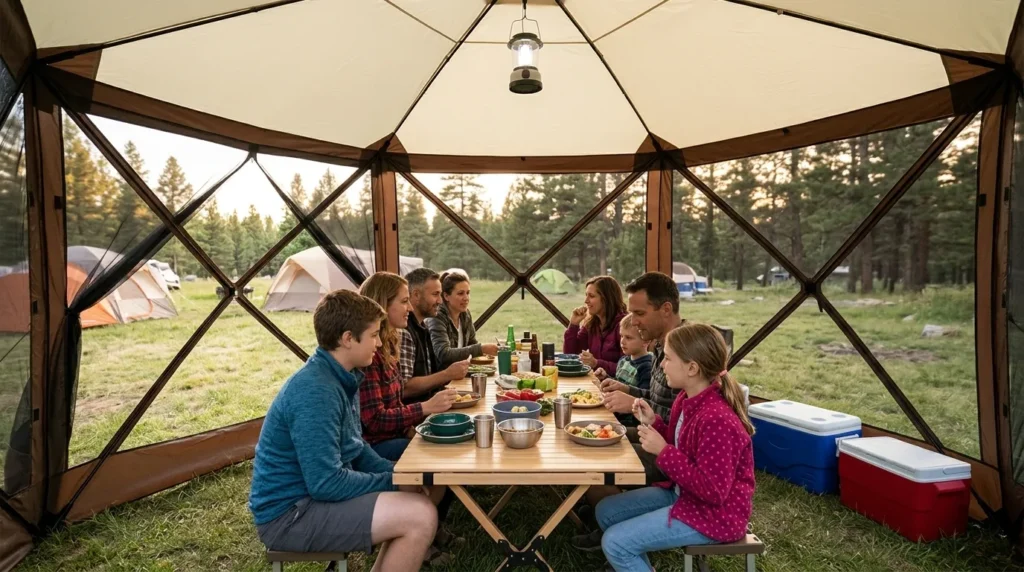
The VEVOR screen tent gives a big group 144 square feet under a 7.5-foot ceiling, enough for eight people in camp chairs around a full-size folding table, or a picnic table with walking room on every side. It is one of the two largest hexagons in this hub.
In my group test, I fit an 8-foot folding table, eight chairs, two coolers, and a camp stove stand with space to walk a lap. The roughly 71-inch walls let chairs sit right against the mesh, and the central peak gave even tall guests full standing room.
If your group is smaller, this is more shelter than you need to carry. A couple or a family of four will be just as comfortable in the 9×9 Clam Venture screen tent, which weighs 26 pounds and packs shorter. At the other extreme, if you regularly host twelve around a long banquet table, the 13×9 rectangle of the DMH Outdoors tent uses floor space more efficiently than any hexagon, though it is pole-built and slower to pitch.
For families who also need a big sleeping tent, the VEVOR pairs well with the large family shelters in my tents for families guide. I used it as the daytime living room beside an 8-person tent, and it turned a crowded site into a proper camp.
What Do the VEVOR Screen Tent Wind Cloths Actually Add?
The VEVOR screen tent wind cloths add privacy, wind and dust protection, and better shelter from blowing rain on whichever sides you zip them onto. Each of the six cloths has a small window and a vent, plus a strap buckle that lets you roll it up partway, so you can tune the shelter to the weather instead of choosing all-mesh or all-walls.
On a dusty gravel site, I zipped cloths onto the two windward sides and left the rest open. The table stayed noticeably cleaner. The EPA’s particulate matter basics note that inhalable particles are 10 micrometers and smaller, far tinier than any mesh opening, which is why solid cloths matter so much more than mesh for dust.

Privacy is the other big win. With four or five cloths on, the VEVOR became a changing area and a quiet nap spot at a busy campground, something no all-mesh shelter can offer. The windows keep it from feeling like a box.
The catch is wind load. Every cloth you add catches more air, so I treat full enclosure as a calm-weather setup. If you do not need walls, the vertical-wall East Oak screen house tent pop up is a lighter backyard alternative, but it has no panel option at all.
Beyond the cloths, the VEVOR screen tent handles bugs well, light rain reasonably, and moderate wind well once staked, but VEVOR itself recommends stopping use in heavy rain or storms. Its 300D Oxford roof sheds showers, the B3 mesh keeps biting insects out, and the steel structure feels planted with every rope out.
Bugs first. With the door zipped and the skirt staked, mosquitoes stayed outside during dusk dinners by a pond. Cornell Cooperative Extension notes that the mosquitoes that spread West Nile virus bite mainly between dusk and dawn, which is exactly when a screen house earns its keep.
Rain was fine in a passing shower, with water running off the roof and the reinforced corners. Steady rain eventually found the seams. If storms build, I follow VEVOR’s advice and take it down, and when thunder starts, everyone heads to the cars; the National Weather Service’s lightning safety tips are clear that open-sided shelters offer no protection.
How Does the VEVOR Screen Tent Compare to Other Hub Screen Tents?
The VEVOR screen tent compares as the value pick among the big hub shelters, matching the Aoxun on features and size, undercutting the Clam Escape and Gazelle G6 on price, and trailing both premium shelters on refinement and rating history. All four open with the same hub method.
The closest match is the Aoxun gazebo, which shares a nearly identical 12×12 frame, setup sequence, and six-cloth bundle. The premium alternatives are the Clam Escape screen tent and the Gazelle G6, which cost far more and leave wind panels as an add-on, but offer a more refined build.
| Hub Shelter | Footprint | Weight | Wind Panels | Rating History | Price Tier |
|---|---|---|---|---|---|
| VEVOR 12×12 | 12 x 12 ft | 32 lb | 6 included | 3,200+ at 4.1 | Mid |
| Aoxun 12×12 | 12 x 12 ft | 37.5 lb | 6 included | Under 200 at 4.4 | Budget |
| Clam Escape | 11.5 x 11.5 ft | 37 lb | Sold separately | 1,600+ at 4.6 | Premium |
| Gazelle G6 | 124 in. across | 34 lb | Sold separately | Under 50 at 4.6 | Premium |
My verdict on the matchup: if you want walls in the box and a long rating history, the VEVOR is the safer value choice than the Aoxun. If you want the best build and do not mind buying panels separately, the Clam Escape is worth the premium.
Frequently Asked Questions About the VEVOR Screen Tent
How many people fit in the VEVOR screen tent?
The 12×12 VEVOR screen tent fits up to eight people comfortably in camp chairs around a full-size folding table, which matches the brand’s own maximum. With 144 square feet of floor and a 7.5-foot ceiling, there is room to walk around the table too. More people can fit standing, but eight seated is the comfortable limit for a meal.
Are the wind cloths included with the VEVOR screen tent?
Yes. The 6-sided 12×12 bundle includes six zip-on wind cloths, each with a small window and a vent, along with ground stakes, five guy ropes, two door frame poles, and a storage bag. That is one of its biggest advantages over premium hubs that sell panels separately. Stake the shelter fully before attaching cloths, because they catch a lot of wind.
Is the VEVOR screen tent waterproof?
The roof is water resistant and shed light rain well in my testing, and the product listing describes the fabric as IPX3 waterproof. Steady rain eventually worked through, and VEVOR recommends stopping use during heavy rain or storms. Use wind cloths on the weather side to block blowing rain, and dry the shelter completely before packing it away.
How heavy is the VEVOR screen tent?
The VEVOR screen tent weighs 32 pounds and packs into a long bag about 75 inches in length. It is a two-handed carry and needs a helper or a wagon for long walks from parking. If weight is your main concern, a spring-open screen room is far lighter, though it lacks the VEVOR’s size, steel frame, and wind cloths.
How long does the VEVOR screen tent take to set up?
The shelter itself takes a couple of minutes once you know the sequence, but expect ten minutes or more the first time. Add time for the two door frame poles, staking every side, running the guy ropes, and zipping on any wind cloths. Practice once at home so the order of steps feels natural at the campsite.
Helpful Guides
- How to Fold a Pop Up Screen Tent
- How to Set Up a Screen House Tent
- Do Screen House Tents Let Dust In?
- How to Clean Mold from a Tent Screen
- How Durable Are Pop-Up Canopy Tents in Severe Weather
Should You Buy the VEVOR Screen Tent?
Yes, buy the VEVOR screen tent if you camp with a big family or group and want a spacious screen house with privacy walls included at a mid-range price. It gives you 144 square feet, six wind cloths, and a sturdy steel frame for less than the premium hubs charge for the shelter alone.
Skip it if you need a light carry, camp mostly as a couple, or want the most refined build available. A spring-open room, the smaller Clam Venture, or the premium Clam Escape will fit those needs better, and my pop up screen tent guide compares every option.