
How to clean a canopy tent comes down to three rules: gentle soap, a soft brush, and a full dry before you fold it. The fastest way to wreck a good canopy is a pressure washer on Sunday afternoon followed by packing it away damp, because the thing you blast off is the coating that keeps rain out. Here is the exact routine I use on my 10×10 canopies, plus what to do about mildew, sap, sand, and stuck zippers.
Every step below applies to the ten canopies I compared in my pop up canopy tent guide, from the thin 190T top on the Oneofics to the heavy 600D top on the Quictent. The method is the same, but the details differ a little by fabric and extras, so I flag those as we go.
How to clean a canopy tent step by step?
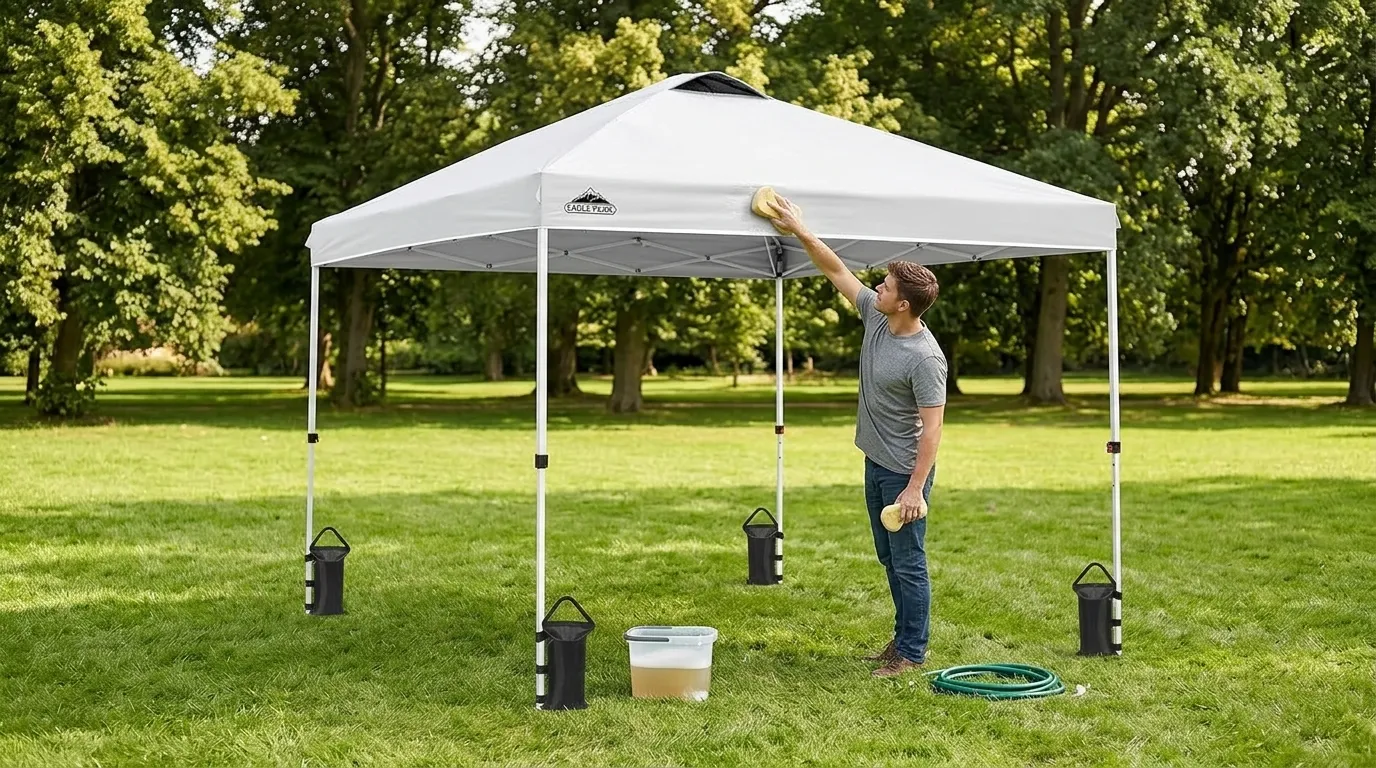
You clean a canopy tent by setting it up in the shade, brushing off loose dirt, washing the top with lukewarm water and mild soap, rinsing with low pressure, and letting it dry fully before you fold it. The whole job takes about 20 to 30 minutes for a 10×10.
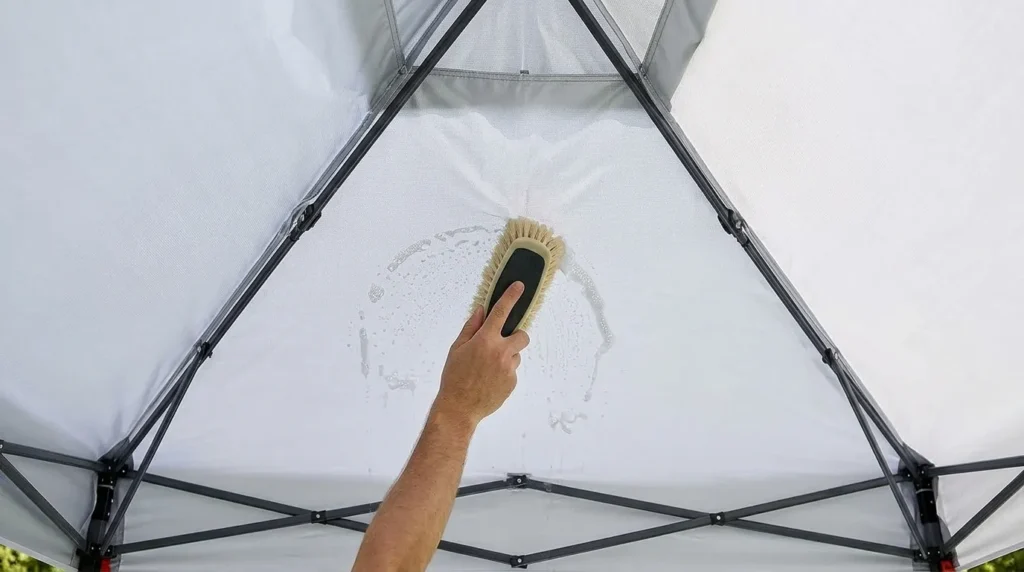
Here is my routine, in order:
- Set the canopy up in a shaded spot. Direct sun dries the soap before you can rinse it and leaves streaks.
- Dry brush the top, the valance, and the legs to remove leaves, sand, and dust.
- Fill a bucket with lukewarm water and a small amount of mild, non-detergent soap.
- Wipe the top in small sections with a soft sponge or soft brush, using gentle pressure.
- Rinse thoroughly with a garden hose on low pressure until no suds remain.
- Clean the underside the same way, since that silver coated layer reflects heat.
- Leave the canopy standing until the top is completely dry, then fold it.
Work in sections so the soap never dries on the fabric, and rinse more than you think you need to. Leftover soap attracts dirt and leaves a sticky film.
I skip harsh dish detergents because makers like MSR advise against dishwashing liquid, detergent, and bleach on tent fabric, since they can strip the waterproof coating. You can read their full guidance on the MSR tent cleaning page. Canopy tops use similar PU and silver coatings, so the same logic applies.
How often you clean depends on use. A canopy that only provides backyard shade needs a wash once or twice a season, while a market canopy that sits near food and grease needs one after most events. A good rinse after every beach trip is the minimum.
What should you never use to clean a canopy tent?
Never use bleach, a pressure washer, a washing machine, or a stiff scrub brush on a canopy tent, because each one damages the coating or the seams. Those four mistakes cause most of the fabric failures I see.
Here is a quick cheat sheet:
| Cleaning item | Safe to use? | Why |
|---|---|---|
| Soft sponge or soft brush | Yes | Lifts dirt without wearing the coating |
| Lukewarm water with mild soap | Yes | Gentle on PU and silver coatings |
| Garden hose, low pressure | Yes | Rinses soap without stressing seams |
| Pressure washer | No | Can tear seams and strip the coating |
| Bleach or chlorine cleaners | No | Can damage the waterproof and UV layers |
| Washing machine or dryer | No | Agitation and heat harm seams and coatings |
| Stiff brush or scouring pad | No | Wears through the coating and dulls the fabric |
| Hot water | No | Not needed, and heat can wear the coating |
Bleach is the one people reach for first, because it kills mildew. I avoid it on tent fabric. A tent care guide from Pitchup notes that bleach can ruin a tent’s waterproof and UV coating, and you can read their advice on removing mould and mildew from a tent.
There is also a safety side. Never mix bleach with vinegar or ammonia, since the combination can create toxic gas. If you have a bad exposure, the Poison Help line can walk you through what to do. For a canopy, soap and time almost always beat harsh chemicals.
If you ever do need a stronger mildew treatment, use a product labeled safe for polyester or tent fabric, test it on a hidden spot, and follow the label exactly.
How do you remove mildew, sap, and stains from a canopy tent?
You remove mildew, sap, and stains from a canopy tent by spot cleaning with mild soapy water and a soft brush, then drying the spot fully in the shade. Start gently and escalate slowly, because every extra scrub removes a little coating.
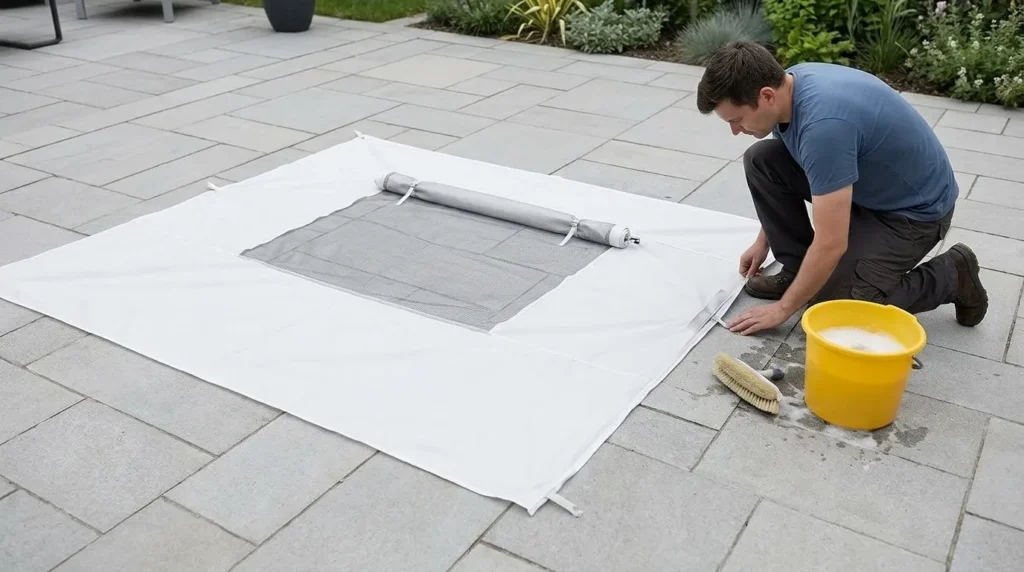
Here is how I handle the common problems:
- Mildew spots: brush off loose growth outdoors, wash with mild soapy water, rinse well, and dry fully in a shaded, airy spot.
- Bird droppings: soften with a damp cloth first, then lift gently with a soft brush.
- Tree sap: dab with a cloth dampened in mild soapy water and repeat rather than scrubbing.
- Grease and food spills: wipe soon with warm soapy water, especially on market and vendor canopies.
- Sand and salt: rinse with plenty of fresh water, since salt crystals wear fabric and corrode frames.
Speed matters most with mildew. The EPA says to dry wet items within 24 to 48 hours to prevent mold growth, and you can read more in its guide to mold, moisture, and your home and on the main EPA mold page. MSR also notes mildew can start forming in as little as 24 hours on a wet, crumpled tent, which is why a damp canopy in a roller bag is a bad idea.
Some mildew stains are permanent, and I accept a faint mark instead of destroying the coating to chase it. Sand deserves its own routine, so if you camp on the coast, my beach camping tents guide covers salt and sand care that applies to canopies too. And if your canopy hosts a family birthday, juice and sticky fingers add up, so my tents for families guide has more ideas for tackling spills and messes.
If a stain will not budge after two gentle tries, leave it. A stain is cosmetic, but a stripped coating means a leaky top.
How do you clean a canopy tent frame, sidewalls, and roller bag?
You clean the frame with a damp cloth, the sidewalls like the top, and the roller bag by shaking it out and airing it, and every part needs to dry fully before storage. The frame matters more than people think, since grit in the sliders is what makes a canopy hard to open.
Fabric and coating differ across the hub, which changes the details a little:
| Canopy | Top fabric and coating | Care note |
|---|---|---|
| Eurmax USA 10×10 | PU coated polyester, seam sealed | Wash gently over the sealed seams and dry them fully |
| Cobizi 10×10 | 420D Oxford, two PU layers | Wash the PU coated sidewalls flat and dry the zippers |
| Quictent 10×10 | 600D PU coated, mesh windows | Rinse the mesh windows and dry the awning separately |
| Eagle Peak 10×10 | 150D silver coated oxford, vented peak | Clear debris from the vent and clean the silver underside gently |
| MasterCanopy 10×10 | 150D silver coated polyester | Wipe the underside softly, shake out the roller bag |
| Oneofics Slant Leg | 190T Oxford with silver lining | Clean the velcro straps and dry quickly, the fabric is thin |
For the frame, wipe the legs and truss with a damp cloth, dry them, and check the sliders and center hub for sand. A light shot of silicone lubricant on slider joints keeps them moving. If you see a paint chip on a steel leg, touch it up, because bare steel rusts. The powder coated frames resist rust well, but only while the coating stays intact.
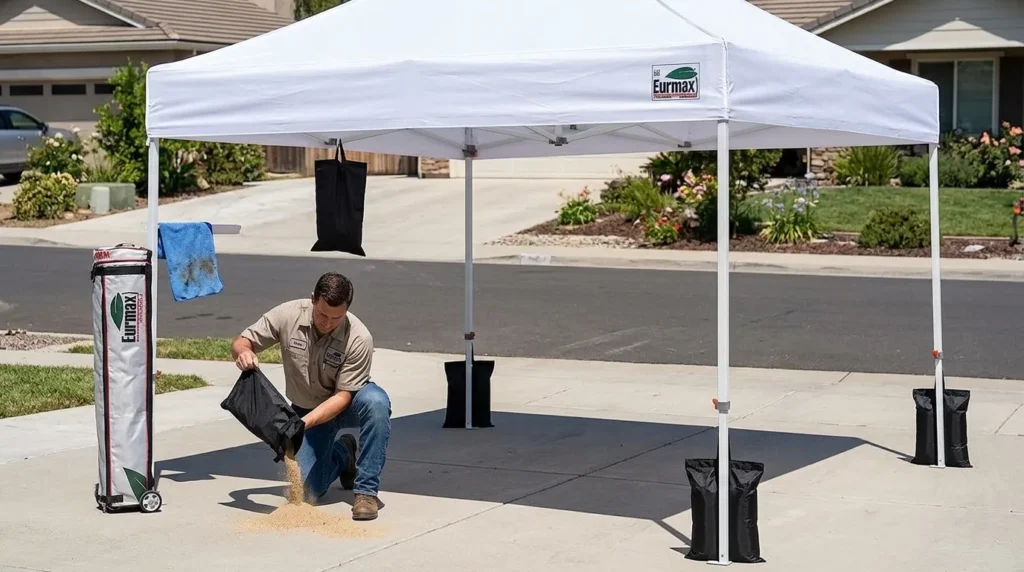
For the sidewalls, clean them flat on a clean surface or while attached. Four canopies come with walls. The 10×10 ft pop up canopy tent with sidewall review covers the three windowed walls on the Sannwsg, the Quictent pop up canopy review covers three walls plus an awning, the Cobizi canopy review covers four PU coated walls, and the ABCCANOPY durable easy pop up canopy tent review covers the single pocket wall. All of them need their zippers and hook and loop strips cleaned and dried. Keep a soft toothbrush for those. Roll up mesh windows only when completely dry.
The Yaheetech has a solar panel and LED strings, so wipe those with a barely damp cloth and keep the power bank connection dry. Read my Yaheetech canopy review before you buy if lights matter to you. For weight bags, empty the sand, rinse, and dry them, since damp sand left inside grows smell and rots stitching.
How often should you clean a canopy tent, and how should you dry and store it?
Clean a canopy tent a couple of times a season for casual use and after most events for commercial use, and always dry it completely before storing it. Drying is the step that decides whether the canopy lasts two seasons or ten.
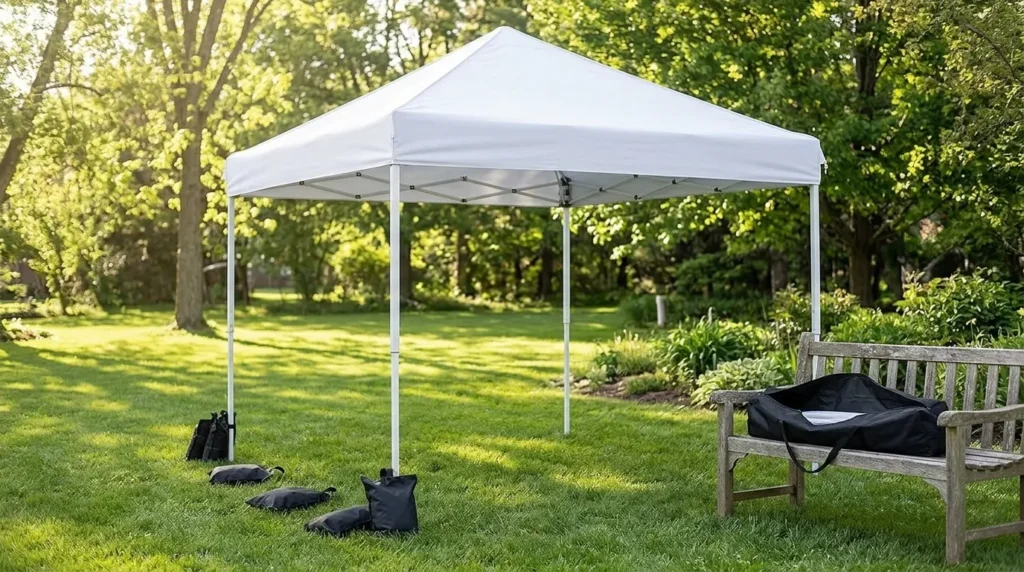
This is my schedule:
- After every beach or muddy trip: rinse the top, legs, and feet with fresh water.
- Once or twice a season: full wash with soap and soft brush.
- After storms or heavy rain: air dry before folding.
- Before long storage: clean, dry fully, and check seams and corner straps.
For drying, I leave the canopy standing in a shaded, breezy spot until the top and the seams are bone dry. Direct sun is fine for a short time, but constant sun speeds fabric aging, and the EPA UV Index scale is a good guide for how harsh the day is. Fold the top loosely, and never pack it wet. My beach pop up tent guide covers folding and drying a beach tent in more detail, and the same habits work here.
For storage, keep the canopy in its bag in a cool, dry place off the floor, away from direct sun. Each bag differs. The Eurmax 10×10 canopy review covers the no-tip L shaped roller bag, the Eagle Peak canopy 10×10 review and the MasterCanopy 10×10 review cover the rolling bags, the one push pop up canopy review covers the simpler carry bag, and the 10×10 slant leg canopy review covers the lightest packed size. Whichever bag you have, shake out sand and leaves first.
If you set up often, a pop up canopy tent is cheap to maintain, and my pop up canopy tent guide shows which models are easiest to care for. For general tent care ideas across other shelters, see my pop up tent guide.
What do people ask about cleaning a canopy tent?
People mostly ask about washing machines, vinegar, stains, mildew timing, and re-waterproofing, and the answers below cover each one.
Can I put a canopy tent top in the washing machine?
No, you should not put a canopy tent top in the washing machine or the dryer, because the agitation and heat can damage seams and strip the water-resistant coating. Tent makers like MSR specifically warn against machine washing or machine drying for the same reason. Hand wash the top while the canopy is set up, using a soft brush and mild soap. It takes about twenty minutes, and it protects the coating that keeps rain out.
Can I use vinegar or baking soda to clean a canopy tent?
You can use diluted white vinegar or a baking soda paste for light spot cleaning, as long as you test a hidden spot first and rinse thoroughly afterward. Neither one is as gentle as plain mild soap on a coated top, so I keep them for stubborn spots only. The important safety rule is never to mix bleach with vinegar or ammonia, because that creates toxic gas. If you ever have a bad exposure, the Poison Help line can guide you.
How do I get bird droppings and tree sap off a canopy top?
Soften bird droppings with a damp cloth and lukewarm water, then lift them off gently with a soft brush before they bake on in the sun. Tree sap is harder, so I dab it with a cloth dampened in mild soapy water and give it time rather than scrubbing hard. Scrubbing wears through the coating, especially along stitched areas. If a mark will not move, I leave a faint stain instead of risking a bare spot.
How long can a wet canopy tent sit before mildew starts?
A wet canopy tent can start growing mildew in about a day or two if it is packed away damp. The EPA advises drying wet items within 24 to 48 hours to prevent mold growth, and MSR notes mildew can begin forming on a wet, crumpled tent in as little as 24 hours. That is why I never fold a canopy that is even slightly damp. If I have to pack up wet at an event, I open the canopy again at home the same day.
Should I re-waterproof a canopy tent after cleaning?
You do not need to re-waterproof every time, but a water repellent spray can help an older top that no longer beads water after a wash. Use a product made for polyester or tent fabric, apply it to a clean, dry top in a shaded spot, and test a small area first. It will not fix leaking seams, which need seam sealer, and it is not a replacement for a properly sealed top. For a new canopy, regular gentle cleaning is usually enough.
Helpful Guides
- How Durable Are Pop-Up Canopy Tents in Severe Weather?
- How to Put Up a Pop Up Canopy Tent
- How to Choose Between Cheap and Premium Pop Up Canopy Tents
- How to Fold a Pop Up Beach Tent
Is cleaning a canopy tent worth the effort?
Yes, cleaning a canopy tent is worth the effort because 30 minutes of gentle washing can add years to a top that costs well over a hundred dollars to replace. Keep it simple: soft brush, mild soap, low pressure rinse, full dry.
If your canopy is already worn out, my pop up canopy tent guide can help you pick a replacement, and if you want to make your next one last longer, take the cleaning schedule above and follow it every season.