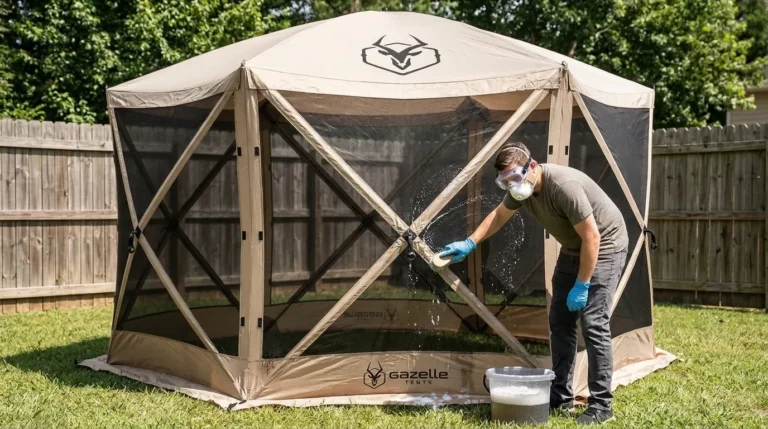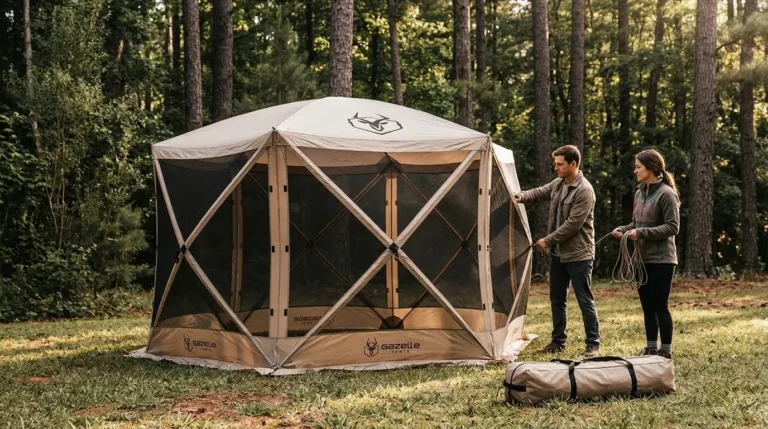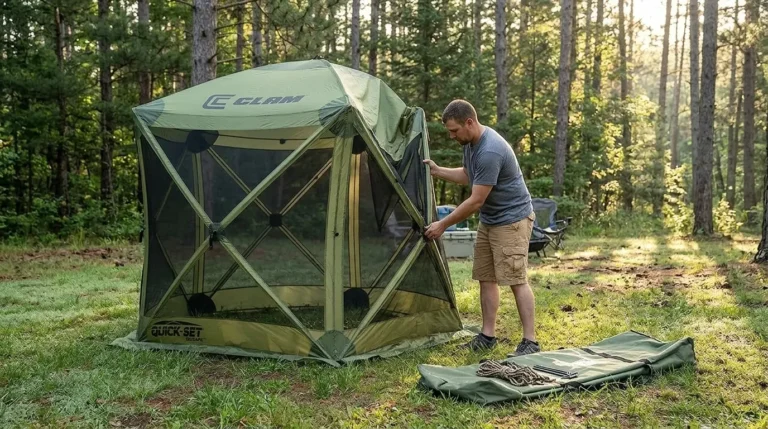


Do screen house tents let dust in? I found out the gritty way at a dry, dusty campground, where every passing truck sent a tan cloud rolling across the loop and straight through the mesh walls of my shelter. The bugs stayed outside. The dust did not. By lunch there was a fine film on the table, the cooler lid, and the paper plates, and I realized I had been thinking about mesh the wrong way.
Screen house mesh is built to stop insects, not particles a fraction of their size. That does not mean you are stuck eating grit. After testing the ten shelters in my pop up screen tent guide on dirt sites, gravel pads, and breezy fields, I have a clear picture of where dust gets in, which designs block the most of it, and which setup habits make the biggest difference.
Do Screen House Tents Let Dust In Through the Mesh?
Yes, screen house tents let dust in through the mesh, because the openings that stop mosquitoes and no-see-ums are still far larger than most airborne dust particles. Fine mesh slows dust down and catches some of the coarser grit, but on a windy, dry day, a fine layer will settle on everything inside.
The size gap is enormous. The EPA’s particulate matter basics describe PM10 as inhalable particles generally 10 micrometers and smaller, and point out that a typical human hair is about 70 micrometers wide. Even the tightest no-see-um mesh is designed around insects, which are many times larger than that. Dust kicked up from a dirt road includes particles across that whole range, from visible grit down to fine powder.

What the mesh does do is reduce wind speed as air passes through, and that matters. Slower air drops heavier particles sooner, so a lot of the coarse grit lands on the outside skirt rather than on your table. In my tests, the shelters with finer mesh and wider fabric skirts collected visibly less grit inside than open canopies parked nearby.
So the honest answer has two parts. Screen walls alone will not keep dust out on a windy day at a dry site. But mesh plus the right panels, placement, and ground cover can cut what reaches your food and gear by a wide margin, and that is what the rest of this guide is about.
Where Does Dust Actually Get Into a Screen House Tent?
Dust gets into a screen house tent through four main routes: wind blowing through the mesh walls, gaps under the skirt, dust kicked up from the open ground inside, and dirt carried in on shoes and gear. Most people only think about the first one, but on many sites the other three account for just as much grit.
| Entry Route | When It Is Worst | Best Fix |
|---|---|---|
| Through the mesh walls | Steady wind across dry ground or a dirt road | Solid wind panels on the windward side |
| Under the skirt | Uneven ground, unstaked corners | Stake every loop, weigh down gaps |
| From the ground inside | Bare dirt floor, lots of foot traffic | Outdoor rug, tarp, or mats inside |
| Carried in on shoes and gear | Busy campsites, kids running in and out | Door mats, a quick shake-off spot outside |
The ground inside surprised me the most. Every shelter in our hub has an open bottom with a fabric skirt rather than a sewn-in floor. On bare dirt, simply walking around the table stirs up a haze you can see in the afternoon light. Laying a large outdoor rug or a tarp inside fixed more of the problem than any panel did.
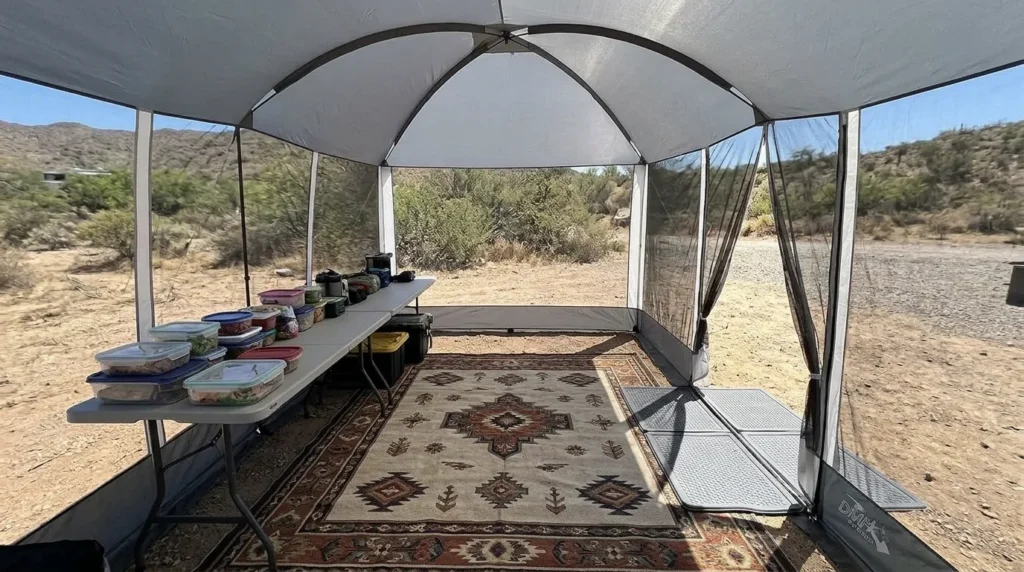
Skirt gaps come next. A screen house skirt only seals if it lies flat and is staked. On a lumpy site, the corners lift and wind pushes dust straight under. A few rocks or the included sandbags along the windward skirt close those gaps in minutes.
Which Screen House Tent Features Keep the Most Dust Out?
The screen house tent features that keep the most dust out are solid wind panels you can zip on, wide fabric skirts that lie flat, doors that close themselves, and some way to cover the bare ground inside. No shelter is dust-proof, but these features make a real difference.
Wind panels are the biggest lever. The Vevor screen tent and the Aoxun gazebo both ship with six zip-on wind cloths, so on a dusty site you can close the windward side right away and leave the sheltered side open for airflow. The Clam Escape screen tent, the smaller Clam Venture screen tent, and the Gazelle G6 all accept optional wind panels sold separately, and once fitted they block dust the same way. On the Gazelle, flaps at the top of each wall help hold the panels snug.
Skirts and wall design come next. The Clam shelters use an extra-wide skirt that seals well when staked. The East Oak screen house tent pop up and the Mars Explo use vertical arched walls with more solid fabric framing each mesh panel than a typical bubble design, which gives dust fewer open inches to pass through. The rounded Alvantor screen house has large mesh panels for airflow, which is great in summer heat and less helpful on a dusty day.
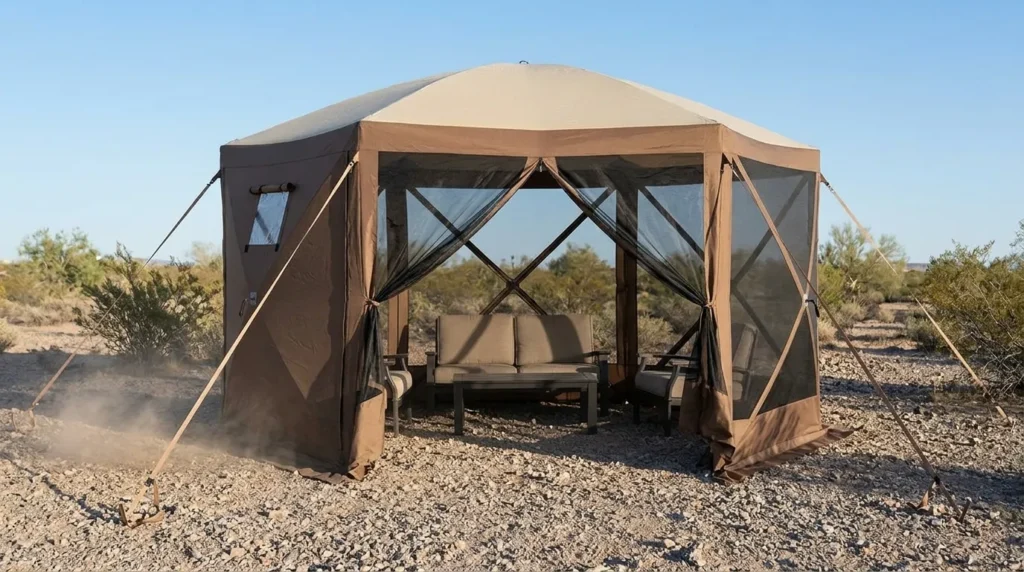
Doors and floors finish the picture. The DMH Outdoors tent has two magnetic doors that close themselves behind you, plus detachable mud mats at both entrances, which cuts the dirt tracked inside on a busy site. The Coleman Skylodge portable screenhouse has two entryways with a fabric bottom band, which helps traffic flow but means two doors to keep closed.
| Feature | Dust Benefit | Shelters With It |
|---|---|---|
| Included wind cloths | Block wind-driven dust on chosen sides | VEVOR, Aoxun |
| Optional wind panels | Same benefit once purchased | Clam Escape, Clam Venture, Gazelle G6 |
| Self-closing magnetic doors | Less dust blown in through open doors | DMH Outdoors |
| Mud mats at entrances | Less dirt tracked inside | DMH Outdoors |
| More solid fabric framing on walls | Less open mesh area | East Oak, Mars Explo |
How Do You Set Up a Screen House Tent to Reduce Dust?
You set up a screen house tent to reduce dust by choosing grass or gravel over bare dirt, placing it upwind of roads and parking areas, turning the door away from the wind, covering the ground inside, and closing the windward side with panels. Placement does more than any single product feature.
Here is the routine I follow at dry campsites:
- Pick the greenest or most gravelly patch available. Grass holds dust down far better than loose soil.
- Put roads, parking spots, and trails downwind of the shelter whenever the site allows. Passing vehicles are the biggest dust makers at most campgrounds.
- Face the door away from the prevailing wind.
- Stake every skirt loop and weigh down any gaps along the windward side.
- Lay an outdoor rug, tarp, or mats inside before setting up the table.
- Zip panels onto the windward side, and leave the downwind side open so the shelter still breathes.
At the beach, sand behaves like heavy dust. It skips along the ground in wind and piles up against the skirt. My beach pop up tent guide covers sand-specific anchoring, and the same windward-panel trick works on a screen house parked near the dunes.
If your group uses a regular canopy as well, side walls play the same role there. My pop up canopy tent guide covers sidewall options for open canopies, and pairing a walled canopy as a windbreak beside a screen house works surprisingly well on a long, dusty weekend.
One last trick: if your site allows it and water is plentiful, lightly misting the bare ground around the shelter before dinner settles the surface dust for a few hours. Skip this anywhere water is scarce or restricted.
When Is Dust a Health Concern Inside a Screen House Tent?
Dust becomes a health concern inside a screen house tent when the air itself is unhealthy, such as during wildfire smoke, dust storms, or in regions where soil fungi travel on dust. In those situations, mesh offers no meaningful protection, and the right move is to change plans rather than seal up the shelter.
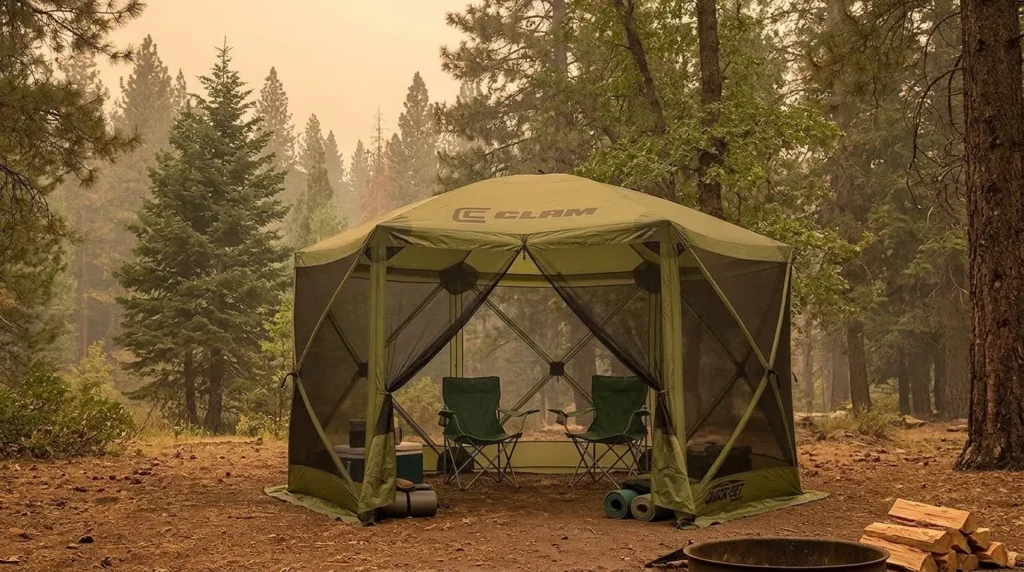
Wildfire smoke is the clearest example. Smoke particles are fine particulate matter, small enough to pass through any screen. The CDC’s wildfire smoke safety guidance recommends checking your local Air Quality Index, limiting time outdoors, and using a well-fitted NIOSH-approved respirator such as an N95 if you must be outside. I check AirNow before every trip in fire season.
Dust storms are another. The National Weather Service’s dust storm safety page notes that haboobs, dust storms driven by thunderstorm outflow winds, can happen anywhere in the U.S. but are most common in the Southwest. Those winds can also flatten a screen house, so collapse it and move to a vehicle or building when a dust storm warning is issued.
In parts of California and the Southwest, dust can carry fungal spores too. California’s public health department explains that Valley fever spreads when people breathe in dust containing spores from the soil, and that wind or digging can stir it up. If you camp in those regions on dusty days, minimize digging around camp and consider a properly fitted respirator.
How Do You Clean Dust Out of a Screen House Tent?
You clean dust out of a screen house tent by shaking out loose grit, brushing the mesh with a soft dry brush from the top down, wiping the roof with a damp cloth, and letting everything dry fully before you pack it. Dry dust brushes off easily; dust mixed with moisture turns into grime that is much harder to remove.
At the end of a dusty trip, I do this before folding:
- Lift the skirt and shake out the grit trapped in the folds.
- Brush the mesh walls with a soft upholstery brush, working top to bottom.
- Wipe the inside of the roof with a damp microfiber cloth to catch fine powder.
- Shake out the rug or tarp well away from the shelter.
- Let any damp spots dry before folding.
Never pack a dusty shelter wet. Damp dust holds moisture against the fabric and gives mildew a foothold, which is exactly how musty smells and dark spots start. If that has already happened, the mold-cleaning guide in the Helpful Guides list below walks through safe removal from mesh.
FAQ: Do Screen House Tents Let Dust In?
Do screen house tents let dust in even with no-see-um mesh?
Yes. No-see-um mesh is fine enough to stop tiny biting insects, but airborne dust particles are much smaller than any insect, so fine dust still passes through. The mesh slows the wind and catches some coarser grit, which reduces how much lands inside, but it will not keep a dusty site’s air out. Solid wind panels, good placement, and a ground cover inside do far more.
Do wind panels make a screen house tent dust-proof?
No, but they help more than anything else. Panels stop wind-driven dust on the sides they cover, though dust can still drift in through open sides, under the skirt, and through the door. I zip panels onto the windward side and leave the downwind side open so the shelter still breathes. Remember that panels catch more wind too, so stake every guyline before adding them.
Is a screen house tent with a floor better for dust?
A floor helps by covering the bare ground, which is one of the biggest dust sources inside. None of the shelters in our hub has a sewn-in floor, but Alvantor sells an optional floor separately, and the DMH includes mud mats at the doors. For any model, a large outdoor rug or tarp inside gives you most of the same benefit and keeps chairs from sinking into soft ground.
Can I use a screen house tent during wildfire smoke?
You can stand under one, but it will not protect you from smoke. Smoke particles pass through mesh easily, so the air inside is the same as the air outside. Check your local Air Quality Index before outdoor plans, limit time outside when the air is unhealthy, and follow public health guidance on respirators. A screen house is a bug and sun shelter, not an air filter.
How do I keep dust off food in a screen house tent?
Set up upwind of roads and parking, close the windward side with panels, and cover the ground inside with a rug or tarp. Keep food in lidded containers or a closed cooler until you serve it, and cover serving dishes between helpings. Placing the table toward the downwind side of the shelter also helps, because the panels block the most dust closest to the windward wall.
Helpful Guides
- How to Fold a Pop Up Screen Tent
- How to Set Up a Screen House Tent
- How to Clean Mold from a Tent Screen
- How to Clean a Canopy Tent
What Is the Bottom Line on Whether Screen House Tents Let Dust In?
The bottom line is that screen house tents let dust in, because mesh is made for bugs, not fine particles. But you can keep most of it off your table by choosing the right site, covering the ground inside, sealing the skirt, and closing the windward side with solid panels.
If you camp in dry, dusty country often, prioritize shelters with included or optional wind panels and a wide skirt, and pack an outdoor rug as standard kit. My best pop up screen tent comparison shows which of the ten shelters include panels and which treat them as an add-on.
And if the air itself turns unhealthy from smoke or a dust storm, remember that no screen house is an air filter. Fold it down and head indoors. For full details on every shelter mentioned here, the pop up screen tent reviews hub links to each one.