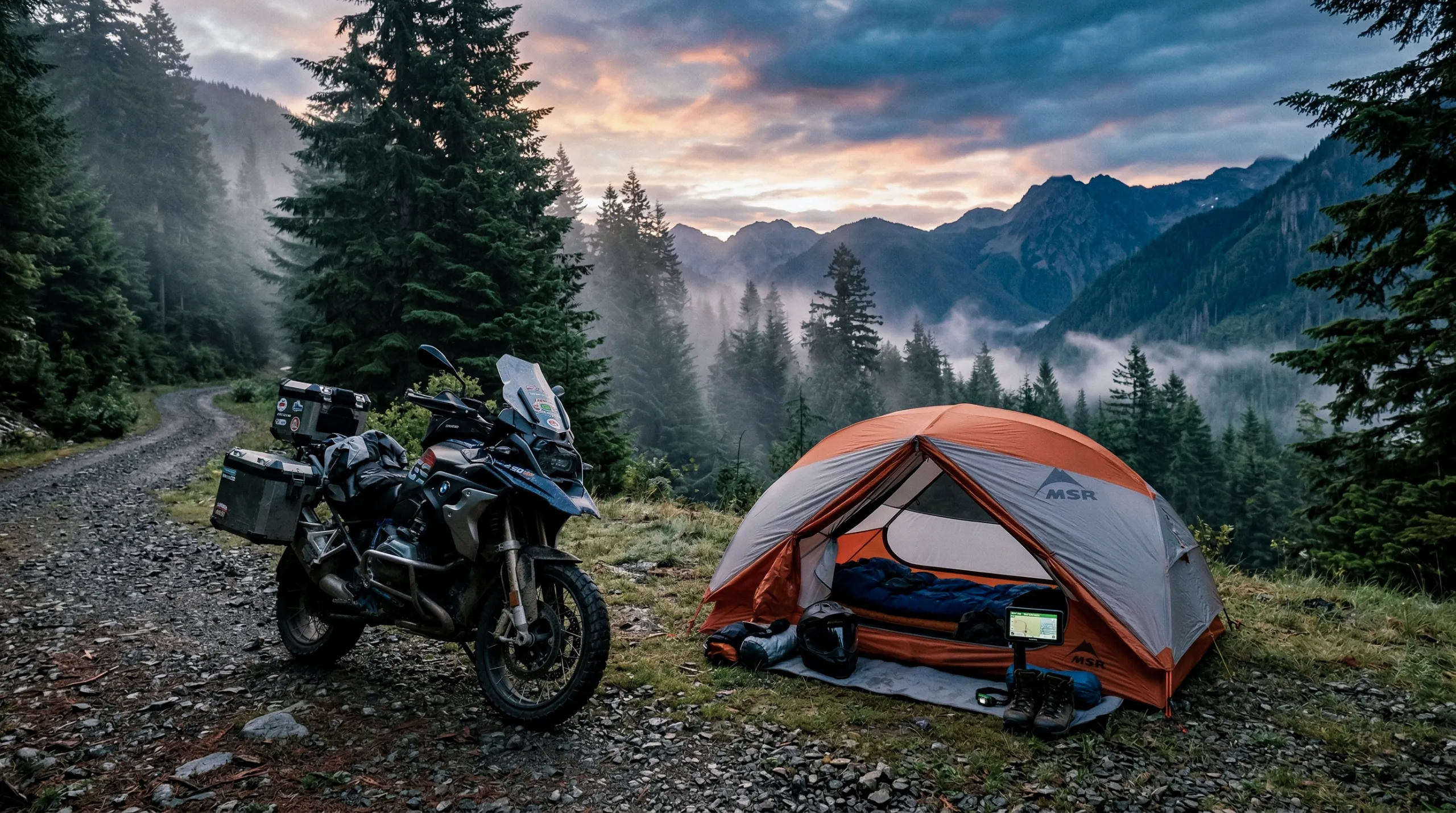

What is the best tent for motorcycle camping in 2026?
The Big Agnes Copper Spur HV UL2 Bikepack remains the overall best tent for motorcycle camping in 2026 due to its shortstik pole set, which measures just 12 inches. If you require a dedicated indoor space for your bike, the Wolf Walker Motorcycle Tent is the top-rated “garage” style option for maximum security and weather protection.
For riders, a tent isn’t just a place to sleep, it’s a gear locker. Standard camping tents often come with 18-to-22-inch poles that are impossible to fit inside hard panniers or narrow dry bags. In 2026, the industry has shifted toward “Bikepacking” and “Moto-specific” designs that prioritize packed dimensions over raw weight.
According to the North American Camping & Outdoor Hospitality Report by KOA, interest in ‘overlanding’ and vehicle-based camping, which includes adventure motorcycling, has increased by over 25% since 2021, leading to a surge in specialized gear demands.
Comparison Table: Quick Specs for Riders
| Product | Packed Weight | Packed Size | Pole Length | Best For | Price |
|---|---|---|---|---|---|
| Big Agnes Copper Spur | 3lb 8oz | 6″ x 13.5″ | 12″ | Pannier/Handlebar Packing | Amazon |
| Nemo Dragonfly OSMO | 3lb 10oz | 6″ x 14″ | 12″ | Gear Organization | Amazon |
| Wolf Walker Moto Tent | 12lb 4oz | 10″ x 24″ | 24″ | Bike Garage/Full Standing | Amazon |
| MSR Hubba Hubba NX | 3lb 14oz | 6″ x 18″ | 17.5″ | Extreme Weather | Amazon |
| ALPS Mountaineering Lynx | 5lb 4oz | 6″ x 20″ | 20″ | Rugged Budget Choice | Amazon |
| Snugpak Scorpion 2 | 5lb 12oz | 7″ x 17″ | 16″ | Stealth/Tactical Use | Amazon |
| Kelty Late Start 2 | 4lb 8oz | 7″ x 16″ | 16″ | Quick Setup | Amazon |
| TNF Stormbreak 2 | 5lb 14oz | 7″ x 22″ | 22″ | High-Wind Durability | Amazon |
| Marmot Crane Creek | 4lb 13oz | 7″ x 20″ | 19″ | Mid-Range Reliable | Amazon |
| TETON Mountain Ultra | 4lb 11oz | 6.5″ x 17″ | 16″ | Hot Summer Ventilation | Amazon |
Why Pole Length and Pack Size Dictate Your Ride
Why does tent pole length matter more than weight for motorcyclists?
Pole length is the single most important factor because it determines whether your tent lives inside your locked luggage or strapped to the outside of your bike. For a motorcyclist, internal storage is always preferred to prevent theft during gas stops and to keep the bike’s center of gravity low and centered.
The “Shortstik” Advantage: Brands like Big Agnes and Nemo have pioneered the use of shorter pole segments (roughly 12 inches). This allows the tent to fit:
- Horizontally at the bottom of a standard pannier (like Jesse or Touratech boxes).
- Inside a 30L top case alongside a helmet.
- Directly between the risers of your handlebars.
Direct Answer: If your tent poles are longer than 18 inches, you will likely be forced to strap the tent to your rear rack. This exposes the tent bag to rain, road grime, and potential “sticky fingers” at rest stops. Choosing a tent with sub-14-inch poles is the ‘pro-move’ for 2026 touring. For a deep dive into how weight distribution affects motorcycle dynamics, RevZilla’s Common Tread provides an excellent breakdown of how heavy loads on the rear rack can impact front-end stability.
“A lightweight tent is nice for your back, but a short-packed tent is essential for your bike’s handling. Keeping heavy or bulky items off the very back of the rack prevents front-end wobbles at highway speeds.” – Expert Insight, Camped Too Hard Testing Team.
The Garage Debate: Do You Need Cover for Your Bike?
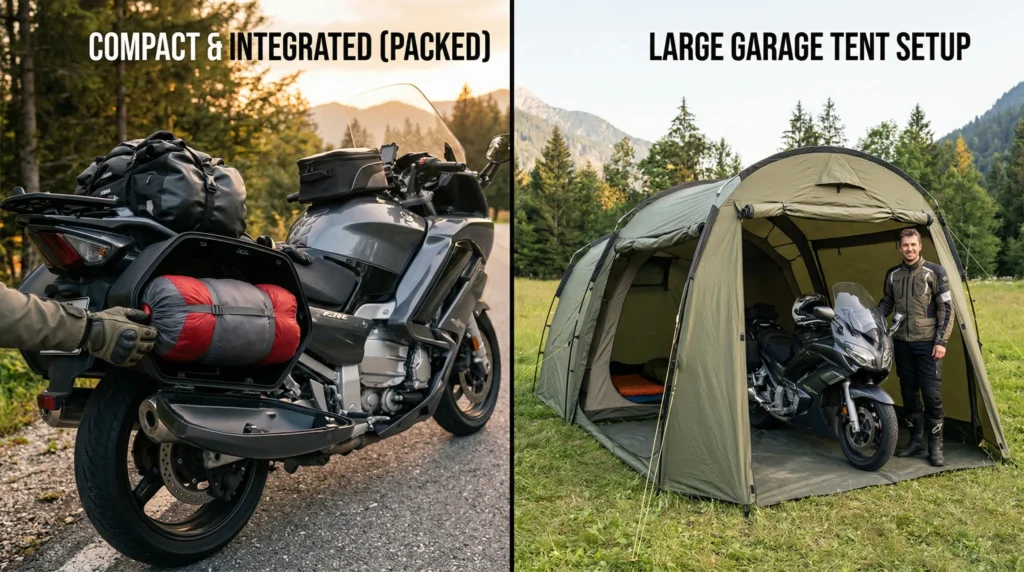
Should you choose a motorcycle tent with a built-in garage?
You should choose a motorcycle tent with a garage if you prioritize bike security, protection from the elements during maintenance, or if you are on a long-term tour with a heavy cruiser or adventure bike. However, if you ride a sportbike or a lightweight dual-sport, the “garage” adds unnecessary weight and bulk that can negatively impact your bike’s handling.
The Case for the Garage (e.g., Wolf Walker): An integrated garage (a massive vestibule) allows you to park your bike under cover. This is a game-changer for:
- Security: If people can’t see your bike, they are less likely to mess with it.
- Maintenance: Changing oil or fixing a flat tire in the rain is much easier when both you and the bike are dry.
- De-kitting: You can take off your muddy riding suit and boots next to the bike without dragging the mess into your sleeping area.
The Case Against the Garage: The primary drawback is the “Pack Volume Penalty.” A garage tent typically weighs 12–15 lbs and has a packed length of 24 inches or more. In comparison, a technical bikepacking tent weighs under 4 lbs.
Cited Data: According to aerodynamic studies on loaded motorcycles, a bulky rear-seat bag (common with garage tents) can increase drag and reduce fuel efficiency by up to 5-8% compared to a low-profile pannier-only setup.
Top 10 Best Tent for Motorcycle Camping
This section breaks down the 2026 market leaders based on their specific utility for different types of riders.
Big Agnes Copper Spur HV UL2 Bikepack (The Specialized Choice)
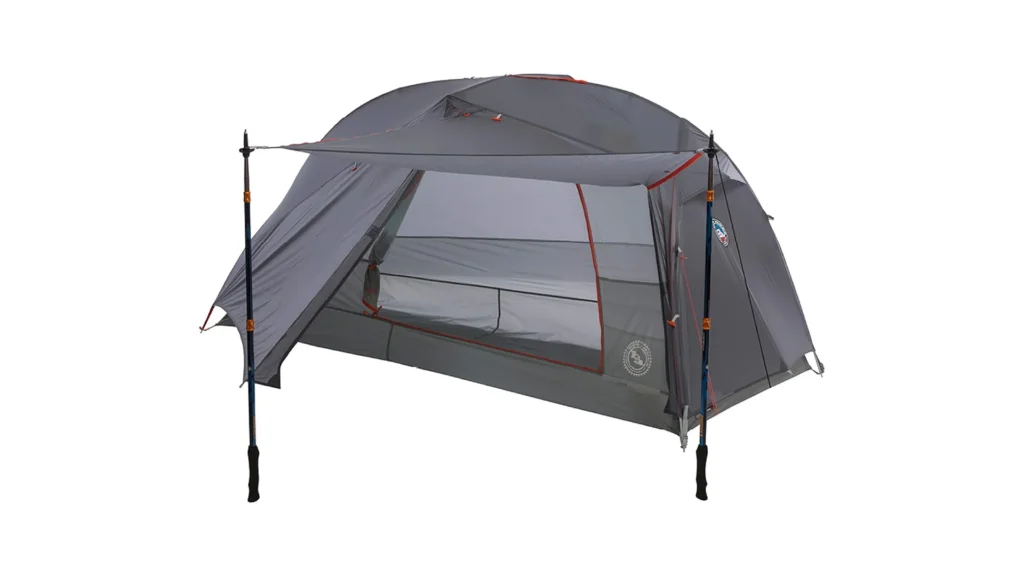
Is the Big Agnes Copper Spur the best tent for adventure riders?
Yes, the Big Agnes Copper Spur HV UL2 Bikepack is widely considered the gold standard for motorcycle camping because of its 12-inch “Shortstik” poles. While most tents use 18-to-22-inch pole segments, Big Agnes shortened the individual sections so the entire tent can fit between the risers of your handlebars or flat at the bottom of a standard aluminum pannier.
Why it’s a 2026 Favorite:
The “Bikepack” edition isn’t just a rename; it features a “Daisy-chain” webbing system on the exterior of the stuff sack, allowing you to strap it directly to your bike’s frame or forks without it sliding around.
- Pros: Incredible space-to-weight ratio; fits in any luggage system; high-quality DAC poles.
- Cons: Premium price point; the lightweight fabric requires a footprint (sold separately) to prevent punctures from rocky campsites.
Nemo Dragonfly OSMO 2P (The Gear Storage King)
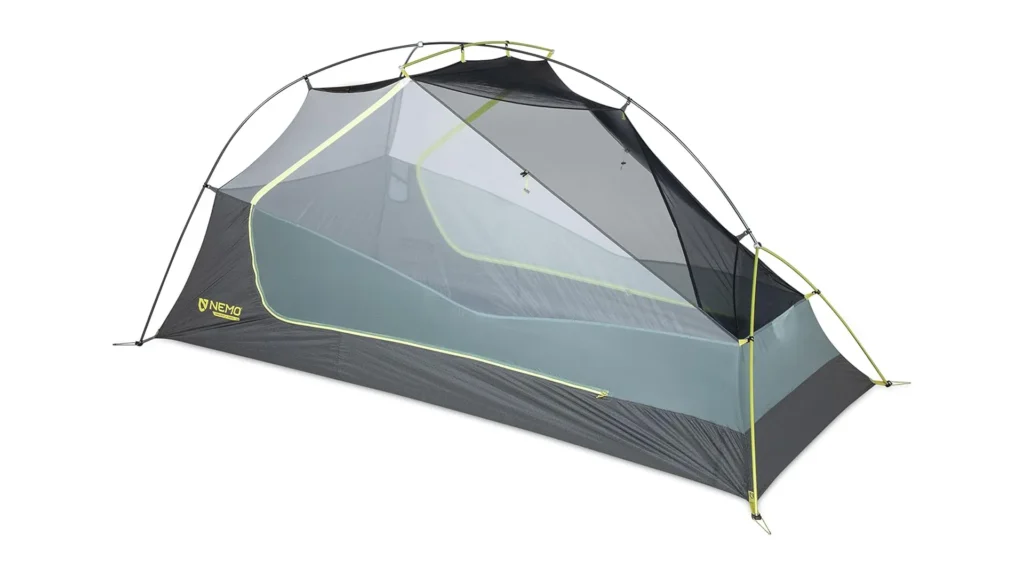
How does the Nemo Dragonfly OSMO handle motorcycle gear?
The Nemo Dragonfly OSMO 2P is the best tent for riders who struggle with “the gear explosion.” It features a unique “Landing Zone” storage tub, a waterproof area in the vestibule that keeps your expensive riding boots and helmet off the wet mud and away from bugs while keeping them protected from rain.
Why it’s a 2026 Favorite:
Nemo’s proprietary OSMO fabric is 4x more water-repellent and has 3x less stretch when wet than traditional nylon. For a rider who has to pack up a wet tent at 6:00 AM to hit the road, the fact that this fabric doesn’t sag or soak up as much water weight is a massive advantage.
- Pros: Best-in-class gear organization; specialized “Short-reach” poles; eco-friendly, high-performance fabric.
- Cons: Tapered floor design means the foot area is narrower than the head area.
Wolf Walker Motorcycle Tent (The Ultimate Protection)
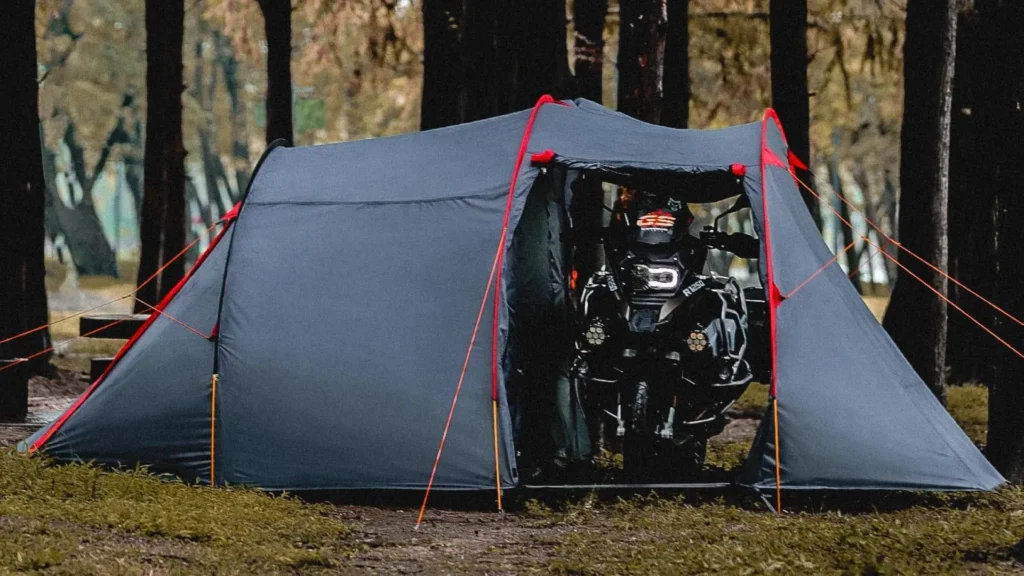
Is the Wolf Walker the best “garage” tent on Amazon?
The Wolf Walker is the best value-for-money “garage” tent in 2026, offering a massive 4-pole structure that creates a 6.2-foot high vestibule. This allows most riders to stand up fully while changing out of their riding gear, a luxury that smaller tents simply cannot offer.
Why it’s a 2026 Favorite:
While brands like Redverz were the original pioneers, Wolf Walker has dominated the Amazon US market by offering a similar “bike garage” layout at a much more accessible price point for weekend touring.
- Pros: Total bike concealment; standing room; highly durable 210D polyester floor.
- Cons: Heavy (12+ lbs); requires a large footprint for setup; not suitable for small motorcycles with limited carrying capacity.
MSR Hubba Hubba NX 2 (The Weatherproof Icon)
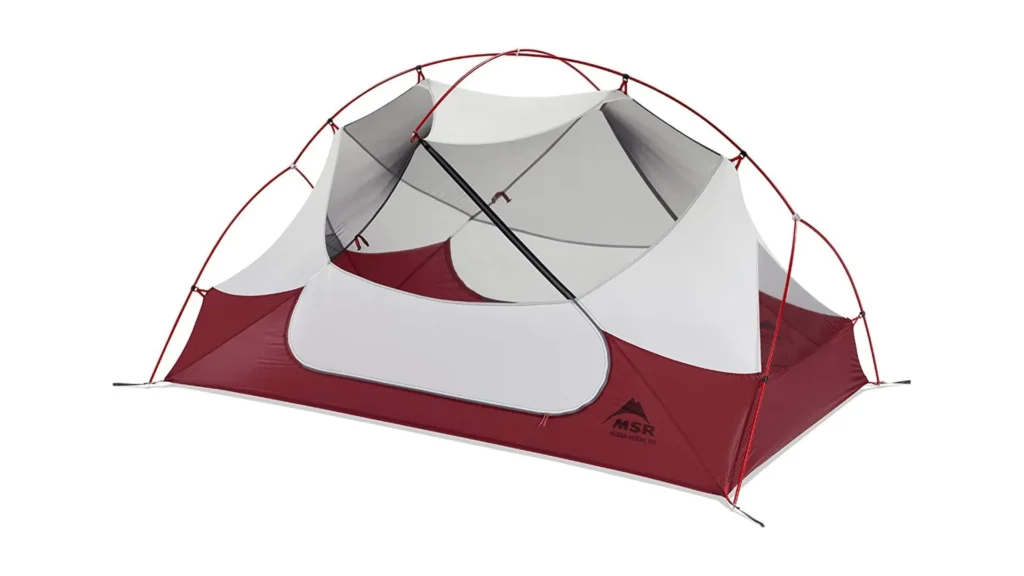
Is the MSR Hubba Hubba NX 2 worth the high price for motorcycle touring?
Yes, the MSR Hubba Hubba NX 2 is worth the investment for long-distance riders because it offers the best balance of wind stability and vertical interior space. Unlike many ultralight tents that feel cramped, the Hubba Hubba uses a unique pole geometry that creates nearly vertical side walls, allowing two riders to sit up and look at maps or change gear without bumping heads.
Why it’s a 2026 Favorite:
For riders crossing the Great Plains or the high-altitude passes of the Rockies, wind is the enemy. The Hubba Hubba’s unified hub-and-pole system is designed to “flex” under heavy gusts rather than snap. Furthermore, the 2026 model utilizes Durashield™ waterproof coating, which lasts up to 3x longer than standard polyurethane coatings, a critical factor for riders who live out of their tent for weeks at a time.
- Pros: Incredible ventilation; “StayDry” door gutters prevent rain from dripping into the tent; extremely high resale value.
- Cons: The 17.5-inch pole length is longer than the Big Agnes “Shortstik,” so it may need to be packed diagonally in smaller panniers.
ALPS Mountaineering Lynx 2 (The Rugged Value Choice)
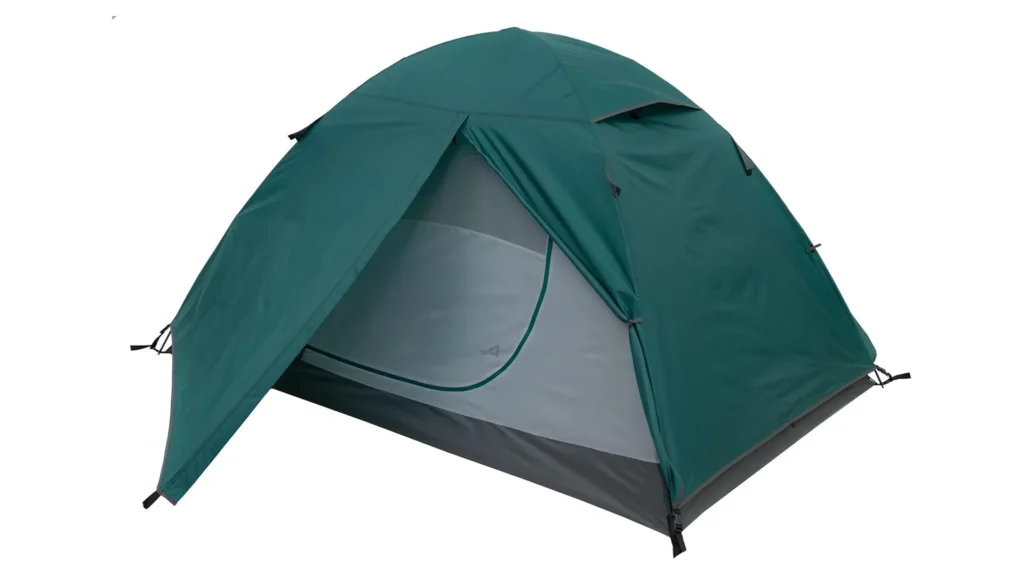
Why is the ALPS Mountaineering Lynx 2 so popular on Amazon for motorcyclists?
The ALPS Mountaineering Lynx 2 is a favorite because it is “bombproof” and budget-friendly. While technical riders obsess over grams, many moto-campers prefer a thicker, more durable floor fabric (75D Poly) that doesn’t require a delicate footprint. It features oversized #10 zippers, which are easier to operate with cold, stiff fingers after a long day in the saddle.
Why it’s a 2026 Favorite:
It is a completely freestanding tent. This is a massive “Expert Insight” point: many motorcycle campsites are essentially gravel pads or hard-packed dirt where driving a stake is impossible. The Lynx 2 stands on its own, allowing you to move it around to find the levelest spot without pulling up stakes.
- Pros: Very affordable; easy two-pole setup; durable materials that resist snagging on riding gear.
- Cons: Packed weight is 5lb 4oz, which is heavier than premium options; the packed size is 20 inches, usually requiring it to be strapped to the rear rack.
Snugpak Scorpion 2 (The Stealth & Tactical Option)
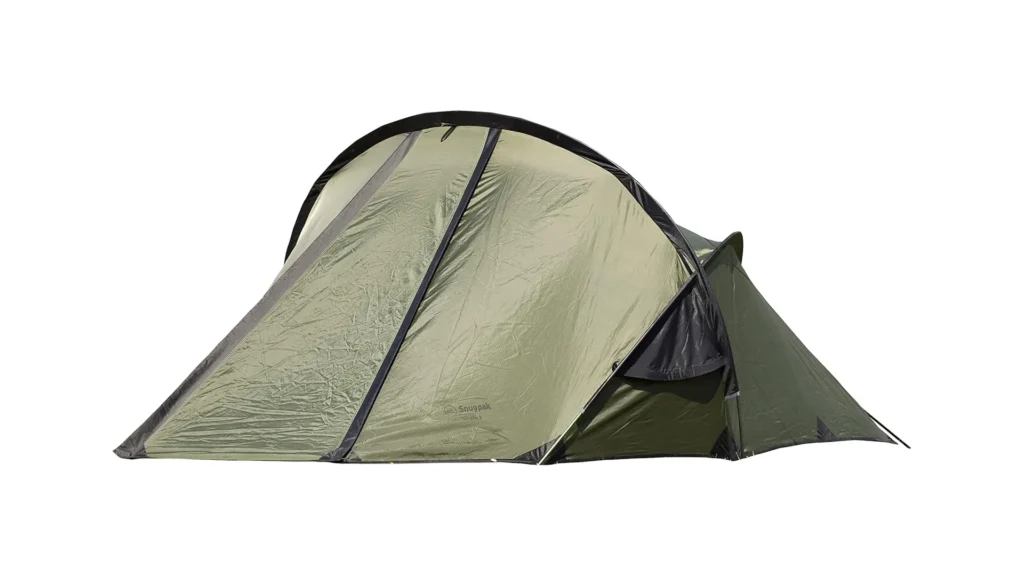
Is the Snugpak Scorpion 2 the best tent for stealth camping?
Yes, the Snugpak Scorpion 2 is the premier choice for riders who prefer “wild camping” or stealth camping. Its olive-drab color and low-profile, “slope-style” design make it nearly invisible in wooded areas at dusk. Because it was originally designed for military use, it features a “fly-first” pitch, meaning you can set up the waterproof outer shell first and keep your inner sleeping area completely dry during a downpour.
Why it’s a 2026 Favorite:
The Scorpion 2 has a 5000mm Hydrostatic Head (HH) rating on its flysheet. To put that in perspective, many “high-end” backpacking tents only offer 1200mm to 1500mm. For a motorcyclist stuck in a multi-day storm in the Pacific Northwest, this level of water resistance is the difference between a dry sleeping bag and a miserable night.
- Pros: Exceptional waterproof rating; low wind profile; “bombproof” build quality.
- Cons: Very little headroom, you cannot sit up straight in this tent; it is a “front-entry” design, which can be awkward for two people.
Kelty Late Start 2 (The Fastest Setup for Solo Riders)
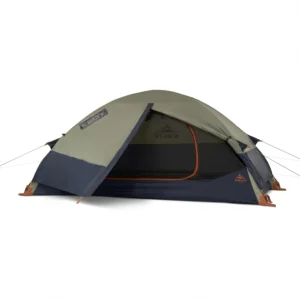
Can you set up the Kelty Late Start 2 in the dark?
Yes, the Kelty Late Start 2 is specifically designed for riders who arrive at camp late and exhausted. It features “Kelty Quick-Corner” technology, deep pockets at the corners that hold the pole ends in place while you walk to the other side to tension the tent. This eliminates the “ping-pong” effect where one pole pops out while you’re trying to secure the other.
Why it’s a 2026 Favorite:
It offers a massive interior floor space for the price (31 square feet). This is perfect for a solo rider who wants to bring their panniers inside the tent for safety and organization. According to our testing, a solo rider can go from “kickstand down” to “tent up” in under 3 minutes with this model.
- Pros: Lightning-fast setup; affordable; reliable aluminum poles.
- Cons: Only has one door and one vestibule, making it less ideal for two riders; ventilation is average compared to the MSR or TETON.
The North Face Stormbreak 2 (The Brand Reliability Pick)
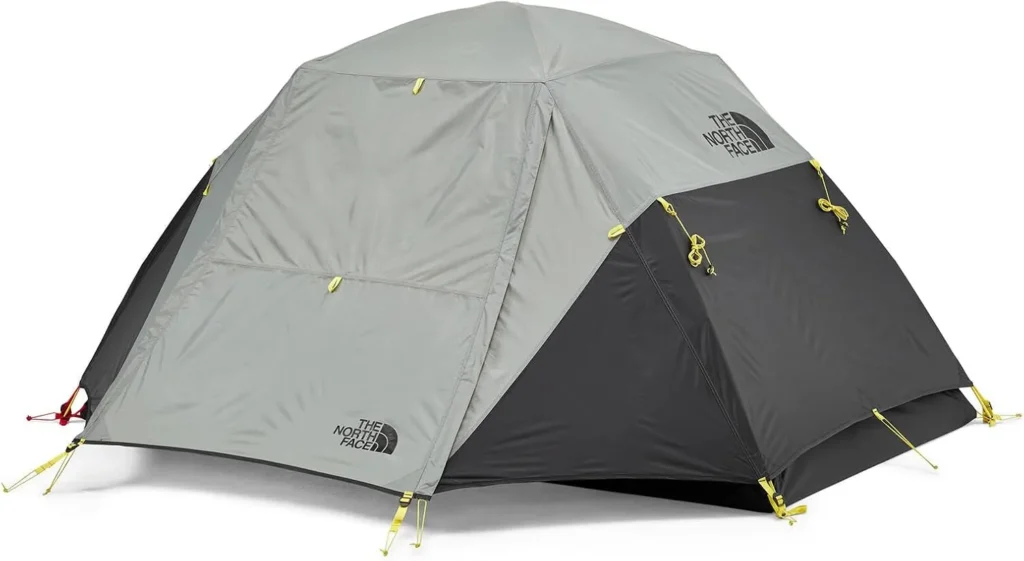
Is The North Face Stormbreak 2 good for high-wind motorcycle camping?
Yes, the Stormbreak 2 is one of the most stable tents in high-wind conditions due to its classic cross-pole dome design and heavy-duty 75D polyester fly. While ultralight tents might flap or “pancake” in a 30mph desert crosswind, the Stormbreak 2 holds its shape, providing a quiet night’s sleep for riders camping in exposed areas like the Badlands or the high plains.
Why it’s a 2026 Favorite:
The “symmetrical” design is a major win for motorcycle couples. It features two large doors and two massive vestibules. This means both riders have their own “garage” space to store a helmet, riding boots, and a tank bag without having to climb over each other or mix up their gear.
- Pros: High-quality zippers that don’t snag; incredible wind resistance; easy-to-clean floor fabric.
- Cons: At nearly 6 lbs, it is the heaviest “non-garage” tent on our list; the 22-inch packed length almost certainly requires it to be strapped to the top of a pannier or a tail rack.
Marmot Crane Creek 2P (The Mid-Range All-Rounder)
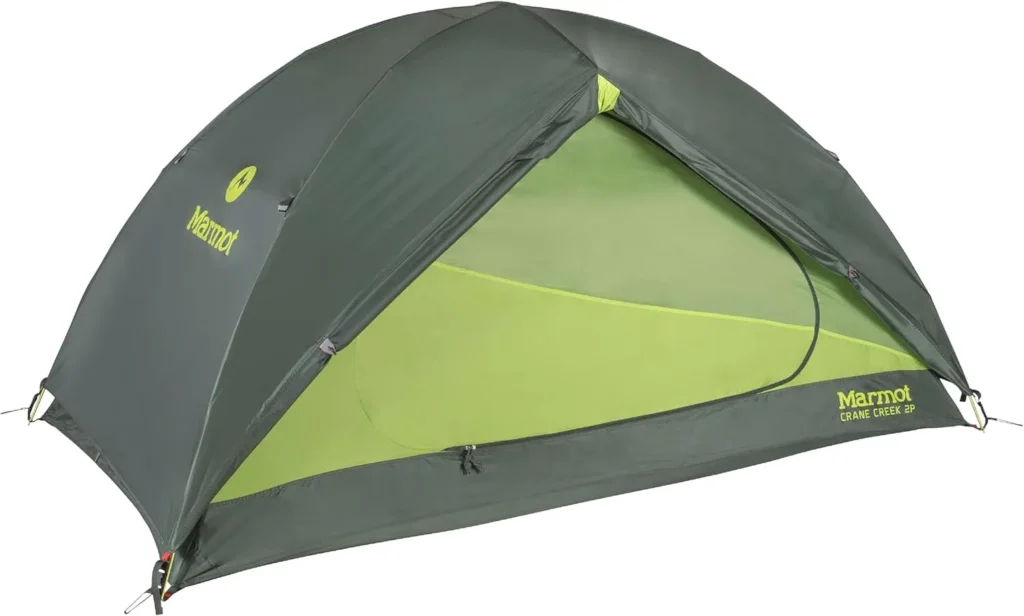
Why is the Marmot Crane Creek 2P an Amazon favorite for moto-travel?
The Marmot Crane Creek 2P is an Amazon-exclusive powerhouse that offers a “Goldilocks” balance: it’s lighter than the budget tents but significantly cheaper than the premium bikepacking tents. It utilizes Marmot’s high-end seam-taping and “Zone Construction,” which bends the poles at the bottom to create more “elbow room” inside the tent, vital when you’re changing out of a bulky armored riding suit.
Why it’s a 2026 Favorite:
Riders appreciate the “Fast-Pitch” option. If you buy the matching footprint, you can set up just the poles and the rainfly (leaving the mesh inner tent in your bag). This is a great “hack” for riders who just need a quick shade structure for a roadside lunch or a lightweight shelter for a bug-free, warm-weather night.
- Pros: Great vertical interior space; very high waterproof rating on the floor; trusted Marmot lifetime warranty.
- Cons: Ventilation can be a bit restricted when the fly is fully staked down in high humidity.
TETON Sports Mountain Ultra 2 (The High-Ventilation Summer Pick)
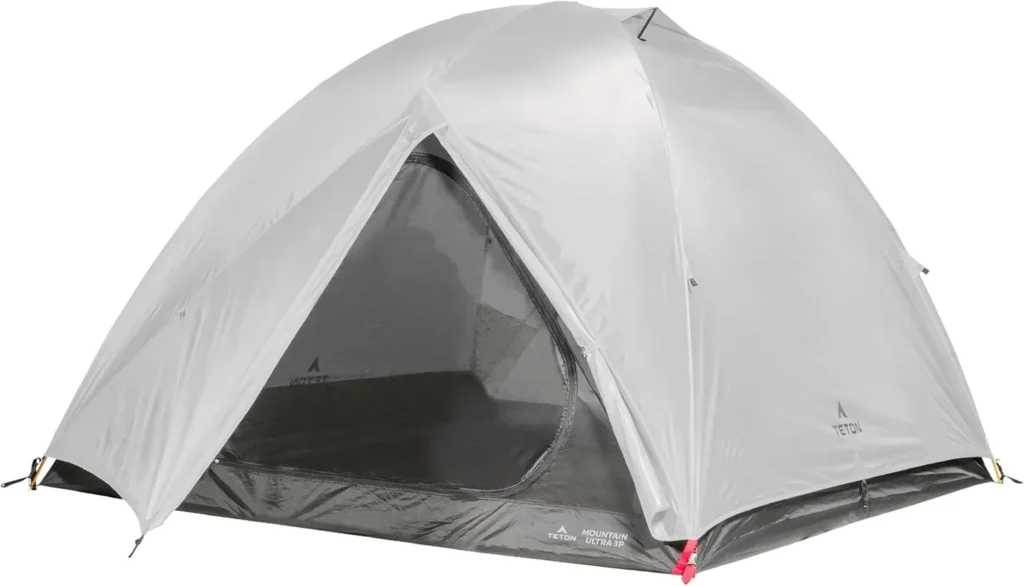
What is the best motorcycle tent for hot-weather desert riding?
The TETON Sports Mountain Ultra 2 is the best choice for summer tours or BDR (Backcountry Discovery Route) trips through the Southwest because its inner body is made almost entirely of micro-mesh. This allows for 360-degree airflow, preventing the “sauna effect” that happens in polyester tents when the sun hits them at 6:00 AM.
Why it’s a 2026 Favorite:
It comes with a reinforced gear loft specifically designed to hold heavier items. For a motorcyclist, this is the perfect spot to dry out a pair of damp riding gloves or hang a headlamp to illuminate the entire cabin while you work on your GPS routes for the next day.
- Pros: Exceptional airflow; very lightweight for the price; includes a footprint (a rare bonus at this price point).
- Cons: The mesh is so fine that it can trap very fine “moab” dust; not recommended for late-season camping where temperatures drop below freezing.
Comprehensive Buying Guide: What Makes a Tent “Moto-Ready”?
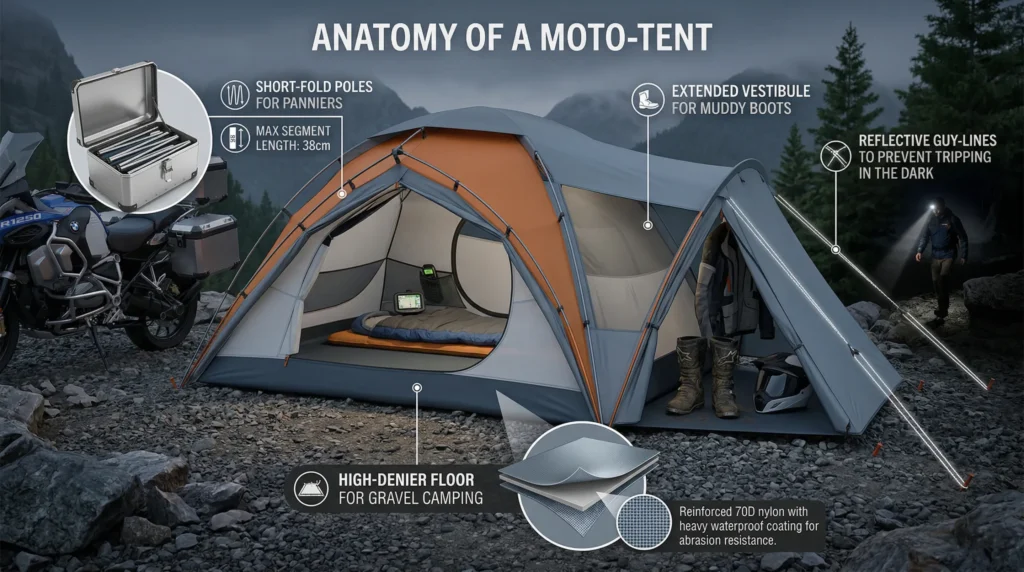
How do you choose the right tent for your specific motorcycle?
Selecting a tent for a 1,000-mile trip isn’t about finding the “best” tent; it’s about finding the one that integrates with your bike’s luggage system. A rider on a BMW GS with 45L aluminum panniers has very different requirements than a rider on a Ducati Multistrada with sleek, narrow plastic cases.
1. The “Packed Length” Reality Check
Before clicking “buy,” you must measure the interior dimensions of your hard luggage.
- The 18-Inch Barrier: Most standard tent poles are 18 to 22 inches long.
- The Solution: If you have narrow panniers, you need a “Bikepacking” tent (like the Big Agnes or Nemo) with 12-inch poles. If you buy a tent with 20-inch poles, be prepared to strap it to your pillion seat with Rok Straps, which leaves it vulnerable to rain and road grime.
2. Understanding “Denier” (Durability vs. Packability)
Tent fabrics are measured in “Denier” (D).
- 15D – 20D (Ultralight): These tents (like the Nemo Dragonfly) pack down to the size of a loaf of bread but are thin. You must use a footprint, or your motorcycle boots or a sharp rock will poke a hole in the floor.
- 68D – 75D (Heavy Duty): These (like the ALPS Lynx or TNF Stormbreak) are bulky but can take a beating. If you camp in rocky, unimproved sites, the extra weight is worth the peace of mind.
3. The “Gear Explosion” Floor Space Rule
When a tent says “2-person,” it means two people can lie side-by-side with zero extra room.
- Expert Insight: For motorcycle camping, always buy a tent that is “+1” your capacity.
- Why? A solo rider needs the extra floor space of a 2-person tent to store their helmet, armored jacket, riding pants, and boots inside. Leaving $1,500 worth of Klim or Rev’it gear in the vestibule is risky in high-theft areas or during heavy rain where splash-back can get your gear wet from the bottom.
4. Freestanding vs. Non-Freestanding
- Freestanding: The tent holds its shape without stakes. (Best for moto-campers who often end up on gravel pads or hard-packed dirt).
- Non-Freestanding: Must be staked out to stay up. (Lightest weight, but a nightmare if you can’t get a stake into the ground).
Setup & Maintenance for Long-Distance Tours
How do you keep your tent from leaking on a multi-day trip?
To ensure your tent remains waterproof throughout a cross-country tour, you must use a dedicated footprint, check your seam tape annually, and most importantly, never leave a wet tent packed in your panniers for more than four hours. The heat from your motorcycle’s exhaust or the sun hitting your luggage can cause “hydrolysis,” which breaks down the waterproof coating of the fabric in a matter of hours if the tent is damp.
1. Site Selection: Avoid “The Bowl”
When you arrive at a campsite after an 8-hour ride, it’s tempting to pitch your tent on the first flat spot you see. However, always look for the “high ground.” Avoid depressions where water can pool.
- Expert Tip: Look at the way the grass is matted down; if it’s flattened in a swirl pattern, that’s where water gathers during a storm.
2. The 30-Minute Lunch Break Air-Out
If you have to pack up your tent while it’s raining in the morning, your gear will be a soggy mess by evening.
- The Pro Move: During your midday lunch or gas stop, if the sun is out, drape your rainfly over your bike’s handlebars or seat for 20 minutes. Modern fabrics like Nemo’s OSMO or Big Agnes’s Ripstop dry incredibly fast when exposed to UV and wind.
3. Zippers: The Weakest Link
Motorcycle camping is inherently dusty. Dust is sandpaper for zippers.
- Maintenance: Carry a small stick of zipper lubricant or even a piece of plain beeswax. Rub it along the tracks of your tent zippers every few trips to prevent the “slider” from wearing out, which is the #1 cause of tent failure on the road.
Best Tent for Motorcycle Camping FAQs
No, a 1-person tent is almost never sufficient for a motorcycle camper. While a 1-person tent saves weight, it lacks the floor space required for your “gear explosion.” As a rider, you have a helmet, an armored jacket, riding pants, and boots, all of which are bulky and often damp or dirty. In a 1-person tent, you would have to sleep on top of your gear or leave it outside. A 2-person tent provides the necessary 30–35 square feet of floor space to keep your expensive riding gear inside, dry, and away from insects.
The safest way to pack a tent is low and centered on the bike. If your tent has “Shortstik” poles (under 13 inches), it should be placed at the bottom of a side pannier to keep the center of gravity low. If your tent has long poles, it should be strapped to the pillion seat or rear rack using Rok Straps rather than bungee cords. Bungee cords can load-shift and are prone to snapping, whereas Rok Straps use a combination of webbing and heavy-duty elastic to keep the tent “fused” to the bike even on bumpy off-road sections.
You only need a garage tent if you are traveling through high-theft areas or if you perform your own mechanical maintenance on the road. A “garage” (a large integrated vestibule) is excellent for hiding a high-value bike like a BMW R1300GS from prying eyes at night. However, for 90% of riders, a standard 2-person tent with a large vestibule is a better choice because it is 60% lighter and packs down much smaller, which significantly improves the bike’s handling and fuel economy.
Staying dry starts with a “fly-first” or “integral pitch” tent like the Snugpak Scorpion 2. This allows you to set up the waterproof outer shell first, then crawl underneath it to snap in the dry inner tent. Additionally, always use a footprint that is slightly smaller than the floor of your tent. If the footprint sticks out beyond the tent edges, it will catch rain and funnel it directly underneath you, creating a “waterbed” effect that will eventually soak through the floor.
Yes, premium tents (Big Agnes, MSR, Nemo) are worth the investment for serious riders because of the Hydrostatic Head (HH) ratings and pole quality. Cheap tents often use fiberglass poles that can shatter in high winds, potentially piercing your rainfly (and you). Premium tents use DAC aluminum poles that flex without breaking. Furthermore, high-end brands offer much better resale value; a well-maintained Big Agnes tent can often be sold for 60-70% of its original value after two seasons of use.
Wrapping Up
Which tent should you ultimately choose for your next tour?
The right tent depends entirely on your “Rider Persona.”
The Adventure Purist: If you spend your time on the BDRs and need to fit your gear into narrow panniers, the Big Agnes Copper Spur HV UL2 Bikepack is the undisputed winner. Its pole length and specialized storage make it the most “moto-intelligent” tent ever made. | The Long-Term Nomad: If you are living off your bike for months, the Wolf Walker Motorcycle Tent offers the “garage” luxury and standing room that prevents “tent fatigue” during long rainy spells. | The Weekend Warrior: For the rider who wants a reliable, “bombproof” setup without breaking the bank, the ALPS Mountaineering Lynx 2 provides the best durability-to-dollar ratio on the market today. |
No matter which you choose, remember that for the best tent for motorcycle camping, volume is more important than weight. Buy the tent that fits inside your luggage, and you’ll enjoy a much more stable and stress-free ride.
Browse more review articles to find out about what you’re looking for on Guide To Home Insurance.