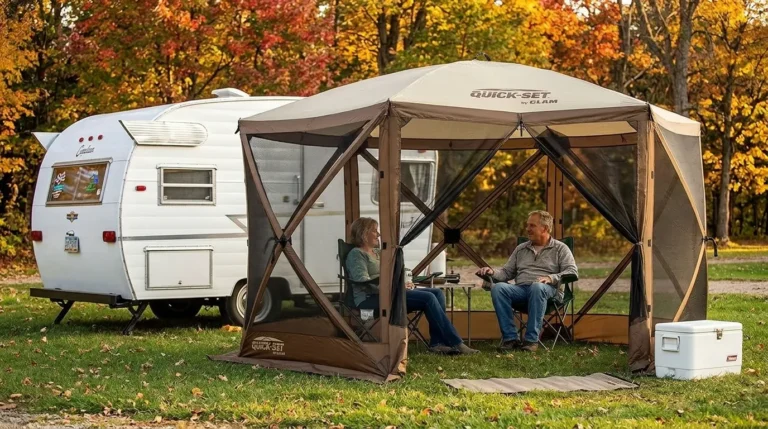
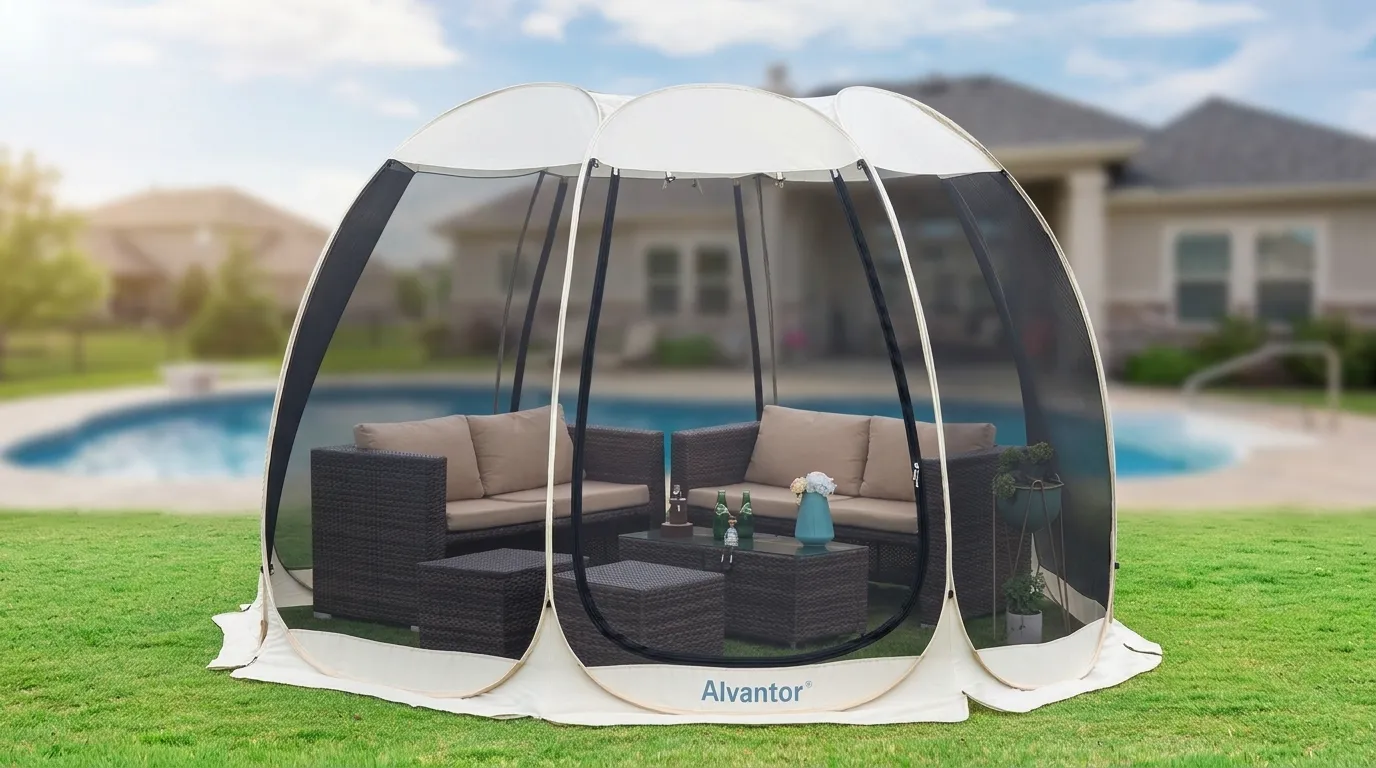

The Alvantor screen house is the shelter my neighbors kept asking about, mostly because it looked like a giant beige bubble had landed on my lawn in about four seconds flat. Following my earlier tests of the Clam Escape screen tent, a heavy hub shelter built for campgrounds, I wanted to know whether a 12-pound spring-open room could do the same bug-free job for a fraction of the weight and price. Mostly it can. But there is one moment, the fold, where it will test your patience, and you should know that before you buy.
This post contains affiliate links. As an Amazon Associate, I may earn commission from qualifying purchases at no extra cost to you.
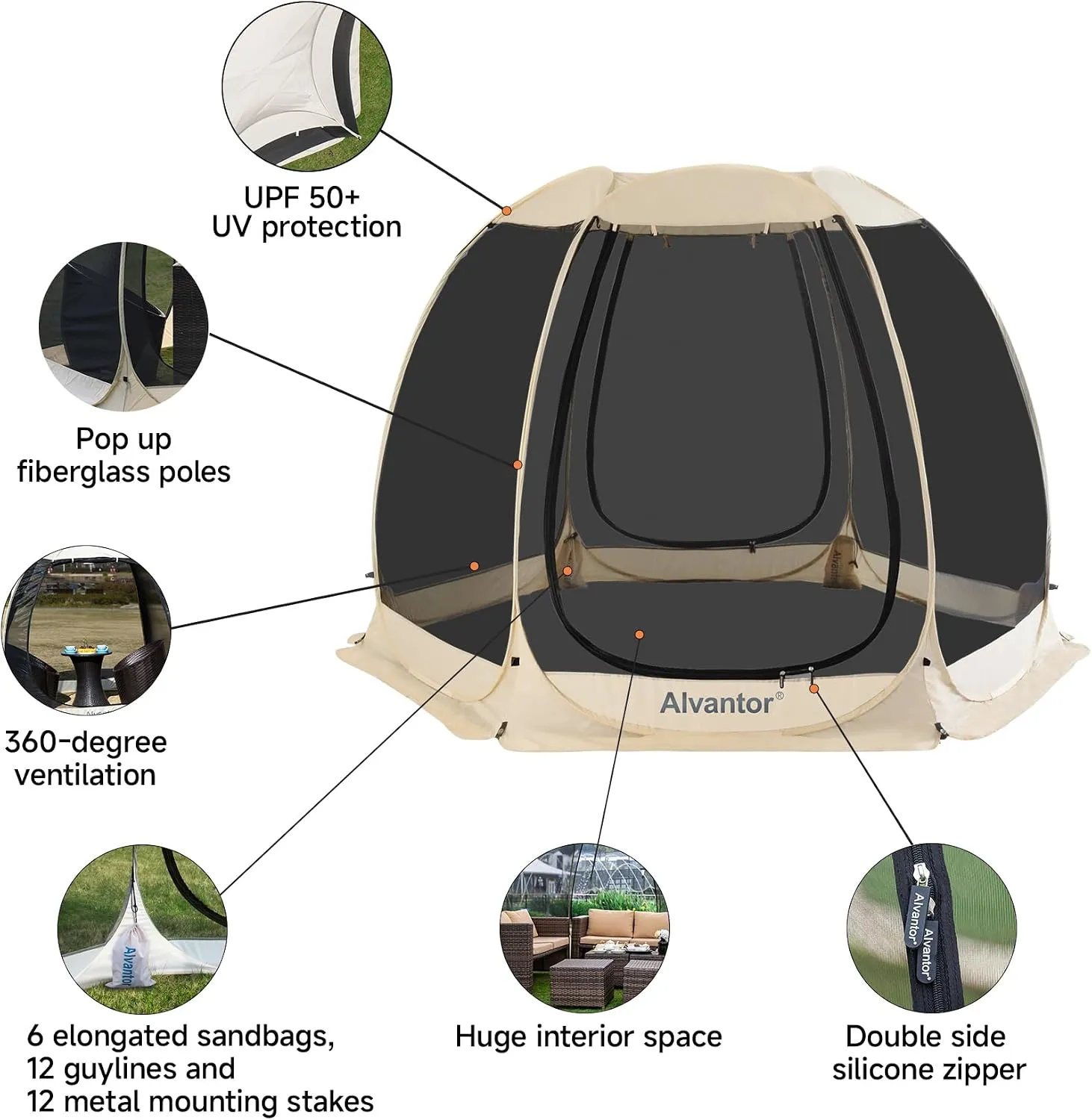
The Alvantor is a hexagonal spring-frame screen house with six mesh walls, a UPF 50+ fabric top, and a fiberglass frame that opens automatically when you release it. I named it the best budget and lightest pick in my pop up screen tent guide, and after a full season in the backyard and two camping weekends, here is the full picture.
Overall Rating: 4.4/5
| Rating Question | Score (Out of 5) |
|---|---|
| How quickly did it spring open? | 4.8 |
| How easy was it to fold back down? | 3.9 |
| How light was it to carry? | 4.8 |
| How well did the mesh keep bugs out? | 4.6 |
| How well did it handle a breezy afternoon? | 3.9 |
| How much usable room did the 10×10 give? | 4.2 |
| How good is the value for the price? | 4.7 |
What Are the Primary Pros and Cons of the Alvantor Screen House?
The primary pros of the Alvantor screen house are its featherweight 12-pound build, instant spring-open setup, and UPF 50+ top at a budget price, while the main cons are its not-waterproof fabric, a fold that takes practice, and curved walls that eat into edge headroom. It is a brilliant sun and bug room that asks you to respect the weather.
Pros
| 1. Springs open on its own in seconds |
| 2. Only 12 pounds, the lightest shelter in this hub |
| 3. Packs into a flat disc about 39 inches across |
| 4. UPF 50+ fabric top for real midday shade |
| 5. Six mesh walls give 360-degree airflow |
| 6. 6 sandbags, 12 guylines, and 12 metal stakes included |
| 7. Huge rating base of 8,000+ reviews at 4.5 stars |
Cons
| 1. Fabric is not waterproof or rainproof |
| 2. Not recommended in winds of 24 mph and up |
| 3. Folding back into the disc takes practice |
| 4. Curved walls reduce headroom near the edges |
| 5. Only one entrance door |
| 6. Floor is an extra purchase |
| 7. Lights and accessories sold separately |
That balance makes the Alvantor easy to recommend for the right buyer. If your screen house will live on a lawn or patio for summer evenings, every con is manageable. If you need a camp dining room that shrugs off afternoon storms, the cons start to matter. For tighter budgets that need straighter walls, the Coleman Skylodge portable screenhouse costs less and uses a canopy-style frame, though it lacks the Alvantor’s 360-degree airflow. On sun protection, the Skin Cancer Foundation explains that a UPF 50 fabric blocks about 98 percent of the sun’s rays, which is exactly the shade quality the Alvantor’s top delivers at noon.
The Specs of the Alvantor Screen House
| Rating Question | Score (Out of 5) |
|---|---|
| How quickly did it spring open? | 4.8 |
| How easy was it to fold back down? | 3.9 |
| How light was it to carry? | 4.8 |
| How well did the mesh keep bugs out? | 4.6 |
| How well did it handle a breezy afternoon? | 3.9 |
| How much usable room did the 10×10 give? | 4.2 |
| How good is the value for the price? | 4.7 |
The spec that defines the Alvantor is the weight. At 12 pounds it is a third of the big hub shelters, and the flat disc slides behind a car seat. Compare that with the 37-pound Clam Escape I tested first, and you can see why so many people buy this as their first screen house.
How Fast Does the Alvantor Screen House Set Up and Fold?
The Alvantor screen house sets up in seconds, because the fiberglass frame springs open on its own the moment you release the bands, but folding it back into its disc takes a practiced twist that most people need three or four tries to learn. Setup is the easiest in this hub; takedown is the hardest of the spring rooms to master.
Setup is almost comical. Pull the disc from the bag, hold it at arm’s length pointed away from you, release the bands, and step back. The frame flips into shape and you walk around straightening any panel that did not fully extend. Then the real work starts: stake the twelve loops, run the twelve guylines, and drop sandbags in the corners if you are on a deck.
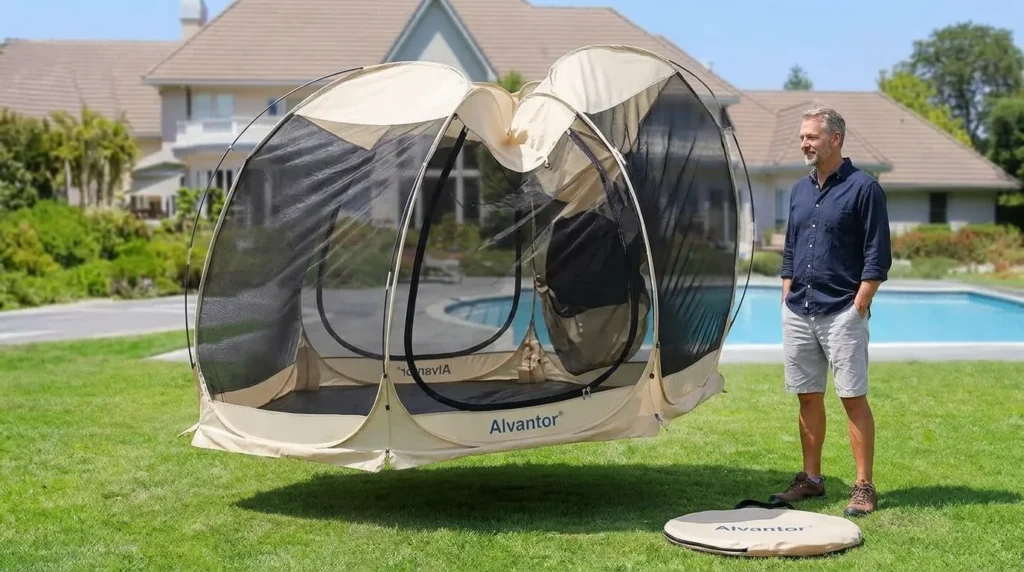
The Alvantor screen house flips into shape in seconds, so anchoring is where your setup time goes.
Folding is the learning curve. You collapse the room in half, then press it toward the ground while twisting the frame into stacked loops until it lies flat as a 39-inch disc. My first attempt ended with the frame springing back open in my arms. By the fourth attempt, I had it down to about two minutes. If you have folded a pop up beach shade before, the motion is similar to what I describe in my beach pop up tent guide.
Two tips helped. Leave one door zipper open a few inches so trapped air escapes as you fold, and keep your face out of line with the frame during the twist. A spring frame stores real energy, and it can whip open fast if your grip slips.
Compared with a hub shelter, the trade is clear. Hub frames open slower but fold with no drama, while the Alvantor opens instantly and folds with a little drama. For a backyard room that stays up for weeks at a time, the fold barely matters. For camping trips where you pack up every couple of days, practice it at home before you go.
How Much Room Does the Alvantor Screen House Really Give?
The 10×10 Alvantor screen house gives you 100 square feet and a 7-foot center height, which comfortably holds a patio loveseat, two chairs, and a coffee table, or four to six adults around a small table. The rounded walls mean the best space is in the middle; the outer foot or so is better for gear than for people.
My patio test summed it up. A two-seat outdoor sofa, two lounge chairs, and a low table fit with room to walk through the door. Six adults in camp chairs fit too, but they sat in a tighter circle than they would in a straight-walled shelter, because the mesh curves inward above shoulder height near the edges.

The Alvantor screen house shines as a patio room, with the best headroom in the middle of the bubble.
The size range is a real strength. Alvantor sells this same design from a 6×6 for two or three people up to a 15×15 rated for twelve to fifteen adults. If you are choosing between the 10×10 Alvantor and a camping hub, think about the shape of your crowd. A couple or small family will be happy in the 10×10, and the 9×9 Clam Venture screen tent is the hub alternative for that group size, with straighter walls but more than double the weight.
For bigger groups who want privacy walls, the 12×12 hexagons are worth comparing. The Vevor screen tent and the Aoxun gazebo both include six zip-on wind cloths, which the Alvantor does not offer, but both weigh well over 30 pounds. The Alvantor’s 12×12 size stays dramatically lighter.
There is also a small hanging hook inside for a coat, bag, or lantern. String lights look great draped over the frame at night, but they are not included, and I only use battery-powered lights inside any screen room, in line with Maine’s State Fire Marshal advice on tent safety to keep fuel-burning lanterns and heaters out of tents and enclosed spaces.
Can the Alvantor Screen House Handle Sun, Rain and Wind?
The Alvantor screen house handles sun brilliantly, bugs very well, rain poorly, and wind only when fully anchored and below about 24 mph. Alvantor is upfront about this: its own description says the fabric top is not waterproof or rainproof, and it advises against use once wind reaches 24 to 30.8 mph.
Sun is its best weather. The UPF 50+ top threw deep shade over the whole center of the room on a cloudless July afternoon, and with six mesh walls, any breeze passed straight through. On hot days it felt noticeably cooler inside than under my solid-walled canopy.

Rain is the weak spot. A passing sprinkle was fine, but a steady shower soaked through the top within minutes. If rain is in the forecast, I treat the Alvantor as something to fold and put away, not something to shelter under. For camp shelters that genuinely shed rain, the Gazelle G6 lists a 2000mm waterproof roof, though at more than double the price and nearly triple the weight.
Wind needs respect. Fully staked with all twelve guylines out, the Alvantor stayed put through a gusty afternoon, but the whole frame flexed and breathed in a way hub shelters do not. The National Weather Service’s wind safety guidance is to secure loose outdoor items when a High Wind Watch is posted, and with a 12-pound spring frame, securing it means folding it down. Never leave it unanchored, even for an hour; light structures like this are the ones that cartwheel across yards.
Bugs were a non-issue with the door zipped and the skirt staked flat. On uneven grass, I added sandbags along the windward skirt to close small gaps.
How Does the Alvantor Screen House Compare to Other Spring-Open Screen Rooms?
The Alvantor screen house compares favorably with the other spring-open rooms in this hub on weight and price, while the vertical-wall designs beat it on edge headroom and warranty. All three open the same way and share the same fair-weather limits, so the choice comes down to shape, weight, and how long you want coverage.
The two rivals are the East Oak screen house tent pop up and the Mars Explo. Both use a squared-off frame with arched mesh panels instead of the Alvantor’s bubble, which keeps the walls closer to vertical, and both come with a 3-year warranty versus Alvantor’s 1 year. In exchange, they are heavier and need telescoping support poles fitted after opening.
| Feature | Specification |
|---|---|
| Brand and model | Alvantor, model 9020#E6 |
| Size tested | 10 x 10 ft, Beige |
| Dimensions | 120 x 120 x 84 inches (7 ft center) |
| Floor area | 100 square feet |
| Capacity | 4 to 6 adults (listed occupancy 6) |
| Weight | 12 pounds |
| Packed size | Flat disc about 39.3 inches across |
| Frame | Fiberglass, automatic spring-open |
| Top | Fabric top with UPF 50+ protection |
| Walls | 6 mesh walls |
| Door | 1 large door, double-sided silicone zipper |
| Water resistance | Not water resistant |
| Included | 6 sandbags, 12 guylines, 12 metal stakes, carry bag |
| Floor | Optional, sold separately |
| Other sizes | 6×6, 12×6, 12×12, 15×15 ft |
| Warranty | 1 year |
My take after living with all three: if you carry the shelter often, or simply want the most screen room for the money, the Alvantor wins. If it will stay set up on a patio for months and you value straighter walls and a longer warranty, the East Oak or Mars Explo is worth the extra weight.
Frequently Asked Questions About the Alvantor Screen House
Is the Alvantor screen house waterproof?
No. Alvantor states that the fabric top is not waterproof or rainproof, and my testing agreed: a light sprinkle was fine, but a steady shower soaked through quickly. Treat the Alvantor as a sun and bug shelter. When rain is coming, fold it and put it away, and always let it dry completely before storing it in the bag to prevent mildew.
How do you fold the Alvantor screen house?
Remove all stakes, sandbags, and guylines, leave one zipper slightly open, and fold the room in half. Then press it toward the ground while twisting the frame into stacked loops until it lies flat as a disc about 39 inches across, and slide it into the bag. Expect three or four practice attempts before it feels natural, and keep your face clear of the frame while twisting.
Does the Alvantor screen house come with a floor?
No, it has an open bottom with a fabric skirt, but Alvantor sells a matching floor separately. Many people use an outdoor rug instead, which works well on patios and lawns. If a floor-like setup matters to you for muddy campsites, the DMH Outdoors tent includes detachable mud mats at its doors, though it is a heavier pole-built shelter.
How many people fit in the 10×10 Alvantor screen house?
The 10×10 size fits four to six adults, with the listing giving an occupancy of six. In practice, four people in lounge chairs or six in compact camp chairs is comfortable. Because the walls curve inward, people sit closer to the center than in a straight-walled shelter. For bigger groups, Alvantor offers 12×12 and 15×15 sizes of the same design.
Can you leave the Alvantor screen house up all summer?
You can leave it up for long stretches on a patio or lawn if it is fully anchored with stakes, guylines, and sandbags, but take it down before storms, heavy rain, or winds approaching 24 mph. Check guyline tension weekly, and brush off leaves and debris so moisture does not collect on the fabric. A long stint in strong sun will also age any outdoor fabric over time.
Helpful Guides
- How to Fold a Pop Up Screen Tent
- How to Set Up a Screen House Tent
- Do Screen House Tents Let Dust In?
- How to Clean Mold from a Tent Screen
Should You Buy the Alvantor Screen House?
Yes, buy the Alvantor screen house if you want a light, affordable screen room for patios, backyards, and fair-weather camping. It opens faster than anything else in this hub, packs into a slim disc, and gives genuine UPF 50+ shade with 360-degree airflow.
Skip it if you need rain protection, camp in windy places, or want privacy walls. A taped-roof hub shelter or a 12×12 hexagon with included wind cloths will serve you better there, and my best pop up screen tents guide compares them all.