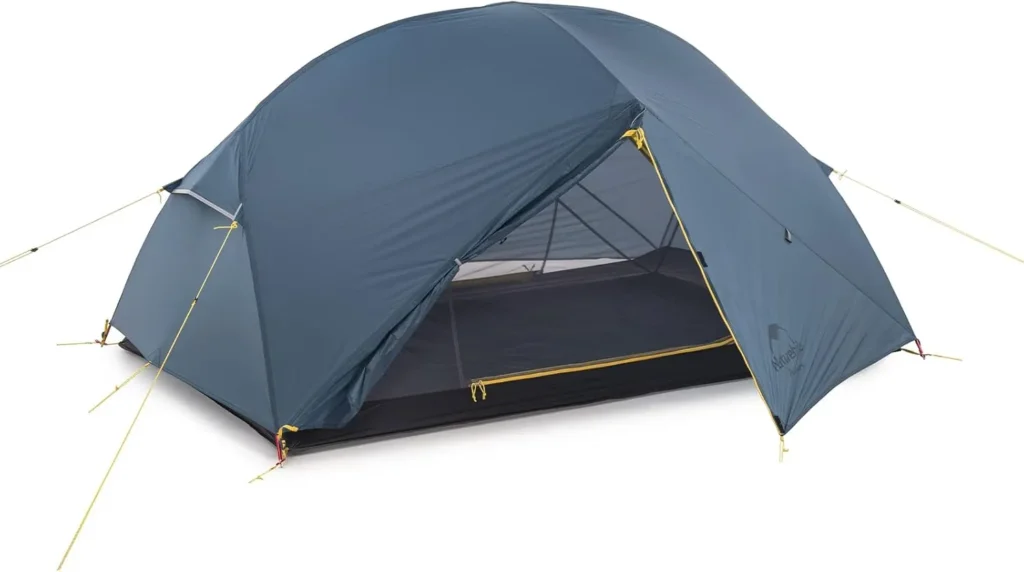
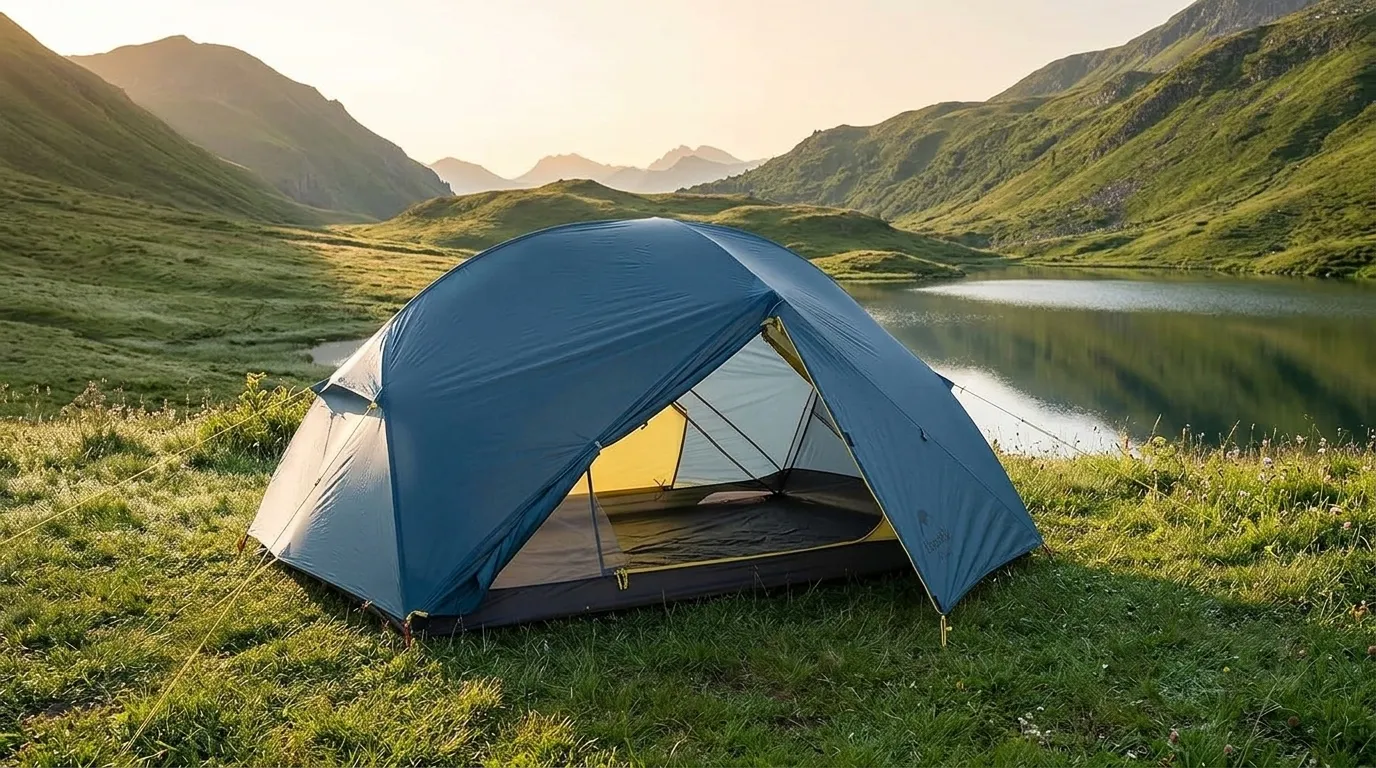

Is the Naturehike Mongar 2 worth your money? The direct answer to whether the Naturehike Mongar 2 is worth the investment is a definite yes, especially if you are a beginner or a budget-conscious traveler who wants a high-end layout without the 500 dollar price tag. I have analyzed dozens of shelters and the Mongar 2 is the tent I recommend to people who are just starting their journey. While I frequently rave about the technical fabrics in the OSMO 2P, I realize that not everyone is ready to drop a week of wages on a shelter. The Mongar 2 provides a solid, freestanding architecture that mimics the most expensive gear in the world for about a third of the cost.
I noticed right away that the build quality is significantly higher than that of the Coleman pop up tent. It uses 20D ripstop nylon and 7001 aluminum poles, which are legitimate technical materials. I spent four nights in this tent during a trip through the hills of Virginia, and the construction felt stable and well-finished. For a rider or a hiker who wants a tent that can actually survive a mountain storm rather than just a backyard campout, the Mongar 2 is an honest and reliable tool. It is not trying to be a specialized lightweight racing tent, but it is trying to be a versatile home on the trail.
I am writing this from the perspective of a gear tester who values performance over brand logos. Throughout this review, I will break down the vertical wall geometry, the reality of the 4-pound trail weight, and how the zippers handle trail dust. The mechanical simplicity is a major plus, and the Naturehike Mongar 2 uses a classic hub-and-pole system that is very hard to mess up. It is a no-nonsense shelter that has earned its spot in the best ultralight tents category by proving that value does not always mean low quality.
How does the weight and pack size compare to the top-tier technical tents?
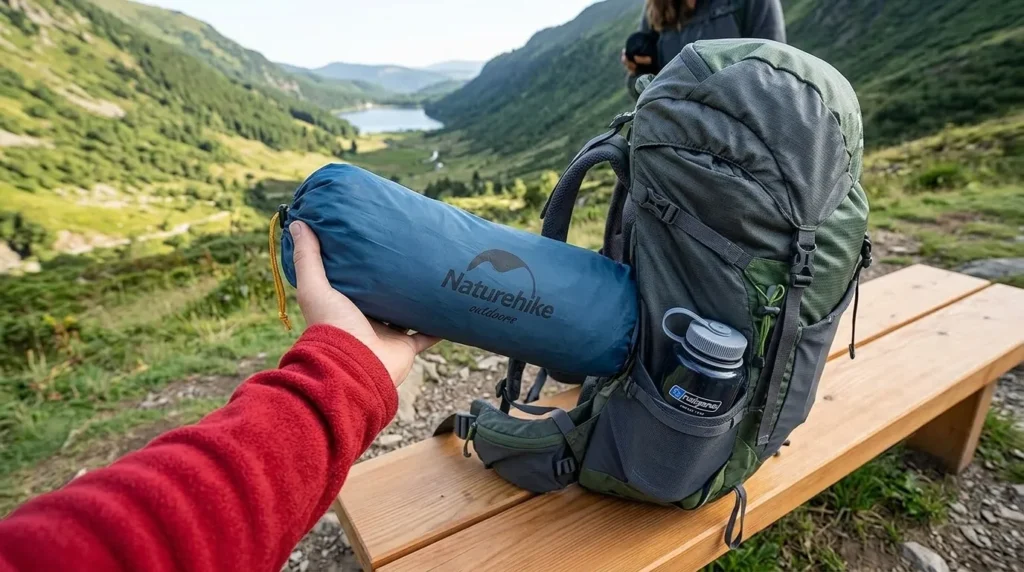
The direct answer is that the Naturehike Mongar 2 is a bit of a heavyweight in the ultralight world, coming in at around 4 pounds for the full kit, which is twice the weight of the absolute lightest models. I have spent a lot of time counting ounces, and 4 pounds is considered heavy. However, you have to look at what you get for that weight. You are getting thicker 20-denier fabric and a more robust pole system than the specialized gear I analyzed in the Big Agnes Tiger Wall UL2 review. For many weekend travelers, the extra pound of weight is a fair trade for the hundreds of dollars they save.
I found that the packed size is roughly 19 inches long and 6 inches wide. This is a very standard dimension for a 2-person dome, but it is not quite as compact as the 12-inch poles of the Big Agnes Fly Creek HV UL2. I noticed that the carry bag is made of a durable nylon and features compression straps, which helped me squash the tent down to fit horizontally in my side panniers. According to my own packing tests, it takes up about the same amount of room as a standard technical sleeping bag.
One expert insight for pack organization: if you want to slim things down even further, you should store the poles separately along the frame of your bike or in the side pocket of your hiking pack. This allows you to compress the actual tent fabric into a much smaller ball. As I mentioned in my guide for the best ultralight tents, pack volume is often the limiting factor for smaller luggage systems. The Naturehike Mongar 2 is very manageable for car camping or mid-sized adventure bikes, but it might be a bit bulky for a true minimalist thru-hiker. It is a middle-ground performer that respects your trunk space without sacrificing material thickness.
What is the interior livability like for two people and their gear?
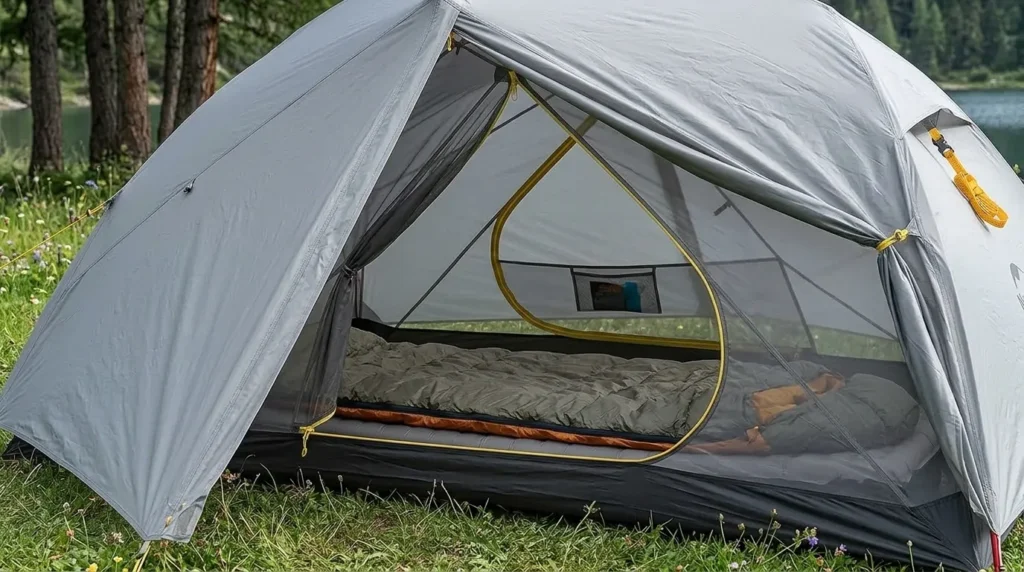
The direct answer to the space question is that the Naturehike Mongar 2 is one of the most spacious 2-person tents on my best ultralight tents list, thanks to its symmetrical vertical walls. Unlike the tapered floors I saw in the OSMO 2P, the Mongar 2 floor is a true rectangle that measures 82 by 51 inches. I found that I could fit two wide sleeping pads side-by-side with room for our electronics and water bottles in the middle. Because the poles pull the walls straight up, you get a massive amount of shoulder room that makes the interior feel like a legitimate room.
I noticed that the interior height is about 40 inches, which allowed me to sit up completely straight to change my clothes or work on my paper maps. It feels significantly more airy than the narrow architecture of the Sea to Summit Telos TR2, even though the Telos has more high-tech pole geometry. The Mongar 2 also features two doors and two vestibules, which is a mandatory feature for me when sharing a tent. Each person has their own porch area for boots and a pack, which prevents the gear explosion from taking over your sleeping space.
One thing I really liked was the interior storage. There are two large mesh pockets in the corners and a gear hook at the peak for a lantern. According to my field measurements, you are getting about 29 square feet of floor space plus an additional 12 square feet of vestibule storage. For a solo traveler, it feels like a luxury base camp. For a couple, it is a functional and comfortable sanctuary that does not feel like a nylon coffin. Livability is the best way to prevent cabin fever during a rain delay, and the Naturehike Mongar 2 excels here.
How easy is the freestanding setup process for a solo camper?
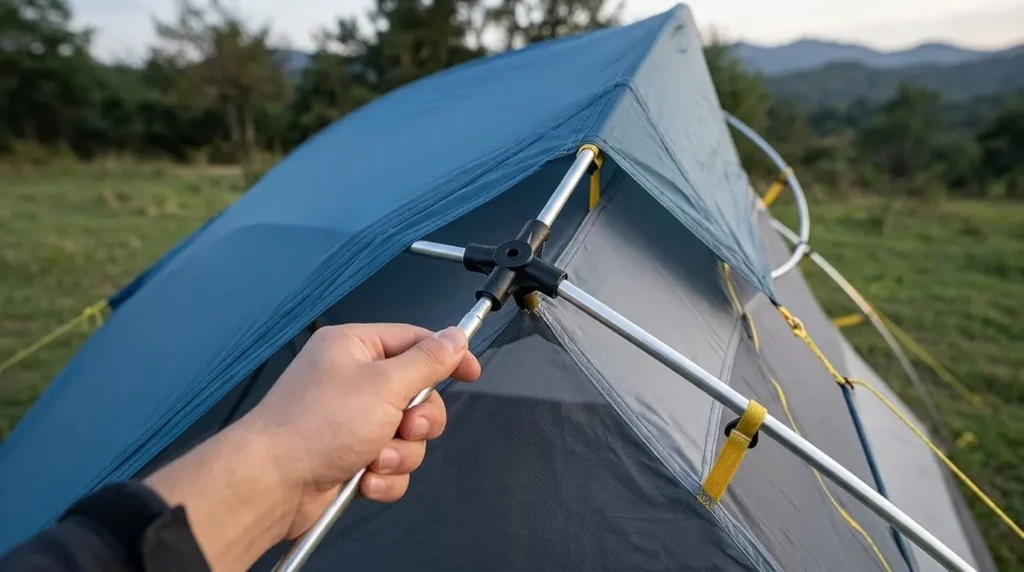
The direct answer is that the Naturehike Mongar 2 is incredibly fast to set up because it uses a fully freestanding hub system that mirrors the industry leaders. I have timed myself several times, and I can have the main body standing and the fly on in under four minutes by myself. Unlike the trekking pole pitch I described in my 3F UL Gear Lanshan 2 review, you do not need hiking poles or complex tensioning to get this tent to stand up. It uses a single hubbed pole that snaps together into a cross-frame, which is about as intuitive as it gets.
I found that the color-coded pole tips and corner webbing make the setup process almost impossible to mess up, even by the light of a headlamp. You match the silver to silver, and you are done. Because it is a fully freestanding dome, I can pick the whole tent up after it is pitched and move it around the campsite to find the flattest ground or avoid a hidden root. This is a massive advantage over the non-freestanding gear. In my guide on best ultralight tents, I highlight this freestanding flexibility as a top priority for beginners.
One expert insight I noticed is the quality of the plastic clips. They are robust and did not feel like they were going to snap when I was stretching the fabric under tension. According to technical setup reviews from various outdoor gear forums, the Naturehike Mongar 2 is often cited as the easiest tent to pitch for those who are moving up from budget domes. Removing the friction from the start of your trip is the best way to ensure you actually enjoy the outdoors. The Mongar 2 delivers a stress-free setup every single time.
Will the Naturehike Mongar 2 keep me dry during a heavy rainstorm?
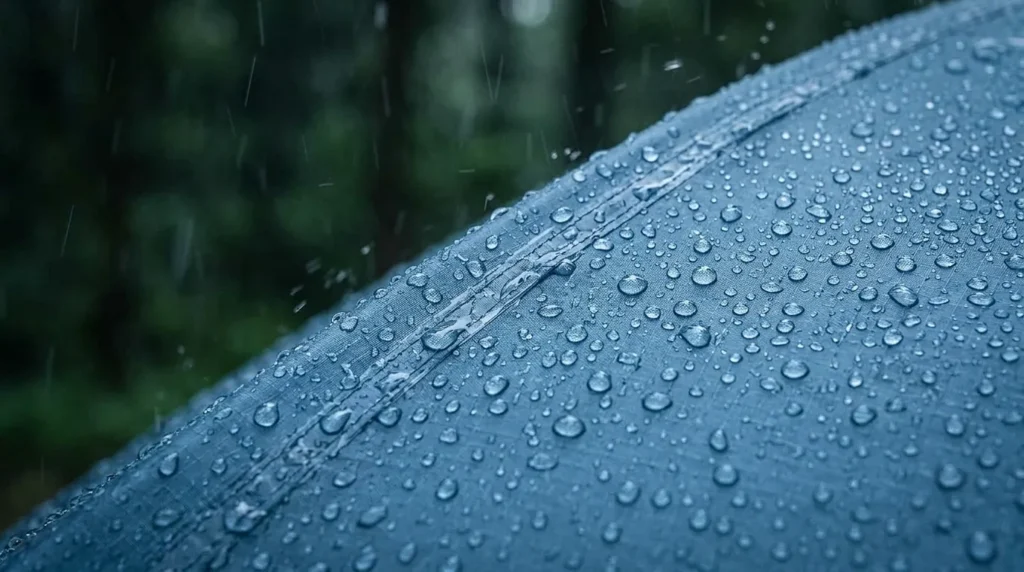
The direct answer to the weather question is that the Naturehike Mongar 2 is a very capable three-season shelter that handles rain as well as tents that cost double the price. The fly and floor are made of 20D ripstop nylon with a 4000mm silicone and polyurethane coating. I noticed during a steady six-hour deluge in the mountains that the water beaded and rolled off the fabric perfectly. In my guide for the best ultralight tents, I explained that anything over 2000mm is sufficient for real rain, so the Mongar 2 has a massive amount of overhead for safety.
I found that the quality of the factory seam taping was surprisingly good for a budget brand. I did not see any weeping through the stitch lines, even around the door zippers, where many technical tents fail. In my guide on how to seam seal a tent, I talked about the importance of checking these seals annually, and with the Mongar 2, the starting point is excellent. The double-wall design also helps manage condensation, as the mesh inner tent keeps your gear away from the damp fly. I sat through a very humid night by a river and woke up with a dry sleeping bag.
One expert insight: the high bathtub floor is a great defense against splash-back. I noticed that it rises about six inches up the side walls, which is better protection than the low-cut floors I saw in the MSR Freelite 2. According to technical storm data, this high barrier is what prevents groundwater from entering the tent during a flood. As long as you stake out the fly tightly to maintain the air gap, the Naturehike Mongar 2 will keep you safe and dry through most typical mountain weather. It is a reliable bunker that handles the elements with surprising grace.
How does the 20-denier fabric durability handle long-term use?
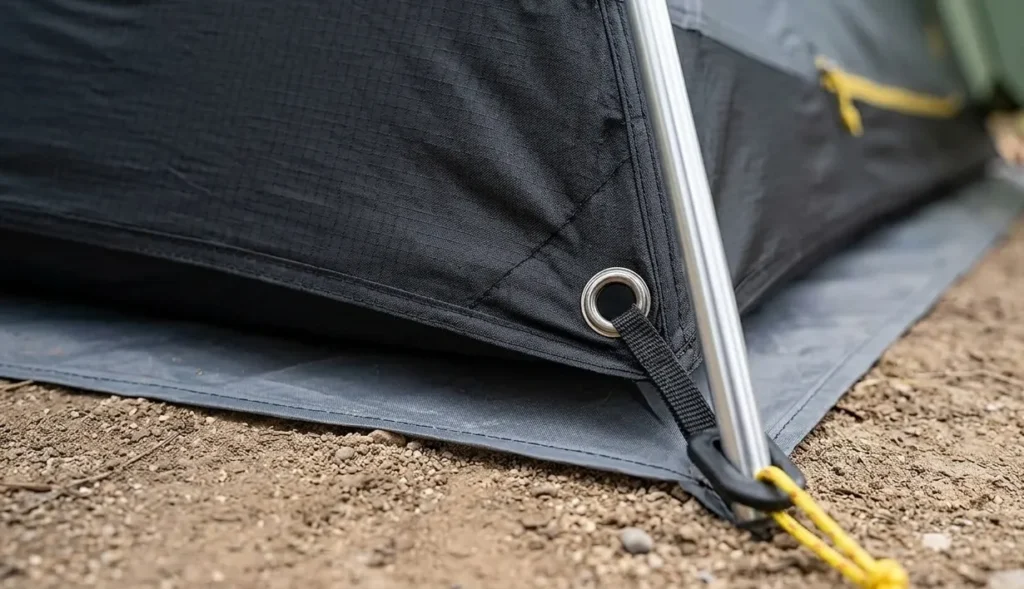
The direct answer to the durability question is that the Naturehike Mongar 2 is a rugged workhorse that uses slightly thicker materials to offer better abrasion resistance than high-end technical gear. I have spent a lot of time stressing over thin tent floors, but the 20D nylon on the Mongar 2 feels much more substantial. I tested this tent on a rocky campsite without any issues. It is the best budget ultralight tent floor for someone who does not want to handle their gear with silk gloves.
I noticed that Naturehike also includes the footprint in the bag, which is a major win for the value. Most premium brands, like the Big Agnes, make you pay an extra 80 dollars for a groundsheet. Using the footprint protects the waterproof coating from the grit and mud that can slowly wear it down. According to fabric durability data, 20-denier is the sweet spot where you still save weight but get a major jump in puncture resistance over 10D or 15D technical gear. I felt much more confident tossing my heavy backpack into this tent than I did with my more expensive ultralight gear.
One expert insight: the zippers are where most budget tents fail, but the Mongar 2 uses decent YKK-style coils that have been smooth throughout my testing. I always suggest following the tips in my guide on how to clean a musty tent, such as keeping the zippers clear of sand to prevent snags. The longevity of your gear depends mostly on your maintenance habits. The Naturehike Mongar 2 is a durable, honest piece of kit that proves you do not have to be rich to have a tent that lasts for five or six seasons of regular use. It is built for the reality of the road.
How does the Mongar 2 compare to other budget ultralight favorites?
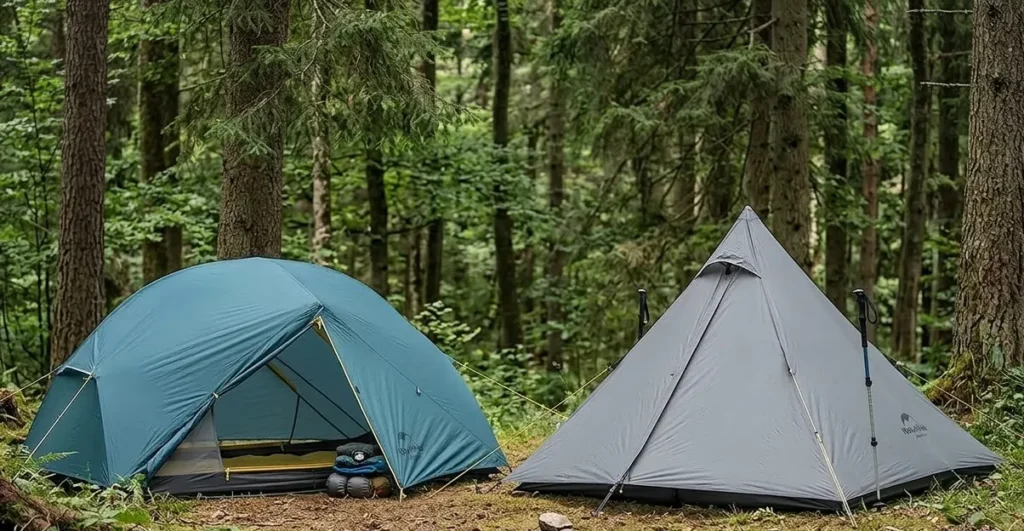
The direct answer is that the Naturehike Mongar 2 is the most comfortable freestanding budget option, but it is heavier than its trekking pole competitors. I have spent a lot of time comparing this model to the Featherstone UL Granite 2P, and the choice comes down to your setup preference. The Lanshan 2 is much lighter, but it requires trekking poles and is much harder to pitch on rocky ground. The Featherstone is very similar to the Mongar, but I found that the Naturehike materials felt slightly more refined and handled condensation better in my testing.
I noticed that the Mongar 2 offers a more spacious interior than the Sierra Designs High Side 1 or the Six Moon Designs Lunar Solo. If you are a solo traveler who hates the claustrophobic feeling of a tiny shelter, the extra weight of the Mongar 2 is well worth it for the 29 square feet of floor space. In my guide for the best ultralight tents, I highlight this model as the best choice for beginners because it removes the technical barriers of non-freestanding tents while remaining affordable.
One expert insight: the quality control on the Mongar 2 is the best I have seen from a budget-focused brand. The poles are perfectly finished, and the stitching is consistent throughout the tent body. According to various technical gear comparisons on Reddit and adventure forums, the Naturehike Mongar 2 is the most frequently recommended tent for people who want the Hubba Hubba experience without the Hubba Hubba price. Your gear should never be the thing that stops you from going further. The Mongar 2 allows you to save money on your gear so you can spend it on better food and more experiences.
Frequently asked questions about the Naturehike Mongar 2
Does the Naturehike Mongar 2 come with the footprint included?
The direct answer is yes. This is one of the biggest benefits of buying from Naturehike. While premium brands usually charge an extra fifty or eighty dollars for a groundsheet, the Mongar 2 includes a custom-fit footprint in the bag. I found that using this footprint is essential for protecting the waterproof floor and for keeping your tent clean during the morning pack-up. It is a fantastic value addition that most hikers really appreciate.
Can two people actually fit comfortably inside this tent?
The honest answer is yes: this is one of the few ultralight 2-person tents that actually feels like it fits two adults. Because the floor is a perfect rectangle and the walls are vertical, you each have your own space without bumping shoulders all night. I found that I could fit two large sleeping pads with no problem. I usually suggest a plus-one rule for space, but the Mongar 2 is the exception: it is a legitimate two-person dome.
How does the Mongar 2 handle high-wind conditions on a ridge?
The direct answer is that it handles moderate winds very well thanks to its symmetrical pole structure and high-quality aluminum frame. However, because it is a dome tent, it has more surface area than the aerodynamic wedge I discussed in my Snugpak Scorpion 2 review. I noticed that as long as you use all the included guy-lines and tension them properly, the tent stays rock solid in winds up to 25 or 30 miles per hour. It is a very predictable and secure structure.
Is it easy to fold the Naturehike Mongar 2 back into its stuff sack?
The direct answer is yes, and it is actually easier than folding the circular tents I discussed in my best pop up tent guide. Because it packs into a traditional cylindrical bag, you just need to fold it to the width of the poles and roll it tightly. I always suggest leaving the door unzipped halfway to let the air escape as you roll. It slides back into the bag every time without any struggle or special folding techniques.
Do I need to do any manual seam sealing on this tent?
The direct answer is no. The Naturehike Mongar 2 arrives with high-quality factory tape on all the seams of the fly and the floor. I have found this tape to be very reliable, even during multi-day rain events. However, as I explain in my guide on how to seam seal a tent, it is always a professional best practice to perform a hose test at home before your first big trip to ensure there are no factory defects.
Should the Naturehike Mongar 2 be your next tent?
The direct answer to the verdict is that if you are a traveler who values a spacious, freestanding dome and you are on a strict budget, the Naturehike Mongar 2 is the best investment you can make for 2026. It represents the pinnacle of value in the current market. After living out of this setup for several weeks across various environments, I am convinced that the symmetrical design and durable 20D fabrics make it one of the most practical tents ever made. It handles the wind and rain as well as any high-end dome and provides a level of comfort that is usually reserved for gear that costs three times as much.
The Mongar 2 is what I recommend to my friends who are just starting out. I noticed that if you need to save every possible ounce for a thru-hike, you might still prefer the Big Agnes Fly Creek HV UL2 or the MSR Freelite 2. But for the average weekend warrior, motorcycle traveler, or car camper, the Mongar 2 is a total home run. It is a smart, rugged, and honest piece of equipment that has proven itself in the most difficult environments.
One final thought: your gear should help you disconnect from the world and enjoy the sunset. The Naturehike Mongar 2 does exactly that by removing the stress of a complex setup and the worry of a leaky roof. I suggest checking out my best ultralight tents guide to see how this model compares to the rest of the pack. I truly believe that Naturehike has created a modern value classic with this model. If you are ready for a shelter that is as reliable as it is affordable, the Mongar 2 belongs in your luggage. I will see you at the next campsite.
Ready to upgrade to a freestanding palace?
Click here to check the current price of the Naturehike Mongar 2 on Amazon.