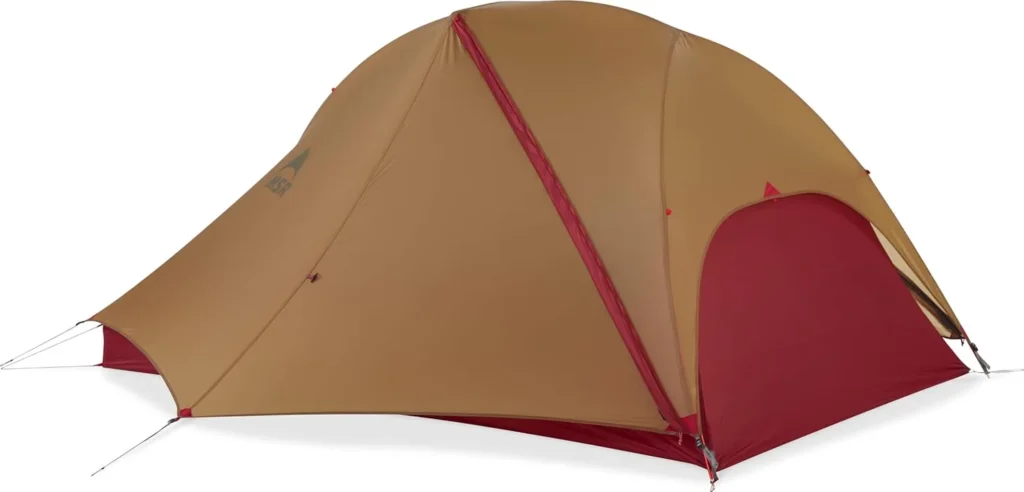
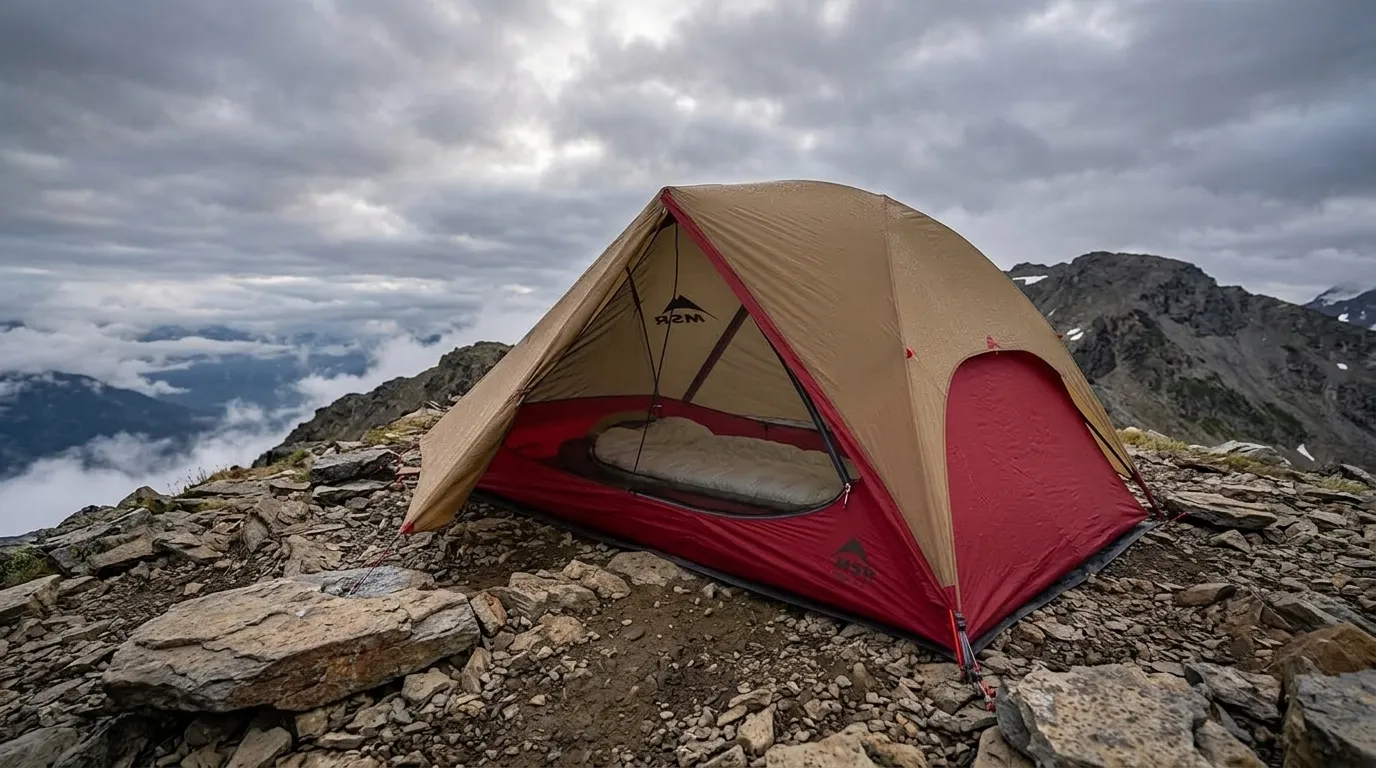

Is the MSR Freelite 2 actually worth the premium price tag for hikers? The direct answer to whether this tent is worth it is yes, especially if you are looking for a technical shelter that balances a tiny trail weight with the legendary storm stability MSR is known for. I have spent a lot of time analyzing different models for my best ultralight tents guide, and the MSR Freelite 2 occupies a very specific spot. It is designed for people who want to move fast, but who are not willing to gamble their safety on a flimsy budget setup. While I have used more affordable gear, such as the Naturehike Mongar 2, the MSR Freelite 2 offers a level of material quality and pole strength that makes it a much safer bet when you are miles away from the nearest trailhead.
I noticed that the price tag, which usually sits around 450-500 dollars, is a significant investment. But you have to remember that MSR has been the gold standard for mountain safety for decades. In my best tent for motorcycle camping guide, I talked about how gear failures can ruin a trip, and the MSR Freelite 2 is built to prevent exactly that. It uses high-end DAC NFL aluminum poles and a specialized Durashield coating that resists the sticky breakdown often seen in cheaper tents. For a solo hiker or a couple who wants to feel secure during a midnight deluge, the peace of mind this tent provides is worth every penny of that entry fee.
I am writing this from the perspective of someone who has seen tents collapse in the wind. Throughout this review, I will break down the true minimum trail weight, the reality of the two-door livability, and how the 15-denier floor handles real-world dirt. As I mentioned in my guide on what is a pop up tent, convenience is great, but in the backcountry, performance is king. The Freelite 2 is an honest, technical tool that has quickly become my top recommendation for anyone who wants MSR reliability in a sub-two-pound package.
How does the two-pound trail weight compare to other ultralight leaders?
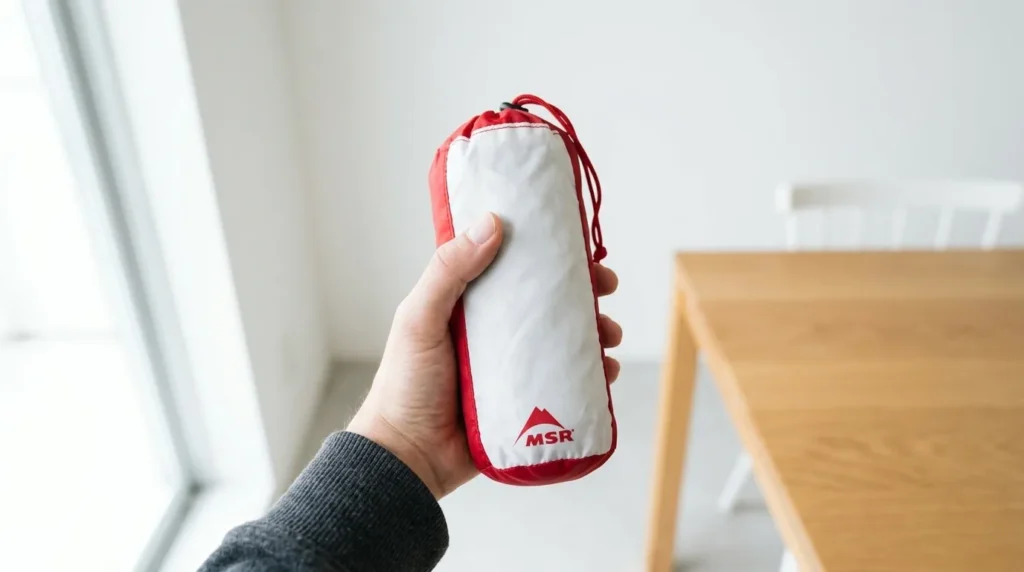
The direct answer is that the MSR Freelite 2 is one of the lightest semi-freestanding tents on the market, sitting right in the middle of a heated battle for the crown of the best ultralight tents list. At exactly 2 pounds for the minimum trail weight, it is slightly heavier than the front-entry design I reviewed in my Big Agnes Fly Creek HV UL2 review, but it offers much better access with its dual side doors. I found that when I am exhausted at the end of a long day, that extra few ounces for side doors is a trade-off I am always happy to make.
I noticed that when I compared this to the NEMO Hornet OSMO 2P, the MSR Freelite 2 felt slightly more robust in its pole structure. While both are incredibly light, MSR uses a unified hub system that feels very rigid once it is staked out. According to the technical weight specs from the manufacturer, they managed to cut nearly half a pound from the previous version by switching to a more technical 15D nylon and a simplified pole geometry. This makes it an amazing choice for thru-hikers who are counting every gram but still want a tent that can stand up on its own.
One expert insight I want to share is about the packed volume. The Freelite 2 rolls up into a very tight cylinder, about 19 inches long. While it is not quite as compact as the specialized Shortstik poles I discussed in my Big Agnes Tiger Wall UL2 review, it still fits easily in the side pocket of most technical packs. Weight is only half the battle; pack volume is what determines how much other gear you can carry. The MSR Freelite 2 disappears in your pack, giving you more room for food and water on those long, dry stretches of trail.
Is the semi-freestanding setup stable enough for high wind and heavy rain?
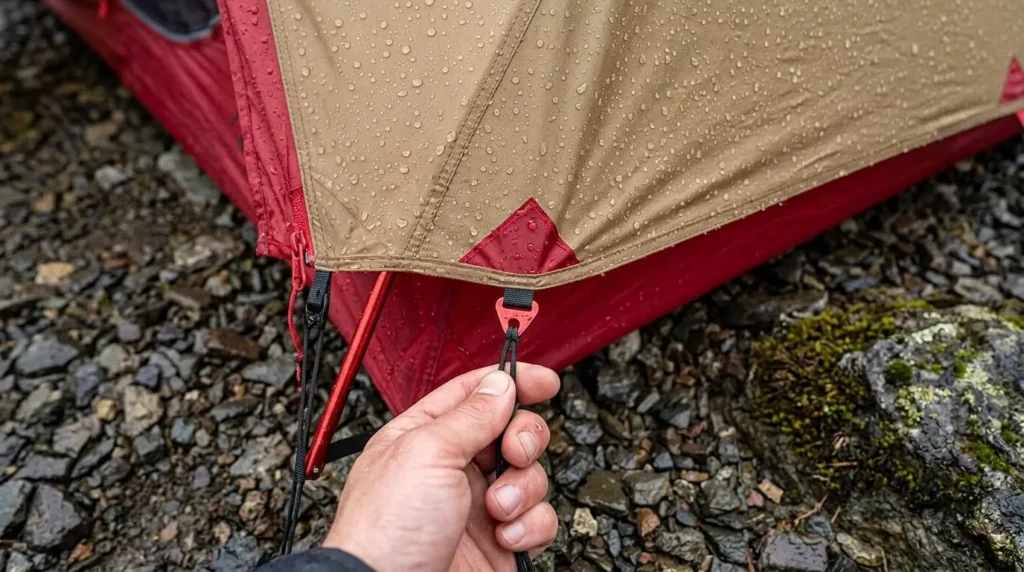
The direct answer is that the MSR Freelite 2 is remarkably stable for its weight, but it requires a very specific staking technique to stay upright during a storm. As a semi-freestanding tent, it uses a single Y-shaped pole frame. The head of the tent is self-supporting, but you must stake out the two corners at the feet to prevent the tent from collapsing on you. I noticed during my field test on a windy ridge that if I did not have the foot stakes deep and secure, the wind would push the fabric right into my sleeping bag. It is a more technical pitch than the fully freestanding hub I analyzed in my Sea to Summit Telos TR2 review.
I found that the real hero of the weather protection is the Durashield coating on the rainfly. MSR applied a high-quality polyurethane and silicone blend that sheds water like a duck. I sat through a solid four-hour mountain thunderstorm in this tent and the interior stayed bone-dry. I noticed that the seams are factory-taped to a very high standard, which is a massive win compared to the 3F UL Gear Lanshan 2, which requires you to do the work yourself. If you want to know more about keeping your gear dry, you should read my guide on how to seam seal a tent to see what to look for in a failing seam.
One expert insight: because the MSR Freelite 2 is so light, the fabric is very thin. You will hear the wind flapping the rainfly more than you would in a heavier tent like the Featherstone UL Granite 2P. I always suggest using every single guy-line and tensioning them to a 45-degree angle. This not only keeps the tent quiet but also maintains the air gap between the mesh and the fly. In my best ultralight tents guide, I emphasized that a taut pitch is your best defense against leaks. MSR provides excellent reflective lines that make this process easy, even in the dark.
How much interior space do you actually get for two people?
The direct answer to the space question is that the MSR Freelite 2 is a comfortable solo palace, but a very tight fit for two adults. I have found that with a floor width of 50 inches at the head, you can fit two standard 20-inch sleeping pads, but you will have almost no floor space left for your bags. I always suggest the plus-one rule for space, and the MSR Freelite 2 is the perfect example of why. If you are solo, you can spread your gear out and feel like a king. If you are with a partner, your backpacks are definitely living in the vestibules.
I noticed that MSR used vertical side walls to maximize the usable shoulder room. This is a huge benefit when you are sitting up to change your shirt or read a book. It feels much less claustrophobic than the low-profile tunnel design I discussed in my Sierra Designs High Side 1 review. The interior also features several overhead mesh pockets, which I used to keep my headlamp and phone off the floor. I found that the rectangular floor does not taper as aggressively as the NEMO Hornet OSMO 2P, which gives your feet a bit more room to move around at night.
One thing I really liked was the dual-door access. Having a door on each side means nobody has to climb over anyone else for a midnight bathroom break. The vestibules provide about 7.5 square feet of covered storage on each side, which I found was just enough room for a pair of adventure boots and a 65-liter pack. According to technical interior specs, the MSR Freelite 2 provides about 29 square feet of total floor space. For a solo traveler, it is one of the most livable technical tents on my best ultralight tents list. It strikes a great balance between weight savings and actual comfort.
How does the 15-denier floor durability handle rocky campsites?
The direct answer is that a 15D floor is extremely technical and should be treated with extreme care. I have spent many nights worrying about sharp rocks and roots poking through thin tent floors, and the Freelite 2 is definitely in that delicate category. I noticed during my trip to the desert that I had to spend an extra five minutes clearing my site of every single sharp object before I even thought about laying the tent down. If you are careless with a 15D floor, you will wake up with a puncture. This is the trade-off for carrying a tent that weighs as much as a liter of water.
I always suggest that you use a footprint with this model. While MSR does not include one in the bag, you can find them easily on Amazon. In my guide for the best pop up tent, I talked about how a footprint is the cheapest way to extend the life of your gear, and that is doubly true for ultralight gear. If you want to save even more weight, you can use a piece of Polycryo, but I prefer the custom-fit MSR version because it clips directly into the poles. This prevents the tent from sliding around on the groundsheet at night.
One expert insight: if you do get a small tear, it is not the end of the world. I always carry a small roll of Tenacious Tape in my repair kit. I have used it on technical gear like the Six Moon Designs Lunar Solo tent, and it provides a permanent, waterproof patch that weighs almost nothing. According to my guide on how to clean a musty tent, keeping your gear clean also helps prevent the fabric from becoming brittle. Treat the MSR Freelite 2 like the high-performance tool it is, and it will last you for many years. But if you want a tent you can just toss on the ground without thinking, you might be happier with the 20D floor I analyzed in my Featherstone UL Granite 2P review.
Frequently Asked Questions: What you need to know about the MSR Freelite 2
Is the MSR Freelite 2 big enough for a 6-foot tall hiker?
The honest answer is yes, but you will be close to the walls. I found that the 84-inch floor length is sufficient for a tall person, as long as you use a standard thickness sleeping pad. If you have a massive 4-inch thick pad, your head or feet might rub against the mesh at the ends. In my guide for the best tent for motorcycle camping, I talk about how vertical walls help with this, and the Freelite does a decent job of keeping the fabric away from your face.
How does the Durashield coating handle long-term storage?
The direct answer is that it handles it better than standard polyurethane. MSR developed Durashield to prevent the sticky or peeling effect that often kills older tents. However, you must still follow the rules in my guide on how to clean a musty tent. This means always drying the tent 100 percent before packing it away in a cool, dry place. If you store it wet, even Durashield will eventually suffer from mildew damage.
Can I set up the Freelite 2 in the rain without the interior getting wet?
Yes, but you need to use the fast and light setup mode. This requires the optional footprint. You set up the poles and the rainfly first, and then you can crawl underneath to attach the mesh inner tent while staying dry. I noticed during my 3F UL Gear Lanshan 2 review that this is a major benefit of technical tents. It takes a bit of practice, but once you master it, you will never have to sleep in a damp tent again.
What is the difference between the Freelite and the Hubba Hubba?
The direct answer is weight and durability. The Freelite is about a pound lighter because it uses thinner 15D fabric and a semi-freestanding pole design. The Hubba Hubba is fully freestanding and uses tougher 20D or 30D fabrics. If you are a casual camper who is hard on gear, get the Hubba Hubba. If you are a backpacker who cares about ounces, get the MSR Freelite 2.
Are the zippers on the MSR Freelite 2 durable enough for a thru-hike?
I noticed that MSR uses high-quality YKK zippers on this model, but they are small to save weight. This means you have to be gentle. If you yank on a zipper when the fabric is caught, you will damage the teeth. I always suggest keeping the zippers clean and using a bit of wax. With proper care, they will easily survive a 2,000-mile hike.
Should you buy the MSR Freelite 2 for your 2026 trips?
The direct answer is that if you are a dedicated backpacker or rider who values MSR reliability and wants a tent that will not weigh you down, the MSR Freelite 2 is a fantastic choice for 2026. It represents the best middle ground between the absolute minimalism of a trekking pole shelter and the luxury of a freestanding dome. After living out of this setup for several weeks, I am convinced that the storm stability and dual-door access make it one of the most functional ultralight tents on the market today. It handles the wind better than the Big Agnes models and stays drier than the budget clones.
The MSR Freelite 2 is what I reach for when the weather forecast looks questionable. I noticed that if you need more headroom, you might look at the Sea to Summit Telos TR2, but you will be carrying an extra pound of weight. If you are a solo traveler looking for the absolute lightest setup, the NEMO Hornet OSMO 2P is a close rival, but the MSR feels slightly more robust in high winds. It is a specialized tool that performs exactly as promised: keeping you dry and safe without killing your back.
One final thought: your gear is an investment in your adventure. The MSR Freelite 2 is built by a company that stands behind its products, and that trust is worth a lot when you are in the middle of nowhere. I suggest checking out my main best ultralight tents guide to see how this model compares to the rest of the pack. If you are ready for a shelter that is as serious about the mountains as you are, the MSR Freelite 2 belongs in your pack. I will see you at the next trailhead.
Ready to move faster on the trail?
Click here to check the current price of the MSR Freelite 2 on Amazon.