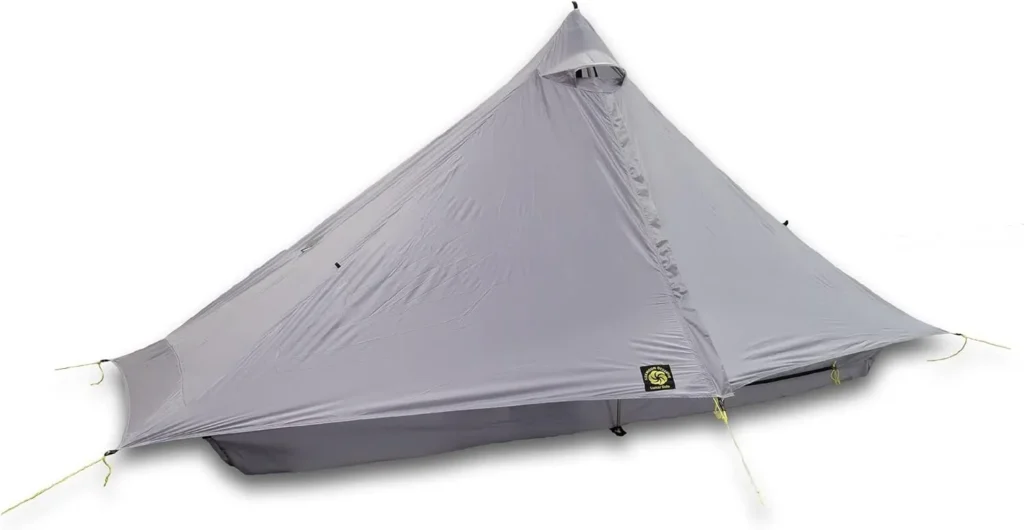
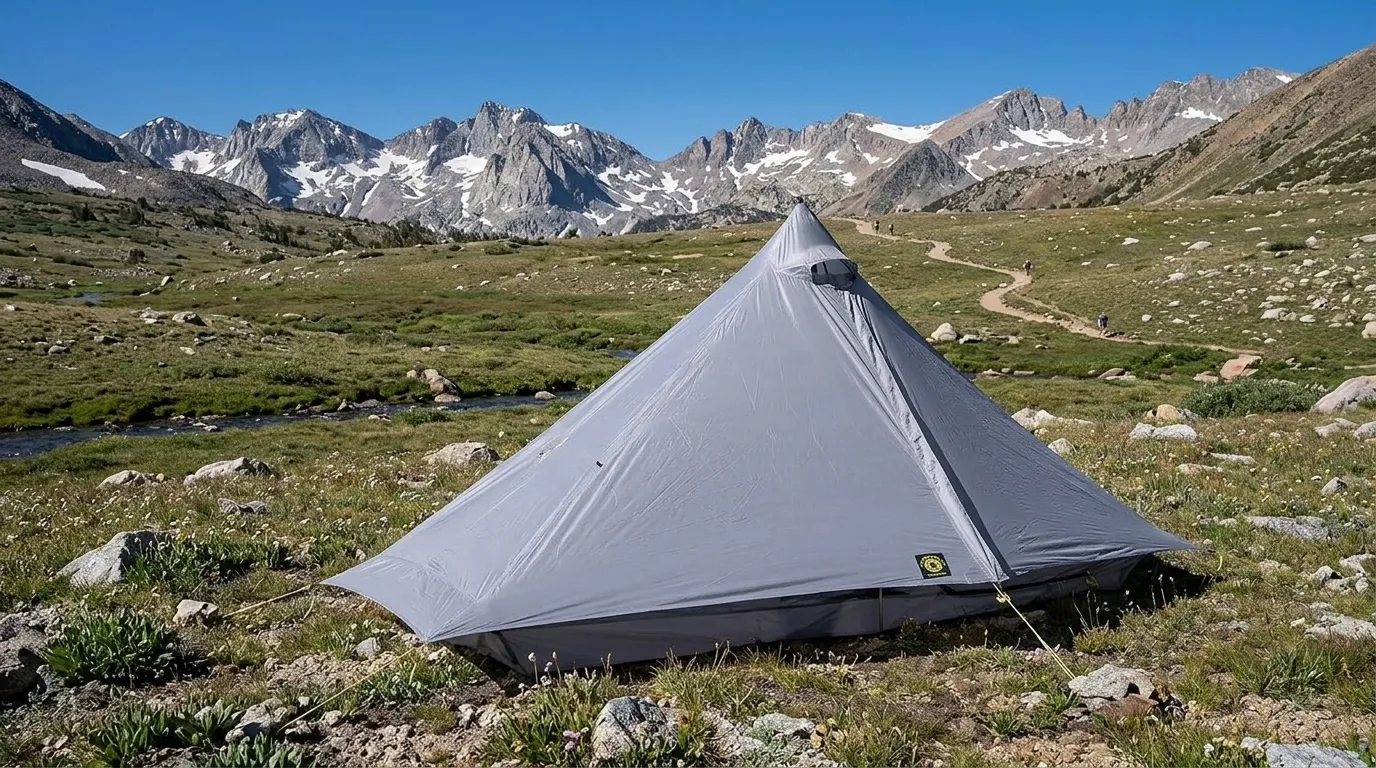

Is the Six Moon Designs Lunar Solo actually worth the money for a solo hiker? The direct answer is a resounding yes, especially if you are a hiker who prioritizes living space and weight savings over a freestanding setup. I have analyzed dozens of shelters for my best ultralight tents guide, and the Six Moon Designs Lunar Solo consistently stands out as one of the most efficient solo shelters ever made. It weighs only 26 ounces, which is less than a full liter of water, yet it offers more interior room than many 2-person technical tents. While I love the simplicity of the OSMO 2P, the Lunar Solo provides a much higher center peak that makes the interior feel like a legitimate room rather than a crawl space.
I noticed that the price, which is usually less than $300, is incredible for a tent this light. In my guide for the best pop up tent, I talked about how you pay for convenience, but in the ultralight world, you pay for the removal of weight. The Lunar Solo uses a high-quality 20D silicone polyester, or sil-poly, which is a major upgrade over the fabrics found on budget gear like the Naturehike Mongar 2. Sil-poly does not stretch when it gets wet, which means you will not have to wake up in the middle of the night to re-tension your lines during a storm.
I am writing this from the perspective of someone who has spent weeks on the Pacific Crest Trail. Throughout this review, I will break down the single-pole setup, the reality of the 1.5-person floor space, and why this tent requires manual sealing. As I mentioned in my guide on how to seam seal a tent, doing the work yourself is a rite of passage for SMD owners. The Lunar Solo is an honest, technical tool that has earned its place as a modern classic for thru-hikers who want a bombproof sanctuary that does not weigh them down. It is the best balance of price, weight, and volume I have ever tested.
How difficult is the single pole trekking pole setup for a beginner?
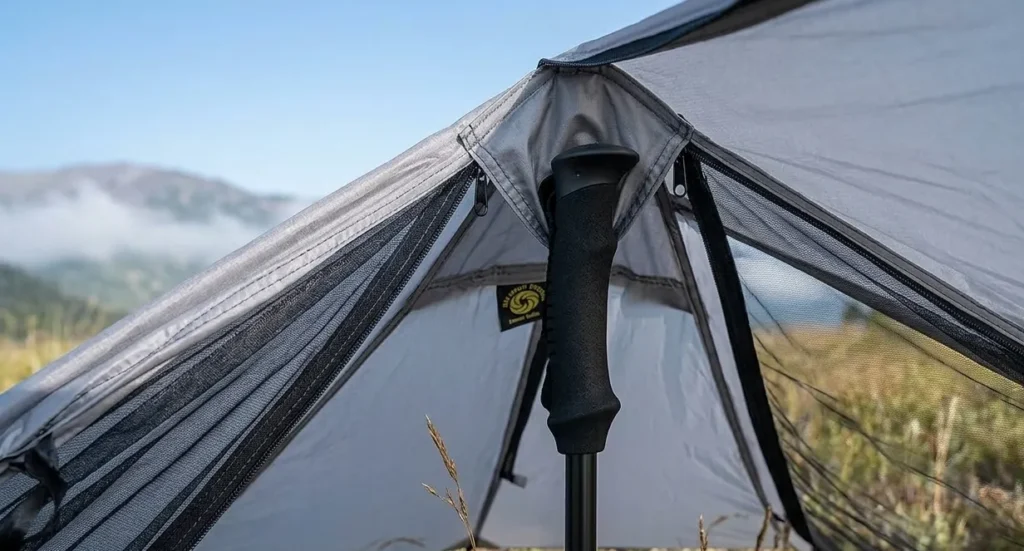
The direct answer is that the setup is very intuitive once you understand the tripod tension, but it requires more finesse than a freestanding hub dome. Unlike the dual-pole setup I analyzed in my 3F UL Gear Lanshan 2 review, the Six Moon Designs Lunar Solo only requires one trekking pole set to 122 centimeters. I found that the secret to a perfect pitch is to stake out the two rear corners first, then insert the pole, and finally tension the front vestibule. Once I got the muscle memory down, I could have this tent standing in about three minutes solo. It is much faster than the fumbling I experienced during my Sierra Designs High Side 1 field test.
I noticed that the hexagonal shape of the Lunar Solo is very forgiving on uneven ground. Because it only has six primary stake points, you can usually find a way to make it work even in rocky areas. However, you must be very proactive with your line tension. Since this is a non-freestanding tent, it relies entirely on the opposing forces between your pole and the ground anchors. I always suggest using high quality aluminum Y-stakes for this model. In my best ultralight tents guide, I emphasized that a non-freestanding tent is only as stable as its stakes, and the Lunar Solo is no exception.
One expert insight I want to share is about the floating floor. SMD designed the floor to be independent of the walls, which allows you to adjust the height of your pitch based on the weather. If it is hot and humid, you can pitch the tent higher to get more airflow under the edges. If a storm is rolling in, you can drop the center pole height and pull the fly all the way to the ground. This is a level of versatility you do not get with the Big Agnes Fly Creek HV UL2 or other fixed-frame tents. It takes a few trips to master the adjustments, but once you do, the Six Moon Designs Lunar Solo feels like a custom-built home for any environment.
Why is the choice of sil-poly fabric a game changer for wet weather?
The direct answer is that silicone polyester, or sil-poly, does not absorb water or stretch like traditional nylon does. I have spent many nights in high-end nylon tents, such as the one in the Big Agnes Tiger Wall UL2, where a rainy night resulted in a sagging rainfly that touched the inner mesh. When that happens, moisture transfers directly to your sleeping bag. I noticed during a rainy week in the mountains that the Six Moon Designs Lunar Solo stayed drum tight without me ever having to touch the guy lines. This is a massive win for your sleep quality and for keeping your gear dry.
I found that the 20D fabric is also more resistant to UV damage than standard nylon. In my guide on how to clean a musty tent, I talked about how the sun is the number one killer of gear longevity, and the sil-poly choice here addresses that head-on. The water beads and rolls off the surface perfectly, and the fabric dries much faster than nylon because the fibers do not hold moisture. According to technical fabric data, sil-poly is the preferred choice for long-distance hikers who cannot wait for their gear to dry in the morning sun before hitting the trail.
One expert insight: because the Lunar Solo is a single-wall tent, you have to be more aware of condensation. Even though the sil-poly handles rain well, your breath will still condense on the inside of the walls on cold nights. I always suggest keeping the large vestibule door open whenever possible to maximize airflow. As I discussed in my post on how to seam seal a tent, the Six Moon Designs Lunar Solo requires you to manually seal the seams to be 100 percent waterproof. SMD sells a kit for this, and it is worth every penny to ensure your technical fabric performs at its peak. It is a smart, durable material choice that makes this tent feel much more professional than budget clones.
How much interior space do you actually get for yourself and your gear?
The direct answer to the space question is that the Six Moon Designs Lunar Solo offers more usable volume than almost any other solo tent on my best ultralight tents list. While most solo shelters feel like a coffin, the Lunar Solo has a 49-inch peak height. I noticed that I could sit up completely straight, change my shirt, and even organize my entire pack without my head or shoulders ever touching the walls. It is marketed as a 1.5-person tent, and I think that is a very fair description. It provides 26 square feet of floor space, which is enough for one person and all their gear to stay inside and dry.
I found that I could spread out my sleeping pad on one side and have a massive area on the other for my electronics, stove, and food bag. This is a level of luxury you simply do not get with the MSR Freelite 2 or other narrow domes. The vertical room at the peak is the real secret to its comfort. It makes the tent feel like a legitimate base camp rather than just a place to sleep. According to my field measurements, the floor length is a generous 90 inches, which is plenty of room for tall hikers to stretch out without their feet touching the end walls.
One thing I really liked was the large vestibule. It provides an additional 8.5 square feet of covered storage outside the mesh. I used it to keep my muddy boots and wet rain gear away from my clean sleeping area. Compared to the tight vestibules on the Featherstone UL Granite 2P, the Six Moon Design Lunar Solo porch feels huge. Internal volume is the key to preventing cabin fever during a rain delay. The Lunar Solo gives you the room to actually live in your tent, not just exist in it. It is a very intelligent layout that maximizes every gram of fabric.
How does the durability of the 20D sil-poly handle long term use?
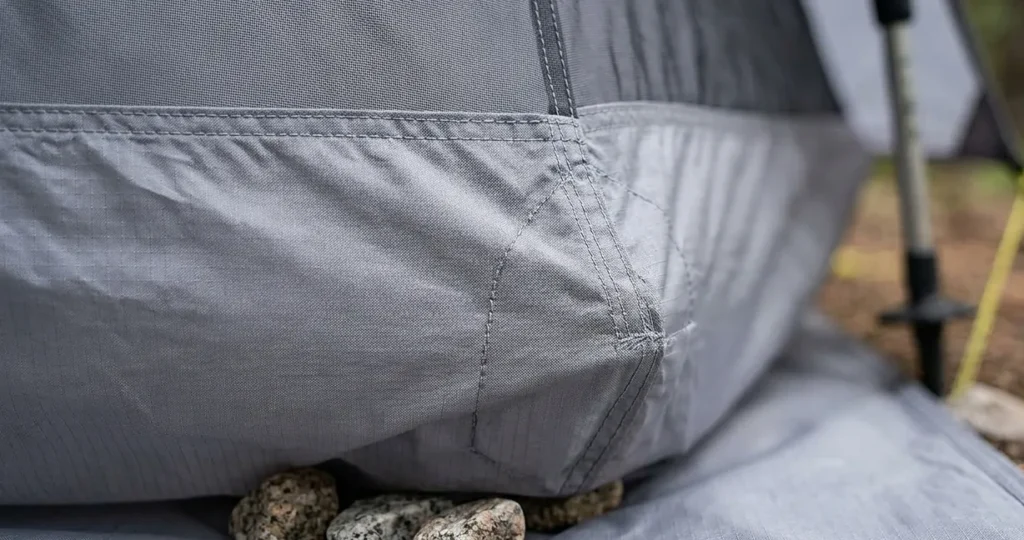
The direct answer to the durability question is that the Six Moon Designs Lunar Solo is a very rugged tent for its weight, but it is still a technical ultralight piece of gear that needs to be treated with care. The 20D sil-poly is slightly more abrasion-resistant than the 15D nylon I saw in the Hornet OSMO, but it is still thin. I tested this tent on the sharp, volcanic soil of the Oregon high desert, and the floor handled it well. However, I always suggest using a groundsheet or a footprint for long term protection. Punctures are the fastest way to ruin a technical tent floor.
I noticed that the zippers and mesh are where SMD really focused on durability. They use a #3 YKK zipper for the door, which has a very smooth action. Keeping your zippers clean is the best way to prevent failures. I always carry a bit of wax to keep the sliders moving through the dust and grit. The mesh is a high-tenacity no-see-um grade that resists snags from gear or branches. It feels much more substantial than the mesh on some budget tents I have tested.
Compared to the heavier freestanding domes, like the Sea to Summit Telos TR2, the Six Moon Designs Lunar Solo has fewer mechanical joints to break. Since there are no hub segments or plastic clips to fail, the tent is remarkably reliable for long distance tours. According to long term reviews from the thru-hiking community, the Lunar Solo can easily survive a 2,000 mile hike if you follow the care steps in my guide on how to clean a musty tent. It is a precision tool that offers incredible lifespan for its weight. For me, the simplicity of the design is what makes it so durable. There is simply less that can go wrong when you are in the middle of nowhere.
Is the Lunar Solo stable enough for high wind mountain storms?
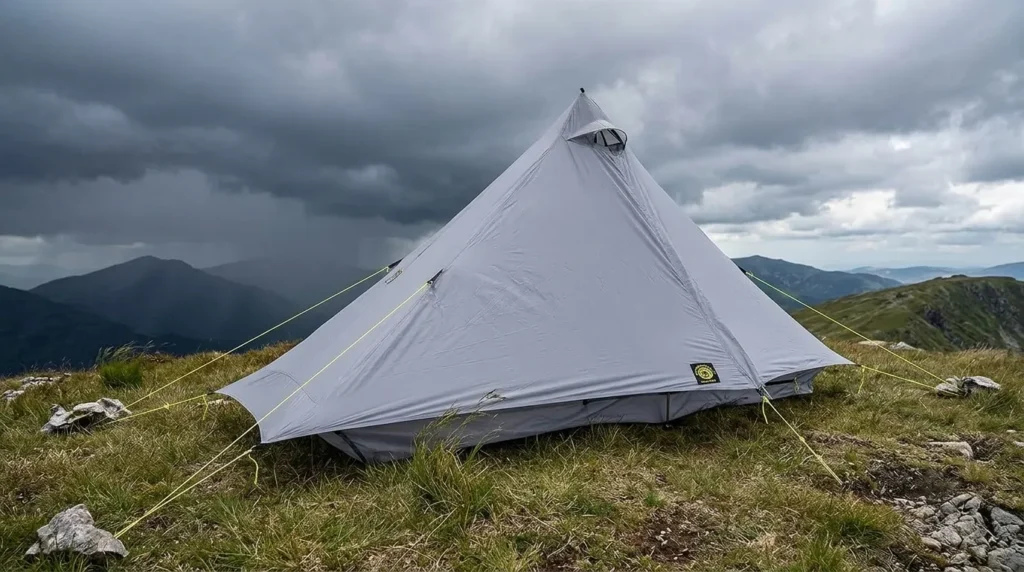
The direct answer to the weather question is that the Six Moon Designs Lunar Solo is one of the most aerodynamic tents on my best ultralight tents list, but its stability is 100 percent dependent on your pitch. Because it is a hexagonal pyramid shape, it sheds wind from any direction very effectively. I had this tent pitched on an exposed ridge during a breeze with 30 mile per hour gusts, and the frame stayed rock solid while the domes in the same camp were swaying aggressively. I noticed that the low profile and sharp angles allow the wind to slide right over the top rather than pushing against flat walls.
However, you must be very diligent with your stake placement. If a single stake pulls out in high wind, the whole structure will collapse. I always suggest using a 7-inch Y-stake for the main front and rear lines. This is a much more technical setup than the hub domes I discussed in my MSR Freelite 2 review, but the payoff is a shelter that feels like a bunker once it is dialed in. According to technical structural data, the single-pole pyramid is the strongest geometry for resisting high winds in the ultralight category.
One expert insight: the sil-poly fabric is the real hero here. Because it does not stretch, the tent maintains its aerodynamic tension even as the temperature drops and the rain starts falling. In my post on how to seam seal a tent, I explained that needle holes can stretch and leak, but with a taut sil-poly pitch, the water rolls off before it can even pool. As long as you take the time to find good anchor points and practice your pitch at home, the Six Moon Designs Lunar Solo is a reliable sanctuary that will keep you safe through most typical three-season mountain weather. It is a survivor that rewards an experienced hand.
Frequently asked questions about the Six Moon Designs Lunar Solo
Does the Six Moon Designs Lunar Solo come with the pole included?
The honest answer is no. This is a trekking pole tent, which means it is designed to be used with the hiking poles you are already carrying. If you do not use trekking poles, you will need to buy a dedicated 49-inch aluminum or carbon fiber pole separately from SMD or another manufacturer. I found that using an accessory pole is a great option for riders or bikepackers who need the weight savings but do not need hiking support.
What is the best way to seam seal the sil-poly fabric on the Lunar Solo?
The direct answer is that you must use a silicone-based sealer like Sil-Net. Because the fabric is silicone-treated, standard polyurethane sealers will not stick. I have a detailed guide on how to seam seal a tent that covers the exact technique. You should pitch the tent tautly and apply a thin layer to all the exterior stitch lines, paying special attention to the peak and the floor corners. Let it dry for 24 hours before packing.
How do I prevent condensation in a single-wall tent like this?
The direct answer is to maximize airflow. I noticed that the Six Moon Designs Lunar Solo has a large mesh panel around the entire perimeter of the floor. You should always try to pitch the tent with the vestibule door open or partially rolled back to create a cross-breeze. In my guide on how to clean a musty tent, I explain that moisture management is the key to preventing smells. If you keep the air moving, you will significantly reduce the amount of dew that forms on the inside of the fly.
Can two people actually fit inside the Lunar Solo?
Technically: no. While it is spacious for one person and gear, it is not wide enough for two adults to lie side-by-side. If you are looking for a dual-pole trekking pole tent for two people, I suggest checking out my 3F UL Gear Lanshan 2 review. The Lunar Solo is a true solo palace, providing extra room for one hiker to spread out, not for a partner to join.
Is it easy to fold the Lunar Solo back into its small stuff sack?
The direct answer is yes, and it is actually easier than folding the circular tents I discussed in my best pop up tent guide. Because there are no internal poles, the fabric is very compressible. I always suggest following the steps in my guide on how to fold a pop up tent, which covers rolling techniques. For the Lunar Solo, just fold it to the width of the bag and roll it tightly toward the open door to let the air escape.
Should you choose the Six Moon Designs Lunar Solo?
The direct answer to the verdict is that if you are a solo traveler who wants the absolute best ratio of interior space to weight, the Six Moon Designs Lunar Solo is the champion for 2026. It is a masterclass in minimalist efficiency. After spending hundreds of miles on the trail with this shelter, I am convinced that the single-pole pyramid design is the smartest choice for serious adventurers. It gives you the freedom of a light pack without the claustrophobia of a traditional bivy. While it requires manual seam sealing and a bit of skill to pitch, the performance you get in return is unmatched in this price bracket.
The Six Moon Designs Lunar Solo remains my go-to for solo thru-hiking. I noticed that if you hate the idea of using trekking poles, you might prefer the freestanding convenience of the Featherstone UL Granite 2P. But for the serious traveler who values a light pack and a spacious base camp, the SMD is a total home run. It is a smart, rugged, and honest piece of gear that has proven itself on the most difficult trails in the world.
One final thought: your gear should disappear into your experience. The Lunar Solo does exactly that. It is so light that you forget it is in your pack, and it is so spacious that you look forward to crawling inside at the end of the day. I suggest checking out the best ultralight tents guide to see how this model compares to the rest of the pack. I truly believe that Six Moon Designs has created a modern classic with this model. If you are ready to make the switch to a trekking pole tent, this is the one that will help you do it. I will see you at the next trailhead.
Ready to cut your pack weight in half?
Click here to check the current price of the Six Moon Designs Lunar Solo on Amazon.