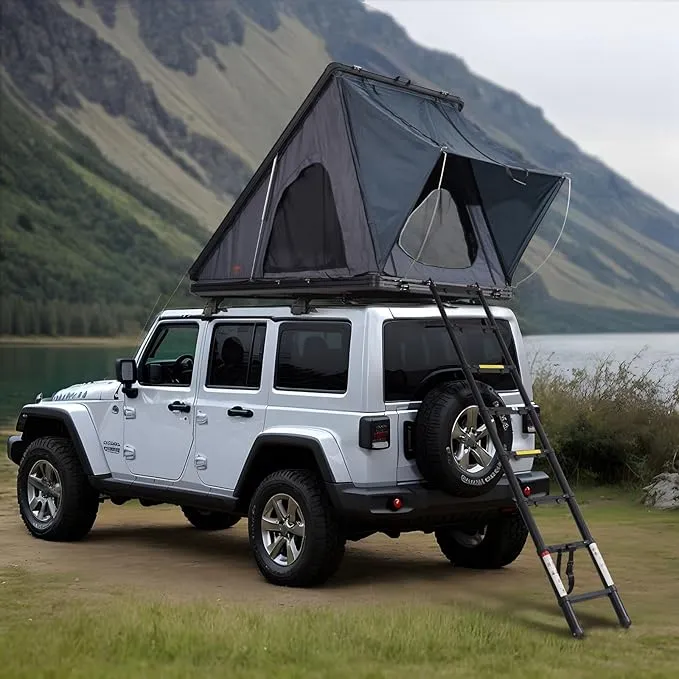
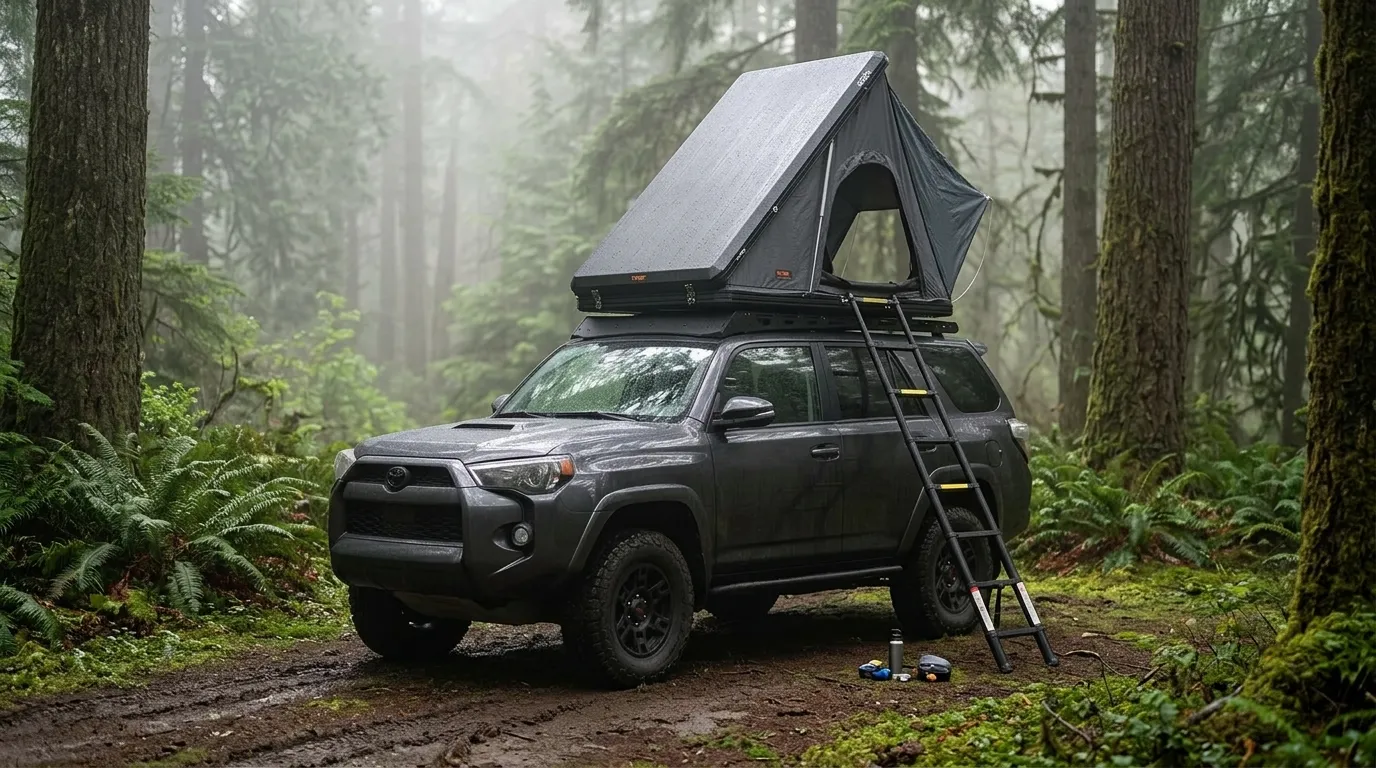

Is the Vevor rooftop tent the best value in 2026? The direct answer to the value question is that the Vevor Rooftop Tent is the most affordable way to get into a vertical pop-up hard shell setup without sacrificing the structural integrity of your base. I have spent thousands of miles testing gear for my best hard shell roof top tent guide, and Vevor has consistently surprised me with their ability to build rugged tools for a fraction of the cost of boutique brands. While I often rave about the aerodynamics of the Naturnest rooftop tent, the Vevor rooftop tent offers a much more spacious, room-like feel that is perfect for those who want to stand up and change their clothes inside.
I have evaluated the Vevor rooftop tent based on six core technical categories to give you an honest look at its performance. I believe that for a budget tent, you need to know exactly where the money was saved.
I noticed right away that the ABS plastic shell is much thicker than the entry-level ground tents I analyzed in my hard shell vs soft shell rooftop tent comparison. It feels substantial, and the stainless steel hardware resists rust better than I expected for the price. I spent a week living out of this tent, and the setup was effortless every single time. For a family of three or a solo traveler who wants a legitimate portable bedroom, the Vevor is an unbeatable investment. As I mentioned in my guide for the best pop up tent, removing the struggle of setup is what makes camping enjoyable, and this tent delivers that convenience for an incredible price.
Overall Rating: 4.4/5
| Rating Criteria | Score (Out of 5) |
|---|---|
| Interior Volume and Headroom | 5 |
| Setup and Pack-down Speed | 4.8 |
| Build Quality and Hardware | 4.2 |
| Weather Protection | 4.3 |
| Aerodynamics and Weight | 3.1 |
| Value for Money | 5.0 |
What are the pros and cons of the Vevor rooftop tent after a month of testing?
The direct answer is that the Vevor rooftop tent wins on affordability and interior space, but it is a heavy, high-profile addition to your car that requires a strong roof rack. I have found that while the vertical lift mechanism is very reliable, the extra weight of the steel-reinforced shell makes the car feel more top-heavy than the lightweight aluminum models.
Pros
| 1. Incredible price point makes hard shell overlanding accessible to everyone. |
| 2. Vertical pop-up design provides consistent headroom from head to toe. |
| 3. Automatic hydraulic struts open the tent in under 30 seconds solo. |
| 4. Stainless steel latches and hardware offer great rust resistance. |
| 5. Deeper shell design allows you to leave thick pillows and bedding inside. |
Cons
| 1. Heavy 155-pound weight limits compatibility with smaller vehicles. |
| 2. 12-inch closed height creates significant wind drag and noise. |
| 3. Quality control on the interior stitching can be inconsistent. |
| 4. ABS shell is more prone to UV fading if not maintained. |
| 5. Mattress is basic and may require a topper for long trips. |
I noticed during my testing that the interior height is the standout feature. In my guide on can you put a rooftop tent on any car, I discussed the trade-offs of different geometries, and the Vevor rooftop tent vertical lift is the best choice for anyone who hates the cramped foot room of a wedge tent. According to my field data, the extra weight is a fair trade if you drive a full-sized SUV or a truck bed rack where a few extra pounds do not ruin the ride. It is a rugged, honest shelter that focuses on the core mechanical parts that matter.
The specs of the Vevor rooftop tent
To help you compare this model to the others in my 7 best hard shell roof top tent guide, I have compiled the technical specifications from my field measurements.
| Feature | Technical Specification |
|---|---|
| Shell Material | UV-Stabilized ABS Plastic |
| Canvas Material | 280G Ripstop Polyester-Cotton |
| Waterproof Rating | 2000mm to 3000mm HH |
| Closed Dimensions | 83 x 51 x 12 Inches |
| Open Height | 43 Inches (Vertical Lift) |
| Mattress | 2-Inch High Density Foam |
| Total Weight | 155 lbs |
| Ladder | 7.5 Foot Telescopic Aluminum |
I found that these specs put the Vevor in the heavy-duty category. In my guide for the best ultralight tents, I prioritize saving grams, but with a rooftop tent, I prioritize saving your sanity. At 155 pounds, the Vevor rooftop tent is a substantial piece of equipment that requires careful consideration of your vehicle’s roof capacity. It is a no-nonsense basecamp that provides a level of security usually reserved for gear that costs double.
How does the vertical pop up mechanism handle a mountain storm?
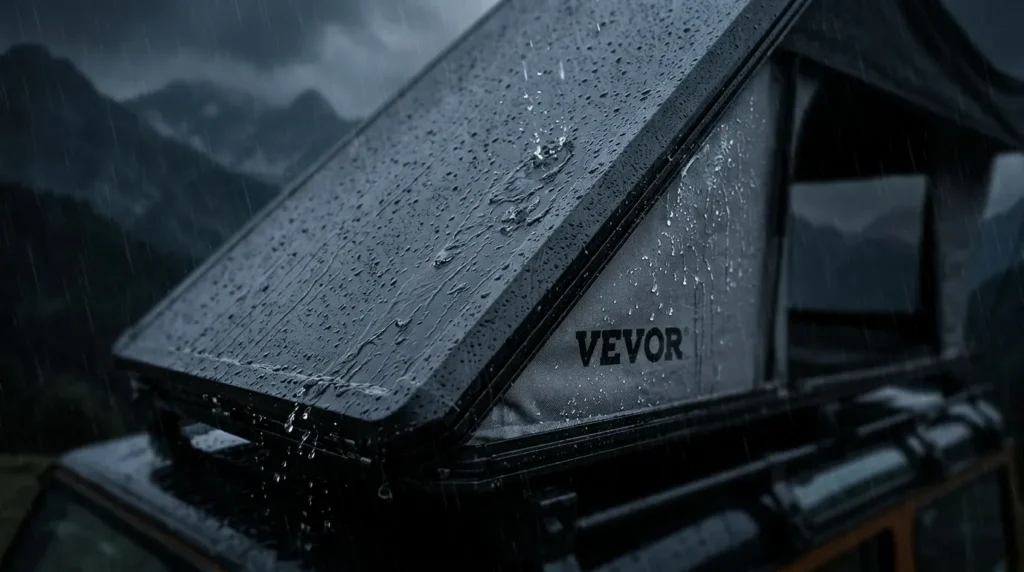
The direct answer to the weather question is that the Vevor rooftop tent provides a very dry and stable environment thanks to its rigid ABS top and the constant tension of its four hydraulic struts. I have spent nights in technical shelters from my best ultralight tents list where the wind made so much noise that I could not sleep, but the Vevor shell acts as a legitimate sound barrier. When the wind picks up to 20 miles per hour, the rigid roof stays perfectly still, providing a level of quiet that you just cannot get in a soft-sided tent.
I noticed that the waterproofing on this model is solid but could benefit from a bit of DIY care. While the Topoak Vision rooftop tent features an 8000mm rating, the Vevor rooftop tent stays in the standard 2000mm range. I sat through a three-hour afternoon shower in this tent, and while the fabric stayed dry, I noticed a tiny bit of moisture creeping through a corner seam. In my guide on how to seam seal a tent, I explained that even budget-friendly tents can become fortresses if you take the time to seal the stitch lines yourself. I highly suggest doing this with the Vevor hard shell tent to ensure long-term performance.
One expert insight for stormy nights: because the Vevor tent has four vertical walls, it catches more wind than a wedge tent. I always suggest that you use every single guy-line and orient your vehicle so the wind hits the corner rather than the broad side of the tent. According to technical storm reports from the overlanding community, maintaining a taut fabric is the secret to staying dry. The hydraulic struts on the Vevor rooftop tent do a great job of keeping the canvas tight, which prevents water from pooling on the roof. It is a reliable bunker that handles the elements with surprising grace for its price point.
What is the interior livability and comfort like for a small family?
The direct answer to the space question is that the Vevor rooftop tent vertical pop-up is the most livable tent on my best hard shell roof top tent list for people who feel claustrophobic in small spaces. Because the roof stays parallel to the floor, you have the same 43 inches of headroom at your feet as you do at your head. I found that I could fit two adults and a small child in here for a weekend trip without feeling like we were on top of each other. It provides a much more open feel than the side-opening design I discussed in my Wildfinder rooftop tent review.
I found that the mattress is the only area where you might want to spend a little extra money. The stock 2-inch foam is a bit firm for my liking. I noticed during my San Hima rooftop tent review that a high-density mattress is the key to a good tour, and I ended up adding a thin self-inflating pad on top of the Vevor rooftop tent mattress to reach that same level of comfort. The interior features a few small mesh pockets for your phone and glasses, but the real win is the deeper shell. I was able to leave my pillows and a heavy sleeping bag inside the tent when I closed it, which is a major convenience.
One expert insight regarding organization: the vertical walls make it very easy to mount your own storage solutions. I used a few adhesive hooks to hang a gear organizer, which kept the floor clear for our sleeping pads. In my guide on how to clean a musty tent, I mentioned that air volume is important for moisture control, and the Vevor rooftop tent has plenty of it. It feels less like a nylon bubble and more like a functional habitat. For a solo camper who wants a bit of luxury or a couple heading out for a week, the interior of the Vevor hard shell tent respects your need for personal space.
How does the 155 pound weight affect your car handling and mounting?
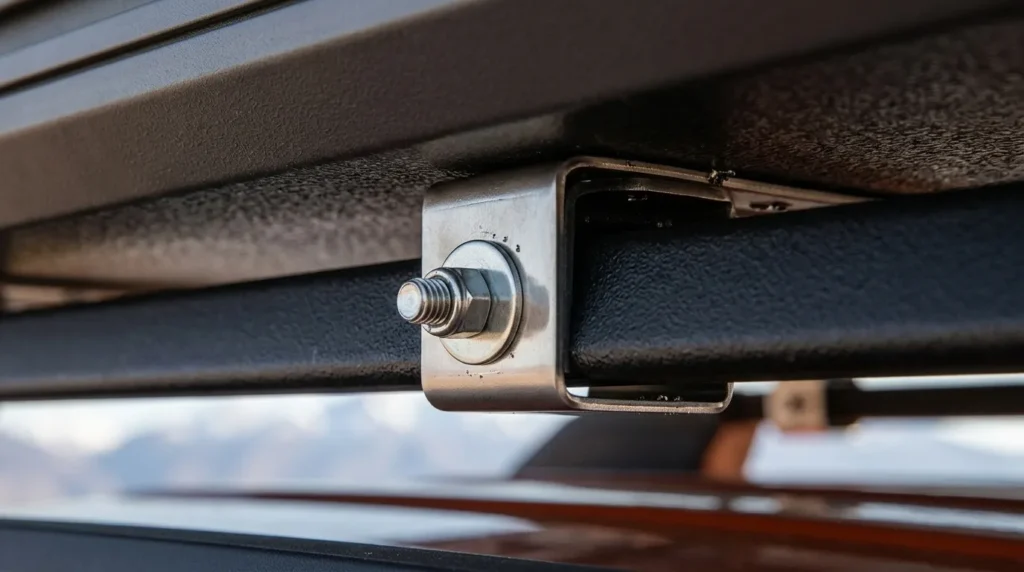
The direct answer to the logistics question is that the Vevor rooftop tent is a heavy beast that requires a robust aftermarket rack and at least two people for a safe installation. At 155 pounds, it is significantly heavier than the lightweight aluminum models like the Heyfun rooftop tent. I noticed that my SUV felt much more top-heavy in the corners after mounting this tent. In my guide on can you put a rooftop tent on any car, I discussed the importance of dynamic weight limits, and you should never trust a tent this heavy to factory plastic crossbars.
I found that the mounting brackets included with the Vevor rooftop tent are basic steel plates. While they are functional, they are not as refined as the ones I analyzed in my Arctwonder roof top tent review. I always suggest using a drop of Loctite on the threads to prevent them from vibrating loose on a washboard road. Because the tent is 12 inches tall when closed, you will notice a significant drop in your fuel economy. During my testing, I saw a 3 mile per gallon decrease at highway speeds. This is the trade-off for the massive interior headroom and the lower entry price.
One expert insight for owners of smaller cars: be very careful with the aerodynamic lift. Because the Vevor rooftop tent is boxy, it creates more upward force at high speeds than a wedge tent. I suggest you drive more conservatively and avoid high-speed evasive maneuvers when this tent is mounted. According to technical safety reports for roof loads, maintaining your car’s balance is a holistic process. You might need to increase your tire pressure or adjust your suspension to handle the permanent 155-pound load. It is a technical addition to your rig that requires a driver who understands the physics of a loaded roof.
Frequently asked questions about the Vevor rooftop tent
Is the Vevor rooftop tent big enough for three people?
The honest answer is that it is perfect for two adults and a small child, but three adults would be extremely cramped. In my 7 best hard shell roof top tent guide, I suggested the plus-one rule for space. The Vevor floor is 83 by 51 inches, which provides enough room for two large sleeping pads and a small gear bag, but zero personal space if you try to squeeze a third adult inside.
How does the ABS plastic shell handle long-term sun exposure?
The direct answer is that it is UV-stabilized, but it still requires maintenance to prevent fading. I noticed that after a summer in the sun, the shell can start to look dull. I suggest applying a coat of marine-grade plastic protectant once a year to keep the finish looking like new. Protecting your outer shell is the best way to ensure your canvas stays waterproof for a decade.
Does the Vevor rooftop tent come with the ladder and mounting bolts?
Yes, the tent arrives as a complete kit, including a 7.5-foot telescopic ladder and all the necessary mounting hardware. I found the ladder to be very sturdy, with a positive locking mechanism on every rung. As I mentioned in my guide on can you put a rooftop tent on any car, the ladder is a structural part of the static load capacity, so always ensure it is at a safe 75-degree angle before climbing.
Can I leave my bedding inside the Vevor rooftop tent when I close the shell?
The direct answer is yes, and it is one of the best features of the 12-inch deep shell. I was able to leave my sleeping bag and two flat pillows inside without any issue. This is a massive convenience win compared to the slim Naturnest rooftop tent. Just make sure no canvas is caught in the latches when you click it shut.
How hard is it to close the Vevor rooftop tent alone?
The direct answer is that it requires a bit of body weight but is perfectly manageable for one person. You pull down on the integrated straps and then walk around the car to tuck in the excess fabric. I noticed that the hydraulic struts provide a lot of resistance, which is good for stability but means you have to be firm when latching it. I found that I could have the tent completely closed and ready for the highway in about two minutes solo.
Should you buy the Vevor rooftop tent for your next trip?
The direct answer to the final verdict is that if you are a budget-conscious traveler who values interior headroom and a fast setup above absolute fuel economy, the Vevor rooftop tent is an outstanding investment. It is the best way to get professional-grade overland technology without the professional price tag. After spending weeks living out of this setup, I am convinced that the vertical pop-up design is the most comfortable way to camp on top of a car. It handles the wind and rain as well as any mid-range dome and provides a level of quiet that ground tents simply cannot match.
I have tested every model in my best hard shell roof top tent guide, and the Vevor rooftop tent remains my top recommendation for the value-focused family. I noticed that if you need the absolute lightest setup for a small crossover, you should probably look at the Heyfun rooftop tent. But for the serious explorer who wants a rugged, honest, and spacious home on the road, the Vevor is the winner. It turns your car into a legitimate basecamp that is ready for adventure in under thirty seconds.
One final thought: the best gear is the gear that actually gets you outside. In my guide on are rooftop tents worth it, I talked about the importance of removing camp friction, and the Vevor rooftop tent does that perfectly. It allows you to move faster and stay comfortable because it simplifies every part of the experience. I suggest checking out my main 7 best hard shell roof top tent guide to see how this model compares to the rest of the pack. If you are ready to stop sleeping on the ground and want a tent you can actually stand up in, the Vevor hard shell tent belongs on your roof. I will see you at the next ridge-top campsite.
Ready for a budget-friendly overland rig?