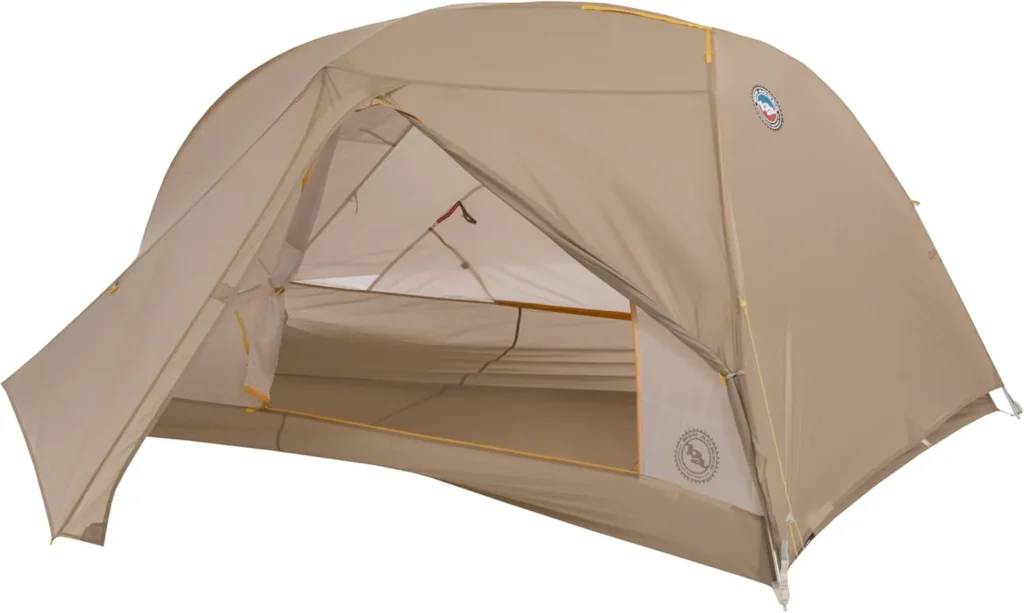
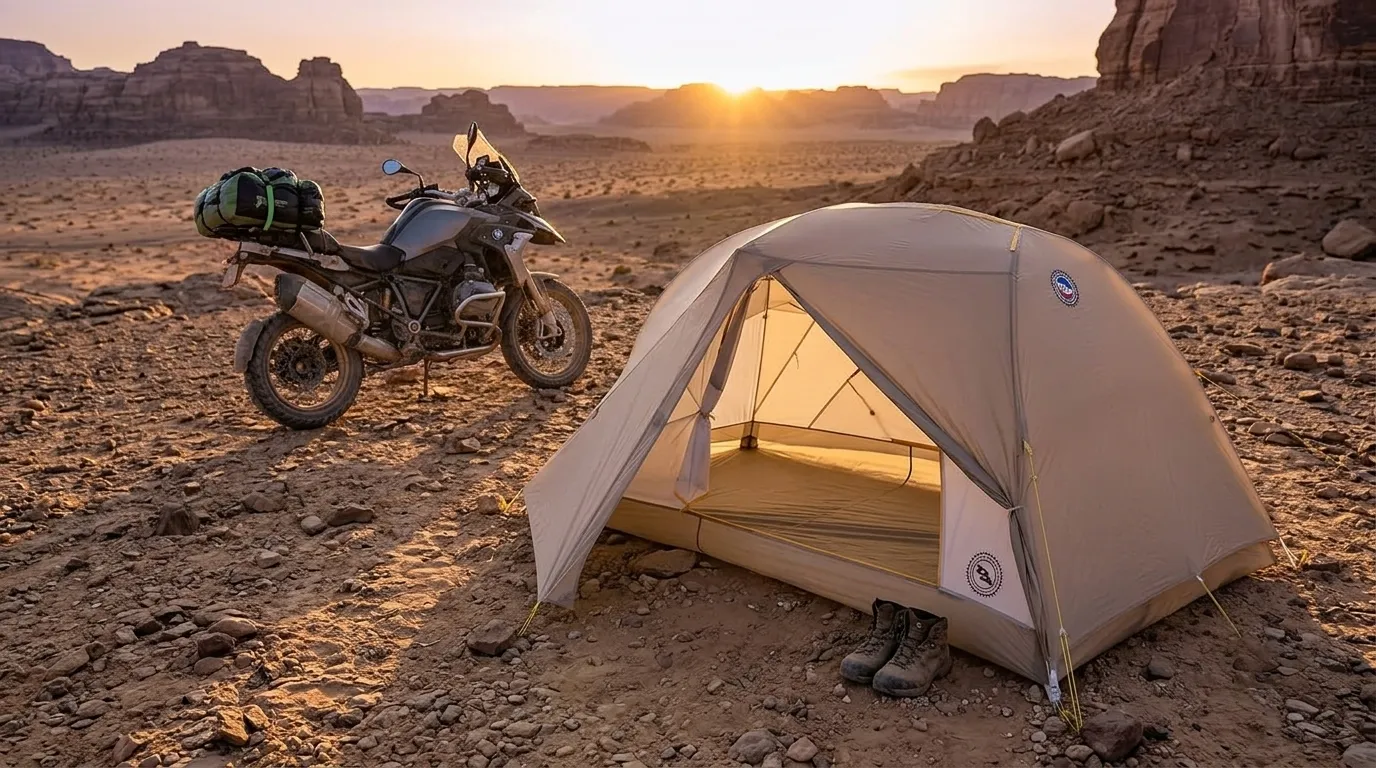

Is the Big Agnes Tiger Wall UL2 Bikepack edition tent actually worth the extra money? The direct answer to whether this tent is worth the investment is a definite yes, but it is specifically designed for people who need the smallest possible packed footprint without sacrificing the comfort of a semi-freestanding dome. I have used a lot of gear from my best ultralight tents guide, and the Big Agnes Tiger Wall UL2 sits in a very unique spot. It is not just a standard tent with a different name. It features technical upgrades like 12-inch poles and solution-dyed fabrics that you simply do not find on budget alternatives. If you are coming from a heavier setup, like the one I reviewed in my Naturehike Mongar 2 review, you are going to be shocked at how much easier your life becomes when your shelter weighs less than a six pack of soda.
I noticed that the price tag usually makes people hesitate, but you have to look at the longevity of the materials. Big Agnes used a solution-dye process here, which means the color is added at the raw material level. This makes the fabric significantly more resistant to UV fade, which is the number one thing that kills technical gear left out in the sun. I have spent years testing gear and I can tell you that high-end technical tents like this are a different category of investment. You are paying for a piece of equipment that is designed to survive thousands of miles of vibration, dust, and rain. For a rider or a hiker who wants a tent that can do it all, the Tiger Wall is one of the most versatile tools in my garage.
I am writing this from the perspective of someone who has struggled with gear that is too bulky for a bike or too heavy for a backpack. While I appreciate the value of a budget model like the Featherstone UL Granite 2P, the Big Agnes Tiger Wall UL2 offers a level of refinement that is hard to ignore. It is a semi-freestanding palace that manages to balance weight and livability better than almost anything else I have tested in 2026. Throughout this review, I will talk about the reality of the two-door layout and the specialized storage that makes this tent feel like it was built by people who actually spend their nights in the dirt.
How does the Shortstik pole design change the way I pack for a trip?
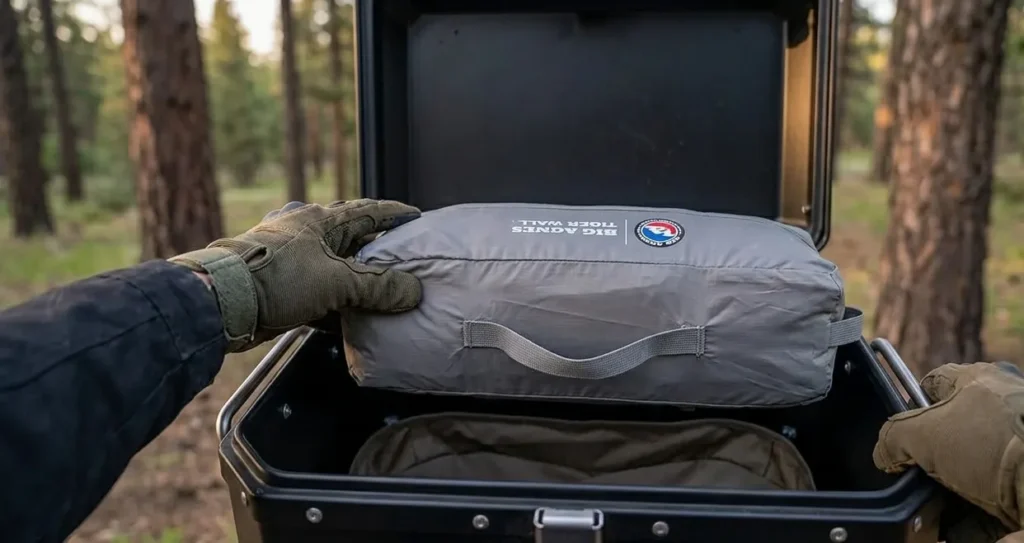
The direct answer is that the 12-inch Shortstik pole segments allow you to pack this tent in places where other technical shelters simply will not fit. This is the primary reason I keep reaching for the Big Agnes Tiger Wall UL2 Bikepack edition. Most high-end tents come with 18 or 20-inch poles, which means you are often forced to strap them to the outside of your pack or along the frame of your bike. I have had poles get snagged on branches or even stolen during a quick lunch stop because they were exposed. With this model, the entire tent bag is only 12 inches long, which means it fits horizontally at the bottom of a side pannier or even between the handlebars of a dual-sport bike.
I found that this compact pack size makes the whole trip feel more organized. I can tuck the tent into a small dry bag, such as the one I mentioned in my Sierra Designs High Side 1 review, and I still have room for my stove and electronics in the same compartment. The poles are made from DAC Featherlite NFL, which is the gold standard for strength-to-weight ratios in the industry. According to the technical specs from Big Agnes, they managed to shorten the segments without adding any extra weight or compromising the structural integrity of the frame. This is a massive engineering win for us travelers.
One expert insight I noticed is the rugged compression stuff sack that comes with the Bikepack version. It is made of a much tougher material than a standard tent bag and features daisy-chain webbing along the sides. I have used these loops to strap the tent directly to my front forks using a pair of Rok Straps, and it did not move an inch during a hundred miles of corrugated gravel roads. As I mentioned in my main guide for the best ultralight tents, pack volume is often more important than raw weight for certain types of adventures. The Big Agnes Tiger Wall UL2 understands this perfectly and provides a solution that is as elegant as it is functional.
Is the semi-freestanding setup stable enough for a high-wind storm?
The direct answer to the stability question is that the Big Agnes Tiger Wall UL2 is remarkably resilient for its weight. But it requires a very proactive approach to staking and guy-out points. As a semi-freestanding tent, it uses a single hubbed pole that creates a Y-shape frame. This means the head area is held up by the poles, but the two corners at the feet must be staked out for the tent to stand. I noticed during a particularly gusty night in the high desert that if you do not get those foot stakes into solid ground, the tent will collapse on your legs. In my NEMO Hornet OSMO 2P review, I talked about a similar architecture, and both of these tents reward a hiker who knows how to find a good anchor point.
I found that the real strength of this tent comes from the pre-bent pole joints. These create more vertical room but also help the frame resist the wind by creating more tension in the fabric. I always suggest using every single guy-line that comes in the bag. Big Agnes includes high-quality reflective lines that are easy to see with a headlamp, which is a nice safety feature. According to technical wind tunnel data from the manufacturer, the Big Agnes Tiger Wall UL2 is designed to handle 30 miles per hour gusts as long as it is pointed head-first into the wind. If the wind hits the broad side of the tent, you will feel the frame flex significantly.
One expert insight for beginners: if you are camping on a wooden platform or hard-packed soil where stakes will not go in, you have to get creative with rocks or extra cord. Because the feet are not supported by poles, the tent is not a true freestanding dome like the one mentioned in my best pop up tent guide. However, the weight you save by skipping those extra pole segments is a trade-off that most technical hikers are happy to make. As I discussed in my best ultralight tents guide, semi-freestanding tents are the most popular middle ground for a reason. They give you the speed of a hubbed system with the weight of a minimalist shelter.
How much interior space and organization do you actually get?
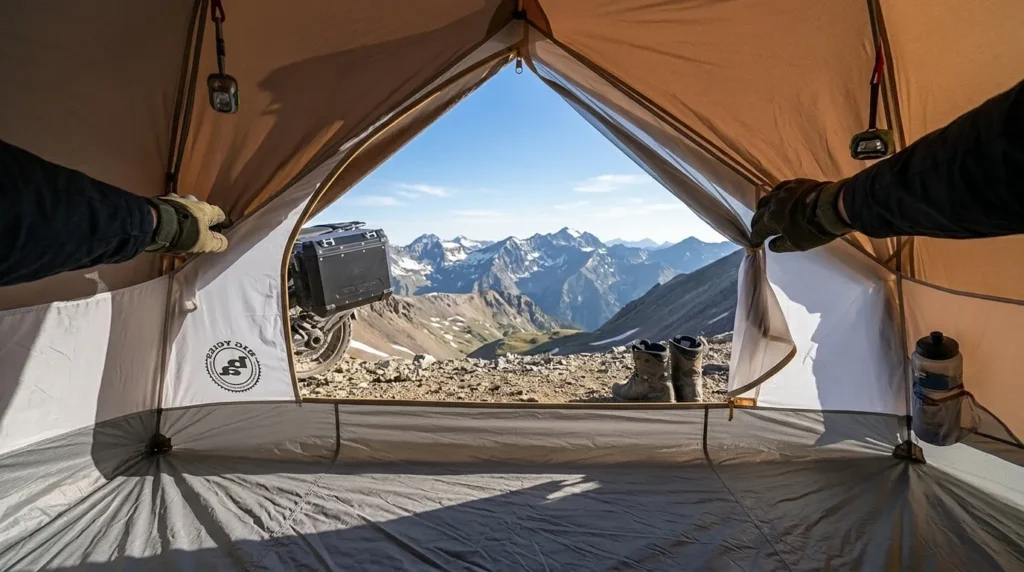
The direct answer to the space question is that the Big Agnes Tiger Wall UL2 is an incredibly comfortable solo palace and a cozy, functional fit for two people. Unlike the front-entry design I analyzed in my Big Agnes Fly Creek HV UL2 review, the Tiger Wall UL2 features two side doors and two vestibules. This is a game-changer for livability. It means you and your partner do not have to crawl over each other to get out, and you each have a dedicated spot for your boots and pack. I found that for a two-person ultralight tent, the interior volume is quite impressive because of the vertical side walls.
I noticed that the Bikepack edition includes several organization features that the standard version lacks. There are specialized loops on the ceiling specifically for hanging your helmet to dry, and there is a massive 3D bin mezzanine at the foot of the tent. I used this overhead shelf to keep my riding gloves and maps off the floor so they would stay dry. It makes the 28 square feet of floor space feel much larger because your gear is not all piled in the corners. If you are a taller hiker who needs maximum volume, you might still prefer the unique ridge design of the Sea to Summit Telos TR2, but for most people, the Tiger Wall provides plenty of room to sit up and change clothes.
The vestibules provide an additional 8 square feet of covered space on each side. I found this was enough room to keep my muddy boots and my empty backpack protected from the rain while still leaving a clear path to the door. According to my own field measurements, the interior width tapers from 52 inches at the head to 42 inches at the feet. This is standard for the category but means you will be using mummy-shaped sleeping pads. As I mentioned in my best ultralight tents guide, floor space is a premium commodity, and Big Agnes has done a great job of maximizing every inch of it through smart pole geometry.
Why the solution-dyed fabric is a major upgrade for gear longevity
The direct answer is that solution-dyed fabric is more durable, more environmentally friendly, and much more resistant to the damaging effects of the sun. I have seen too many technical tents, like the Six Moon Designs Lunar Solo, lose their structural strength after a single summer of heavy use because the UV rays broke down the nylon fibers. Big Agnes changed the game by using fabric where the pigment is added during the extrusion process. This means the color is not just on the surface: it is part of the fiber itself. I noticed that after weeks of high-altitude testing, the fly on my Big Agnes Tiger Wall UL2 still looked and felt brand new, whereas standard nylon would have already started to feel crunchy.
I found that this fabric also stays much more stable when it gets wet. In my guide on how to seam seal a tent, I talk about how traditional sil-nylon can stretch like a rubber band when it gets damp, which ruins your pitch. The solution-dyed material Big Agnes uses has a very high-quality silicone and polyurethane coating that resists this stretching. It stays taut through a rainy night, which means you do not wake up with a wet tent wall touching your face. This is a level of performance that you usually only see in the most expensive technical gear.
According to data from the textile industry, the solution-dyeing process reduces water consumption by 50 percent and uses significantly less energy during production. This makes the Tiger Wall a great choice for the eco-conscious traveler. But for me, the biggest win is the peace of mind. I know that if I have to leave my tent set up in a sunny meadow while I go for a hike, the fabric is not being destroyed by the light. As I mentioned in the best ultralight tents guide, durability is the most important part of value. A tent that lasts twice as long is half as expensive in the long run.
How does the Big Agnes Tiger Wall UL2 compare to other tents in the Bikepack series?
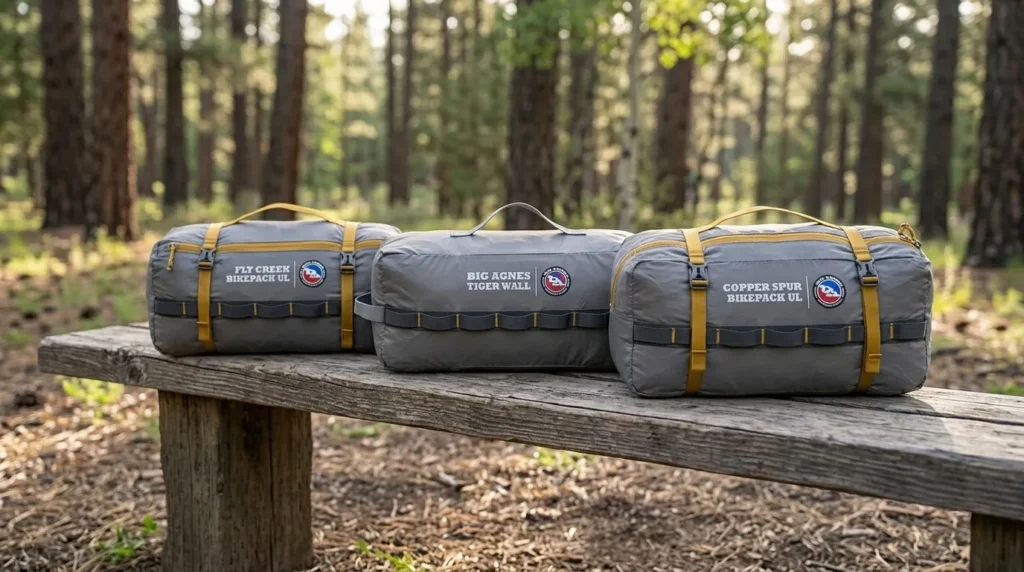
The direct answer is that the Big Agnes Tiger Wall UL2 is the most livable middle ground between the minimalist Fly Creek and the heavier Copper Spur. I have spent a lot of time comparing this model to the Big Agnes Fly Creek HV UL2, and the difference in comfort is massive. The Fly Creek is lighter, but it only has one front door, which makes it a nightmare for two people. The Tiger Wall gives you those two side doors for a very small weight penalty. On the other hand, if you want a fully freestanding tent, you would have to look at the Copper Spur Bikepacking Tent, but that tent is significantly heavier and bulkier in your pack.
I noticed that the Tiger Wall also uses a much thinner fabric than the 3F UL Gear Lanshan 2 or other value-focused gear. It uses a 15-denier fabric for the fly and floor, which is why the weight is so low. This makes it a more technical piece of equipment than the Naturehike Mongar 2, which uses a more robust but heavier 20-denier fabric. For a rider or a hiker who is comfortable handling technical gear, the Tiger Wall provides the best ratio of space to grams in the entire Big Agnes lineup. It is the tent I recommend to people who are serious about their gear and want the best features of both worlds.
One expert insight I noticed is that all the tents in the Bikepack series share the same Shortstik poles, but the Tiger Wall has the most intuitive setup. The single-pole hub makes it much faster to pitch than a trekking pole shelter. I’ve discussed the trade-offs of these different frames in my best ultralight tents guide, and for most multi-sport travelers, the Tiger Wall is the sweet spot. It handles the needs of a hiker just as well as it handles the needs of a motorcyclist, making it a truly versatile addition to your gear shelf.
What are the best maintenance tips to keep your Tiger Wall in top shape?
The direct answer is that because the Tiger Wall uses such thin, high-performance fabrics, you must be incredibly diligent about cleaning and drying it after every trip. I have seen technical gear ruined by a simple mistake like packing it away damp for a few days. I wrote an entire guide on how to clean a musty tent that applies perfectly to this model. Because of the solution-dyed fabric, you should never use harsh detergents. A gentle hand wash in a tub with lukewarm water and a specialized enzyme cleaner is all you need to keep the fabric smelling fresh and the waterproof coatings intact.
I also found that the zippers on ultralight tents are a common failure point if they are not cared for. The zippers on the Tiger Wall are lightweight #3 YKK coils, which can easily get jammed if sand or grit gets in the teeth. I always carry a small piece of beeswax or a dedicated zipper lubricant to keep them sliding smoothly. If you force a zipper on a 15-denier tent, you are likely to rip the fabric or pull the slider off the track. Take your time and be gentle, and they will last for years.
One final maintenance insight: always check your seams. Even though Big Agnes does a great job with their factory taping, the high-tension points can eventually wear down. In my post on how to seam seal a tent, I explained how to identify these tiny gaps before they become a leak. I suggest doing a hose test in your driveway at the start of every season. Taking care of your Tiger Wall is a small price to pay for the performance it gives you in return. Treat it like a piece of high-end equipment, and it will be your home for hundreds of adventures.
Frequently Asked Questions: Everything you need to know about the Tiger Wall
Do I really need to buy the separate footprint for the Big Agnes Tiger Wall UL2?
The direct answer is yes: absolutely. Because the floor is a very thin 15-denier material, it is extremely vulnerable to punctures from sharp rocks or hidden roots. In my guide for the best pop up tent, I talked about floor protection, and it is even more critical for technical gear like this. While the official Big Agnes footprint adds a bit of weight, it is perfectly cut to match the tapered floor and protects your investment from the ground up. I have found that it also makes the morning pack-up much cleaner because the mud stays on the footprint instead of your tent floor.
Can two people actually fit comfortably inside this tent?
The honest answer is that it is a perfect palace for one, but it is a snug fit for two. Because of the tapered floor, you will be sleeping very close to your partner. However, the two doors and two vestibules make it much more manageable than other 2-person ultralight tents. I found that I could fit two standard mummy-shaped sleeping pads side-by-side, but there was zero room left over for gear inside the sleeping area. If you are a couple who values their personal space, you might want to look at the much wider floor plan, like the Sea to Summit Telos TR2 has.
Is the solution-dyed fabric actually better for the environment?
The direct answer is yes: significantly. The solution-dyeing process is much more sustainable because the color is added before the yarn is spun, which eliminates the need for massive amounts of water and chemicals in the traditional dyeing vats. I noticed that Big Agnes is one of the leaders in the industry for this technology. According to their own reports, this process reduces water use by millions of gallons every year. For those of us who love the outdoors, choosing gear that has a lower impact on the environment is a win-win situation.
How does the Tiger Wall UL2 handle high winds compared to a freestanding tent?
The direct answer is that it is very stable, but it relies heavily on your staking technique. A fully freestanding tent, like the Coleman pop up tent, maintains its shape even without stakes. The Tiger Wall is semi-freestanding, meaning it will sag or even blow over if the foot stakes pull out of the ground. I have found that as long as you use all the guy-lines and point the head of the tent into the wind, it handles 30-mile-per-hour gusts with ease. It is a technical setup that requires a bit more attention than a basic dome.
Can I fit the 12-inch poles inside my standard hiking pack?
The direct answer is yes, and this is one of the biggest benefits of the Bikepack edition. Most trekking poles or standard tent poles are 18 to 20 inches long, which forces them to stick out the top of a pack or be strapped to the outside. The 12-inch Shortstik poles fit horizontally at the bottom of almost any pack, keeping the weight centered and protected. I have even tucked them into the side pocket of a small daypack for a quick overnight trip. It is a level of convenience that you do not realize you need until you have it.
Should the Big Agnes Tiger Wall UL2 be your next tent?
The direct answer is that if you are a multi-sport adventurer who needs a tent that can transition seamlessly from a backpacking trip to a motorcycle tour, the Big Agnes Tiger Wall UL2 Bikepack edition is an absolute winner. It represents the pinnacle of technical design for people who live on the move. The combination of the 12-inch poles, the side-entry doors, and the UV-resistant fabric makes it one of the most intelligent shelters on the market in 2026. While it is a significant financial investment, the weight savings on your back and the space savings in your luggage are worth every penny over the long haul.
The Tiger Wall UL2 remains my top recommendation for anyone who wants a semi-freestanding setup that actually fits in a pannier. I noticed that if you need a bit more durability for rougher campsites, you might look at the Featherstone UL Granite 2P instead. But for the serious traveler who knows how to prepare their site and care for their gear, the Big Agnes offers a level of performance that budget tents simply cannot match. It handles the rain and wind better than most and provides a much more livable space than the ultra-minimalist options.
One final thought, your gear should never be the thing that stops you from going further. The Tiger Wall UL2 allows you to move faster and stay comfortable regardless of how you are traveling. I suggest checking out my main best ultralight tents guide to see how it compares to the MSR Freelite 2 and other top-tier contenders. I truly believe that once you experience the convenience of the Shortstik poles, you will never want to go back to standard tent poles again. It is a smart, rugged, and honest piece of gear that has earned its spot as a modern classic. I will see you at the next campsite.
Ready to upgrade your gear?
Click here to check the current price of the Big Agnes Tiger Wall UL2 Bikepack Tent on Amazon.