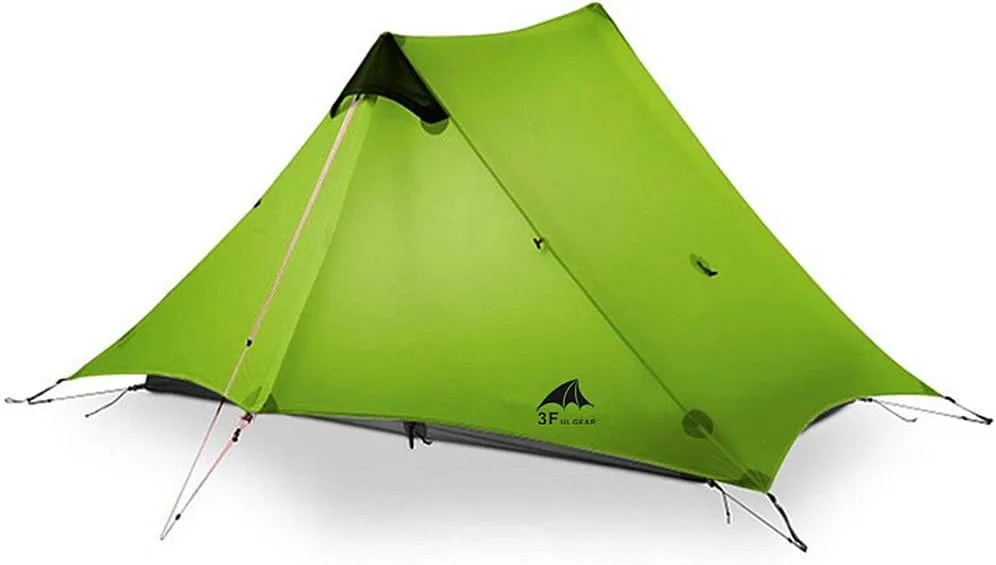
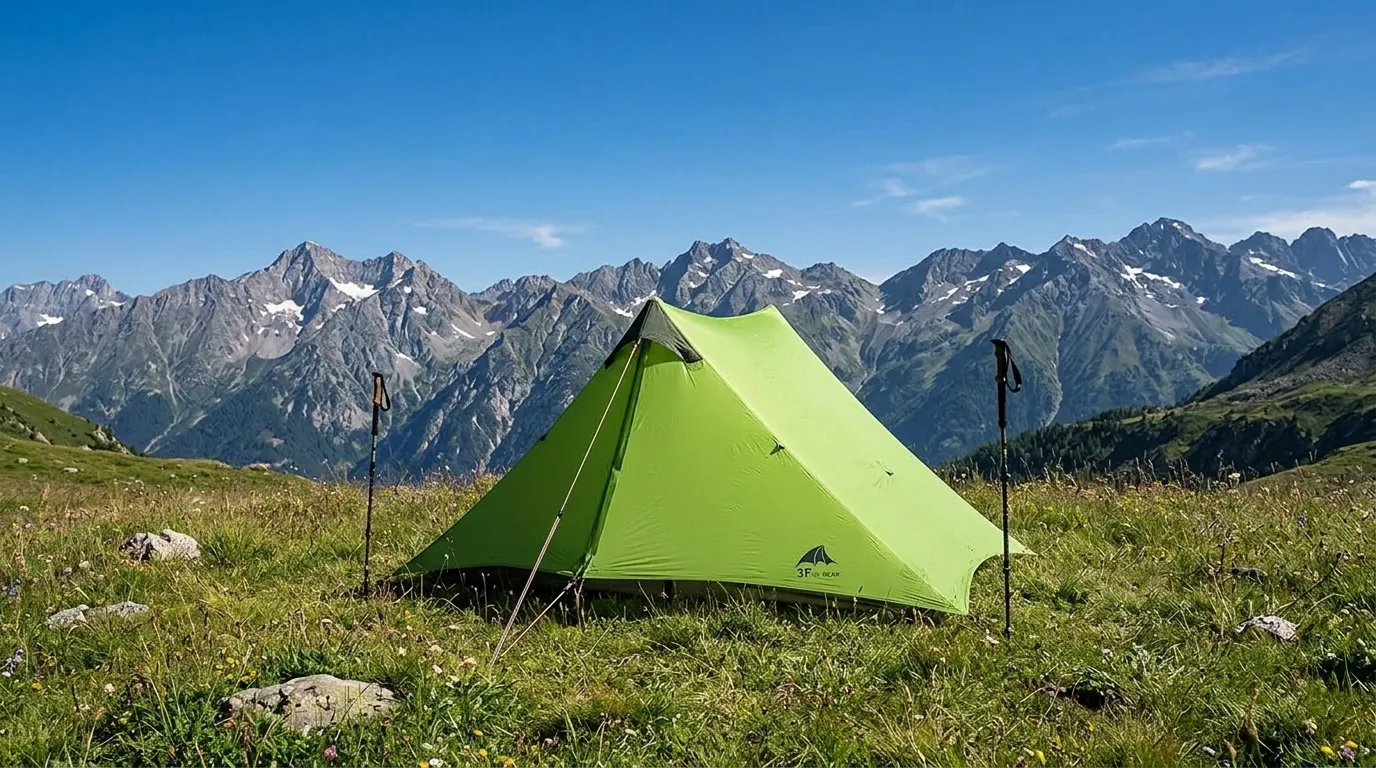

Is the 3F UL Gear Lanshan 2 actually worth the hype for budget backpackers? The direct answer to whether this tent is worth it is a definite yes, provided you are willing to do a little bit of manual labor before your first trip. I have spent a lot of time analyzing the gear in my best ultralight tents guide, and the 3F UL Gear Lanshan 2 is arguably the most famous budget model in the world. It is a double-wall trekking pole shelter that weighs roughly 2.2 pounds and often costs less than 200 dollars. For many people, that is a winning combination that makes ultralight hiking accessible for the first time. While I love the premium feel of the NEMO Hornet, the Lanshan 2 offers about 80 percent of that performance for a fraction of the cost.
What makes this tent different is its reliance on your hiking poles for the frame. In my foundational post on what is a pop up tent, I talked about the luxury of instant setups, but the Lanshan 2 is the total opposite. It requires a bit of skill to get a perfect pitch. I noticed that the 15D sil-nylon fabric is surprisingly high quality, but it does have one major catch: it usually does not come factory-sealed. This means you will need to spend an afternoon in your driveway learning the steps I covered in my how to seam seal a tent guide. If you are okay with that, you are getting one of the best value-to-weight ratios in the industry.
I am writing this from the perspective of a hiker who loves a good bargain but hates gear that fails at midnight. Throughout this review, I will break down the stability of the dual-pole architecture, the reality of the 2-person floor space, and why I think sil-nylon is still a great choice in 2026. As I mentioned in my guide on how to clean a musty tent, proper care is what makes budget gear last as long as the expensive stuff. The 3F UL Gear Lanshan 2 is an honest technical tool that has earned its spot as the unofficial tent of the thru-hiking community.
How difficult is the trekking pole setup of the 3F UL Gear Lanshan 2 for a solo hiker?
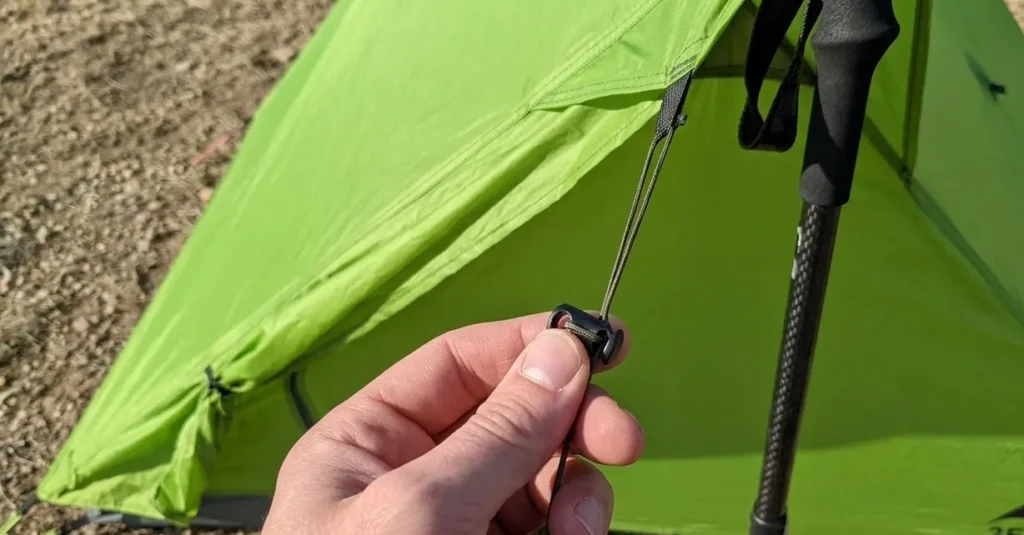
The direct answer is that the setup is moderately difficult for a beginner but becomes very fast once you understand the geometry of the lines. Unlike the semi-freestanding architecture I reviewed in my Six Moon Designs Lunar Solo review, the 3F UL Gear Lanshan 2 requires two poles set to exactly 120 centimeters. I found that if your poles are even an inch too high or too low, the rainfly will either be too floppy or the mesh will be under too much stress. I have timed myself several times and once I got the muscle memory down, I could have the whole thing taut in about five minutes. It is a very rewarding process once you see that sharp, aerodynamic shape take form.
I noticed that you must be very proactive with your stakes. Since this is a non-freestanding tent, it relies entirely on the tension between your poles and the ground anchors. If one stake pulls out in the middle of the night, the tent will collapse on your face. I always suggest using high-quality Y-stakes for the four main corners. This is a much more technical pitch than the one I described in my Teton Sports Vista Quick Tent review, but the weight you save by not carrying a dedicated tent frame is a massive benefit. According to technical pitching guides from 3F UL Gear, the secret to a stable Lanshan is to stake out the corners first, then insert the poles, and finally tension the vestibules.
One expert insight I want to share is about sil-nylon sag. I have mentioned this in my best ultralight tents guide: nylon fabric stretches when it gets cold and damp. I found that with the 3F UL Gear Lanshan 2, I often have to do a midnight tension check. You just need to reach out and give the guy-line adjusters a quick pull to keep the fly away from the mesh. It is a small chore that you do not have to deal with as much in the MSR Freelite 2, but for a sub-200-dollar tent, it is a minor inconvenience. Learning to master a trekking pole pitch is a rite of passage for any serious ultralight hiker, and the Lanshan 2 is the perfect teacher.
Why is manual seam sealing a mandatory step for the 3F UL Gear Lanshan 2?
The direct answer is that 3F UL Gear often leaves the high-stress tie-out points and the peak of the tent unsealed to keep their manufacturing costs low. While many people find this annoying, I actually prefer it because it allows me to do a better job than a factory machine. I spent an afternoon following the steps in my guide on how to seam seal a tent and it made the 3F UL Gear Lanshan 2 completely impervious to heavy rain. If you skip this step, you will likely see water dripping through the peaks where the trekking poles meet the fabric. It is a small investment of time that pays off during your first mountain storm.
I noticed that the 15-denier sil-nylon fabric is silicone-treated on both sides. This makes it incredibly slippery and waterproof, but it also means you must use a silicone-specific sealer like Sil-Net. If you use standard polyurethane sealer, it will simply peel off like a sticker. I have seen hikers make this mistake with the Naturehike Mongar 2 and it results in a sticky mess that does not stop leaks. According to fabric science, silicone bonds to silicone, so you are essentially creating a one-piece waterproof barrier over every needle hole.
One expert insight: I also suggest adding a few dots of silicone sealer to the floor of the tent. Because sil-nylon is so slippery, your sleeping pad will want to slide around all night. In my best ultralight tents guide, I call this the bobsled effect. By adding some grip to the floor, you stay centered and comfortable. Proper sealing is the difference between an entry-level shelter and a professional-grade fortress. Maintaining these waterproof barriers is the only way to ensure your gear lasts for several seasons of heavy touring.
How much interior room do you actually get for two people and gear?
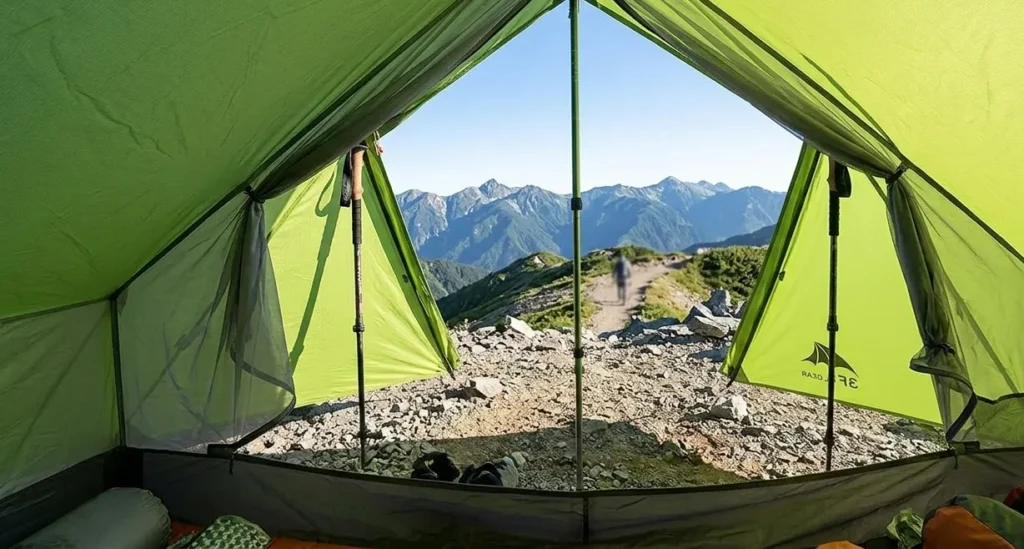
The direct answer is that the 3F UL Gear Lanshan 2 is surprisingly spacious for its weight class, offering enough room for two adults and their essential gear. Unlike the tapered designs I saw in the Big Agnes Tiger Wall UL2, the Lanshan 2 has a wide, rectangular floor plan. I found that I could fit two standard width sleeping pads side-by-side with a few inches of space left over in the middle. The vertical walls are created by the height of your trekking poles, which means you have excellent shoulder room when you are sitting up to change clothes or look at your maps.
I noticed that the two massive vestibules are the real secret weapon of this design. Each person has their own huge porch area for their backpack, boots, and wet gear. This is a level of organization that is hard to find in other lightweight models, such as the front-entry Big Agnes Fly Creek HV UL2. It makes the interior feel much less cluttered because the sleeping area is reserved for just you and your pad. According to my field measurements, you are getting about 28 square feet of floor space plus an additional 12 square feet of vestibule storage. For a solo traveler, it feels like a legitimate mansion.
One thing I really liked was the double-wall construction. Many trekking pole tents are single-wall to save weight, but the 3F UL Gear Lanshan 2 has a separate inner mesh tent. This is vital for managing condensation. In my best ultralight tents guide, I explained that double-wall tents are much safer for beginners because the moisture from your breath stays on the fly, not on your sleeping bag. I found that even on a humid night, the airflow was excellent. It is a very livable space that does not make you feel like you are sacrificing comfort for the sake of your back.
How does the 15-denier sil-nylon durability compare to more expensive brands?
The direct answer is that the fabric is remarkably strong for its thickness, but it is still an ultralight material that requires a careful touch. The 15D sil-nylon used by 3F UL Gear Lanshan 2 feels very similar to the materials found in high-end gear like the NEMO Hornet. It has a high tear strength because of the silicone coating on both sides, which makes the fibers slide against each other rather than snapping. I have had this tent in some pretty dense brush, and I have not seen a single snag or run in the fabric yet.
However, the floor is thin. I have spent many nights stressing over sharp rocks, and I always recommend using a footprint with the Lanshan 2. While I have used more rugged floors, like the Featherstone UL Granite 2P, those tents are significantly heavier. In my guide for the best pop up tent, I mentioned that convenience usually adds weight, and the Lanshan 2 is the proof of the opposite: it is light because it assumes you will be careful. I noticed that the stitching is generally very good, but the zippers are a bit smaller than I would like. You need to be gentle when the fabric is under tension so you do not pull the sliders off the track.
According to long-term reviews in the backpacking community, the 3F UL Gear Lanshan 2 can easily survive a full thru-hike of the Appalachian Trail if you treat it with respect. This means clearing your campsite of every sharp stick and keeping the zippers clean. Dirt acts like sandpaper on technical fabrics. The Lanshan 2 is not a tank like the Naturehike Mongar 2 but it is a precision tool that offers incredible durability for its weight. It is a fantastic example of why sil-nylon remains a favorite for technical hikers who know how to manage their gear.
How does the 3F UL Gear Lanshan 2 handle wind stability and mountain storms?
The direct answer is that the Lanshan 2 is a very capable storm shelter, but its performance depends 100 percent on the quality of your pitch. Because it is a dual-pole pyramid shape, it sheds wind remarkably well from the sides. I had this tent pitched on a high ridge during a breeze with 25 miles per hour gusts, and it felt solid as long as the lines were tight. I noticed that the aerodynamic shape is a major benefit compared to the vertical walls found in the Sea to Summit Telos TR2. The wind just seems to slide over the top of the pyramid.
However, you have to be careful with the large side panels. If the wind hits the broad side of the tent, it will push the fabric in toward you. I always suggest using the mid-panel guy-outs to give the poles more support. In my best ultralight tents guide, I emphasize that a non-freestanding tent is only as strong as its stakes. MSR and other high-end brands provide better stakes, so I usually swap out the basic 3F UL Gear stakes for something beefier. According to technical structural data, the dual-pole layout of the Lanshan 2 is inherently more stable than single-pole tents like the Sierra Designs High Side 1.
One expert insight: the double-wall design means that even if the wind is blowing rain under the fly, you have an inner layer of mesh to keep you dry. I sat through a solid four-hour deluge in this tent and the interior stayed bone-dry. The high bathtub floor is another great feature for storm safety, as it prevents splash-back from getting onto your gear. As long as you take the time to learn the proper tensioning techniques, the 3F UL Gear Lanshan 2 is a reliable sanctuary that will keep you safe through most typical three-season mountain weather. It is a technical setup that rewards an experienced hand.
Frequently Asked Questions: What people want to know about the 3F UL Gear Lanshan 2
Does the 3F UL Gear Lanshan 2 come with the footprint included?
The honest answer is that it usually does not. While some bundles on Amazon might include a groundsheet, most of the time you have to buy it separately. I highly recommend getting one because the 15D floor is technical gear and will not withstand sharp rocks without a second layer of protection. A groundsheet is the cheapest insurance you can buy and that is especially true for sil-nylon gear.
What is the best way to seam seal the Lanshan 2 peaks?
The direct answer is to pitch the tent in your yard and use a small brush to apply silicone sealer to every stitch line at the top. I have a detailed guide on how to seam seal a tent that breaks this down. You want to pay special attention to the area where the trekking pole tips touch the fabric, as that is the most common spot for a leak. Let the sealer dry for 24 hours before you pack the tent away.
Can I use the Lanshan 2 if I do not carry trekking poles?
Yes, but you will have to buy dedicated tent poles separately. Several companies make carbon fiber or aluminum poles specifically for trekking pole tents. However, I found that this adds back some of the weight you were trying to save. In my Big Agnes Fly Creek HV UL2 review, I discussed the benefits of a dedicated frame for people who do not hike with poles. If you are a bikepacker or motorcycle rider, buying accessory poles is a smart move for this model.
How does the sil-nylon handle long-term UV exposure?
Sil-nylon is fairly resistant to the sun, but it is not as robust as the solution-dyed fabrics I analyzed in the Big Agnes Tiger Wall UL2. If you leave the Lanshan 2 pitched in the direct sun for weeks at a time, the fibers will eventually become brittle. I always suggest pitching your tent in the shade whenever possible. UV damage is the primary cause of fabric failure for ultralight gear.
Is it actually possible for two full-sized adults to fit comfortably?
The direct answer is yes, but it is a functional fit rather than a luxury one. I found that I could fit two standard width sleeping pads perfectly. Because of the dual side doors, you each have your own space to get in and out without bumping into each other. It is much more comfortable for two people than the front-entry gears. It is one of the few sub-3-pound tents I would actually consider sharing with a friend for more than one night.
Should you buy the 3F UL Gear Lanshan 2 for your next trip?
The direct answer is that if you are a hiker or rider who is comfortable with a trekking pole setup and you want the best possible weight savings for under 200 dollars, the 3F UL Gear Lanshan 2 is an unbeatable choice. It is the gold standard for budget-friendly technical gear in 2026. The combination of the sub-2.5-pound weight, the dual-door access, and the high-quality sil-nylon makes it a legitimate rival to tents that cost three times as much. While it requires a bit of manual labor for seam sealing, the performance you get in return is worth every second of effort.
The Lanshan 2 remains my top recommendation for anyone who wants to go ultralight without the boutique price tag. I noticed that if you hate fiddling with stakes, you might look at the NatureHike Mongar 2 instead for a more traditional freestanding experience. But for the serious traveler who values a light pack and a spacious base camp, the Lanshan 2 is a total home run. It is a smart, rugged, and honest piece of gear that has proven itself on thousands of miles of trail.
One final expert insight: your gear should never be the thing that stops you from exploring. The Lanshan 2 allows you to save money on your shelter so you can spend it on better food or more miles on the road. I suggest checking out my full best ultralight tents guide to see how this model compares to the rest of the pack. I truly believe that 3F UL Gear has created a modern classic with this model. If you are ready to make the switch to a trekking pole tent, this is the one that will help you do it. I will see you at the next trailhead.
Ready to join the ultralight revolution?
Click here to check the current price of the 3F UL Gear Lanshan 2 on Amazon.