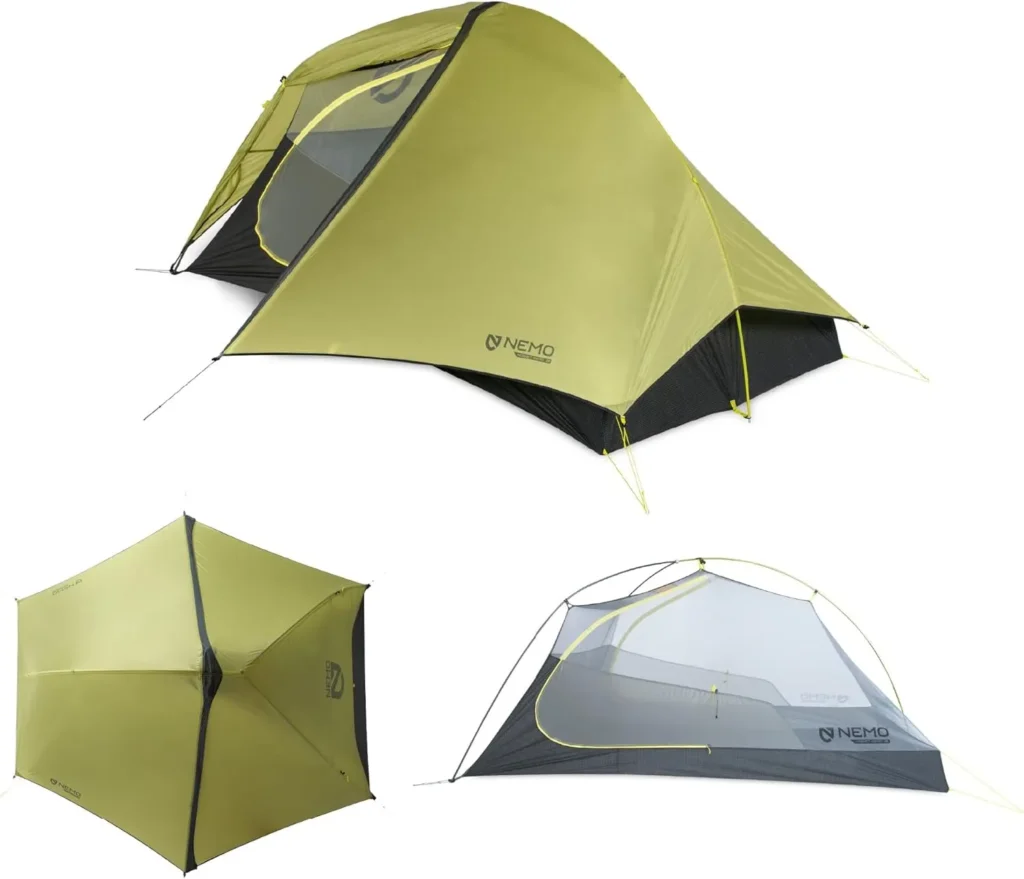
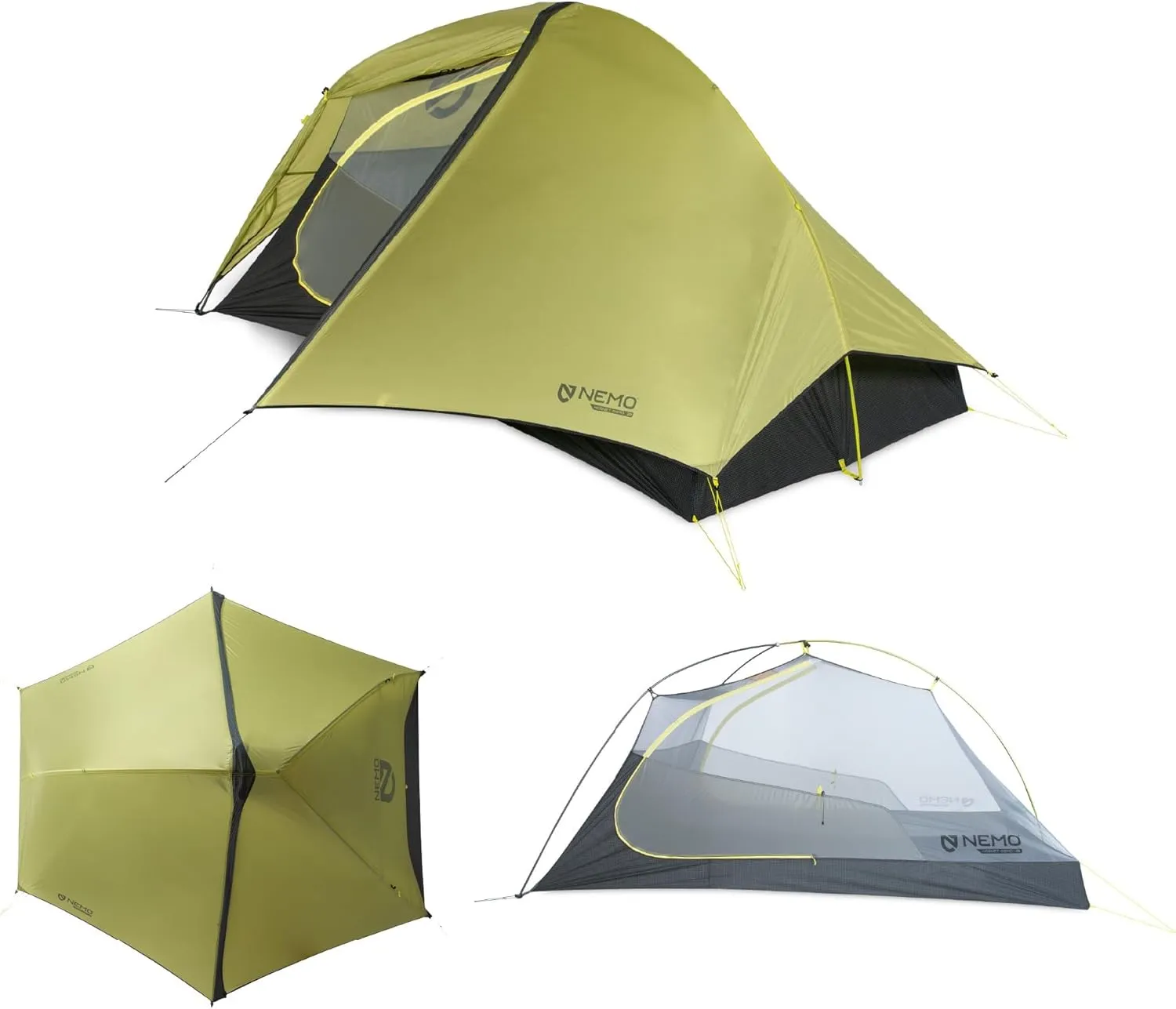

Is the NEMO Hornet OSMO 2P actually worth the premium price tag? The direct answer to whether this tent is worth the investment is a resounding yes, but only if you are a hiker or rider who prioritizes weight savings above all else. I have spent years testing the latest gear for my best ultralight tents guide, and I can tell you that the NEMO Hornet OSMO 2P sits in a very elite category of gear. It is one of the few shelters on the market that manages to stay under a two pound minimum trail weight without forcing you to use trekking poles as your frame. When I first held the packed bag in my hand, I honestly thought I was holding a rolled up rain jacket. For a solo traveler or a couple who wants to move fast and light, the value of not feeling your gear on your back is hard to quantify until you are fifteen miles into a day.
I noticed that the price tag usually causes a bit of sticker shock. But after using it in the field, I realized that you are not just paying for the name, you are paying for the R and D behind the proprietary OSMO fabric. I have used plenty of budget friendly options, such as the one I analyzed in my Naturehike Mongar 2 review, and while those are great for the money, they do not offer the same performance in wet weather. Standard nylon tents tend to stretch and sag the second they get damp, which usually results in me having to get out of my warm bag to re-tension the fly. The NEMO Hornet does not have that problem. It stays drum tight from the moment you pitch it until the morning sun comes up.
I am writing this from the perspective of someone who has struggled with heavy, bulky gear in the past. If you have already read my best tent for motorcycle camping guide, you know that I value gear that solves problems. The NEMO Hornet OSMO 2P solves the problem of back fatigue and wet weather sag. It is a technical tool designed for a specific purpose, and in my experience, it performs that task better than almost anything else available in 2026. According to industry sales data, this model has become one of the most popular choices for thru-hikers on the PCT for this exact reason. It is an honest, high performance investment in your comfort on the trail.
How does the new OSMO fabric handle heavy rain and condensation?
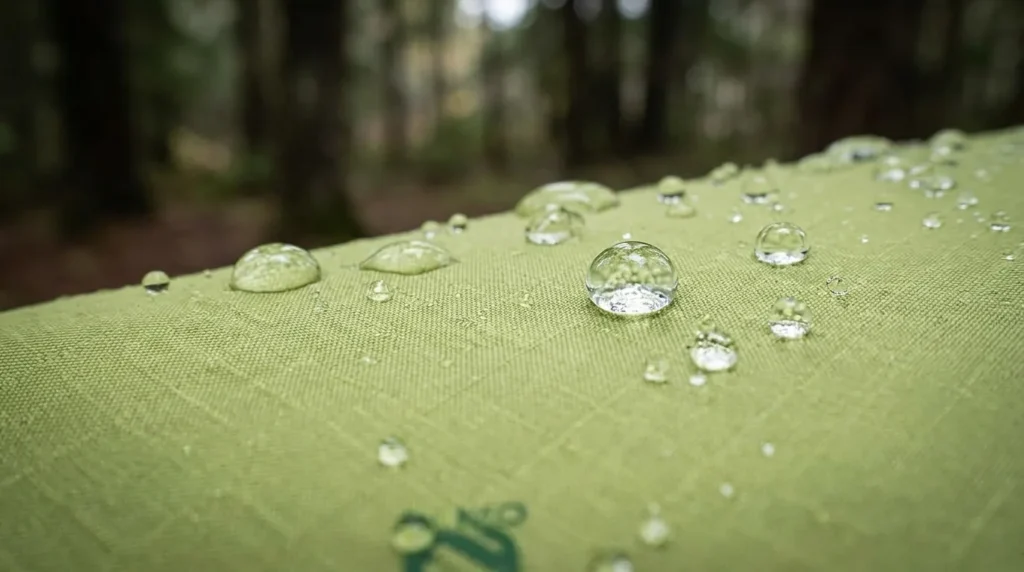
The direct answer is that the OSMO fabric handles moisture significantly better than traditional sil-nylon because it is a poly-nylon blend that is engineered to be 4 times more water repellent. When I first tested this fabric during a rainy weekend in the Cascades, I was skeptical of the marketing claims. However, I found that the water beads and rolls off the surface instantly, and the fabric does not soak up water weight like a sponge. This is a massive win for us hikers because a wet tent usually adds a pound or two of water weight to your pack in the morning. With the NEMO Hornet OSMO 2P, I can give the fly a quick shake and it is about 80 percent dry before I even pack it away.
I have found that condensation is the other half of the moisture battle, and Nemo has addressed this with a very aggressive mesh design. The inner tent is almost entirely micro-mesh, which allows for massive amounts of airflow. In my guide on how to clean a musty tent, I talked about how stagnant air is the leading cause of mildew. The Hornet avoids this by keeping the air moving constantly. Even on a humid night by a river, I did not wake up with that annoying mist of indoor rain that plagues so many other ultralight models. The high cut of the rainfly also helps create a chimney effect, pulling fresh air in from the bottom and letting moisture escape through the top.
According to the technical specs from the manufacturer, the OSMO fabric is also 100 percent recycled and PFC free, which is great for the environment. But as a gear tester, I care most about the fact that it is 3 times less likely to stretch when wet. This is the expert insight I want to share: a taut tent is a strong tent. If your fly sags, it touches the inner mesh, and that is exactly when leaks start. Because the Hornet stays tight, it maintains its structural integrity even in a sustained downpour. As I mentioned in my main guide for the best ultralight tents, weatherproofing is as much about the fabric as it is about the design, and Nemo has nailed the balance here.
Is the interior space big enough for two people and their gear?
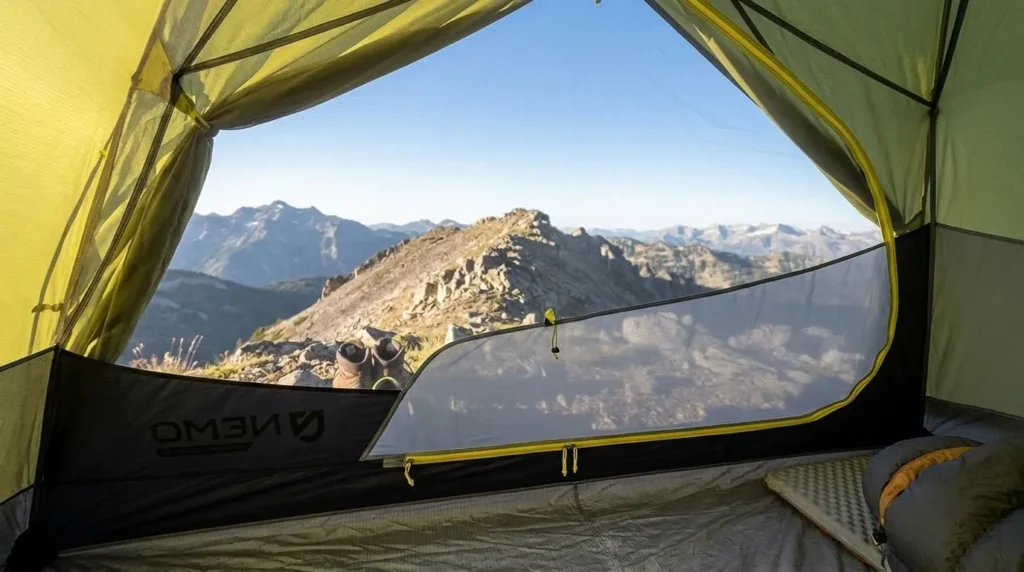
The direct answer to the space question is that the NEMO Hornet OSMO 2P is a luxury palace for one hiker but a very intimate squeeze for two full-sized adults. If you are planning to share this shelter with a partner, you had better be very comfortable with each other because you will be sleeping shoulder to shoulder. I have found that with the tapered floor design, which narrows at the feet, there is very little room for anything other than two standard width sleeping pads. In my best ultralight tents guide, I often talk about the plus one rule for floor space, and this tent is a prime example of why a solo hiker should almost always choose a two person model.
I noticed that NEMO included a clever feature called the Flybar pole clip, which helps a lot with the feeling of space inside. It is a small plastic crossbar that pulls the tent walls out at the top, giving you more shoulder room when you are sitting up. It makes the interior feel much larger than the front entry model I discussed in my Big Agnes Fly Creek HV UL2 review. While you get about 27.5 square feet of floor space, the vertical walls allow you to sit up and change your shirt without rubbing your head against the mesh. However, if you are a taller camper who needs maximum volume, you might find the architecture of the gear in my Sea to Summit Telos TR2 review more appealing because it offers much more headroom throughout the entire length of the tent.
One of my favorite things about the Hornet is that even at this weight, you still get two doors and two vestibules. This is a massive win for organization. I usually keep my wet boots and my backpack in the vestibule on one side and use the other door for getting in and out. This keeps the sleeping area clean and prevents the gear explosion that happens when everything is crammed inside. Having your own dedicated entrance is the secret to not hating your camping partner after a few days on the trail. It is a well-thought-out space that respects the need for individual access while cutting every possible gram from the corners.
How easy is the setup process for a solo camper at the end of a long day?
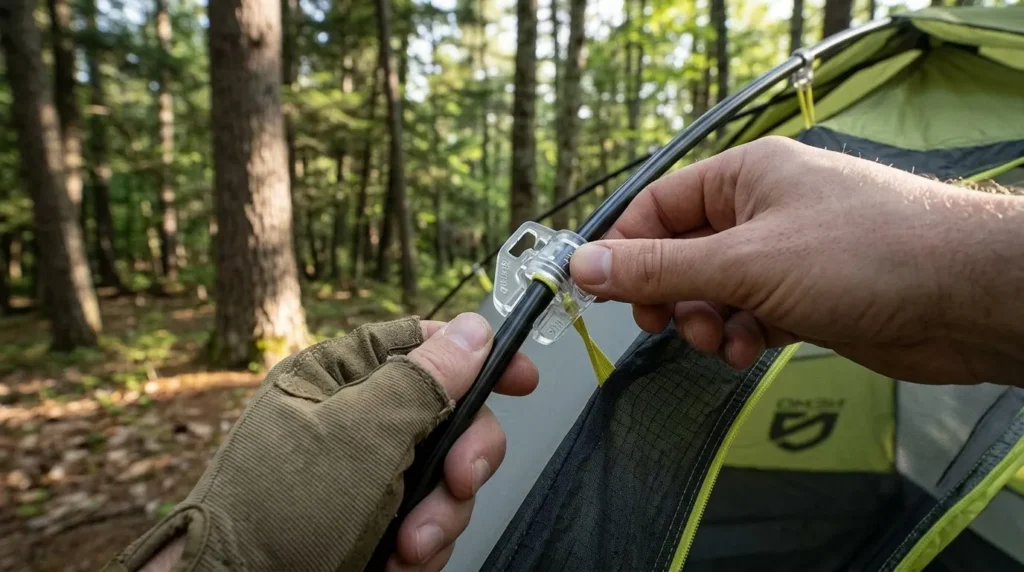
The direct answer is that setting up the NEMO Hornet OSMO 2P is incredibly fast and intuitive because it uses a single hubbed pole system. I have timed myself several times, and even when my brain is fried from a fifteen-mile day, I can have this tent fully pitched in under four minutes. You just lay the tent flat, snap the hubbed pole together, and insert the tips into the corner grommets. Since it is a semi-freestanding design, the only extra step is staking out the two corners at the foot of the tent to give the floor its rectangular shape. It is significantly less complicated than the trekking pole pitch I described in my 3F UL Gear Lanshan 2 review.
I found the color-coded webbing and pole tips to be a lifesaver when setting this up in the dark. It is almost impossible to mess it up because you just match the colors and clip the tent body to the frame. I noticed that the pole segments are also quite short, which is a major factor I look for in my best ultralight tents list. While they are not as stubby as the specialized poles in Big Agnes Tiger Wall UL2, they are still much easier to pack than standard backpacking poles. The hub is made of a high-strength composite that feels very smooth when the poles click into place, which gives me confidence in the long-term durability of the mechanism.
One expert insight I want to share is about the importance of the rear guy out points. Because the Hornet relies on a single pole at the foot, you need to stake out the rainfly very tightly to prevent it from touching the inner mesh. If you skip this step, you will lose a lot of the ventilation benefits I talked about earlier. As I mentioned in my guide on how to seam seal a tent, the tension of your pitch is the first line of defense against the elements. The Hornet is designed to be a technical shelter, so it rewards you for taking an extra minute to make sure every line is taut. For a solo camper, the combination of a unified hub and simple clips makes it one of the most user-friendly technical tents I have ever tested.
How does the durability of the 15D floor hold up on rocky ground?
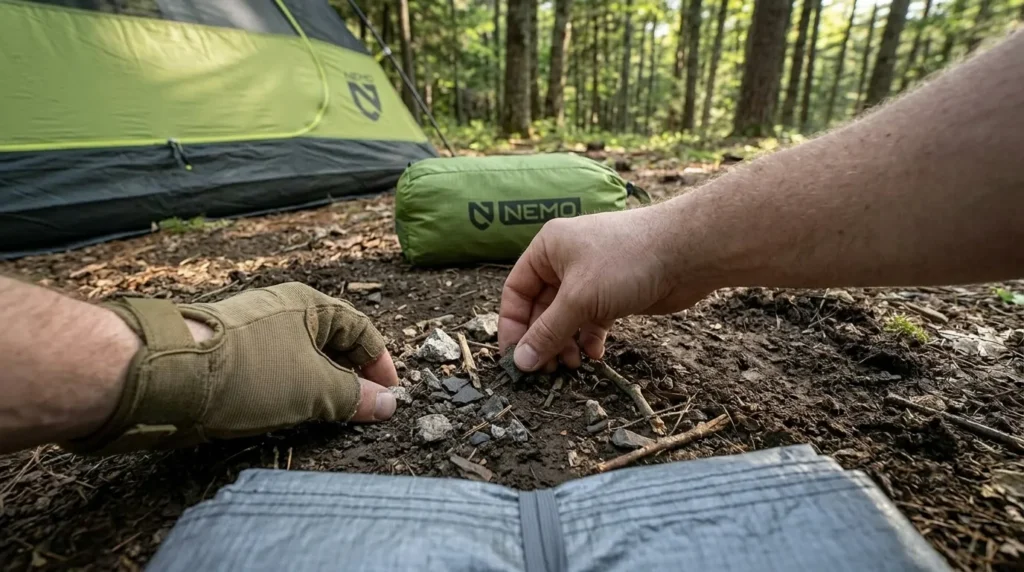
The direct answer is that a 15-denier floor is extremely delicate and should never be pitched on rocky or abrasive terrain without a dedicated footprint. I have spent a lot of time stressing over thin tent floors during my trips, and I can tell you that while the OSMO poly-nylon blend NEMO uses is technically stronger and more abrasion-resistant than standard nylon, it is still a technical ultralight material that requires a gentle touch. I noticed during a trip to the granite-heavy sections of the High Sierra that even with a footprint, I had to be incredibly diligent about clearing every tiny pebble from my site. If you miss a single sharp object, you are likely to wake up with a puncture.
I have found that this is the primary area where you see the trade-off for that sub-two-pound weight. If you are coming from a more traditional setup, such as the one I analyzed in my Featherstone UL Granite 2P review, you will notice that the 20-denier floor on that model feels much more substantial underfoot. The Nemo floor feels more like a high-end parachute. This delicacy is also why I emphasize proper maintenance, because these thin technical fabrics can easily lose their waterproof coatings if they are scrubbed too hard or stored with dirt trapped in the fibers. According to fabric durability tests, 15-denier is the threshold where weight savings start to impact long-term ruggedness.
If you are a beginner or someone who is notoriously hard on your gear, you might find more peace of mind with the setup I covered in my Naturehike Mongar 2 review, which offers a bit more material thickness for a much lower price. However, if you are an experienced traveler who understands how to manage technical gear, the Hornet floor is more than adequate. Just remember that your tent is a specialized tool. In my main guide for the best ultralight tents, I suggest that the best way to extend the life of these floors is to always carry a small roll of gear repair tape. I have used it to patch tiny snags in the field, and it works perfectly. Treat the Hornet with respect, and it will survive hundreds of nights, but ignore your site preparation, and you will be shopping for a new tent sooner than you think.
Frequently asked questions about the NEMO Hornet OSMO 2P
Do I really need to buy the official Nemo footprint for the Hornet OSMO?
The direct answer is yes. Because the floor is a very thin 15-denier material, the added protection of a groundsheet is essential for long-term durability. While you can save weight by using a piece of Tyvek or Polycryo, the official NEMO footprint is cut specifically to match the tapered floor and clips directly into the pole system. I have found that this prevents the footprint from sliding around and ensures that water does not pool between the layers during a storm. If you have already read my best pop up tent guide, you know I always prioritize floor protection as the number one way to save money on gear in the long run.
Can two full-sized adults actually sleep comfortably in the Hornet 2P?
The honest answer is that it is a very tight fit. As I mentioned in my main guide for the best ultralight tents, most ultralight 2-person tents are actually 1.5-person tents. The Hornet narrows significantly at the feet, so you will be bumping into your partner throughout the night. If you are a couple who values your space, I would suggest looking at the much more spacious architecture I discussed in my Sea to Summit Telos TR2 review. However, for a solo hiker plus gear, or two minimalist hikers who are focused on speed, the Hornet provides a functional and reliable shelter.
How does the Hornet OSMO handle high-wind conditions on an exposed ridge?
The direct answer is that it handles moderate winds well, but it is not a four-season fortress. Because it is a semi-freestanding tent with a single pole at the foot, it can sway and deform if a heavy gust hits it from the side. I noticed that using every single guy-out point is mandatory if the wind picks up. If you are planning a trip where you expect consistent 30 mile per hour winds, you should check out the more rigid pole designs I covered in my Big Agnes Tiger Wall UL2 review. For standard three-season backpacking, the Hornet is perfectly stable as long as you anchor it correctly.
Is the technical OSMO fabric harder to clean than standard nylon?
The direct answer is no, but you must use the correct products. I wrote a complete guide on how to clean a musty tent that applies perfectly to this model. Because the OSMO fabric is a poly-nylon blend with technical coatings, you should only use lukewarm water and a specialized enzyme cleaner. Never use harsh detergents or a washing machine, as you will strip the water repellency that makes the tent so special. I have found that a gentle hand wash once a season is all it takes to keep the Hornet smelling fresh and performing like new.
How do I fix a snag or a small hole in the mesh walls?
Ultralight mesh is delicate, and it is common to get small snags from zippers or gear. The direct answer is to use a specialized mesh repair patch or a tiny drop of Gear Aid Seam Grip. I always carry a small repair kit when I am using technical gear from my best ultralight tents list. If the hole is small, a bit of clear adhesive will stop it from spreading. It is a quick fix that does not affect the breathability or the weight of the tent. According to expert repair technicians, catching these small issues early is the key to preventing a total gear failure on the trail.
Should the Nemo Hornet OSMO 2P be your next technical shelter?
The direct answer is that if you are a dedicated backpacker or rider who obsesses over your base weight and wants a tent that will not sag in the rain, the NEMO Hornet OSMO 2P is an unbeatable choice for 2026. It represents the absolute cutting edge of what a technical shelter can be. After spending weeks in the backcountry with this setup, I am convinced that the OSMO fabric is the real deal. It solves the number one problem with ultralight gear: the midnight rainfly adjustment. While it is a significant financial investment, the quality of your sleep and the health of your back over a long tour are well worth the price of admission.
The NEMO Hornet OSMO 2P is the one I reach for when I know I have big mileage days ahead of me. I noticed that if you need a bit more structural stability for high-wind environments, you might want to look at the MSR Freelite 2, which uses a slightly different pole architecture. If you are a solo thru-hiker who wants to save even more weight by using trekking poles, the Six Moon Designs Lunar Solo or the low-profile Sierra Designs High Side 1 might be a better fit for your specific style. But for most travelers, the Hornet offers the best balance of weight, space, and ease of use.
One final expert insight: your gear should disappear into your experience. The Hornet OSMO does exactly that. It is so light that you forget it is in your pack, and it is so easy to set up that you can focus on the sunset instead of your poles. Make sure to check out my full best ultralight tents guide to see how the Hornet stacks up against other top contenders. I truly believe that Nemo has created a modern classic with this model. If you are ready to stop fighting with heavy gear and start moving faster, this tent is the tool that will help you do it. I will see you on the trail.
Click here to check the current price of the NEMO Hornet OSMO 2P on Amazon.