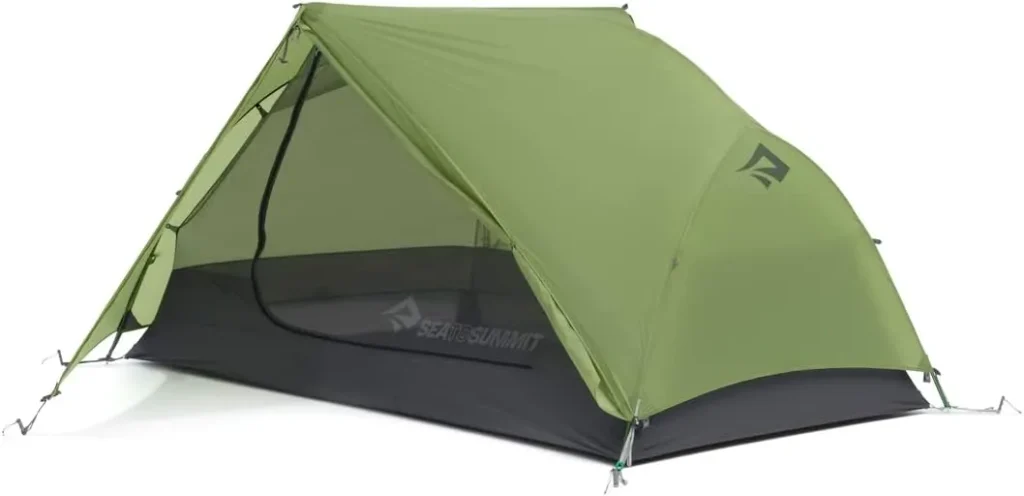
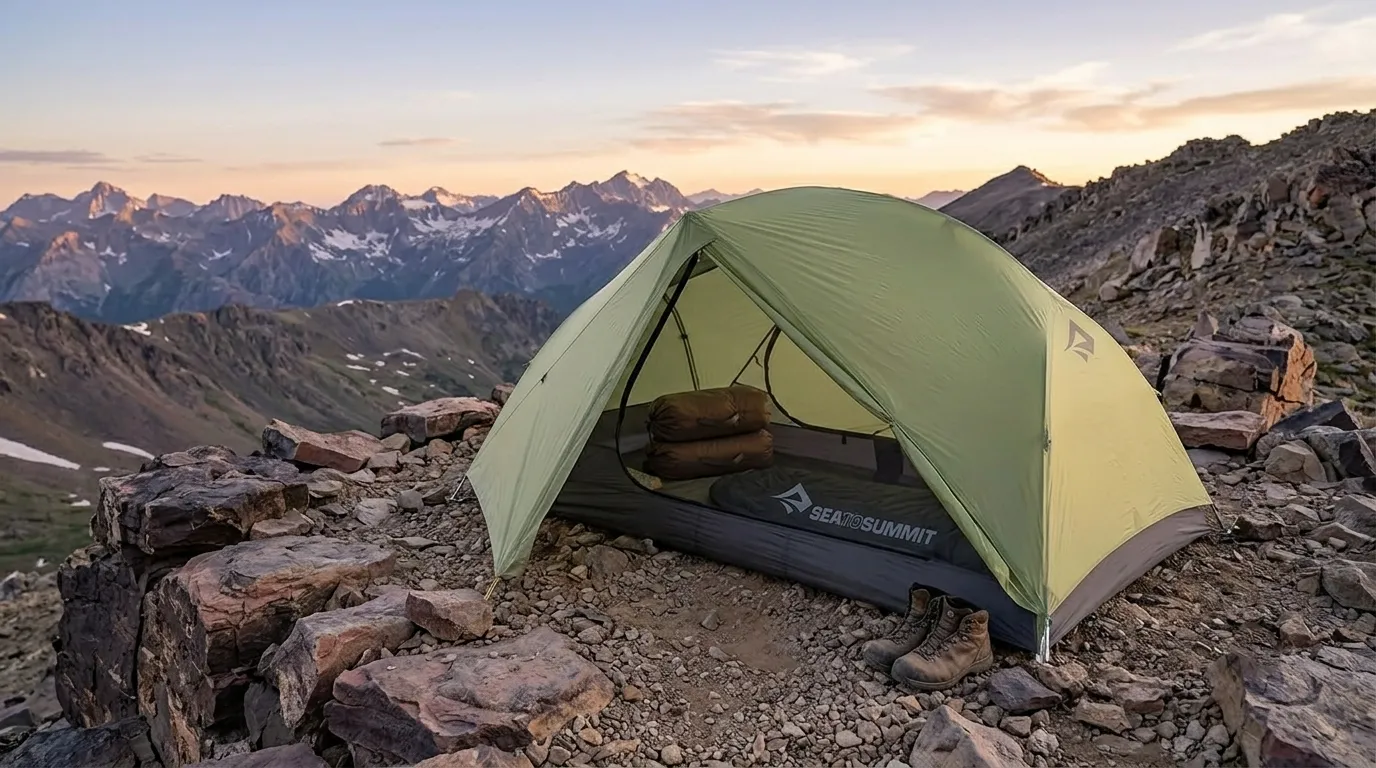

Is the Sea to Summit Telos TR2 actually worth the high price tag? The direct answer to whether this tent is worth your money is a resounding yes, especially if you are tired of the cramped, coffin-like feeling of most other shelters in my best ultralight tents guide. The Telos TR2 bikepacking tent is a premium piece of engineering that prioritizes liveability and clever features over absolute weight savings. I have tested dozens of tents, and while the NEMO Hornet OSMO 2P I analyzed is technically lighter, the Telos bikepacking TR2 feels twice as large on the inside because of its unique architecture. For a solo traveler or a couple who actually wants to enjoy their time inside the tent during a rainstorm, the extra investment in this Sea to Summit model is a total game-changer.
I noticed that the price tag, which is usually over 600 dollars, is one of the highest in the category. However, you have to look at the sheer amount of innovation packed into this bag. Sea to Summit did not just copy a standard dome design. They worked with DAC to create a pole system that slants upwards rather than downwards. I have spent years testing gear, and I can tell you that the Telos TR2 feels more like a small room than a nylon bubble. It is built to last, with high quality 15D and 20D fabrics that handle the grit and vibration of the road much better than budget alternatives.
I am writing this from the perspective of a gear nerd who is six feet tall. Throughout this review, I will break down the magic of the Tension Ridge, the reality of the Hangout Mode, and why the modular packing system is a massive win for riders and hikers alike. As I mentioned in my guide on what is a pop up tent, mechanical design is everything. In the case of the Telos TR2, you are paying for an architecture that solves the number one complaint about ultralight tents: the lack of headroom. It is an honest, high-performance tool that has quickly become my top recommendation for anyone who values comfort as much as weight.
How does the Tension Ridge architecture change the feeling of space inside?
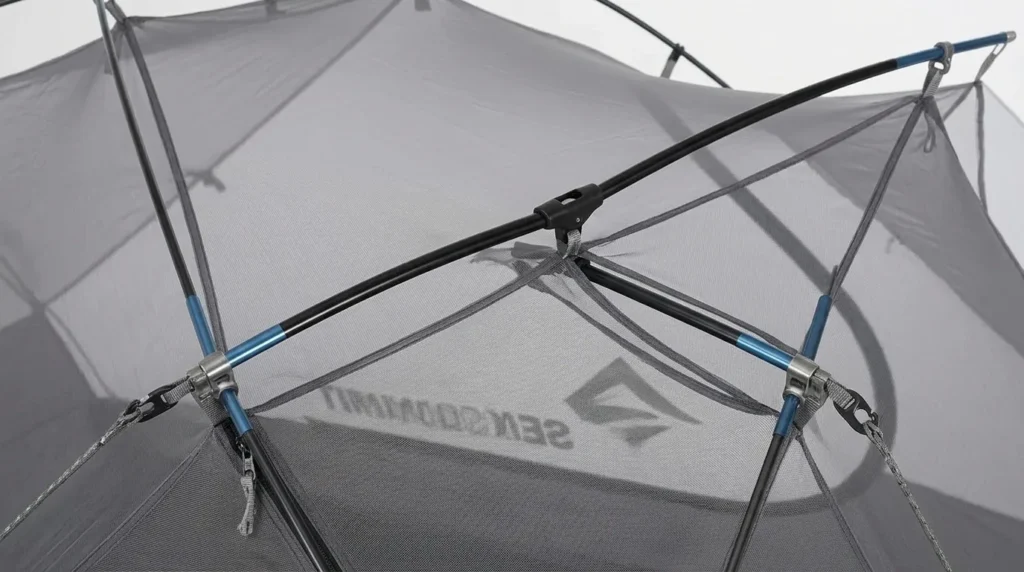
The direct answer is that the Tension Ridge allows the side walls to be nearly vertical and the doors to be significantly taller than standard tents. Most technical shelters, like the Big Agnes Tiger Wall UL2, have poles that curve down toward the ground at the edges. This creates a triangle shape that cuts off your shoulder room. The Sea to Summit Telos TR2 has a cross pole at the peak that slants upwards at the ends. I found that this design pulls the tent walls away from your face, which makes it feel incredibly airy and open. It is the only ultralight tent where I can sit up straight anywhere on the floor without my head rubbing the mesh.
I noticed that this architecture also creates much better ventilation. Because the peak is higher and slanted up, the vents are located at the very highest point of the tent. I have spent nights in humid valleys where other tents would have been dripping with condensation, but the Telos stayed remarkably dry. According to technical data from Sea to Summit, this chimney effect pulls warm air up and out more efficiently than standard roof vents. In my guide on how to clean a musty tent, I talk about how moisture is the enemy of gear longevity, and the Telos architecture addresses this problem through pure physics.
One expert insight I noticed is that the taller doors make getting in and out much easier. I have complained in my Big Agnes Fly Creek HV UL2 review about the struggle of crawling through a small front entry. The Telos TR2 bikepacking tent gives you massive side doors that you can actually step into. This is a huge benefit for anyone with stiff knees or for riders who are wearing bulky armored gear. As I discuss in my best ultralight tents guide, liveability is about more than just square footage. It is about how you move within that space, and the Tension Ridge makes the Telos feel like a legitimate base camp.
What is Hangout Mode and is it actually useful in the field?
The direct answer is that Hangout Mode is a versatile feature that turns your tent fly into a large, open sunshade or rain shelter using a pair of trekking poles. I have used this setup several times during midday lunch stops and long rain delays, and it is a fantastic way to stay dry without being trapped inside a small tent body. It provides a much larger covered area than the small awning I reviewed in my Vidalido tent review. For hikers who are stuck in camp during a storm, being able to cook and hang out under a tall canopy is a massive luxury.
I found that the setup for Hangout Mode is surprisingly intuitive. You just detach the rainfly from the inner tent, prop up the corners with your trekking poles, and stake them out. It creates a space that is tall enough for two people to sit in camp chairs comfortably. I noticed that this makes the Sea to Summit Telos TR2 much more than just a place to sleep. It becomes a social hub for your group. In my post explaining how to fold a pop up tent, I mentioned that versatility is the key to getting the most value from your gear, and Sea to Summit has nailed that concept here.
One expert insight for riders: if you do not carry trekking poles, you can still use this mode if you find two sturdy branches or use a dedicated accessory pole set. It is a level of adaptability that you simply do not get with the 3F UL Gear Lanshan 2 or other fixed-pitch shelters. According to user feedback on various adventure forums, this feature is a favorite for people who do a lot of base camping. It turns your technical ultralight tent into a functional porch, making it a top contender for the most versatile gear on my best ultralight tents list.
How does the modular storage system make packing easier for hikers and riders?
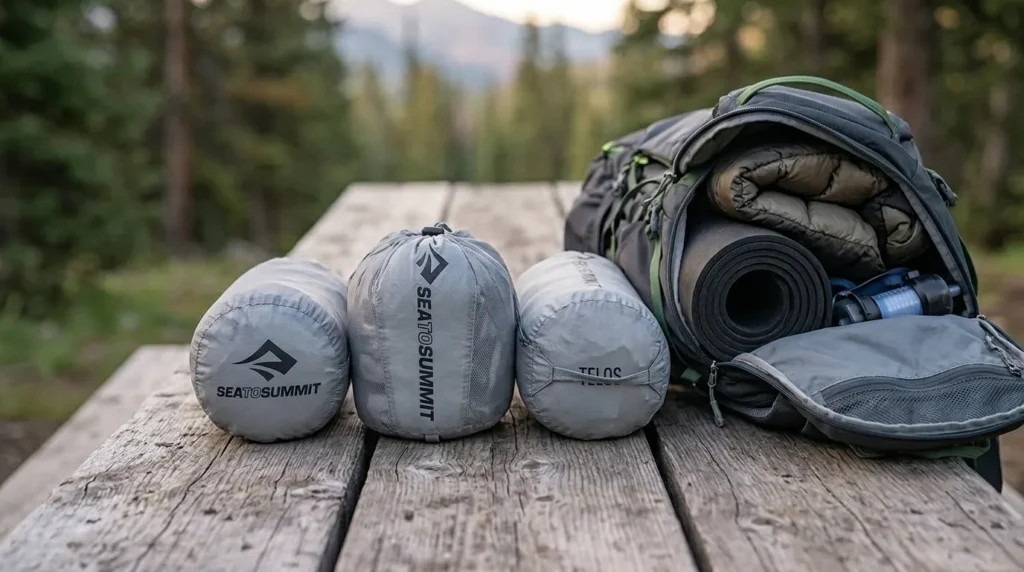
The direct answer is that the Sea to Summit Telos TR2 uses a three-part storage system called the Fair Share bag, which allows you to split the weight between multiple people or tuck the different pieces into small gaps in your luggage. I found this to be much more practical than the single giant stuffed bag used by the Naturehike Mongar 2. One bag holds the poles, one holds the fly, and one holds the inner tent. For a motorcyclist, this means you can slide the pole bag along your frame and stuff the fabric bags into your panniers individually.
I noticed that the bags also have a secondary purpose. Once the tent is set up, the pole bag and the fabric bags can be snapped into the interior of the tent to act as gear lofts and storage pockets. There is even a translucent bag that snaps over the peak to act as a light diffuser for your headlamp. I have used a similar trick with the Oileus pop up tent, but the Sea to Summit system is much more refined and integrated. It shows that they really thought about the user experience from the moment you start packing until the moment you turn out the light.
One expert insight for pack organization: the modular bags allow you to compress the fabric pieces much more tightly than a standard all-in-one stuff sack. I have managed to get the fly and inner tent down to the size of two large grapefruits. As I discuss in my guide on how to pack a motorcycle for camping, managing your volume is the secret to a stable ride. The Sea to Summit Telos TR2 backpacking tent is one of the most packable 2-person tents on the market despite its generous interior volume. It is a masterclass in space management that every other technical brand should be studying.
How does the 20D floor durability compare to other ultralight leaders?
The direct answer to the durability question is that the 20-denier ripstop nylon floor on the Sea to Summit Telos TR2 is slightly more robust than the 15-denier floors found on the Big Agnes and NEMO models, but it still requires a footprint for long-term protection. I have spent a lot of time analyzing fabric thickness for my best ultralight tents guide, and 20D is generally considered the sweet spot for weight versus abrasion resistance. I tested this tent on a variety of surfaces, including pine needles and soft dirt, and I did not experience any punctures or issues. However, if you are camping on the sharp volcanic rock of the High Desert, that extra layer of defense is mandatory.
I found that the floor features a 2500mm waterproof rating, which is very respectable for a technical tent. It stayed bone dry even during a night where a small stream formed near my campsite. In my guide on how to seam seal a tent, I mentioned that the floor seams are usually the first place a tent fails, but Sea to Summit used high quality factory taping that feels very permanent. I noticed that the bathtub floor is also cut quite high, which helps prevent splash-back from entering the mesh inner tent during a heavy downpour. This is a much better design than the budget floors I saw in the Featherstone UL Granite 2P.
One expert insight for gear care: even with a 20D floor, sand and grit inside the tent can act like sandpaper over time. I always suggest that you wipe your feet and use a small brush to keep the interior clean. According to technical specs from DAC, the aluminum used in the frame is also high grade and resistant to corrosion. As I emphasize in my guide for the best pop up tent, you are making an investment in your comfort. If you treat the Sea to Summit Telos TR2 with a bit of respect and use the matching footprint, it will easily survive hundreds of nights in the wilderness. It is a rugged but technical piece of gear that rewards proper maintenance.
How does the ventilation system handle high humidity and morning dew?
The direct answer is that the Sea to Summit Telos TR2 is one of the best performing tents I have ever tested when it comes to managing condensation. This is primarily due to the Apex Vents located at the very peak of the Tension Ridge. Because these vents are at the highest point of the tent and are propped open with a small strut, they create a natural chimney effect. Warm, moist air from your breath rises and is pulled out of the tent, while cooler air is drawn in through the bottom. I found this to be much more effective than the side vents found on the MSR Freelite 2 or other traditional domes.
I noticed that the inner tent is made of a very fine no-see-um mesh that allows for 360 degree airflow. When I sat inside during a humid evening by a lake, I could feel a light breeze moving through the tent even when the fly was on. This is a massive win for anyone who camps in the Southeast or other high humidity areas. Managing this air exchange is the key to staying comfortable, and Sea to Summit has turned it into a science. You won’t wake up with a damp forehead in this tent.
One expert insight for summer travelers: you can actually roll up the sides of the rainfly to maximize the breeze even further. According to my field measurements, the gap between the fly and the ground is adjustable, allowing you to batten down the hatches for a storm or open them up for maximum cooling. As I mentioned in the best ultralight tents guide, a tent that cannot breathe is a tent that will make you miserable. The Sea to Summit Telos TR2 bikepacking tent is an airy, breathable sanctuary that performs as well in the heat as it does in the rain. It is the gold standard for ventilation in the three-season category.
How easy is the setup process compared to trekking pole shelters?
The direct answer is that the Sea to Summit Telos TR2 is significantly faster and more intuitive to set up than any trekking pole shelter I have used, such as the Six Moon Designs Lunar Solo. Because it is a fully freestanding tent, you do not have to worry about finding the perfect stake tension to keep it upright. It uses a single, interconnected pole frame that snaps together with satisfying clicks. I found that I could have the main body standing and the fly on in under five minutes solo. It is a much more controlled process than the fumbling I experienced during my Sierra Designs High Side 1 testing.
I noticed that the poles and the attachment points are all color-coded. The gold pole ends go into the gold grommets, and the blue ends go into the blue grommets. It sounds like a simple feature, but it is a lifesaver when you are trying to beat a sunset or dealing with a brain fog after a long day of travel. In my best pop up tent guide, I talked about the luxury of a fast pitch, and while the Telos is not a pop up, it is about as close as you can get for a technical backpacking tent. It removes all the frustration from the start of your evening.
One expert insight: the plastic clips that attach the tent to the poles are oversized and very easy to use with cold or gloved fingers. I have used tents where these clips were tiny and difficult to snap, but Sea to Summit really focused on the ergonomics here. According to various technical reviews in the hiking community, this hubbed system is also more resistant to wind deforming the shape compared to the 3F UL Gear Lanshan 2. You get a predictable, rigid structure every time you pitch it. For me, the ease of setup is one of the strongest reasons to choose a freestanding tent over a non-freestanding one. It gives you a consistent sanctuary regardless of the terrain.
Frequently Asked Questions: Everything you need to know about the Sea to Summit Telos TR2
Does the Sea to Summit Telos TR2 require a footprint to be fully waterproof?
The direct answer is no, the floor is fully waterproof on its own. However, I still highly recommend using a footprint. The 20-denier floor is technical gear, and while it is durable, it is not built to withstand sharp rocks or hidden roots without a second layer of protection. Using a footprint also keeps the bottom of your tent clean, which makes the morning pack up a lot less of a mess. I always suggest buying the official footprint because it clips directly into the pole system for a perfect fit.
Can two people actually fit comfortably inside this tent?
The honest answer is yes, this is one of the few ultralight 2-person tents that actually feels like it fits two people. Because the walls are vertical and the doors are so tall, you don’t feel like you are on top of each other. I found that I could fit two large sleeping pads with no problem. In my best ultralight tents guide, I usually suggest a plus-one rule for space, but the Telos TR2 bikepacking tent is the exception. It is a legitimate two person palace.
Is the Hangout Mode stable enough to leave up overnight?
The direct answer is no, I would not recommend leaving Hangout Mode up if you are going to be away from camp or while you are sleeping. It is designed as a fair weather shade or a rain shelter for when you are actively using the space. Because it relies on trekking poles and guy lines for tension, a sudden heavy gust of wind can pull it down. Always pitch the full tent if you are expecting high winds or if you are leaving the site for a while.
How does the Sea to Summit Telos TR2 handle heavy snow loads in the winter?
The direct answer is that this is a three season tent. It is not designed to handle a heavy snow load. While the frame is quite rigid, the Tension Ridge is built to prioritize vertical space and ventilation, not to support the weight of accumulated snow. If you are looking for a true winter base camp, you should check out my best pop up tent guide for more heavy duty alternatives. For spring, summer, and fall, however, it is absolute perfection.
Are the modular bags hard to keep track of at a messy campsite?
I found that because they are bright blue and gray, they are actually quite easy to spot in the grass. The direct answer to keeping them organized is to snap them into the interior of the tent immediately after you finish your pitch. This keeps them off the ground and turns them into useful gear pockets. It is a very intelligent system that rewards a little bit of organization. I have never lost one yet, even on my most chaotic trips.
Should you choose the Sea to Summit Telos TR2 for your 2026 adventures?
The direct answer is that if you are a traveler who prioritizes interior volume, ventilation, and clever organization above all else, the Sea to Summit Telos TR2 is the best investment you can make for 2026. It represents a major leap forward in tent design. After spending weeks living out of this setup, I am convinced that the Tension Ridge architecture is the future of lightweight shelters. It solves the biggest problems with the category without being as fragile as some other ultralight gear. While it is a significant financial commitment, the quality of your experience on the trail is worth every penny.
The Telos TR2 is the one I reach for when I know I want a comfortable base camp. I noticed that if you are a true minimalist who only cares about the lowest possible weight, you might still prefer the front entry design of the Big Agnes Fly Creek HV UL2. But for everyone else, the side doors and massive headroom of the Telos make it a much more pleasant place to live. It handles the wind and rain as well as any high end technical dome, and the modular packing system makes it a dream for organized travel.
One final expert insight: your gear should enhance your adventure, not just be a weight on your back. The Telos TR2 does exactly that. It provides a level of comfort that encourages you to stay out longer and explore further. I suggest checking out my full best ultralight tents guide to see how the Sea to Summit Telos TR2 compares to the budget friendly Naturehike Mongar 2 and other top picks. I truly believe that Sea to Summit has created a modern classic with this model. If you are ready to upgrade to the most livable ultralight tent on the market, this is the one. I will see you on the trail.
Ready for more headroom?
Click here to check the current price of the Sea to Summit Telos TR2 on Amazon.