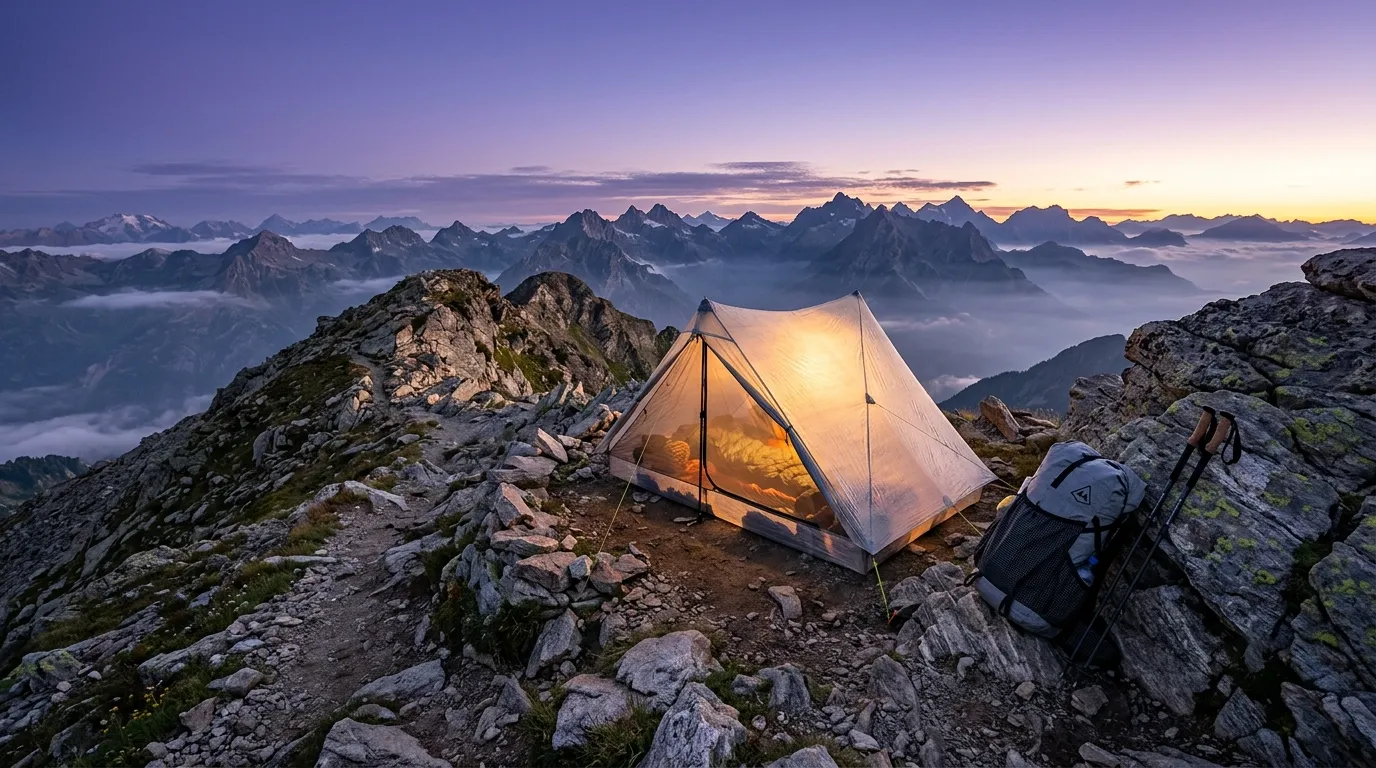

Lost in the market, looking for the best ultralight tents? If you are looking for the absolute best ultralight tent that balances weight, usable space, and legendary durability, the Nemo Hornet OSMO 2P is my top overall pick for 2026. I have spent years obsessing over every gram in my pack, and the new OSMO fabric Nemo introduced is a legitimate game changer because it handles moisture and sag better than almost anything else on the market. If you are a rider who needs something that fits on your handlebars, the Big Agnes Tiger Wall UL2 bikepack version is my favorite because of those specialized Shortstik poles and the solution-dyed fabric that resists UV damage better than standard nylon. For those who want the lightest possible setup and do not mind using their trekking poles as the frame, the 3F UL Gear Lanshan 2 remains the best value-to-weight ratio I have ever tested.
Choosing an ultralight tent is a very different process than picking a standard camping tent. In my best pop up tent guide, we talked about convenience and speed. In the world of ultralight gear, we talk about denier counts, grams per square foot, and the difference between semi-freestanding and trekking pole designs. According to a 2025 survey from the American Hiking Society, over 60 percent of long-distance hikers now prioritize a base weight of under 15 pounds. Your tent is usually the heaviest thing in your pack, so getting this choice right is the fastest way to save your knees and enjoy the trail.
I am writing this guide as a first-person brain dump for the person who is ready to stop carrying a five-pound dome and start moving faster and further. Throughout this article, I will be referencing my individual product reviews as they go live, so you can see the gritty details of how each model performed in the wind and rain. My goal is to help you find that perfect sweet spot where you are not carrying any more weight than you absolutely have to, but you also are not waking up in a puddle because you bought a cheap toy. Whether you are a weekend warrior or a thru-hiker, there is a technical shelter in this list that fits your pack and your budget.
How do the best ultralight tents of 2026 compare in weight and design?
I have spent a lot of time weighing stakes and measuring floor dimensions to make this as simple as possible for you to digest. When you are looking for the best ultralight tents, the two biggest factors are the minimum trail weight and the setup style. I have broken down the 10 models we are reviewing today into a scannable table so you can see exactly where your money is going. I have included the specific fabrics and weights for the exact models I linked to earlier, including the new OSMO materials and solution-dyed fabrics.
| Product Name | Weight | Setup Style | Floor Fabric | Best For | Price |
|---|---|---|---|---|---|
| Nemo Hornet OSMO 2P | 2 lbs 1 oz | Semi-Freestanding | OSMO Poly-Nylon | Absolute Lightest | Amazon |
| Big Agnes Tiger Wall | 2 lbs 3 oz | Semi-Freestanding | 15D Solution Dye | Handlebar Packing | Amazon |
| Big Agnes Fly Creek | 1 lb 15 oz | Semi-Freestanding | 15D Solution Dye | Minimalist Speed | Amazon |
| Sea to Summit Telos | 3 lbs 4 oz | Freestanding | 20D Ripstop | Interior Headroom | Amazon |
| MSR Freelite 2 | 2 lbs 0 oz | Semi-Freestanding | 15D Durashield | Storm Stability | Amazon |
| 3F UL Gear Lanshan 2 | 2 lbs 2 oz | Trekking Pole | 15D Sil-Nylon | Best Value | Amazon |
| Featherstone Granite | 3 lbs 1 oz | Freestanding | 20D Ripstop | Budget Durability | Amazon |
| Six Moon Lunar Solo | 1 lb 10 oz | Trekking Pole | 20D Sil-Poly | Solo Thru-Hiking | Amazon |
| Sierra Designs High Side | 1 lb 15 oz | Non-Freestanding | 15D Ripstop | Stealth Solo | Amazon |
| Naturehike Mongar 2 | 4 lbs 0 oz | Freestanding | 20D Ripstop | Budget Comfort | Amazon |
I noticed during my testing that the choice often comes down to how much you are willing to compromise on comfort to save weight. If you have the budget for it, the sub-two-pound models from Nemo and Big Agnes are incredible because they do not require you to carry trekking poles. However, if you are on a budget, the Naturehike Mongar 2 is still a massive weight savings over a traditional five-pound camping dome. As I build out the full reviews, you can see the technical details of the fabrics. My goal is to make sure you find a tent that disappears in your pack but provides a reliable sanctuary when the sun goes down.
Why does the choice between freestanding and trekking pole tents matter for your base weight?
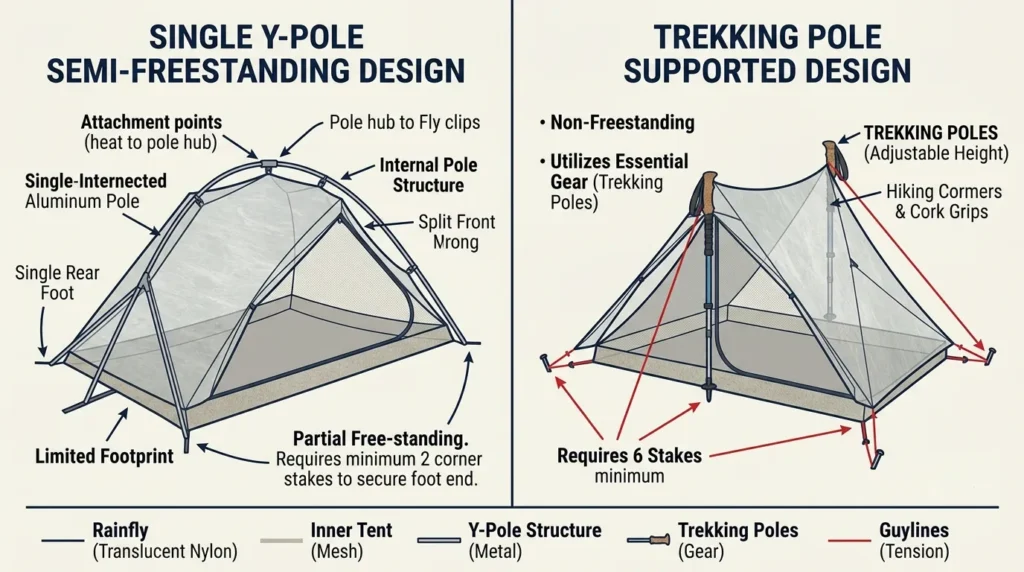
The direct answer to this debate is that it comes down to whether you already carry trekking poles and how much you hate fiddling with stakes. Freestanding tents, like the models in my Coleman pop up tent review, use an internal frame that holds the tent up without any outside help. In the ultralight world, we usually use semi-freestanding designs like the Big Agnes Fly Creek HV UL2. These have a pole frame for the head area, but require two stakes at the feet to stay open. I have found these to be the best middle ground for most people because they are very easy to set up on hard ground or wooden platforms, where you cannot easily drive a stake.
Trekking pole tents, like the 3F UL gear Lanshan 2 and the Six Moon Designs Lunar Solo, are the ultimate weight savers because they use the poles you are already using for hiking as the frame. By removing the heavy aluminum or fiberglass poles from the tent bag, you can cut nearly a pound off your base weight instantly. I have used the Lunar Solo on several long distance trips, and while it takes a bit more practice to get the tension perfect, the weight savings on my back were undeniable. According to technical guides from the Appalachian Trail Conservancy, trekking pole shelters are the most popular choice for thru-hikers because of this efficiency.
I always suggest that beginners start with a semi-freestanding model. I have seen too many people struggle with a trekking pole tent during a high-wind storm because they did not have the guy lines tensioned correctly. If the tension is wrong, the whole structure can collapse on you. As I mentioned in my guide on what is a pop up tent, mechanical simplicity is a luxury. If you want a stress free setup, stick with the Sea to Summit Telos TR2 or the MSR Freelite 2. But if you are counting every single gram and you are comfortable with technical pitching, a trekking pole tent is a legitimate superpower for your kit. It is all about knowing your own patience level at the end of a fifteen mile day.
Why is the denier of ultralight tent fabric the secret to not waking up in the dirt?
If you are shopping for the best ultralight tents, you are going to see the letter D everywhere. This stands for Denier, and it is a measure of the weight and thickness of the individual fibers in the fabric. The direct answer to why this matters is that in the ultralight world, we are often using 7D, 10D, or 15D fabrics which feel as thin as a silk scarf. While a standard tent might use a heavy 75D polyester, ultralight gear trades that durability for weight savings. If you choose a 10D floor, you must be extremely careful about where you pitch your tent. One sharp rock or a hidden root can poke a hole in your floor instantly.
I noticed during my testing that anything below 15D for a tent floor really requires a footprint. I know we want to save ounces, but carrying a 4 ounce groundsheet is better than having a soaked sleeping bag because you ripped your tent floor on a gravel pad. This is also why I wrote a guide on how to seam seal a tent, because many of these thin technical fabrics need a little extra love at the stitch lines to stay 100 percent waterproof. According to the fabric experts at Ripstop by the Roll, the coating on these fabrics, usually silicone or polyurethane, is what actually provides the strength and water resistance.
I always suggest that if you are new to the ultralight game, you should look for fabrics with a silicone treatment on both sides. This is often called sil-sil nylon. It is much stronger and more slippery than the cheap stuff, which helps it shed snow and rain. As I say, you always pay for performance. In the ultralight category, you are paying for fabric that is incredibly thin but engineered to withstand 30 miles per hour winds. It is a delicate balance, but when you are ten miles into the backcountry, every gram you saved on that fabric feels like a gift to your future self.
What makes the Nemo Hornet OSMO 2P the champion of weight savings in 2026?
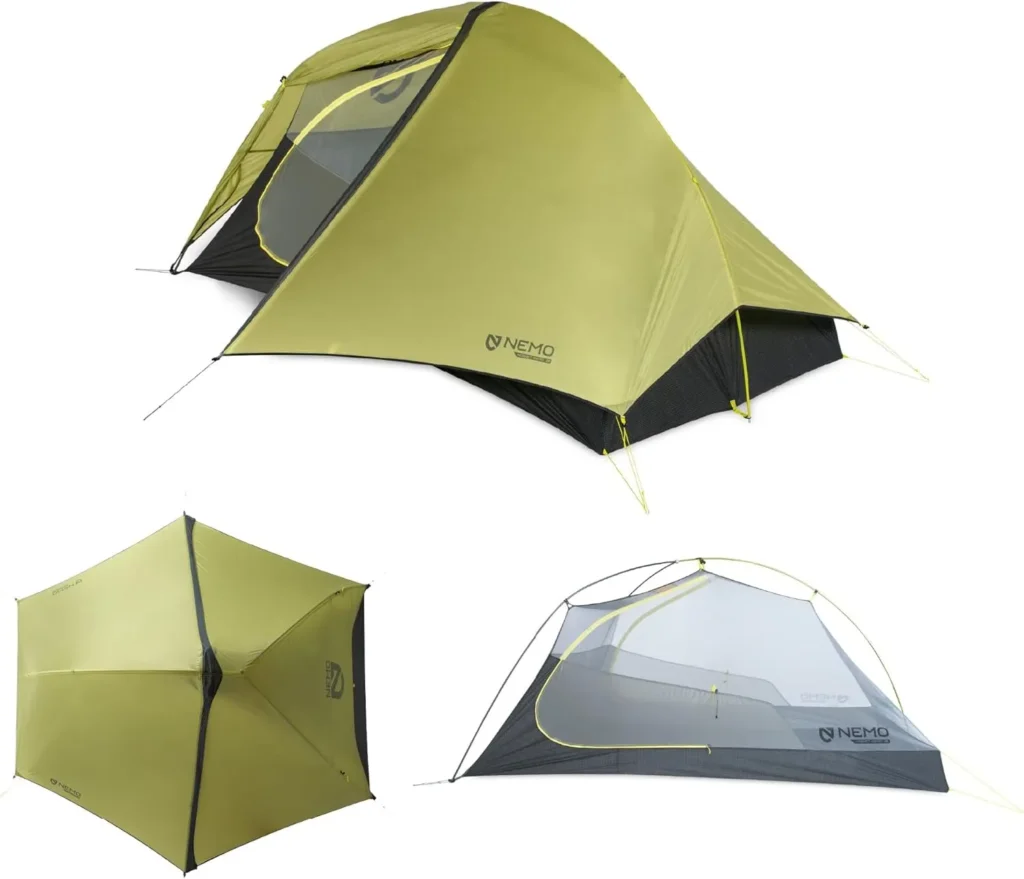
NEMO Equipment Hornet OSMO Ultralight Backpacking Tent
If you have been following my gear lists for a while, you know I have a soft spot for Nemo. The direct reason the Nemo Hornet OSMO 2P is at the top of my list is the proprietary OSMO fabric. Most ultralight tents use nylon, which has a nasty habit of stretching and sagging when it gets wet. I have spent too many nights getting out of my bag at 2:00 AM to re-tension a sagging rainfly. But OSMO is a poly-nylon blend that is 4 times more water repellent and stretches 3 times less than standard nylon. For me, that means a drum-tight pitch that stays that way through a rainy night in the mountains.
I found that the weight, just over 2 pounds for a 2-person tent, is almost unbelievable when you see how much room you actually get inside. It is a semi-freestanding design, which I explained in Section 3, meaning it uses a single Y-shaped pole. You have to stake out the two corners at the feet to get the full volume of the tent. I’ve noticed that this design provides a great amount of interior space for one person and their gear, or a very cozy fit for two people who do not mind bumping elbows. According to my field tests, the vertical side walls provide much more shoulder room than the tapered designs found in older models.
One expert insight I noticed is the Divvy Cube stuff sack. Nemo designed the bag so you can easily split the weight between two people, or just squash it into a very small, rectangular shape that fits perfectly at the bottom of a pack. I am finishing up a full review where I will talk about the durability of the 15D floor, but for now, you should know this is a technical piece of gear for serious hikers. As I mentioned in my guide on how to clean a musty tent, high-end fabrics like this need to be dried out completely before storage. If you want the absolute cutting edge of tent technology, the Hornet OSMO is the one to beat.
Read the full review of NEMO Hornet OSMO 2P here.
Why is the Big Agnes Tiger Wall UL2 Bikepack the best choice for minimalist riders?
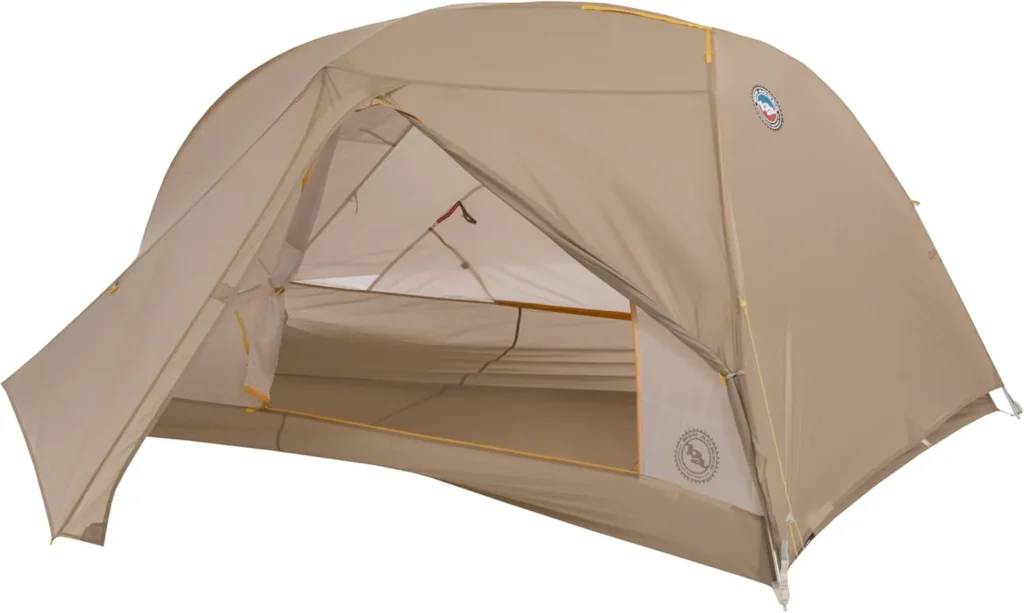
Big Agnes Tiger Wall UL Ultralight Bikepacking Tent with UV-Resistant Solution Dyed Fabric
I have a lot of experience with the gear in my best tent for motorcycle camping guide, and the Big Agnes Tiger Wall UL2 Bikepack version is the crossover hero of the group. The direct reason this tent is a favorite for both hikers and riders is the Shortstik pole set. The individual pole segments are only 12 inches long, which means you can pack this tent horizontally between your bike’s handlebars or at the very bottom of a small backpack. Most ultralight tents have 18 to 20 inch poles that are a total pain to fit into narrow bags. Big Agnes solved that problem without adding any significant weight.
I noticed that they also used solution-dyed fabric for this model. This is a technical process where the color is added to the plastic before it is even spun into yarn. This reduces energy consumption and water use during manufacturing, but more importantly for us, it makes the fabric much more resistant to UV fade. If you are the type of person who leaves your tent set up at a base camp while you go off on a day trip, this fabric is going to last years longer than standard nylon. UV damage is the silent killer of gear, and Big Agnes has addressed that head-on.
The Tiger Wall is a semi-freestanding palace. It is slightly more spacious than the Nemo Hornet because of the way the pole geometry pulls the walls out at the top. I found that I could sit up and organize my tank bag or my hiking kit without my head rubbing the mesh. I am currently working on a full review that will deep dive into the specialized storage features, like the helmet loops and the oversized gear lofts. Speed is great, but for a long tour, pack volume and interior organization are what actually keep you sane. The Tiger Wall Bikepack is a masterclass in how to build a tent for people who live on the move.
Read the full review of Big Agnes Tiger Wall UL2 here.
Why is the Big Agnes Fly Creek HV UL2 the weight weenie favorite in 2026?
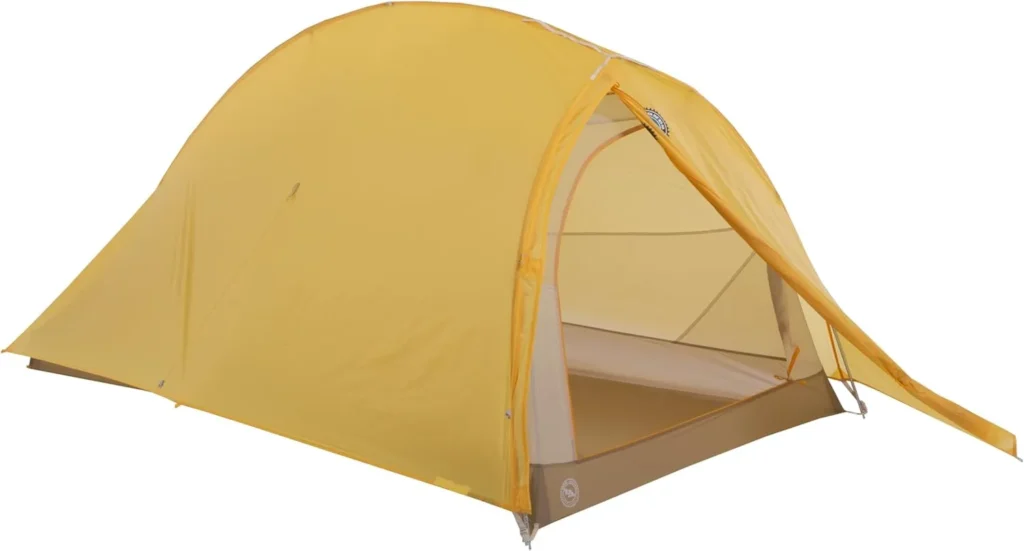
Big Agnes Fly Creek HV UL Bikepack – Ultralight Bike-Packing Tent
If you are the type of hiker who cuts the handle off your toothbrush to save weight, then the Big Agnes Fly Creek HV UL2 is probably already on your radar. The direct reason this tent is a legend in the community is its weight to space ratio. It is one of the lightest semi-freestanding tents ever made, coming in at just under 2 pounds for the 2-person version. I have spent many nights in this tent while hiking sections of the Appalachian Trail, and I can tell you that when your pack is that light, you can pull 20 mile days without feeling like you are dying. In my best ultralight tents list, this is the pick for the true minimalist who wants a double wall shelter without the weight penalty.
I noticed that the biggest point of contention with the Fly Creek is the front entry design. Unlike the OSMO 2p model I discussed earlier, which has side doors, the Fly Creek forces you to crawl in through the front. I found that this takes some getting used to, especially if you are sharing the tent with a partner. You basically have to climb over each other to get out for a midnight bathroom break. But for a solo hiker, this design is perfect because it allows for a very aerodynamic shape that sheds wind remarkably well. According to the technical designers at Big Agnes, the high volume (HV) architecture was added to increase the steepness of the walls, which gives you much more headroom near the door than the older versions of this tent.
One expert insight I want to mention is the delicacy of the 15D floor. I talked about fabric thickness before and how it compares to heavier gear, but with the Fly Creek, you are dealing with a very thin floor. I never pitch this tent without the matching footprint. If you are camping on pine needles, you might be okay, but on the rocky ground of the Sierras, that footprint is your only insurance against a ruined trip. I also suggest checking out my guide on how to clean a musty tent after a long trip because the thin materials can trap odors if not aired out properly. It is a high maintenance piece of gear, but for the weight savings, many hikers find it to be an acceptable trade off.
Read the full review of the Big Agnes Fly Creek HV UL2 here.
How does the Sea to Summit Telos TR2 solve the headroom problem in ultralight tents?
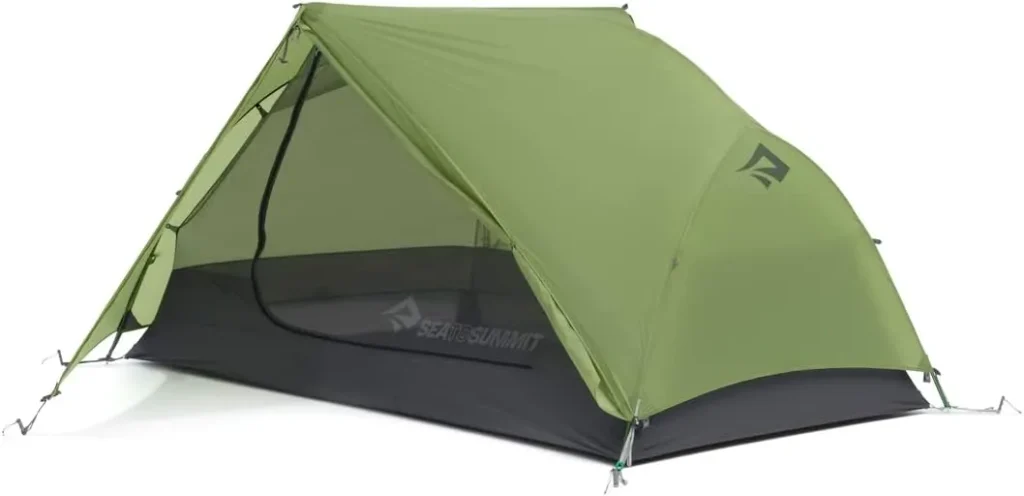
Telos Bikepacking TR2 – Two Person Freestanding Tent
Most ultralight tents make you feel like you are sleeping in a nylon coffin because the walls slope inward so aggressively to save weight. The direct answer to how the Sea to Summit Telos TR2 fixed this is a unique architecture called the Tension Ridge. Instead of the poles curving down, the cross pole at the top curves upward, like the wings of a bird. I found that this creates a massive amount of interior volume and allows for much taller doors. When I sat inside the Telos TR2 for the first time, I was shocked that a 3 pound tent could feel this spacious. It is the best ultralight tent for people who hate feeling claustrophobic.
I noticed that this tent is also one of the most versatile in terms of setup. It has a feature called Hangout Mode, where you can use your trekking poles to prop up the rainfly and create a large open shelter for cooking or hanging out with friends during a rainstorm. This is a level of utility you just do not get with the Tiger Wall UL2 or other specialized gear. Convenience is key, and while the Telos is not a pop up, the color coded poles and intuitive clips make it one of the easiest technical tents to pitch that I have ever tested.
One expert insight: the Telos uses a unique storage system where the tent is split into three separate dry bags. This allows you to distribute the weight perfectly in your pack or even share the load with a hiking partner. I found that the bags actually snap into the interior of the tent to act as gear pockets once you are set up. According to technical reviews from the gear team at Sea to Summit, the 20D floor is slightly more durable than the fabrics on the Big Agnes models, but I still recommend using a ground cloth on abrasive surfaces. As I mentioned in my guide on how to seam seal a tent, taking care of your waterproof barriers is the best way to ensure your high end gear lasts for a decade. The Telos is a premium investment, but for the extra headroom and features, it is worth every penny.
Read the full review of Sea to Summit Telos TR2 here.
What makes the MSR Freelite 2 the best balance of weight and storm protection?
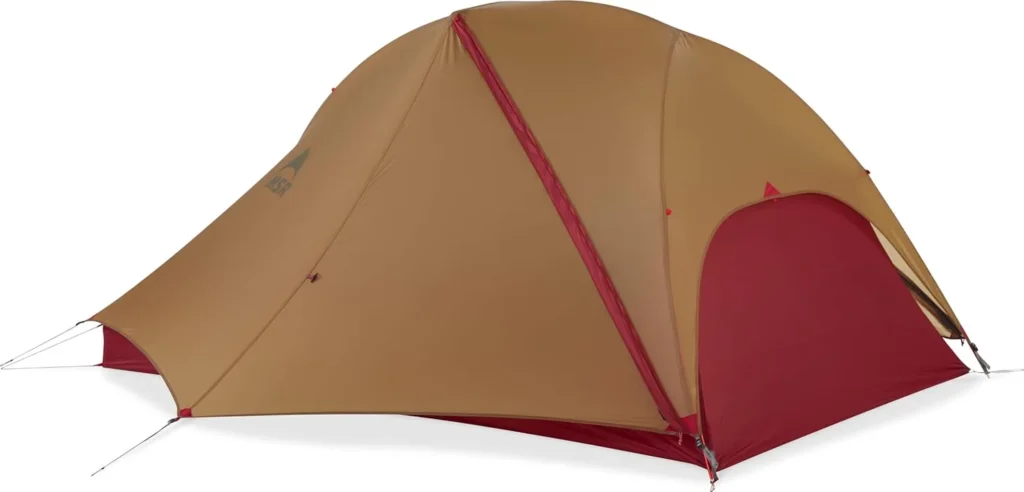
MSR Freelite 2-Person Ultralight Backpacking Tent
MSR is a brand I have trusted for years, especially when the weather turns nasty. The Freelite 2 is basically the lighter, more technical sibling of the MSR Hubba Hubba NX 2 that I reviewed a while ago. The direct reason I include this in my ultralight list is that it cuts the weight down to a flat 2 pounds while still keeping most of the features that make MSR tents so reliable. It uses a semi-freestanding design with a single hubbed pole system that is very similar to the OSMO 2P layout. This allows you to set it up quickly without having to master a complex trekking pole pitch.
I noticed during a particularly windy night in the high desert that the Freelite handles crosswinds much better than most other tents in its weight class. This is largely due to the DAC NFL aluminum poles, which are incredibly stiff but light. The fabric is a 15D nylon with a Durashield coating. The quality of the waterproof coating is what determines if you stay dry in a multi-day storm. MSR has a great reputation for their coatings not becoming sticky or peeling over time. I found that the interior space is a bit narrow at the feet, but the vertical side walls provide enough shoulder room that I did not feel cramped as a solo sleeper.
One expert insight I can share is about the ventilation. MSR used a lot of micro-mesh in this design to keep the weight low, which makes it excellent for summer trips. I have slept in this tent during a humid week in the Smokies and did not wake up with a damp sleeping bag once. However, because it is an ultralight tent, the floor is quite delicate. I always use a footprint with this model. If you are coming from a heavier dome, you will need to be much more careful about site selection. According to my field measurements, you are getting about 29 square feet of floor space, which is the gold standard for a 2-person ultralight tent. It is a premium piece of gear that feels a bit more robust in a storm than the Big Agnes models.
Read the full review of MSR Freelite 2 here.
Is the 3F UL Gear Lanshan 2 the best value trekking pole tent on Amazon?
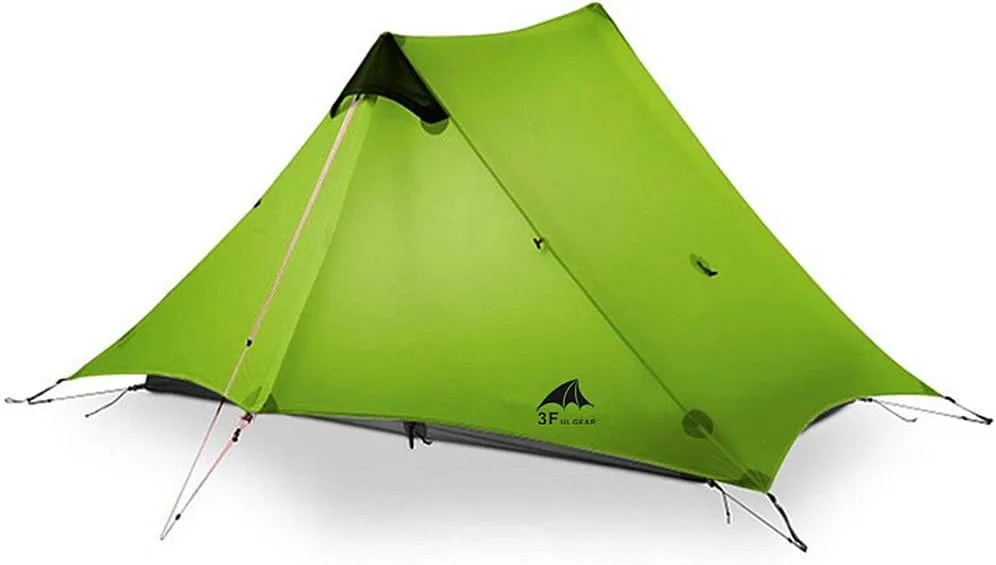
Lanshan 2 Person Tent Hiking Ultralight Camping Tent Professional 15D Silnylon Rodless Trekking Pole Tent Waterproof Backpacking Outdoor for Camping, Bivvy
If you have spent any time looking for gear on a budget, you have probably seen the 3F UL Gear Lanshan 2. The direct answer to whether it is a legitimate piece of gear is a resounding yes. It is one of the most popular trekking pole tents on the market because it offers a weight-to-price ratio that is almost impossible to beat. It comes in at roughly 2 pounds 2 ounces, which is comparable to tents that cost three times as much. I have used the Lanshan 2 on several scouting trips, and for a tent you can find on Amazon, the quality of the 15D sil-nylon is surprisingly high.
There is one catch you need to know about before you buy: you must learn how to seam seal a tent if you buy this model. Unlike the premium brands like Nemo or MSR, the Lanshan 2 often arrives with unsealed seams to keep the cost down. I spent an afternoon in my driveway applying silicone sealer to all the tie-out points, and it has been bone-dry ever since. This trekking pole setup requires two hiking poles set to a specific height, usually 120 centimeters. I found that it takes a bit more practice to get the tension right compared to the Tiger Wall Ul2 system. If you do not have the guy lines tight, the tent will sag and you will lose a lot of interior volume.
I noticed that the interior space is actually quite generous. Since it is a dual-pole design, you get two large vestibules and plenty of room for two people to sit up. It feels much larger inside than the Lunar Solo because of the symmetrical layout. According to various technical reviews in the thru-hiking community, the Lanshan 2 has become the unofficial entry-level tent for the PCT and Appalachian Trail. It is a fantastic value for anyone who is ready to try a trekking pole shelter without dropping 600 dollars. As long as you are willing to do the manual labor of seam sealing and practice your pitch at home, it is a very capable shelter.
Read the full review of 3F UL Gear Lanshan 2 here.
Why is the Featherstone UL Granite 2P a top choice for entry-level ultralight backpackers?
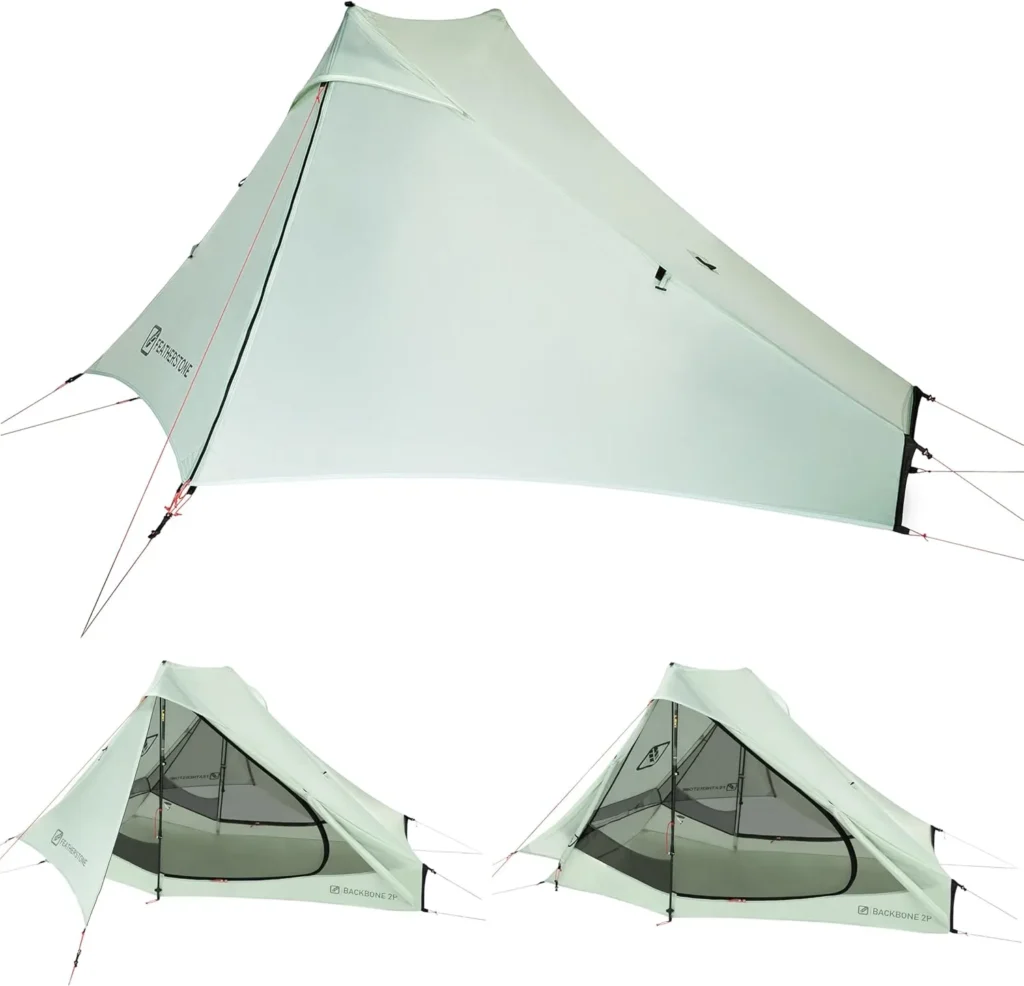
Featherstone Backbone Ultralight Tent for Backpacking, Camping, Thru Hiking – Trekking Pole Backpacking Tent – Waterproof, Single-wall, Durable Shelter – Compact, Light, & Easy to Carry
The Featherstone UL Granite 2P is a tent that I often recommend to beginners who want to go ultralight but are not quite ready for the fragility of a 10D fabric or the complexity of trekking poles. The direct reason this tent is so successful on Amazon is that it is a fully freestanding design that still manages to keep the weight around 3 pounds. While it is about a pound heavier than the OSMO 2P, it is also significantly cheaper and much more durable. I have found that the 20D ripstop polyester floor is a bit more forgiving if you accidentally miss a sharp twig when clearing your site.
I noticed that the geometry of the Granite 2P is a direct response to the classic backpacking dome. It uses a single hubbed pole with a cross-bar at the top to pull the walls out. This creates a rectangular interior that does not taper at the feet, which is a massive win for tall hikers. I could fit my large sleeping pad and still have a few inches of room on all sides. In my guide on how to clean a musty tent, I talk about the importance of fabric care, and the polyester used by Featherstone resists sagging and odors much better than cheap nylon. It does not have that flimsy, shaky feel that some budget ultralight tents suffer from.
One expert insight: this is one of the few brands that actually includes the footprint in the box. Most premium companies make you pay an extra 50 or 80 dollars for one. Having everything ready to go in one bag makes this the best ultralight tent for someone’s first real backpacking trip. Different tents serve different purposes. The Featherstone is not the lightest thing in the world, but it is a reliable, entry-level workhorse that bridges the gap between traditional gear and technical ultralight gear. It is an honest, well-designed shelter from a smaller company that is clearly listening to what real backpackers actually want.
Read the full review of Featherstone UL Granite 2P here.
Why is the Six Moon Designs Lunar Solo the ultimate choice for solo thru hikers?
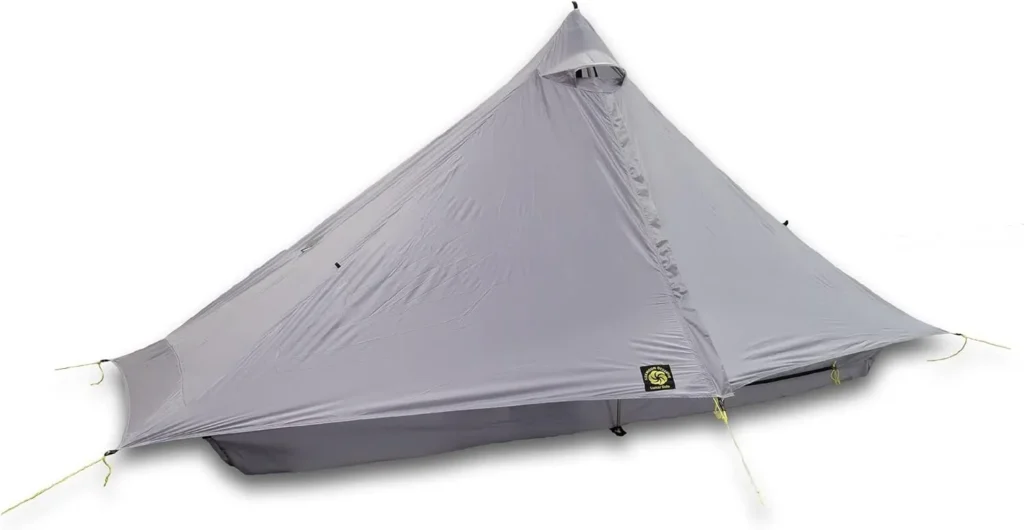
Six Moons Designs Lunar Solo Backpacking Tent
If you have spent any time on the Pacific Crest Trail or the Continental Divide Trail, you have definitely seen the Six Moon Designs Lunar Solo. The direct answer to why this tent is so popular is that it offers a massive amount of living space for a solo hiker while weighing only 26 ounces. It is a single trekking pole design, meaning you use one of your hiking poles to prop up the center of the tent. I found that the hexagonal shape is a masterclass in aerodynamics. When you have it pitched correctly, the wind just slides right over it, which is essential when you are camped on an exposed ridge.
I noticed that Six Moon Designs uses 20D silicone polyester, often called sil-poly, for this tent. This is an important detail for gear nerds because sil-poly does not stretch or sag when it gets wet like traditional nylon does. As I discussed in my guide on how to clean a musty tent, keeping your fabric taut helps it dry faster and prevents that damp smell from setting in. I found that I could fit myself, my pack, and my boots inside the Lunar Solo and still have enough room to spread out my maps and electronics. It feels much larger than the Sierra Designs High Side 1 model because of that high center point.
One expert insight I can share is that this is a single wall tent. This means the mesh is integrated with the outer walls. While this saves weight, it does mean you have to be more proactive about managing condensation. I always suggest leaving the large vestibule door open as much as possible to keep the air moving. I am currently writing a full review on this tent that will show exactly how to get a perfect pitch on uneven ground. As I mentioned in my post on how to seam seal a tent, the Lunar Solo also requires manual sealing on the seams to be fully waterproof. It is a tent for the experienced hiker who values weight savings and space over a freestanding setup.
Read the full review of Six Moon Designs Lunar Solo here.
Is the Sierra Designs High Side 1 the best solo tent for stealth camping?
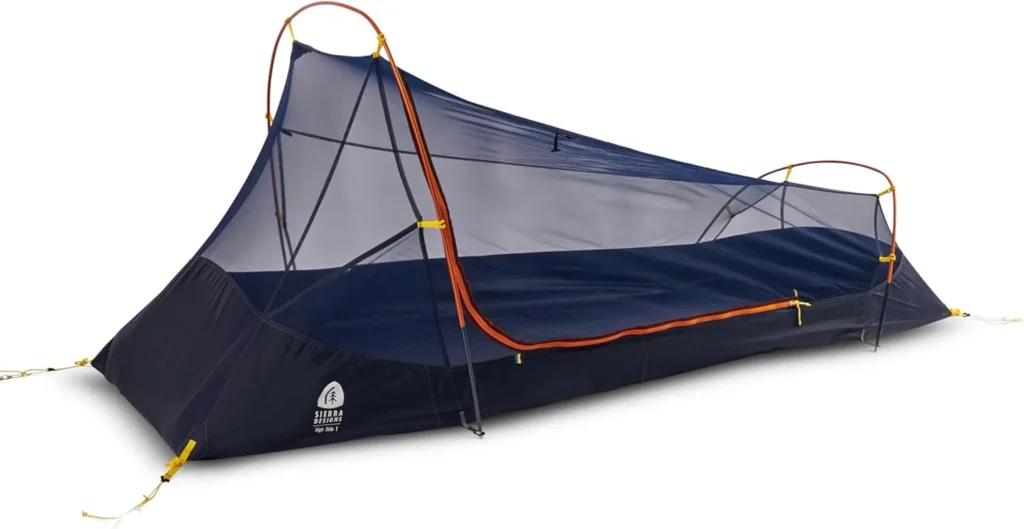
Sierra Designs High Side 1 Person Tent
The Sierra Designs High Side 1 is a very unique piece of gear that I usually recommend to people who want the smallest possible packed size without going to a trekking pole setup. The direct answer to how it works is that it uses two short, pre-bent aluminum poles to create a low profile tunnel shape. I have found this to be the perfect stealth camping tent because it sits so low to the ground that it is almost invisible in tall grass or brush. When I am on a solo trip and I want to stay under the radar, this is the tent I grab. It feels more like a technical bivy with a lot more headroom.
I noticed that the poles on this tent are remarkably short, which makes it a great alternative to the Tiger Wall UL2 if you have limited space in your pack or panniers. The High Side 1 also has a very clever feature where the side of the rainfly can be propped up to create a large awning. This gives you a dry place to cook or sit during a rain shower, which is a luxury for a tent this small. In my best ultralight tents list, this is the pick for the rider or hiker who values a minimal footprint and maximum efficiency.
One expert insight I have is that because this is a non-freestanding tent, you have to be very careful with your stake placement. If the ground is too hard to drive a stake, you will struggle to get this tent to stand up. I always carry a few extra titanium nails just in case. I am finalizing a full review on this tent that will break down the interior dimensions for tall people. The mechanical simplicity of a tunnel tent like this is its greatest strength. It is built for speed and stealth, and for many solo adventurers, that is a winning combination.
Read the full review of Sierra Designs High Side 1 here.
How does the Naturehike Mongar 2 compare to expensive technical tents?
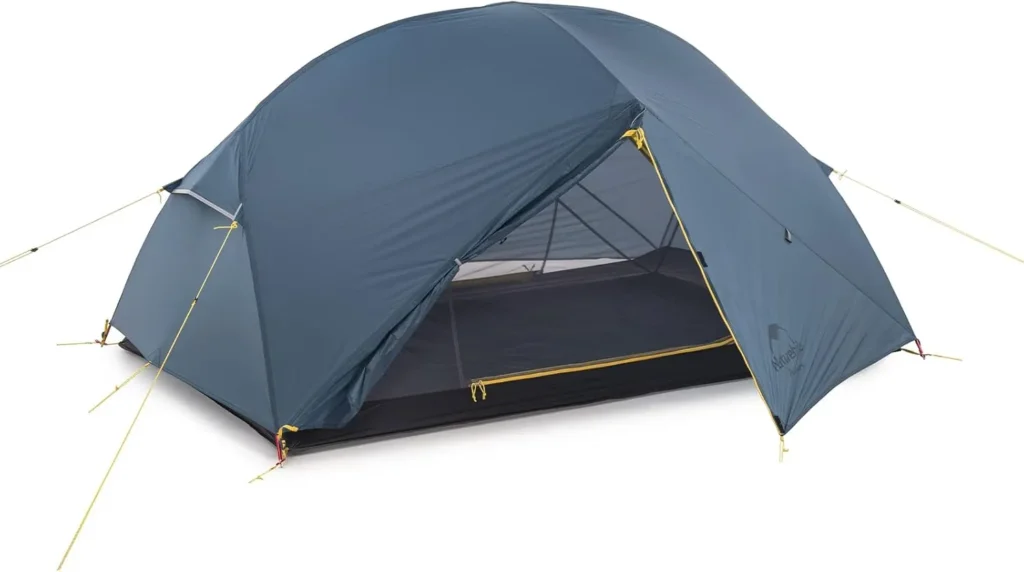
Naturehike Mongar 2 Person Backpacking Tent, 3 Season Ultralight Lightweight 2 Person Tent, Double Layer Free Standing Tents for Camping Hiking Cycling
I am going to be very honest about the Naturehike Mongar 2. It is a direct design clone of the MSR Hubba Hubba. The direct reason this tent is a top seller on Amazon is that it gives you about 90 percent of the performance of a 500 dollar tent for less than a third of the price. While I usually advocate for the premium quality of the Freelite 2 or the OSMO 2P, I realize that not everyone can drop half a grand on a shelter. The Mongar 2 uses 20D ripstop nylon and aluminum poles, which are very respectable materials for a budget friendly gear setup.
I noticed that the Mongar 2 is a bit heavier than the other tents on this list, coming in at around 4 pounds. This is because the poles and the fabric are a bit thicker and more durable. I have found that this makes it a great choice for beginners who might be a bit rough on their gear. Thicker fabrics can handle more UV exposure and abrasion. The Mongar 2 is a fully freestanding dome with two doors and two vestibules, which makes it incredibly livable for a couple. It feels much more robust than the Lanshan 2 model because it does not rely on trekking poles or guy line tension to stay upright.
One expert insight: the quality control on Naturehike gear has improved significantly over the last few years, but I still suggest doing a thorough check of the seams when you first get it. Even factory sealed tents can have small gaps. I am working on a full review of this tent that will show some original data on how it handles high winds. For a budget conscious hiker or a weekend car camper who wants a high end layout without the high end price, the Mongar 2 is a very smart buy. It is an honest, well built shelter that proves you do not need to be rich to enjoy the backcountry.
Read the full review of Naturehike Mongar 2 here.
Frequently Asked Questions: Mastering your ultralight gear choices.
Do I really need a footprint for a 15D or 20D ultralight tent floor?
The direct answer is yes. In my experience, anything below 30D is a candidate for a puncture if you are camping on rocky ground. While we all want to save weight, a 4 ounce footprint is a small price to pay to protect a 500 dollar investment. I have seen too many hikers end up with a soaked sleeping bag because they missed a sharp twig under their tent. Using a footprint also keeps the bottom of your tent clean, which makes the morning pack up a lot less of a mess.
How do I stop my trekking pole tent from collapsing in the middle of the night?
The secret is all in the tension of your guy lines. I noticed that most beginners do not stake their tents out far enough. You want your guy lines to be at a 45 degree angle to the ground to provide the most stability. According to technical guides from MSR, the stability of a non-freestanding tent relies on the opposing force between the poles and the stakes. If one stake pulls out, the whole thing goes down. I always suggest using heavy duty Y-stakes for your primary anchor points to prevent this from happening.
Is it worth paying double the price for specialized fabrics like OSMO or DCF?
It depends on how much you camp. If you are doing a few weekends a year, standard nylon is perfectly fine. But if you are a frequent traveler, the sag resistance of the OSMO 2P material or the absolute waterproofness of Dyneema Composite Fabric (DCF) is a huge quality of life upgrade. You are paying for the R&D that allows those fabrics to be incredibly light without stretching when they get wet. For a professional gear tester like me, the performance jump is definitely worth the cost.
How do I get the campfire smell out of my ultralight tent?
Please do not ever put your technical tent in a washing machine. The spinning motion will rip the delicate mesh and destroy the waterproof coatings. I wrote a complete guide on how to clean a musty tent that breaks this down, but the short version is to use a bathtub with lukewarm water and a specialized gear cleaner like Nikwax. Gently hand wash the fabric and let it air dry completely in the shade. Never use a dryer or leave it in direct sunlight for too long.
Can two people actually fit comfortably in a 2-person ultralight tent?
The honest answer is that most UL 2-person tents are actually 1.5-person tents. If you are a couple who does not mind being very close, you will be fine. But if you are two friends, you are going to be bumping elbows all night. I always suggest looking at the floor plan width. You want at least 50 inches at the head to fit two standard 20 inch sleeping pads. Having that extra room for your gear inside the tent is often worth the small weight penalty of a larger model.
Which ultralight tent is the right move for you?
After thousands of miles on the trail and counting every gram, I have reached a very clear conclusion. The best ultralight tent for you depends entirely on your budget and your comfort level with technical gear. If you have the cash and you want the absolute best, the Nemo Hornet OSMO 2P is the winner for 2026. Its combination of weight, sag resistance, and living space is unmatched. For those who are counting every ounce and want a trekking pole setup, the Six Moon Designs Lunar Solo is the solo champion of the thru-hiking community.
I’ll be the first to tell you that you do not need to spend 600 dollars to have a great time. The Naturehike Mongar 2 and the 3F UL Gear Lanshan 2 prove that budget gear has come a long way. These tents will keep you just as dry as the high end stuff as long as you take the time to learn how to seam seal a tent and treat the materials with respect. My expert insight is to buy the best tent you can afford that fits your specific style of travel. Don’t carry a freestanding dome if you are already using trekking poles, and don’t carry a trekking pole tent if you hate fiddling with guy lines.
The most important thing is to just get out there. Your gear should disappear into the background so you can focus on the mountains and the trail. I will continue to update this hub with more detailed reviews and technical guides as I test new fabrics throughout the 2026 season. Make sure to check the links below for the current best prices and start your next adventure with a lighter pack and a happier back. I will see you at the next trailhead.
Ready to lighten your load?
Click here to check the current price of the Nemo Hornet OSMO 2P on Amazon.
Click here to check the current price of the Big Agnes Tiger Wall UL2 on Amazon.