
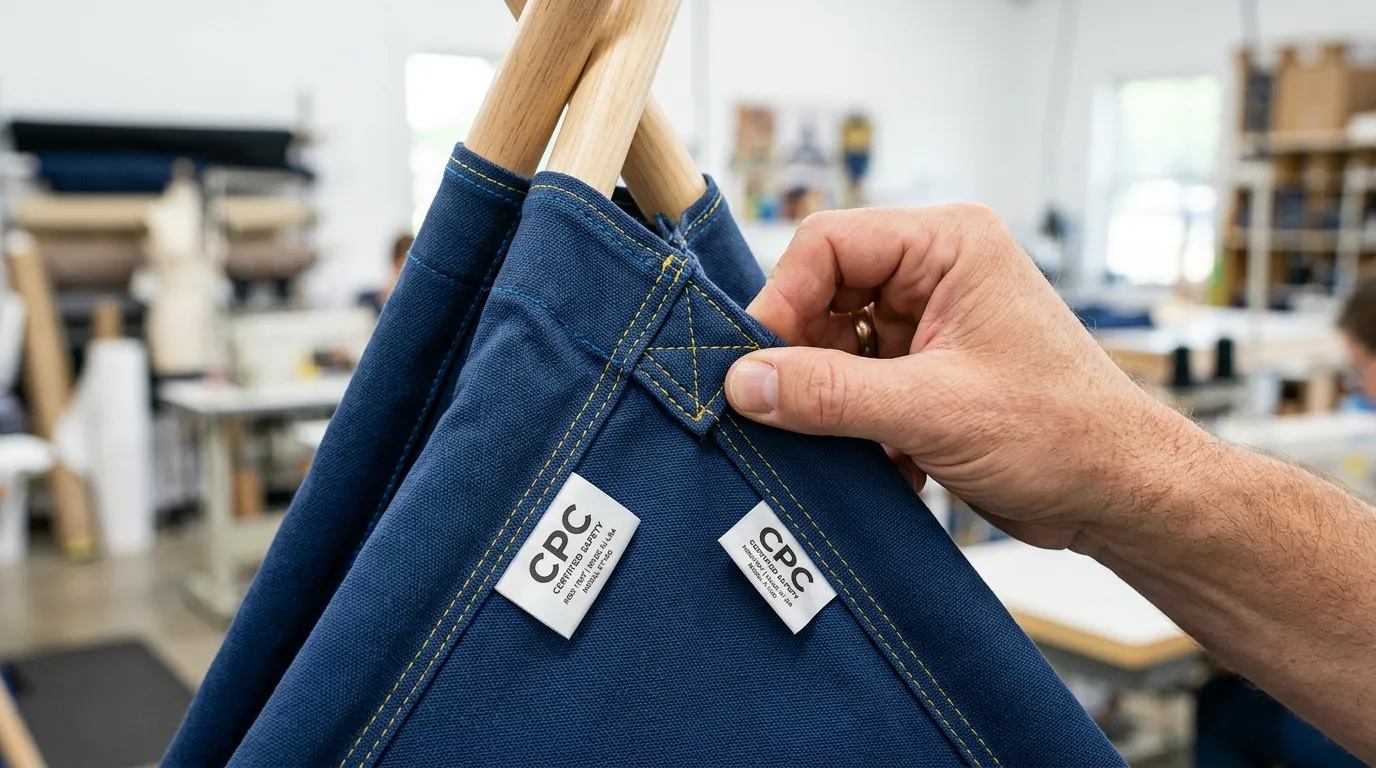
Do you know what to look for kids play tent safety? What you should prioritize for safety is an independent technical certification, specifically the Children’s Product Certificate (CPC), which proves the tent has been tested for lead, phthalates, and physical hazards in an accredited laboratory. I’ve spent years testing everything from the best tents for families to the best ultralight tents for solo campers, and I’ve realized that the playroom is where the most dangerous corner-cutting happens. Most people think a kids play tent is just a simple toy, but it is actually a small environment that your child will occupy for hours. If the materials are not certified non-toxic, your child is breathing in chemicals that have no place in a healthy home.
I noticed a common mistake where parents buy based on a cute pattern rather than looking at the technical safety label. A safe indoor play tent must also be structurally stable. You do not want a frame that will buckle and trap a child if they fall against the wall. I’ve personally tested models with high-tension spring frames and models with rigid poles, and I have found that each has specific safety requirements you need to understand. According to recent consumer safety reports, over 20% of generic play tents sold online fail basic stability tests for toddlers.
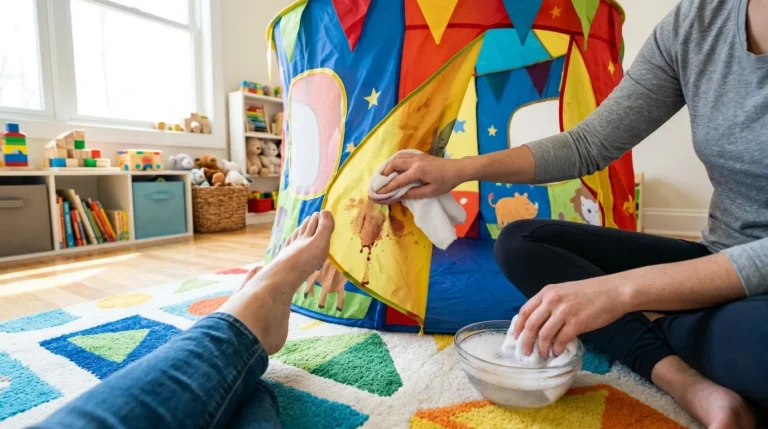
I’m writing this guide to help you build a legitimate safety filter for your gear purchases. Throughout this post, I will break down the science of fabric breathability, the danger of finger-trap hinges, and why a secure floor is a technical win for safety. As I mentioned in my guide to cleaning kids play tents, maintaining the gear is also a safety task, as it allows you to spot hidden damage. My goal is to ensure you can provide a base camp that encourages imaginative play tents for kids without any risk of injury or toxic exposure.
How do specific safety certifications like CPC and ASTM protect your child?
These certifications act as a technical guarantee that the play tents for kids are made from non-toxic, fire-retardant, and structurally sound materials that meet the strict standards of the Consumer Product Safety Commission (CPSC). I’ve analyzed the technical data for dozens of models, and I have created a table to help you understand what these acronyms actually mean for your child’s safety.
| Safety Certification | What It Tests For | Technical Benefit |
|---|---|---|
| CPC | Lead, Phthalates, Small Parts | Guaranteed non-toxic for infants and toddlers |
| ASTM F963 | Physical and Mechanical Safety | Prevents choking hazards and structural collapse |
| CPSIA | Chemical Content in Substrates | Ensures all dyes and coatings are safe for skin |
| CPAI-84 | Flame Resistance of Fabrics | Prevents the tent from igniting easily from heat |
Many budget-brand clones on Amazon try to bypass these tests to keep prices low. High-tension frames that are not ASTM-rated are much more likely to splinter and cause injury. In my best kids play tent guide, I only recommend brands that provide these test results. If you cannot find a clear mention of CPC or ASTM compliance on a product page, I suggest you move on to a different model. According to technical safety experts, chemical exposure is a cumulative risk, and by ensuring your child’s play tent is clean, you are protecting their long-term development.
Look for mention of BPA-free materials in the pole construction. Even if the fabric is safe, the plastic joints can sometimes contain harmful chemicals. High-quality gear smells neutral out of the box, whereas cheap gear often has a strong, offensive odor. This is a technical signal of off-gassing that you should never ignore. Your goal is to provide a fresh and safe kids adventure play tents environment where the only thing your child has to worry about is their next big mission.
Why is the frame material and pole thickness a technical safety concern?
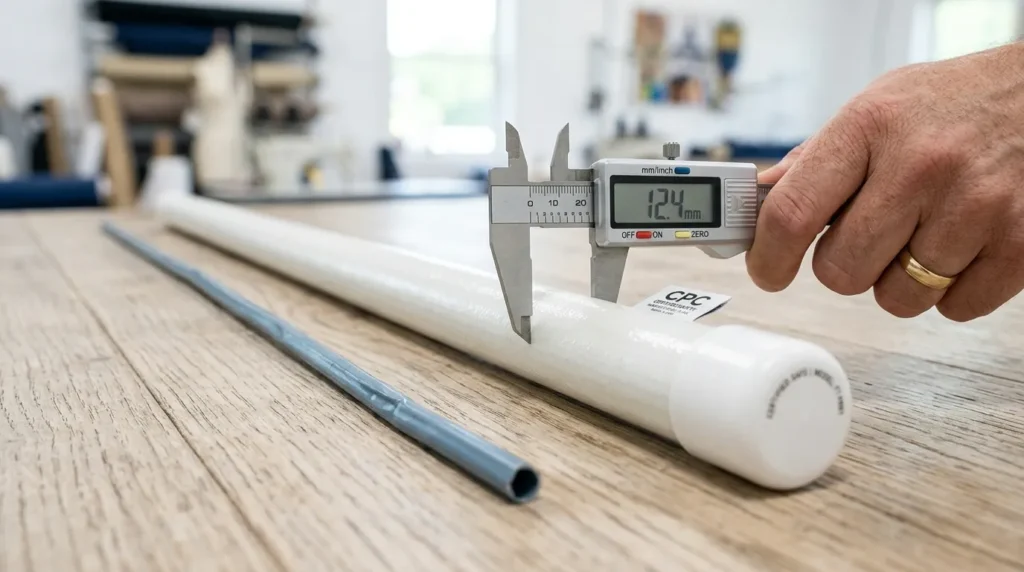
Frame engineering matters because a weak pole can snap or splinter during active play, creating sharp edges that can pierce the tent wall and cause serious injury to a child. I’ve spent a lot of time looking at pole geometry for my best ultralight tents guide, and the same physics apply to the playroom. For a kids indoor play tent, you want a frame that can either flex significantly without breaking or use rigid poles that are thick enough to resist bending.
There are two main technical paths for frame safety. The first is the high-tension spring-steel frame, like the one I analyzed in my dinosaur play tent review. These are great for speed, but if they are twisted incorrectly, the metal can warp or snap. The second path is the manual pole frame, like the Ryssin car teepee model in my childrens outdoor play tent review. I noticed that the best manual poles are made of thick, reinforced fiberglass or high-density PP plastic. If the poles feel like thin straws, they are a safety risk. According to structural safety data, a 10mm pole is the bare minimum for stability, but I prefer the 15mm options found in premium base camps.
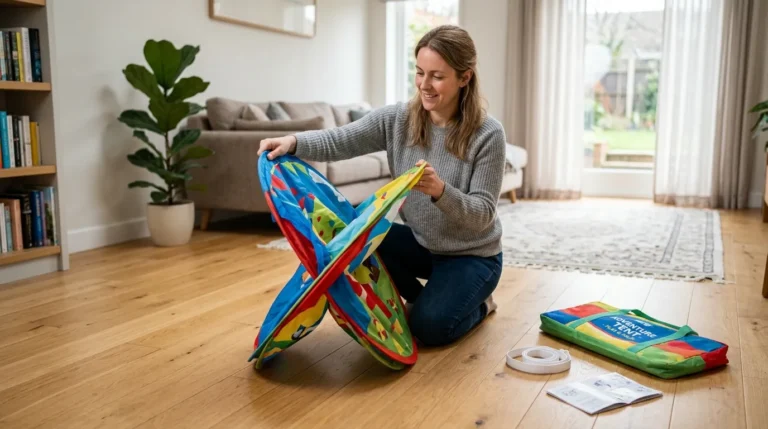
Check the pole tips. Technical safety standards require that all fiberglass poles have rounded or capped ends to prevent them from ripping through the fabric sleeves. High-end brands go the extra mile by double-stitching these contact points. As I mentioned in my guide to folding a pop up play tent, mechanical failure often happens at the joints. By choosing a tent with reinforced hubs and thick poles, you are ensuring that your Basecamp remains a stable and secure sanctuary even during a rowdy playdate.
How can you identify potential finger traps and mesh hazards?
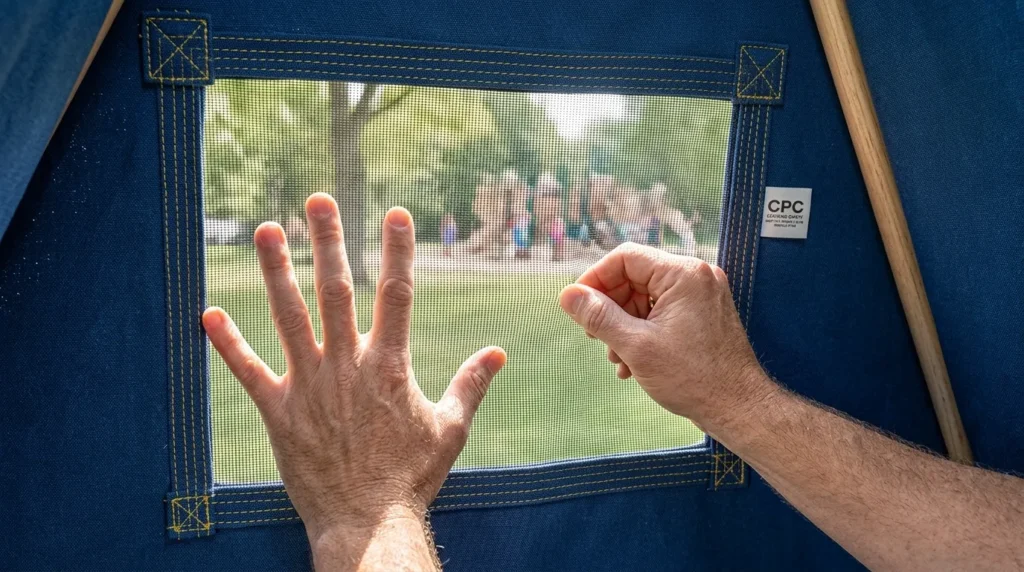
To identify physical hazards, look for exposed mechanical hinges and poor-quality mesh that could snag a child’s finger or become a strangulation risk if a panel fails. I’ve analyzed dozens of high-mesh best inflatable tents, and I always check for the density of the weave. In a kids play tent, the mesh should be high-visibility but extremely fine no-see-um grade. If the mesh holes are large enough for a child to stick their finger through, it is a technical failure that can lead to tears in the fabric or even skin injuries.
The doors are the second most common place for safety issues. I’ve seen many parents struggle with kids adventure play tents that have long, loose ties for the door flaps. These can easily become a trip hazard or a wrap-around risk for a toddler. I suggest you look for tents that use simple velcro tabs or wide, short fabric toggles instead. I found during my extra large play tent review that the best designs keep all strings and ties under six inches in length to meet modern safety protocols.
One expert insight regarding the pop-up model, such as the Diorssen pop up playhouse tent, is the risk of the spring-frame unfolding unexpectedly. According to CPSC injury reports, most pop-up accidents happen when a parent tries to open a tent in a cramped space. You should always have a 5-foot clearance area when deploying an instant frame. Managing the energy of the frame is a technical skill. By choosing a model with fully wrapped edges, you are ensuring that your child never comes into contact with the mechanical guts of the tent, keeping their fingers and face safe.
Does the fabric choice affect fire safety and chemical exposure risk?
Yes, the density of the polyester and the type of fire-retardant coating used are technical factors that determine how fast a tent will ignite and whether it will release toxic fumes if exposed to heat. I’ve spent a lot of time reviewing heavy-duty hard shell roof top tents, but for kids indoor play tents, the fabric rules are different. You want a material that meets the CPAI-84 fire resistance standard. This ensures that if a child brings a forbidden heat source near the tent, the fabric will melt slowly rather than bursting into flames.
Many high-end playhouses, like the old post office, use a much thicker, higher-denier polyester than the cheap toys. This extra thickness provides a better thermal barrier and is less likely to shred. In my large play tent review, I raved about the Oxford cloth because it feels much more like a real tent and less like a plastic bag. I suggest you avoid any tent that has a strong chemical or oil smell. This is a technical sign of low-quality dyes that can cause skin irritation for babies.
Check for silver-coated fabrics if you plan on using the tent outdoors. Heat management is a safety issue. If a tent lacks a UV-reflective layer, it can reach dangerous temperatures in minutes. According to fabric durability reports, a high-quality technical coating should not flake or peel, as these tiny particles can be inhaled by an infant. By choosing gear with a certified non-toxic pedigree, you are creating a professional-grade play tent that respects your child’s health and your home’s air quality.
Why is age appropriateness and weight limits a technical safety win?
Age ratings matter because a tent designed for an 8-year-old might have small parts or structural features that are dangerous for a crawling infant, making it essential that you match the gear to your child’s current developmental stage. I’ve analyzed many different sizes for the best tents for families, and the same logic applies to the playroom. If you put a baby in a tent with a zippered floor that is not secured, they could potentially crawl under the fabric and become trapped. This is why I suggested the pink play tent from BSHAPPLUS as a top pick for infants.
The weight and height of the tent are also technical safety factors. A tall, narrow tent is much more likely to tip over than a wide, low-profile dome. When I was testing the farm play tent, I noticed that adding a few soft toys or a padded mat provided the necessary ballast to keep the structure centered. For more active play, such as the tunnel tent play setup, you need to ensure the connections between modular parts are secure. If a tunnel disconnects while a child is crawling through it, it creates a moment of panic that can lead to an injury.
If you are using a princess castle tent, you must follow the capacity limits. If too many children pile into one corner, they can snap a pole or pull the entire structure down. According to technical ergonomics reports, maintaining a high interior volume-to-user ratio is the best way to prevent accidents. Extra space is your best defense against chaos. By respecting the technical limits of your kids play tent, you are ensuring that your home base remains a place of fun rather than a source of stress.
Frequently asked questions about what to look for kids play tent safety
Is it safe to let my child sleep overnight in their play tent?
Yes, provided the tent is set up in a safe indoor area. You must ensure the tent has 360-degree airflow to prevent CO2 buildup. I noticed during my review of large play tents that cabin-style tents with mesh windows are much safer for indoor sleepovers than sealed domes.
How do I know if the fiberglass poles are starting to fail?
Perform a monthly feel-test by running your hands along the fabric sleeves. If you feel any bumps, cracks, or splinters through the cloth, the pole is compromised. I found during my dinosaur play tent review that budget fiberglass is the most common safety fail. If you find a break, I suggest you remove the tent from the room immediately and replace it with one of my kids play tent technical picks.
Are there any fire-retardant sprays I should use on my tent?
No, you should never apply your own chemicals to a kids tent. The reason is that these sprays often contain toxic off-gassing agents that are not safe for children to breathe in a confined space. It is much better to buy a tent that is factory-certified for fire resistance.
What is the safety risk of a non-removable tent floor?
A fixed floor can trap moisture and bacteria if not cleaned properly. I noticed during my guide to cleaning kids play tents that removable mats are much safer because you can deep-clean them in a bathtub. If your tent floor is permanent, you must be extra diligent about vacuuming crumbs and wiping spills to prevent mold growth.
Can a pop up tent be a choking hazard for babies?
Yes, but only if the tent features small, poorly attached parts like loose buttons or cheap plastic toggles. I always suggest parents check for these details before use. The safety strap can be a hazard if not kept in the carry bag while the tent is open.
Why technical safety is the foundation of every great adventure
At the end of the day, knowing what to look for kids play tent safety is a mandatory technical skill for any parent who wants to maximize the value and security of their playroom. By prioritizing CPC certifications, inspecting your frames, and managing your ventilation, you are creating a professional-grade sanctuary for your children. It is about being proactive rather than reactive. Once you have established your safety routine, you will find that the imaginative play becomes much more relaxing for everyone involved.
I’ve seen too many cheap toys end up as safety hazards. I’ve laid out all the best technical solutions in this guide to help you avoid the expensive and dangerous mistakes I have seen in the field. I suggest you start by performing a technical inspection of your current play tents today.
I will be continuing to add more technical guides to the site, including deep dives into individual models like the Kid Trax USPS Playhouse. Childhood is a season of discovery, and with the right technical approach, your home can be the safest play tent in the neighborhood. I will see you at the next indoor trailhead.