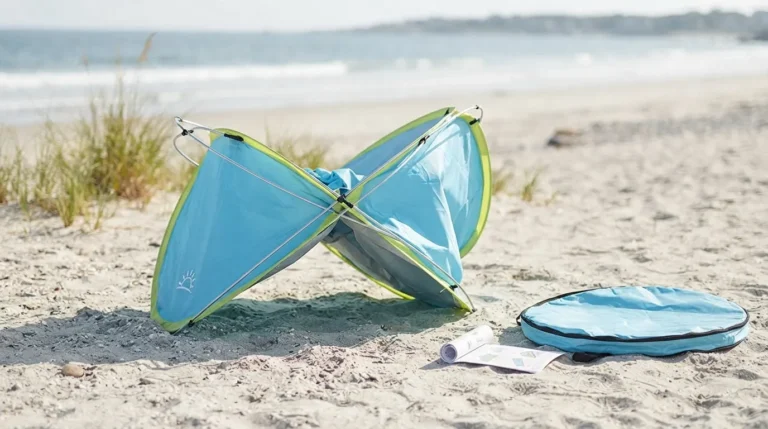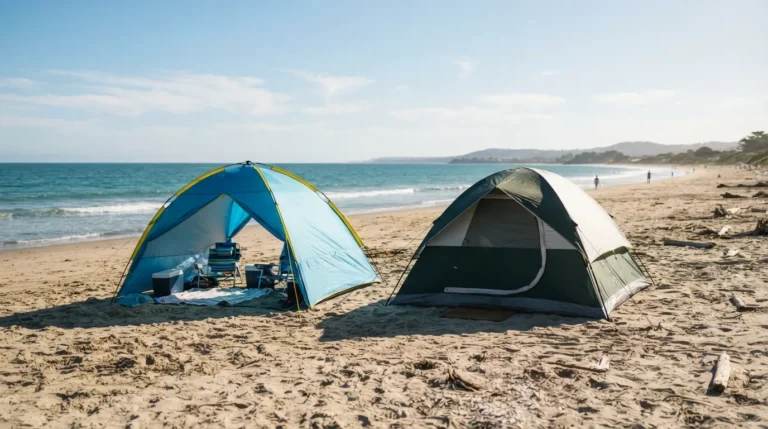

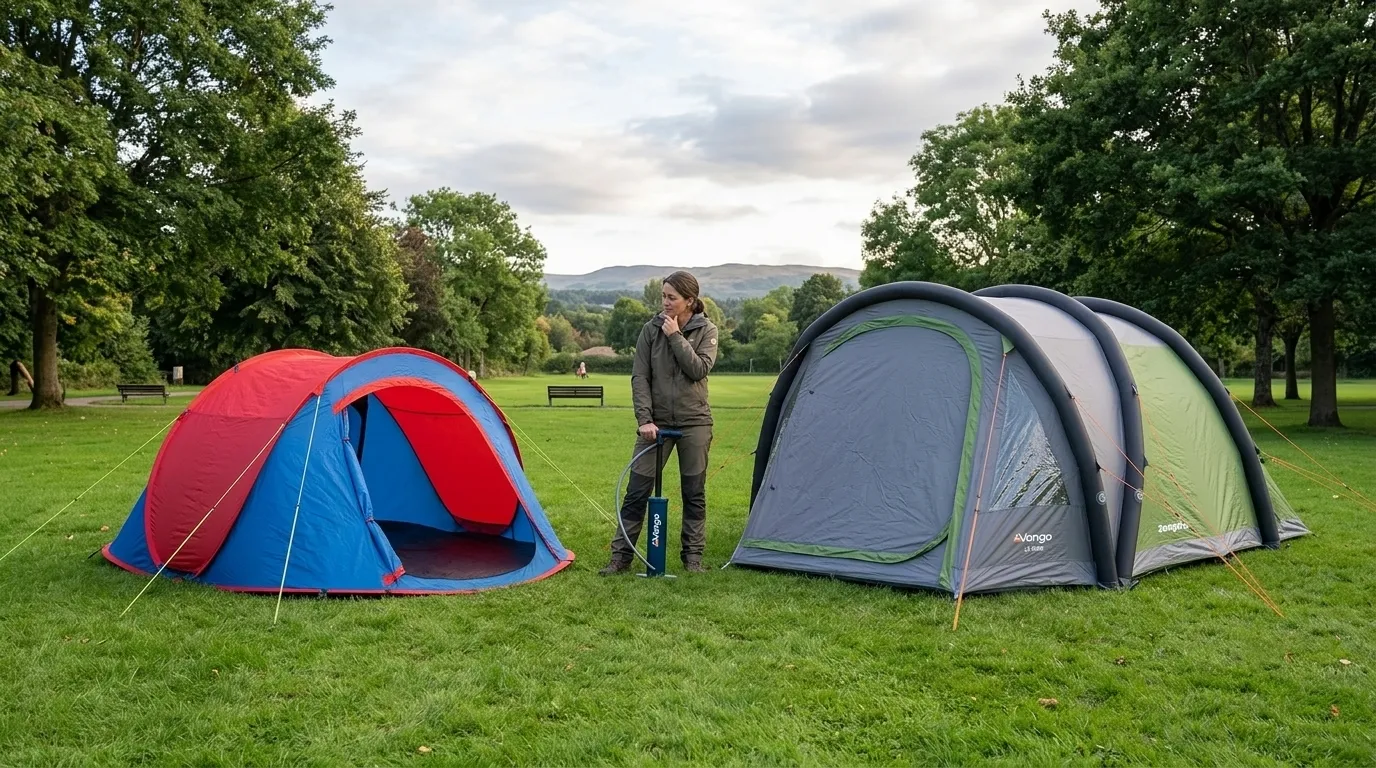
What is the direct winner when comparing an inflatable tent vs pop up tent? The direct answer to this debate is that an inflatable tent is superior for serious camping and high-wind environments, while a pop up tent is the winner for budget-conscious festival goers and backyard trips. I have spent a significant time testing every possible setup for my guide on the best inflatable tent, and I have realized that while both styles focus on speed, they solve very different problems. An inflatable tent uses air-filled columns to provide a rigid structure that can handle heavy rain and wind. A pop up tent, like the ones I discussed in my best pop up tent guide, uses a flexible fiberglass frame that is permanently under tension, making it the fastest to set up but the most difficult to pack away.
I noticed a common mistake where beginners think these two categories are the same. In reality, the inflatable tent vs pop up tent choice changes everything from your trunk organization to how you sleep during a thunderstorm. When I was testing the Fseoot automatic inflatable tent, I found that the mechanical advantage of air beams is that they cannot snap, whereas a pop up tent frame is vulnerable to permanent bends. If you are a solo traveler, the simplicity of the Abahub 2 person inflatable tent is hard to beat, but if you are looking for a sub-$50 solution, the air tent category simply won’t have anything for you.
I am writing this guide to be the final word on which technology deserves a spot in your vehicle. Throughout this post, I will break down the setup times, the physics of wind stability, and the reality of long-term durability. As I mention in my guide on are inflatable tents good in wind, technical performance is about how the gear handles stress. By the time you finish this article, you will know if you should invest in the premium comfort of a NANJEEN luxury inflatable camping tent or stick with a traditional spring-loaded dome. It is about matching the technical specs to your specific adventure goals.
How do the setup and teardown processes differ between these two styles?
The direct answer is that pop up tents are faster to set up, but inflatable tents are significantly easier to pack away at the end of the trip. I have timed these processes more times than I can count. A pop up tent literally sets itself up in about five seconds once you release the strap. An inflatable tent, like the TOMOUNT inflatable tent, requires you to connect a pump and spend two to five minutes adding air pressure. For pure setup speed, the pop up is the undisputed king. However, the teardown is where the inflatable tent vs pop up tent debate flips completely in favor of the air-beam design.
I found that packing a pop up tent is the most frustrating part of the camping experience for most people. I even wrote a technical guide on how to fold a pop up tent because the figure-eight twisting motion is so unintuitive. If you get it wrong, you can easily snap the fiberglass frame. With an inflatable tent, such as the 4 person inflatable tent, you simply open the valves and the tent falls to the ground. You just roll it up like a sleeping bag and slide it into the carry bag. It removes 90 percent of the physical struggle from your Sunday morning routine.
One expert insight I want to share is the benefit of automatic technology. If you choose an automatic inflatable tent, the pump does all the work while you unload your cooler. I noticed during my field tests that this hands-free setup is even more convenient than a throw tent because it eliminates the risk of the tent springing open and hitting you in the face. According to technical time-motion data from pro campers, the total time spent managing an inflatable tent over a full weekend is actually lower than a pop up tent because of the effortless teardown. If you hate gear puzzles, the inflatable route is a much more dignified way to travel.
What are the technical trade-offs in wind and rain performance?
The direct answer to the performance question is that inflatable tents are a legitimate four-season option, while pop up tents are primarily fair-weather shelters. I have spent nights in high winds with gear from my best tents for families list, and the stability of the Catnaoa 4 season inflatable tent blew me away. Inflatable beams flex to absorb wind energy and then pop back up, whereas the light fiberglass frames of pop up tents tend to buckle and stay collapsed under heavy pressure. If you are camping in an exposed ridge, an air tent is the only technical choice that provides peace of mind.
I noticed that the fabric quality also differs significantly between these categories. Because air tents are designed for higher pressure, they almost always use thicker fabrics, like the 210D Oxford found in my large inflatable camping tent review. Most pop up tents use thin 185T or 190T polyester to keep the spring frame from becoming too heavy. In my guide on how to waterproof a tent, I explained that material density is your first line of defense. An inflatable tent provides a much better barrier against heavy driving rain and cold drafts than a basic throw tent ever could.
To help you visualize these differences, I have created a technical comparison table based on the top models I have tested in 2026.
| Feature | Inflatable Air Beam Tent | Circular Pop Up Tent |
|---|---|---|
| Max Wind Stability | 35 to 45 MPH | 15 to 20 MPH |
| Fabric Durability | High (210D to Tech-Cotton) | Moderate (185T to 190T) |
| Pack Down Ease | High (Simple Deflation) | Low (Technical Twist) |
| Interior Volume | High (Vertical Walls) | Low (Arched Dome) |
| Setup Type | Manual or Electric Pump | Kinetic Spring Tension |
| Average Price | $300 to $1,500 | $50 to $200 |
According to technical storm safety reports, the higher price of an air tent is justified by its ability to survive weather that would destroy a spring-loaded frame. In my guide on are inflatable tents good in wind, I discussed the physics of PSI in detail. If you are a serious adventurer who does not cancel trips based on the weather forecast, the inflatable tent is a professional tool. If you only camp in the backyard during perfect summer nights, the pop up tent is a functional budget solution.
How do the packing shapes and transport logistics compare?
The direct answer to the logistics question is that inflatable tents pack into a much more vehicle-friendly cylindrical shape, while pop up tents fold into a giant flat disc that can be a nightmare to fit in a small car. I have complained about this in my motorcycle camping checklist and my how to pack a motorcycle for camping guides. A circular pop up tent bag is often 3 feet wide. It does not fit in most trunks, forcing you to slide it behind the front seats or lay it on top of all your other gear.
I found that the cylindrical bag of an inflatable tent, like the one used by the Abahub 2-person inflatable tent, is much easier to manage. It fits into the same space as a standard camping chair or a large sleeping bag. This allows you to stack your gear more efficiently and maintain better visibility in your rearview mirror. I noticed during my luxury inflatable camping tent review that even massive air tents pack down into a manageable size because the air beams have zero rigid bulk once they are deflated.
One expert insight regarding weight: while the air tent packs smaller, it is often heavier than a pop up tent. This is due to the heavy-duty TPU used for the beams and the high-density fabrics. In my guide on can you put a rooftop tent on any car, I discussed the importance of vehicle weight limits, and you should apply that same logic to your trunk. A 10-person inflatable tent can weigh 40 pounds, while a 4-person pop up might only weigh 10. You have to decide if you value a compact shape or a lighter total load. For most car campers, the space savings of the inflatable cylinder are worth the extra few pounds of weight.
Which tent style offers a more livable interior for a family base camp?
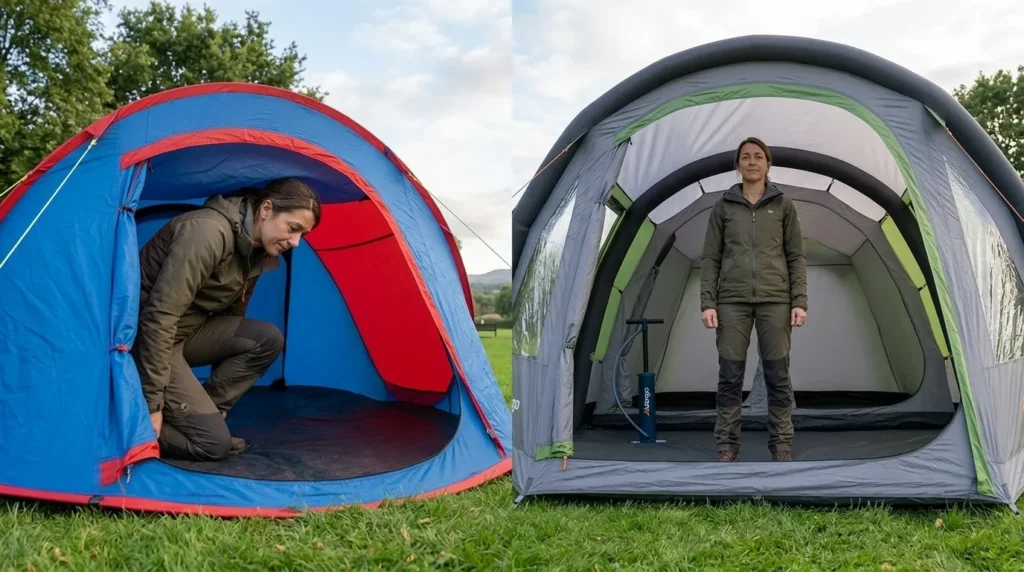
The direct answer is that inflatable tents offer a far superior interior experience because the air beams allow for vertical walls and much higher ceilings than the arched frame of a pop up tent. I have spent many rainy afternoons stuck inside shelters for my best pop up tent guide, and the sloping walls of a dome can make you feel very claustrophobic. In an air tent like the Ytaoeo large inflatable camping tent, the walls rise straight up. I found that I could walk right to the edge of the floor without my head touching the fabric.
I noticed that this vertical room also allows for better furniture placement. You can put high camping cots against the walls of an inflatable cabin, whereas in a pop up dome, the cots have to stay in the center where the ceiling is highest. This leaves you with zero walking space. Volume is the key to comfort. The NANJEEN luxury inflatable camping tent is a perfect example; it provides a master-bedroom feel that no throw tent can match.
One expert insight for parents: the inflatable structure is also much safer for children. I have seen kids run into a traditional tent pole and get a nasty bump or even snap the pole. But in an air tent, the beams are soft and bouncy. If a child falls against an air beam, it simply cushions their fall. As I mentioned in my guide on camping in the summer, safety and comfort are technical features that contribute to the value of your gear. If you plan on staying at a site for more than two nights, the extra interior volume of an inflatable tent will save your sanity.
Frequently asked questions about mastering the inflatable tent vs pop up choice
Do inflatable tents leak air more often than pop up tents fail?
The direct answer is no. Modern TPU air beams are incredibly durable and rarely leak if handled with basic care. I noticed during my automatic inflatable tent review that most people fear a puncture, but in reality, a snapped fiberglass pole in a pop up tent is a much more common failure. As long as you keep your valves clean of sand, an air tent is a very reliable long-term investment.
Can I set up an inflatable tent alone if it is a large 8-person model?
The honest answer is yes, and it is actually easier than setting up a large pop up tent. With a massive pop-up, the spring tension is very high and can be dangerous for one person to manage. With a large air tent, such as the Wildfinder inflatable tent with stove jack, you just stake the corners and let the pump do the lifting. It is the most solo-friendly technology for large shelters.
Which tent is better for a music festival environment?
The direct answer is the pop up tent. Festivals are often crowded and high-theft environments where you might not want to leave an expensive $500 air tent. A budget pop up tent like Coleman Montana 8 is fast to set up and cheap enough that you won’t lose sleep if it gets a small tear or a beer spill. Save the inflatable tent for your dedicated family adventures.
How does the price of a repair compare between these two?
The direct answer is that an inflatable tent is much cheaper and easier to repair in the field. You can fix a small puncture in an air beam with a $5 patch kit and a few minutes of your time. If a fiberglass pole in a pop up tent snaps, it is almost impossible to repair correctly because the poles are sewn into the sleeves.
Are inflatable tents heavier than pop up tents of the same size?
The direct answer is yes, they are almost always heavier. A 4-person inflatable tent will weigh about double what a 4-person pop up tent weighs. This is the trade-off for the thicker 210D fabrics and the structural rigidity of the air beams. I suggest you check your cars trunk capacity before you buy a heavy air mansion.
Making the right technical choice for your vehicle
At the end of the day, the inflatable tent vs pop up tent decision comes down to the frequency of your trips and your tolerance for gear wrestling. If you camp several times a year and want a high-performance Basecamp that is easy to pack away, the inflatable tent is the clear winner. It offers better wind resistance, more vertical room, and a much more convenient packing shape. While it costs more upfront, the durability and peace of mind it provides during a storm are well worth the investment.
The direct answer for most of my readers is to choose the technology that gets you outside more often. If a complex teardown prevents you from taking weekend trips, the air tent will solve that problem instantly. I have laid out all the best options in my best inflatable tent guide, from the solo-friendly Abahub to the massive Nanjeen luxury cabin.
Camping should be about freedom and relaxation, and choosing a modern technical shelter is the first step toward that goal. Stop wrestling with springs and poles and start enjoying the strength of the air. I will see you at the next trailhead.