
Learning how to fold a pop up beach tent is the one skill nobody tells you about before you buy one, and it’s the difference between packing up in ten seconds or standing on hot sand wrestling a stubborn ring of fiberglass while your kids melt down about leaving. I’ve been there with my own gear more times than I want to admit, sweating through a takedown while everyone around me packed up in one smooth motion. The good news is that almost every pop up beach tent, regardless of brand, uses the same basic folding trick, and once your hands learn the motion it becomes almost automatic.
I’ve folded and re-folded all ten tents from my beach pop up tent buyer’s guide dozens of times this summer, timing myself and taking notes on which ones fought back and which ones practically folded themselves. What I found is that the folding motion itself is nearly universal, the differences between tents come down to how forgiving the fabric is, how the poles are joined, and whether the tent gives you any visual guide for the fold. Below is the exact method that worked every time, along with what to do when a tent refuses to cooperate.
How To Fold A Pop Up Beach Tent Step By Step?
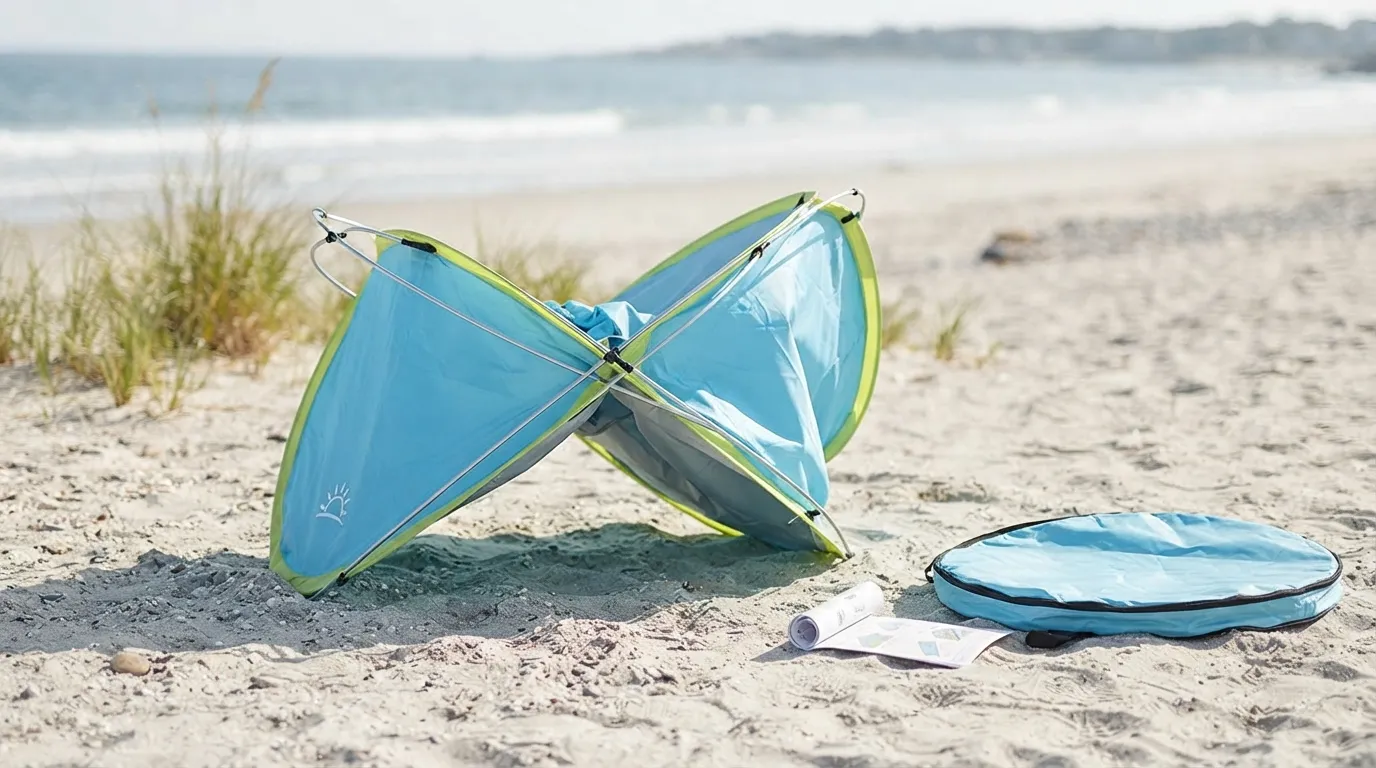
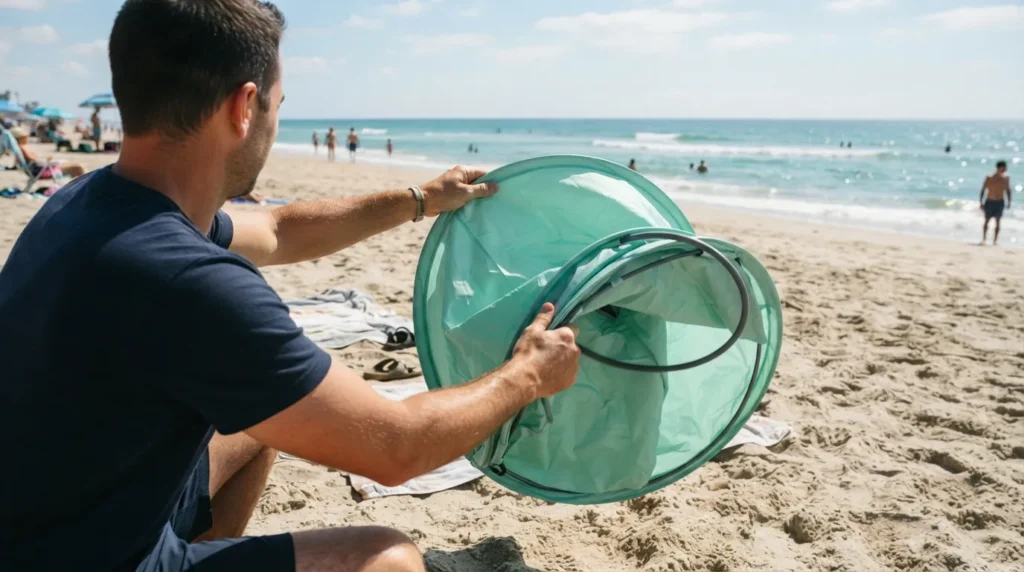
Every spring-steel or fiberglass pop up tent uses the same core principle: the frame wants to spring back into its flat, folded shape, and your job is just to guide it there rather than force it. Here’s the method that’s worked on every tent I’ve tested:
- Remove all stakes, sandbags, and guy lines first, and shake out any loose sand from the floor.
- Find the two opposite points on the tent’s ring (usually along the longer side) and grab one in each hand.
- Bring your hands together so the two points touch, twisting one hand’s ring a quarter turn as you do. This is the motion that actually collapses the frame, not brute force pushing.
- Once the first twist collapses part of the frame, a second, smaller ring will pop up. Grab that ring the same way and repeat the twist.
- Bring the final folded rings together into one flat stack and secure it with the tent’s own strap or slide it straight into the carry bag.
The twist is the part almost everyone gets wrong the first few times, myself included. If you just push the two sides together without rotating, the poles fight you and the tent looks like it’s trying to pop back open in your hands. Once you feel that quarter-turn click, the whole thing collapses almost on its own.
Why Won’t Your Pop Up Beach Tent Fold Back Down?
If you’ve tried the twist motion and the tent still won’t cooperate, the problem is almost always one of a small handful of things, not a defective tent. Sand trapped in the pole sleeves is the most common culprit I’ve run into, since even a small amount of grit can keep a joint from rotating smoothly. A wet or damp tent is the second most common issue, since damp fabric adds friction and makes the poles feel stiffer than they are. The table below covers the most common sticking points and what actually fixes them.
| Problem | Likely Cause | Fix |
|---|---|---|
| Frame springs back open mid-fold | Twist wasn’t a full quarter turn | Redo the twist more deliberately, don’t rush it |
| Poles feel gritty or stiff | Sand trapped in pole sleeves | Shake out the tent upside down before folding |
| Tent won’t lie flat after folding | Fabric still damp from dew or spray | Air dry for 10 minutes before the final fold |
| One side folds, the other resists | Uneven grip, one hand not on the true ring point | Reposition hands to the actual seam intersection |
| Folded tent won’t fit the bag | Folded out of sequence, rings stacked wrong | Restart the fold from step 2 rather than forcing it in |
Beyond the mechanical fixes, patience matters more than strength here. Fighting a stuck fold with more force is how poles crack, and a cracked fiberglass pole is a repair, not a quick fix at the beach.
Which Pop Up Beach Tents Fold The Easiest, And Which Take More Patience?
Not every tent in this hub folds at the same speed, and the differences come down to design choices more than build quality. The Automatic Pop Up Beach Tent and the WhiteFang Deluxe Pop Up Beach Tent were the two easiest tents to re-fold in my testing, largely because both include a printed step-by-step folding diagram right on the storage bag, which took the guesswork out of the process the first few times. The WolfWise Pop Up Beach Tent was close behind thanks to its lighter fabric, which simply has less resistance to fight against during the twist.
A few tents need a bit more patience. The OutdoorMaster Pop Up Beach Tent has a full zippered privacy door that needs to be closed before folding, or the loose fabric catches in the rings. The Pop Up Beach Shade Tent has a similar quirk with its extended zip-out floor section. And the Acacia Pop Up Tent doesn’t use this fold at all, since it’s built on a rigid hub-and-pole frame rather than a springy pop-up ring, so taking it down means reversing its pole-locking setup instead of any twist motion.
Do You Need To Clear The Sand Off Before Folding?
Yes, and skipping this step is the single biggest reason people end up fighting their tent. Sand works its way into every seam and pole joint over the course of an afternoon, and if you fold the tent with sand still trapped inside, you’re grinding grit into the fabric coating and the pole sleeves every time you do it. I flip the whole tent upside down and give it a firm shake before I even think about starting the fold, then run a hand along the floor to knock loose anything that’s settled into the corners.
This matters even more on tents with a fully enclosed floor or a zippered changing area, like the EchoSmile Pop Up Tent, since sand can hide inside the enclosed section where you can’t see it. The same goes for a double-door design like the Wakeman Pop Up Beach Tent, where sand can settle near both entrances. A quick shake-out before folding takes ten extra seconds and saves you from a gritty, harder-to-fold tent every single time.
How Should You Store A Pop Up Beach Tent So It Doesn’t Develop Mold Or Sun Damage?
Never pack a pop up beach tent away while it’s still damp. Even a small amount of trapped moisture in a sealed carry bag creates exactly the kind of environment mold needs to take hold, and the EPA’s guidance on moisture and mold points to trapped humidity as the single biggest driver of mold growth in stored fabric goods. I always give my tent at least ten to fifteen minutes of open-air drying time before the final fold, even if that means propping it up in the trunk on the drive home rather than folding it the second I pack up the cooler.
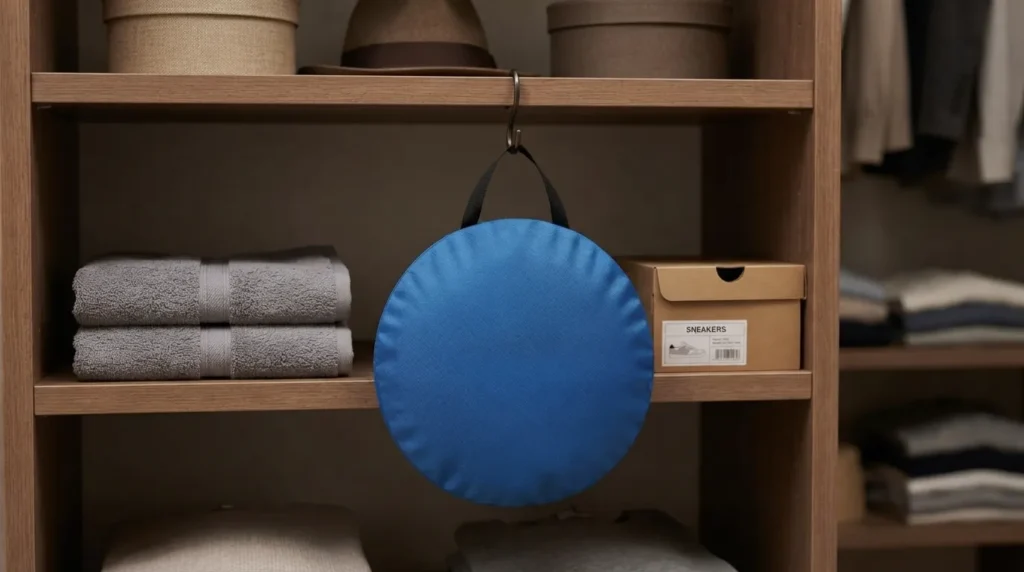
Where you store it between trips matters too. Direct sunlight through a garage window or the back window of a car can be just as hard on the fabric as a day at the beach, since UV exposure breaks down the same synthetic fibers used in most tent fabric over time, which is part of why the UPF ratings the Skin Cancer Foundation explains on these tents fade a little with age and heavy use. A closet shelf or a dark storage bin beats a sunny garage corner every time. If you’re storing beach gear alongside baby items between seasons, the same mold and moisture rules apply to a Baby Beach Tent just as much as they do here.
What Should You Do If The Poles Feel Like They’re Fraying Or Shedding Fibers?
Stop using the tent and inspect it closely before your next trip. Fiberglass poles are strong and lightweight, but the material can splinter into tiny fibers as it ages or takes repeated stress at the joints, and those fibers can cause real skin and eye irritation if you handle a frayed section with bare hands. This isn’t a hypothetical: the CPSC recalled a children’s play tent in June 2026 specifically over fiberglass poles shedding fibers and irritating skin and eyes, and the same physical risk applies to any fiberglass-poled beach tent, not just that one product.
If you notice a rough, splintery texture anywhere along a pole, wear gloves when folding that section and consider replacing the pole before your next beach trip rather than pushing through it. This is also a good moment to think about Leave No Trace principles more broadly, since a cracked pole segment or a stray stake left behind in the sand is exactly the kind of small litter that adds up on a busy beach. Pack out every piece you brought, damaged or not, the same way you would on an overnight trip with a Beach Camping Tents setup.
Frequently Asked Questions On How To Fold A Pop Up Beach Tent
How to fold a pop up beach tent the fastest way?
Grab two opposite points on the tent’s ring and bring them together with a quarter-turn twist rather than a straight push, then repeat with the smaller ring that pops up next. Once you’ve done this a few times, most tents fold flat in under ten seconds. Tents with a printed folding diagram on the bag, like the WhiteFang Deluxe, make learning the motion faster the first time.
Why does my pop up beach tent keep popping back open when I try to fold it?
This almost always means the twist wasn’t a full quarter turn, or there’s sand trapped in the pole joints adding resistance. Shake the tent out upside down first, then redo the twist more deliberately rather than rushing or forcing it. If the tent is still damp from dew or ocean spray, let it air dry for ten minutes first, since damp fabric adds friction that makes the fold feel stuck.
Can two people fold a pop up beach tent faster than one?
It can help on a larger tent, but it’s not necessary once you know the motion, since the design is built around a single person managing the twist alone. Two people are more useful for holding the fabric flat while the other person does the actual twisting fold, especially on bigger tents like the OutdoorMaster or a taller frame tent like the Acacia, which uses a completely different pole-locking takedown instead of a twist.
Do I need to wash a pop up beach tent before folding it away for the season?
You don’t need a full wash after every single trip, but you should always brush off sand and let the tent dry completely before long-term storage. A more thorough rinse to remove salt residue and sunscreen buildup once or twice a season helps the UPF coating and water resistance hold up longer, especially heading into off-season storage.
Is it normal for a pop up beach tent to feel harder to fold after a few uses?
Some resistance increase is normal as sand works its way into pole joints over repeated use, but a tent that’s noticeably harder to fold than when it was new is usually telling you it needs a proper shake-out and dry before its next fold, not that something is broken. If a specific pole segment feels rough or splintery rather than just stiff, treat that as a sign to inspect it rather than force the fold through it.
How Do You Choose The Right Beach Pop Up Tent For Your Needs?
If easy folding matters as much to you as easy setup, look for a tent that includes a printed folding diagram or clear instructions on the bag itself, since that one detail made the biggest difference in my own testing. My full beach pop up tent buyers guide breaks down all ten tents by capacity, weight, and wind stability if you’re still deciding which one to buy before you have to worry about folding it at all. And if your group includes little kids who’ll be using their own smaller Kids Play Tent at the same beach setup, the same twist-and-fold method applies there too, just on a smaller frame.