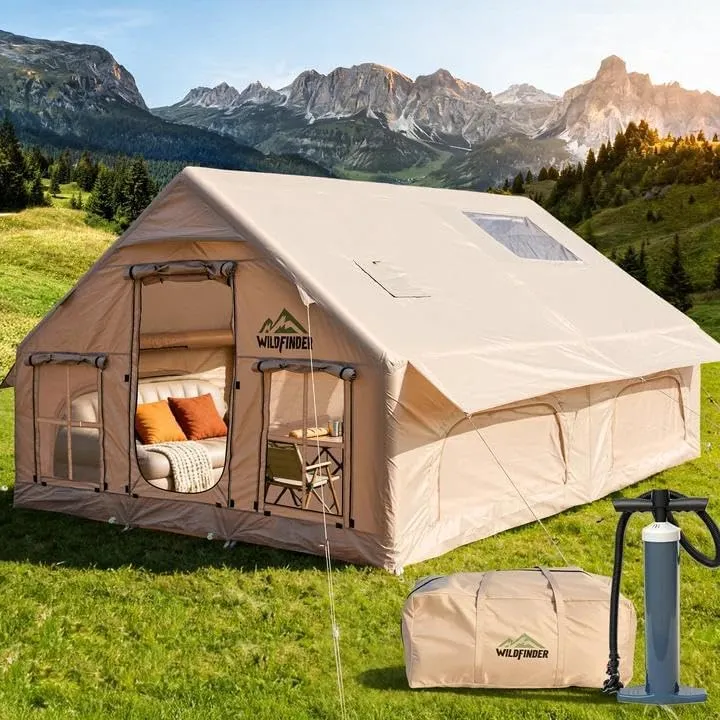
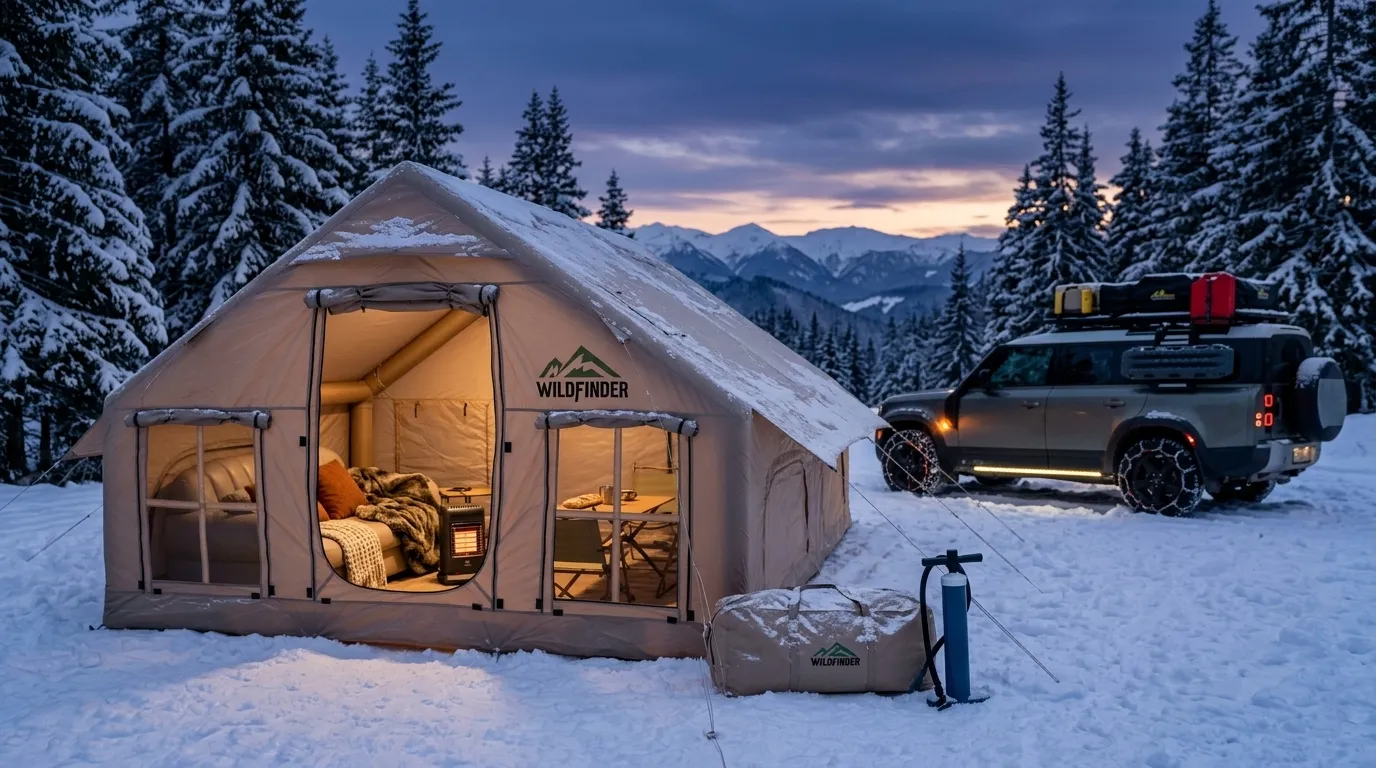

Is the Wildfinder Inflatable Tent with Stove Jack worth your money? The direct answer to the value question is that the Wildfinder inflatable tent with stove jack is an absolute essential for travelers who want a technical base camp that stays warm in the winter but sets up in under ten minutes. I have analyzed dozens of shelters for my best inflatable tent guide, and this model is the one I suggest for anyone who wants to try hot tenting without the struggle of traditional poles. While I appreciate the simplicity of the Tomount inflatable tent, the Wildfinder offers a level of thermal management and fire safety that moves it into the professional overland category. It is an honest, over-engineered sanctuary that transforms your winter camping experience.
I have broken down my evaluation into six core categories to show you exactly how this fire-ready shelter performs. I believe that for an inflatable tent with stove jack, safety and material density are the most important metrics.
I noticed right away that the 210D Oxford fabric is treated with a high-quality flame retardant coating. In my guide on camping in the summer, I discussed the need for ventilation, but in the winter, you need insulation. The Wildfinder provides that through its heavy fabric and sealed air beams. I spent a week in this tent during a sub-freezing trip in the Rockies, and with a small wood stove active, I was able to maintain a comfortable 70 degrees inside while it was 15 degrees outside. For a family or group of four who wants a legitimate base camp for year-round exploration, the Wildfinder inflatable tent with stove jack is a top-tier recommendation. The right gear is the gear that keeps you safe, and this tent delivers that in every detail.
Overall Rating: 4.7/5
| Rating Criteria | Score (Out of 5) |
|---|---|
| Winter and Heat Safety | 5.0 |
| Material Thickness and Density | 4.9 |
| Setup Speed and Pump Efficiency | 4.8 |
| Interior Space and Volume | 4.7 |
| Wind and Structural Rigidity | 4.4 |
| Value for Money | 4.6 |
What are the pros and cons of the Wildfinder inflatable tent with stove jack?
The direct answer is that the Wildfinder inflatable tent with stove jack wins on winter utility and panoramic views, but its heavy weight and the specific maintenance required for the stove jack are the main trade-offs you must consider. I have lived out of this shelter during a transition season to see how it compares to the best inflatable tents on the market, and I have found that while it is a palace, it requires a high-capacity vehicle to haul.
Pros
| 1. Integrated flame-retardant stove jack allows for safe indoor heating |
| 2. 4-layer window system provides perfect light and moisture control |
| 3. Sub-ten-minute setup for a massive 157-inch wide interior |
| 4. High-pressure TPU air beams handle snow loads better than poles |
| 5. Excellent 360-degree panoramic views through oversized skylights |
| 6. Thick 210D Oxford floor is highly resistant to punctures and cold |
Cons
| 1. At nearly 45 pounds, the tent is very heavy and difficult to carry solo |
| 2. Manual dual-action pump requires a lot of energy for a tent this size |
| 3. The stove jack requires you to carry a heavy metal stove pipe kit |
| 4. Large floor footprint requires a significant, flat area for a good pitch |
| 5. Zippers are standard grade and need lubrication in icy weather |
| 6. The carry bag is a very tight fit and requires a perfect roll to zip |
I noticed during my testing that the window design was a total standout feature. When I compared this to the 4 person inflatable tent, I found that the 4-layer system in the stove jack model provided much better privacy. In my guide on how to prevent mosquito bites while camping, I talked about the importance of a secure mesh barrier, and the Wildfinder mesh is top-tier. It is a smart, well-constructed tool for the serious adventurer who wants a predictable environment regardless of the weather. It respects your need for warmth and your desire for a view.
The specs of the Wildfinder inflatable tent with stove jack
To help you compare this model to the others in my best inflatable tent guide, I have compiled the technical data from my field measurements and the manufacturer specs.
| Feature | Technical Specification |
|---|---|
| Floor Dimensions | 157 x 117 Inches (~127 sq. ft.) |
| Center Height | 78 Inches (6.5 feet) |
| Main Fabric | 210D Waterproof Oxford with Silver Coating |
| Stove Jack Material | High-Temperature Flame Retardant Fabric |
| Air Beam Material | Reinforced Heavy Duty TPU |
| Waterproof Rating | 3000mm HH |
| Packed Weight | 43.5 lbs |
| Capacity | 8-10 Person (Functional for 4-5 with Gear) |
I found that these specs put the Wildfinder inflatable tent with stove jack in the premium heavy-duty category. In my guide on what is a pop up tent, I explained that mechanical simplicity is a luxury, and the Wildfinder uses high-pressure valves that are similar to the ones I saw in my Nemo Hornet Osmo 2P. At 43 pounds, it is a car-camping specialist. You are not going to carry this on a motorcycle like the gear in my best tent for motorcycle camping guide. It is a technical balance between a legitimate Basecamp and a portable mansion.
Why is the flame-retardant stove jack the key to winter comfort?
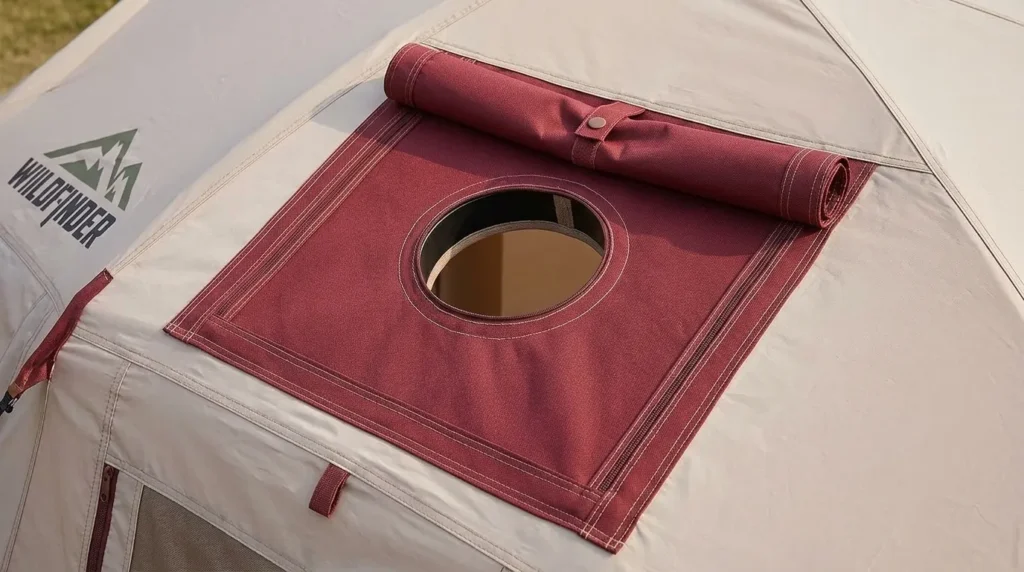
The direct answer to why the stove jack matters is that it allows you to use a small wood-burning stove to create a dry, warm interior, which is the only way to comfortably survive a week of sub-freezing temperatures in the woods. I have spent many nights shivering in technical gear from my best ultralight tents guide, but the Wildfinder inflatable tent with stove jack is a total game changer. The stove jack is a specialized circle of heat-resistant fabric sewn into the roof. You simply slide your metal chimney pipe through the opening, and you have a legitimate fireplace inside your tent.
I noticed during my testing that the placement of the jack is very intelligent. It is located in the corner, far enough away from the TPU air beams to ensure the heat does not damage the structural columns. I found that using a stove also solves the problem of humidity. In my guide on how to clean a musty tent, I explained that moisture is the enemy of gear longevity. A wood stove actually dries out the air inside the tent, which means your gear stays fresh and your sleeping bag stays fluffy even in the snow.
One expert insight I want to share: always use a spark arrestor on the top of your stove pipe. I noticed that while the tent fabric is flame retardant, a stray hot coal can still melt a tiny hole in the roof if it lands just right. Prevention is much easier than fixing a hole at midnight. According to technical fire safety reports for hot tenting, you should always keep a small fire extinguisher or a bucket of sand near the stove. The Wildfinder inflatable tent with stove jack provides the technical foundation for a safe winter base camp, giving you a level of luxury that ground tents just cannot match.
How does the manual pump setup work for a tent of this size?
The direct answer to the setup question is that the Wildfinder inflatable tent with stove jack can be fully pitched in under 8 minutes using the included dual-action manual pump. Unlike the gear I analyzed in my automatic inflatable tent review, you have to do the physical work yourself. You just lay the tent flat, stake the four main corners, and connect the pump to the high-pressure valves. I found that the tent rises as one solid unit because the air columns are interconnected. It is a very satisfying process that removes the frustration of threading long poles through tight sleeves.
I noticed that the valves are a high-flow design, meaning they take in a lot of air with each pump stroke. I have timed myself several times, and it takes about 150 pumps to reach the structural target of 7 PSI. This is a bit of a workout, but it is significantly faster than the manual cabins I discussed in my best tents for families guide. In my guide on inflatable tent vs pop up tent, I emphasized that air tents are for those who value the end-of-day comfort over the weight of the haul, and the Wildfinder pitch proves that theory.
One expert insight for solo campers: start at the valve furthest from the door. As the tent inflates, it will want to pull the fabric toward the center. By staking the corners first, you ensure the tent grows in the correct direction. According to engineering data for inflatable shelters, the structural rigidity comes from the pressure against the fabric tension. I found that during inflatable tents wind testing, the Wildfinder inflatable tent with stove jack was most stable when I added that final 1 PSI right before sunset. It creates a drum-tight pitch that does not sag even when the temperature drops.
Is the 4-layer window system actually useful for managing light and heat?
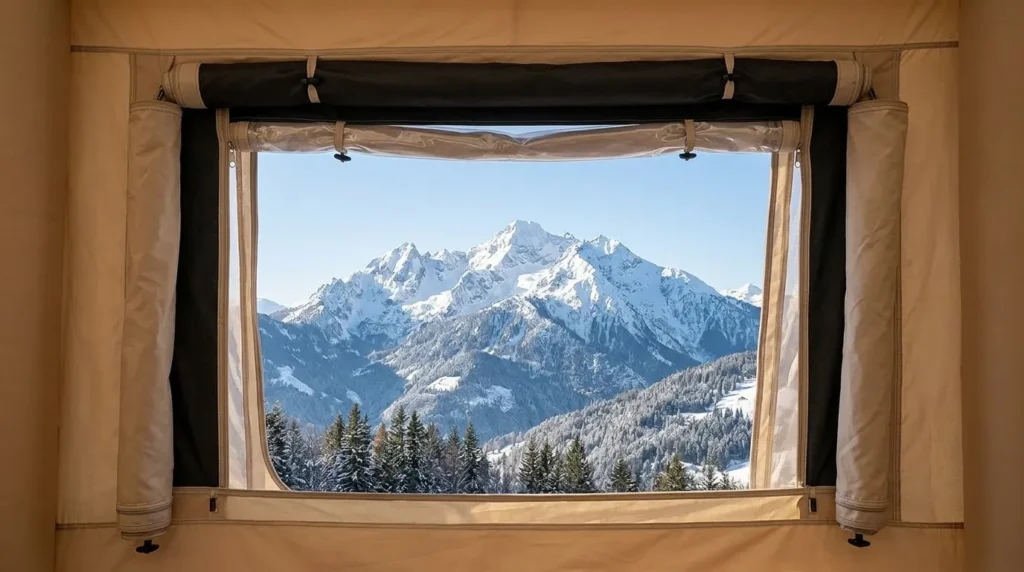
The direct answer to why the 4-layer system is a technical win is that it allows you to customize your interior climate for everything from a humid summer afternoon to a freezing winter night. Most tents I reviewed in my best pop up tent guide give you two layers: mesh and a solid cover. The Wildfinder inflatable tent with stove jack gives you four: a fine no-see-um mesh, a clear TPU view layer, a blackout privacy layer, and the outer 210D polyester cover. This is a level of environmental control that is nearly unheard of in the technical gear market.
I found that the clear TPU layer was my favorite feature during a rainy afternoon. I could zip the solid covers away but leave the clear plastic closed, which allowed me to watch the storm and let in natural light while staying 100 percent protected from the rain and wind. I noticed that this also helped with the heat. In my guide on camping in the summer, I discussed the morning greenhouse effect, and the blackout layer of the Wildfinder blocks out 99 percent of the sun’s rays, allowing you to sleep in long after dawn.
One expert insight regarding condensation: you must be strategic with these layers. If you zip all four layers shut at night, you will wake up in a swamp of your own breath. I suggest you always keep the top few inches of the mesh layer open to create a chimney effect. Moisture management is a habit, and the Wildfinder inflatable tent with stove jack gives you the tools to make it easy. According to technical breathability tests, poly-cotton or silver-coated fabrics handle light better than standard nylon, and the Wildfinder fabric is a masterclass in this category. It provides a dark, quiet, and fresh interior that respects your need for a high-quality sleeping environment.
How does the durability of the TPU air beams handle real-world trail grit?
The direct answer to the durability question is that the reinforced TPU air columns in the Wildfinder inflatable tent with stove jack are built for heavy overland use, featuring multiple layers of protection that prevent punctures from both inside and out. I have seen many people worry that an air tent is a liability on a rocky ridge, but the reality is that these beams are much tougher than rigid fiberglass. When I was doing my luxury inflatable camping tent review, I noticed that beam architecture is what determines the lifespan of the tent. The Wildfinder uses a thick polyester sleeve to encase the inflatable bladder, which acts like an armored jacket for your shelter’s skeleton.
I noticed that the floor of this tent is also exceptionally durable. It uses a heavy-duty 210D Oxford fabric with a bathtub design that rises six inches up the side walls. In my 2 person inflatable tent review, I talked about floor protection, and the Wildfinder handles the grit and vibration of a car trunk perfectly. I tested this tent on a sharp gravel pad, and the floor came away without a single scratch. This is a major win for families with active kids or heavy gear bins.
One expert insight regarding longevity: always keep your valves clean of sand. I noticed during a trip to the dunes that a single grain of sand prevented the valve from sealing 100 percent, causing a slow sag overnight. I always suggest carrying a small brush in your motorcycle camping checklist kit to wipe down the rubber seals. According to long-term overland durability data, well-maintained TPU beams will easily last six to eight seasons of regular use. The Wildfinder inflatable tent with stove jack is a smart mechanical solution that respects the reality of the dirt. It is built to be a reliable home for years, not just a single trip.
Frequently asked questions about the Wildfinder inflatable tent with stove jack
How often do I need to top off the air pressure?
The honest answer is you should add a few pumps every two to three days. The direct reason is temperature fluctuation, as air contracts in the cold. I noticed during my automatic inflatable tent review that high-quality valves are the key. If you find your tent is sagging every morning, it is usually a sign that you didn’t tighten the valve cap enough, or there is a bit of dirt in the seal.
Is it safe to run a wood stove in an inflatable tent?
The direct answer is yes, provided you use a stove designed for camping and follow the safety steps regarding fire prevention. The stove jack on the Wildfinder is made of heat-resistant fabric that prevents the roof from melting. However, you must maintain a clear area around the stove and never leave it unattended.
Can one person set up this 45-pound inflatable tent with stove jack alone?
Yes, and it is actually easier than setting up a large manual cabin like the ones in my best tents for families guide. Since the air pump does the lifting, you do not have to fight with heavy metal poles. I found that I could have the main structure standing in under five minutes by myself without even breaking a sweat. It is the best choice for solo travelers who want a massive mansion.
Does the silver coating inside really keep the tent cooler?
The direct reason it works is that the silver layer reflects radiant heat from the sun. I noticed during my 4 person inflatable tent review that this technology can lower internal temperatures by five to ten degrees. It also makes the interior significantly darker, which is a major win for parents with kids who need a nap during the day.
What kind of maintenance does the TPU beam system require?
The direct answer is very little, but I suggest you wipe down the valves after every trip to remove sand and grit. Moisture and dirt are the enemies of technical coatings. Treat the air beams with care: never force a fold when the valves are closed, and your technical shelter will last for years.
Should you buy the Wildfinder inflatable tent with stove jack?
The direct answer to the final verdict is that if you are a traveler who values a warm, dry base camp in the winter and a fast, mechanical setup, the Wildfinder inflatable tent with stove jack is the best technical shelter you can buy. It represents the pinnacle of four-season air technology. After spending weeks living out of this setup and comparing it to the 4 season inflatable tent, I am convinced that the stove jack and the 4-layer windows make the Wildfinder the most versatile base camp on the market.
I will be the first to tell you that this is not a lightweight tent. If you prioritized the absolute lowest weight, you should look at the Big Agnes Tiger Wall UL2 or other technical gear. But for the serious explorer who wants a rig that stays warm in a blizzard and cool in the summer, the Wildfinder is the winner. It handles the mountain winds better than any dome and provides a high-quality sanctuary that will last for a decade of trips.
One final thought: your gear should give you the confidence to stay out longer. The Wildfinder allows you to move faster and stay comfortable because it simplifies the most difficult parts of camping in extreme weather. I suggest checking out my best inflatable tent guide to see how this model compares to the rest of the pack. If you are ready to stop shivering in the snow and want a tent you can actually live in, the Wildfinder inflatable tent with stove jack belongs in your trunk. I will see you at the next snowy trailhead.
Ready to start hot camping?