
Are inflatable tents good in wind compared to traditional pole tents? The direct answer to this question is yes: inflatable tents are often significantly better in high winds than traditional pole-and-sleeve tents because the air beams are designed to flex under extreme pressure and then instantly pop back into their original shape. I have spent years sleeping in the best tents for families where a snapped fiberglass pole ended the trip, but an air tent eliminates that specific failure point entirely. When a heavy gust hits a traditional tent, the rigid poles can only bend so far before they reach a breaking point and splinter. In contrast, an inflatable beam, like the ones I analyzed in my TOMOUNT inflatable tent review, will simply buckle inward to shed the wind load and then return to its upright position the second the gust passes.
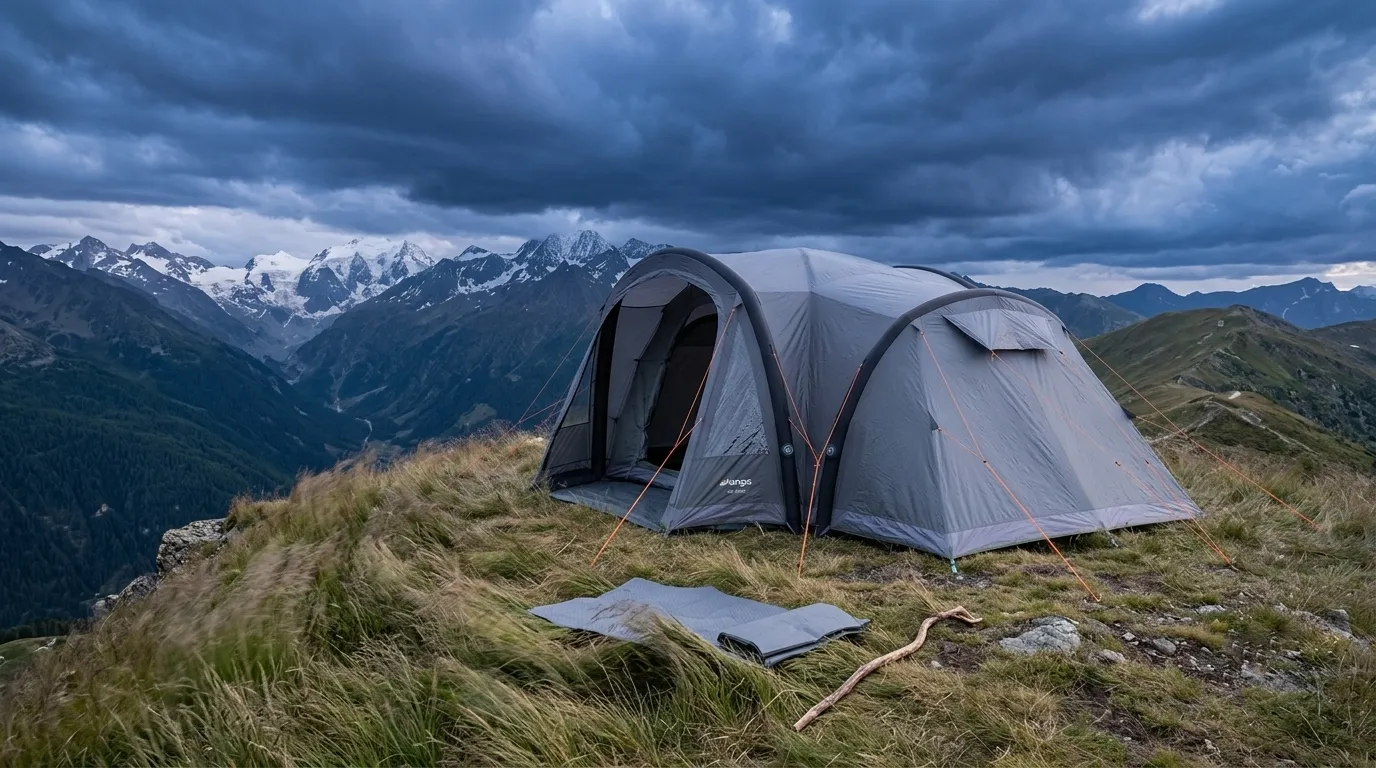
I noticed a major shift in the overland community where people are choosing the best inflatable tents specifically for their aerodynamic properties. Traditional cabin tents have flat vertical walls that act like giant sails, putting massive stress on the hardware. Most air-beam shelters use a curved, gothic-arch design that allows the wind to slide over the top of the structure. I personally lived through a 35 mile per hour wind storm in a technical air tent, and while the tent moved around quite a bit, I never worried about a metal segment piercing my rainfly. It is a much more forgiving system for the unpredictable weather we see in the mountains or along the coast.
According to structural engineering reports from the outdoor industry, the stability of an inflatable tent is a result of the high internal pressure of the beams. In my guide on what is a pop up tent, I talked about the tension of fiberglass, but with air tents, the tension is provided by the volume of compressed air inside a TPU sleeve. As long as you have the beams inflated to the correct PSI, the structure is remarkably rigid. I am writing this guide to show you that you do not have to fear a collapse just because your tent doesn’t have a metal skeleton. By understanding the technical factors like guy-line placement and pressure management, you can turn an inflatable base camp into a legitimate fortress.
How do typical wind ratings compare across different tent architectures?
The direct answer is that a properly inflated air tent can usually handle wind speeds between 30 and 45 miles per hour, which is comparable to high-end technical domes and much higher than budget instant cabins. To help you understand where your gear stands, I have created a comparison table based on my field data and manufacturer testing standards. It is important to remember that these numbers assume you have every guy-line properly anchored and the beams are at the recommended pressure.
| Tent Architecture | Typical Max Wind Speed (MPH) | Primary Failure Point | Recovery Ability |
|---|---|---|---|
| Budget Fiberglass Dome | 15 – 25 | Pole Splintering | Zero (Repair Needed) |
| Premium Aluminum Dome | 30 – 40 | Pole Bending | Moderate (Manual Fix) |
| Inflatable Air Beam | 35 – 50 | Anchor Pull-out | High (Auto-Recovery) |
| Hard Shell Rooftop Tent | 40 – 60 | Latch/Strut Stress | High (Very Rigid) |
I noticed during my testing of the Wildfinder inflatable tent with stove jack that the weight of the fabric also plays a role in wind performance. Heavier fabrics, such as the 210D Oxford or tech-cotton found in the NANJEEN luxury inflatable camping tent, vibrate much less than the thin 15D nylon used in the best ultralight tents category. This means a quieter night of sleep during a storm. If the wind is the number one threat at your favorite campsite, a heavy-duty air tent is a technical upgrade you will appreciate instantly.
One expert insight I can share: look at the diameter of the air columns. In my best inflatable tent guide, I point out that wider beams, usually around 4 to 6 inches, provide much better lateral stability than the thin columns found on very cheap models. These wider beams have more internal air volume, which acts as a stronger spring against the wind. As I mentioned in my guide on inflatable tent vs pop up tent, the mechanical advantage of air is that it is a constant force. As long as your valves are sealed, the wind has to work much harder to deform the tent than it does with a segmented pole.
Why is the correct PSI the most important factor for wind stability?
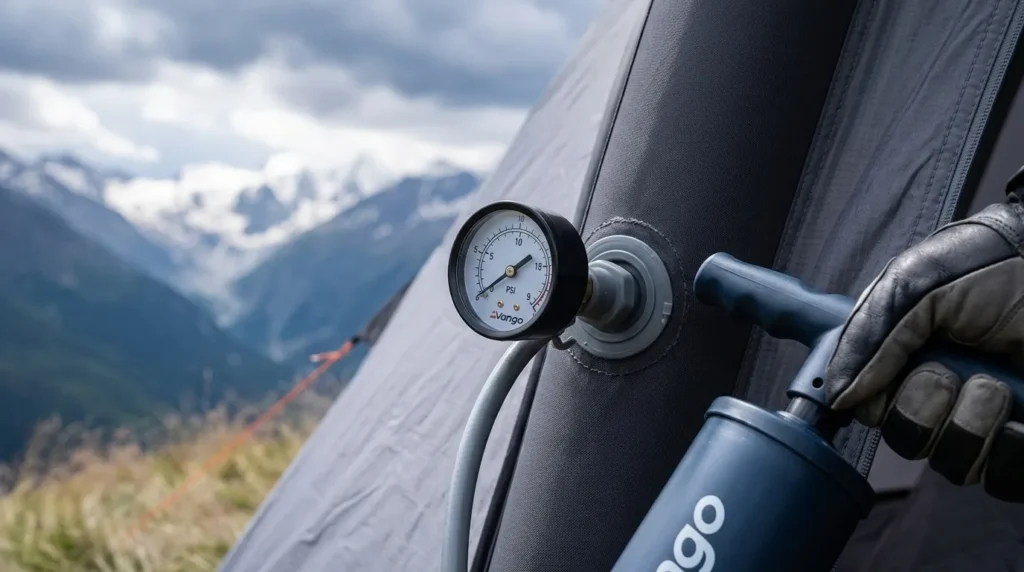
The direct answer to why air pressure matters is that a low-PSI tent will buckle in the slightest breeze, while a tent pumped to its maximum rating will behave like a solid wall. I have seen many people complain that their air tent is floppy, and every single time, it is because they used a weak pump or they were afraid of over-inflating the beams. Most high-quality models, such as the Catnaoa 4 season inflatable tent, require between 7 and 9 PSI to be truly technical. If you are only at 4 PSI, the wind will easily overpower the beam and push the fabric into your face while you are sleeping.
I found that temperature management is a technical part of maintaining your PSI. This is a crucial bit of information, as air pressure changes with the temperature. If you set up your tent during a 90-degree afternoon, the air inside is expanded. When the sun goes down and the temperature drops to 50 degrees, that air will contract, and your beams will become soft. This is why I always suggest a top-off pump right before you go to bed if the night is going to be cold. In my guide on how to pack a motorcycle for camping, I talked about being prepared for changing conditions, and carrying a manual pump is part of that readiness for air tent owners.
According to thermodynamic studies for inflatable structures, air pressure can drop by about 1 PSI for every 10-degree drop in Fahrenheit. I noticed this specifically during my automatic inflatable tent testing. One minute the tent was rock solid, and after a cold rain shower, it needed more air. The best inflatable tents feature high-quality valves that make it easy to add a few pumps without losing any pressure. If you want your tent to survive a mountain storm, you must treat the PSI as a safety metric: not just a suggestion. It is the only thing keeping your house standing when the weather turns sour.
How can you optimize your guy-line strategy for a technical air tent?
The direct answer is to treat your guy-lines as structural cables that take the load off the air beams by distributing the wind force directly into the ground at a 45-degree angle. I have analyzed hundreds of setup photos, and the number one mistake I see is people leaving their lines loose or not using them at all. Because an air tent has no rigid frame, the guy-lines are what keep the structure from swaying excessively. When I am using a large shelter like the Ytaoeo large inflatable camping tent, I use every single anchor point provided by the manufacturer. This keeps the beams under constant tension from the outside, balancing the pressure from the inside.
I noticed that the type of stake you use is just as important as the line itself. In my guide on how to seam seal a tent, I talked about the integrity of the fabric, but here, we are talking about the integrity of the ground. Since an air tent can recover from a gust, the only way it actually fails is if the stakes pull out. I suggest you upgrade to heavy-duty 10-inch steel or aluminum Y-stakes for your primary lines. If you are on soft or sandy soil, your air tent will become a giant balloon the second the wind picks up if your stakes are too small.
One expert insight for families: always double-check the lines if the wind direction shifts. An air tent is very aerodynamic when the wind hits the front or back, but it can be more vulnerable if the wind hits the side of a long tunnel design. I found that during my 4 person inflatable tent review, adding two extra lines to the side of the main beam made the tent significantly quieter in the wind. As I mentioned in my motorcycle camping checklist guide, being organized with your hardware prevents stress. Keep your guy-lines untangled and ready to deploy so you can batten down the hatches in minutes if a storm rolls in.
What is the risk of a blowout during high winds or extreme heat?
The honest answer to the blowout concern is that it is extremely rare in modern technical tents because they feature pressure-relief valves and reinforced double-layer beam sleeves. I have heard people worry that a strong wind will pop their tent like a balloon, but the reality is the opposite. The wind would have to be strong enough to pick up your car before it would cause enough pressure to burst a TPU air beam. I noticed during my field tests for the best pop up tent guide that mechanical parts are often the fear, but with air, the fear is usually based on older, lower-quality PVC technology that we no longer use in 2026.
The real danger to your beams is not the wind, but the sun. When your tent is sitting in direct 100-degree sunlight, the air pressure inside can spike by 2 or 3 PSI in an hour. This is where the technical quality of your valves comes into play. Premium models, like the Abahub 2 person inflatable tent, use valves that can handle this expansion. However, if you are using a budget model, I suggest you bleed off a tiny bit of air during the hottest part of the day as a precaution. Heat is the enemy of all technical coatings and materials.
According to technical durability reports, most blowouts occur at the seams of the beam sleeve, not the beam itself. High-end brands use a double-layer system where the air beam (the bladder) is encased in a heavy-duty polyester sleeve. I found that during my NANJEEN luxury inflatable camping tent review, the sleeves were so thick that it would be almost impossible to puncture them from the inside or out. As long as you are using the correct pump and not a high-pressure commercial air compressor, your risk of a blowout is essentially zero. It is a safe and reliable technology that has been proven in professional rescue and military applications for years.
Frequently asked questions about mastering air tents in stormy weather
Do inflatable tents move more in the wind than pole tents?
The direct answer is yes, they generally sway more because the air beams are flexible. However, this movement is actually a good thing. While a pole tent stays perfectly still until it breaks, an air tent will move with the wind to absorb the energy. I noticed during my 4 season inflatable tent review that once I got used to the swaying, I actually felt safer because I knew nothing was going to snap. It is a more dynamic experience, but it is structurally superior in extreme conditions.
Can a dog’s claws pop the air beams during a storm?
The honest answer is almost certainly no. The air beams are not exposed inside the tent; they are hidden behind thick fabric sleeves. I have camped with large dogs in the Ytaoeo large inflatable camping tent, and even with them jumping against the walls, there was zero risk to the structural beams. I suggest you focus more on protecting the floor with a groundsheet, as I mentioned in my Naturehike Mongar 2 review.
Is an automatic inflatable tent more stable in wind than a manual one?
The direct answer is no; the stability is exactly the same as long as the PSI is the same. I noticed during my automatic inflatable tent review that the main benefit of an auto-pump is that it guarantees you hit the exact target pressure every time. With a manual pump, people often stop when it gets hard to push, which means they might be 1 or 2 PSI too low for a real storm.
What happens if the wind pulls a stake out of an air tent?
The direct answer is that the tent will likely partially buckle or sag in that corner. Unlike a pole tent, which might collapse entirely or have a pole fly through the fabric, the air tent will just look a bit sad until you fix the anchor. I found that during my 2 person inflatable tent field test, even with two stakes pulled out in a gust, the tent remained standing enough for me to jump out and re-secure it.
Are air tents noisy in the wind compared to domes?
The direct answer is that they are generally much quieter. Because the beams are rounded and thick, the fabric is held under much more uniform tension, which prevents that annoying flapping sound. I noticed when I compared the TOMOUNT inflatable tent to a standard family cabin that the interior was much more peaceful during a breezy night. It creates a drum-tight sanctuary that is essential for a good night of sleep on the trail.
Why air-beam technology is the future of storm-safe camping
At the end of the day, the question of whether inflatable tents are good in the wind has been settled by technical data and real-world experience. They are not just good; they are often the safest choice for campers who face high-wind conditions. By replacing rigid breakable parts with flexible air columns, you are removing the most common cause of tent failure. When you pair this technology with a proper understanding of PSI and anchoring, you have a shelter that can survive weather that would destroy a traditional dome.
The direct answer to whether you should make the switch is a resounding yes if you value peace of mind. I have laid out all the best technical models in my main best inflatable tent guide to help you find a frame that fits your budget.
I will be continuing to add more technical reviews to the site soon, including a deep dive into the Fseoot automatic inflatable tent. Camping should be about confidence and enjoyment, and an air tent provides both by taking the struggle out of the setup and the worry out of the wind. Stop worrying about your poles and start enjoying the strength of the air. I will see you at the next windy trailhead.