
When can babies go to the beach safely for the first time? Most pediatricians recommend waiting until a baby is at least 6 months old before taking them for a full day at the beach. While you can technically take a younger infant for a very short, shaded visit, the biological reality is that babies under 6 months have extremely sensitive skin and an underdeveloped ability to regulate their core body temperature. I have tested 5 baby beach tent models, and I can tell you that even the best technical shelter cannot fully compensate for a newborn’s lack of natural protection. When your child hits that 6-month milestone, their skin has developed more melanin and their surface-area-to-mass ratio is more stable, making them much more resilient to the elements.
I noticed that many parents want to rush this experience, but the beach is a harsh technical environment. You are dealing with direct UV rays, reflective radiation from the sand, and high humidity that can lead to rapid dehydration. In my experience, the first trip is less about the water and more about the logistics of shade. If you are planning your first outing, you should focus on building a shaded sanctuary. I have learned the hard way that a poorly timed trip results in a cranky baby and a stressed parent, which is the opposite of why we go to the beach in the first place.
I am writing this guide to help you understand the technical hurdles of infant sun safety. Throughout this post, I will break down the medical consensus on age limits, the risks of heatstroke, and how to manage the sensory overload of the sand and salt. As I mentioned in my guide on what to bring to the beach with a baby, preparation is your best defense. According to the American Academy of Pediatrics, infants under 6 months should be kept out of direct sunlight entirely whenever possible. By waiting for the right technical window, you ensure that your child’s first encounter with the ocean is a positive one.
Why is the six-month mark the standard recommendation for beach trips?
The 6-month threshold is based on two critical factors: the development of the skin barrier and the safety of sunscreen application. Before this age, an infant’s skin is so thin that it absorbs topical chemicals much more readily than an adult’s, making many sunscreens a potential health risk. I noticed during my research for the WhiteFang beach tent that parents often rely too heavily on creams when they should be relying on technical fabric barriers. At 6 months, you can safely apply broad-spectrum mineral-based sunscreens to small exposed areas of your child.
I found that the second factor is the ability to sweat. Newborns have a limited number of active sweat glands, which means they cannot cool themselves down as efficiently as we can. When you combine this with the high heat of a summer afternoon, the risk of a dangerous spike in body temperature is very real. I always suggest that you wait until your child can sit up or hold their head steady, as this usually coincides with a more robust internal regulatory system. In my guide on camping in the summer, I discussed the chimney effect for ventilation, and you need a baby who can handle that airflow without becoming chilled or overheated.
One expert insight I want to share is the importance of the melanin barrier. Melanin is the pigment that provides some natural UV protection, and babies are born with very little of it. It takes about half a year for this system to fully activate. This is why a 2-month-old can get a severe burn in as little as 15 minutes, even on a cloudy day. According to dermatological studies, early childhood sunburns are a major risk factor for long-term skin health. By respecting the 6-month rule, you are following a technical safety standard that has been established by thousands of clinical observations. It is a small wait for a lifetime of safe adventure.
What are the primary heat and hydration risks for a baby at the shore?
Babies can dehydrate and overheat much faster than adults because they have a higher surface-area-to-volume ratio, meaning they lose moisture through their skin at an accelerated rate. I have spent afternoons on the sand testing the Dreamon baby tent and its pool feature, and I noticed that the ambient temperature inside a tent can still rise even if you are in the shade. To help you monitor your child’s safety, I have created a technical symptom table based on heat safety protocols I use in the field.
| Condition | Visual Warning Signs | Technical Risk | Action Required |
|---|---|---|---|
| Heat Exhaustion | Flushed skin, extreme fussiness, rapid breathing | Moderate | Move to AC, offer fluids, cool cloth |
| Dehydration | Fewer than 6 wet diapers, dry mouth, lethargy | High | Immediate fluid intake, contact doctor |
| Heat Stroke | Hot: dry skin, high fever, vomiting | Critical | Call emergency services, active cooling |
Sometimes parents might forget that babies cannot tell you when they are thirsty. I suggest you offer breast milk or formula much more frequently than you would at home. According to hydration experts, you should not offer plain water to infants under 6 months, as it can interfere with their electrolyte balance. This is another technical reason why the 6-month mark is the safer time for a full beach day. If you are using a pool tent, like the Sunba Youth, you are adding an active cooling component that helps manage these risks naturally.
One expert insight for families: use the thumb-press test on your baby’s skin. If you press gently and the skin does not instantly return to its normal color, or if it looks doughy, they are likely dehydrated. As I mentioned in my guide on whether rooftop tents are worth it, luxury is often about comfort, but with babies, technical comfort is a survival requirement. Keeping your child hydrated and monitoring their skin temperature every thirty minutes is the only way to stay ahead of the heat. It turns a potential medical emergency into a safe and relaxing afternoon.
When can babies go to the beach and ocean water safely?
Babies should not enter the ocean until they are at least 6 months old and have a strong immune system to handle the bacteria and temperature fluctuations of open water. I have seen many parents dipping newborns into the surf, but I suggest you avoid this. Ocean water is often much colder than a baby’s body temperature, which can cause their heart rate to spike or lead to hypothermia in minutes. Furthermore, the salt and microscopic organisms in the water can be very irritating to their eyes and digestive system if they accidentally swallow a mouthful.
I found that the best way to introduce a baby to the water is through a controlled environment like the integrated pools I discussed in my Sunba Youth review. This allows you to use a small amount of clean water that has been warmed by the sun, giving your baby the sensory experience of splashing without the risks of the open ocean. Infants who are introduced to water in a shallow, shaded pool are much less likely to be frightened by the waves later on. It is a technical, tiered approach to water safety that respects your child’s developmental stage.
One expert insight regarding the surf: the physical force of even a small wave can be enough to knock a parent off balance while they are holding a baby. According to coastal safety reports, the majority of infant-related water incidents occur in the shore-break where the water is shallowest. I suggest you always wear high-traction water shoes if you plan on carrying your child into the surf. As I mentioned in my guide on how to pack a motorcycle for camping, stability is everything when you are carrying a precious load. Wait until your child is older and has better head control before you brave the waves together.
Why is a technical shelter better than a standard beach umbrella for infants?
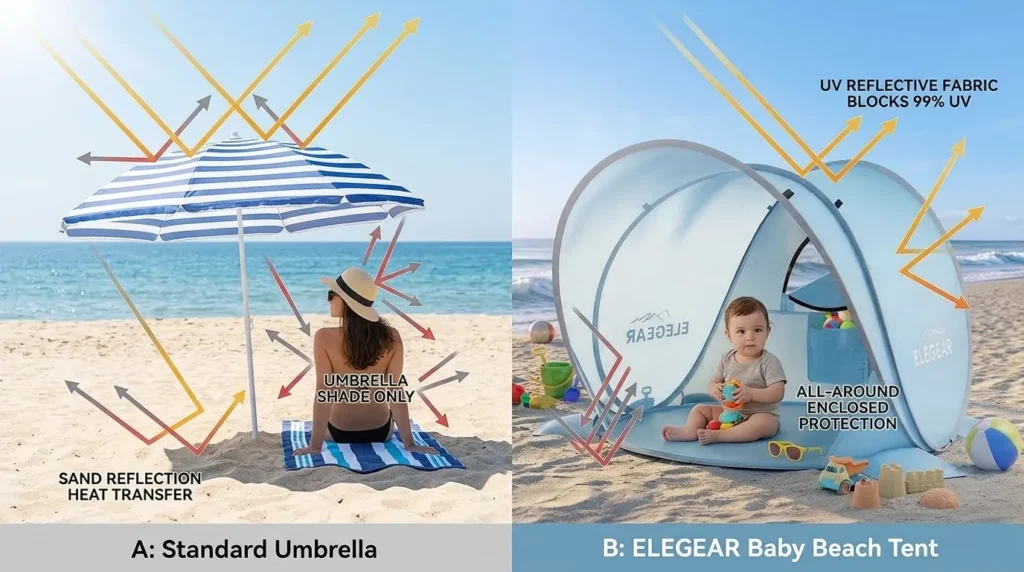
You should invest in a technical shelter because a standard umbrella only blocks direct light, while a UPF 50+ tent blocks 98 percent of both direct and reflective radiation from the sand. I’ve tested many beach tents for babies, and the difference in protection is massive. Sand reflects up to 15 percent of UV rays, which means even if you are under an umbrella, your baby is still being hit with radiation from below. A technical shelter, such as the Elegear beach tent, provides a complete floor and side-wall barrier that eliminates this reflective risk. A technical shelter like the NXONE is far superior to a standard umbrella for blocking the reflective radiation that bounces off the sand.
Wind stability is the other major technical advantage. An umbrella is essentially a giant sail that can pull out of the sand and become a dangerous projectile. When I was testing the Pivoryla beach tent for babies, I was impressed by the sandbag and stake systems that kept the tent anchored in 15-mile-per-hour winds. This provides a secure, predictable space for your child to nap. I talked about the mechanics of the frame in my pop-up tent foundational guide, and the circular spring-frames in baby tents are perfect for handling coastal gusts.
According to technical fabric tests, the silver-coated interior found in the baby beach tents is essential for managing the infrared heat that an umbrella can’t stop. I found that sitting inside a technical tent felt about 10 degrees cooler than sitting under a standard polyester umbrella. For a baby who cannot sweat effectively, that 10-degree difference is a critical safety margin. If you want a professional-grade base camp for your child, the move from an umbrella to a tent is the smartest gear upgrade you can make. It turns a risky environment into a legitimate nursery on the sand.
Frequently asked questions about when can babies go to the beach
Is it safe to bring a newborn to the beach if they stay in the car?
Only if the car is running with the air conditioning on. Cars act like greenhouses and can reach lethal temperatures in minutes. A shaded technical tent from my 5 best baby beach tent guide provides a much safer and more ventilated environment than a parked car. According to child safety experts, you should never leave an infant in a car for any amount of time, especially at a high-heat location like the beach.
How do I handle a diaper change in a sandy environment?
Use the zippered floor of your technical shelter as a clean room. The zippered door allows you to create a sand-free zone. I suggest you lay down a dedicated changing mat inside the tent and keep all your wipes and diapers in a sealed bag. In my motorcycle camping checklist, I talk about the value of organization, and at the beach, keeping sand out of your child’s diaper is a top priority for preventing skin irritation.
What is the best time of day to take a baby to the shore?
The direct answer is either before 10:00 AM or after 4:00 PM. When I was testing the WhiteFang beach tent for babies, I noticed that the UV index was at its highest during the middle of the day. By planning your trip for the early morning or late afternoon, you avoid the most intense heat and radiation. This simple bit of camp strategy is what separates a veteran traveler from an exhausted beginner. It also ensures the sand is cool enough for your child to touch without burning their feet.
Can babies wear sunglasses to protect their eyes?
Yes, infant eyes are more susceptible to UV damage because their lenses are more transparent than adults’. I found that high-quality wrap-around sunglasses with a soft elastic strap are the only ones that stay on. I suggest you look for lenses that offer 100 percent UVA and UVB protection. As I mentioned in my guide on what to bring to the beach with a baby, eye safety is just as important as skin safety. It also helps reduce the glare and squinting that can make a baby fussy.
What should I do if my baby gets a small amount of sand in their eye?
Flush the eye gently with a large amount of clean, fresh water or a specialized saline solution. Never try to rub the sand out with a towel, as you will likely scratch the cornea. I always carry a dedicated bottle of sterile water for this exact reason. I noticed that keeping your child’s hands clean with wipes also prevents them from rubbing sand into their eyes themselves.
Making your child’s first beach trip a technical success
At the end of the day, the question of when can babies go to the beach is a matter of developmental readiness and gear preparation. By respecting the 6-month rule and investing in a high-quality technical shelter from the 5 best baby beach tents, you are setting your family up for a lifetime of safe coastal adventures. It is about being proactive rather than reactive.
Once you have established your shade routine and mastered the logistics of hydration, you will find that the ocean is a wonderful place for your child to grow and explore. The sensory experience of the wind, the waves, and the sand is invaluable for a child’s development. I have laid out all the best technical solutions in this guide to help you avoid the mistakes I made when I was a beginner. I suggest you start by checking your tent’s UPF rating and planning your trip for the cooler hours of the day.
Summer is a season of discovery, and with the right technical approach, your baby will be a beach pro in no time. I will see you at the next tide pool.