
What to bring to the beach with a baby? What are the absolute essentials you must bring? What you need to bring is a multi-system kit that focuses on thermal regulation, medical-grade UV protection, and a sand-free hygiene zone. I’ve tested 5 baby beach tents, and I have realized that the transition from a carefree adult beach day to a parent logistics mission is a major technical shift. You are essentially building a portable nursery on the sand. If you forget even one critical item, such as a technical sun shelter or adequate hydration, your relaxing afternoon will quickly turn into a high-stress survival situation for your infant.
Most first-time parents overpack the wrong things, like too many toys, and underpack the technical basics, like fabric-based UV barriers. When I am building my own kit, I prioritize items that serve multiple purposes. For example, a large technical sarong can act as a nursing cover, a towel, or an extra sunshade for your stroller. I always tell my readers that a successful beach day is about managing the environment as much as the child. If you are still wondering about the right timing for your trip, you should definitely check out my technical guide on when babies can go to the beach to understand the age-related safety thresholds.
I am writing this guide to be the final word on your beach day logistics. Throughout this post, I will break down the essential categories: from the Sunba Youth 2-in-1 pool tents to the specific minerals you should look for in your sunscreen. As I mentioned in my guide for the best tents for families, the right gear is the gear that removes the friction from your adventure. My goal is to make sure your packing list is lean, technical, and 100 percent focused on your child’s safety. Whether you are a minimalist hiker or a car-camping pro, these essentials represent the peak of coastal preparation.
How do you organize your baby beach gear for maximum efficiency?
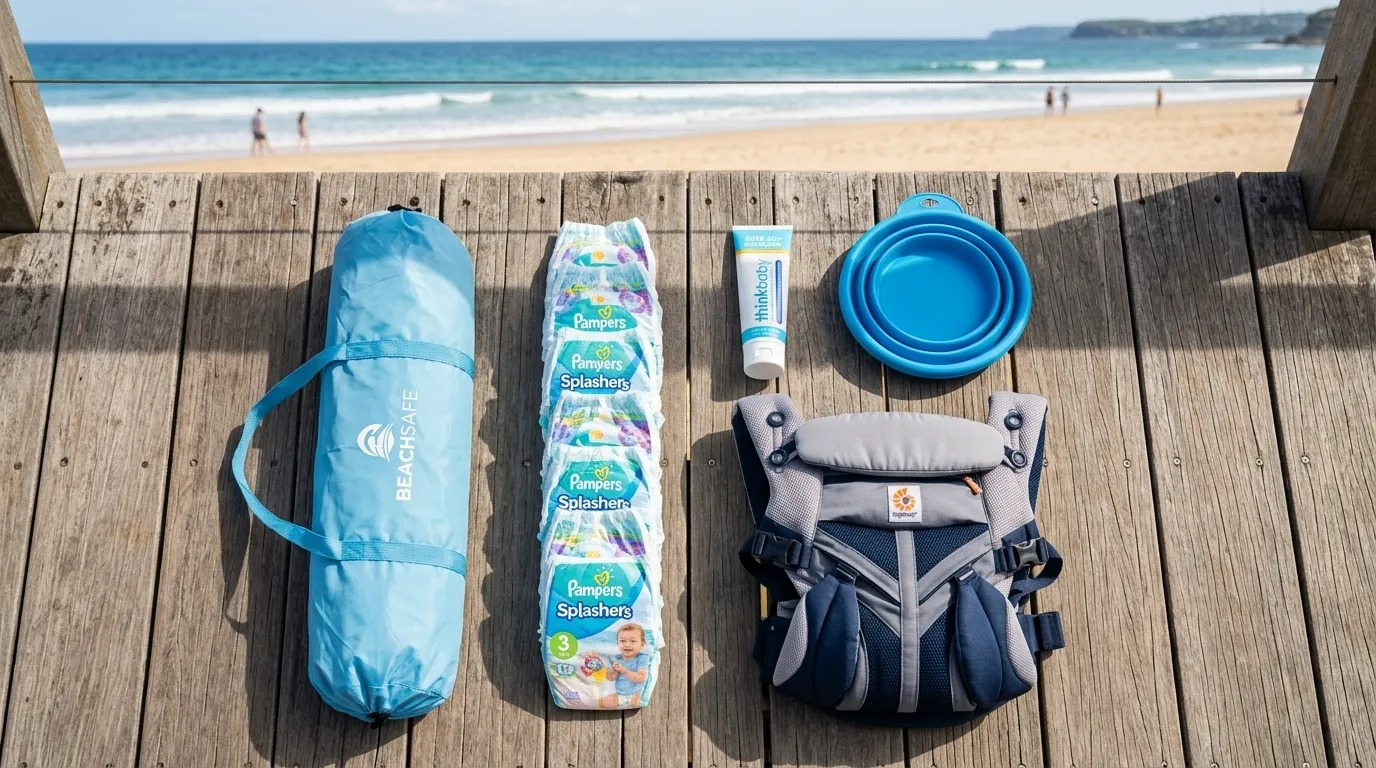
Use a tiered packing system that separates your active gear, like towels and toys, from your life-support gear, like feeding supplies and sun protection. I have analyzed hundreds of gear layouts for my technical reviews, and I have found that a single giant bag is a recipe for disaster when you need to find a diaper in a hurry. To help you organize your loadout, I have created a technical packing table that categorizes items by their functional priority.
| Category | High Priority Essentials | Technical Secondary Items |
|---|---|---|
| Shelter | UPF 50+ Baby Beach Tent | Sand Stakes and Mallet |
| Sun Safety | Mineral Sunscreen (Zinc Oxide) | Wrap-around Baby Sunglasses |
| Hygiene | Swim Diapers and Scented Bags | Cornstarch for Sand Removal |
| Hydration | Extra Formula or Breast Milk | Collapsible Silicone Water Bowl |
| Play | Soft Rubber Beach Toys | Small Inflatable Water Pool |
Many parents forget to bring a way to remove sand before it causes a rash. A technical pro move is to bring a small container of cornstarch or baby powder. If you rub it on your baby’s skin, the moisture is absorbed, and the sand falls right off. I used this trick while testing the Pivoryla beach tent for baby, and it kept the interior of our technical shelter pristine all day. In my guide on how to pack a motorcycle for camping, I talked about the value of organization, and at the beach, keeping your clean-room area separate from the sand is your number one technical goal.
One expert insight I want to share: always pack your sunscreen and first aid kit in a bright, easy-to-identify bag. If you need to reapply protection while the baby is fussy, you do not want to be digging through a pile of wet towels. I suggest using clear dry bags for your electronics and feeding supplies so you can see exactly what you have without exposing the contents to the salt air. According to coastal safety reports, being organized reduces the time you spend with your back turned to the water, which is a major safety factor for parents. By following this technical layout, you are ensuring that your gear works for you, not against you.
Why is a technical UPF shelter the most important item on your list?
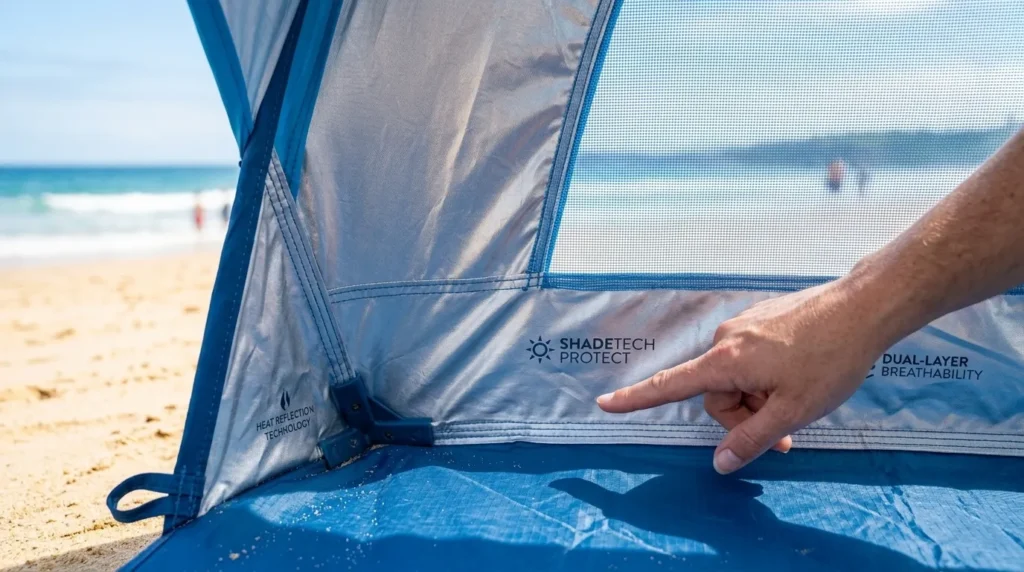
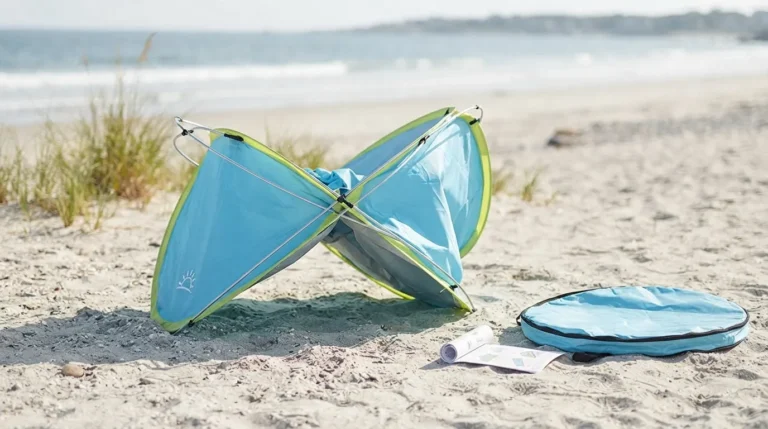
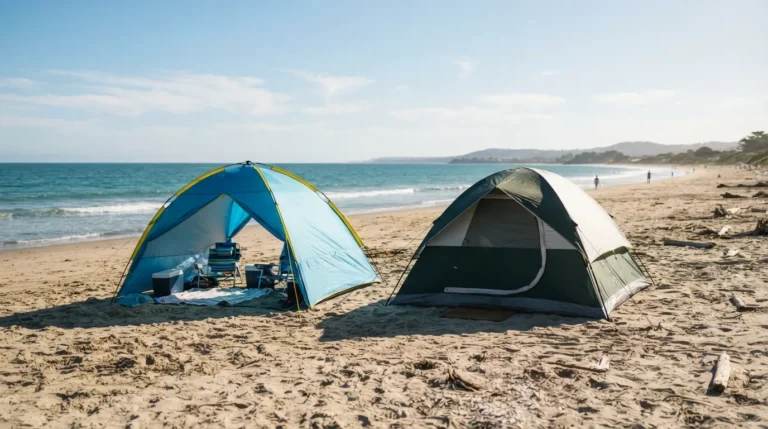
The direct answer to why you need a specialized tent is that a standard umbrella only provides shade from direct light, while a technical baby beach tent provides a 360-degree barrier against the reflective UV radiation that bounces off the sand and water. I have spent significant time analyzing the fabrics used in the best baby beach tents, and the level of engineering in these shelters is impressive. A high-quality beach tent for babies, such as the Whitefang, uses a silver-coated interior to reflect infrared heat, which can lower the temperature inside the tent by up to 10 degrees. Packing a 360-degree mesh model like the NXONE is the most effective way to manage your child’s core temperature.
I noticed that many parents view the tent as just a place for a nap, but it is actually a safety airlock. In my guide on how to prevent mosquito bites while camping, I discussed the importance of a secure mesh layer, and the same logic applies to the beach. You need a space where you can get your baby away from the wind-blown sand and the biting flies that often plague the shore. When I was testing the Elegear beach tent, I found that the mini-canopy extension provided the extra shade needed to keep the sun off the baby’s legs even as the earth rotated throughout the afternoon.
One expert insight: look for a tent with a built-in pool feature if you have a young infant. I noticed during my Sunba Youth review that the pool allows for active cooling through water play, which is a technical requirement for babies who cannot yet sweat effectively. As I mentioned in my guide on what a pop-up tent is, mechanical simplicity is key, and these tents expand in one second, giving you an immediate base camp the moment you hit the sand. If you want a professional-grade setup, do not rely on a cheap umbrella. Invest in a technical shelter that offers a certified UPF 50+ rating.
What feeding and hydration supplies should you prioritize for the heat?
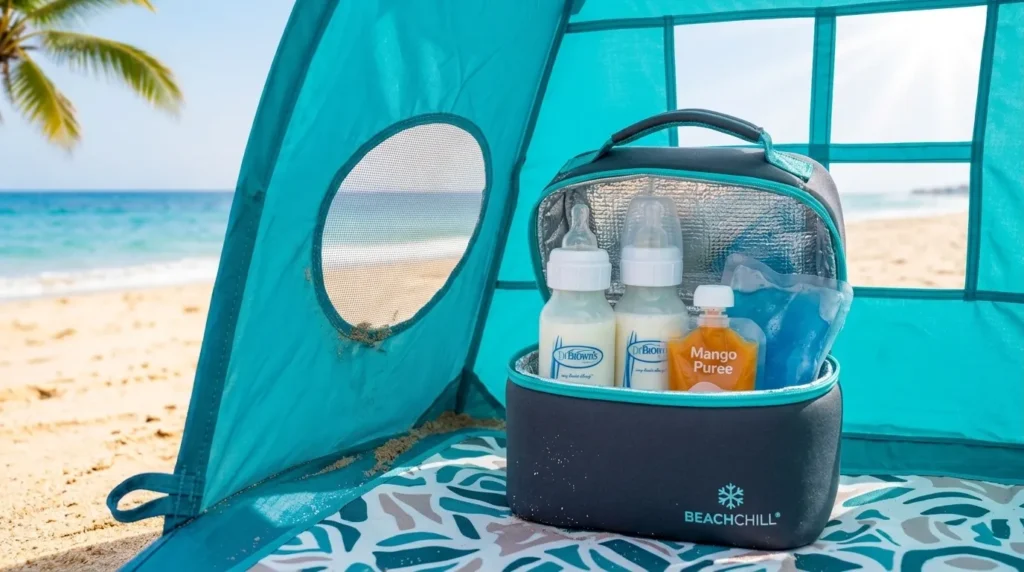
You must bring 50% more fluids than your baby typically consumes in a day, as the combination of salt air and high temperatures leads to rapid moisture loss. I have spent nights in the best winter tents where hydration is easy to manage, but the beach is the opposite end of the technical spectrum. I noticed that if you are formula-feeding, you should bring pre-measured water in insulated bottles to keep the liquid at a safe, room-temperature level. If you are breastfeeding, the mother needs to significantly increase her own water intake to maintain supply in the heat.
I found that insulated containers are the secret to food safety on the sand. You should not leave baby food or milk sitting in the direct sun for more than 15 minutes. In my guide on camping in the summer, I explained that car interiors and open beach bags can reach dangerous temperatures. I suggest using a dedicated small cooler bag for your baby’s food, separate from the main family cooler. This prevents the frequent opening and closing of the bag from letting the cold air escape. I used this strategy while testing the Dreamon baby tent for the beach, and it kept the bottles perfectly chilled all afternoon.
One expert insight for parents: use collapsible silicone bowls for snacks and water. They pack flat and are incredibly easy to clean. As I discussed in my guide on how to clean a musty tent, sand and moisture are the enemies of gear, and silicone does not trap sand like traditional plastics or fabrics. According to pediatric nutrition reports, offering small, frequent sips is better for an infant’s stomach than one large feeding in the heat. By bringing the right technical storage and a surplus of fluids, you are protecting your child from the two biggest risks of a beach day: dehydration and heat exhaustion.
How do you handle diapering and hygiene in a sandy environment?
Create a clean-room environment inside your baby beach tent and utilize disposable swim diapers that are designed to handle water without swelling into a giant, heavy sponge. I have seen many first-timers try to use regular diapers at the beach, which is a massive technical mistake. A standard diaper will absorb seawater and become a three-pound anchor around your baby’s waist in minutes. You need a dedicated hygiene kit that is sealed in its own waterproof bag to prevent sand from contaminating your wipes and creams.
I noticed during my testing for the Pivoryla beach tent for baby that a zippered floor is essential for a clean diaper change. I found that I could zip the door shut, wipe the floor with a damp cloth, and perform a quick change without a single grain of sand getting near the child’s sensitive skin. In my guide on how to prevent mosquito bites while camping, I talked about the importance of maintaining an airlock; and at the beach, you are maintaining a sand-lock. If sand gets into a diaper, it acts like sandpaper, leading to a painful rash that can end your trip early.
One expert insight regarding cleanup: always bring a dedicated wet bag for soiled diapers and clothes. You do not want these items sitting in your main beach bag. According to environmental safety guidelines for coastal areas, you should always practice pack-in, pack-out principles. I suggest you also bring a large bottle of fresh, lukewarm water to rinse the salt off your baby’s skin before you head home. As I mentioned in my guide on how to waterproof a tent, moisture management is about keeping the bad stuff out and the good stuff in. Fresh water is the best way to prevent the skin irritation caused by dried salt crystals.
What first aid and emergency supplies should be in your beach kit?
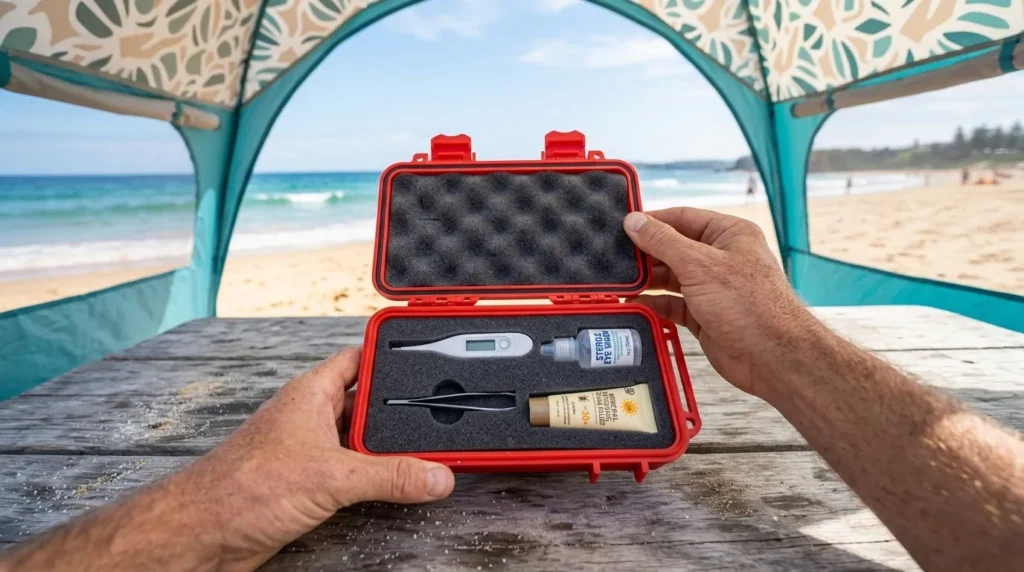
Your first aid kit must be tailored for coastal risks, including a mineral-based sting relief cream, a high-quality digital thermometer, and a sterile eye wash solution for removing sand. I have spent years building the ultimate motorcycle camping checklist, and I have learned that the beach requires its own specialized medical gear. Biting sea flies and jellyfish are real technical threats for an infant’s thin skin. I always carry a small tube of hydrocortisone and a pair of fine-point tweezers for removing any debris from the sand.
I found that the thermometer is the most underrated item on the list. When you are wondering what to bring to the beach with a baby, you need a way to verify if their fussiness is due to the environment or a rising core temperature. I noticed when testing the WhiteFang beach tent for babies that a baby’s forehead can feel hot just from the sun, so a reliable internal temperature reading is the only way to be sure. In my guide on when babies can go to the beach, I discussed the dangers of heat stroke, and early detection is the key to safety.
One expert insight for emergency prep: always know the location of the nearest lifeguard station or first aid post. I suggest you also download an offline map of the area in case you lose cell service. Being self-sufficient is a technical win for any explorer. Your first aid kit should be in a waterproof hardshell case to prevent the contents from getting crushed or soaked by the surf. According to beach safety experts, a well-stocked medical kit is the difference between a minor incident and a ruined vacation. It is the final piece of the puzzle for a professional-grade family adventure.
Frequently asked questions about what to bring to the beach with a baby
Should I bring a full stroller or a technical baby carrier?
You should bring both if possible. I have found that a stroller with large rubber wheels is a great way to haul your heavy gear, like the best tents for families, while a technical mesh carrier is much better for the actual sand. I noticed during my Elegear beach tent testing that a stroller can also act as a secondary sunshade if positioned correctly. Weight distribution matters and a stroller handles the bulk while a carrier handles the baby.
What is the best way to keep toys from getting lost in the waves?
Use a mesh gear bag that you can anchor to your baby beach tent. I have lost many small plastic buckets to the tide. By keeping the toys inside the tent vestibule or in a weighted mesh bag, you ensure they stay exactly where you left them. I noticed during my Pivoryla baby tent test that the internal pockets are also a great spot for smaller items like pacifiers and teethers.
Is it safe to use natural bug sprays on a baby at the beach?
Yes, provided the child is over 6 months old. Biting flies are a major coastal issue. I suggest using a Picaridin-based repellent on clothing rather than the skin for infants. If you prefer a natural approach, stick with oil of lemon eucalyptus, but remember that it requires very frequent reapplication.
How do I keep the baby’s sand toys clean of harmful bacteria?
Soak them in a mixture of one part vinegar to four parts water after your trip. I found that saltwater and damp sand can trap bacteria in the crevices of plastic toys. Moisture is the enemy, and the same applies to your play gear. Dry the toys completely in the sun before packing them away for the season.
Do I really need to bring a portable fan to the beach?
The reason I say yes is the chimney effect. When you are inside a technical shelter, such as the one in my Sunba Youth review, a small battery-powered fan can double the amount of airflow. I found that this was the single best way to keep my child from getting fussy during a windless afternoon. It is a technical upgrade that provides a legitimate cooling benefit for under $20.
Preparing for a perfect day on the sand
At the end of the day, knowing what to bring to the beach with a baby is a matter of technical preparation and environmental awareness. By focusing on shelter, hydration, and sand management, you are setting your family up for a successful coastal adventure. It is about being a professional-grade parent-explorer. Once you have established your packing routine and invested in a high-quality technical tent from my baby beach tent guide, the ocean becomes a place of joy rather than a place of stress.
I have laid out all the best technical solutions in this guide to help you avoid the mistakes I made when I was a beginner. I suggest you start by checking your mineral sunscreen and ensuring your tent has a certified UPF rating. Coastal camping is a beautiful way to introduce your child to nature, and with the right gear, you can focus on the memories instead of the logistics.
I will see you at the next tide pool.