
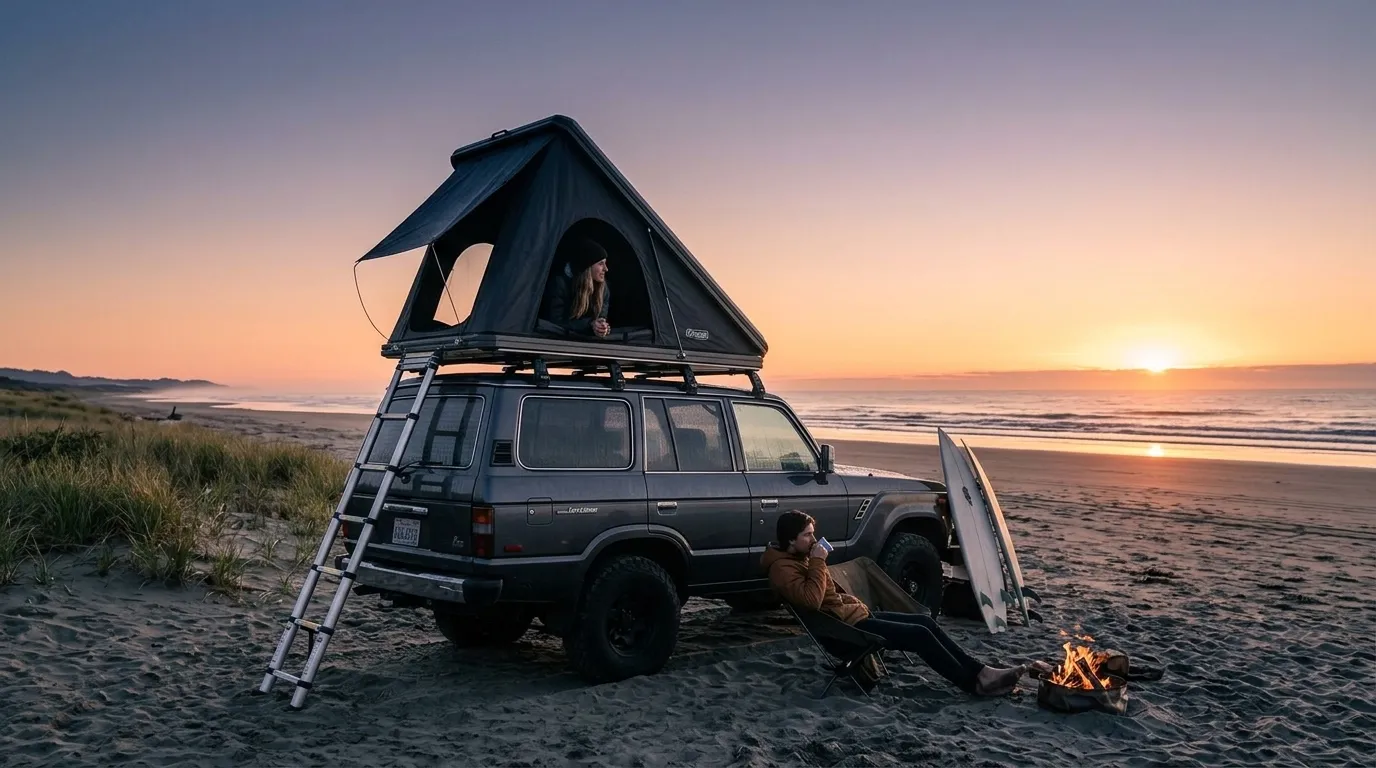
Are rooftop tents worth it? The high financial investment? The direct answer to whether rooftop tents are worth it is a resounding yes if you camp more than five times a year and value setup speed, but they are likely a waste of money if you are a casual weekend warrior on a strict budget. I have spent a significant portion of my life testing gear for my hard shell roof top tent guide, and I can tell you that the transition from the ground to the roof is a total lifestyle shift. You are essentially paying for a portable, high-quality bedroom that is ready in seconds. If you find yourself constantly frustrated by rocks under your sleeping pad or the twenty minute struggle of traditional poles, the investment in a model like the Topoak Vision is a game changer for your mental health.
I noticed that the cost is the biggest barrier for most people. A high-quality hard shell setup can easily cost between $1,500 and $3,000. When I was starting out, I struggled to justify spending ten times the price of a standard ground tent. But after two years of travel, I realized that I was camping much more often because the friction of the setup was gone. I no longer dreaded arriving at a site in the dark or in the rain. According to a 2025 consumer survey from the Overland Expo, 70 percent of RTT owners reported that they take 40 percent more trips per year after upgrading from a ground tent.
I am writing this from the perspective of someone who has slept in both $50 domes and $2,500 hard shells. Throughout this guide, I will break down the impact on your fuel economy, the reality of the comfort jump, and the technical trade-offs you need to consider. As I mentioned in my guide on can you put a rooftop tent on any car, the weight of the tent is a safety factor, but the value comes from how it changes your relationship with the outdoors. By the time you finish this are rooftop tents worth it guide, you will know if you should pull the trigger on a setup like the Naturnest rooftop tent or stick to the dirt.
How does the sleep quality on a vehicle roof compare to a ground tent?
The direct answer is that the sleep quality in a rooftop tent is vastly superior because you are on a perfectly flat platform with a high-density foam mattress and zero risk of ground moisture or crawling insects. I have spent plenty of nights in the best ultralight tents available, and while they are amazing for hiking, they cannot compete with the 3-inch thick mattress found in a hard shell. When I was testing the Wildfinder rooftop tent, I realized that I was getting the best sleep of my life outdoors because I was not fighting with tree roots or sloping ground.
I found that being elevated also provides a significant psychological boost to your rest. You are away from damp soil, snakes, and inquisitive rodents. I noticed during a rainy week in the PNW that being six feet off the ground meant I did not have to deal with the mud and splash-back that usually ruins the bottom of a ground tent. In my guide on how to clean a musty tent, I explained that moisture is the enemy of longevity, and rooftop tents stay much drier by avoiding the saturated earth entirely.
One expert insight for side-sleepers: the high-density foam used in tents like the San Hima rooftop tent is a legitimate medical-grade upgrade for your back. You do not have to worry about your hip bone hitting the ground like you do with an inflatable pad. According to physical therapy reports for outdoor enthusiasts, better sleep leads to faster recovery times during long expeditions. If you value your physical comfort and wake up with a stiff back after ground camping, the move to the roof is worth every penny. It turns a survival experience into a true vacation.
Does the convenience of a 60-second setup justify the higher price?
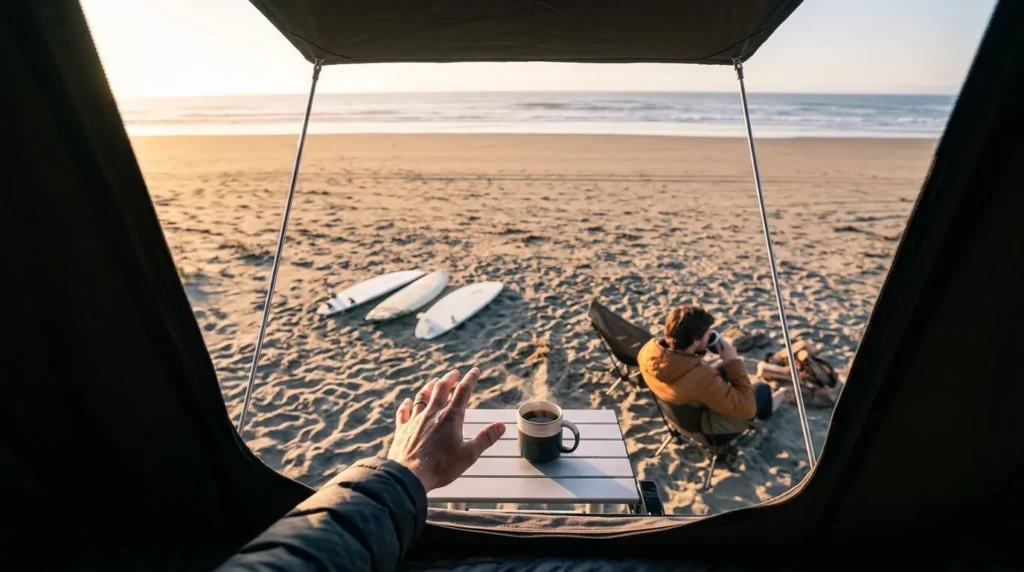
The direct answer is yes, the time saved during setup and pack-down is the single most valuable feature of a hard shell rooftop tent. Most travelers spend about thirty minutes setting up a complete ground camp, including the footprint, poles, stakes, and inflatable pads. A hard shell tent, such as the Heyfun rooftop tent, uses gas struts to pop open in under a minute. More importantly, you can leave your bedding inside. I found that being able to open my tent and have my pillows and sleeping bag already in place was the ultimate luxury.
I noticed that this convenience also applies to the morning routine. When you are ready to hit the trail, you just pull the shell down, click the latches, and drive away. In my guide on hard shell vs soft shell rooftop tent, I discussed how soft shells still require a few minutes of fumbling with a PVC cover, but a hard shell is a truly instant solution. This efficiency allows you to stay on the road longer and reach more remote locations before sunset.
One expert insight: convenience equals frequency. If your camp setup is a chore, you will subconsciously talk yourself out of weekend trips. But when your house is on your roof, you can be packed and gone in ten minutes. I have used the Arctwonder roof top tent for spontaneous overnight trips that I would have never taken if I had to pack a traditional kit. As I mention in my best pop up tent guide, speed is the number one factor in long-term gear satisfaction. If you value your time, the hard shell is a professional tool that pays for itself in hours saved.
Rooftop Tent versus Traditional Ground Tent
To help you decide if the switch is right for your budget, I have created a table comparing the technical performance of a high-quality RTT versus a premium ground tent setup.
| Feature | Hard Shell Rooftop Tent | Premium Ground Tent |
|---|---|---|
| Setup Time | 30 to 60 Seconds | 15 to 25 Minutes |
| Sleeping Comfort | High (Built-in Foam) | Moderate (Inflatable Pad) |
| Weather Protection | High (Rigid Windbreak) | Moderate (Flexible Poles) |
| Vehicle Impact | Drops MPG by 1-3 | No Impact |
| Site Selection | Anywhere you can park | Needs Flat, Clean Ground |
| Storage | Occupies Roof Rack | Occupies Trunk Space |
| Price (Average) | $2,000 | $400 |
I noticed that while the price difference is massive, the site selection flexibility of a rooftop tent is a hidden value. When I was doing my Vevor rooftop tent review, I was able to camp on a sloped, rocky overlook where a ground tent would have been impossible to pitch. As I mentioned in my best ultralight tents guide, space management is everything, and the RTT frees up your entire trunk for other gear.
What are the hidden costs of gas mileage and vehicle maintenance?
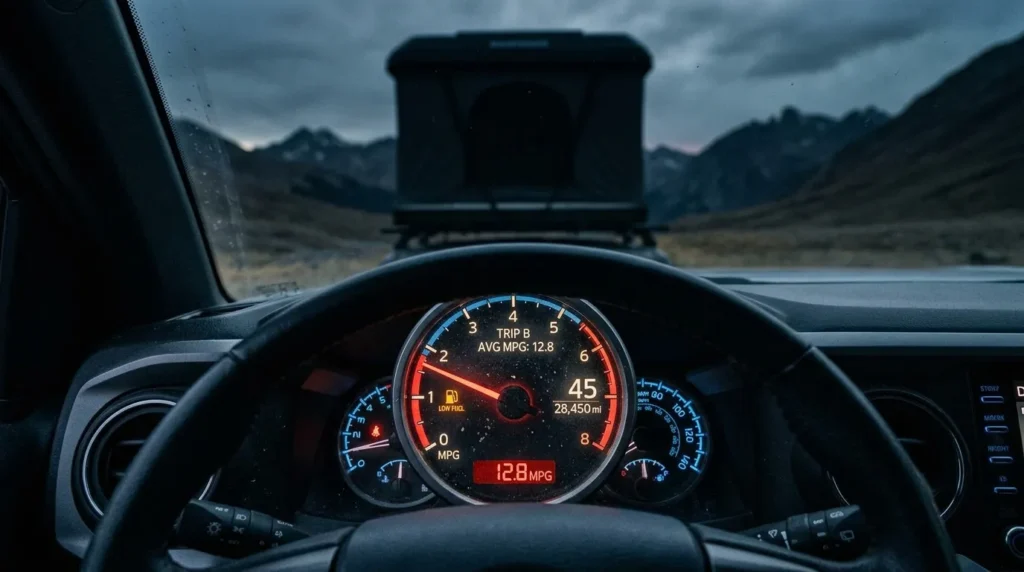
The direct answer to the hidden cost question is that you will pay a permanent tax in the form of reduced fuel economy and accelerated wear on your tires and suspension. A hard shell tent weighs between 130 and 180 pounds and sits at the highest point of your car. I found that even with the most aerodynamic models from my hard shell roof top tent list, my gas mileage dropped by at least 1.5 miles per gallon. Over a 5,000 mile cross-country trip, that can add hundreds of dollars to your fuel bill.
I noticed that the handling of the vehicle also changes. In my guide on can you put a rooftop tent on any car, I explained that a heavy roof load raises your center of gravity. This makes your car lean more in the corners and increases your braking distance. You are also putting a constant load on your roof rack seals and your shocks. According to automotive engineering reports, carrying a 150 pound permanent load can reduce the lifespan of your rear shocks by about 20 percent if you do not upgrade your suspension.
One expert insight for budget planners: you should also consider the cost of the roof rack itself. You cannot just bolt a heavy tent to factory plastic bars. As I discussed in my hard shell vs soft shell rooftop tent guide, a professional rack system from Yakima or Rhino-Rack will cost another $500 to $800. You need to factor this into your total budget. While the tent itself is durable, the ongoing costs of fuel and hardware are real factors that many YouTube influencers gloss over. If you drive a small car, these costs will be more impactful than if you drive a heavy-duty truck.
Are rooftop tents worth it for solo travelers versus families?
The direct answer is that rooftop tents are a slam dunk for solo travelers and couples, but they can be a logistical headache for large families with pets. I have found that a 2-person hard shell is the ultimate freedom machine for a single explorer. It allows you to move fast and stay safe. But if you have two kids and a large dog, a rooftop tent becomes a crowded bunk bed that requires everyone to climb a narrow ladder in the middle of the night. In my best pop up tent guide, I suggested that families often prefer the massive floor space of a ground cabin for a reason.
I noticed that pets are the biggest challenge for RTT owners. If you have a 70 pound Labrador, getting them up a 7 foot ladder is a recipe for a back injury. While there are specialized dog ramps available, they add even more bulk to your luggage. In my guide on how to pack a motorcycle for camping, I talked about the importance of simplicity, and for a family, a rooftop tent can actually make camp life more complex rather than less.
One expert insight: if you have a family, look for a side-opening model like the Wildfinder rooftop tent, which provides a bit more width. But if you are a solo nomad or a couple, the wedge style is absolute perfection. It provides a cozy, wind-resistant sanctuary that feels incredibly secure. According to long-term overland travelers, the solo RTT setup is the most efficient way to see the country. For a single person, the ability to have a safe, dry bed anywhere you can park a car is the ultimate definition of worth it.
Frequently asked questions about rooftop tent ownership
Do rooftop tents get stolen often from cars?
The direct answer is no, they are not a common target for casual thieves because they weigh 150 pounds and are bolted down. However, I always suggest using security nuts on your mounting brackets to prevent someone with a basic wrench from taking it. I noticed that most RTT thefts happen in storage: not while the tent is on the car. In my main hard shell roof top tent guide, I discuss the best hardware for theft prevention.
How do I handle going to the bathroom at night in an RTT?
The honest answer is that it is the biggest downside of the experience. You have to unzip two layers of fabric, climb out onto a cold ladder, and descend to the ground in the dark. I found that many long-term users keep a dedicated bottle or a portable container inside the tent to avoid the ladder climb at 3:00 AM. As I mentioned in my best pop up tent guide, accessibility is a major factor in camp comfort, and the ladder is a legitimate hurdle for some people.
Will a rooftop tent make my car tip over in a high-speed turn?
The direct answer is no: provided you stay within the dynamic weight limits I discussed in my guide on can you put a rooftop tent on any car. Modern SUVs have sophisticated electronic stability control that can handle the extra weight. However, you will feel the car lean more than usual. I suggest you slow down on curvy mountain roads and avoid sudden steering inputs when your tent is mounted.
Can I wash my car in an automated car wash with a tent on top?
The direct answer is no: you should never take a car with a rooftop tent through an automated brush wash. The brushes can catch the latches or the fabric, causing thousands of dollars in damage to both the tent and the car. I always use a self-service spray wash or wash my rig at home. In my guide on how to seam seal a tent, I explained that high-pressure water should be used with care, and that applies to the shell as well.
Are rooftop tents worth it when it’s too hot during the summer months?
The direct answer is that they can be, but the 360-degree ventilation usually keeps them cooler than a ground tent. Because you are high up, you catch much more of a breeze. I noticed during my Heyfun rooftop tent review that opening the side windows allowed for incredible cross-ventilation. I suggest you always pitch your tent with the windows oriented toward the wind to maximize the cooling effect.
Are rooftop tents worth it? Final verdict on the RTT lifestyle
At the end of the day, the question, are rooftop tents worth it, comes down to how much you value your time and your sleep. If you are a serious traveler who wants to explore remote areas without the hassle of a traditional camp setup, the rooftop tent is the single best investment you can make. It transforms your vehicle into a go-anywhere basecamp that provides a level of comfort and security that no ground tent can match.
The direct answer for most of my readers is to look at your camping frequency. If you go out once a month, buy the tent. I have laid out all the best hard shell options in my main hard shell roof top tent guide, from the heavy-duty Topoak Vision to the aerodynamic Naturnest.
Camping should be about freedom and ease, and a rooftop tent is the most effective tool I have found to achieve that goal. Stop sleeping in the dirt and start looking at the world from the roof of your car. I will see you on the trail.