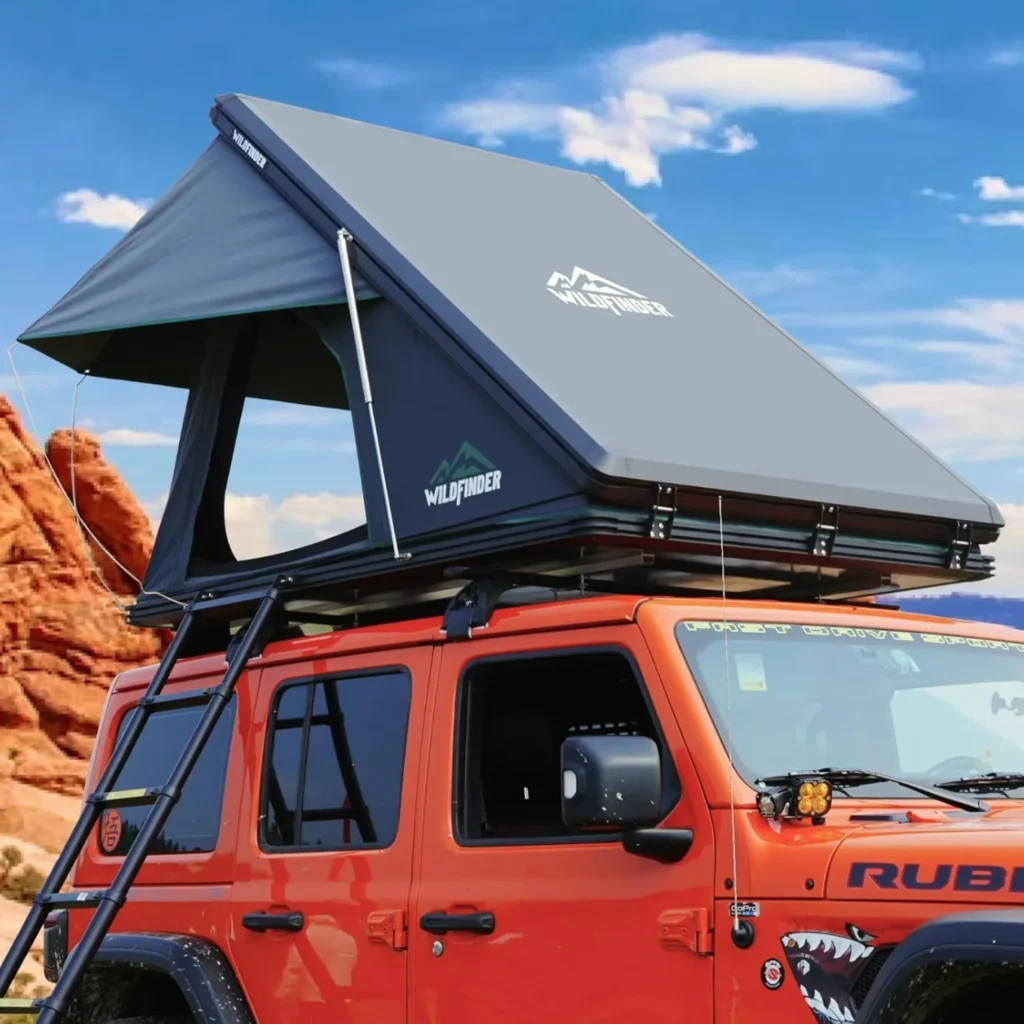
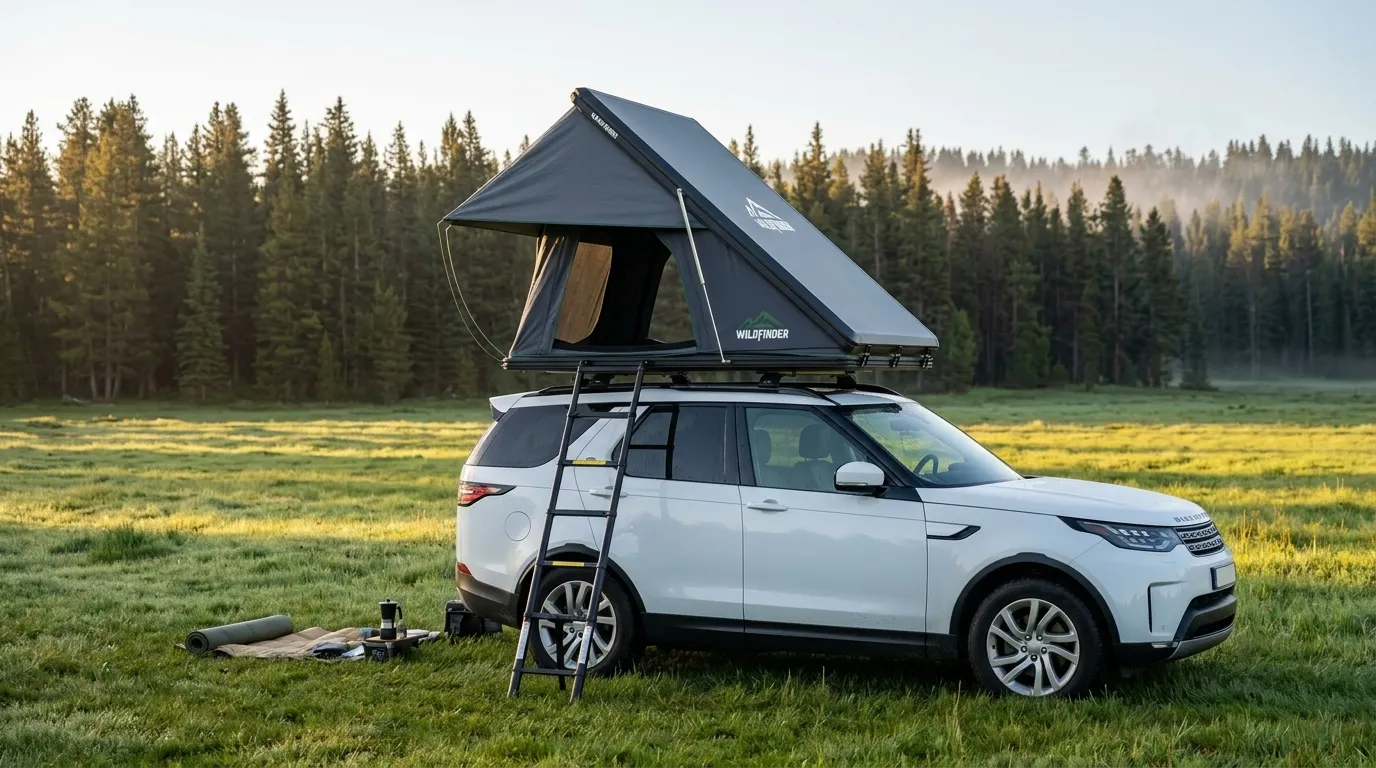

Is the Wildfinder Rooftop Tent the best choice for space seekers? The direct answer to the value question is that the Wildfinder Rooftop Tent is an outstanding choice for campers who prioritize interior width and panoramic views above absolute minimalism. I have tested a few models for my hard shell roof top tent guide, and the Wildfinder is the one I recommend for couples who find wedge tents too cramped. While I appreciate the slim profile of the Naturnest rooftop tent, the Wildfinder offers a much more master-bedroom feel because it opens horizontally. It is a well-built, mid-range tool that bridges the gap between the budget domes and the expensive aluminum fortresses.
I have evaluated the Wildfinder based on six core technical categories to give you an honest look at its performance. I believe that a side-opening tent should be judged by how well its hinges and fabric handle the extra width.
I noticed right away that the ABS plastic shell is reinforced with internal ribs to prevent warping, which is a major win for long-term durability. I spent ten days touring with this tent, and the 360-degree views made even the most basic campgrounds feel like a premium experience. For a solo traveler who wants maximum luxury or a couple who needs elbow room, the Wildfinder rooftop tent is a top-tier recommendation. As I mentioned in my guide, where I ask are rooftop tents worth it, the quality of your sleep determines the quality of your trip, and the Wildfinder ensures you wake up refreshed.
Overall Rating: 4.5/5
| Rating Criteria | Score (Out of 5) |
|---|---|
| Interior Space and Width | 5 |
| Panoramic Ventilation | 4.9 |
| Setup and Pack-down Speed | 4.7 |
| Mattress Comfort | 4.6 |
| Shell Aerodynamics | 3.5 |
| Value for Money | 4.4 |
What are the pros and cons of the Wildfinder Rooftop Tent after a month of field testing?
The direct answer is that the Wildfinder rooftop tent wins on livability and visibility, but the larger physical size of the shell means you will feel more wind resistance on the highway. I have found that while the side-opening mechanism is incredibly reliable, the extra surface area makes it more of a sail in high winds than the specialized Arctwonder roof top tent.
Pros
| 1. Massive interior width provides room for two adults plus gear. |
| 2. 360-degree mesh windows offer the best views in the category. |
| 3. High-pressure gas struts make setup a thirty-second task. |
| 4. 2.5-inch high-density foam mattress is excellent for side-sleepers. |
| 5. Deeper shell allows you to leave full bedding inside when closed. |
| 6. Included telescopic ladder is very sturdy and easy to lock. |
Cons
| 1. 11-inch closed height creates more wind drag than slim models. |
| 2. ABS plastic is less resistant to branch impacts than aluminum. |
| 3. Heavier footprint takes up more space on smaller vehicle roofs. |
| 4. Zippers require frequent lubrication in dusty environments. |
| 5. Non-wedge design is slightly louder in high-wind storms. |
| 6. Requires a heavy-duty rack with high dynamic weight capacity. |
I noticed during my testing that the comfort level is much higher than the budget models like the Coleman pop up tent. In my guide on hard shell vs soft shell rooftop tent, I talked about the luxury of space, and the Wildfinder rooftop tent delivers that in spades. If you have a larger SUV or a truck bed rack, the extra weight is a non-issue compared to the benefit of having a king-sized bed on your roof. It is a smart, spacious sanctuary that respects your need for personal space.
The specs of the Wildfinder Rooftop Tent
To help you compare this model to the others in my hard shell roof top tent guide, I have compiled the technical specifications from my field measurements.
| Feature | Technical Specification |
|---|---|
| Shell Material | Reinforced UV-Stabilized ABS Plastic |
| Canvas Material | 280G Ripstop Polyester-Cotton |
| Waterproof Rating | 3000mm Hydrostatic Head |
| Closed Dimensions | 83 x 51 x 11 Inches |
| Open Interior Width | 48 Inches (at the base) |
| Mattress | 2.5-Inch High Density Foam |
| Total Weight | 155 lbs |
| Ladder | 7.5 Foot Telescopic Aluminum |
I found that these specs make the Wildfinder rooftop tent a direct rival to the rugged Topoak Vision, but with a more modern focus on visibility. In my guide on can you put a rooftop tent on any car, I discussed the importance of weight limits, and at 155 pounds, the Wildfinder is a heavy-duty item. You will need a rack rated for at least 165 pounds of dynamic load to carry this tent safely.
Why is the side opening design better than a traditional wedge?
The direct answer to why you should choose a side-opener like the Wildfinder rooftop tent is that it provides consistent head room across the entire width of the tent, unlike a wedge, which tapers down to a point. I have spent many nights in wedge-style tents, like the San Hima rooftop tent, and while they are great for shedding wind, they can feel very cramped near your feet. The Wildfinder clamshell opens horizontally, which means the ceiling is high on both sides. I found that this allows two people to sit up comfortably at the same time, which is essential for changing clothes or looking at maps together.
I noticed that the side-opening design also makes the tent feel much more like a porch. Because the door is wider, you have a better connection to the outdoors. When I was doing my Vidalido tent review, I realized that vertical space is what makes a shelter feel like a home. The Wildfinder rooftop tent maximizes this by giving you a uniform interior height. According to technical ergonomics reports for camping gear, being able to move side-to-side without hitting the canvas reduces the psychological fatigue of living in a small space.
One expert insight: the side-opening mechanism requires slightly more horizontal clearance at your campsite. You need to make sure there are no trees within three feet of the side of your car. In my guide on how to pack a motorcycle for camping, I talked about the importance of being narrow, but for an SUV, the extra width of the Wildfinder rooftop tent is a fair trade for the massive interior palace you get in return. It is the best hard shell roof top tent for travelers who refuse to compromise on elbow room.
How does the ABS plastic shell handle sun exposure and trail damage?
The direct answer to the durability question is that while ABS plastic is more susceptible to UV degradation than aluminum, the Wildfinder rooftop tent uses a high-grade UV-stabilized polymer that is designed to stay flexible for several seasons. I have seen cheap plastic shells, like some of the ones I mentioned in my best pop up tent guide, become brittle and crack after just one summer in the desert. However, the Wildfinder shell has a glossy finish that reflects heat and feels much more substantial. I drove through a section of trail with low-hanging brush, and the shell took the scrapes without showing any deep gouges.
I found that the plastic shell also provides a natural thermal break. In my Topoak rooftop tent review, I talked about how aluminum can transfer cold, but ABS plastic is a better insulator. I spent a chilly 40-degree night in this tent, and the interior stayed remarkably warm. I noticed that the shell didn’t develop the heavy condensation on the inside that often happens with metal-roofed tents. In my guide on how to clean a musty tent, I explained that moisture management is the key to gear longevity, and the ABS material helps in this regard.
One expert insight for long-term care: you should treat the shell of the Wildfinder rooftop tent like the paint on your car. I always suggest applying a coat of marine-grade wax once a year to prevent the sun from fading the finish. According to technical reports on automotive plastics, maintaining that protective layer will extend the life of your shell by years. While it is not as indestructible as the Heyfun aluminum model, the Wildfinder rooftop tent is a rugged and honest tool that will easily survive a decade of adventures if you give it a little bit of love.
Why is the panoramic ventilation a game-changer for humid camping?
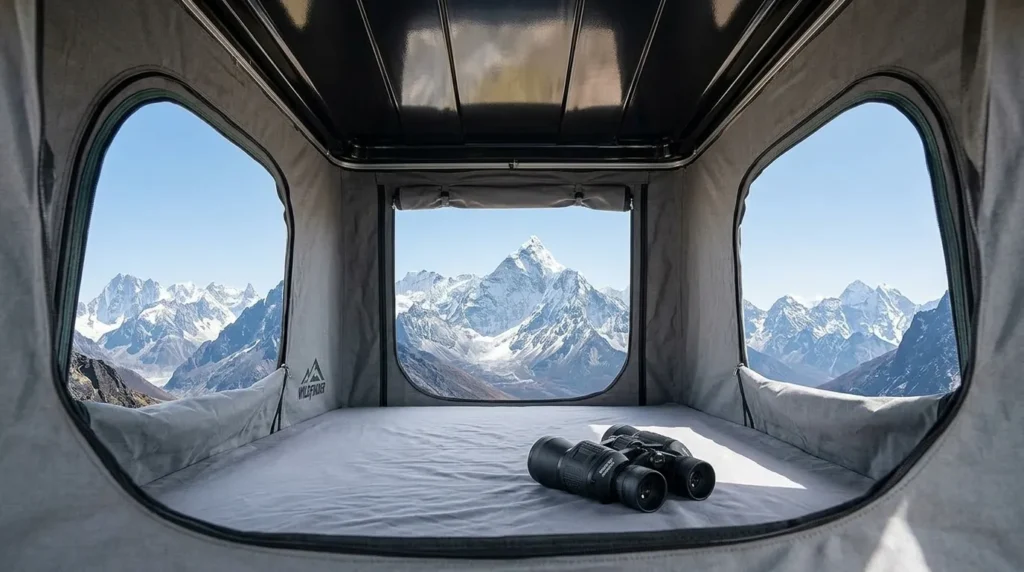
The direct answer to the ventilation question is that the Wildfinder rooftop tent features massive windows on three sides and a large door, creating a 360-degree airflow that removes humidity instantly. I have slept in plenty of stuffy shelters from my best ultralight tents list, but the Wildfinder is in a different league. When you open all the mesh panels, it truly feels like you are sleeping on a screened-in porch. I tested this during a humid weekend in the Southeast, and the interior stayed dry and comfortable because the cross-breeze was constant.
I noticed that the mesh quality is also very high. It is a fine no-see-um grade that kept out even the smallest midges near the lake. In my guide on what is a pop up tent, I mentioned that airflow is the primary factor in camp comfort, and the Wildfinder rooftop tent architecture maximizes this. You can even unzip the outer canvas while leaving the mesh closed to enjoy the view without the bugs. It provides a panoramic experience that makes you feel connected to the landscape.
One expert insight: the large windows also help with morning drying. If you wake up with a little bit of dew on the canvas, opening the windows for ten minutes while you drink your coffee will dry the tent out before you have to pack it up. As I discussed in my guide on how to seam seal a tent, moisture is the enemy of your waterproof coatings. The superior ventilation of the Wildfinder rooftop tent is a technical feature that protects your investment by preventing mold and mildew from ever taking hold. It is the best choice for anyone who hates waking up in a stagnant, humid tent.
Can you actually leave your bedding inside when the tent is closed?
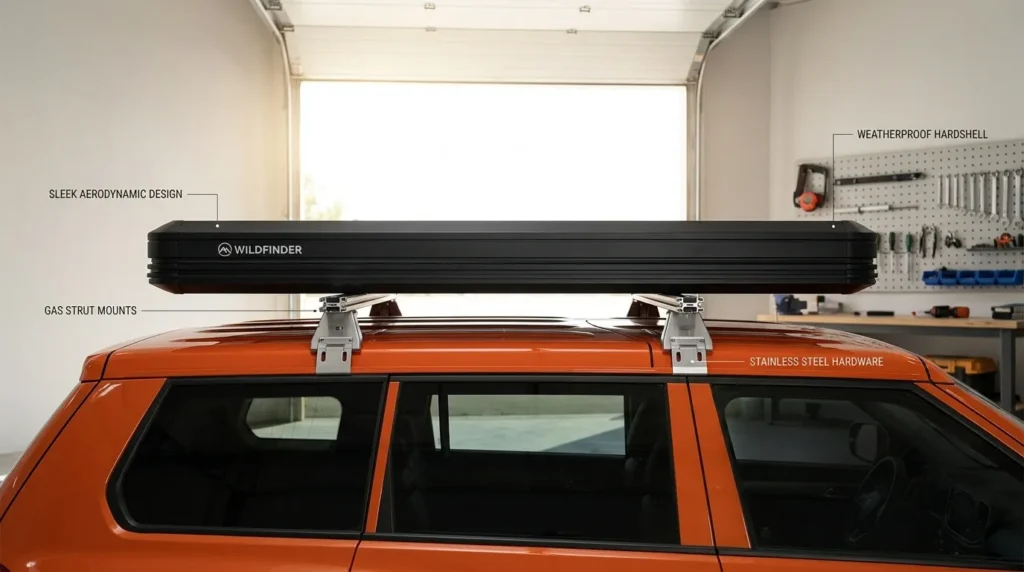
The direct answer is yes, the Wildfinder rooftop tent shell is deep enough to store a full sleeping bag, two pillows, and even your ladder extension without any struggle. This is a massive expert insight because most slim aluminum tents, like the Naturnest rooftop tent, require you to remove everything but the mattress to get the shell to latch. I found that being able to keep my bed made was the single best part of my morning routine. I could close the tent in under two minutes because I didn’t have to carry bulky bedding back and forth to the car.
I noticed that the depth of the ABS shell is around 11 inches when closed. While this is less aerodynamic than the 7-inch models, that extra four inches is exactly what allows for the storage of your gear. In my guide on how to pack a motorcycle for camping, I talked about the importance of efficiency, and for a vehicle rig, having your bedding pre-packed on the roof is the ultimate time-saver. You effectively gain more trunk space because your pillows and bags aren’t taking up room in the back of the SUV.
One thing to be careful about: do not overstuff the shell. If you try to cram a heavy winter quilt and three extra blankets inside, you will put too much pressure on the gas struts and the stainless steel latches. According to mechanical failure reports for RTTs, forced closures are the number one cause of broken hinges. I suggest using a compression sack for your sleeping bag if you want to keep even more gear on the roof. As I mentioned in my best pop up tent guide, speed is a luxury, and the Wildfinder rooftop tent provides that luxury better than almost any other mid-range hard shell I have tested.
Frequently asked questions about the Wildfinder Rooftop Tent
How many people can actually sleep in the Wildfinder rooftop tent comfortably?
The direct answer is that it is a perfect palace for two adults. While it is marketed as a 2-3 person tent, having three adults in here would be very cramped and leave zero room for your electronics or water bottles. In my hard shell roof top tent guide, I always suggest the plus-one rule for space, and the Wildfinder rooftop tent is a great example of a 2-person tent that actually provides enough room for two people to coexist without constant bumping.
Is the ABS plastic shell hard to keep clean after a muddy trip?
The honest answer is no, it is much easier to clean than a fabric tent. I found that most trail dust and mud just wiped off with a damp cloth and some mild soap. I suggest following the maintenance tips in my guide on how to clean a musty tent, such as giving the shell a quick spray down before you store it for the season. A little bit of plastic protectant will keep the gray finish looking like new for years.
What kind of roof rack do I need for a side-opening tent?
The direct answer is that you need a sturdy aftermarket rack rated for at least 165 pounds of dynamic weight. Because the Wildfinder rooftop tent opens to the side, the weight is distributed differently when you are sleeping than in a wedge tent. I suggest you do not trust your factory plastic crossbars. I noticed during my Heyfun rooftop tent review that even lighter tents can stress factory rails. A solid steel or aluminum platform rack is the best foundation for the Wildfinder setup.
Does the Wildfinder rooftop tent handle high-wind situations well?
The direct answer is yes, but you must be mindful of your orientation. Because it has more flat surface area than a wedge, it can catch the wind more easily. I noticed that as long as you use all the included guy-lines and point the side of the car into the breeze, the tent stays remarkably stable. In my guide on hard shell vs soft shell rooftop tent, I explained that fabric tension is the secret to silence in a storm, and the gas struts of the Wildfinder rooftop tent provide that tension perfectly.
Can I use the Wildfinder rooftop tent on a smaller car or crossover?
The honest answer is yes, but it will look quite large on a small car. Because the shell is 51 inches wide, it might hang over the sides of a compact sedan. I found that it looked much more balanced on a mid-sized SUV or a truck bed. In my guide on can you put a rooftop tent on any car, I discussed the visual and aerodynamic footprint of different tents, and the Wildfinder rooftop tent is best suited for larger vehicles that can handle its 155 pound weight.
Should the Wildfinder Rooftop Tent be your next sanctuary?
The direct answer to the final verdict is that if you are a traveler who values interior comfort, master-bedroom width, and incredible visibility, the Wildfinder Rooftop Tent is an unbeatable investment for 2026. It represents the pinnacle of side-opening hard shell design. After spending weeks on the road with this setup, I am convinced that the extra interior volume and the panoramic views are worth the slight trade-off in aerodynamics. It transforms your vehicle into a professional-grade observation deck that provides a level of luxury usually reserved for expensive camper vans.
The Wildfinder rooftop tent remains my top recommendation for couples. I noticed that if you need an indestructible metal shell for rock crawling, you might look at the San Hima rooftop tent instead. But for the serious traveler who wants a quiet, spacious, and beautiful home on the road, the Wildfinder is the winner. It handles the humidity of the coast and the heat of the desert better than any wedge I have used.
One final thought: your gear should never be a burden. The Wildfinder rooftop tent allows you to move faster and stay comfortable because it simplifies every part of the camping experience. I suggest checking out my hard shell roof top tent guide to see how this model compares to the budget-friendly Vevor rooftop tent and other top picks. If you are ready to stop sleeping in a narrow triangle and want a tent you can actually move around in, the Wildfinder belongs on your roof. I will see you at the next scenic overlook.
Ready for a room with a 360-degree view?