
Can you put a rooftop tent on any car without damaging the structure? The direct answer to this question is yes: you can technically put a rooftop tent on almost any car, but the real concern is whether your specific roof rack can handle the dynamic weight of the tent while you are driving. I have seen everything from tiny Mini Coopers to massive Ford F-150s carrying the gear from my hard shell roof top tent guide. Modern automotive engineering uses high-strength steel for the roof pillars to protect passengers during a rollover accident, which means the actual frame of your car is incredibly strong. However, the way you attach the tent to that frame is what determines if your trip is a success or a safety hazard.
I noticed a massive trend lately where people are moving away from dedicated off-road rigs and putting tents on their daily drivers. When I was testing the Naturnest rooftop tent, I was surprised at how many sedans I saw with similar setups. The trick is understanding the difference between the weight of the tent and the weight of the people inside it. Most cars have a roof load rating that is designed for a cargo box or a couple of bicycles, so when you add a 150 pound hard shell tent, you are pushing the limits of the factory hardware.
I am writing this guide for the person who is on the fence about buying their first rig. Throughout this post, I will explain the physics of dynamic versus static loads, how to identify your car’s specific limits, and why your factory crossbars are probably not up to the task. As I mentioned in my guide on are rooftop tents worth it, the investment only makes sense if your vehicle remains safe to drive. By the time you finish this article, you will know exactly what to look for in your owner’s manual to ensure your car and your new tent are a perfect match.
What is the difference between dynamic and static weight limits?
The direct answer is that the dynamic weight limit is what your car can carry while moving, and the static weight limit is what it can hold while parked. This is the most important technical distinction you will ever learn as an overlander. When you are driving down the highway at 70 miles per hour, your car is dealing with wind resistance, braking forces, and the centripetal force of turns. This is why the dynamic limit is usually quite low, typically between 100 and 165 pounds for most passenger vehicles. If you exceed this, you risk the tent flying off the roof or causing the car to become unstable in a sharp turn.
I found that the static weight limit is much higher, usually around three to five times the dynamic limit. This is because a parked car is a stable platform, and the weight is distributed straight down through the steel pillars to the tires. When you extend the ladder of a tent like the Topoak Vision, the ladder acts as a support leg that transfers about 30 percent of the weight to the ground. This is why a car with a 165 pound dynamic limit can easily support two adults and a tent totaling 600 pounds while you are sleeping.
I always suggest that you look for these numbers in the technical specifications section of your owner’s manual. If you cannot find them, a good rule of thumb is to look at the rating of the roof rack itself. According to roof rack manufacturers like Thule, their heavy duty bars are tested to handle the specific forces of rooftop tents. I have discussed this balance in my guide on hard shell vs soft shell rooftop tent, because hard shells are often heavier but more aerodynamic. Understanding these numbers is the only way to avoid a catastrophic gear failure on the road.
How do typical roof load limits compare across different vehicle types?
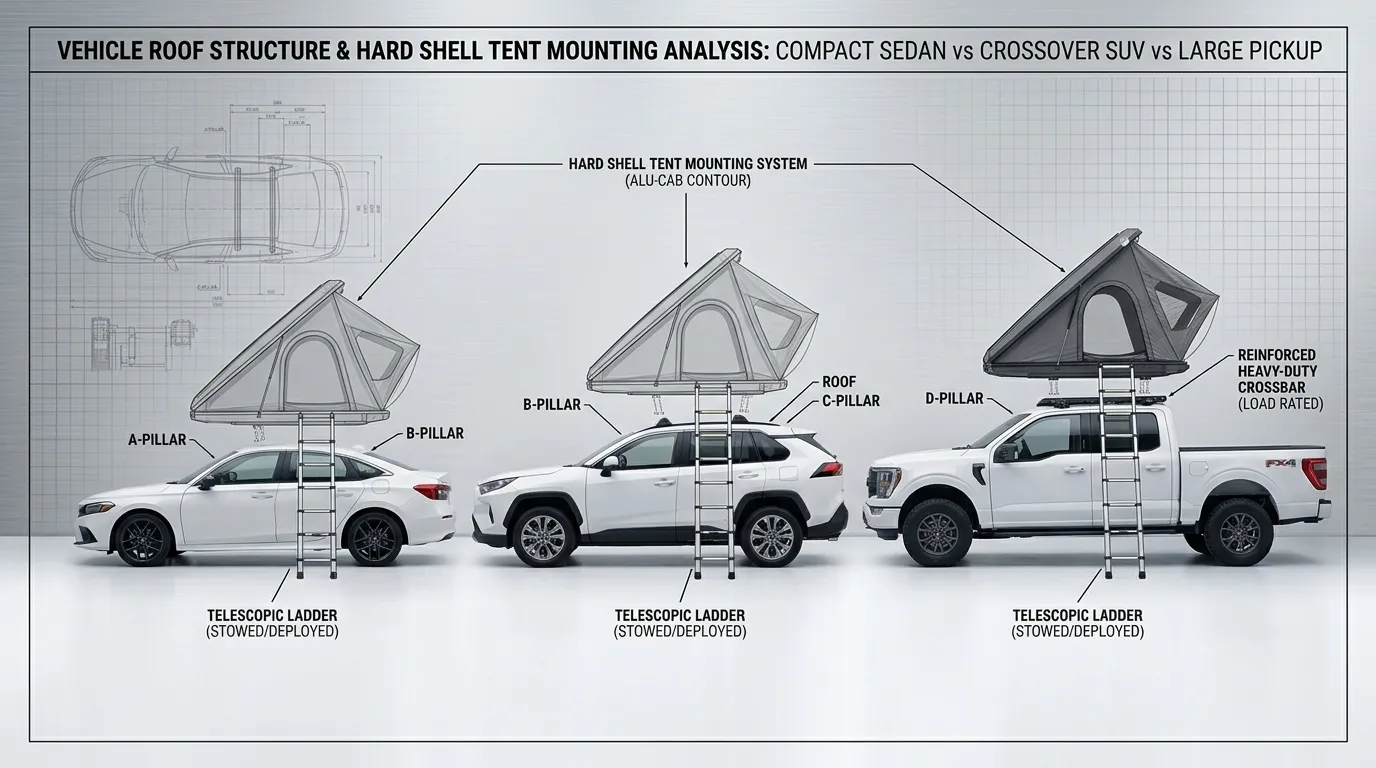
The direct answer is that while trucks and large SUVs have the highest ratings, many modern crossovers and even some sedans have surprisingly robust roof capacities. To help you visualize where your car might fall, I have created a table based on average industry standards for 2026 models. Please remember that these are general estimates and you must still verify the exact number for your specific VIN.
| Vehicle Category | Average Dynamic Limit | Average Static Limit | Recommended Type |
|---|---|---|---|
| Compact Sedan | 100 – 125 lbs | 400 – 500 lbs | Lightweight Solo Wedge |
| Mid-Size Crossover | 150 – 165 lbs | 600 – 700 lbs | Slim Aluminum Hard Shell |
| Full-Size SUV | 165 – 200 lbs | 800+ lbs | Any Hard Shell RTT |
| Pickup Truck (Cab) | 150 – 165 lbs | 600 – 700 lbs | Any Hard Shell RTT |
| Truck Bed Rack | 200 – 300+ lbs | 1,000+ lbs | Heavy Duty Pop-Up |
I noticed during my Arctwonder roof top tent review that smaller SUVs can handle a hard shell tent perfectly as long as the tent itself is under 140 pounds. If you are driving a sedan, you are limited to the most minimalist models, such as the Heyfun rooftop tent. Trucks have a major advantage because they can mount the tent over the bed using a dedicated rack, which keeps the center of gravity much lower and removes the weight from the cab roof entirely. As I mentioned in my best hard shell roof top tent guide, match your tent weight to your vehicle size to maintain a comfortable ride.
Why are factory roof racks usually the weakest link in your setup?
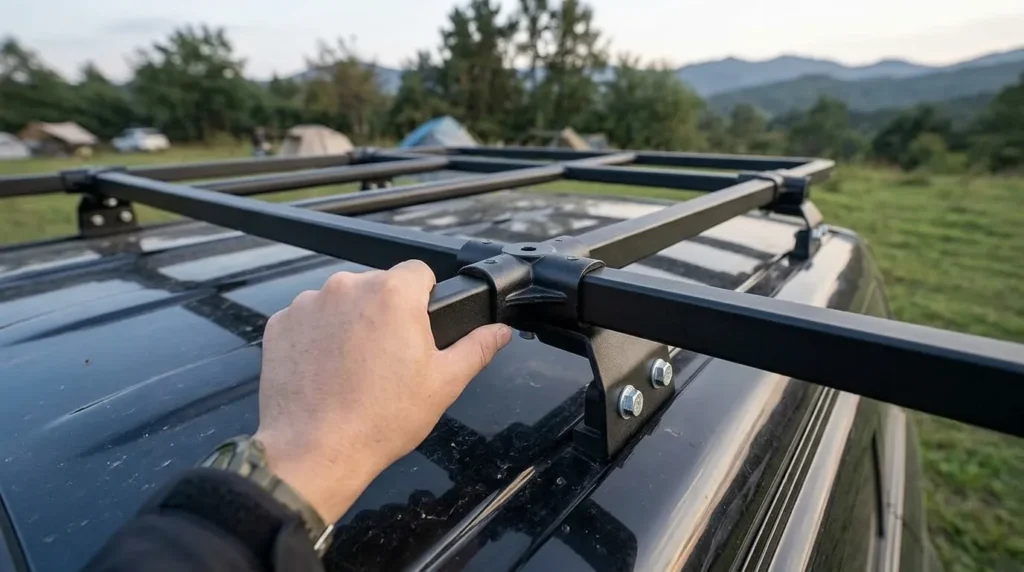
The direct answer is that most factory-installed crossbars are made of thin aluminum or even plastic, and they are designed for light loads like skis or a small luggage box, not a 150 pound tent. I have seen many people try to mount a high-end tent from my hard shell roof top tent list to their stock bars, only to have the bars bend or the plastic feet crack during the first trip. Factory bars often have a much lower weight rating than the actual roof of the car, and they are the first point of failure you need to address.
I always suggest that you invest in a high-quality aftermarket rack system from a brand like Yakima or Rhino-Rack. These systems are made of heavy-duty steel or extruded aluminum and are specifically rated for the dynamic forces of overlanding. I noticed when I was setting up the Wildfinder rooftop tent that the mounting brackets were much wider than standard bars, which is another reason you need a robust rack. Aftermarket bars also provide a flatter, more stable surface that prevents the tent from vibrating or humming at high speeds.
One expert insight I want to share is about the mounting points. Many crossovers use raised side rails that are only attached to the roof with a few small bolts. According to technical safety reports, these side rails can be pulled right out of the roof if the wind catches the tent at a certain angle. If your car has these rails, I suggest looking for a rack system that replaces them or mounts directly to the fixed points in your roof ditch. As I discussed in my guide on how to pack a motorcycle for camping, securing your load to the frame is the key to stability. Don’t trust your $2,000 tent to a $50 piece of factory plastic.
How does a hard shell design help smaller cars handle the weight?
The direct answer is that the aerodynamic profile of a hard shell tent reduces the upward lift and lateral drag that can make a small car feel unstable. Soft shells are basically giant bricks on your roof. A hard shell tent, like the 7-inch Naturnest rooftop tent, allows the air to flow over the vehicle smoothly. This means there is less strain on your roof rack and less vibration being transferred into the car’s frame.
I found that the weight distribution of a hard shell is also much more predictable. Because the weight is contained within a rigid box, it does not shift around like the heavy canvas and PVC covers of a soft shell tent. When I was doing my San Hima rooftop tent review, I noticed that the car felt much more planted in the corners than it did with a folding model. This is especially important for smaller cars with softer suspension. If the weight shifts suddenly in a turn, it can trigger your electronic stability control or even lead to a rollover.
One expert insight for small car owners: choose a wedge-style tent. The wedge shape is naturally more aerodynamic and puts less stress on the rear of the rack than a vertical pop-up. As I mentioned in my best pop up tent, low profiles are always better for wind resistance. A hard shell wedge is the best way to get a rooftop basecamp onto a crossover without ruining the driving experience. It turns your car into a specialized travel machine that can still handle a 500 mile day on the interstate without exhausting the driver.
What are the risks of ignoring your cars roof load rating?
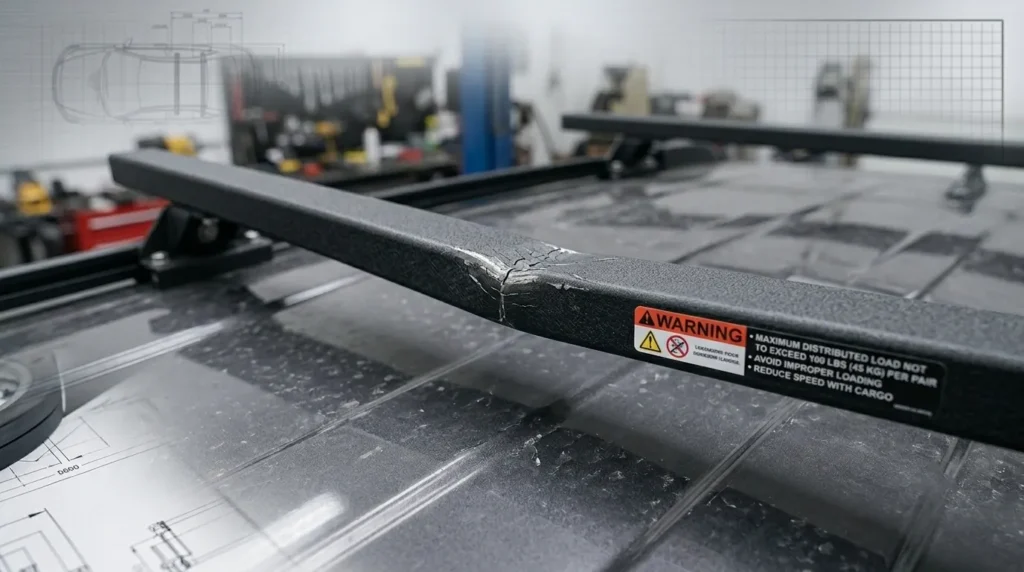
The direct answer to the risk question is that you are gambling with the structural integrity of your vehicle and the safety of everyone on the road. If you put a heavy tent like the Vevor rooftop tent on a car with a 100-pound limit, you are putting massive stress on the roof pillars. In the event of a sudden swerve or a hard braking maneuver, that 150-pound weight becomes a giant pendulum. It can cause the roof to buckle or the rack to snap completely off the car. I have seen photos of tents that were ripped off roofs on the highway, and it is a miracle that nobody was killed in those accidents.
I noticed that another hidden risk is the damage to your sunroof or your car’s paint. Many factory roofs have a lot of flex, and if you overload them, the crossbars can touch the glass or the metal during a bump. This can lead to thousands of dollars in repairs. According to automotive insurance experts, many policies will not cover damage caused by exceeding the manufacturer’s rated weight limits. This is why I am so obsessive about checking your specs before you buy anything from my hard shell roof top tent guide.
I suggest you also consider the impact on your tires and suspension. Adding a permanent 150 pound load to the highest point of your car will accelerate the wear on your shocks and bushings. As I mention in my motorcycle camping checklist, weight management is a holistic process. You might need to upgrade your rear springs or increase your tire pressure to handle the new load. Being a responsible overlander means respecting the engineering limits of your vehicle. If your car isn’t rated for the tent you want, it is better to buy a lighter tent or a different car than to risk a disaster on the trail.
Frequently asked questions about mastering rooftop tent compatibility
Can you put a rooftop tent on any car with a sunroof?
The direct answer is yes, but you must ensure the crossbars provide enough clearance so the tent does not touch the glass. I have found that as long as you use high-quality aftermarket bars, the tent sits several inches above the sunroof. You should never allow the weight of the tent to rest directly on the glass. I always suggest that you check the clearance by having someone carefully push down on the bars before you bolt the tent down.
Does a rooftop tent make my car more likely to roll over?
The honest answer is yes, adding weight to the roof raises your center of gravity, which technically increases the rollover risk. However, for most modern SUVs and trucks, adding 150 pounds is well within the safety margins for highway driving. I noticed during my Topoak rooftop tent review that the car felt a bit more top-heavy in tight turns, but it was perfectly manageable. I suggest you drive more conservatively and avoid high-speed evasive maneuvers when your tent is mounted.
How do I know if my roof rack is rated for a rooftop tent?
The direct answer is to check the manufacturer’s website for your specific rack model. If the rack is rated for over 165 pounds dynamic weight, it is usually safe for an RTT. I found that many companies, like Yakima, have a specific filter on their site to show only tent-compatible racks. The hardware is important, and for a rooftop tent, the rack is the most important hardware you will buy.
Can I use a rooftop tent on a car with no roof rails?
Yes, you can use a clip-on rack system that attaches to the door jams of your vehicle. I have seen many sedans using this method to carry gear from my hard shell roof top tent list. However, these systems often have lower weight limits than fixed-point or rail-based racks. I suggest you be extra careful with your weight choice if you are using a clip-on system and always use a lightweight aluminum tent like the Arctwonder roof top tent.
Will a rooftop tent void my car warranty?
The direct answer is no, mounting gear to your roof does not void your entire car warranty. However, if the tent causes damage to the roof or the suspension, the manufacturer will likely refuse to cover those specific repairs. I found that as long as you stay within the weight limits listed in your manual, you are technically following the manufacturer’s guidelines. According to consumer protection laws, the burden is on the manufacturer to prove that the aftermarket gear caused the failure.
Making the safe choice for your vehicle
At the end of the day, the question, can you put a rooftop tent on your car, comes down to a simple calculation of weight and hardware. Most modern vehicles are legitimate candidates for an RTT, provided you are willing to upgrade your rack and choose a tent that matches your dynamic load limit. When you get this right, you are opening up a whole new world of adventure where your car becomes a self-contained home on wheels.
The direct answer to whether you should pull the trigger is to trust the data in your owner’s manual. If you have the weight capacity, go for it. I have laid out all the best lightweight and aerodynamic options in the hard shell roof top tent guide, so start there to find a model that fits your car’s profile.
Overlanding should be about exploration and peace of mind, and that starts with a safe and secure setup. Stop worrying about your roof and start planning your next ridge-top campsite. I will see you out there.