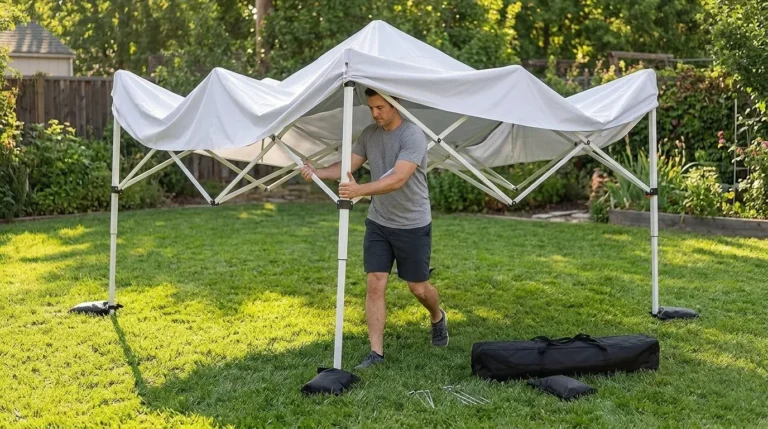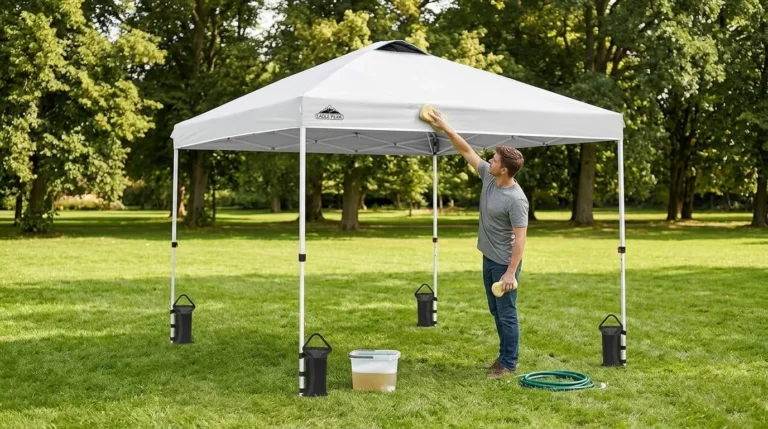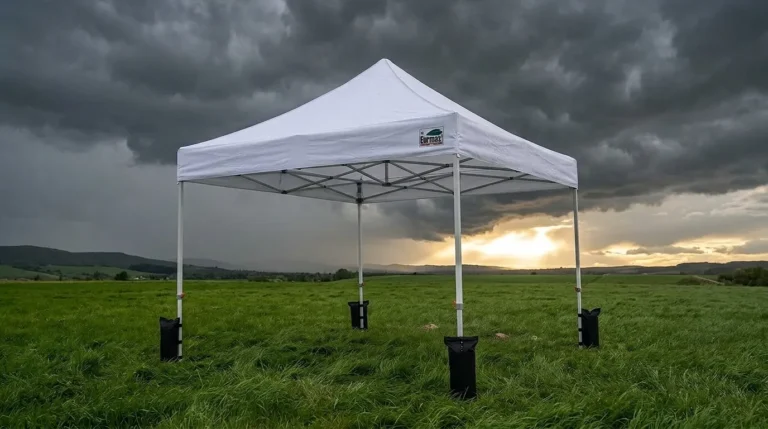


How to choose between cheap and premium pop-up canopy tent comes down to how often you set it up and how much wind and weight you will deal with. A $70 canopy is a bargain for a backyard barbecue and a false economy for a weekly market stall, while a $189 canopy is overkill for two birthdays a year. In this guide I show what the extra money actually buys and where it is wasted.
The price range in my pop up canopy tent guide runs from $69.97 to $188.91 for a 10×10, so I use three tiers: under $100, $100 to $150, and over $150. Real commercial canopies can cost more than any of these, but this is the range most shoppers actually buy in.
How do you choose between cheap and premium pop-up canopy tents?
Choose a cheap pop-up canopy tent if you use it a few times a year in calm weather, and choose a premium one if you set it up often, work events, or face wind. The three tiers below show what each price band looks like in my hub.
| Tier | Canopies | Price range | Who it suits |
|---|---|---|---|
| Budget, under $100 | Vinabilia One Push, Oneofics Slant Leg | $69.97 to $79.99 | Occasional backyard and beach shade |
| Mid, $100 to $150 | Yaheetech, MasterCanopy, ABCCANOPY, Eagle Peak, Sannwsg | $112.99 to $147.99 | All-round use, weekend events |
| Premium, over $150 | Quictent, Cobizi, Eurmax | $159.99 to $188.91 | Weekly vendors and heavy use |
The pattern is simple: budget canopies save you money and weight, premium canopies save you bent frames and replacements, and the mid tier splits the difference. If you want one answer, buy mid unless you have a clear reason to go cheap or premium.
Three questions settle it for most people:
- How many times a year will you set it up?
- How windy and exposed is the spot?
- Can you carry 30 pounds, or do you need a rolling bag and a helper?
If you answer a few times, calm, and I carry it alone, buy cheap. If you answer weekly, exposed, and I have a truck, buy premium. Everything in between is mid tier territory. The rest of this article explains what each tier actually gives you, so you can see where your money goes.
What does extra money actually buy in a pop-up canopy tent?
Extra money buys a thicker frame, heavier fabric, better seams, sidewalls, and sometimes a fire rating, and it costs you weight. These upgrades matter most when the canopy works hard, and matter least when it stays in the garage.
Here is how the features change across my hub:
| Feature | Budget examples | Premium examples |
|---|---|---|
| Frame | Lighter steel, 22 to 30 lb | Eurmax 1 1/8 inch legs, Cobizi 1.26 inch poles |
| Top fabric | 190T Oxford, 150D silver coated | Cobizi 420D, Quictent 600D PU coated |
| Seams | Basic stitching | Eurmax seam sealed, Eagle Peak heat sealed |
| Fire rating | Rarely listed | Eurmax lists NFPA 701, Quictent lists fire retardant |
| Bag | Hand carry bag | Rolling bags, Eurmax no-tip bag |
| Sidewalls | Usually none | Quictent 3 plus awning, Cobizi 4 |
| Weight | 22 to 33 lb | 52 to 62 lb |
The frame is where the money works hardest. A thicker leg flexes less in a gust, so it lasts longer in rough use. The fabric is next, since a heavier top resists wear and UV for more seasons, and the EPA UV Index scale shows how much sun a canopy takes on a regular summer day.
Wind is the other factor, and a heavy frame helps but does not make a canopy storm safe. The National Weather Service Beaufort page puts a strong breeze at about 25 to 31 miles per hour, which is where I take any canopy down, and the short wind safety page applies to cheap and premium models alike. My pop up tent guide covers how other portable shelters handle the same tradeoffs.
Where is money wasted? On features you will never use. Do not pay extra for walls if you sell nothing, a fire rating if no one asks for it, or a 62 pound frame if you carry it alone.
When is a cheap pop-up canopy tent the smarter buy?
A cheap pop-up canopy tent is the smarter buy when you use it a few times a year, in calm weather, and want something light enough to carry alone. Good budget canopies exist, and the best ones skip the extras without skipping the anchoring kit.
In my hub, three canopies fit this buyer:
- The one push pop up canopy review covers the Vinabilia at $69.97, which includes four sandbags, four guy lines, and eight stakes with a one push center lock.
- The 10×10 slant leg canopy review covers the 22 pound Oneofics at $79.99, the lightest option, but with a smaller 8×8 top and only four ground stakes.
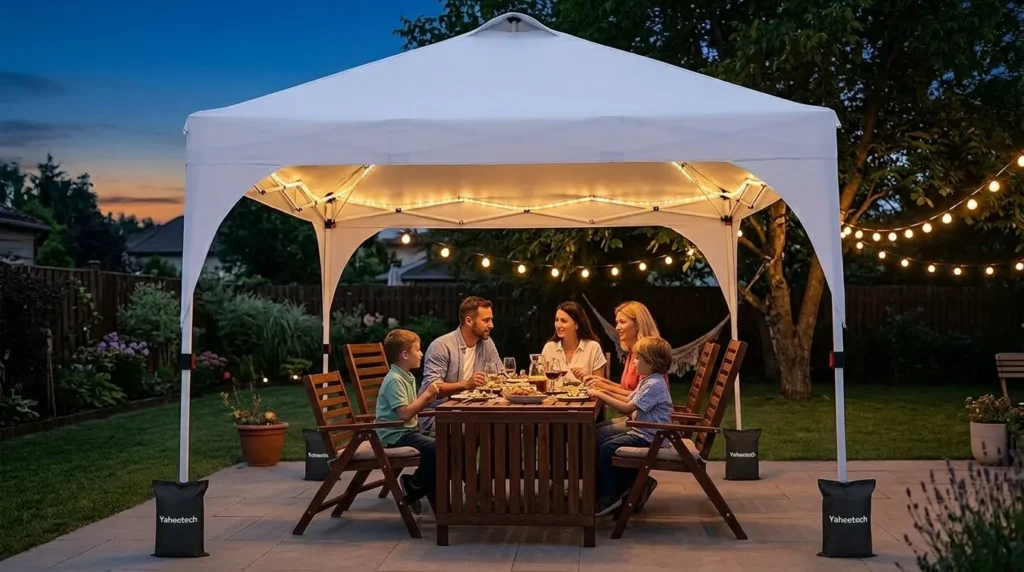
- The Yaheetech canopy review covers the $112.99 Yaheetech with 17 solar LED lights, a good fit for patio evenings.
Cheap canopies work best on calm days with all four legs weighted. If you set up at the coast, my beach pop up tent guide shows when a simple shade structure beats a full canopy. For family gatherings, my tents for families guide helps you size the shade for a group.
The tradeoff is margin. A thin frame and a 150D or 190T top leave less room for error in wind and strong sun, so you take the canopy down sooner and replace it sooner. That is fine if you accept it, and a bargain if you never push the limits.
If you only need shade two or three weekends a year, spending $190 on a frame built for daily vendor use is usually money you will never recover.
When is a premium pop-up canopy tent worth the extra money?
A premium pop-up canopy tent is worth the extra money when you set it up weekly, work markets or events, or need walls and a fire rating. For heavy use, a thick frame and a heavier top pay for themselves over the years.
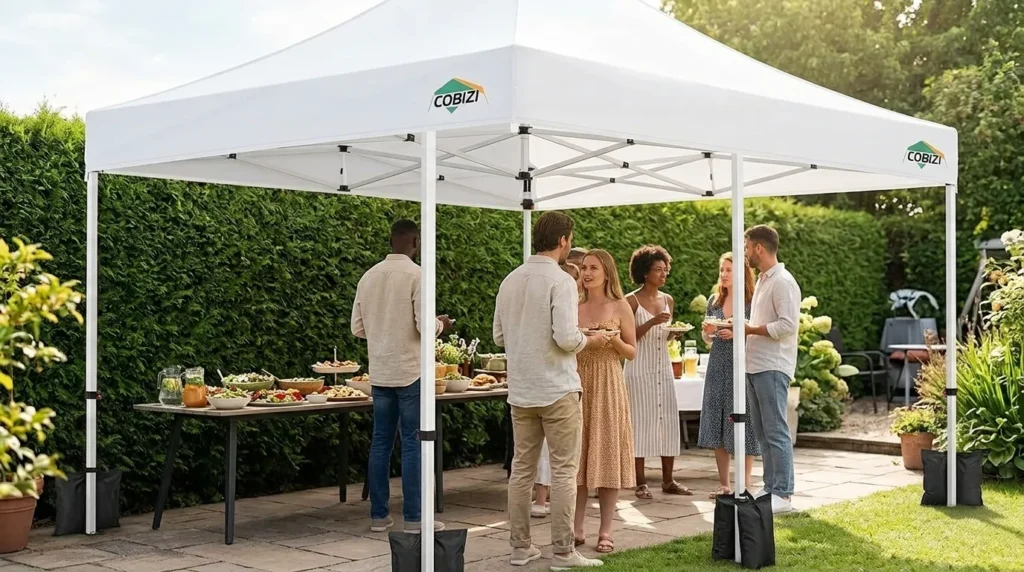
Three canopies in my hub live in this tier:
- The Eurmax 10×10 canopy review covers the 53.9 pound frame with 1 1/8 inch legs, a seam sealed top, and a no-tip rolling bag at $188.91.
- The Cobizi canopy review covers the 62 pound frame with thick 1.26 inch poles and four PU coated sidewalls at $169.99.
- The Quictent pop up canopy review covers the 52.2 pound frame with three sidewalls, an awning, and a 600D top at $159.99.
These are heavy, so plan for a rolling bag, a helper, and a vehicle with room. They are also the canopies I trust most on a working day, since a thicker frame resists flexing in a gust.
Fire ratings can matter too. Many city fire codes require tents and canopies to be flame resistant under NFPA 701 with a permanent label, and rules start at larger sizes, as you can see on this fire marshal tent requirements page. Some cities also carve out exceptions for open sided canopies, as shown in this city temporary tent license guide. Rules vary by place, so ask the organizer or your local fire marshal before you buy.
If you plan to run a booth, a premium frame also looks more professional. For the full ranking of all ten, my pop up canopy tent guide shows how they compare on weight, setup, and price.
Are mid-priced pop-up canopy tents the best value?
Yes, for most buyers mid-priced pop-up canopy tents are the best value because they add rolling bags, vents, and better fabric without the weight of a commercial frame. They also make up the biggest group in my hub.
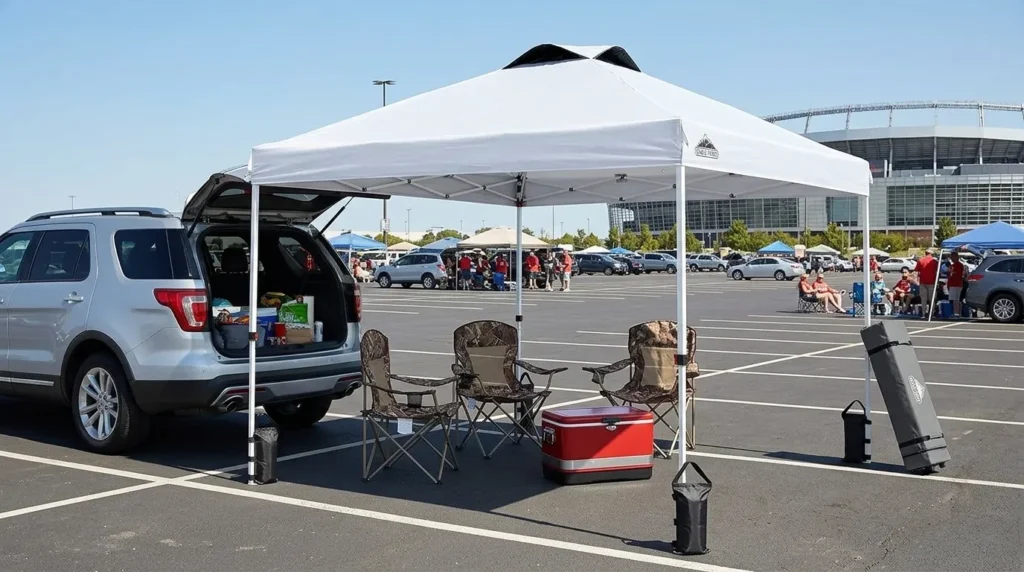
Four canopies sit in the $130 to $148 band:
- The Eagle Peak canopy 10×10 review covers the $144.99 Eagle Peak with a PeakPush lock, a vented peak, and heat sealed seams.
- The MasterCanopy 10×10 review covers the $129.95 MasterCanopy with a roller bag and more than 8,000 ratings.
- The ABCCANOPY durable easy pop up canopy tent review covers the $135.95 ABCCANOPY with a storage sidewall and wheeled bag.
- The 10×10 ft pop up canopy tent with sidewall review covers the $147.99 Sannwsg with three windowed sidewalls.
For about $60 to $80 more than the cheapest canopy, you get a rolling bag, a vented top, and a more comfortable setup. For about $15 to $45 less than the premium tier, you lose some frame thickness and some fabric weight but keep a carry weight near 33 to 37 pounds.
That is why I recommend mid tier first. It is the sweet spot between a canopy you can lift alone and a canopy that survives regular use. You can always step up later if your use grows.
If you want to estimate your real cost, use cost per use, which is the next section.
How do you calculate cost per use for a pop-up canopy tent?
Divide the price by the number of times you expect to use the canopy, and compare the result across tiers. This one number often settles the cheap versus premium question.
Here is an illustrative example. The use counts are my assumptions, not guarantees, and your results will vary:
| Canopy | Price | Assumed uses | Cost per use |
|---|---|---|---|
| Vinabilia One Push | $69.97 | 10 | $7.00 |
| Yaheetech 10×10 | $112.99 | 20 | $5.65 |
| Eagle Peak 10×10 | $144.99 | 50 | $2.90 |
| Eurmax USA 10×10 | $188.91 | 100 | $1.89 |
If you use a canopy ten times in its life, the cheap one wins on total cost, while at a hundred uses, the premium one wins on cost per use. The right answer depends on your own numbers, not on the price tag.
Add two practical checks. First, count replacement risk: a cheaper frame in rough weather may need replacing sooner. Second, count the hassle: a heavy canopy you dread lifting costs you time every use. For carry weight, my pop up canopy tent guide lists the weight of each model.
Now you have what you need to choose. Match the tier to your usage, then pick the specific canopy that fits your car, your strength, and your weather.
What do people ask about how to choose between cheap and premium pop-up canopy tent?
People mostly ask whether price equals quality, how long cheap canopies last, fire ratings, sidewalls, and replacement math, and the answers below cover each one.
Is a more expensive pop-up canopy tent always better?
No, a more expensive pop-up canopy tent is not always better, because price tracks frame weight and extras more than it tracks overall satisfaction. In my hub, the $69.97 Vinabilia holds a 4.5 star rating, the $188.91 Eurmax also holds 4.5, and the $129.95 MasterCanopy sits at 4.3 across more than 8,000 ratings. The premium models are tougher and heavier, but a lighter canopy can be the better pick if you carry it alone and only use it a few times a year.
How long does a cheap pop-up canopy tent last?
A cheap pop-up canopy tent usually lasts a few seasons of occasional use, and the top fabric usually wears out before the frame does. Thin 150D or 190T tops fade and tear sooner in strong sun, and lighter frames bend more easily in gusts. How you treat it matters most: weighting every leg, taking it down in strong wind, and drying it before storage can stretch its life well past what the price suggests.
Do I need a fire retardant canopy for a market or event?
You may, depending on the event and your local fire marshal, so ask the organizer before you buy. Fire codes in many cities require tents and canopies to be flame resistant under NFPA 701 with a permanent label, and permits typically start at 400 square feet, which a single 10×10 does not reach. Organizers can still ask for proof, and several canopies lined up side by side can add up fast. The Eurmax and Quictent list fire retardant tops, while most budget models do not.
Are sidewalls worth paying extra for?
Sidewalls are worth paying extra for if you sell, host in cooler weather, or need privacy, and they are not worth it for simple backyard shade. The Quictent, Sannwsg, and Cobizi include them, and the ABCCANOPY includes one storage wall. Walls add shade and wind protection on the sides, but they also add sail area, so they make anchoring more important. I use them on calm days and remove them first when gusts rise.
Is it smarter to buy a cheap canopy and replace it every year?
It can be, if you use the canopy only a few times a year and you are comfortable replacing it, but the math changes fast if you set up weekly. A $70 canopy replaced every year costs about $70 a year, while a $189 canopy that lasts five seasons costs about $38 a year. Cost per use is the better yardstick, and I walk through an example above. If you value your time and hate replacing gear, spend more on the frame.
Helpful Guides
- How Durable Are Pop-Up Canopy Tents in Severe Weather?
- How to Clean a Canopy Tent
- How to Put Up a Pop Up Canopy Tent
- How to Fold a Pop Up Beach Tent
Should you buy a cheap or premium pop-up canopy tent?
Buy a cheap pop-up canopy tent for occasional calm-weather use, a mid-priced one for most people, and a premium one if you set up weekly or need walls and a fire rating. Match the tier to your use, and the price will make sense.
My short answer to the question of how to choose between cheap and premium pop-up canopy tent is mid-tier first, because a canopy you can carry alone and use often beats a perfect canopy that stays in the garage. For the full ranking and top picks, start with my pop up canopy tent guide.