
How to put up a pop up canopy tent sounds like a ten second job, until the first time you open the frame upside down, pinch a finger in a slider, and watch a breeze carry the top across the parking lot. It really is a two to five minute job when you do it in the right order. Here are the nine steps I follow every time, plus what changes for solo setups, heavy frames, and windy days.
These steps work for the ten canopies I compared in my pop up canopy tent guide, from the 22 pound Oneofics to the 62 pound Cobizi. Setup styles differ slightly, and I point out the differences wherever they matter.
How do you put up a pop up canopy tent step by step?
You put up a pop up canopy tent by choosing a level spot, opening the frame halfway, attaching the top, expanding the frame fully, locking the legs, raising the height, and anchoring every leg. Here are the nine steps in the order I do them:
- Pick a level, clear spot and check the wind direction.
- Lay the bag flat and take out the frame, top, weights, stakes, and ropes.
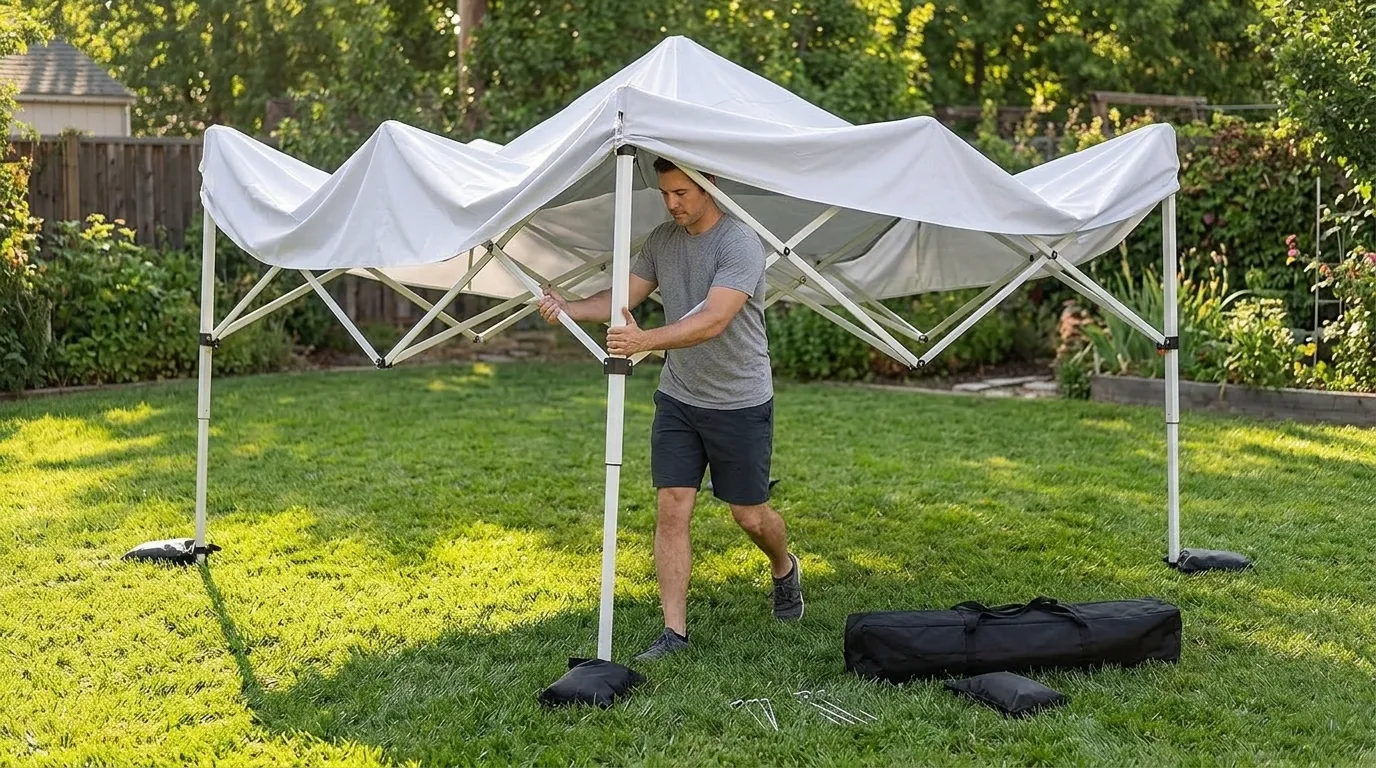
- Open the frame about halfway while it is still on the ground.
- Drape the top over the frame and attach the velcro straps to the truss.
- Walk each corner outward until the frame is almost fully open.
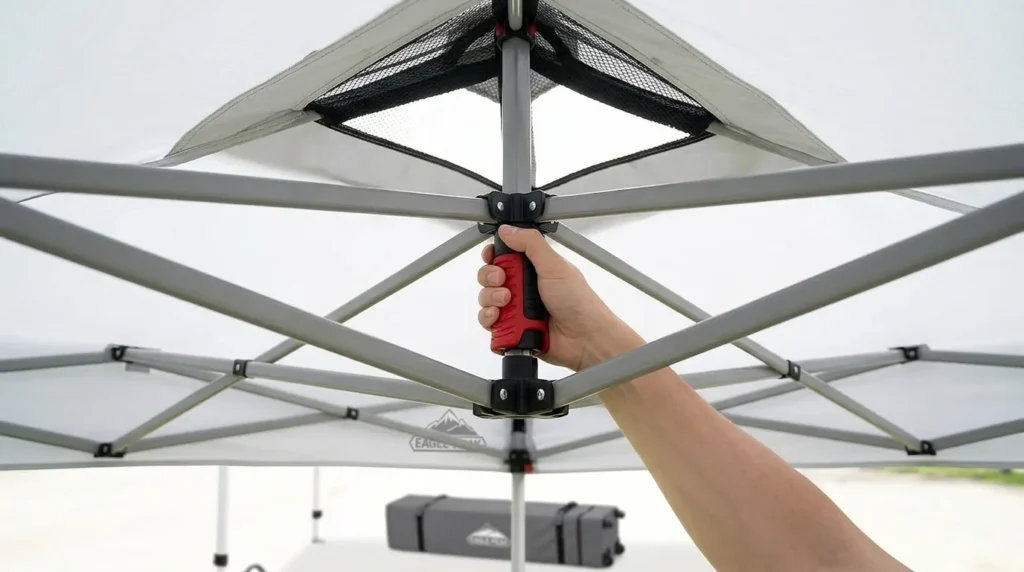
- Push up the center lock, or slide the corner locks, until they click.
- Raise each leg to the height you want and check the locking buttons.
- Anchor all four legs with weight bags, stakes, and guy lines.
- Add sidewalls last, and only if the wind is calm.
The two parts people rush are step 4 and step 8. A top that is not fully seated on the truss makes the frame hard to lock, and an unanchored canopy is a kite waiting for a gust. Slow down on those two and the rest is easy.
I always set the legs to the lowest height first, then raise them one at a time in small steps, since a lopsided frame is much more likely to bind. If you plan to use a lower height in wind, leave it there. A shorter canopy catches less breeze.
For general wind guidance before you start, the National Weather Service wind safety page is a good short read, and my pop up canopy tent guide has wind and anchoring advice for each canopy in the hub.
How do you choose the right spot for a pop up canopy tent?
Choose a flat, open spot clear of branches, power lines, and slopes, and set up with the wind in mind. A bad spot makes a good canopy fail, and a good spot makes a cheap canopy feel solid.
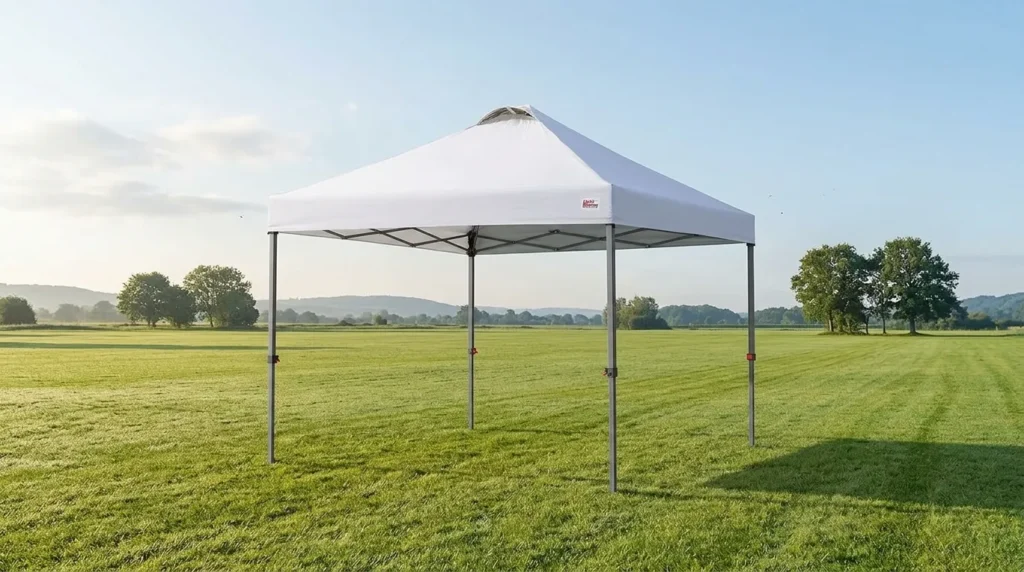
Here is what I check before I unfold anything:
- Level ground: a slope makes the frame twist and the legs bind.
- Overhead clearance: no tree limbs, power lines, or awnings above the peak.
- Wind direction: note which way the breeze blows and where gusts funnel.
- Ground type: grass takes stakes, pavement needs weights, sand needs heavy weights.
- Shade and sun: place the canopy where the shade will cover the table for the whole event.
The Beaufort scale from the National Weather Service puts a strong breeze at about 25 to 31 miles per hour, and you can read it on the National Weather Service Beaufort page. If gusts are already near that range when you arrive, I do not set up. A canopy goes up in minutes, but a bent frame stays bent.
If you plan to drive long ground anchors rather than short tent stakes, call 811 first so a utility line does not get hit. You can learn how that works at Call 811. Most canopy stakes are short, but better safe than sorry in a yard or a park.
On the beach, anchoring is a different game, so my beach pop up tent guide covers sand setup in more detail, and my beach camping tents guide explains why heavy weights beat stakes on soft sand. A good site takes two minutes to find and saves you from rebuilding the whole setup later.
Can one person put up a pop up canopy tent alone?
Yes, one person can put up most pop up canopy tents alone if they use a center lock and weigh under about 38 pounds. Heavier frames technically open solo too, but they are far easier and safer with a helper.
Here is how the ten canopies break down by setup style and weight:
| Canopy | Setup style | Weight | Solo friendly? |
|---|---|---|---|
| Oneofics Slant Leg | Push up frame, velcro top | 22 lb | Yes |
| Vinabilia One Push | One push center lock | 30 lb | Yes |
| ABCCANOPY 10×10 | Center lock button | 31 lb | Yes |
| Eagle Peak 10×10 | PeakPush center lock | 33.4 lb | Yes |
| Yaheetech 10×10 | Pop up frame, thumb buttons | 33.5 lb | Yes |
| MasterCanopy 10×10 | Center hub push | about 35 lb | Yes |
| Sannwsg 10×10 | One touch lock | 37.4 lb | Yes |
| Quictent 10×10 | Manual expand | 52.2 lb | With a helper |
| Eurmax USA 10×10 | Slider lock, expand and extend | 53.9 lb | With a helper |
| Cobizi 10×10 | Expand frame, stretch legs | 62 lb | With a helper |
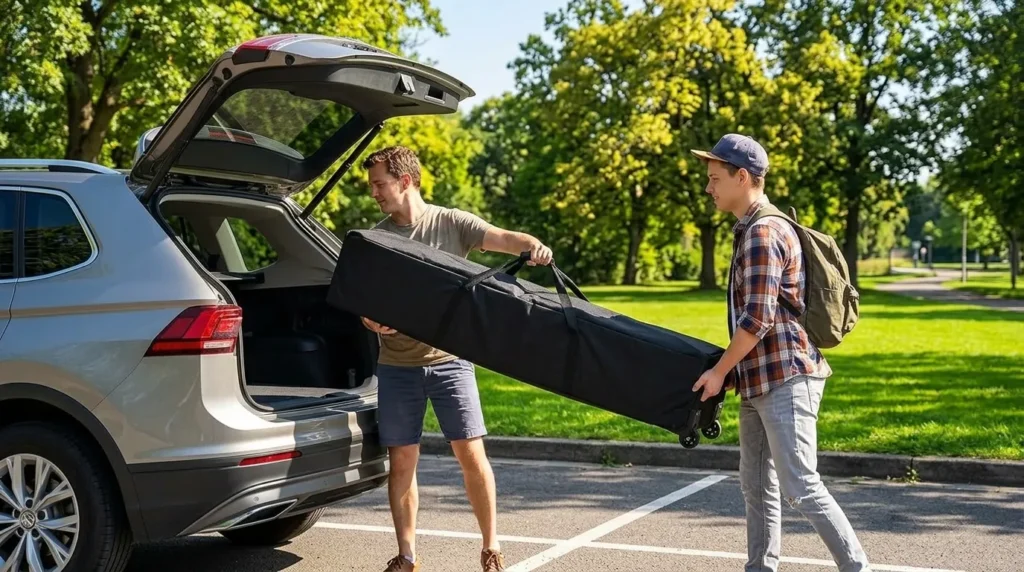
Weight changes the whole experience. The National Institute for Occupational Safety and Health lifting equation sets a baseline of about 51 pounds under ideal conditions, and conditions around a canopy are rarely ideal, since the load is long, awkward, and often lifted from a car trunk. You can read the method in the NIOSH lifting equation manual. I use the roller bag on every heavy canopy and ask for help with the lift.
For single person setup, the easiest are the center lock canopies. The Eagle Peak canopy 10×10 review covers the PeakPush lock, the one push pop up canopy review covers the Vinabilia, the MasterCanopy 10×10 review covers the center hub, the ABCCANOPY durable easy pop up canopy tent review covers the center lock button, and the 10×10 ft pop up canopy tent with sidewall review covers the one touch lock on the Sannwsg.
The lightest, the 10×10 slant leg canopy review, is the simplest of all, but its top attaches with velcro and the legs slant inward, so check the order carefully.
How do you anchor and finish setting up a pop up canopy tent?
You anchor a pop up canopy tent by strapping a weight bag to every leg, staking the guy lines at an angle, and adding sidewalls last. Anchoring is the step that decides whether the canopy stays put when a gust arrives.
Here is my anchoring routine:
- Fill each weight bag with sand or gravel before the canopy goes up.
- Strap one bag to each leg, close to the foot pad, and pull the straps tight.
- Run guy lines from the top corners to stakes at about a 45 degree angle.
- Stake out the ropes where the ground allows, and use extra weights on pavement.
- Check that every leg is locked and every button has popped out.
What comes in the box matters. The Yaheetech canopy review covers the wide four inch feet, twelve stakes, and four sandbags in its kit, the Quictent pop up canopy review covers the three sidewalls and the full anchoring set, and the Eurmax 10×10 canopy review covers a frame that ships with four weight bags but no stakes. For sidewalls, the Cobizi canopy review covers four PU coated walls on a heavy 62 pound frame.
Add sidewalls last, since they catch the wind. I attach one wall at a time, starting on the lee side, and I remove them first when gusts rise. If you want a deeper look at weather limits, my pop up canopy tent guide explains when to take a canopy down.
Heat matters when you set up for hours. The CDC extreme heat guidance is a good reminder to bring water and take breaks, even under shade. A properly anchored canopy gives you shade, not a cooler.
When the canopy is up, walk around it and shake each leg gently. If any corner moves more than the others, re-check the weights and the locks.
What mistakes make a pop up canopy tent hard to put up or take down?
The biggest mistakes are skipping the top velcro, opening the frame unevenly, forcing a stuck lock, and rushing the anchors. Each one turns a two minute job into a fight.
Here are the mistakes I see most:
- Opening the frame fully before attaching the top.
- Locking one corner at a time instead of expanding all four evenly.
- Pinching fingers in the sliders or the center scissor.
- Setting the legs to full height first in a breeze.
- Skipping weights because it looks calm.
Takedown is the same steps in reverse, and a clean takedown keeps your canopy working for years. Here is my order:
- Remove sidewalls and guy lines first.
- Unstrap and empty the weight bags.
- Lower the legs to the shortest height.
- Press the center lock release, or unlock the sliders, while a helper steadies the frame.
- Collapse the frame slowly while guiding the scissor, and keep your fingers outside the joints.
- Fold the top loosely and roll the frame back into the bag.
If the canopy is wet or sandy, open it again at home and let it dry before storing it. My pop up tent guide has more setup and takedown habits that carry over to other shelters, and my tents for families guide covers keeping kids clear of folding frames, which is a real pinch hazard.
Finally, do a practice setup before your first event. Ten minutes in the yard teaches you the lock order, the sliders, and the weight of the bag, which makes the real day much smoother.
What do people ask about putting up a pop up canopy tent?
People mostly ask about solo setup, orientation, setup time, stuck locks, and different ground types, and the answers below cover each one.
Do I need two people to put up a 10×10 pop up canopy tent?
You can put up most 10×10 pop up canopy tents alone if they use a center lock and weigh under about 38 pounds, but two people make it faster and safer. The Eagle Peak, Vinabilia, MasterCanopy, ABCCANOPY, and Sannwsg are all designed for one person setup. The heavier frames, like the 52 pound Quictent, the 54 pound Eurmax, and the 62 pound Cobizi, are much easier with a helper. A second person also steadies the frame in a breeze while you lock the legs.
Which way should I face a pop up canopy tent?
Face the open side of a pop up canopy tent away from the wind, and put your heaviest weights and any sidewalls on the windward side. Before I unfold anything, I check which way the breeze is blowing and where the sun will be during the event. If you are using sidewalls, hang the walls on the side that blocks wind or low sun, not on the side that traps a gust. When the wind is shifting, I skip walls entirely and keep the roof low.
How long does it take to set up a pop up canopy tent?
A center lock pop up canopy tent takes about one to three minutes to open and raise, and about five to ten minutes once you add weights, stakes, and guy lines. Heavier models with manual expansion, like the Quictent, list about three minutes for the basic setup. Takedown is usually a bit slower than setup, because you remove weights and stakes first. Your first setup will always take longer than your fifth, so try it once at home before an event.
What if the legs will not lock or the canopy sticks while opening?
If the legs will not lock or the canopy sticks, stop and check three things before you force anything: the top is seated and the velcro is attached, the frame is opened evenly on all four sides, and the sliders are clear of grit. Forcing a stuck frame is how legs bend and fingers get pinched. I open the frame back to half, reset the top, and try again. A light shot of silicone lubricant on dry sliders helps too.
Can I set up a pop up canopy tent on sand, grass, or pavement?
You can set up a pop up canopy tent on all three, but the anchoring changes. On grass, use stakes at an angle plus weight bags. On sand, stakes pull out easily, so lean on heavy weight bags and buried anchors. On pavement, you cannot stake at all, so rely entirely on weights, at least 20 to 40 pounds per leg for a large event. Always check wind and weather before you set up, whatever the surface.
Helpful Guides
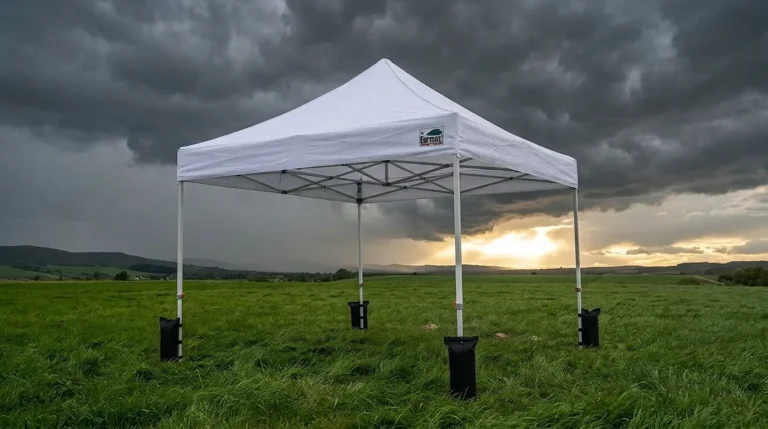
- How Durable Are Pop-Up Canopy Tents in Severe Weather?
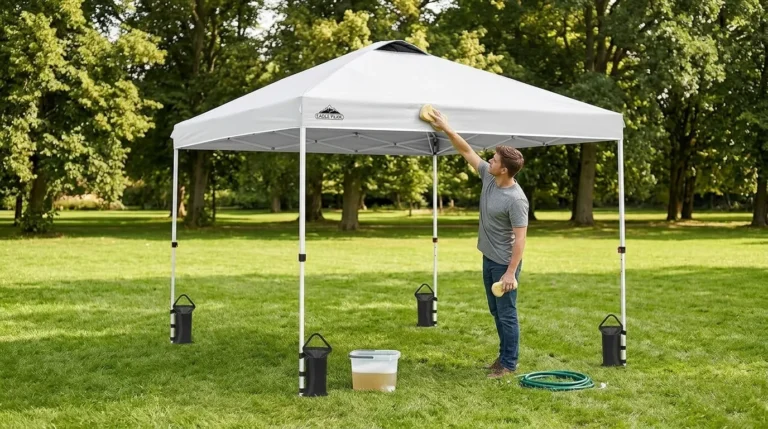
- How to Clean a Canopy Tent
- How to Choose Between Cheap and Premium Pop Up Canopy Tents
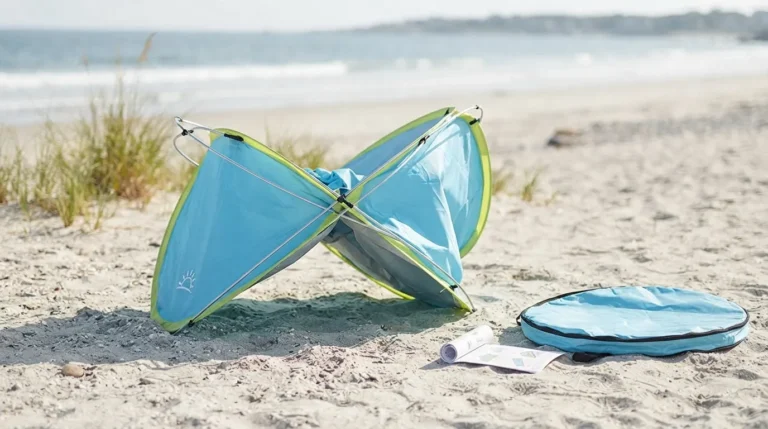
- How to Fold a Pop Up Beach Tent
Is a pop up canopy tent easy to put up?
Yes, a pop up canopy tent is easy to put up once you learn the order, and most center lock models take only a few minutes. Pick a level spot, attach the top, expand evenly, lock the legs, and anchor every leg.
If you are still shopping, my pop up canopy tent guide compares all ten canopies on setup style, weight, and price, so you can pick the one that matches your strength and your car.