
How durable are pop-up canopy tents in severe weather? Durable enough for sun, light rain, and a steady breeze, and not durable enough for gale-force gusts, hail, snow, or lightning. The mistake I see most is people trusting a canopy because it survived last weekend, then getting a frame bent in half by one gust they did not see coming. In this guide I walk through what each kind of weather does to a 10×10 canopy and what to do before it hits.
Everything here comes from the ten canopies I compared for my pop up canopy tent guide, from the 22 pound Oneofics slant leg to the 62 pound Cobizi. The frames, tops, and anchoring kits differ a lot, so the limits differ too. I will tell you where each one lands.
How durable are pop-up canopy tents in severe weather?
A pop-up canopy tent is durable in everyday weather and fragile in severe weather, because it is a lightweight frame holding up a big fabric sail. Even the toughest 10×10 here is a shade structure, not a storm shelter. Treat the numbers below as a ceiling, not a promise.
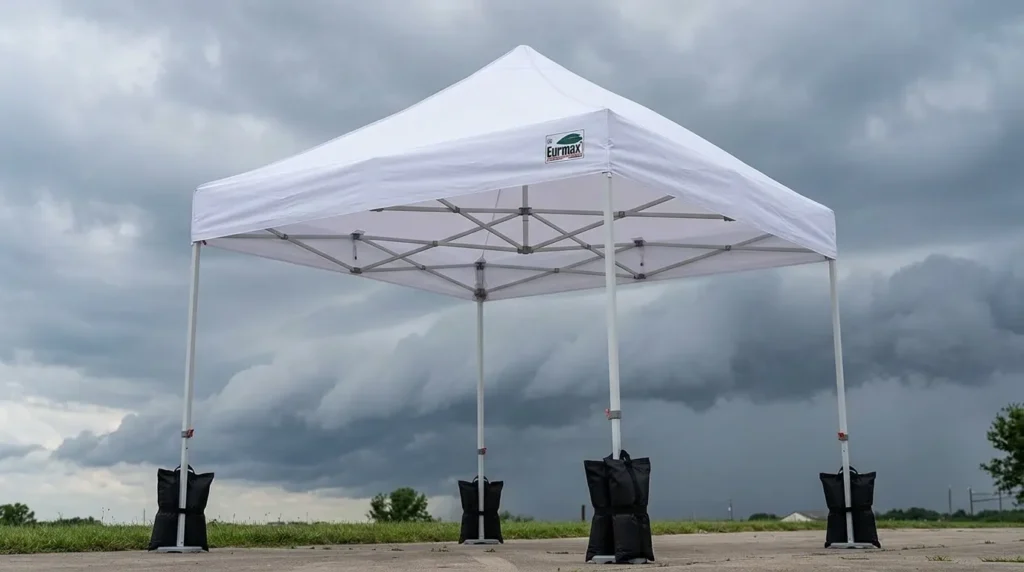
This is how a typical 10×10 canopy handles each kind of weather, based on my own use of these canopies:
| Weather | How a typical pop-up canopy tent handles it | What I do |
|---|---|---|
| Sunny and hot | Handles it well, UPF 50+ tops block most UV | Use the vent, drink water |
| Light rain | Handles it, water resistant tops shed showers | Keep sidewalls off the windward side |
| Steady heavy rain | Marginal, seams can weep and fabric can pool | Tip pooled water out, consider taking it down |
| Breeze up to about 15 mph | Handles it with all four legs weighted | Stake the guy lines |
| Strong breeze, 25 to 31 mph | Risky, frames start to flex and lift | Take it down |
| Gusts of 40 mph or more | Not reliable, frames can bend or fly | Do not set up |
| Hail | Fails, fabric tears and frames dent | Take it down before it starts |
| Snow | Fails, wet snow weight bends the frame | Do not use for snow loads |
| Lightning | Gives no protection | Leave for a building or hard top car |
If you camp in cold weather, my winter camping tents guide covers shelters that can carry a snow load, because a canopy cannot. The rest of this article explains the reasons behind each row so you can judge borderline days for yourself.
How much wind can a pop-up canopy tent actually survive?
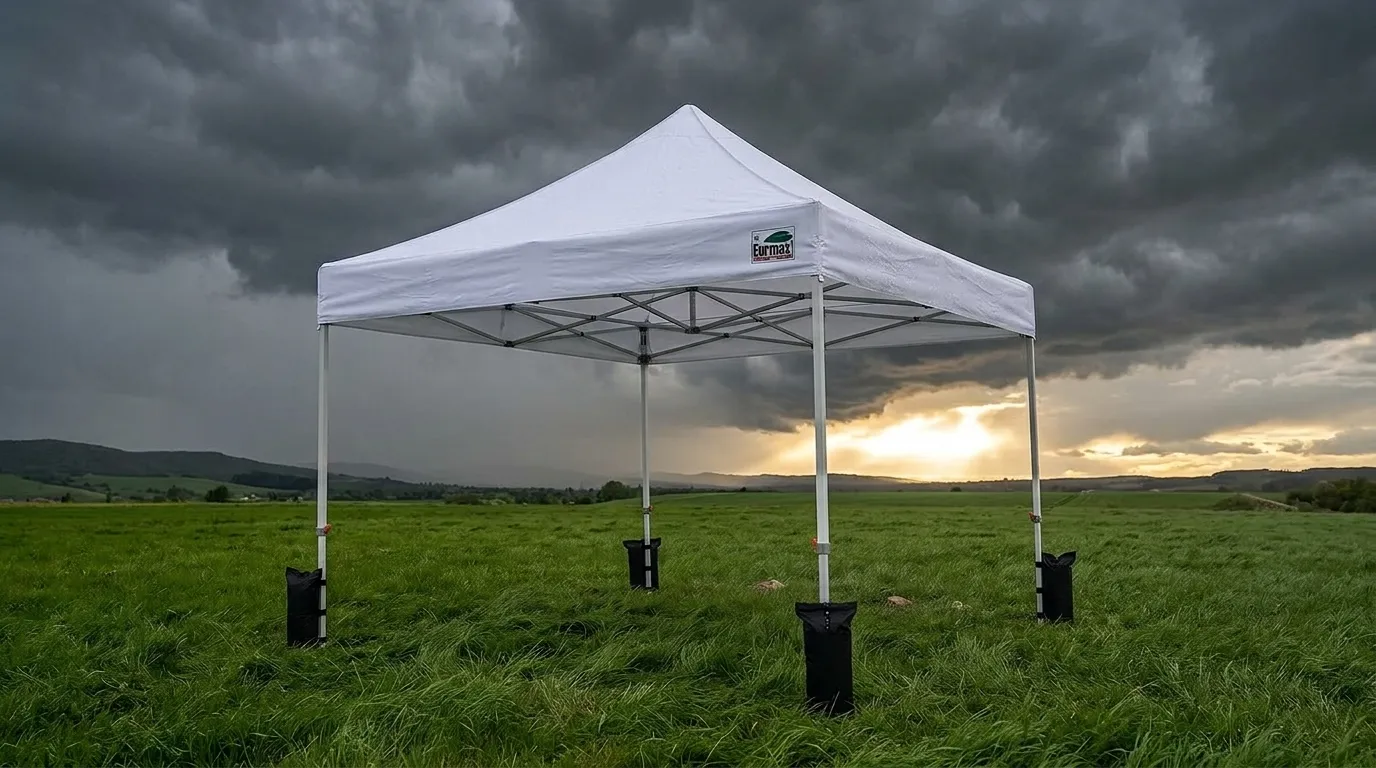
A pop-up canopy tent can usually survive a light to moderate breeze up to about 15 to 20 miles per hour when every leg is weighted, and it should come down before a strong breeze arrives. The National Weather Service Beaufort scale describes a strong breeze at about 25 to 31 miles per hour, and you can read the full scale on their official page.
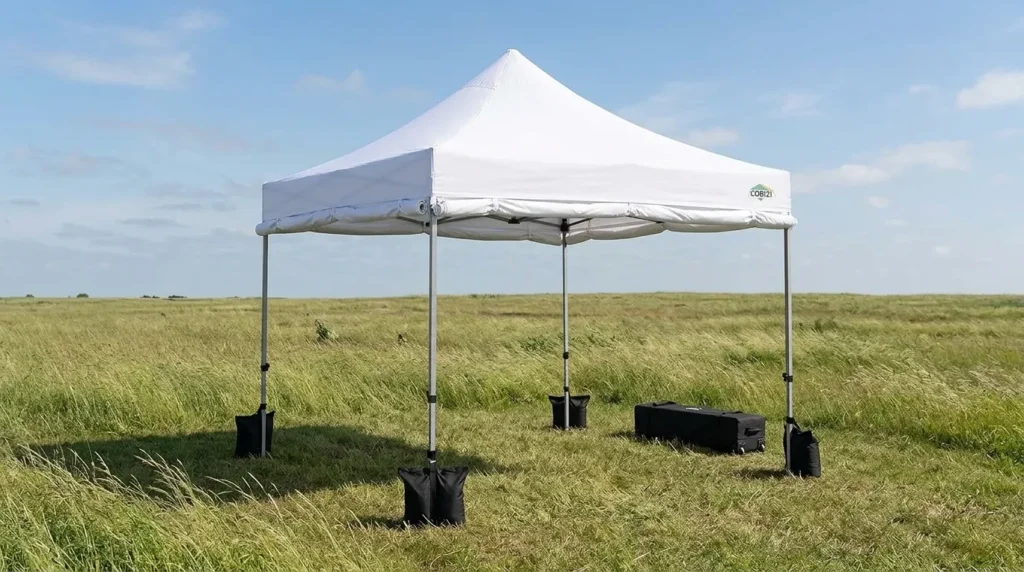
Wind is the number one killer of canopy tents, so I judge the frame and the anchor kit first. The MasterCanopy brand itself describes handling coastal breezes up to 15 miles per hour with gusts to 20, which is a refreshingly honest ceiling. Here is how the sturdier and lighter options compare on the details that matter in wind:
| Canopy | Weight | Durability detail | Anchoring in the box |
|---|---|---|---|
| Eurmax USA 10×10 | 53.9 lb | 1 1/8 inch steel legs | 4 weight bags, no stakes |
| Cobizi 10×10 | 62 lb | 1.26 inch poles | 4 sandbags, 8 pegs, 4 ropes |
| Quictent 10×10 | 52.2 lb | 600D PU coated top | 4 sandbags, 8 stakes, 4 guy lines |
| Eagle Peak 10×10 | 33.4 lb | Vented peak, heat sealed seams | 4 weight bags, 8 stakes, 4 ropes |
| MasterCanopy 10×10 | about 35 lb | 1.2mm steel poles, vented top | 4 weight bags, stakes, ropes |
| Oneofics Slant Leg | 22 lb | 190T top, maker advises against rain and wind | 4 stakes, no weights |
Weight is a form of durability here. A heavier frame flexes less, so the 54 and 62 pound canopies lift less easily, and the 22 pound slant leg lifts easiest. Vents help too, since a vented peak lets some air pass instead of pushing the whole roof.
Anchoring matters as much as the frame. I fill every weight bag with sand or gravel, strap one to each leg, and stake the guy lines when the ground allows. For general wind preparation, the National Weather Service has a good wind safety page and a pre-storm checklist that apply to a canopy as much as to patio furniture.
On sand, stakes pull out easily, so lean on weights. My beach camping tents guide covers anchoring tricks for sand that work here too. In short, a canopy is only as durable as its anchors, and no anchor kit covers a strong breeze.
Can a pop-up canopy tent handle heavy rain without leaking?
A pop-up canopy tent can handle light to moderate rain without leaking, but heavy steady rain exposes the weak points: seams, flat spots, and thin fabric. Most tops here are water resistant rather than waterproof, so the real test is how the top deals with seams and pooling.
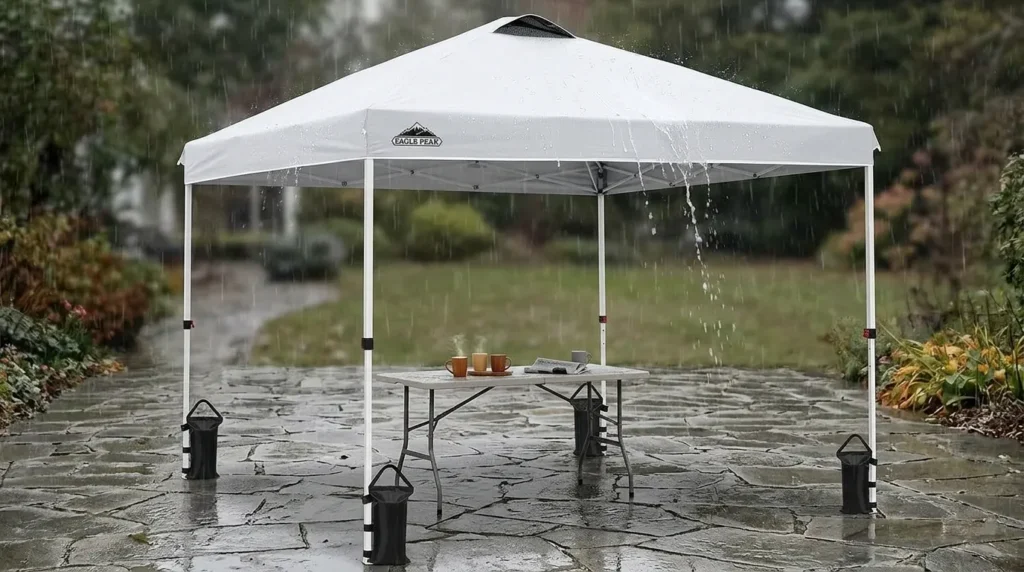
Look for these features when rain matters:
- Sealed or heat sealed seams: the Eurmax lists seam sealed stitching and the Eagle Peak lists heat sealed seams.
- A hydrostatic head rating: the MasterCanopy lists 1000mm, which repels light to moderate rain.
- A vented peak: the Eagle Peak and MasterCanopy vents help keep water from pooling.
- Heavier fabric: 420D and 600D tops, like the Cobizi and Quictent, resist wear longer than 150D or 190T.
The tops that I trust least in rain are the thin ones. The Oneofics maker says its 190T top is not meant for heavy rain and wind, and advises putting it away on rainy days. That is the kind of honesty I like to see, and I follow it.
Rain also adds weight. A saggy top can hold liters of water, which bends the truss and pulls the frame toward the ground. I tip pooled water out by pushing up from underneath with a broom handle, and I lower the legs to the shortest height so water runs off faster.
If rain turns into wind, the picture changes immediately, because a wet canopy catches more wind and weighs more. When rain arrives with gusts, take it down. If you are choosing a canopy mostly for wet weather, my pop up canopy tent guide points to the models with sealed seams and heavier tops, and a vendor with a long day in drizzle should add sidewalls.
Does sun and heat wear out a pop-up canopy tent over time?
Yes, sun and heat wear out a pop-up canopy tent over time, because UV slowly fades and weakens the top fabric even when the weather looks perfect. This is the quiet kind of severe weather: it does not cause a dramatic failure, it just shortens the life of the top every sunny season.
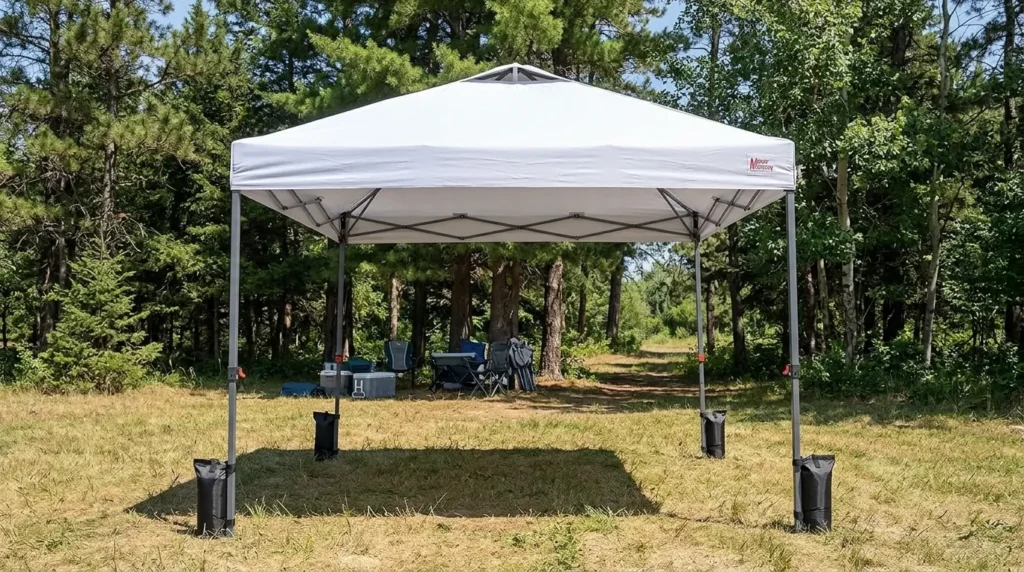
Most tops in this hub carry UPF 50+ and a silver coated underside, which reflects heat and blocks UV. The Eagle Peak and MasterCanopy use 150D silver coated fabric with vented peaks, and the Cobizi and Quictent use heavier 420D and 600D PU coated tops. Thicker fabric usually lasts longer in constant sun, but a thin top is fine if you only use the canopy a few days a year.
Here is how I protect a top from UV:
- Fold the canopy and store it out of the sun.
- Do not leave it up for weeks in direct sun.
- Rinse off salt, sand, and dirt, then dry it fully.
- Check seams and corner straps each season.
The EPA UV Index scale is a good way to judge how harsh the day is. On high index days, expect the fabric to age faster, especially at the peak and the valance edges. My beach pop up tent guide goes deeper on UV exposure at the coast, where sun and salt team up.
Heat also affects you. A vented canopy stays cooler, but a 100 square foot roof does not replace water and breaks, and the CDC extreme heat guidance is worth a quick read before a long summer market. A durable canopy protects you only if you stay safe underneath it.
What should you do when severe weather hits while your canopy is up?
Take the canopy down as soon as severe weather is forecast or visible, and move people to a real shelter. A canopy is not a shelter, and lightning makes that especially true, because the National Weather Service lists tents among structures that are not safe during a thunderstorm.
Here is my severe weather routine, in order:
- Check the forecast before you set up. If a thunderstorm or high wind is likely, I do not set up.
- Watch the sky. Fast building clouds and a sudden change in wind direction mean it is time to pack.
- Remove sidewalls first. Walls add the most wind load and come off in seconds.
- Lower the legs and unclip the top if you have time, or collapse the whole frame.
- Move to a building or hard top car when thunder is heard.
- Wait before going back out. The NWS advises staying inside for at least 30 minutes after the last thunder.
The National Weather Service lightning safety page is clear that no place outdoors is safe in a thunderstorm and that tents do not protect you. I treat that as the rule for every canopy, including the heavy ones.
After the weather passes, dry the canopy before folding it. A wet top stored in the roller bag grows mildew, and mildew eats fabric and coating. If you sleep outdoors under a canopy for any reason, my pop up tent guide covers real sleeping shelters, which are designed for overnight weather in a way a canopy is not.
Finally, check the frame for bends, loose rivets, and damaged feet before you use it again, since a slightly bent leg is a weak leg.
Which pop-up canopy tents hold up best in rough weather?
The pop-up canopy tents that hold up best in rough weather are the heavy steel frames with sealed tops: the Eurmax, the Cobizi, and the Quictent. They resist wind and flexing better, but they do not make a storm safe, and all of them still need weights and a timely takedown.
Here is how I group the ten canopies from my guide:
- Toughest frames: the Eurmax 10×10 canopy review covers the 1 1/8 inch steel frame and sealed top, the Cobizi canopy review covers the 1.26 inch poles and 62 pound weight, and the Quictent pop up canopy review covers the 600D top with removable sidewalls.
- Best balance of weight and weather: the Eagle Peak canopy 10×10 review covers the vented peak and heat sealed seams, and the MasterCanopy 10×10 review covers the 1000mm top and honest wind rating.
- Budget and light: the one push pop up canopy review covers the Vinabilia with a full anchoring kit, the ABCCANOPY durable easy pop up canopy tent review covers the storage sidewall model, and the Yaheetech canopy review covers the solar light model with 12 stakes.
- Walls for vendors: the 10×10 ft pop up canopy tent with sidewall review covers the Sannwsg, which needs extra care in wind because of its three walls.
- Calm days only: the 10×10 slant leg canopy review covers the Oneofics, which is the lightest and the least suited to wind or rain.
If you are choosing from scratch, my pop up canopy tent guide ranks all ten on weight, setup, and price. And for general durability, remember that a cheaper canopy used on calm days can outlast an expensive one that is left up in gusts.
The best canopy is the one you take down in time. Even the strongest frame in this hub is not a substitute for judgment, and I would rather fold a good canopy early than rebuild a bent one.
What do people ask about how durable are pop-up canopy tents in severe weather?
People mostly ask about wind speed limits, waterproofing, sidewalls, overnight use, and frame thickness, and the answers below cover each one.
Can a pop-up canopy tent survive 40 mph wind?
A pop-up canopy tent should not be left standing in 40 mph wind, even with every leg weighted. That speed sits well above a strong breeze on the Beaufort scale and in the range where many National Weather Service offices issue high wind warnings, so a 10×10 frame can bend or lift no matter how thick the legs are. The heavier steel frames like the Eurmax and Cobizi give you a bigger margin in gusts, but I still take any canopy down once the wind turns strong. Folding it takes a few minutes, and a bent frame costs far more.
Is a pop-up canopy tent really waterproof?
Most pop-up canopy tents are water resistant rather than fully waterproof, which is enough for showers but not for a long soaking. Sealed or heat sealed seams, like those listed on the Eurmax and Eagle Peak tops, and a hydrostatic head rating, like the 1000mm figure on the MasterCanopy, tell you more than the word waterproof on a listing. Water can still weep through seams in steady rain, and sagging fabric collects pools that add weight. I tip the pooled water out from underneath with a broom handle and keep sidewalls off the windward side.
Should I use sidewalls on a canopy tent when it is windy?
No, sidewalls should come off or stay rolled up when the wind is blowing, because walls turn a 10×10 roof into a much bigger sail. The Quictent, Sannwsg, Cobizi, and ABCCANOPY all offer walls, and they are great for sun, privacy, and light drizzle, but a gust that a roof only canopy shrugs off can lift a fully walled one. If you need walls in a breeze, keep them on the lee side only and stake every guy line. Removing them takes seconds and saves your frame.
Can I leave a pop-up canopy tent up overnight?
You can leave a pop-up canopy tent up overnight only if the forecast is calm and every leg is weighted and staked, but I avoid it when I can. Overnight wind shifts, dew, and unexpected showers all hit a canopy while no one is watching, and a 10×10 top can collect pooled water or tip with no one around to catch it. On a multi-day camp I collapse the top and leave the frame short and weighted, or take the whole thing down. Treat it like a daytime shade structure, not a shelter.
Does a thicker frame really make a canopy tent more durable?
A thicker frame does make a pop-up canopy tent more durable, mainly because it resists bending when gusts lift one side. The Eurmax uses 1 1/8 inch square legs and the Cobizi uses 1.26 inch poles, while the lightweight canopies use thinner tubing to save weight. The tradeoff is carry weight, since those two run about 54 and 62 pounds. Thick legs help, but weights, stakes, and good judgment about when to take the canopy down matter just as much.
Helpful Guides
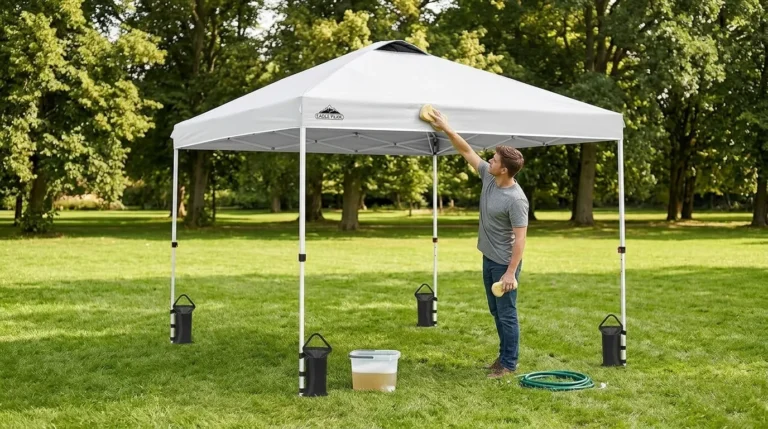
- How to Clean a Canopy Tent
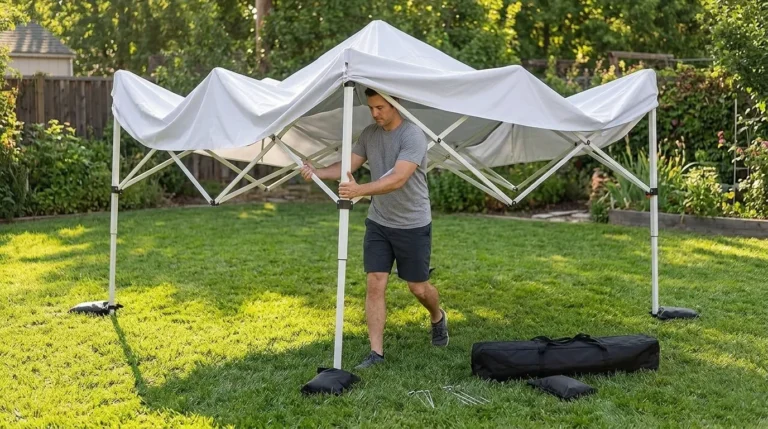
- How to Put Up a Pop Up Canopy Tent
- How to Choose Between Cheap and Premium Pop Up Canopy Tents
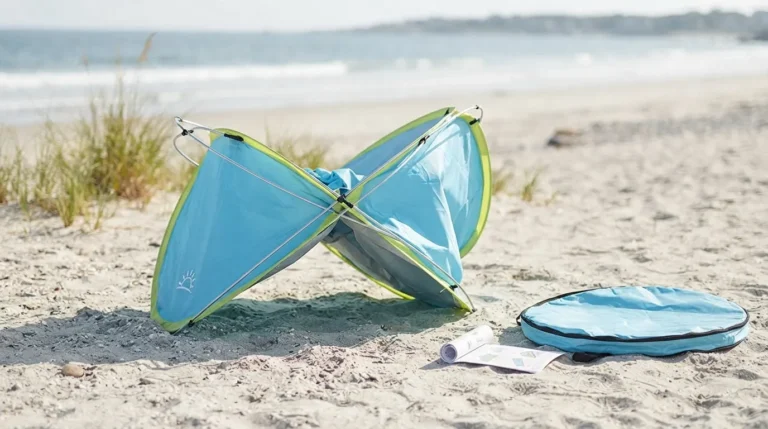
- How to Fold a Pop Up Beach Tent
Should you trust a pop-up canopy tent in severe weather?
No, you should not trust a pop-up canopy tent in severe weather, and you should trust it fully in ordinary weather when it is anchored properly. Sun, light rain, and a steady breeze are well within its range, and anything stronger means weights, walls off, or a quick takedown.
My advice is simple. Pick a heavier steel frame if you set up often, anchor every leg every time, and read the forecast before you unfold anything. If you want help picking the right canopy, my pop up canopy tent guide is the place to start.