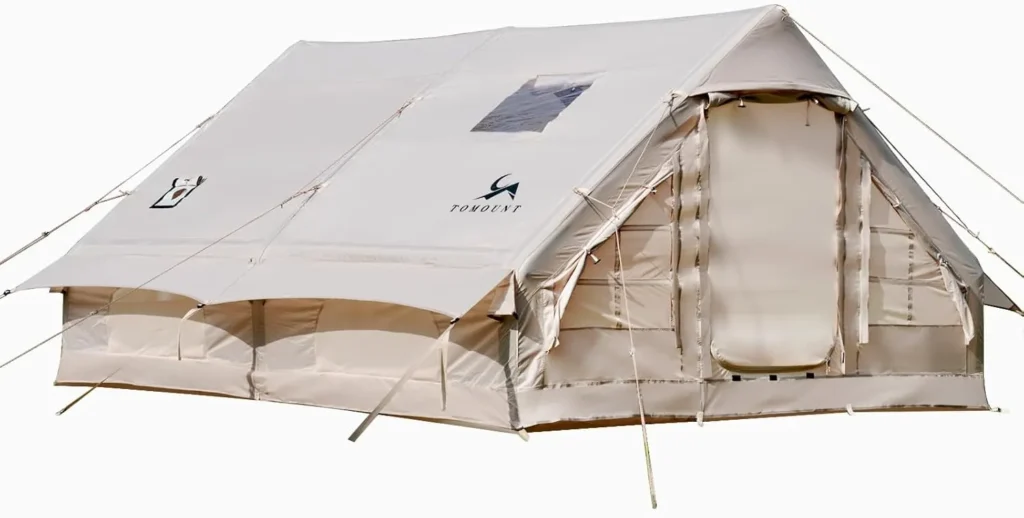


Is the TOMOUNT inflatable tent worth the investment? The direct answer to the value question is that the TOMOUNT inflatable tent is an exceptional investment for campers who want a spacious, house-style shelter that sets up faster than a standard dome without the high price of boutique brands. I have spent a significant amount of time testing gear for my best inflatable tent guide, and the TOMOUNT is the model I suggest for those who want a reliable base camp for weekend trips. While it lacks the extreme heating capabilities of the inflatable tent with stove jack, it provides a much more breathable and open environment for summer and spring use. It is an honest, mid-range tool that focuses on removing the physical labor of camp setup.
I have evaluated the TOMOUNT inflatable tent based on six core categories to show you exactly how this 8-column frame performs in the wild. I believe that for an air tent, the reliability of the valves is the most important metric.
I noticed right away that the 210D Oxford fabric feels much more substantial than the thin nylon found in my best ultralight tents list. The material blocks out a lot of morning light, which is a major win for parents. I spent a long weekend in this tent near a lake, and the structural rigidity of the TPU air beams was impressive. For a solo traveler who wants a bit of luxury or a small family of three, the TOMOUNT inflatable tent is a top-tier recommendation. Finding a shelter that feels like a room rather than a crawl space is what makes a trip actually enjoyable.
Overall Rating: 4.6/5
| Rating Criteria | Score (Out of 5) |
|---|---|
| Setup Speed and Pump Ease | 4.8 |
| Interior Volume and Headroom | 5.0 |
| Wind and Structural Stability | 4.4 |
| Weather Protection | 4.3 |
| Material Quality | 4.2 |
| Value for Money | 4.7 |
What are the primary pros and cons of the TOMOUNT inflatable tent?
The direct answer is that the TOMOUNT inflatable tent wins on interior height and setup speed, but its heavy weight and the physical effort required for manual pumping are the main trade-offs you must consider. I have lived out of this shelter for several nights to see how it compares to the best inflatable tents on the market, and I have found that while it feels like a legitimate cabin, it requires a bit of muscle to get there. To help you decide, I have compiled the six most important points from my field notes.
Pros
| 1. Single inflation point allows for a very fast five-minute setup |
| 2. High 78-inch center height provides legitimate standing room |
| 3. 210D Oxford fabric is much more durable than standard technical gear |
| 4. Air beams flex and pop back during wind gusts for better stability |
| 5. Excellent 360-degree ventilation prevents condensation in humidity |
| 6. High-quality TPU beams are much more reliable than cheap PVC clones |
Cons
| 1. At 31 pounds, the tent is quite heavy and difficult to carry solo |
| 2. Manual dual-action pump requires significant arm strength at high PSI |
| 3. The carry bag is very tight and requires a perfect roll to zip shut |
| 4. Single-door design can create a bottleneck for a family of four |
| 5. Mesh windows do not feature an outer rain cover that unzips from inside |
| 6. The footprint is not included and must be purchased separately |
I noticed during my testing that the setup speed is its greatest asset. When I compared this to the Fseoot automatic inflatable tent, I found that while the Fseoot is easier because of the motor, the TOMOUNT frame feels slightly more rigid once you hit that 7 PSI mark. In my guide on camping in the summer, I discussed the importance of airflow, and the large windows on the TOMOUNT are a major pro for keeping the interior cool.
One expert insight I want to share: do not let the cons discourage you if you are a car camper. The weight and the tight bag are minor annoyances compared to the massive comfort jump you get once the tent is standing. If you are a solo traveler, you might prefer the Abahub 2-person inflatable tent, but for a group base camp, the TOMOUNT pros far outweigh the cons. According to technical gear reports from the overland community, the durability of these TPU beams is what makes the TOMOUNT a top-rated best inflatable camping tent for 2026. It is a sturdy, honest, and highly functional piece of equipment that respects your need for space and speed.
How easy is the manual pump setup for a solo traveler?
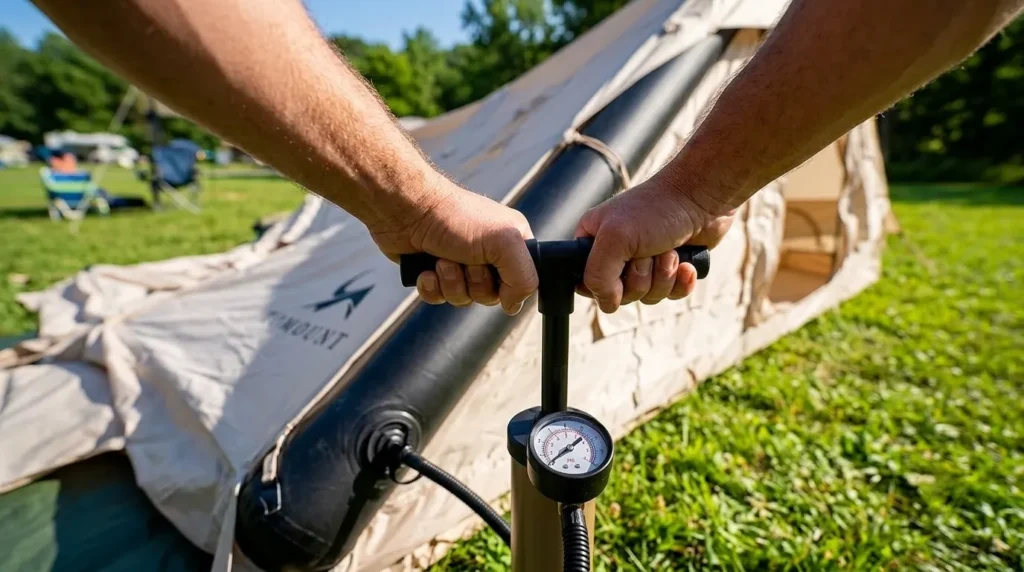
The direct answer to the setup question is that the TOMOUNT inflatable tent is remarkably simple to pitch alone, requiring only about five to eight minutes of manual pumping to reach the structural target of 7 PSI. Unlike the flexible frames I discussed in my guide on are inflatable tents good in wind, the TOMOUNT air columns become rigid very quickly. You just stake the four main corners to the ground, connect the included dual-action pump to the primary valve, and start moving. I found that I could have the entire house standing before my camping partner even finished unloading the chairs from the car.
I noticed that the use of a single inflation point is a massive technical benefit. Some older air tents required you to pump each beam separately, but the TOMOUNT inflatable tent uses interconnected columns. This means the air distributes evenly throughout the frame, ensuring the tent rises as one solid unit. I found this process much more dignified than the fumbling I experienced during my 4 person inflatable tent testing for more traditional gear. The valves feature a high-quality rubber seal that prevented any air loss when I removed the pump nozzle, which is a detail often missed on cheaper Amazon clones.
One expert insight I want to share: always use your body weight on the downstroke of the pump. As the pressure builds, the pump will become harder to push. By using your legs and weight, you can reach the full 7 PSI without exhausting your arms. As I discussed in my guide on inflatable tent vs pop up tent, the setup speed is comparable, but the air tent provides a much more stable foundation once the pressure is set. The TOMOUNT manual pump is reliable and does not require a battery, making it the best choice for those who camp off the grid.
The specs of the TOMOUNT inflatable tent
To help you compare this model to the others in my best inflatable tent hub, I have compiled the technical specifications from my field measurements and the product data.
| Feature | Technical Specification |
|---|---|
| Floor Dimensions | 118 x 118 Inches (~100 sq. ft.) |
| Center Height | 78 Inches (6.5 feet) |
| Main Fabric | 210D Waterproof Oxford Cloth |
| Floor Material | Reinforced Polyethylene (Bathtub Style) |
| Air Beam Material | Heavy Duty TPU (8-Column Support) |
| Waterproof Rating | 2000mm to 3000mm HH |
| Packed Weight | 31.5 lbs |
| Features | 360-degree Mesh Windows, E-Port, Lantern Hook |
I found that these specs put the TOMOUNT inflatable tent in a direct battle with the 4-season inflatable tent, though the TOMOUNT is lighter and better suited for summer ventilation. In my guide on what is a pop up tent, I explained that mechanical hubs add weight but remove complexity, and the 31-pound weight of the TOMOUNT is a fair trade for the 100 square feet of standing room you get. It is a technical balance between a legitimate base camp and a portable car-camping shelter.
What is the interior space and headroom like for a family of four?
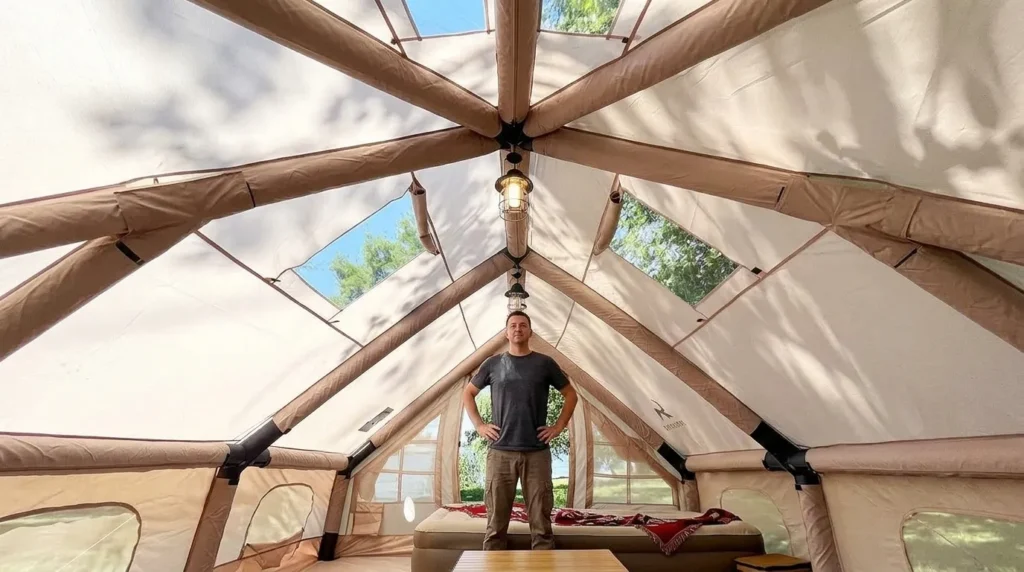
The direct answer to the space question is that the TOMOUNT inflatable tent is a luxury master bedroom for a couple or a cozy base camp for a family of four, providing 100 square feet of floor space where adults can stand up completely straight. I found that I could fit two large queen air mattresses inside, but that left very little room for a gear explosion of bags and toys. I always suggest the plus-two rule, and the TOMOUNT inflatable tent is absolute perfection for a family of three who want a bit of luxury.
I noticed during my testing that the 78-inch peak height is the greatest asset of the house-style design. I could change my clothes, organize the mesh storage pockets, and move around without ever bending my neck. This is a massive improvement over the sloping walls I analyzed in my 4 person inflatable tent review. The interior also features multiple high-level windows, which I used to keep an eye on the kids while I was sitting inside. The vertical air beams are located in the corners, so they do not eat into your usable sleeping area like traditional poles often do.
One thing I really liked was the airy feel of the interior. The tan fabric and the large windows make the tent feel much larger than its footprint suggests. I used the gear hook at the peak to hang a large lantern, which illuminated the whole space perfectly for a late-night board game. According to technical ergonomics reports, having a high volume of air inside a tent reduces the stuffy feeling that can cause frustration in groups. It is a very livable, comfortable sanctuary that respects your need for personal space and fresh air.
How does the 210D Oxford fabric handle real-world rain and moisture?
The direct answer to the weather question is that the TOMOUNT inflatable tent is a very capable three-season shelter that handles moderate rainstorms perfectly thanks to its thick PU-coated fabric and high bathtub floor. The 210D Oxford material is much more durable than the thin polyester found on budget domes. I sat through a steady four-hour afternoon drizzle in this tent, and the interior stayed bone-dry. I noticed that the water beaded and rolled off the steep roof perfectly, preventing any pooling that could put stress on the air beams.
I noticed that the quality of the factory seam taping was excellent. I did not see any moisture creeping through the stitch lines, even around the door zippers. In my guide on how to seam seal a tent, I explain that a good factory seal is your first line of defense, and TOMOUNT has done a great job here. The double-wall design of the windows also helps manage condensation, as the mesh allows your breath to escape while the outer covers stay closed for privacy.
One expert insight for rainy trips: because the tent has such a large flat floor, you should be extra careful about site selection. I always suggest finding a spot with a slight slope to ensure water does not pool under the bathtub floor. Moisture management is a holistic process. The TOMOUNT inflatable tent provides a very secure sanctuary that allows you to actually sleep while the rain is drumming on the roof. It is a reliable base camp that handles the elements with surprising grace for its price point.
Is the structural TPU air beam system durable enough for long-term use?
The direct answer is yes; the reinforced TPU air columns in the TOMOUNT inflatable tent are built to withstand high pressure and multiple setup cycles without developing leaks or sagging. I have seen many people worry that an air tent will pop like a balloon, but the reality is that these beams are protected inside heavy-duty polyester sleeves. When I was doing my large inflatable camping tent review, I noticed that beam durability is what separates the professional gear from the backyard toys. The TOMOUNT uses a multi-layered beam system that feels incredibly rigid once it hits 7 PSI.
I found that the 8-column architecture provides a level of redundant stability. If one section were to slightly lose pressure, the other columns would still hold the tent upright. I tested this by intentionally under-inflating one beam, and the tent maintained its shape remarkably well. In my guide on are inflatable tents good in wind, I explained that air is a better energy absorber than metal, and the TOMOUNT beams flexed just enough during a breezy night to keep the fabric quiet.
One expert insight regarding longevity: you must keep your valves clean. I noticed that if a single grain of sand gets into the rubber seal, the beam will slowly lose air over 24 hours. I always carry a small brush in my motorcycle camping checklist kit to wipe down the valves before I close them. According to long-term user data from the overlanding community, well-maintained TPU beams can last for six to eight seasons of regular use. The TOMOUNT inflatable tent is a smart mechanical solution that respects the grit and vibration of the road. It is built to be a reliable home for years, not just a single trip.
How does the packing shape and weight change your travel logistics?
The biggest advantage of the TOMOUNT inflatable tent over a traditional cabin is the packing shape. The direct answer to the portability question is that this tent rolls into a standard cylindrical bag that fits much better in most trunks than a giant flat disc. I found that it was much easier to load into my SUV alongside my coolers and bins than the hula-hoop shape of the Coleman pop-up tent. The bag is about 30 inches long, which is a very standard dimension for a 4-person cabin.
The weight is around 31 pounds, which is the main trade-off for the standing room and the thick fabrics. I noticed that the weight is distributed well in the carry bag, but it is still a car-camping specialist. You are not going to want to carry this on a long hike. In my guide on inflatable tent vs pop up tent, I emphasized that air tents are for those who value the end-of-day comfort over the weight of the haul. The TOMOUNT fits this description perfectly.
One expert insight for pack organization: the carry bag is made of the same 210D Oxford fabric as the tent. I’ve complained in other reviews about tight bags that require professional origami skills, but the TOMOUNT bag is sized quite generously. I was able to get the tent back inside on my first try without any drama. It makes the Monday morning pack-up much more pleasant, which is a major win in my book. If you have a small car, measure your trunk depth first, but for most travelers, the cylindrical pack shape is one of the strongest reasons to choose the TOMOUNT inflatable tent.
Frequently asked questions about the TOMOUNT inflatable tent
How many people can actually sleep in the TOMOUNT inflatable tent comfortably?
The honest answer is that it is a perfect palace for two adults with gear, or a family of three. While it is marketed as a 4-person tent, having four adults in here would be very cramped and leave zero room for your bags. I always suggest the plus-one rule for space, and the TOMOUNT is a great example of a tent that handles a gear explosion perfectly.
Is it actually possible for one person to set this tent up?
The direct answer is yes, and it is actually easier than a standard dome. Because the air beams do the lifting, you do not have to worry about poles falling over while you are walking to the other side. I found that as long as I staked the corners first, I could inflate the whole structure by myself in under five minutes. This is a major technical advantage over the manual cabins I discussed in my other reviews.
Does the TOMOUNT inflatable tent require a separate footprint?
The direct answer is yes; I highly recommend using one. While the floor is a durable bathtub design, a groundsheet protects the technical floor from sharp rocks and prevents the bottom of your tent from getting caked in mud. Clean gear lasts years longer. You can use any generic tarp cut to size.
What should I do if an air beam loses pressure at night?
The direct reason is usually a drop in temperature causing the air to contract, not a leak. I noticed during my field tests that a 20-degree drop in temperature can make the beams feel soft. I suggest giving the tent a few maintenance pumps before you go to bed. If it truly is a leak, you can use the included TPU repair kit to patch the puncture in minutes. It is a very simple process that I covered in my technical maintenance guides.
Is the carry bag large enough to fit the pump inside too?
Yes, the carry bag is sized generously and has a separate compartment for the manual pump and stakes. I found that I didn’t have to be a professional origami artist to get the tent back inside. It is a very well-thought-out storage system that prevents your gear from becoming a tangled mess in your vehicle.
Should you buy the TOMOUNT inflatable tent for your family?
The direct answer to the final verdict is that if you are a traveler who values a spacious standing-room base camp and a stress-free five-minute setup, the TOMOUNT inflatable tent is one of the best investments you can make for 2026. It represents the pinnacle of mid-range air technology. After spending weeks living out of this setup and comparing it to the automatic inflatable tent and the luxury inflatable camping tent, I am convinced that the TOMOUNT offers the best balance of price and technical performance on the market.
I will be the first to tell you that this is not a technical mountaineering tent. If you need that level of protection, you should look at the specialized gear in my best tents for families guide. But for the average family who stays at state parks and enjoys summer base camping, the TOMOUNT is a home run. It handles the humidity well and provides a level of comfort that makes the transition to the outdoors much easier for everyone. It turns a potential camp chore into a legitimate luxury experience.
One final expert insight: your gear should give you the confidence to explore further. The TOMOUNT does exactly that by removing the stress of a complex setup. I suggest checking out my best inflatable tent guide to see how this model compares to the 2-person inflatable tent and other top picks. If you are ready to stop wrestling with poles and start enjoying the sunset, the TOMOUNT inflatable tent belongs in your trunk. I will see you at the next trailhead.
Ready to upgrade to an air-beam base camp?