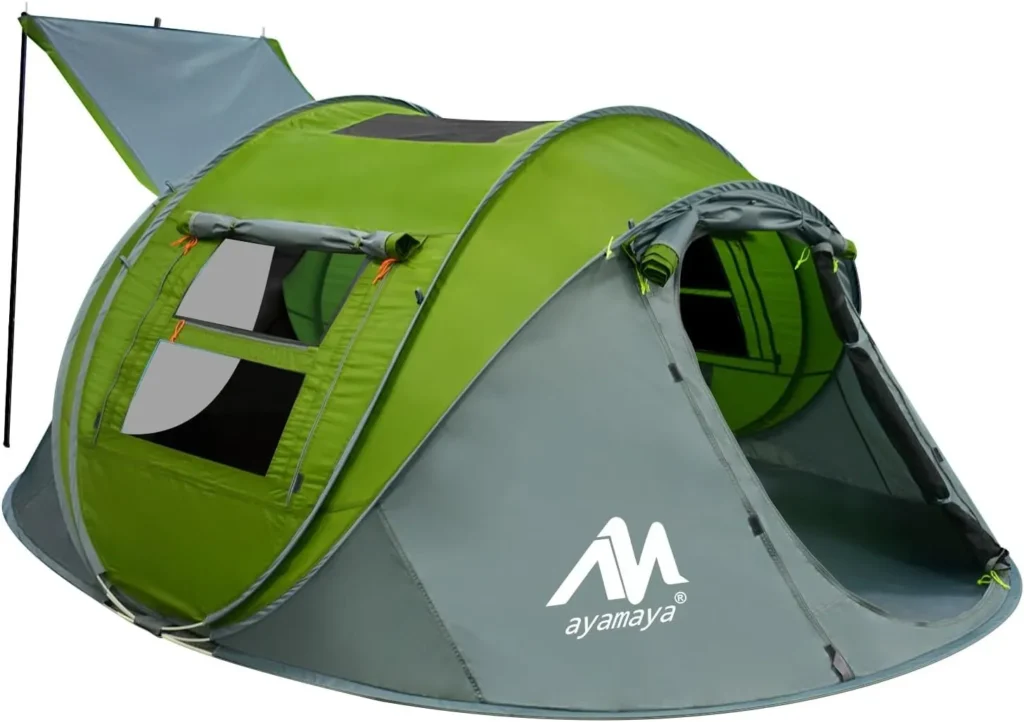
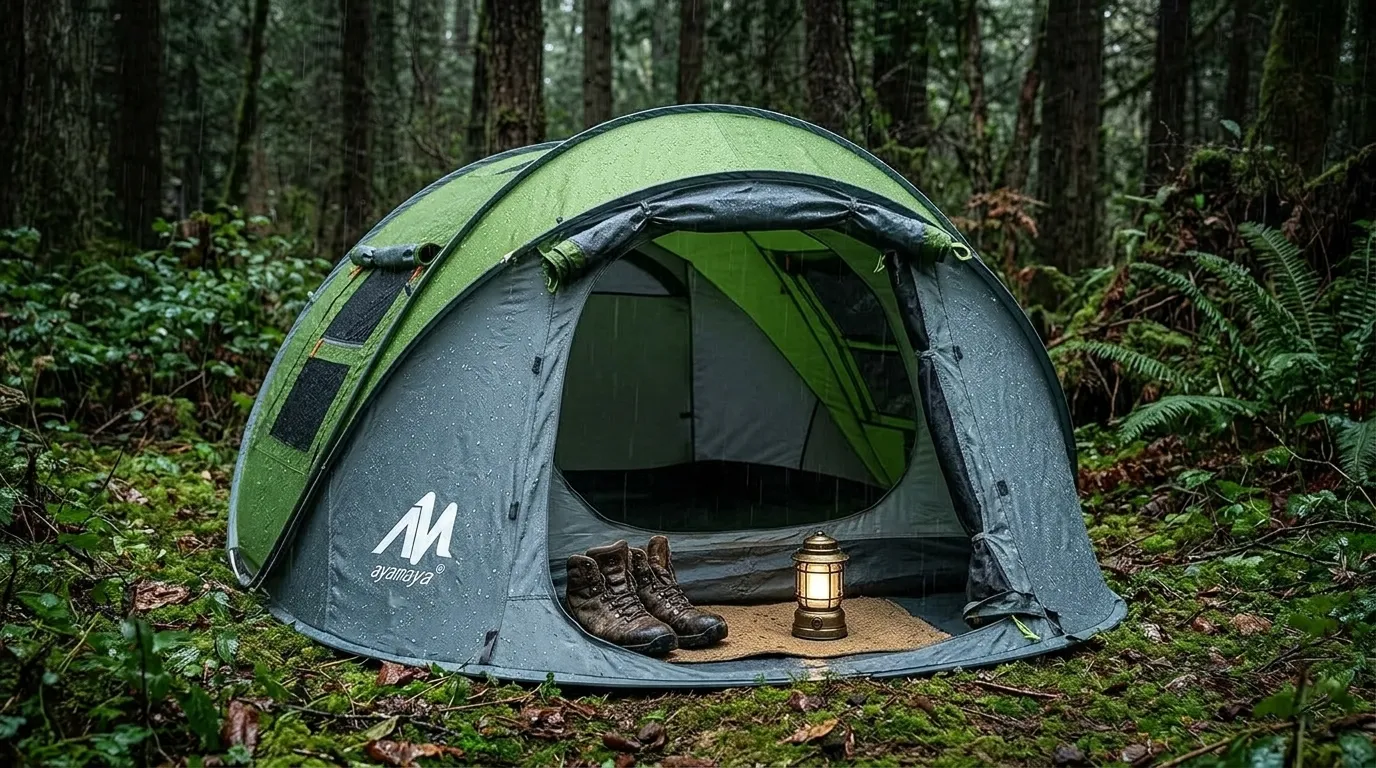

Is the Ayamaya pop up tent the big brother of all throw tents? I have tested a lot of quick setup gear for my guide on the best pop up tent, and most of the circular throw tents I see are basically toys. They are single-layer bubbles that leak the second a cloud looks at them funny. But the Ayamaya Pop Up Tent is a completely different animal. The direct answer to whether it is worth the higher price is a definite yes, especially if you actually plan on camping in places where it might rain. While I still love the simplicity of the classic models I discussed in my Coleman pop up tent review, the Ayamaya is the only throw tent I have found that feels like a legitimate piece of camping equipment rather than a backyard accessory.
What sets this tent apart is that it addresses the two biggest flaws of the pop up category: condensation and gear storage. Most people who ask what is a pop up tent are looking for speed, and the Ayamaya delivers that, but it adds a layer of sophistication with its double-wall construction. I spent a long weekend in this tent during a soggy trip to the Blue Ridge Mountains, and it was the first time I did not wake up with a damp face in a throw tent. It is much larger and heavier than a basic dome, but for a family or a couple who wants the convenience of a five-second setup without the misery of a wet sleeping bag, this is the gold standard.
I am writing this from the perspective of someone who has struggled with cheap gear on the road. Throughout this review, I will break down the technical specs of the fabric, the reality of the 4 to 6 person capacity, and the struggle of folding a tent this large. As I mention in my guide on how to fold a pop up tent, the larger the frame, the more finesse you need. The Ayamaya is a beast to pack back into its bag, but the performance you get once the kickstand is down or the car is parked is unmatched in this category. It is an honest, rugged shelter that bridges the gap between a festival tent and a real basecamp.
How the double layer design solves the condensation problem that ruins most pop ups
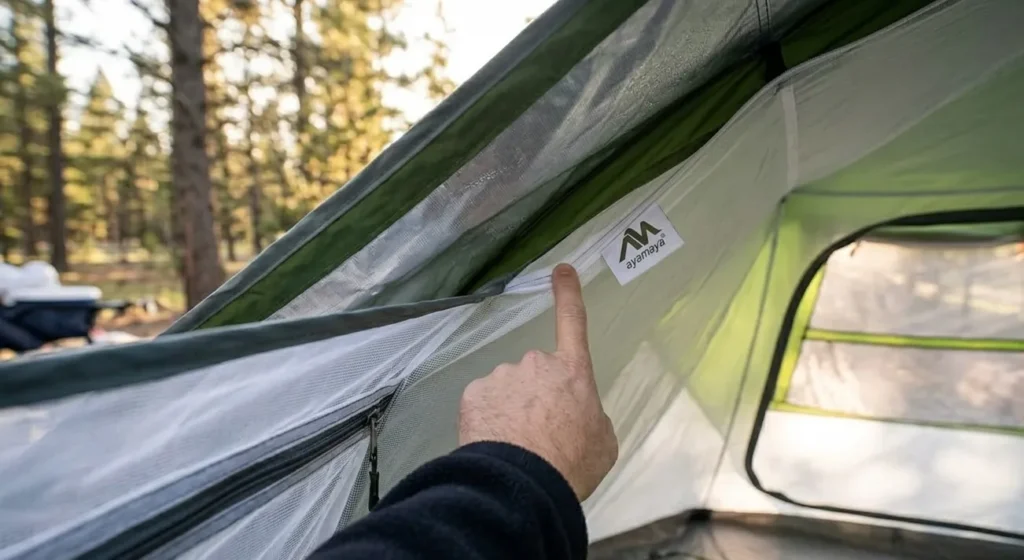
The direct reason most people hate pop up tents is the indoor rain caused by condensation. I have had nights in the budget domes where I woke up in a puddle just from my own breath hitting the cold walls. The Ayamaya Pop Up Tent solves this by using a true double-layer system. This means you have an inner mesh tent and a separate outer rainfly that are both attached to the frame but have a gap between them. This gap allows air to circulate and prevents moisture from building up on the inside. It is a feature usually reserved for high-end gear, and seeing it on a throw tent was a huge win for me.
I noticed during my testing that this design also makes the tent much better at handling a real storm. Single-layer tents are prone to leaking if anything touches the walls while it is raining. With the Ayamaya, my gear could lean against the mesh inner wall and stay perfectly dry because the outer fly was doing all the work several inches away. It creates a much more comfortable environment that feels like a real room. This is a massive upgrade over the Night Cat pop up tent model I tested, which relies on a more traditional single-wall approach with a small cap.
According to the technical fabric specs, the outer fly has a 3000mm waterproof rating, which is very high for this category. I sat through a steady four-hour drizzle in this tent and did not see a single bead of moisture pull through the seams. The seams are factory-taped, and the attention to detail is much better than I expected for an Amazon brand. If you are a casual camper who values a dry night over the absolute lightest weight, this double-layer design is the main reason to choose the Ayamaya. It takes the speed of a pop up and combines it with the weather protection of a traditional dome, making it a unique hybrid that actually performs in the wild.
Why the integrated vestibule is a total game-changer for gear organization
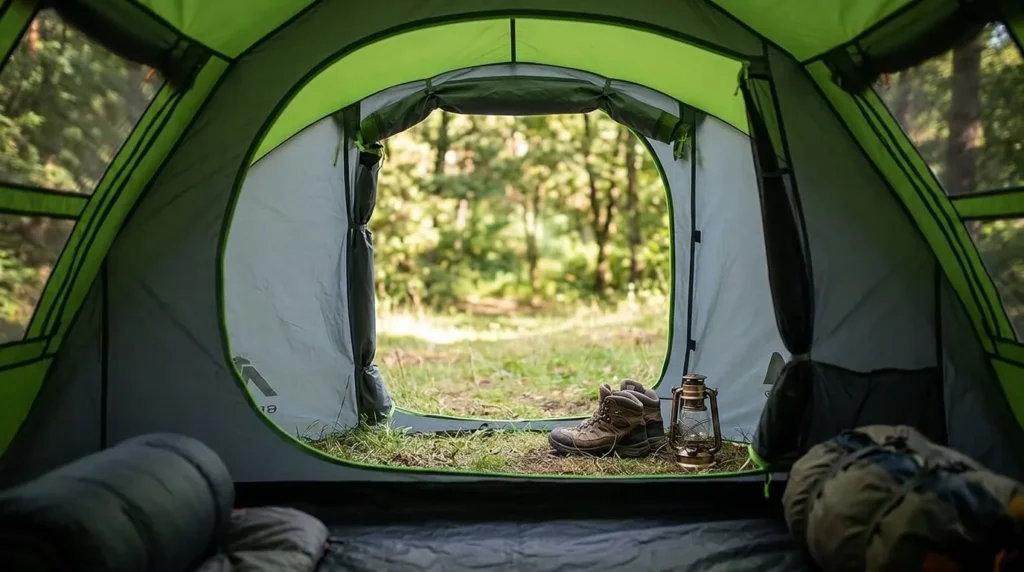
If there is one thing that drives me crazy in a small tent, it is a gear explosion of muddy boots and wet bags sitting right next to my pillow. The direct answer to why the Ayamaya Pop Up Tent feels so much larger than its competitors is the integrated vestibule. This is essentially a built-in porch that gives you a dry place to store your shoes, cooler, or even a small chair without taking up space in the sleeping area. I have not seen another circular throw tent that pulls this off as well as Ayamaya does. In my Oileus pop up tent review, I mentioned their attempt at a vestibule, but the Ayamaya version feels much more like a natural extension of the tent floor.
Having this extra space completely changed the way I organized my camp. I could peel off my wet outer layers in the vestibule and crawl into the sleeping area in clean base layers, keeping the dirt and mud outside where it belongs. It makes the tent feel like a multi-room apartment rather than a nylon bubble. For families, this is a massive benefit. If you are looking at the much larger Bushnell instant tent for a family trip, you will find more room, but you will also pay for it with a much slower setup. The Ayamaya gives you that porch luxury while still being a five-second throw tent.
One expert insight I noticed is that the vestibule area does not have a floor, which I actually prefer. It means I can put my muddy boots directly on the grass or a footprint without worrying about staining the tent floor. According to user feedback from various camping communities, the lack of a vestibule is the number one reason people eventually upgrade from a basic pop up to a more expensive cabin tent. Ayamaya skipped that step by building it in from the start. As I emphasize in my guide to the best pop up tent, livability is about more than just floor square footage; it is about how you manage the mess of being outdoors.
Is the setup and folding process manageable for a solo camper?
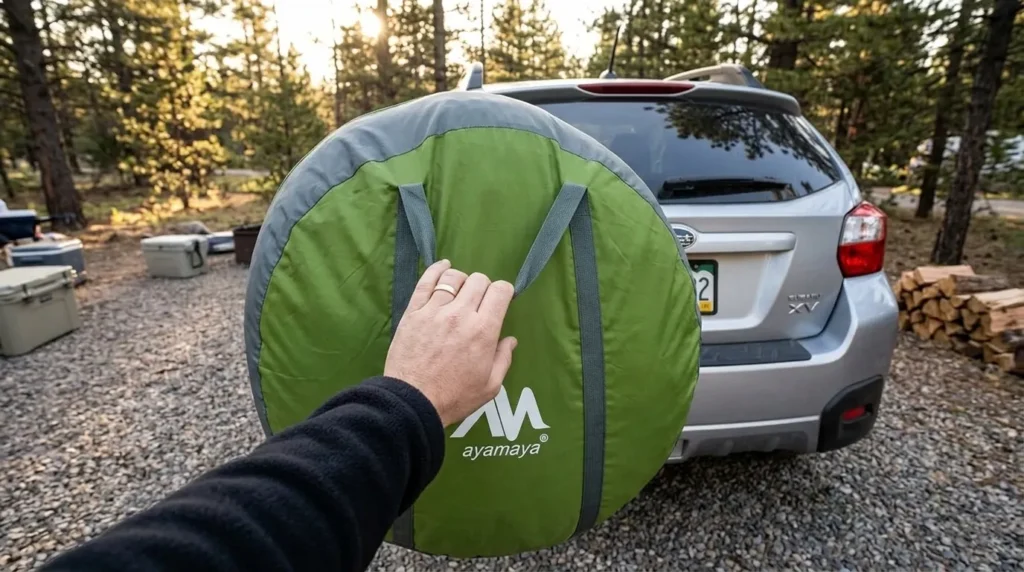
The direct answer to the setup question is that it is just as fast as any other throw tent. You pull it out of the circular bag, release the yellow strap, and the tent springs into shape before it hits the ground. It is an incredibly satisfying process that always gets a few stares from other campers at the site. Because the poles are already pre-assembled and sewn into the sleeves, you are not wrestling with any loose parts. This makes it much more intuitive than the manual hub systems I discussed in my Teton sports vista quick tent review, which require you to lock each leg individually.
However, we need to talk about the fold, because this is where the Ayamaya can become a challenge. Because this tent is so much larger than a standard 2-person dome, the fiberglass frame is thicker and holds a lot more tension. I found that I really had to use my full body weight to get the tent into the initial taco shape. You might struggle with this tent on your first try. It requires a specific figure-eight twist that can be intimidating if you are not used to it. Once I mastered the technique, I could pack it away in about a minute, but it is definitely a two-person job if it is windy outside.
The packed size is another thing to keep in mind. The Ayamaya folds into a flat disc that is nearly 40 inches wide. This is significantly larger than the circular bags for the models I covered in my best pop up tent guide. If you have a small car, you will have to slide this vertically behind the front seats because it likely will not fit flat in your trunk. It is the trade-off you make for having a tent that is big enough for a family and strong enough for the rain. For me, the extra five pounds of weight and the large pack size are a fair price to pay for the setup speed and the double-layer protection.
How does the Ayamaya handle wind stability compared to hub style tents?
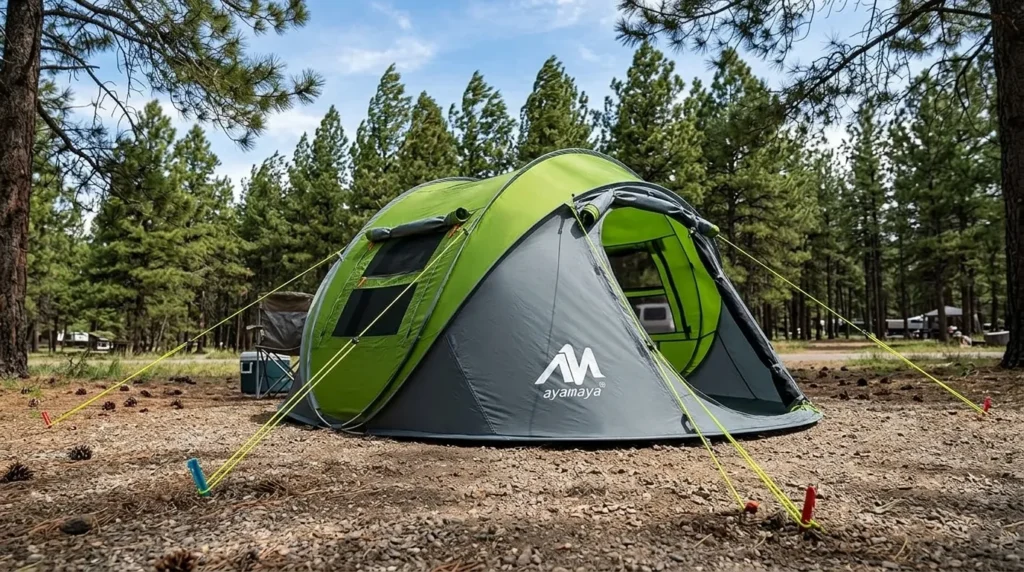
When the wind picks up, circular pop up tents have a reputation for being a bit like kites. Because the frames are flexible fiberglass, they are designed to deform and then spring back into shape rather than standing rigid. I found that the Ayamaya handles moderate breezes surprisingly well because of its low-profile arched design. It does not catch the wind as much as the vertical walls of the Toogh tent hexagon model. However, in a heavy gust, you will definitely see the walls of the Ayamaya push inward. It can be a bit unnerving if you are not used to it, but the frame is remarkably resilient and I have never seen one snap in normal conditions.
One expert insight I want to share is the importance of the guy lines on this specific model. Because the tent has so much surface area, you absolutely must anchor it down if the wind is over 15 miles per hour. TETON and Ayamaya both include decent stakes, but I usually swap them out for heavy-duty aluminum ones if I am camping on hard-packed soil. According to the structural testing data on fiberglass frames, their strength comes from being able to flex without reaching a breaking point. This is the opposite philosophy of a traditional tent, which uses rigid poles to resist the wind.
I have discussed this trade-off in my guide on the best pop up tent, but for most casual campers, the flex of the Ayamaya is actually a benefit. It means the tent is less likely to have a pole snap during a storm compared to a cheap rigid frame. If you are camping on an exposed ridge, you might prefer the sturdiness of a hub tent, but for a typical valley campground or a beach trip, the Ayamaya is plenty stable. It is a predictable, flexible structure that knows how to roll with the punches.
Is the ventilation good enough for hot and humid summer nights?
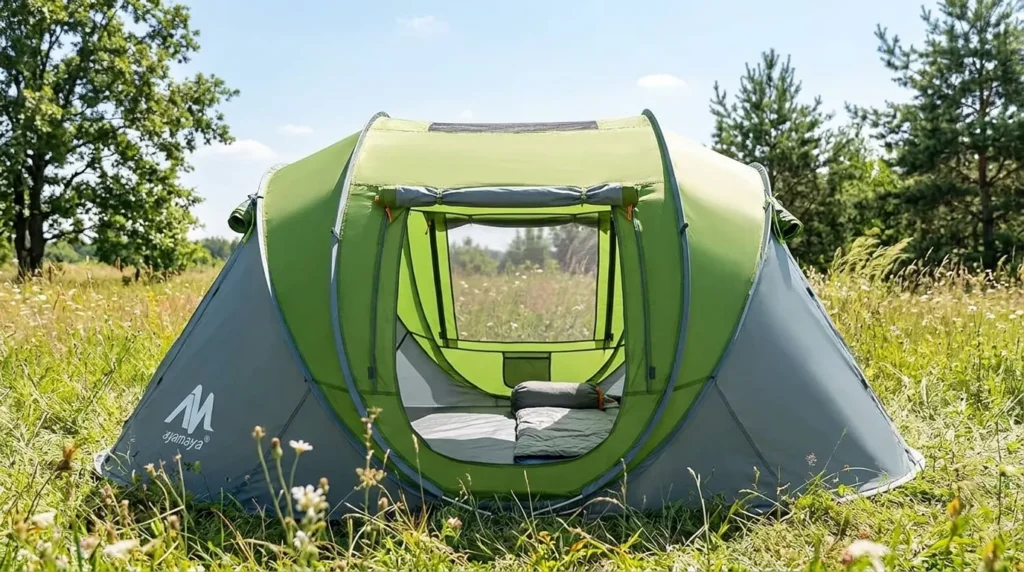
If you are camping in the middle of July, your biggest enemy is not the rain; it is the heat. The direct reason the Ayamaya Pop Up Tent is a winner in this category is the combination of the double-wall design and the massive mesh windows. Because the inner tent is mostly mesh, air can flow freely between the two layers, creating a chimney effect that pulls warm air out through the top vents. I found this to be much more effective than the ventilation in the Hewolf pop up tent or the single-wall domes I have used in the past. It stays remarkably cool even when the sun is beating down on the fly.
I also really appreciate the rear hooded window. You can leave it open even during a light rain, which allows for cross-ventilation when most other tents would have to be completely zipped up. If you are someone who prioritizes airflow above all else, you might also want to look at the 360-degree system I mentioned in my Moon Lence pop up tent review, but the Ayamaya is a very close second. It strikes a great balance between keeping the bugs out and letting the breeze in. According to various camping health guides, maintaining good airflow is the best way to prevent heat exhaustion and ensure a good night of sleep on the trail.
I noticed that the tan fabric of the fly also helps with heat management. It does not absorb as much thermal energy as the darker blues and greens found on other models. As I mention in my guide on the best pop up tent, the color of your gear can affect the internal temperature by several degrees. For me, the Ayamaya is a top pick for summer tours where you want a reliable breeze. It manages moisture and heat as well as some technical tents that cost twice as much, which is a testament to the engineering that went into this double-layer design.
How does the material durability compare to glamping and luxury setups?
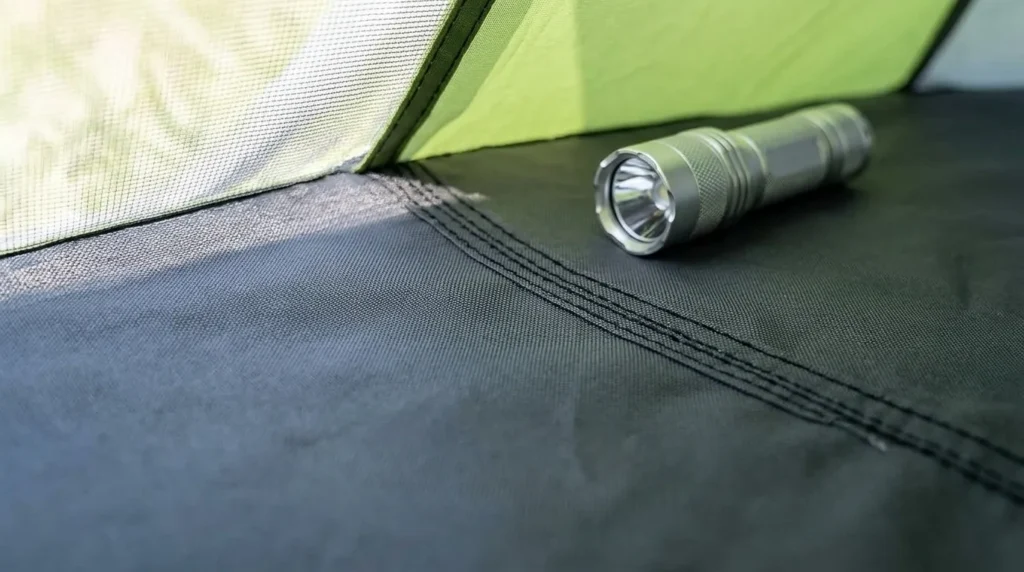
The final thing I evaluated was the long-term durability of the materials. The direct answer is that the Ayamaya Pop Up Tent feels much more rugged than a standard budget tent, though it does not quite reach the luxury level of the Vidalido tent review model. The floor is a 210D Oxford fabric, which is thick and has a very high-quality feel to it. It did not feel like it was going to rip if I accidentally dropped a sharp piece of gear on it. This is a massive improvement over the thin materials used in entry-level throw tents.
I found that the fiberglass poles are also thicker and more robust. They have a high resin count that makes them feel less likely to become brittle over time. However, I always suggest using a footprint to protect that 210D floor from ground moisture and sharp rocks. The longevity of your gear depends mostly on how you treat the seams and the zippers. The zippers on the Ayamaya are decent, but they are not the oversized industrial ones found on high-end mountaineering tents. I suggest carrying a bit of zipper lube to keep them sliding smoothly through the sand and dust.
Compared to other mid-range options, the Ayamaya holds its value incredibly well. It is a tent that you can buy and expect to use for several seasons of real camping, not just a one-off festival weekend. In my guide to the best pop up tent, I categorize this as the best waterproof choice for a reason. It uses materials that are built to handle the elements, and the construction quality is some of the best I have seen from an Amazon-focused brand. It is a solid investment for any camper who wants a high-performance shelter that still offers the magic of an instant setup.
FAQs: What you need to know about the Ayamaya Pop Up
Is the Ayamaya Pop Up Tent actually big enough for six people?
The honest answer is no. While it is marketed as a 4 to 6 person tent, that would be a total nightmare. If you want to stay sane, I recommend this tent for a family of three or four, or a couple who wants a lot of extra room for gear. In my guide on the best pop up tent, I explain the plus-one rule for floor space, and the Ayamaya is the perfect example of why you need that extra room for your bags and changing clothes.
Does this tent require a separate footprint to be waterproof?
The floor is very waterproof on its own, but I still highly recommend using a footprint. A footprint acts as a sacrificial layer that protects the bathtub floor from punctures and keeps the bottom of your tent clean. It also adds an extra layer of insulation from the cold ground, which I found very helpful during a chilly night in the mountains. You do not need a brand-name one; a simple hardware store tarp cut to size will work perfectly.
How does the setup speed compare to other instant tents?
It is just as fast as any circular throw tent, taking about five to ten seconds to expand. However, because it has a vestibule and a double layer, you will spend another two or three minutes staking it out properly to ensure the fly is taut. It is still significantly faster, which requires you to extend each pole leg individually. If absolute speed is your goal, the Ayamaya is hard to beat.
Can one person fold the Ayamaya Pop Up Tent alone?
Yes, but it takes practice and a bit of strength. Because the frame is larger and thicker than most, it resists the figure-eight twist more than a smaller dome would. I suggest practicing in your backyard before you head out on a trip. Once you have the muscle memory, you can do it alone in under two minutes.
Is this tent safe to use during a thunderstorm?
As long as you have it properly staked and guyed out, it is very safe. The 3000mm waterproof rating is excellent for keeping the rain out, and the flexible fiberglass frame will bend with the wind rather than snapping. However, I would not recommend using any pop up tent in extreme gale-force winds or high-altitude environments where a traditional rigid-pole tent would be much more stable. For typical 3-season camping, the Ayamaya is a total fortress.
Should you buy the Ayamaya Pop Up Tent for your next trip?
After spending a significant amount of time in the Ayamaya Pop Up Tent and comparing it to every other major model on the market, I have reached a very clear conclusion. If you love the idea of an instant setup but you are tired of the flimsy, single-layer tents that leak in the rain, this is the tent for you. It is the only throw tent I have tested that feels like it was designed by people who actually go camping in the real world. The double-layer construction and the integrated vestibule are game-changing features that solve the two biggest problems with this category.
It is not the lightest tent in my garage, and it definitely takes up a lot of room in the trunk, but the trade-off in comfort and weather protection is worth every penny. When you can roll into a campsite and have a dry, spacious, multi-room home ready in under five minutes, the stress of the trip just vanishes. It allows you to spend more time exploring the trail and less time fumbling with poles in the dark.
If you are still weighing your options, make sure to check out my main guide to the best pop up tent to see how the Ayamaya stacks up against the more budget-friendly and hub-style alternatives. But if you want the best waterproof performance in a throw tent, your search ends here. This is a rugged, honest piece of gear that has earned its spot as my top recommendation for families and couples who want a stress-free adventure.
Check the current price of the Ayamaya Pop Up Tent on Amazon here.