
I have watched more than one family show up to an overnight site with nothing but a beach tent vs camping tent mix-up waiting to happen: a lightweight pop up sun shelter with no floor, no rainfly, and no real wind rating, and then wonder why the whole thing is flapping and soaked by ten at night. The two categories look similar enough in a product thumbnail that the mistake is an easy one to make, but they are built to solve genuinely different problems, and knowing which one your trip actually calls for is the difference between a great day and a miserable night.
What Is the Real Difference Between a Beach Tent and a Camping Tent?
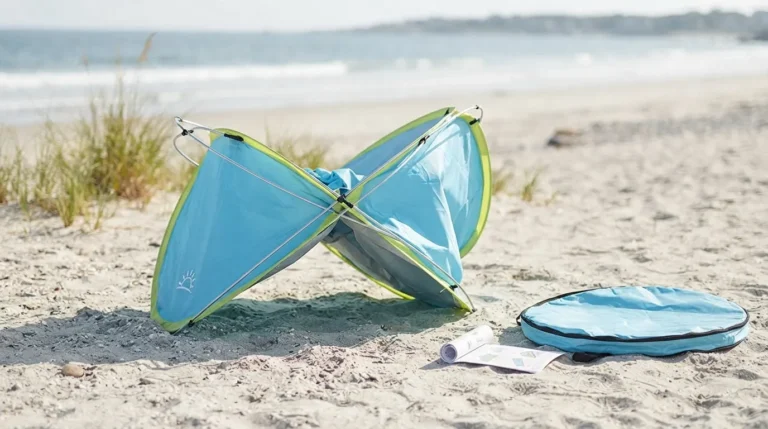
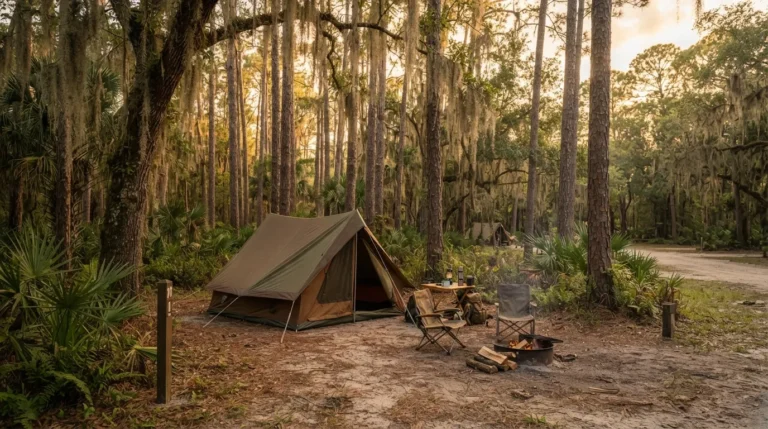
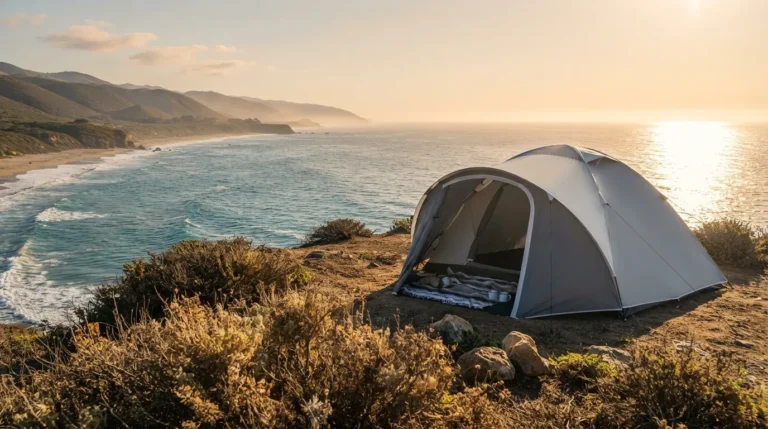
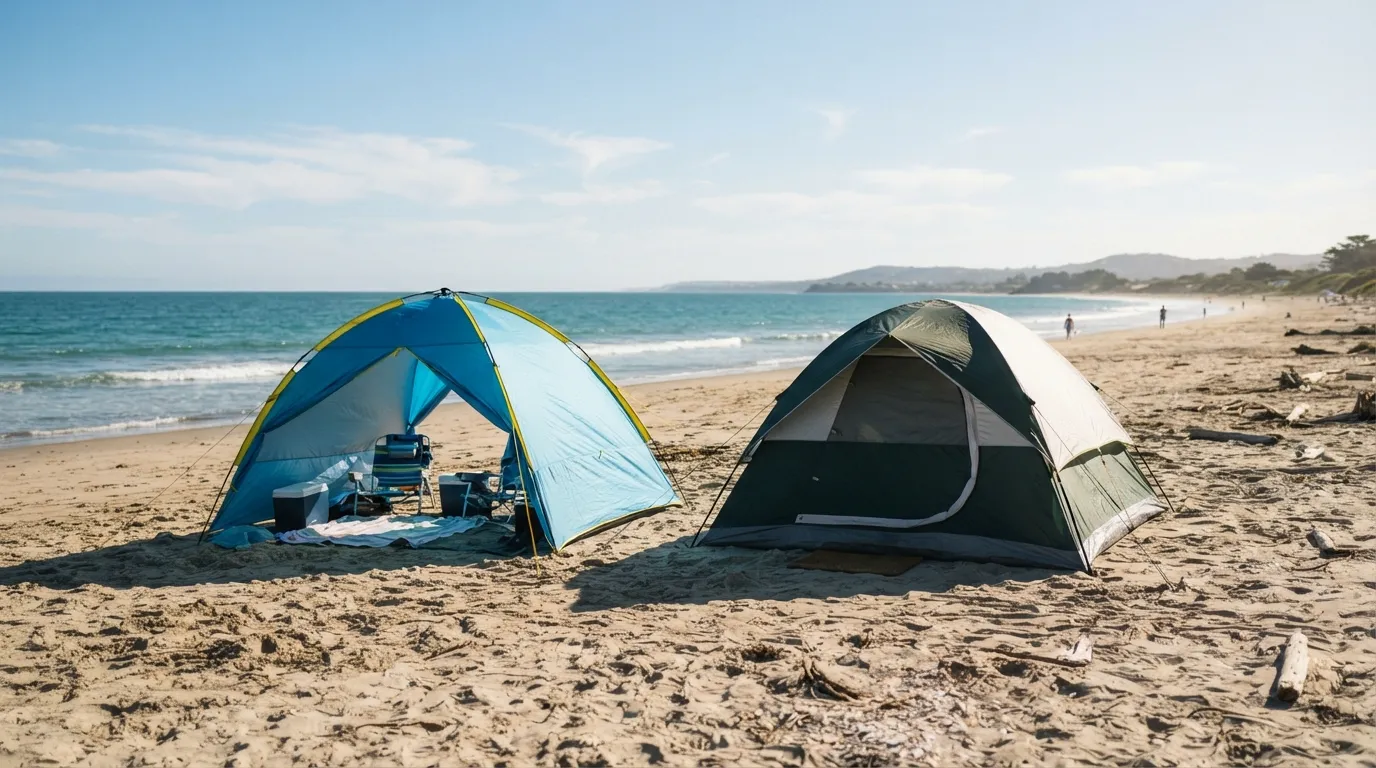
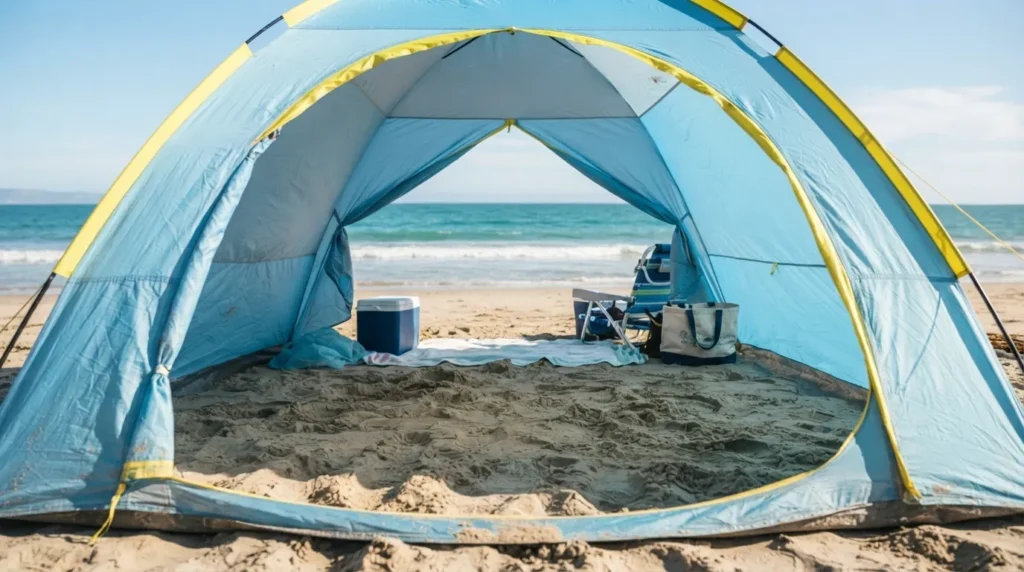
A beach tent is built for daytime shade and wind blocking, with an open or partially open floor, lightweight fiberglass poles, and a pop up or near-instant setup, while a camping tent is a fully enclosed structure with a sewn-in floor, a genuine rainfly, and weatherproofing meant to hold up overnight in changing conditions. That single distinction, floor and rainfly versus open sides and a canopy, explains almost every other difference between the two categories once you start comparing them side by side.
| Feature | Beach Tent | Camping Tent |
|---|---|---|
| Floor | Open or partial, sometimes a small mat | Fully sewn-in, seam sealed |
| Rainfly | Rarely included | Standard on any real 3-season tent |
| Pole material | Lightweight fiberglass, 6.5mm to 8.5mm | Heavier fiberglass or aluminum |
| Setup time | Seconds to a few minutes | 10 to 20 minutes typically |
| Typical weight | 2.5 to 7 pounds | 8 to 12 pounds or more |
| UV rating | UPF 50+ standard | Rarely advertised |
| Best for | A few hours of daytime shade | Sleeping overnight |
Beach tents also tend to run cheaper, most of what we have tested in our beach camping tents hub sits between 30 and 70 dollars, while a genuine camping tent with a proper floor and rainfly usually starts closer to 100 dollars and climbs from there depending on capacity and season rating.
When Should You Use a Beach Tent Instead of a Camping Tent?
Use a beach tent any time your plan is measured in hours rather than overnight, since that is exactly the problem this category is built to solve. A beach tent gets you UPF 50+ shade, a wind block for sitting behind, and a setup fast enough that you are not losing half your afternoon to poles and stakes, which matters if you are packing up a car full of kids, coolers, and chairs for a single day trip. According to the Skin Cancer Foundation, UPF 50 fabric blocks 98 percent of the sun’s rays, which is the entire reason this category exists in the first place rather than everyone just bringing an umbrella.
It also makes sense any time you are camping at a standard campground with a tent already reserved for the night and just want a shaded home base on the sand during the day. That is a common pattern for a lot of the trips we cover, our beach tent camping Southern California guide walks through exactly this setup at campgrounds like Leo Carrillo, where a beach tent handles the sand and a separate overnight tent handles the campsite.
When Do You Actually Need a Real Camping Tent at the Beach?
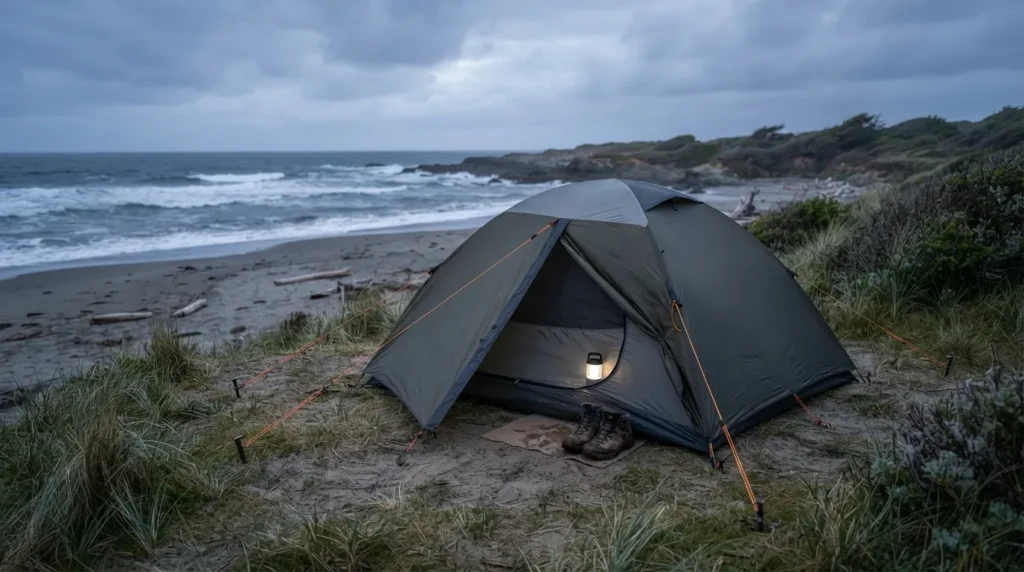
You need a real camping tent any time sleeping is part of the plan, full stop. Overnight temperatures near the coast drop more than people expect, and National Weather Service data on beach conditions makes clear how quickly wind and weather can shift after dark along open coastline, exactly the conditions a floorless beach tent is not built to handle. A sewn-in floor keeps sand, insects, and ground moisture out, and a real rainfly is the only thing standing between you and a genuinely wet night if a marine layer rolls in or a storm shows up unannounced.
This is not a theoretical distinction either. Our tent camping Daytona Beach guide covers a location where this matters in a very literal, legal sense, overnight camping is not even permitted directly on the sand there, so a beach tent for the day and a real camping tent at a nearby campground like Tomoka State Park are not just two good options, they are the only combination that actually works within the rules. Our Pismo Beach tent camping guide covers a different but related case, where fog and consistent evening wind make an actual rainfly genuinely necessary rather than optional for anyone staying overnight near the dunes.
Which Tents in This Hub Fall Into Each Category?
Nine of the ten tents we have tested in this hub are beach tents in the strict sense, and one is a genuine camping tent, which is a useful split to understand before you shop rather than assuming every product on a beach tent list solves the same problem. Gorich, Rhino Valley, WhiteFang, Camel Crown, NXONE, Wolfwise, Glymnis, Oileus X-Large, and OutdoorMaster are all built around the same core formula, UPF 50+ canopy fabric, an open or partial floor, and lightweight fiberglass poles meant for daytime shade rather than overnight weatherproofing.
EchoSmile is the outlier, and deliberately so. It carries a sewn-in floor, a PU-coated waterproof rainfly, a proper vestibule, and 360-degree mesh ventilation designed to manage overnight condensation, none of which the other nine products in this hub even attempt. If your trip genuinely calls for an overnight stay near the water, EchoSmile is the one product in our roundup actually built for that job, and pairing it with any of the daytime shelters above for the beach itself covers both halves of a real beach camping trip.
Can One Tent Realistically Do Both Jobs?
Beach tent vs camping tent? Not well, and that is the honest answer even though it is tempting to want a single purchase that covers everything. A beach tent’s open floor and lack of rainfly make it a poor overnight choice the moment conditions turn, while a full camping tent is heavier, slower to set up, and generally overkill if all you need is a few hours of shade before heading home. The two categories are priced and engineered around different jobs, which is exactly why most experienced beach campers end up owning one of each rather than searching for a single tent that pretends to do both.
Frequently Asked Questions About Beach Tent vs Camping Tent
Can I sleep overnight in a beach tent if the weather looks calm?
You can, but I would not recommend it beyond an emergency situation, since most beach tents have an open or partial floor and no rainfly, leaving you exposed to dew, sand, and any unexpected wind or moisture overnight. Even a calm forecast can shift after dark near the coast, and a beach tent simply is not built with the sealed floor or waterproofing that makes a real camping tent safe for sleeping outdoors.
Is a camping tent overkill for a single day at the beach?
Usually yes, since a full camping tent takes longer to set up, weighs considerably more to carry across sand, and does not offer the same UPF-rated open-air shade design that beach tents are specifically built around. Save the camping tent for when you are actually staying overnight, and use a dedicated beach tent for daytime sessions.
Do all beach tents have the same level of UV protection as camping tents?
Beach tents are far more likely to advertise a specific UPF rating, UPF 50+ is standard across nearly every product in our beach camping tents hub, while camping tents rarely mention UV protection at all since they are engineered primarily around waterproofing and structural stability rather than sun exposure. If UV blocking is your top priority for a daytime setup, a dedicated beach tent is the more reliable choice.
Which is more windproof, a beach tent vs camping tent?
It depends more on the specific product’s pole thickness and anchor kit than on the category itself, though camping tents generally use heavier poles built for sustained overnight wind rather than a few hours of daytime use. Within the beach tent category, models with thicker fiberglass poles and a full stake, sandbag, and guyline kit hold up noticeably better in real wind than lighter, more minimal designs.
Do I need both a beach tent and a camping tent for a multi-day beach camping trip?
For most multi-day trips, yes, and it is the combination experienced beach campers actually rely on rather than trying to make one product do both jobs. Use a lightweight beach tent for daytime shade down on the sand, and set up a real camping tent with a sewn-in floor and rainfly at your actual overnight site, whether that is a beachfront campground or one a short drive inland.
So, Beach Tent vs Camping Tent, Which Should You Buy?
Match the purchase to the actual plan rather than the marketing photo. If your trip is daytime shade, sit under an umbrella style shelter, and go home before dark, any UPF 50+ beach tent in our hub will serve you well. If sleeping outdoors is genuinely part of the itinerary, budget for a real camping tent with a floor and rainfly instead, and treat a beach tent as a separate, complementary purchase rather than a substitute. For the full side by side on all ten tents we tested across both categories, our beach camping tents hub has the complete breakdown.
Ready to see which category actually fits your next trip?