
Driving straight onto the sand at Daytona Beach feels like it should come with an overnight campsite attached, and that assumption trips up more people planning a tent camping Daytona Beach trip than almost anything else about this coastline, because pitching a tent to actually sleep on the beach itself is not legal here, no matter how wide open that hard-packed sand looks. The good news is Daytona still offers a genuinely great camping trip once you know where the beach itself fits into the plan and where the actual overnight sites are.
Can You Actually Camp Overnight on Daytona Beach?
No, and this is worth knowing before you build a trip around the idea. The Volusia County Sheriff’s Office states plainly in its own beach FAQ that overnight camping is not allowed on Volusia County beaches, which covers Daytona Beach itself along with the surrounding shoreline. This surprises a lot of first-time visitors, since Daytona is famous for letting cars drive right onto the sand, and it is easy to assume that openness extends to spending the night there too. It does not, and setting up a tent to sleep in in on the beach after dark is the kind of thing that gets you a visit from Beach Safety patrol rather than a peaceful night by the water.
What Is Daytona’s Famous Beach Driving Actually For, Then?
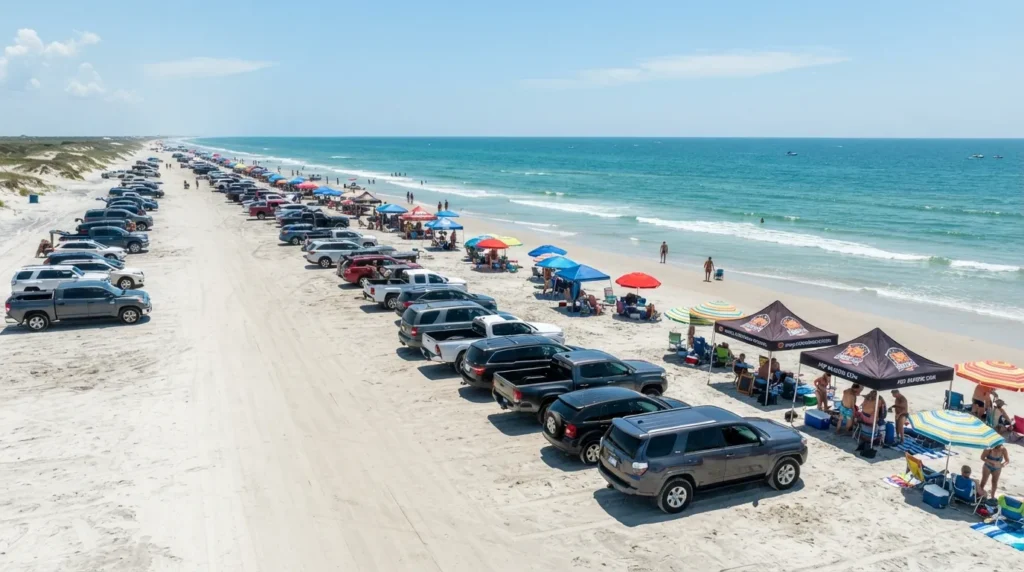
It is built around day use, not overnight stays, and once you understand that distinction the rest of the rules make a lot more sense. According to the official Daytona Beach guidelines, driving on the beach is available in designated areas from sunrise to sunset, weather and tides permitting, at a maximum 10 mph with headlights on. Non-residents pay 30 dollars per vehicle per day for unlimited same-day re-entry, Volusia County residents drive for free, and a 150 dollar annual pass is available for non-residents who visit often.
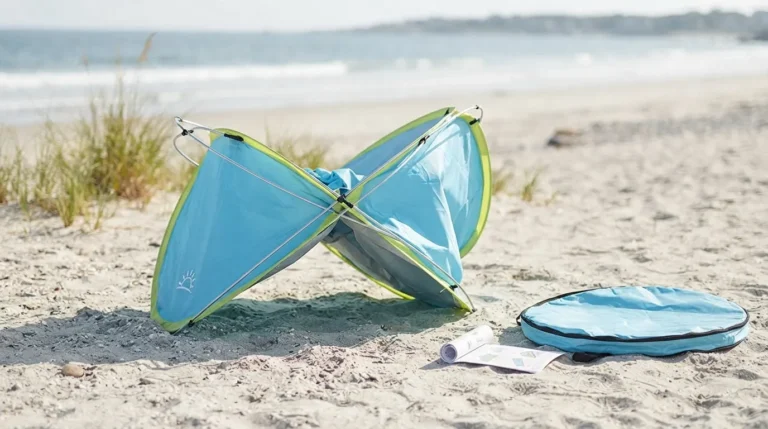
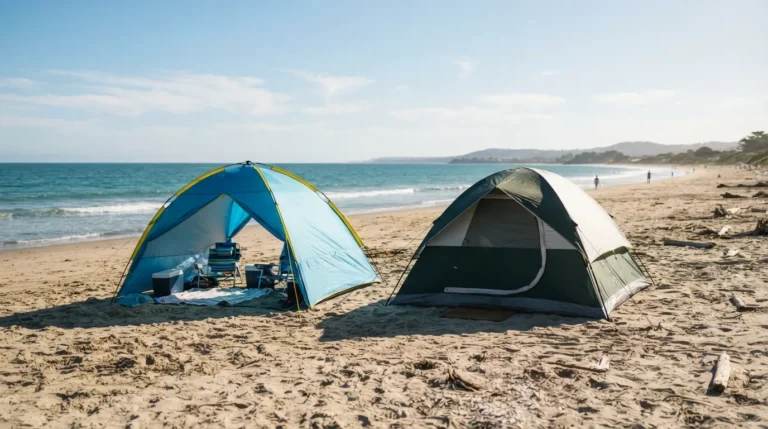
The point of driving onto the hard-packed sand is to unload everything at once, chairs, coolers, umbrellas, and yes, a beach tent, park perpendicular to the shoreline in a designated area, and set up for the day. Canopies, tents, and umbrellas are explicitly allowed for daytime use; there is no rule against them. The restriction only kicks in once the sun goes down and you are still trying to occupy that spot to sleep.
Where Do You Actually Pitch Overnight Tent Camping Daytona Beach?
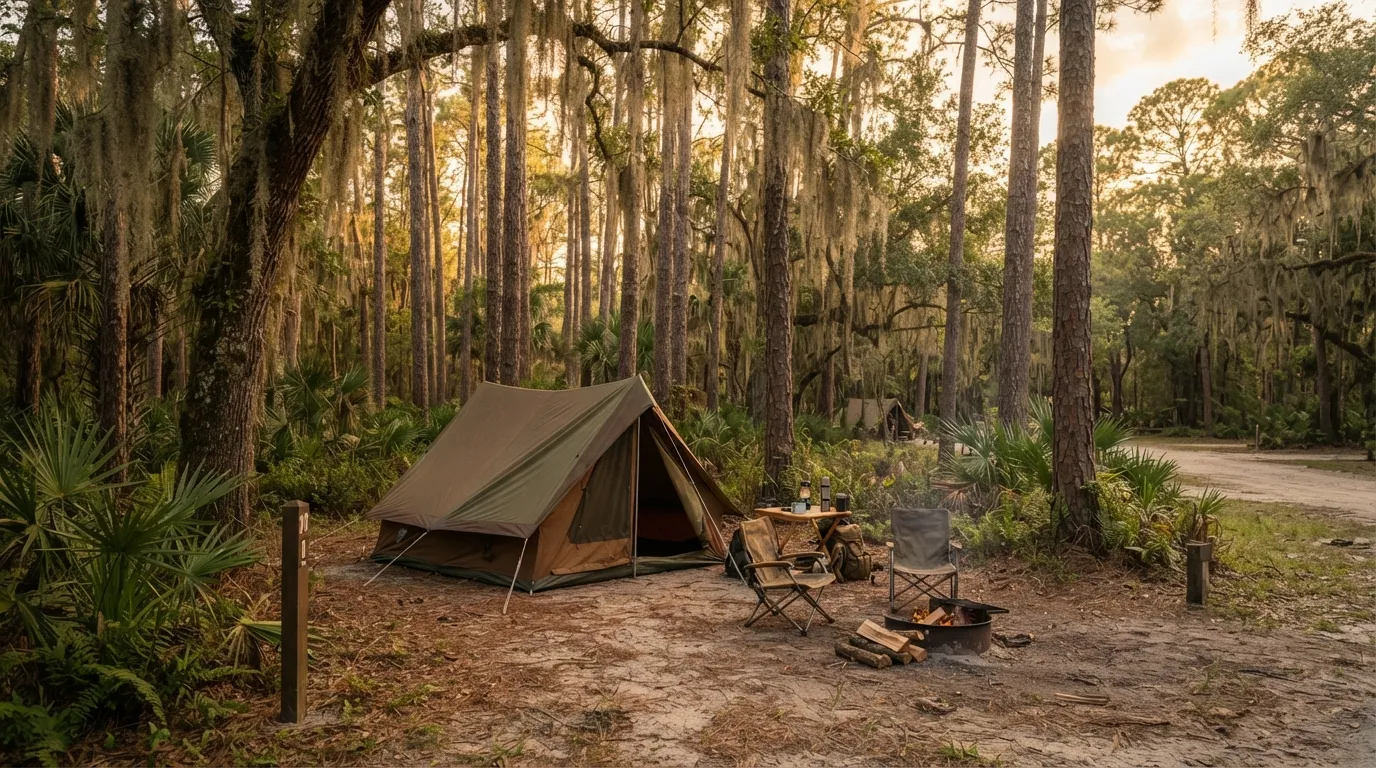
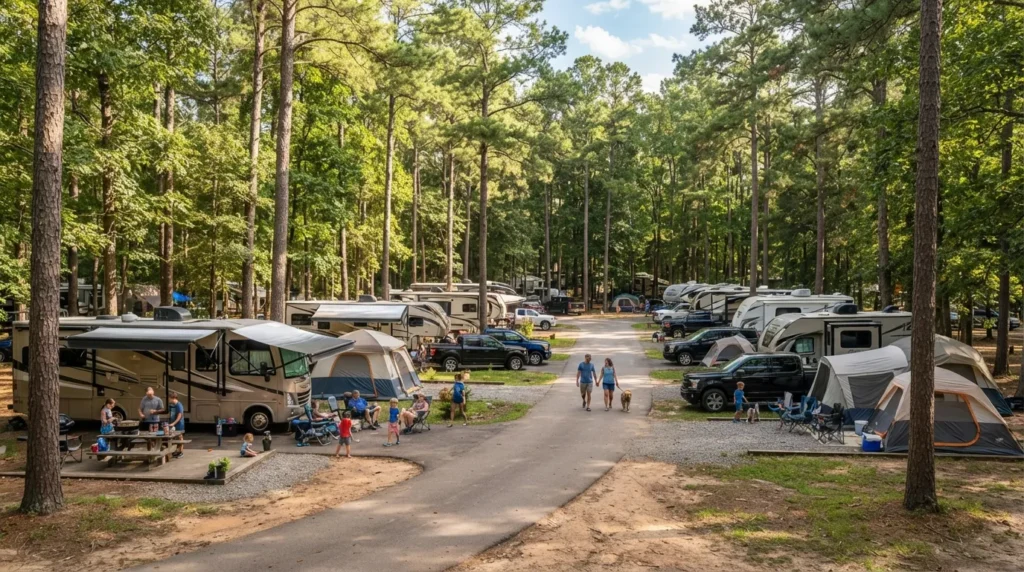
The most established option is Tomoka State Park, about 3 miles north of Ormond Beach and roughly a 15 minute drive from the main Daytona Beach strip, sitting where the Tomoka and Halifax rivers meet the Intracoastal Waterway rather than directly on the ocean. Every one of its 100 campsites includes a picnic table, grill, electric hookup, and water, which puts it a step above a primitive beach setup, and the park allows leashed pets in the campground too.
| Camping Option | Distance from Daytona Beach | Setting | Overnight Legal |
|---|---|---|---|
| Daytona Beach sand itself | On the beach | Open shoreline, day use only | No |
| Tomoka State Park | About 3 miles north of Ormond Beach | River and estuary, shaded hammock | Yes |
| Private RV parks and campgrounds in the area | Varies, several within a few miles | Mixed, amenity-dependent | Yes |
Reservations for Tomoka run through the official Florida State Parks system, and Florida residents can book up to 11 months ahead while non-residents get a 10 month window, both well worth using early if you are aiming for a summer or holiday weekend date. Beyond Tomoka, the wider Daytona area also has a mix of private RV parks and campgrounds, so if the state park is full on your dates, it is worth checking what else sits within a short drive of the beach itself.
How Does Speedway Calendar Affect Tent Camping Daytona Beach Plans?
More than most visitors expect, and it is worth checking before you lock in dates. Daytona International Speedway runs a packed calendar of events, including Bike Week in late February and early March, the Daytona 500, Biketoberfest in October, and several other race weekends throughout the year, and each one pulls in a wave of visitors that fills up every nearby campground, hotel, and RV park well in advance. If your trip does not need to line up with a specific event, deliberately picking dates outside that calendar makes booking a site, and finding the beach itself less crowded, considerably easier.
What Tent Setup Actually Makes Sense for a Daytona Beach Trip?
This is the one region in this guide where you genuinely need two different categories of tent rather than picking just one, since the beach itself and your overnight site are two completely separate stops. Our beach tent vs camping tent guide covers this distinction in more depth, but Daytona is the clearest real world example of why it matters: a UPF 50+ sun shelter is exactly right for the sand during the day, and a genuine camping tent is what you actually sleep in that night.
For the beach itself, sizing and quick setup matter more than heavy duty wind anchoring, since Florida’s coastal breeze generally runs calmer than the Pacific coast conditions covered in our Pismo Beach tent camping and beach tent camping Southern California guides. Gorich scales up to 8 people across four size tiers if you are bringing a larger group down to the sand, and Rhino Valley is a solid lower-cost pick if you are still deciding whether beach days will become a regular thing. Glymnis sets up in under five minutes with just two rods, which suits the pace of a beach driving day where you might relocate a couple of times, and Wolfwise packs down small enough to ride along in the car without eating into your cooler and chair space.
Humidity and sudden pop-up storms are more of a Florida concern than wind rigidity specifically, so fabric quality and ventilation matter just as much as pole thickness here. WhiteFang and OutdoorMaster both ship with thicker fiberglass poles, 8.0mm and 8.5mm, than most competitors, which still helps on a gustier afternoon, while NXONE and Camel Crown lean on more complete stake and sandbag kits if a summer thunderstorm rolls in faster than expected. Oileus X-Large rounds this group out with a fast automatic pop up frame that is genuinely useful if you need to break down quickly once lightning warnings start.
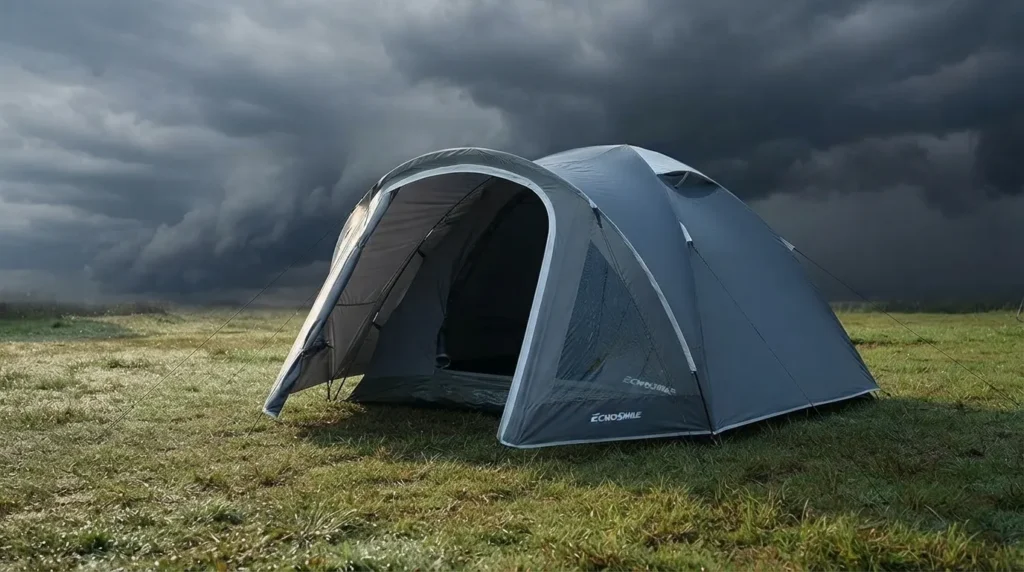
Once you leave the sand for Tomoka State Park or another nearby campground, none of the above replace a real overnight tent. The EchoSmile camping tent in the same hub, with its sewn-in floor and actual rainfly, is built for exactly that second half of the trip, standing up to a Florida evening downpour in a way no daytime beach shelter is designed to handle.
Frequently Asked Questions About Tent Camping Daytona Beach
Can I set up a tent on Daytona Beach during the day?
Yes, daytime beach tents, canopies, and umbrellas are fully allowed for tent camping Daytona Beach, and plenty of visitors drive right onto the hard-packed sand and set one up for the day. The restriction is specifically about overnight camping and sleeping on the beach after dark, not about using a sun shelter during normal beach hours.
Why can’t I just camp overnight on the sand if cars are already allowed to drive there?
Beach driving and overnight camping are governed by different rules entirely, and Volusia County has been explicit that overnight camping is not permitted on its beaches even though daytime vehicle access is a long standing local tradition. Think of the beach driving privilege as covering a single day, sunrise to sunset, rather than an overnight stay.
How far is Tomoka State Park from the actual beach?
Tomoka State Park sits about 3 miles north of Ormond Beach and roughly a 15 minute drive from the main Daytona Beach area, though it is set along the Tomoka River and Intracoastal Waterway rather than directly on the ocean. It is the most established overnight camping option within easy striking distance of the beach itself.
When is the worst time to plan a tent camping Daytona Beach trip without a reservation?
Avoid Bike Week in late February and early March, the Daytona 500 in February, and Biketoberfest in October if you have not already booked a site, since these events draw large crowds that fill nearby campgrounds and hotels well in advance. If your dates are flexible, picking a week outside the official Speedway event calendar makes both booking and beach crowds considerably easier to manage.
Do I need a fishing or camping permit to drive on Daytona Beach?
No permit beyond the standard beach driving toll is required for day use, which runs $30 per vehicle per day for non-residents or is free for Volusia County residents, with a $150 annual pass available for frequent non-resident visitors. This fee covers beach access and parking for the day, not an overnight camping permit, since overnight beach camping is not available at any price.
Should You Plan a Tent Camping Daytona Beach Trip?
Yes, you should plan a tent camping Daytona Beach trip as long as you are planning for two separate stops rather than one. Spend your daytime hours driving onto the sand with a proper UPF 50+ shelter, then head to Tomoka State Park or another nearby campground for the night with a real camping tent built to handle a Florida evening. For the full breakdown of which tent fits which half of that trip, our beach camping tents hub covers all ten options side by side.
Ready to pick the right tent for both halves of your trip?