
Southern California sells itself as endless summer, but anyone who has actually tried beach tent camping Southern California style knows the marketing skips a few details: June gloom can blanket the coast in cool marine fog well into July, campsites on the popular bluffs book out months ahead, and the gear that works fine for a day at the beach is not automatically what you want for a night camped above the surf. I put together this guide from the campgrounds down to the tent itself, so you can actually plan around how this coastline behaves rather than how it looks in a postcard.
Where Can You Actually Pitch a Tent Near the Beach in Southern California?
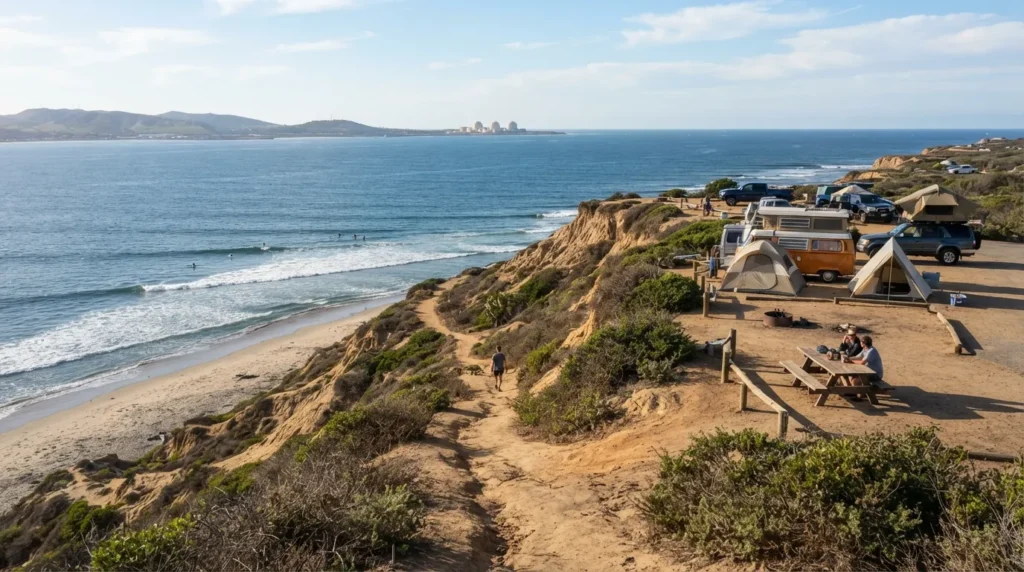
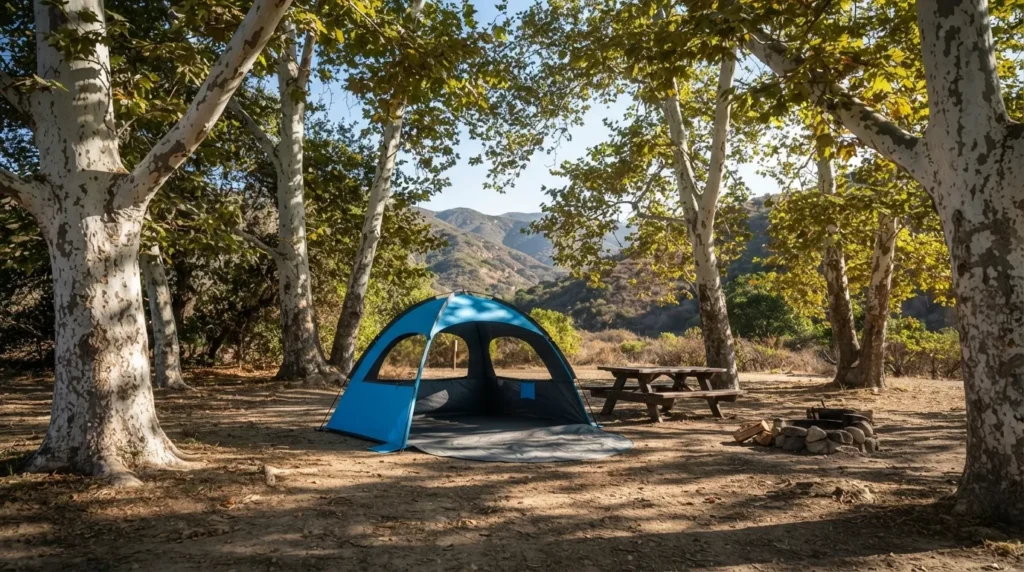
You have real, well-established options spanning from San Diego County up through Malibu, and the two most iconic are San Onofre State Beach and Leo Carrillo State Park. San Onofre splits into two very different camping areas: the Bluffs Campground runs along old Highway 101 directly above the sand with trails cut down to the water, while San Mateo Campground sits inland and connects to Trestles Beach by a 1.5 mile nature trail. Leo Carrillo, up in Malibu, puts its shaded Canyon Campground on the inland side of Pacific Coast Highway with a short underpass walk to 1.5 miles of beach, sea caves, and tide pools.
| Campground | Location | Setting | Hookups |
|---|---|---|---|
| San Onofre Bluffs | San Diego County | Oceanfront bluffs, seasonal (mid-May to end of September) | None |
| San Mateo Campground | San Diego County | Inland, open year-round | Available on some sites |
| Leo Carrillo Canyon Campground | Malibu | Inland, shaded, short walk to beach | Available on some sites |
Beyond those two, Doheny State Beach in Dana Point and the bluff-top sites at San Elijo and South Carlsbad State Beach further south round out the most popular beach tent camping Southern California has to offer, each putting you within a short walk of the sand rather than requiring a long drive from an inland site. San Onofre in particular just secured its long-term future too, California State Parks and the Navy signed a new 25 year lease in 2025 covering the beach and San Mateo Campground, so it is not going anywhere anytime soon.
How Far Ahead Do You Need to Book a Southern California Beach Campsite?
Earlier than you think, especially for the oceanfront sites. Every campground mentioned here books through ReserveCalifornia, the official state park reservation system, and reservations open up to six months before your arrival date. San Onofre Bluffs only takes reservations during its open season from mid-May through the end of September, and outside that window it is not available at all, while San Mateo Campground and Leo Carrillo both stay open and bookable year-round.
Summer weekends and holidays at the ocean-view sites, San Onofre Bluffs sites 1 to 23, 99 to 119, and 146 to 174 in particular, tend to disappear within days of the six month window opening. If your dates are flexible, aiming for a weekday or shoulder season trip in spring or fall gives you a real shot at booking without setting an alarm for the exact morning reservations open.
How Is Beach Tent Camping Southern California Different From the Central Coast?
The biggest difference is consistency, not just temperature. Southern California generally runs warmer and calmer than the wind that shows up almost daily along the Central Coast, which we covered in detail in our Pismo Beach tent camping guide. But calmer does not mean guaranteed. June gloom and afternoon onshore breeze still show up regularly enough that treating every SoCal beach as automatically mild is how people end up cold and under-anchored on an otherwise sunny-looking trip. Coastal camping anywhere in California also means packing differently than camping somewhere genuinely tropical. If you are comparing regions before booking a flight instead of a drive, our notes on tent camping Daytona Beach cover a very different climate and permit system on the opposite coast entirely.
What Tent Setup Actually Works Best for Beach Tent Camping Southern California?
Sun exposure matters more consistently here than wind does, though you still want real anchoring on the exposed bluffs. According to the Skin Cancer Foundation, a UPF 50 rated fabric blocks 98 percent of the sun’s rays, and every tent in our beach camping tents hub meets that bar, so the real decision comes down to size, setup style, and how exposed your specific site actually is.
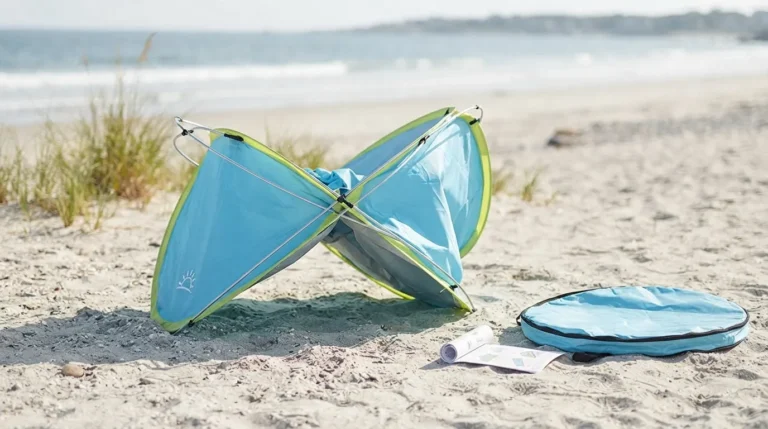
For a day session at the sand before heading back to a shaded campsite, Gorich scales across four size tiers up to 8 person, useful if you are camping as a bigger group, and its dual doors help keep air moving on a warm afternoon. Rhino Valley is a reasonable lower-cost entry point if this is your first Southern California beach trip and you are not ready to invest heavily in gear yet.
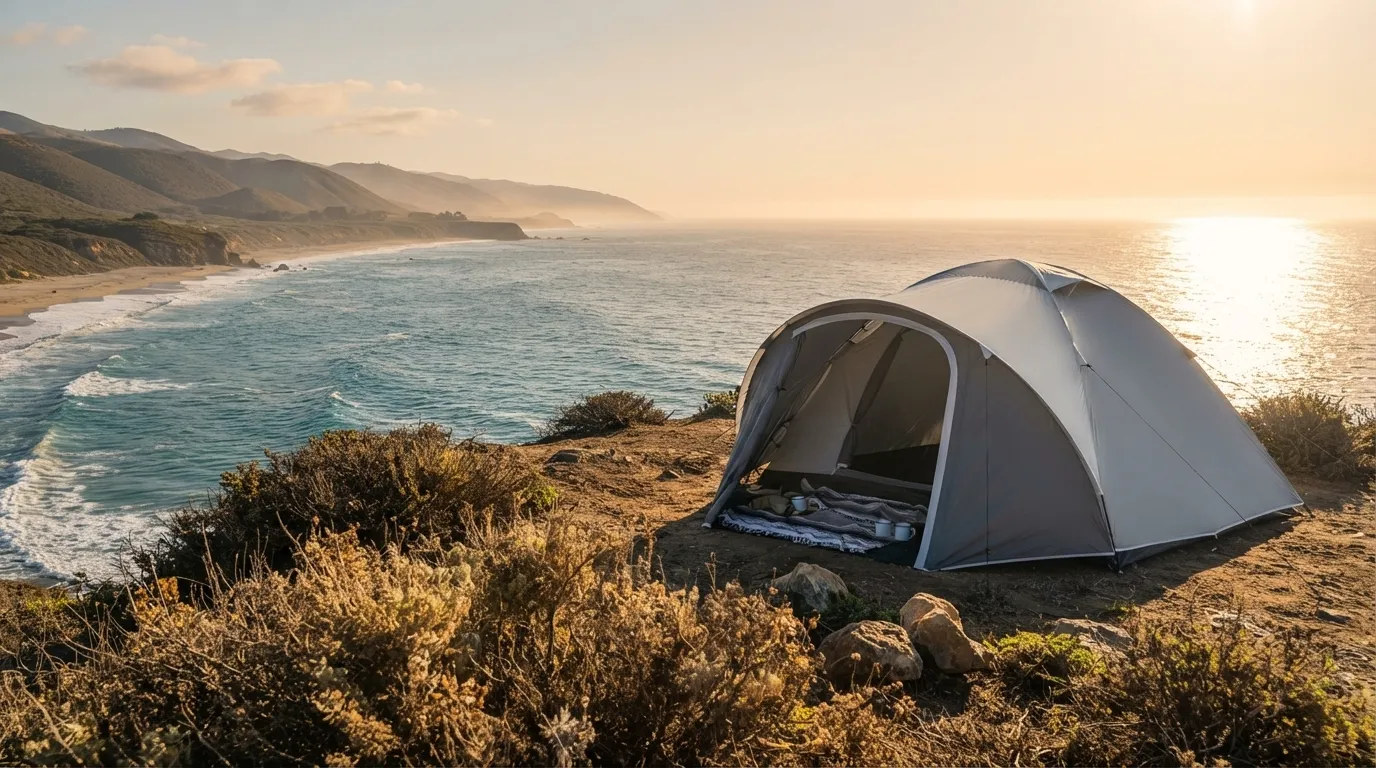
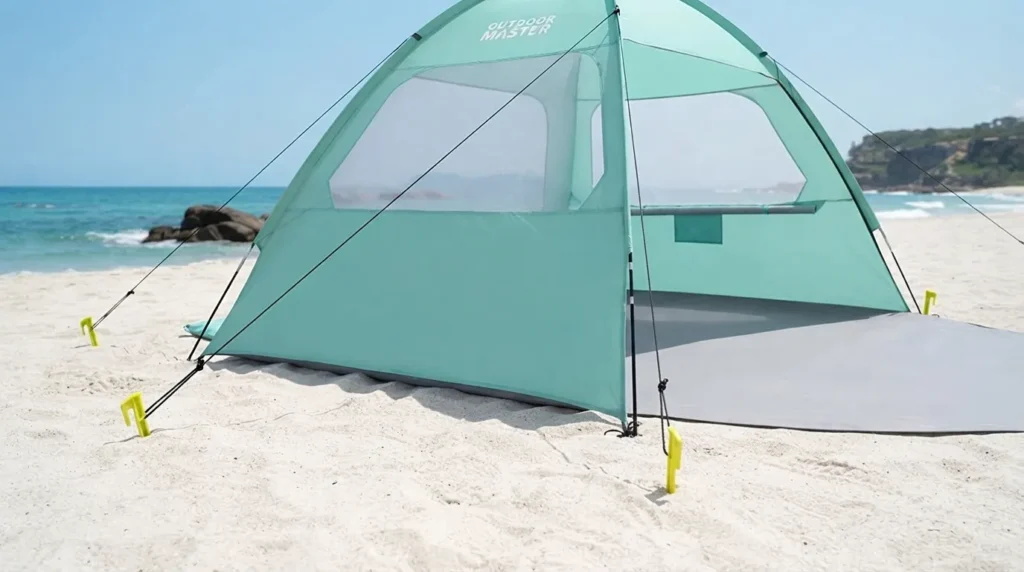
If your site sits somewhere more exposed, like the San Onofre Bluffs directly above the surf, pole rigidity and anchoring both start to matter more. WhiteFang and OutdoorMaster ship with 8.0mm and 8.5mm fiberglass poles respectively, thicker than the roughly 6.5mm to 7mm most competitors use, while NXONE, Camel Crown, and Oileus X-Large lean on heavier combined stake, sandbag, and guyline kits instead. Either approach beats a shelter with only a couple of thin stakes once the wind actually picks up on an open bluff.
If you are packing light for a walk-in site or just want fast shade, Wolfwise packs down under three pounds, light enough to carry the whole way from the car without a second trip, and Glymnis sets up in under five minutes with just two rods if you only need an hour or two of shade before moving on. For an actual overnight stay where a real rainfly and enclosed floor matter more than daytime shade, the EchoSmile camping tent covered in the same hub is built for that job in a way none of the pop up sun shelters are, and our beach tent vs camping tent guide breaks down exactly when that upgrade is worth it.
What Else Should You Know Before You Go Beach Tent Camping Southern California?
Pack layers regardless of the forecast, since coastal temperatures swing more than inland weather apps usually suggest, and a warm layer for the evening is worth the extra bag space even in July. Bring extra stakes or sand anchors beyond what your tent includes if you are camping on loose sand rather than a firmer inland site, since standard stakes pull out of dry sand more easily than most first-time campers expect. Cell service is spotty at several of these campgrounds too, so download offline maps and confirm your reservation details before you lose signal on the drive in.
Frequently Asked Questions About Beach Tent Camping Southern California
What is the best Southern California beach for tent camping right on the sand?
San Onofre Bluffs Campground is the closest most people get to true oceanfront tent camping in this region, with sites directly along the bluffs above the water and trails leading down to the beach itself. Keep in mind it only takes reservations during its mid-May through September season, so outside that window San Mateo Campground or Leo Carrillo are your best year-round alternatives, both requiring a short walk to actually reach the sand.
How far in advance should I book a Southern California beach campsite?
Book as close to the six month reservation window opening as you can, especially for summer weekends at San Onofre Bluffs or the ocean-view Leo Carrillo sites. Reservations through ReserveCalifornia open exactly six months before your arrival date, and the most popular oceanfront sites are known to fill within days once that window opens.
Do I need a heavy duty tent for Southern California beach camping, or will a basic sun shelter work?
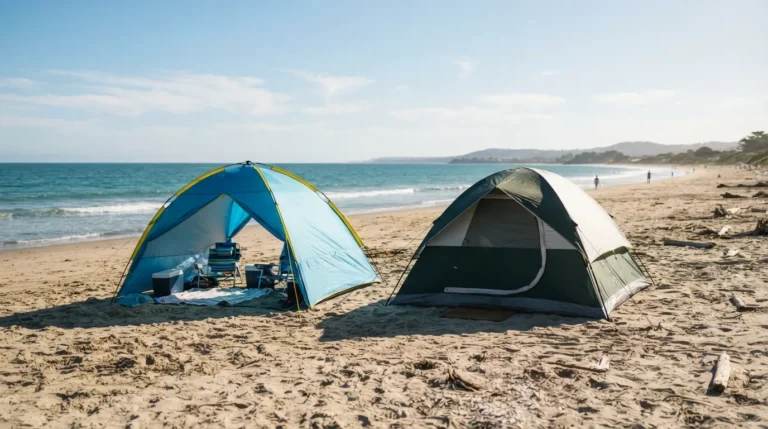
It depends on whether you are camping overnight or just spending the day. A UPF 50+ sun shelter is fine for daytime use at any of these beaches, but if you are actually sleeping there, a real camping tent with a sewn-in floor and rainfly handles the overnight temperature drop and any surprise marine layer far better than a daytime shelter ever will.
Is beach tent camping Southern California crowded even outside of summer?
Yes, though noticeably less than peak season. Spring and fall weekdays are genuinely more available, but popular campgrounds like Leo Carrillo and San Onofre still see steady weekend demand nearly year round given how close they sit to the Los Angeles and San Diego metro areas.
Are dogs allowed at Southern California beach campgrounds?
Usually yes in the campground itself, though rules vary by location and by which section of beach you are on. Leo Carrillo, for example, allows leashed dogs in its campground and on the north beach area but not on backcountry trails or the south beach, so it is worth checking the specific park’s current pet policy before you bring one along.
Should You Plan a Beach Tent Camping Southern California Trip?
If you want reliable weather, well-established campgrounds, and a shot at genuinely oceanfront tent sites, this stretch of coast delivers more consistently than almost anywhere else in the state. Just book early, bring layers regardless of the forecast, and match your tent to how exposed your specific site actually is rather than assuming every Southern California beach behaves the same way. For the full side-by-side on which tent handles which kind of trip, our beach camping tents hub covers all ten options I tested.
Ready to pick the right shelter for your trip?