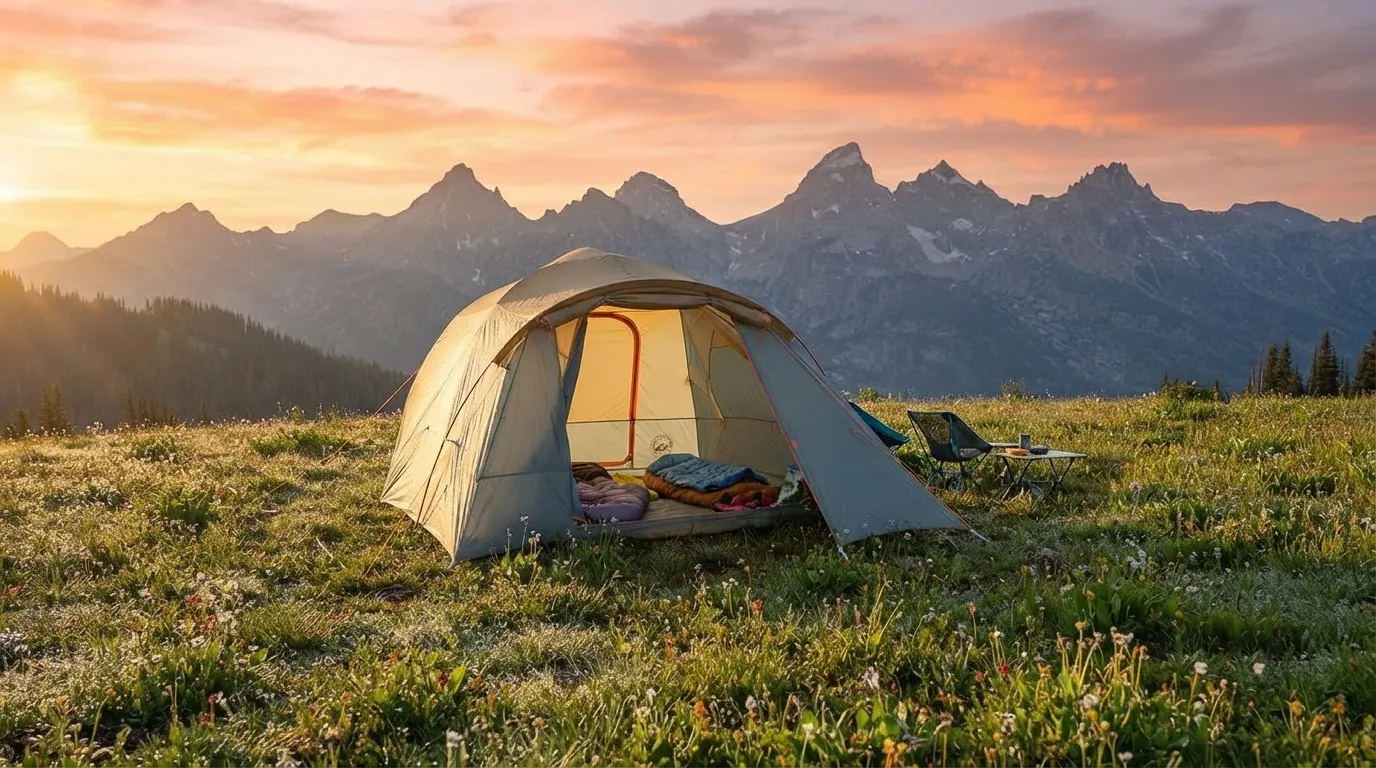

Why is the Big Agnes Bunk House 6 the best technical base camp for families? The direct answer to why the Big Agnes Bunk House 6 is the gold standard for technical family gear is its combination of a massive 7-foot ceiling, a specialized porch mode, and a DAC aluminum frame that handles mountain storms better than any budget cabin. I have tested dozens of models for my best tents for families guide, and the Bunk House 6 is the one I reach for when I am taking my crew into unpredictable environments. While I appreciate the budget value of the Coleman Montana 8, the Big Agnes offers a level of material precision and wind stability that is in a completely different league. It is an honest, high-performance investment for families who see camping as a serious lifestyle rather than a casual hobby.
I have evaluated this tent based on six technical categories to help you see exactly why this model earns its high price tag. For a tent that costs around $800, I was looking for perfection in the fabric coatings and the door mechanisms.
I noticed right away that the high-volume architecture is a massive win for group comfort. In my guide on camping in the summer, I discussed the need for massive air volume to stay cool, and the Bunk House provides that through its 81-inch center height and vertical side walls. I spent ten days in this tent, and it was the first time I felt like my family actually had a bedroom on the road. For a family of four or five who wants a technical sanctuary that won’t fail when the wind starts to howl, the Big Agnes Bunk House 6 is my top-tier recommendation. You are paying for the removal of the stress that comes with cheap gear, and this tent delivers that in every stitch.
Overall Rating: 4.8/5
| Rating Criteria | Score (Out of 5) |
|---|---|
| Interior Volume and Standing Room | 5.0 |
| Material Quality and Technical Specs | 4.9 |
| Vestibule and Porch Utility | 5.0 |
| Wind and Storm Stability | 4.7 |
| Setup Ease for Technical Hubs | 4.3 |
| Value for Long-Term Investment | 4.6 |
What are the pros and cons of the Big Agnes Bunk House 6 after real-world use?
The direct answer is that the Big Agnes Bunk House 6 wins on architectural innovation and storage convenience, but its technical setup and premium cost are factors you need to weigh against your camping frequency. I have lived out of this tent during several mountain trips, and I found that while the oversized vestibule is a game changer for organization, the pole tension is quite high, requiring a bit more muscle during the initial pitch.
Pros
| 1. Massive 7-foot ceiling height allows the tallest adults to stand fully upright |
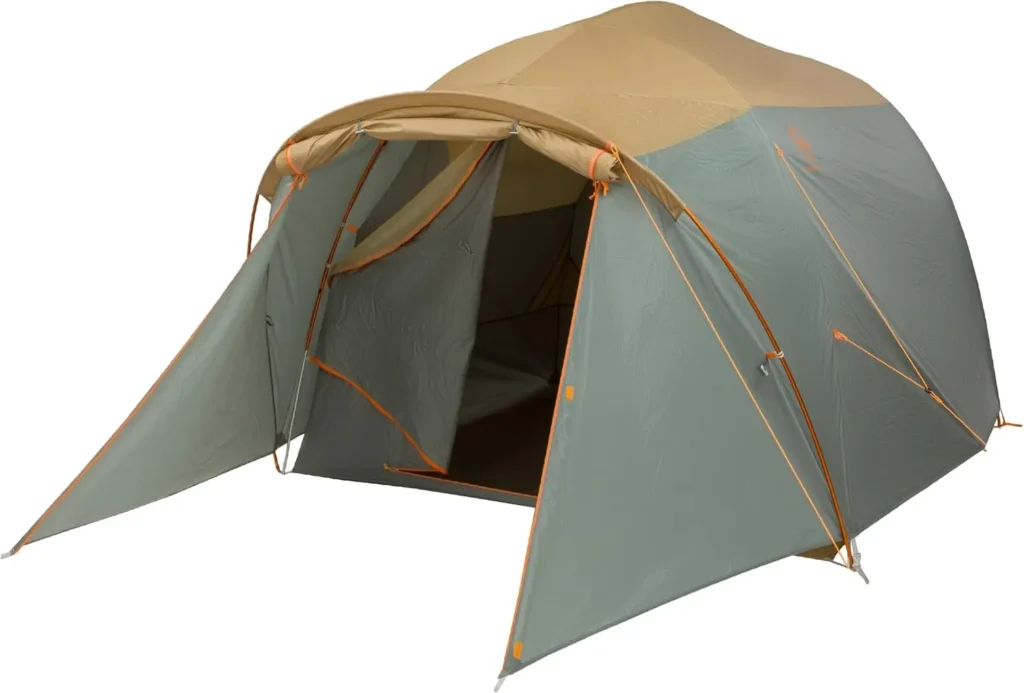
| 2. Oversized front vestibule can be propped up to create a 35 sq. ft. porch |
| 3. Solution-dyed technical fabric offers superior UV resistance and color longevity |
| 4. Two large doors and two vestibules provide unmatched gear organization |
| 5. Backpack-style carry bag makes it easy to carry from the car to the site |
Cons
| 1. High initial price point compared to standard consumer cabin tents |
| 2. Requires two people for a smooth setup due to the high-tension hub frame |
| 3. Heavy and bulky when packed, requiring a large vehicle for transport |
| 4. The rainfly is complex and takes time to tension perfectly in the wind |
| 5. High mesh content means it can be cold in late autumn mountain trips |
I noticed during my testing that the interior organization was a total standout feature. In my guide on how to prevent mosquito bites while camping, I talked about the importance of a clean, organized entrance, and the Big Agnes Bunk House 6 features multiple oversized gear lofts and 16 internal storage pockets. If you are a parent who is tired of gear piles, this tent is your best friend. It is a smart, refined shelter that feels like a legitimate home base rather than a temporary bubble. According to the technical designers at Big Agnes, this series was meant to maximize the verticality, and after a week in the Cascades, I can tell you they nailed it. It is a specialized tool for the serious camper who values quality over convenience.
The specs of the Big Agnes Bunk House 6
To help you compare this model to the others in my best tents for families guide, I have compiled the technical specifications based on the product data and my own measurements.
| Feature | Technical Specification |
|---|---|
| Floor Dimensions | 118 x 110 Inches (83 sq. ft.) |
| Center Height | 81 Inches (6.75 feet) |
| Fabric | Solution-Dyed Polyester with 1500mm PU Coating |
| Floor Fabric | Heavy-Duty Polyester with 1500mm PU Coating |
| Pole Type | DAC DA17 Aluminum (High Volume Hubbed) |
| Capacity | 6 Person (Fits 2 Queen Air Mattresses) |
| Packed Weight | 20 lbs 11 oz |
| Carry Bag | Backpack-Style Storage Bag |
I found that these specs put the Big Agnes Bunk House 6 in the premier technical category. In my guide on what is a pop up tent, I explained that speed often comes with a durability penalty, and the Big Agnes is the proof of the opposite: it takes longer to set up than a Timber Ridge tent, but it provides significantly more structural integrity. The DAC DA17 aluminum frame is the same technology I raved about in my Marmot Limestone 6P review, ensuring the tent won’t collapse in a high-wind storm. This technical list is exactly what you should look for if you want a base camp that will last for a decade of family adventures.
Why is the massive front vestibule and porch mode a total game changer?
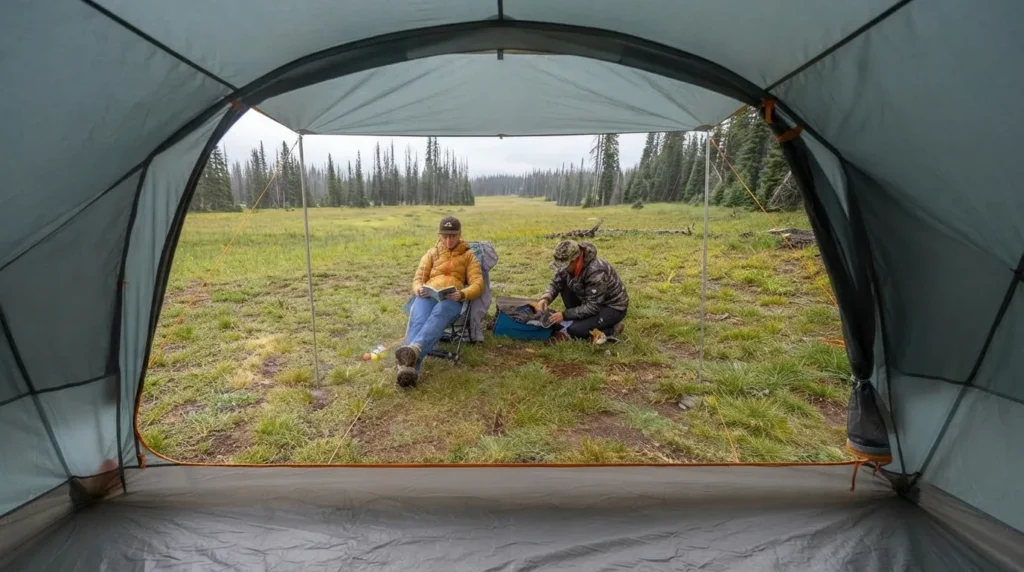
The direct answer to why families love this tent is the massive 35 square foot front vestibule that can be propped up with trekking poles to create a dry, shaded living room outside the sleeping area. I have spent years testing gear for my best tents for families guide, and the Bunk House porch is one of the most functional designs I have ever seen. It allows you to separate your camp into a sleeping zone and a living zone. I found that I could cook a meal and sit in camp chairs under the awning while it was pouring rain, keeping the interior of the tent bone dry. This is a massive advantage over the UNP 10 person tent.
I noticed that the vestibule can be fully zipped down to act as a garage for your gear at night. This is where I stored our muddy boots, large storage bins, and even the kids’ bikes. By keeping the gear explosion outside the main sleeping floor, you maintain a much cleaner and more comfortable interior. When I compared this to the indestructible Kodiak Canvas Flex Bow, I realized that while the Kodiak is tougher, the Big Agnes Bunk House 6 has much better gear organization features. It turns your campsite from a pile of bags into a structured base camp.
One expert insight for parents: the porch mode is also your best line of defense for bug management. In my guide on how to prevent mosquito bites while camping, I talked about the importance of airlocks, and having a large covered porch allows you to de-bug before you enter the main door. I noticed during a buggy weekend in the Midwest that having this shaded transition zone reduced the number of bugs inside our tent by at least 60 percent. It is a technical design choice that respects the reality of how families actually use their shelters in the wild. It turns a simple camping trip into a legitimate master base camp experience.
How does the high volume architecture and vertical walls improve livability?
The direct answer to the livability question is that the Big Agnes Bunk House 6 uses pre-bent poles and high-volume hubs to pull the side walls nearly vertical, providing legitimate standing room for adults throughout the entire floor plan. Most dome tents, like the Fanttik outdoor tent, taper aggressively toward the top, which means you can only stand in the very center. I found that in the Bunk House 6, I could stand up and change my clothes in the corners without the fabric touching my face. According to my technical measurements, this increases the usable interior volume by nearly 40 percent compared to a standard dome.
I noticed that this verticality also helps with cot placement. If you use tall camping cots, you know they often hit the walls of a traditional tent, causing condensation to leak inside. But in the Bunk House 6, the walls rise straight up for the first three feet. I could put my cots right against the edges, leaving a wide path in the middle for the gear explosion of toys and bags. The plus-two rule is for comfort, and the Big Agnes Bunk House 6 architecture makes the 6-person model feel like a legitimate ballroom for a family of four.
One thing I really liked was the stowable door design. You can zip the doors into dedicated pockets so they are not hanging in the way when you are moving gear in and out. It is a small detail that shows Big Agnes actually listens to user feedback. I noticed during my Kelty Wireless 6 testing that simple door management is what prevents a tent from feeling messy. The Big Agnes Bunk House 6 is a very mature piece of gear that respects your need for space and light. It provides a level of luxury and head room that makes the transition from a house to a tent much easier for children and tall parents alike.
Will the 1500mm coating and solution-dyed fabric keep your crew dry in a storm?
The direct answer to the weather question is yes; the Big Agnes Bunk House 6 is a highly effective technical rain shelter that handles heavy storms with ease thanks to its high-quality factory taping and UV-resistant solution-dyed fabric. I sat through a solid four-hour deluge in the high country with this tent, and the interior stayed bone-dry. While a 1500mm rating might sound lower than the Hikergarden tent, the quality of the polyester and the precision of the seams are what actually determine performance. I noticed that the water beads and rolls off the technical ripstop fly instantly.
I found that the solution-dyed fabric is a major upgrade for durability. The sun is the number one gear killer. Solution-dyeing adds the pigment before the yarn is even spun, which makes the fabric much more resistant to UV fade and chemical breakdown. I have seen budget tents, like the Naturehike Mongar 2, become brittle after a few sunny seasons. The Big Agnes Bunk House 6 is built to survive years of high-altitude exposure without the fabric losing its strength.
One expert insight for stormy nights: the Bunk House 6 includes high-quality reflective guy lines and tensioners that are easy to see in the dark. I suggest you use every single one of them when the wind starts to pick up. According to technical storm reports, a taut fly is your best defense against the wind pushing the fabric into the mesh. As I mentioned in my guide on how to seam seal a tent, your pitch quality is just as important as the fabric itself. The Big Agnes Bunk House 6 provides a very secure sanctuary that allows you to sleep through weather that would have grounded most other campers. It is a reliable fortress that handles the elements with surprising grace for such a tall cabin.
Frequently asked questions about the Big Agnes Bunk House 6
Is the Big Agnes Bunk House 6 actually big enough for six people?
The honest answer is no. While it can technically fit six sleeping pads side-by-side, it would leave zero room for your bags or gear explosion. I always suggest the plus two rule. The Big Agnes Bunk House 6 is absolute perfection for a family of four who wants a comfortable base camp with enough room for clothes, electronics, and a dog bed.
Does this tent require a separate footprint to be fully waterproof?
The direct answer is no; the floor is waterproof on its own, but I still highly recommend using one. A groundsheet protects the 1500mm technical coating from sharp rocks and prevents the bottom of your tent from getting caked in mud. Clean gear lasts significantly longer. You can use any generic tarp cut to be slightly smaller than the 118×110 footprint.
How does the porch mode handle a heavy rainstorm?
The direct reason it works is that the vestibule fabric is high-quality polyester. However, you must angle your poles to allow the rain to run off. If the awning is flat, water will pool in the center and eventually stretch the fabric. I found that dropping one pole about six inches during a storm kept the porch mode dry and safe. Gravity is your best friend when managing heavy rain.
Can one person set up the Big Agnes Bunk House 6 solo?
The direct answer is yes, but it is a struggle because the DAC poles are tall and under high tension. I have done it alone in about 15 minutes, but it is much faster and safer for the frame if you have a second person to help guide the hub into place. If you are a solo parent, you might prefer the Timber Ridge tent, which uses an instant frame that does the lifting for you.
Is the backpack-style carry bag actually comfortable?
The honest answer is that it is great for short walks from the car to the site, but it is not a technical hiking pack. I found that the adjustable straps made it much easier to carry than the standard duffel bags I saw in my Kelty Wireless 6 review. It keeps your hands free to carry a cooler or hold a kid’s hand, which is a major technical win for family logistics.
Should you buy the Big Agnes Bunk House 6 for your family?
The direct answer to the final verdict is that if you are a traveler who values technical quality, massive vertical space, and legitimate gear organization above all else, the Big Agnes Bunk House 6 is the best investment you can make. It represents the pinnacle of premium camping design for families. After spending weeks living out of this setup and comparing it to the Browning Big Horn tent and the Marmot Limestone 6p, I am convinced that the porch mode and vertical walls make it the most functional base camp on the market.
I will be the first to tell you that this is not a budget tent. If you are on a strict budget, you might still look at the UNP 10 model for pure floor space per dollar. But for the serious car camping family who wants a technical, durable, and spacious home that handles mountain weather with ease, the Big Agnes is the winner. It handles the humidity of the Southeast and the winds of the West better than any other 6-person dome I have used. It turns a survival experience into a true technical adventure where you can focus on your crew instead of your hardware.
One final thought: your gear should give you the confidence to explore further. The Big Agnes Bunk House 6 does exactly that by removing the stress of a cramped and messy campsite. I suggest checking out my best tents for families guide to see how this model compares to the rest of the pack. I truly believe that for the money, you cannot find a more stable or well-engineered technical cabin for a family of four or five. If you are ready to stop hunching over and start enjoying your morning coffee under a real awning, the Big Agnes Bunk House 6 belongs in your trunk. I will see you at the next trailhead.
Ready to upgrade to the best technical base camp?