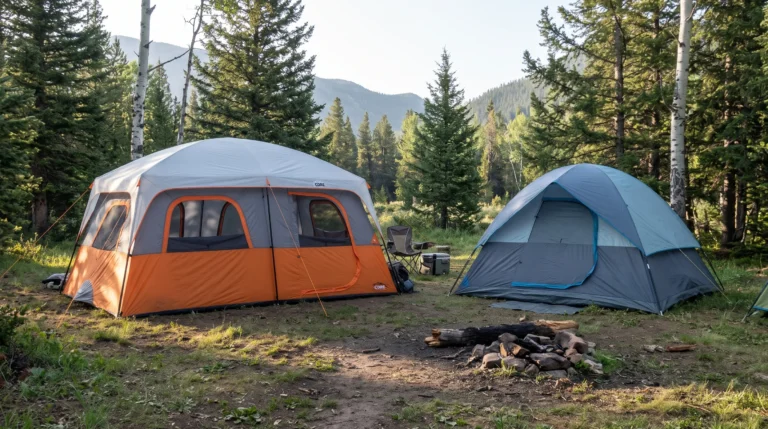

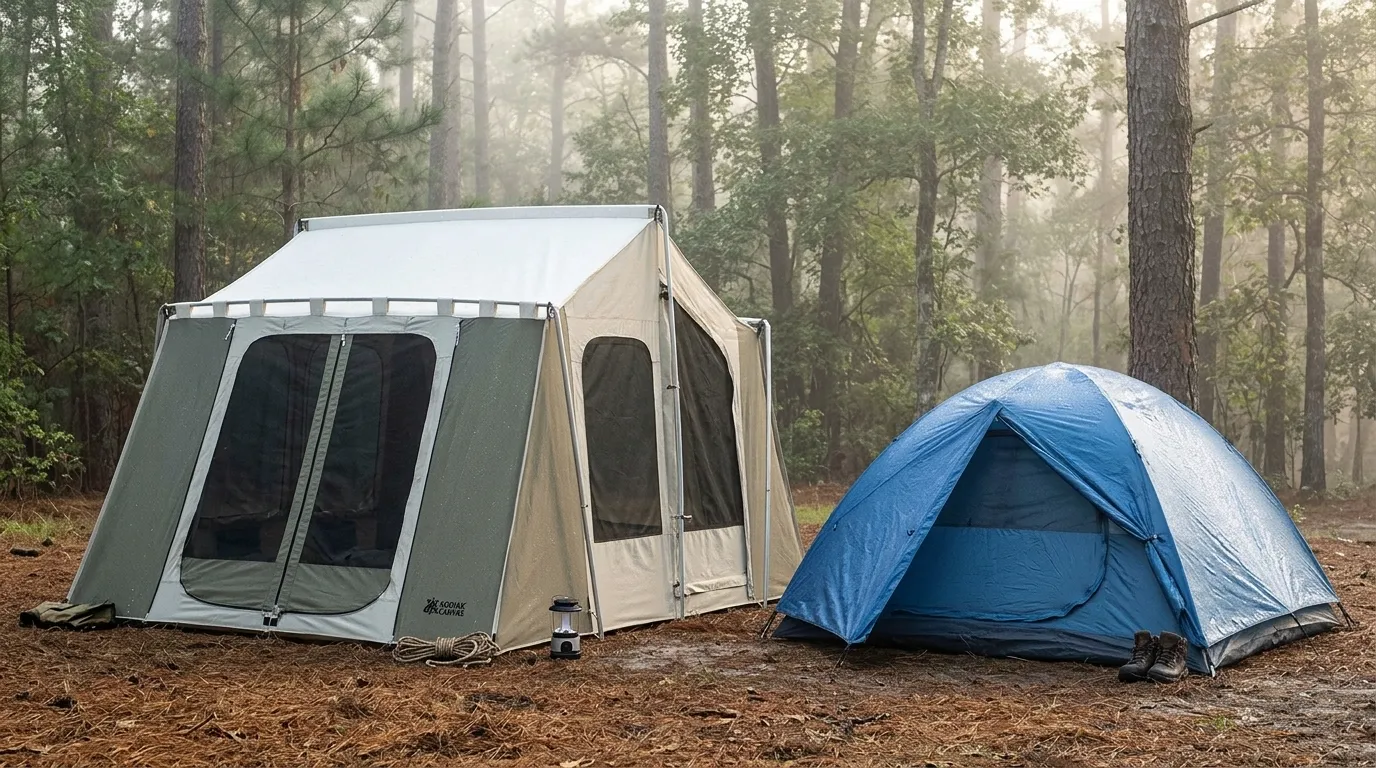
Canvas vs nylon tent is the argument that breaks out at every campground the moment someone pulls a cotton bell tent out of a truck bed. One side says canvas is too heavy and old-fashioned. The other side says nylon is a sweaty plastic bag. I spent a full season pitching both side by side, sometimes on the same weekend, and the honest answer is that both camps are right about the other one’s weakness.
This guide skips the brand loyalty and gets into what actually changes when you sleep under cotton instead of synthetic fabric. I tested the ten tents in my canvas tents roundup against a range of nylon and polyester tents from earlier hubs, and the differences were bigger than I expected in some areas and smaller in others.
What is the real difference between canvas and nylon tents?
The real difference is that canvas is a woven natural fiber, usually cotton or a polycotton blend, that breathes and swells when wet, while nylon is a lightweight synthetic that relies on a waterproof coating and does not breathe. Almost every other difference flows from that one fact.
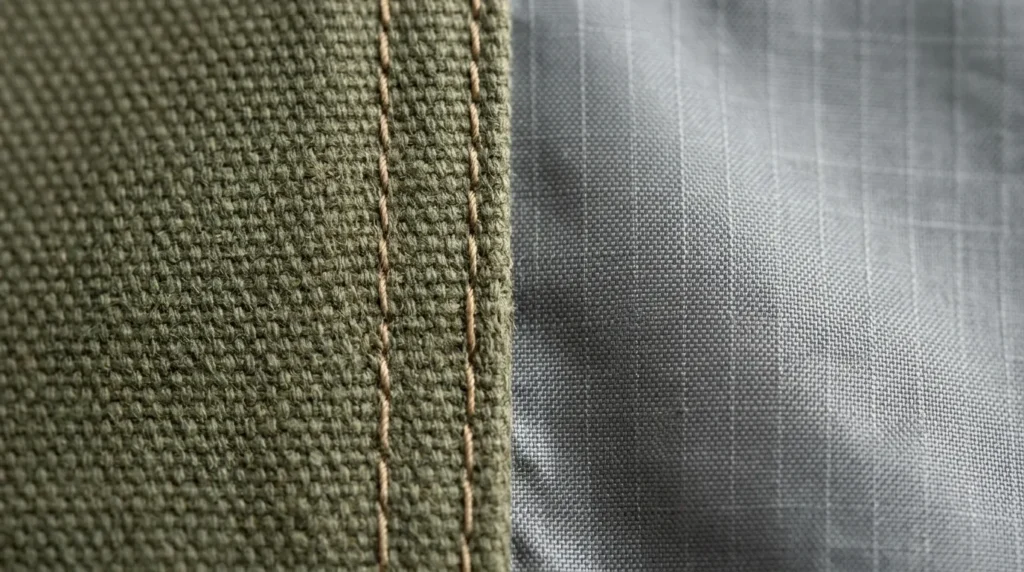
Here is the full comparison from my testing:
| Factor | Canvas Tent | Nylon Tent |
|---|---|---|
| Typical weight (family size) | 43 to 199 lb (19.5 to 90 kg) | 10 to 25 lb (4.5 to 11 kg) |
| Breathability | High, vapor passes through | Low, vapor condenses inside |
| Condensation | Minimal | Common, especially in cold |
| Heat in sun | Stays cooler, thick roof | Heats quickly, greenhouse effect |
| Warmth in cold | Better insulation, stove-ready options | Colder, rarely stove-safe |
| Wind noise | Quiet, slow movement | Loud flapping |
| Waterproofing | Fibers swell shut after seasoning | Coating does the work |
| Mildew risk | Higher if stored damp | Lower |
| UV lifespan | Good with care | Nylon weakens noticeably in sun |
| Setup time | 15 to 35 minutes | 5 to 15 minutes |
| Price | Higher | Lower |
| Best for | Car camping, long stays, cold weather | Backpacking, quick trips |
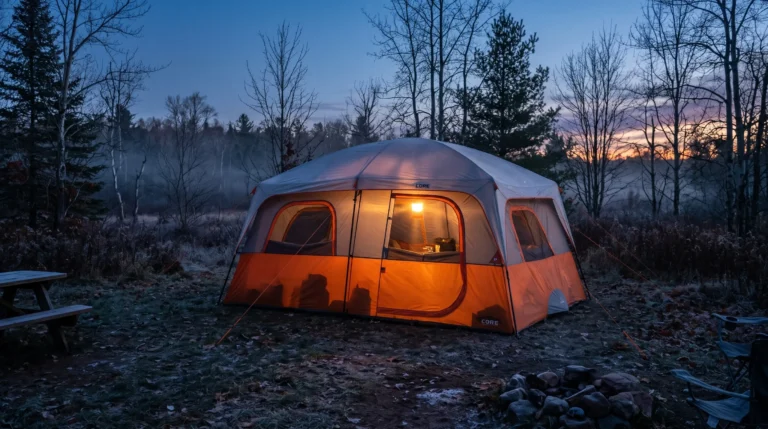
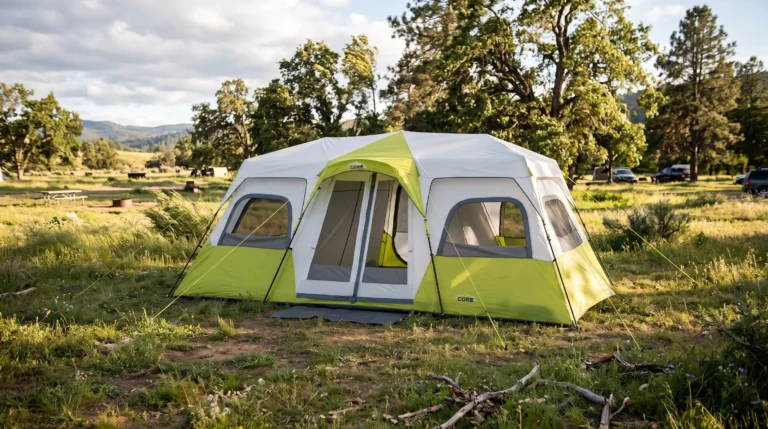
People often lump polyester in with nylon, and for this comparison that is mostly fair. Polyester stretches less when wet and handles UV a bit better than nylon, but it shares the same core trait: it does not breathe. The polyester instant cabins I reviewed, like the Core 9 person instant cabin tent, are a good example of how synthetic family tents trade breathability for speed and price.
The real wildcard is blended canvas. Polycotton and TC canvas sit between pure cotton and synthetic, keeping most of cotton’s breathability while drying faster and resisting mildew better. Several tents in this hub use it, and I cover where they land below.
Is canvas or nylon better for condensation and comfort?
Canvas is clearly better for condensation and comfort, because water vapor from breath and bodies passes through the cotton weave instead of collecting on the inside wall and dripping back down. This was the most noticeable difference in my side by side nights.
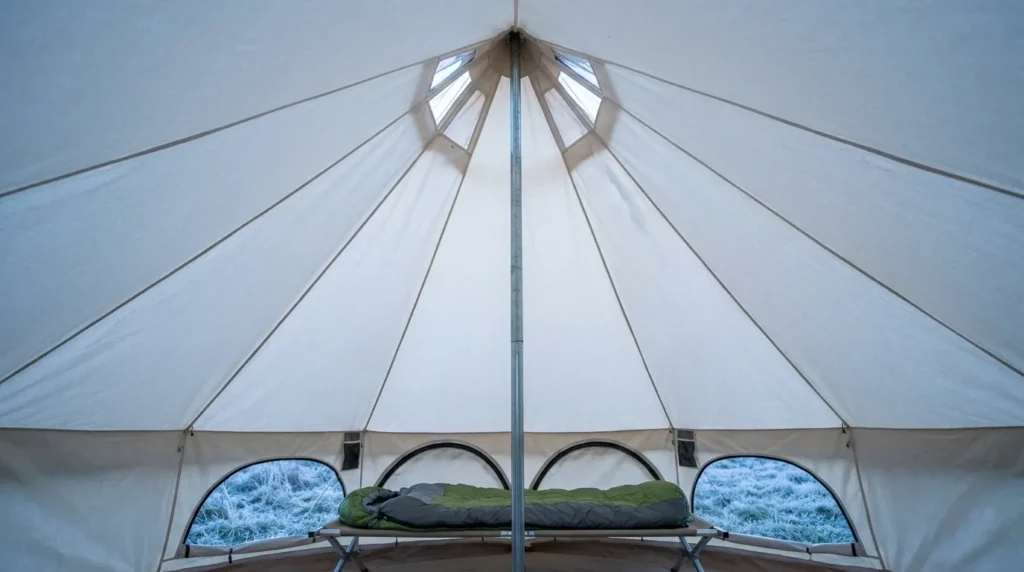
On a still, 38 degree night, I slept in the WhiteDuck Bell Tent, a 16.5 ft Avalon, while a friend slept in a nylon dome a few yards away. At sunrise, his tent walls were beaded with water and his sleeping bag foot box was damp. The Avalon roof was dry to the touch. That is not a one-off result, it happened on almost every cold, calm morning I compared.
The physics is simple. Warm, moist air inside the tent meets a cold wall. On nylon, the moisture condenses because it cannot escape. Cotton lets much of it pass through and evaporate outside. The National Weather Service dew point explainer helps if you want to understand when condensation is most likely.
Comfort also shows up in temperature. A thick cotton roof shades like a tree canopy, so canvas tents stay noticeably cooler at midday. The Kodiak Canvas Flex Bow Deluxe, with its two big doors open, felt like a covered porch on a hot afternoon, while a nylon tent of similar size felt like a car with the windows up.
Noise is the comfort factor nobody mentions until they experience it. Canvas walls move slowly in wind. Nylon snaps and rattles. On a gusty night, that alone can decide who gets sleep.
Which is more waterproof, a canvas or nylon tent?
A new nylon tent is waterproof right away thanks to its coating, while a canvas tent becomes fully waterproof after seasoning, when the cotton fibers swell and seal the needle holes along its seams. Once seasoned, a quality canvas tent is every bit as weatherproof as nylon, and it keeps that ability longer as coatings on nylon eventually peel.

The heavy cotton duck tents in this hub, the Kodiak Canvas Cabin Lodge Tent, the Kodiak Canvas Cabin Tent, and the White Duck Outdoors Alpha Wall Tent, all stayed dry through hard rain once seasoned. My separate guide on are canvas tents waterproof explains seasoning in more depth, including what to do if a seam still weeps after two soaks.
Nylon has a weakness that takes longer to show. Polyurethane coatings break down over years, especially with heat and humidity, and seam tape peels. Once that happens, a nylon tent leaks in ways that are hard to fix. A canvas tent that starts to let water through can be re-proofed or re-seasoned, which is a big reason canvas tents last decades.
Hybrid tents sit in the middle. The VEVOR Canvas Bell Tent uses a TC cotton roof with Oxford walls, and VEVOR suggests adding an extra waterproof cover in heavy storms. That is honest advice and a fair picture of hybrid tents: good in light to moderate rain, less bombproof in a deluge.
Is a canvas tent or a nylon tent better in cold weather?
A canvas tent is much better in cold weather because cotton insulates better, sheds less heat, avoids heavy condensation, and can be fitted with a stove jack for safe wood stove heating, which nylon tents cannot handle. This is where canvas tents earn their weight.

Seven of the ten canvas tents I tested have stove jacks. The 4 Season Canvas Tent from WaldZimmer, the Canvas Bell Tent with Stove Jack from VANFOND, and the Cotton Canvas Bell Tent from glamcamp all let you run a small wood stove for a warm, dry shelter even when it is well below freezing outside. Nylon would melt near a stove pipe, so heating a nylon tent safely is basically off the table.
Even without a stove, canvas holds warmth better overnight. Combine that with less frost forming on the inside walls, and canvas tents simply feel more livable on shoulder-season and winter trips. The National Weather Service winter safety page is worth reviewing before any cold trip regardless of tent type.
Any stove use carries carbon monoxide risk. Read the CPSC carbon monoxide guidance, run a CO alarm, and ventilate. If you are deciding between a three-season and four-season setup, my 3 season vs 4 season tent guide helps frame it.
What about fire safety and durability in canvas vs nylon tents?
Neither canvas nor nylon is fireproof, but treated canvas can meet flame-resistance standards and resists sparks better than nylon, which melts quickly. For durability, canvas resists abrasion and UV better over the long haul, while nylon resists mildew and weighs far less.
Some canvas tents use fire-retardant treatments. The WHITEDUCK Alpha wall tent I tested comes in a Fire Water Repellent version. Flame resistance in tents is commonly measured against standards like NFPA 701, which tests how fabric responds to flame. Even treated canvas will burn, so keep stoves, lanterns, and fire pits at a safe distance from any tent.
On durability, cotton canvas from a quality maker like Kodiak or WHITEDUCK regularly lasts 15 to 20 years with good care. WHITEDUCK uses cotton sourced through the Better Cotton program, which matters to some buyers. Nylon family tents typically last a handful of seasons before coatings, poles, or zippers fail.
The durability catch for canvas is moisture. Pack a canvas tent wet and leave it for a week and mildew can do real damage. Nylon forgives that mistake far more. Cotton Incorporated’s fabric resources explain why natural fibers need airflow during storage.
Budget hybrids like the MC TOMOUNT Canvas Glamping Tent split the difference with a TC roof and polyester Oxford walls. They resist mildew better than full cotton but do not breathe as well down low.
How much more does a canvas tent cost than a nylon tent?
A canvas tent typically costs two to ten times more than a nylon tent of similar floor size, with budget polycotton bell tents at the low end and outfitter-grade cotton wall tents at the top. The gap narrows a lot when you factor in lifespan.
| Tent Type | Rough Price Tier | Expected Lifespan With Care |
|---|---|---|
| Budget nylon dome | Lowest | 2 to 5 seasons |
| Polyester instant cabin | Low | 3 to 6 seasons |
| Budget polycotton or hybrid bell | Low to mid | 5 to 10 seasons |
| Kodiak cotton duck cabin or flex-bow | Mid to high | 15+ seasons |
| WHITEDUCK cotton bell or wall tent | High | 15 to 20+ seasons |
If you camp a few nights a year, a nylon tent is the better value. If you camp ten or more nights a year, especially in cold or changeable weather, a canvas tent often costs less per night over its life. That is how I justify the big Kodiaks and WHITEDUCKs to myself.
Frequently asked questions about canvas vs nylon tent
Is canvas or nylon better for backpacking?
Nylon is far better for backpacking. The lightest canvas tent in my testing weighed about 43 pounds, while a good backpacking tent weighs 2 to 4 pounds. There is no realistic way to carry canvas on your back for more than a short walk from the car. Canvas tents are built for car camping, base camps, hunting camps, and glamping, where weight barely matters and comfort over several nights matters a lot. If you want nylon for trails and canvas for long car-camping trips, owning one of each is common among experienced campers.
Do canvas tents get moldy more easily than nylon tents?
Yes, canvas tents are more vulnerable to mold and mildew than nylon, because cotton is a natural fiber that holds moisture and can feed mold when stored damp. The fix is simple but strict: never store a canvas tent wet, and if you have to pack it damp at camp, set it up to dry within a day or two. Polycotton blends resist mildew a bit better than pure cotton. Nylon is not immune either, mold can still grow on dirt and coatings, but it happens less often.
Is a polyester tent the same as a nylon tent?
Not exactly, but for a canvas vs nylon comparison they behave similarly. Both are synthetic, both depend on coatings for waterproofing, and both trap condensation because they do not breathe. Polyester stretches less when wet and resists UV a bit better, which is why many family tents use it. Nylon is lighter and stronger for its weight, which is why backpacking tents favor it. Compared with canvas, both are lighter, faster to dry, and less breathable.
Which lasts longer, a canvas tent or a nylon tent?
A well-made canvas tent usually lasts much longer than a nylon tent, often 15 to 20 years compared with a handful of seasons for most nylon family tents. Cotton canvas resists UV and abrasion well, and it can be re-proofed or patched when it wears. Nylon breaks down in sunlight, and its waterproof coatings eventually peel in ways that are hard to repair. The one condition is care: canvas only reaches that lifespan if you dry it fully before storage every time.
Should I buy a canvas or nylon tent for family camping?
Buy canvas if your family camps often, stays several nights at a time, drives to the site, or camps in spring, fall, or winter. Buy nylon if you camp a few times a year in summer, need a light tent, or have limited storage and vehicle space. For many families, a canvas tent becomes the main tent for longer trips while an older nylon tent stays in the garage for quick overnights and festivals. A flex-bow or cabin-style canvas tent is the easiest switch for families coming from nylon.
Helpful Guides
- How to Clean a Canvas Tent
- How to Set Up a Canvas Tent
- How to Get Rid of Mold on Canvas Tent
- Teton Canvas Tent vs Kodiak
- What Is a Hot Tent
Should you choose a canvas or nylon tent?
Choose a canvas tent if comfort over multiple nights, cold-weather camping, or a tent that lasts decades matters most to you, and choose a nylon tent if weight, speed, price, and low maintenance matter more. There is no universal winner in the canvas vs nylon tent debate, only the right tool for your trips.
My own setup ended up as both. I carry nylon when I backpack or need to pitch fast, and I bring canvas for anything longer than a weekend, anything below about 45 degrees, and any trip where I want to actually enjoy the tent instead of just survive in it. Once you have slept dry under cotton on a frosty morning, it is hard to go back.
If you are leaning canvas, start with my best canvas tents guide, which ranks all ten tents I tested by use case, from the family-friendly Kodiaks to the budget polycotton bells. The canvas tents comparison table there is the fastest way to narrow the field by weight and stove jack.