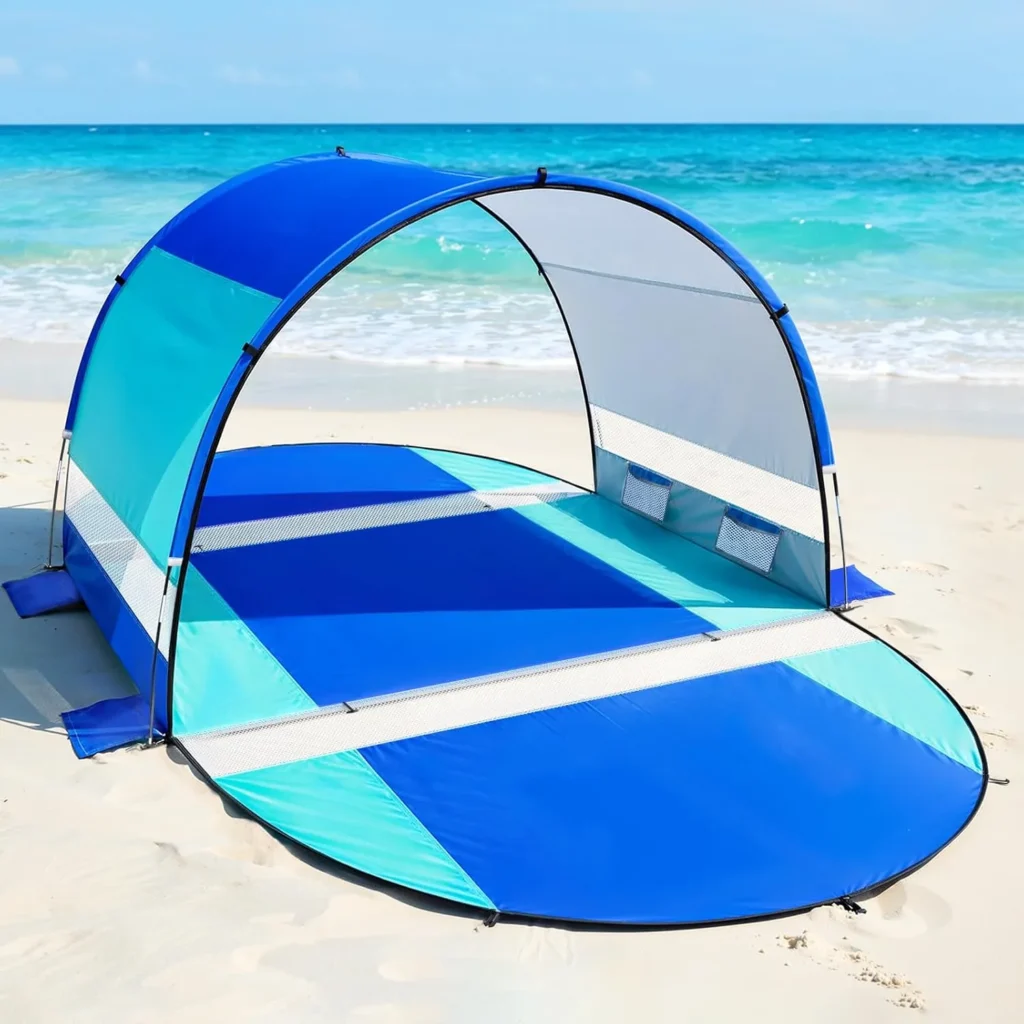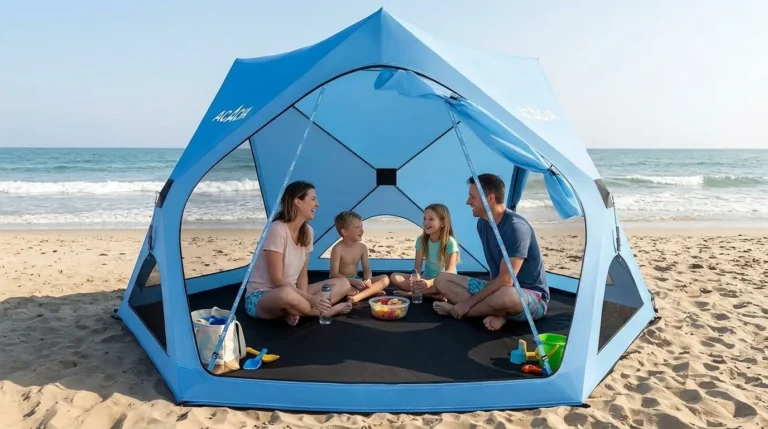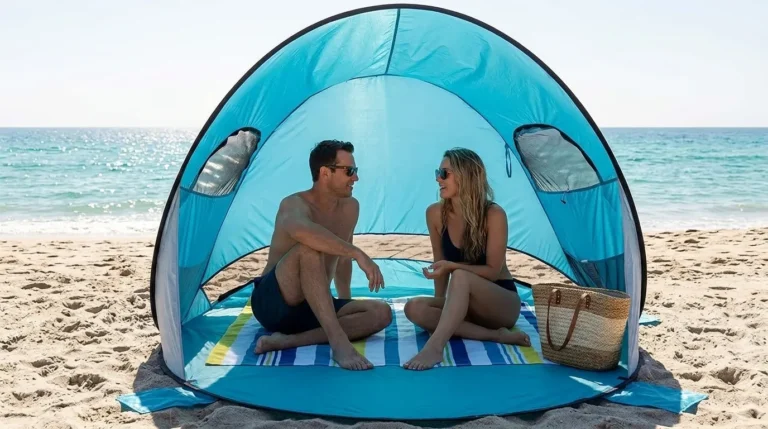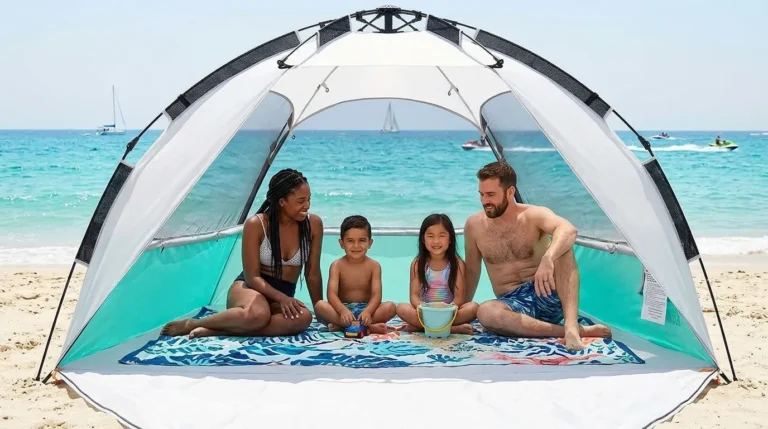
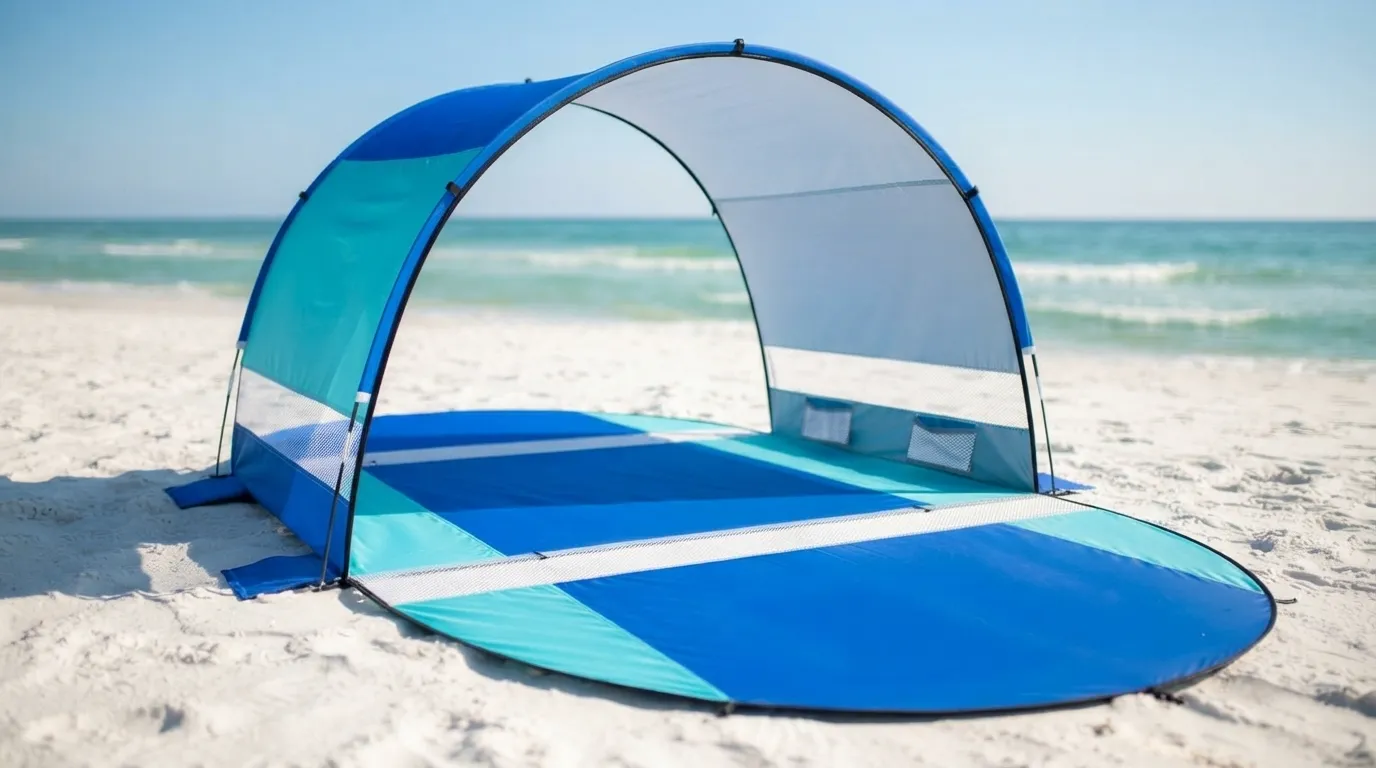

The Rhino Valley beach tent looked like the easiest setup in my whole test lineup right up until a steady onshore breeze turned it into a genuine two person job, poles bowing one way while I chased a flapping side panel the other. Once it was staked down properly though, that same semi-circular arch shape gave me more headroom and a better view of the water than almost anything else in this hub, so I kept it up for the rest of the week anyway.
This post contains affiliate links. As an Amazon Associate, I may earn commission from qualifying purchases at no extra cost to you.
Overall Rating: 4.0/5
This is the second review in our beach camping tents hub, following my earlier look at the Gorich beach tent. The Rhino Valley takes a noticeably different approach with its rounded arch frame and double zippered doors, so it earned its own full test rather than a quick mention.
| Category | Score (Out of 5) |
|---|---|
| Shade Coverage | 4.4 |
| Setup Ease | 3.6 |
| Windproof Stability | 3.5 |
| Ventilation & Airflow | 4.6 |
| Portability | 4.2 |
| Value for Price | 4.0 |
Check out the current price of the Rhino Valley beach tent on Amazon.
What Are the Primary Pros and Cons of the Rhino Valley Beach Tent?
The Rhino Valley beach tent stands out for its shape and its ventilation, but the setup and wind performance need some honest caveats based on both my own test and what other owners are reporting.
Pros
| 1. Semi-circular arch design gives noticeably more interior headroom than a flat-panel canopy style |
| 2. Front and rear zippered doors roll up independently, so you can block sun from one side while leaving the other open |
| 3. UPF50+ coated polyester plus full mesh side walls on all four sides for real cross ventilation |
| 4. Ships with a sand shovel in the box, a small but genuinely useful inclusion for filling the sandbags |
| 5. Two interior mesh storage pockets keep phones, keys, and sunscreen off the sand |
| 6. Comes with six windproof ropes plus 12 plastic and 6 metal stakes, more anchor points than most rivals in this hub |
| 7. Packs into a labeled duffel bag under seven pounds |
Cons
| 1. Multiple reviewers say setup genuinely needs two people once there is any onshore breeze, despite the listing’s no special skills claim |
| 2. One reviewer gave up entirely partway through setup and went back to a plain beach umbrella |
| 3. The fiberglass poles must be pushed, not pulled, through the sleeves. Amazon’s own setup graphic specifically warns against pulling |
| 4. A reviewer reported the fabric ripping near the zipper line after only a handful of uses |
| 5. Tops out at a 5-6 person size, with no 7-8 person option for larger groups the way some rivals in this hub offer |
| 6. In real wind, the tall arch shape can catch gusts like a sail, and one detailed review describes having to reposition and re-stake it mid-use |
| 7. Sits at 3.9 out of 5 on Amazon with 120 ratings, and roughly one in ten of those are one star, a noticeably higher complaint rate than some other tents in this hub |
Most of the frustration in the reviews traces back to wind, not manufacturing defects, which lines up with what I saw myself. For more on how to actually secure any canopy style shelter before conditions turn, the National Weather Service’s Beaufort wind scale is a useful gut check before you even start unpacking on a gusty day. If setup speed matters more to you than interior headroom, the OutdoorMaster beach tent and the NXone beach tent in this hub are both worth a look once their reviews are live, since their listings lean harder on instant, single person setup.
The Specs of the Rhino Valley Beach Tent
| Feature | Specification |
|---|---|
| Brand | Rhino Valley |
| Model | OS220120 |
| Sizes Available | 2-3 (L), 3-4 (XL), and 5-6 (XXL) Person |
| Dimensions (2-3 Person / L) | 82.7″L x 63″W x 55″H |
| Weight (2-3 Person) | 6.89 pounds |
| Material | Abrasion-resistant polyester, UPF50+ UV-resistant coating |
| Frame | 2 fiberglass rods |
| Water Resistance | Water resistant |
| Included Components | 1 tent, storage bag, 2 fiberglass rods, 6 windproof ropes, 1 sand shovel, 12 plastic ground stakes, 6 metal ground stakes |
| Warranty | Amazon standard 30-day voluntary return guarantee |
That included sand shovel is a small thing, but it is the kind of detail that tells you the brand actually thought through the sandbag step rather than assuming you would bring your own tool. It is one of the small touches that separates this tent from a couple of others in the beach camping tents hub that skip it entirely.
How Easy Is the Rhino Valley Beach Tent to Set Up?
The Rhino Valley beach tent setup is a six step process on paper: lay the tent flat and stake the base, push the fiberglass poles through the side sleeves, align the pole ends and seat them, tie the six windproof ropes to the support points and stake those too, fill the sandbags, and you are done. On a calm morning I had it up in about seven minutes working alone, and the semi-circular shape popped into place cleanly once both poles were seated.
The catch, and it is a real one, is that Amazon’s own setup graphic includes a specific warning not to pull the poles through the sleeves, only push them, which tells you this is a common enough mistake that the brand felt the need to call it out. I fumbled this on my first attempt and had to back a pole out and restart.
Wind is where this tent’s setup difficulty really shows up. Several owner reviews describe needing a second person once there is any breeze at all, one to hold the poles steady while the other stakes the base, and one particularly detailed review called it a full contact wrestling match on a breezy day. I did not need a second person in light wind, but I would not want to try this solo in anything stronger. Compared to the WhiteFang beach tent and the EchoSmile beach tent, both of which use simpler single-hoop pop-up frames, the Rhino Valley’s two-pole arch asks a little more patience from you before it rewards you with its extra headroom.
How Much Shade and Airflow Does the Rhino Valley Beach Tent Provide?
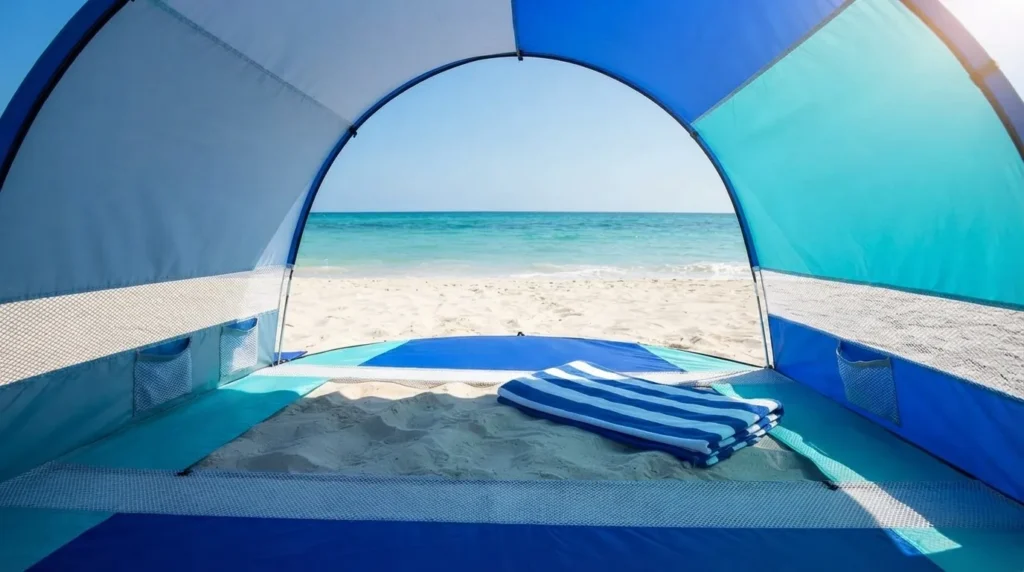
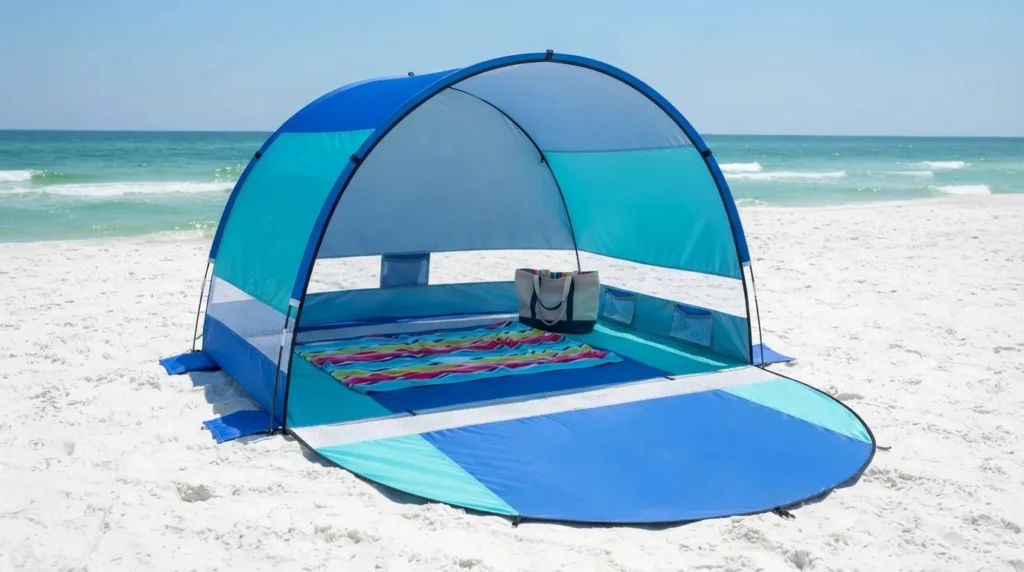
The Rhino Valley beach tent covers a genuinely large, tall interior thanks to its semi-circular arch shape, and its front and rear zippered doors give you more control over shade and airflow than a fixed canopy panel does. Roll both doors up and you get a full cross breeze. Zip one side closed and you can block direct afternoon sun while still leaving the other end open for a view or for kids to run in and out.
The UPF50+ coated polyester blocks the bulk of direct UV exposure, and combined with the mesh side walls on all four sides, the interior stayed comfortably ventilated even when the sun was directly overhead. This dual-door design is genuinely different from most of the other tents in this hub, which tend to have a single front opening.
Where it loses a little ground to something like the Glymnis beach tent is overall footprint at the base size. The 2-3 person Rhino Valley I tested measures 82.7 by 63 inches, which is a taller, narrower shape built for headroom rather than sprawling floor space. If you want to compare a wider, lower profile shade footprint against this one, that review is worth reading once it is live.
How Stable Is the Rhino Valley Beach Tent in Ocean Wind?
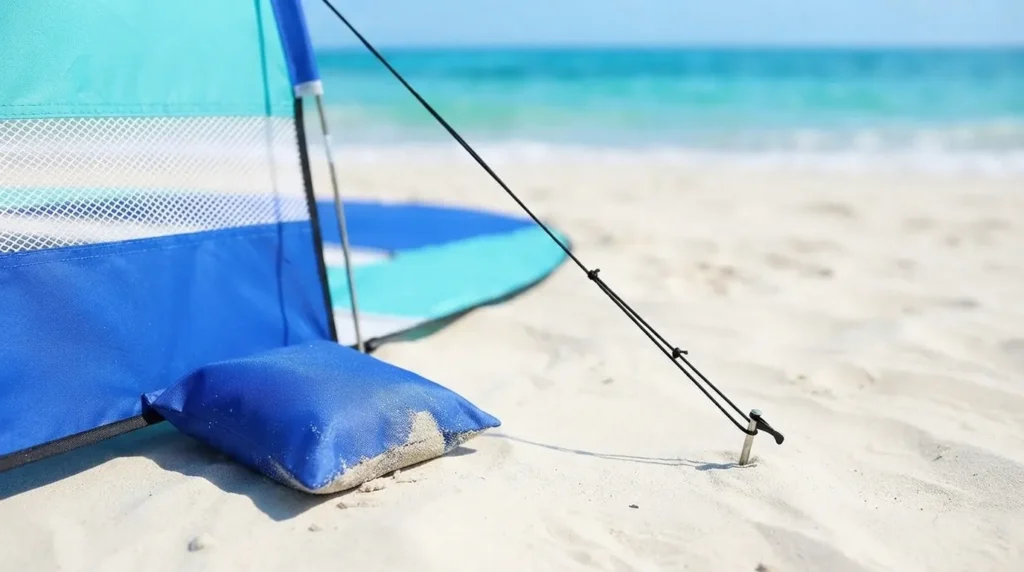
The Rhino Valley beach tent ships with more anchor hardware than most tents in this hub, four sandbags, six windproof ropes, and eighteen stakes combined between plastic and metal, but that hardware does not fully offset the challenge its tall arch shape presents in real wind. I tested it through a light to moderate onshore breeze and it held reasonably well once fully staked and roped, but I could feel the front arch flexing noticeably more than the Gorich beach tent I reviewed earlier in this hub, which uses rigid alloy steel poles instead of fiberglass.
Owner reviews back this up. One reviewer left the tent up from morning through evening with wind estimated around 14 miles per hour and had to reposition and re-stake it partway through the day as it shifted. Another described the second real gust turning setup into what she called a full contact wrestling match, with the tent catching wind like a parasail during takedown.
The fiberglass poles themselves are a deliberate tradeoff. They flex rather than snap under pressure, which is good for durability, but that same flex is likely part of why the tent moves more in wind than a stiffer alloy steel frame would. If beach wind is a regular part of your trips, I would treat the sandbags and all six ropes as mandatory, not optional, every single time you set this up.
Which Rhino Valley Beach Tent Size Should You Buy?
The Rhino Valley beach tent comes in three sizes rather than the four you will see on some competitors in this hub, and the right one depends on how many people and how much gear you actually want under that arch. The L size I tested measures 82.7 by 63 by 55 inches and comfortably fits 2 to 3 people.
Step up to the XL and you get 94.5 by 71 by 59 inches for 3 to 4 people, and the largest XXL reaches 115 by 94.5 by 59 inches for 5 to 6 people, a significant jump in floor length while the height stays about the same across the two larger sizes. Unlike some tents in this hub, there is no 7-8 person option here, so a bigger family reunion crowd will need to look elsewhere or bring a second shelter.
For a group that consistently runs larger than six, it is worth comparing this against the Camel Crown tent, which is built more like a traditional beach tent and scales differently for bigger groups. For most couples, small families, or two friends who want real headroom without a huge footprint, the L or XL size here is a solid fit.
How Does the Rhino Valley Beach Tent Compare to Other Tents in This Hub?
The Rhino Valley beach tent’s defining tradeoff, more anchor hardware but a taller shape that still catches wind, makes the most sense when set against tents with different anchoring approaches rather than every shelter in the hub. I am comparing it here against the Gorich beach tent, the WolfWise beach tent, and the Oileus X-Large beach tent, since all four rely on some combination of sandbags, stakes, and ropes but land on different tradeoffs.
| Beach Tent | Pole Material | Anchoring System | Size Tested |
|---|---|---|---|
| Rhino Valley Beach Tent | Fiberglass, push-fit arch | 4 sandbags, 6 windproof ropes, 18 stakes | 2-3 Person |
| Gorich Beach Tent | Alloy steel, X-cross pop up | Sewn-in sandbag pockets, stakes, windproof ropes | 3-4 Person |
| WolfWise Beach Tent | Not specified in listing | Sandbag pockets and stakes | 3-4 Person |
| Oileus X-Large Beach Tent | Not specified in listing | Six sandbag pockets | 4 Person |
The honest takeaway from testing both the Gorich and Rhino Valley beach tent is that anchor hardware count matters less than pole rigidity and overall shape once wind actually picks up. The Rhino Valley wins on sheer number of anchor points, but the Gorich’s stiffer alloy poles and lower profile made it feel more planted in the same conditions.
Frequently Asked Questions About the Rhino Valley Beach Tent
How long does it take to set up the Rhino Valley beach tent?
Budget about seven to ten minutes solo on a calm day, following the six step process of staking the base, pushing the fiberglass poles through the sleeves, tying off the windproof ropes, and filling the sandbags. Add extra time, and ideally a second person, if there is any real wind, since that is when this particular tent gets noticeably harder to manage.
Does the Rhino Valley beach tent actually block UV rays?
Yes. The polyester fabric carries a UPF50+ UV-resistant coating, and combined with the mesh side walls, the interior stayed shaded and comfortably ventilated during testing rather than turning into a stuffy hot box.
Will the Rhino Valley beach tent hold up in windy beach conditions?
It holds up acceptably in light to moderate wind once you use all four sandbags and all six windproof ropes with their stakes, but its taller arch shape does catch gusts more than lower profile designs in this hub. Multiple owner reviews describe needing to reposition it mid-use in stronger, gustier conditions.
What size Rhino Valley beach tent should I buy?
The L size fits 2 to 3 people at 82.7 by 63 by 55 inches, the XL fits 3 to 4 people, and the XXL fits 5 to 6 people at 115 by 94.5 by 59 inches. There is no larger option for bigger groups, so plan accordingly if you regularly beach it with more than six people. If your trip is a full weekend rather than a single beach day, our guide to tent camping Daytona Beach covers how to pair a shelter like this with a nearby campsite.
Is the Rhino Valley beach tent worth it over a standard pop up canopy?
If interior headroom and airflow control matter more to you than fighting wind on a bad day, yes. The double zippered doors genuinely give you options a fixed canopy panel does not. If you regularly beach it somewhere windy, weigh the setup tradeoffs described above before deciding.
Related Resources
- Pismo Beach tent camping guide
- Beach tent camping southern california guide
- Beach tent vs Camping tent
Should You Buy the Rhino Valley Beach Tent?
I would recommend the Rhino Valley beach tent to a couple or small family who prioritizes headroom, airflow control, and the flexibility of two separate doors over the fastest possible setup. The shade and ventilation genuinely impressed me, and the included sand shovel and generous anchor hardware show real thought went into the design.
Skip it if you regularly set up in windy conditions and want something closer to foolproof, or if you need a 7-8 person size, since this line tops out at 5-6. For a steadier setup in breezy conditions, the Gorich beach tent earlier in this beach camping tents hub held up more predictably in my own side by side test.
Check out the current price of the Rhino Valley beach tent on Amazon.