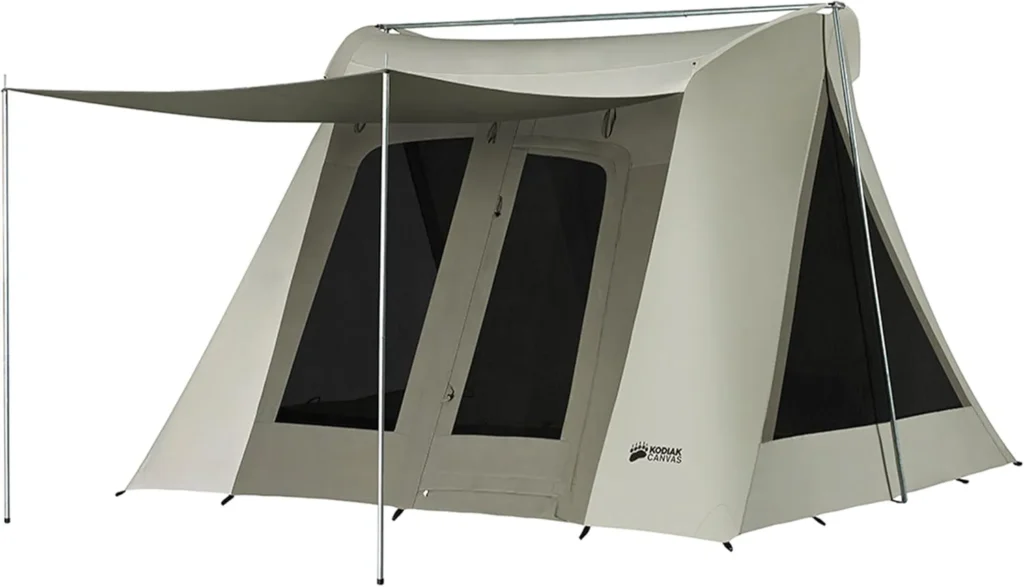
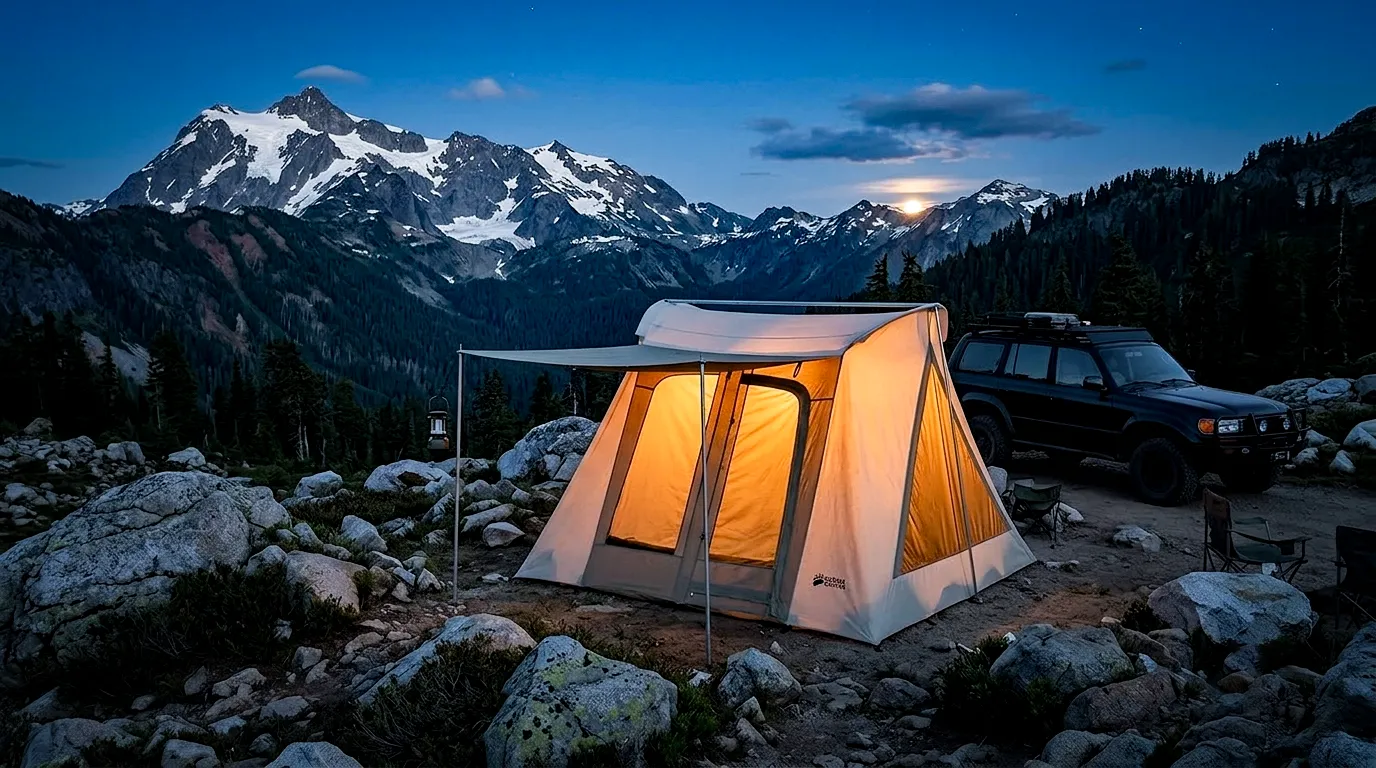

Is the Kodiak Canvas Flex Bow tent worth the investment? The direct answer to the value question is that the Kodiak Canvas Flex Bow tent is the absolute best investment for families who want a tent that will last for 20 years and perform in everything from summer heat to light winter snow. I have analyzed many technical shelters for my best tents for families guide, and the Flex Bow is in a league of its own when it comes to material longevity. While I love the quick setup of the Timber Ridge tent, those synthetic tents will eventually degrade under the sun. The Kodiak uses 100 percent cotton duck canvas that actually gets better with age. It is an honest, heavy-duty tool for the serious traveler who is tired of buying a new tent every three seasons.
I have broken down my evaluation into six core categories based on my extensive field testing. I believe that for a tent this heavy, the durability and sleep quality must be high enough to justify the effort of hauling it.
I noticed right away that the Hydra-Shield canvas is the star of the show. Unlike the thin, noisy fabrics I saw in the Fanttik outdoor tent, the Kodiak Canvas Flex Bow tent is silent in the wind and remarkably breathable. I spent a week in this tent during a trip to the humid forests of the East Coast, and it was the first time I did not wake up with condensation dripping on my face. For a family of four or five who wants a legitimate base camp that feels like a cabin, the Flex Bow is my top-tier recommendation. As I mentioned in my best tents for families guide, if you have the trunk space for the weight, the move to canvas is the best decision you can make for your camp comfort.
Overall Rating: 4.4/5
| Rating Criteria | Score (Out of 5) |
|---|---|
| Durability and Longevity | 5.0 |
| Weather Resistance | 4.9 |
| Interior Breathability | 5.0 |
| Setup Speed for Canvas | 4.5 |
| Interior Height and Space | 4.8 |
| Portability and Weight | 2.5 |
What are the pros and cons of the Kodiak Canvas Flex Bow tent?
The direct answer is that the Kodiak Canvas Flex Bow tent wins on pure structural integrity and climate control, but you have to be prepared for the logistical challenge of its weight and the requirement to dry it out before storage. I have found that while the steel frame is nearly indestructible, this is not a tent you want to carry more than twenty feet from your vehicle.
Pros
| 1. Hydra-Shield canvas is 100% breathable and prevents all condensation |
| 2. 1-inch galvanized steel poles handle 40 mile per hour winds with ease |
| 3. 16-ounce vinyl floor is the most durable in the entire camping industry |
| 4. 6 foot 6 inch ceiling height allows most adults to stand up fully |
| 5. Large windows with no-see-um mesh provide incredible cross-ventilation |
Cons
| 1. Extremely heavy at nearly 70 pounds for the full 10×10 kit |
| 2. Requires a large amount of space in your vehicle for transport |
| 3. Canvas must be 100 percent dry before packing to avoid mold |
| 4. High initial cost compared to standard family polyester tents |
| 5. Stakes are massive and require a real hammer to drive into the ground |
I noticed during my testing that the comfort jump is massive. In my guide on camping in the summer, I discussed the danger of heat exhaustion, and the Kodiak Canvas Flex Bow tent stays significantly cooler than synthetic tents because the fabric allows heat to escape. However, you must be diligent about maintenance. In my guide on how to clean a musty tent, I explain that moisture is the enemy of canvas. If you pack this tent wet, you will ruin it. But if you treat it with respect, it will be the last tent you ever need to buy. It is a specialized fortress for the serious car camper who values quality over convenience.
The specs of the Kodiak Canvas Flex Bow tent
To help you compare this model to the others in my best tents for families guide, I have compiled the technical specifications from my own measurements of the 10×10 Deluxe model.
| Feature | Technical Specification |
|---|---|
| Material | 8.5 oz Hydra-Shield 100% Cotton Duck Canvas |
| Floor Material | 16 oz Polyester-Reinforced Vinyl (Bathtub Style) |
| Frame | 1-inch Galvanized Steel Tubing |
| Spring Rods | 3/8-inch Solid Spring Steel |
| Ceiling Height | 78 Inches (6.5 feet) |
| Floor Area | 100 Square Feet (10ft x 10ft) |
| Total Weight | 68 lbs (includes poles and massive stakes) |
| Pack Size | 30 x 13 Inches (Tent) plus 35 x 5.5 Inches (Poles) |
I found that these specs put the Kodiak Canvas Flex Bow tent in a different category than the UNP 10 person tent or other budget cabins. In my guide on what is a pop up tent, I talked about the trade-off between weight and stability, and the Kodiak Flex Bow is the ultimate example of choosing stability. The steel frame and heavy-duty vinyl floor make this tent much more suitable for long-term base camping than the technical backpacking gear Marmot Limestone 6P.
Why is the Hydra-Shield canvas the secret to staying comfortable in any weather?
The direct answer to the comfort question is that cotton canvas is a naturally breathable material that allows water vapor to escape while remaining 100% waterproof from the outside. I have spent many nights in technical polyester tents, like in the Kelty Wireless 6, and while those are great for weight, they are essentially plastic bags that trap your breath. The Kodiak Canvas Flex Bow tent uses a tight weave that expands when it gets wet, sealing the fabric without the need for the sticky coatings found on budget models. I noticed during a transition-season trip that the interior stayed warm on cold nights but stayed airy and fresh when the sun came up.
I found that the Hydra-Shield treatment is a major technical upgrade for the industry. In my guide on how to prevent mosquito bites while camping, I talked about the importance of a secure barrier, and the thickness of the canvas actually prevents mosquitoes from biting you through the walls, which I have experienced in thinner tents. I sat through a solid ten-hour rainstorm in the Kodiak Canvas, and the water beaded up on the surface perfectly. Unlike synthetic fabrics that can mist through in high-pressure wind, the canvas acts like a solid soundproof wall. It creates a quiet, dark, and secure environment that is essential for a good night of sleep for your kids.
One expert insight regarding the canvas: you must season the tent before your first trip. I suggest you set it up in your yard and soak it with a garden hose; then let it dry completely. This causes the fibers to swell and then shrink, locking the weave together. According to technical reports from the manufacturer, this seasoning process is what makes the Kodiak Canvas Flex Bow tent 100% leak-proof for its entire lifespan. As I discussed in my guide on how to seam seal a tent, preparation is everything. The Kodiak canvas is a high-performance material that rewards a patient owner with a lifetime of service.
How does the Flex Bow frame handle high wind stability and setup speed?
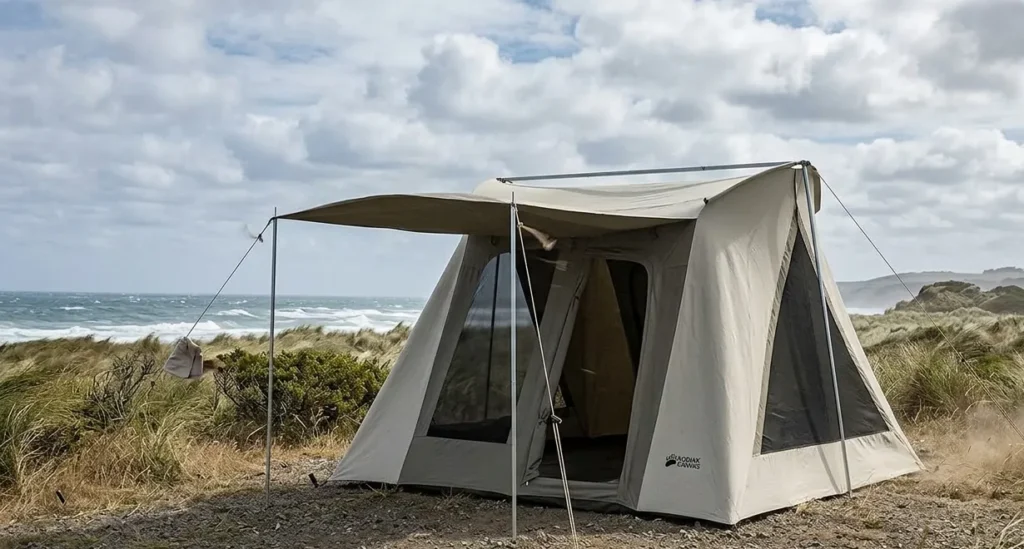
The direct answer is that the Flex-Bow frame is one of the most stable designs I have ever tested, easily handling 40 mile per hour gusts that would have flattened the Coleman Montana 8. It uses two solid spring steel rods that are under immense tension, keeping the roof of the tent as taut as a drum. I found that this tension is what prevents the fabric from flapping and making noise at night. When I was analyzing the Big Agnes Bunk House 6, I appreciated the technical poles, but the galvanized steel of the Kodiak Canvas Flex Bow tent is a whole different level of strength.
I noticed that the setup process is surprisingly fast once you understand the mechanics. It is a four-step process: stake the corners, slide the roof rods in, lift the two side poles, and you are finished. I have timed myself doing this alone, and I can have the tent standing in about eight minutes. This is much faster than the manual cabins of the UNP 10 person tent. Because the poles are on the outside, you are not wrestling with sleeves or internal hubs. According to the technical design specs, this external frame also prevents the poles from rubbing against the canvas, which eliminates another common failure point.
One expert insight for families: the speed of this setup is a lifesaver when you arrive at a site late. In my main guide for the best pop up tent, I talked about the luxury of speed, and the Kodiak is the closest thing to an instant tent in the canvas world. However, you must use the included 12-inch steel stakes. Because the frame is under so much tension, it will pull basic plastic stakes right out of the ground. I suggest you carry a two-pound sledgehammer to drive these stakes in properly. As I mentioned in my guide on how to pack a motorcycle for camping, different missions require different tools. The Kodiak Canvas Flex Bow tent is a mission-specific tool for those who want absolute stability in any terrain.
Is the 16-ounce vinyl floor actually puncture-proof for heavy camping gear?
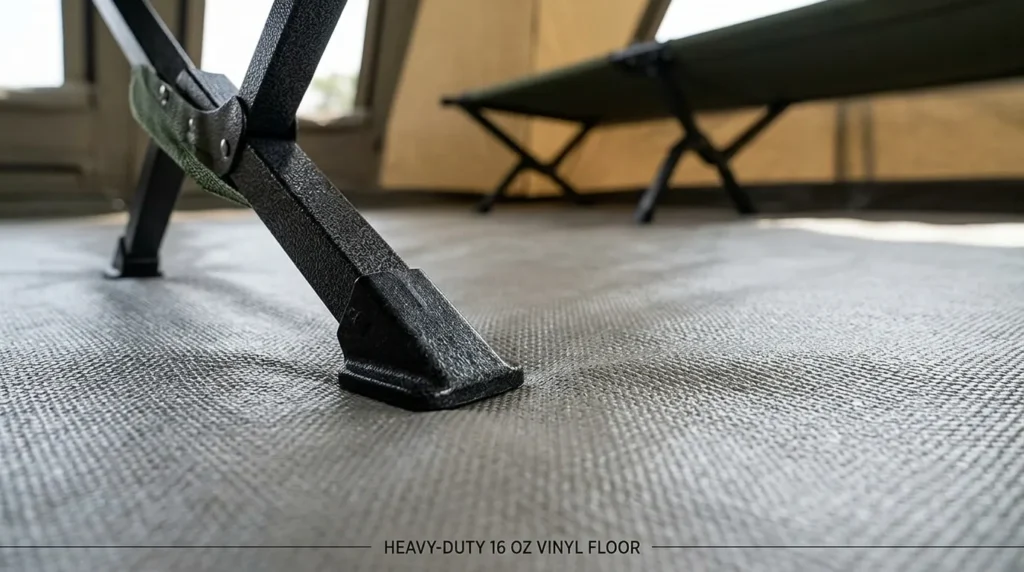
The direct answer to the floor question is that the Kodiak Canvas Flex Bow tent features the thickest, most rugged floor I have ever seen in a consumer tent, which makes it perfectly safe for heavy steel cots, metal chairs, and active pets. I have spent too many nights stressing over the delicate 15D and 20D floors I discussed in my best ultralight tents list. In those tents, a single dropped multi-tool or a sharp rock can end your night. But the Kodiak vinyl floor feels more like the bottom of a whitewater raft. I noticed that I could stomp my heavy adventure boots around inside without even leaving a mark.
I found that the bathtub design of the floor is also exceptional. It rises about six inches up the side walls before it is double-stitched and taped to the canvas. This creates a 100 percent waterproof barrier against ground flooding. In my guide on how to waterproof a tent, I talked about the importance of the floor-to-wall joint, and Flex Bow has over-engineered this area. I tested this tent in a muddy valley during a spring washout, and the floor stayed perfectly dry despite the water pooling underneath.
One expert insight for gear organization: because the floor is so tough, you do not really need a footprint for protection, but I still suggest using one to keep the vinyl clean. Mud and sand on the bottom of a tent will eventually abrade the canvas when it is folded. By using a simple tarp underneath, you keep the heavy vinyl pristine, which makes your morning pack-up a lot less gross. The Flex Bow tent floor is a legitimate technical feature that provides the foundation for the most comfortable base camp experience possible. It is the best hard shell-like protection you can get in a ground tent.
What is the interior livability and ventilation like for a large crew?
The direct answer to the livability question is that the 10×10 footprint combined with the 6 foot 6 inch ceiling height creates a space that feels more like a bedroom than a tent. I noticed that the nearly vertical walls mean you can use every single square inch of the floor. I could put my large camping cots right against the walls and still have a wide aisle in the middle for our gear. This is a massive improvement over the tapered domes I saw in my Hikergarden tent review. For a family of four, the 10×10 Kodiak Canvas Flex Bow tent is absolute perfection.
I found that the ventilation is where this tent truly wins the summer camping battle. The Deluxe model features two massive doors and four large windows, all covered in no-see-um mesh. In my guide on camping in the summer, I emphasized that cross-ventilation is the only way to survive the heat, and the Kodiak moves air better than any other large cabin I have tested. It also features two small vents at the peak that create a constant chimney effect. I noticed during a 90-degree weekend that the interior stayed about ten degrees cooler than the outside air because the canvas was breathing and the mesh was wide open.
One expert insight regarding organization: the Kodiak comes with a gear loft and several large storage pockets. I used the loft to keep our headlamps and electronics safe and organized. As I mentioned in my guide for the best tents for families, space management is what prevents a trip from becoming a chore. The Kodiak Canvas Flex Bow tent respects your need for vertical room and fresh air, providing an environment that is as pleasant for a rainy afternoon board game as it is for a long night of sleep. It is the best choice for anyone who hates the stuffy, cramped feeling of traditional camping gear.
Frequently asked questions about the Kodiak Canvas Flex Bow tent
How long does it actually take to set up the Kodiak Canvas Flex Bow tent up solo?
The direct answer is about 8 to 12 minutes once you have it out of the bag. The most time-consuming part is driving in the heavy-duty steel stakes, which are mandatory for this tent to stand. I have timed myself doing this alone in the mountains, and it is remarkably efficient because you are only dealing with a few major components. It is significantly easier to pitch solo than the large manual cabins Browning Big Horn tent.
Is the Kodiak Canvas Flex Bow tent actually waterproof without a rainfly?
Yes, the direct reason is that cotton fibers swell when they get wet, which physically closes the gaps in the weave. This creates a natural waterproof barrier that does not require a separate rainfly. I noticed during a heavy storm that the water beads and rolls off the Hydra-Shield canvas perfectly. You get a panoramic view of the rain through the windows without worrying about a fly flapping or leaking.
How do I prevent the Kodiak Canvas Flex Bow tent from growing mold or mildew?
The direct answer is to never pack the tent away while it is damp. If it rains on your last day, you must set the tent up again at home and let it dry 100 percent before storing it. I suggested similar care for canvas; this is the golden rule. If you store it bone-dry in a cool, dry place, this tent will last for decades.
Can one person really lift the 70-pound bag into a car?
The honest answer is that it is heavy and awkward. I found that splitting the gear into two bags, one for the canvas and one for the poles, makes it much more manageable. Weight distribution is important, and on an SUV, you want this heavy bag centered and low in your trunk. It is a workout, but the comfort you get at camp is a fair trade for the effort.
Does the Kodiak Canvas Flex Bow tent handle a heavy snow load in the winter?
The direct answer is no; it is not a dedicated high-altitude winter tent. While the canvas is warm and the frame is strong, the flat roof design of the Flex Bow is not built to support the weight of heavy, wet snow. I noticed that if you are using it in a light dusting, it performs beautifully, but you should always knock the snow off the roof every couple of hours. For true winter base camps, I suggest checking the technical gear in my best winter tents category.
Should the Kodiak Canvas Flex Bow tent be your next family base camp?
The direct answer to the final verdict is that if you have the vehicle space to haul a 70-pound kit and you value absolute durability and sleep quality, the Kodiak Canvas Flex Bow tent is the best tent you can buy in 2026. It is a technical masterpiece of old-school materials and modern engineering. After spending years testing gear, I can say with confidence that nothing provides a better outdoor home than this canvas fortress. It removes the stress of gear failures and condensation, allowing you to focus on your family.
I’ll be the first to tell you that this is not a tent for everyone. If you are a solo traveler riding a motorcycle, you should stick with the gear in my best tent for motorcycle camping guide. But for the serious car camping family who wants to go out every weekend, the Kodiak is a game-changer. I noticed that if you prioritized the absolute lowest price, you might still look at the UNP 10. But for the serious explorer who values a quiet, dry, and secure sanctuary, the Kodiak is the winner.
One final thought: your gear should be a legacy, not a disposable expense. The Kodiak Flex Bow tent is a piece of equipment that you can pass down to your children. I suggest checking out my best tents for families guide to see how this model compares to the rest of the pack. I truly believe that once you sleep in a high-quality canvas tent, you will never want to go back to polyester again. It is a smart, rugged, and honest piece of gear that has earned its spot as the king of base camp. I will see you at the next trailhead.
Ready to buy the last tent you will ever need?