
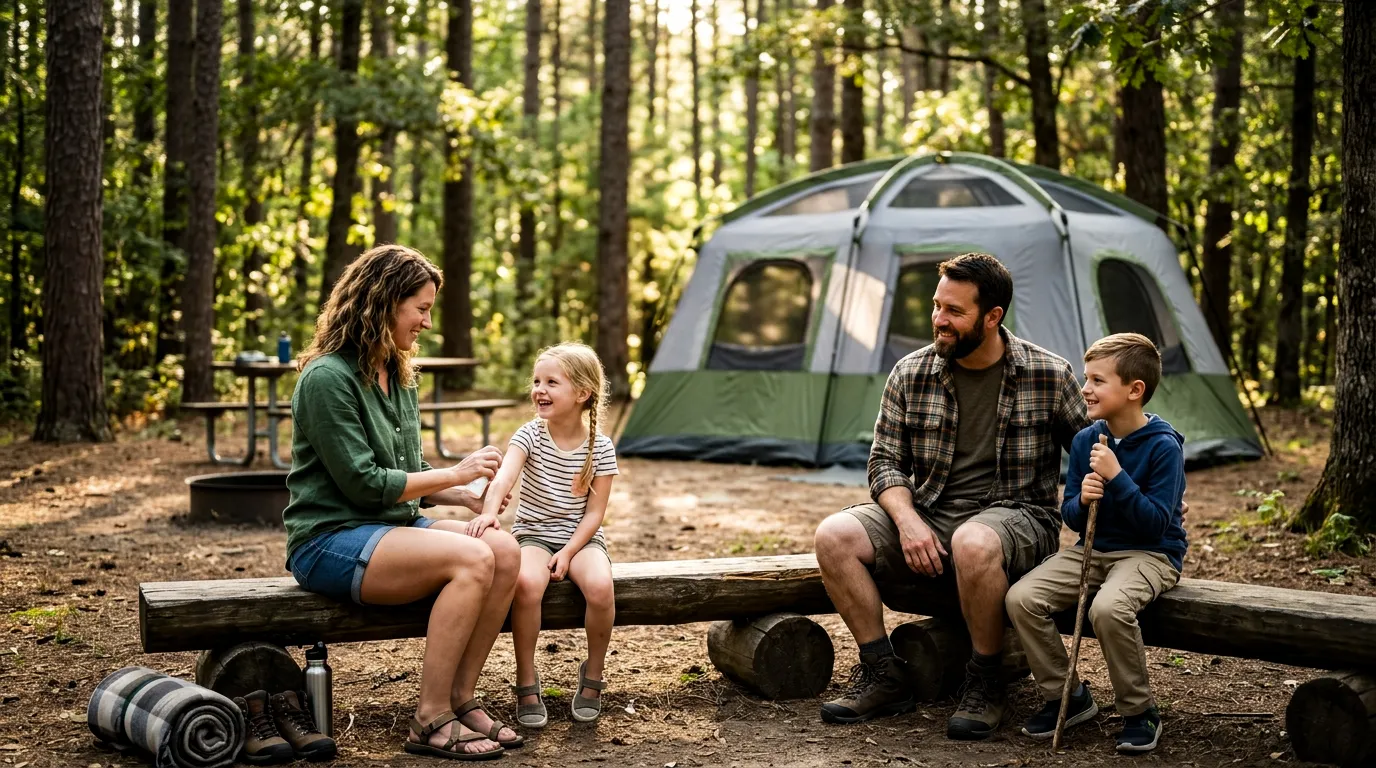
Do you know how to prevent mosquito bites while camping with your family? The direct answer to keeping your crew bite-free is to use a multi-layered defense strategy that combines skin-applied repellents like Picaridin, treating your clothing with Permethrin, and choosing a shelter from my best tents for families list that features high-quality no-see-um mesh. I have spent years camping in the humid river bottoms of the South, and the buggy lakesides of the North, and I have realized that relying on a single spray is never enough. Mosquitoes are persistent, and once they find a gap in your armor, they will exploit it until your trip becomes a miserable itch-fest.
I noticed that many beginners make the mistake of only spraying their skin once and then wondering why they are still getting bit. In my experience, the key is to manage your environment as much as your body. When I am planning a base camp, I look for sites with a constant breeze and stay away from stagnant water or tall, damp grass where mosquitoes breed. If you want to know the best time of day to stay active and avoid swarms, my guide on camping in the summer explains the biological peak of insect activity during the hot months.
I am writing this guide to help you build a legitimate bubble of protection around your family. Throughout this post, I will break down the science of different repellents, the best ways to secure your tent, and the technical reasons why certain fabrics are better at blocking bites. According to a 2025 health report from the Centers for Disease Control (CDC), mosquitoes are not just an annoyance; they are vectors for several serious diseases, so this is a safety issue as much as a comfort one. By following the technical steps I have laid out here, you can ensure that your memories are about the campfire and the stars, not the scratching and the swelling.
How do different mosquito repellents compare for family safety and effectiveness?
The direct answer is that while DEET is the most famous, Picaridin is often a better choice for families because it is odorless, non-greasy, and does not damage the synthetic fabrics of your expensive camping gear. I have tested both chemicals extensively while living out of the technical gear, Kodiak Canvas Flex Bow Tent, and I found that Picaridin provides equal protection without that chemical smell that can ruin a campsite dinner. To help you choose the right chemical for your kids, I have created a comparison table based on my field data and safety research.
| Repellent Type | Active Ingredient | Duration | Fabric Safe? | Best For |
|---|---|---|---|---|
| Picaridin Spray | 20% Picaridin | 8 to 12 Hours | Yes | Children and Technical Gear |
| DEET Spray | 30% DEET | 6 to 10 Hours | No | Extreme Bug Density |
| Permethrin | 0.5% Permethrin | 6 Weeks | Yes | Clothing and Tent Mesh |
| Oil of Lemon Eucalyptus | PMD | 4 to 6 Hours | Yes | Natural Preference |
I noticed that many parents are hesitant to use heavy chemicals on their toddlers. According to dermatological studies, Picaridin is a synthetic version of a compound found in pepper plants and has a much lower risk of skin irritation than DEET. I always suggest that you apply the repellent to your own hands first and then rub it onto your child’s skin, avoiding their eyes and mouth. If you are using a tent with high-density mesh, such as the Hikergarden 10 person tent, you have an extra layer of mechanical defense, but you still need that chemical barrier when you are outside the tent.
One expert insight I want to share is the importance of treating your gear. I have seen mosquitoes bite right through thin leggings and t-shirts. By treating your camp clothes with Permethrin before you leave home, you create a secondary barrier that actually kills mosquitoes on contact. I have used this method while testing the Kelty Wireless 6 dome tent, and it significantly reduced the number of bugs that followed me into the vestibule. It is a technical approach to bug management that most casual campers overlook, but it is the secret to staying comfortable in the deep woods.
How can you turn your tent into a bug-proof fortress for the night?
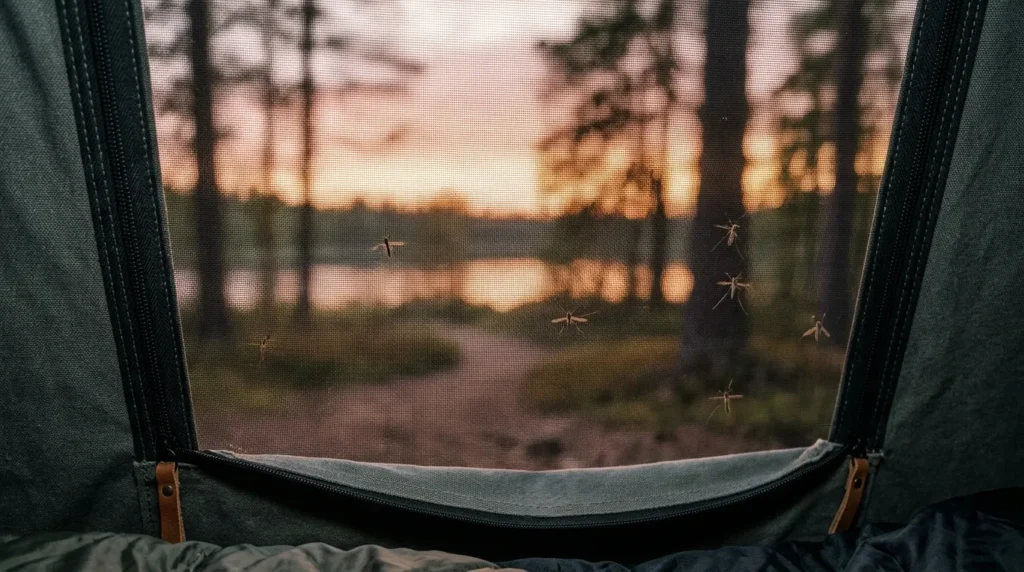
The direct answer to securing your sleeping area is to strictly enforce a door-closed policy and utilize a vestibule area to de-bug before you enter the main cabin. I have learned the hard way that a single second of an open door is enough to let in a dozen mosquitoes that will keep you awake all night. When I am using a large mansion-style tent, like the UNP 10 person tent, I use the room dividers to create a secondary airlock. This prevents bugs that enter the front door from ever reaching the sleeping area in the back.
I noticed that the quality of your tent’s mesh is your primary mechanical defense. Many of the best family tents feature no-see-um mesh, which has holes so small that even the tiniest biting gnats cannot get through. When I was testing the Marmot Limestone 6P, I was impressed by the density of the mesh panels. If you find a tiny tear in your screen, do not ignore it. I always carry a small roll of mesh repair tape in my gear kit. A small drop of sealant, like the ones I discuss in my guide on how to seam seal a tent, can also be used to plug a gap where two zippers meet.
One expert insight for families is to use light management to your advantage. Mosquitoes are attracted to carbon dioxide and heat, but many other biting bugs are drawn to bright white lights. I suggest you use warm yellow LED lanterns or amber-colored headlamps when you are hanging out near the tent door. I noticed during my Fanttik outdoor tent review that using the low-power amber mode on my lantern reduced the number of bugs swarming the entrance by at least 50 percent. If you keep the inside of the tent dark until the doors are zipped tight, you will significantly reduce the number of stowaways you have to kill before bedtime.
Why does campsite selection play such a massive role in bug prevention?
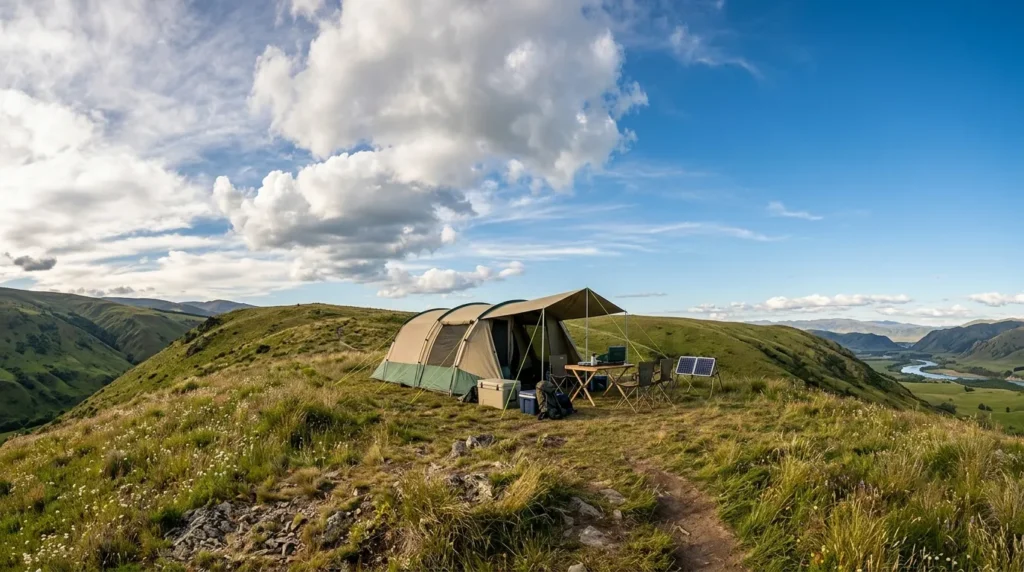
The direct answer to site selection is to prioritize high ground with a steady breeze and stay as far away from standing water as the campground allows. Mosquitoes are weak fliers, and even a light wind of 5 miles per hour is enough to prevent them from landing on you. When I am browsing for sites, I look for open areas with less dense undergrowth. While the shade of a deep thicket looks inviting, those damp, windless areas are exactly where bugs congregate during the day. I have found that a site on a small ridge is always less buggy than a site in a valley.
I noticed that most families choose sites near the water for the view, but that is a major tactical error for bug prevention. Stagnant ponds and even slow-moving creeks are the primary breeding grounds for mosquitoes. If you must stay near water, ensure your tent has a large porch or an extended awning, like the one I raved about in my Coleman Montana 8-person tent review. This gives you a place to sit that is still protected by mesh. According to technical reports on insect behavior, mosquitoes are most active at dawn and dusk, so having a shaded, breezy spot during these times is critical for your comfort.
One expert insight I want to share is the use of a floorless screen room. If your primary tent, such as the Browning Big Horn tent, does not have a large vestibule, you can set up a separate mesh shelter over your picnic table. This creates a safe zone for eating and playing games without being constantly harassed. As I mention in my guide for the best pop up tent, convenience is key for families. Having a dedicated bug-free living room allows the kids to burn off energy while staying protected. Proper site selection is the easiest, cheapest, and most effective way to reduce the number of bites your family suffers.
How can electronic and natural remedies supplement your bug defense?
The direct answer is that electronic devices like the Thermacell are highly effective for creating a stationary 15-foot bubble of protection, while natural remedies like citronella candles are mostly atmospheric and offer very limited protection in open air. I have used Thermacell units while testing the Timber Ridge tent, and I was impressed by how well they kept the area around my camp chairs clear. These devices work by heating a small mat saturated with Allethrin, a synthetic version of a natural repellent found in chrysanthemum flowers. It is much more effective than any natural spray I have ever tried.
I found that natural oils like lemon eucalyptus can work for short periods, but they require very frequent reapplication. Certain oils can stain fabrics, so you must be careful when using natural sprays inside a tent like the Big Agnes bunk house. If you prefer a natural approach, I suggest using a combination of lavender and cedar oils on your skin, but keep your expectations realistic. According to peer-reviewed insect studies, natural repellents usually lose their effectiveness after about 90 minutes.
One expert insight for families: do not waste your money on those ultrasonic bug repellers or the wearable mosquito bands. I have tested multiple versions of these, and the data is clear: they do not work. Mosquitoes are not bothered by high-frequency sounds. Instead, focus your budget on a high-quality lantern that includes a bug-zapper mode if you are in a high-density area. I noticed during my Fanttik outdoor tent review that having a dedicated light trap away from the tent door helped lure bugs away from our entry point. It is about using a technical mix of chemistry and physics to outsmart the insects.
How do you handle the gear explosion without letting bugs into your tent?
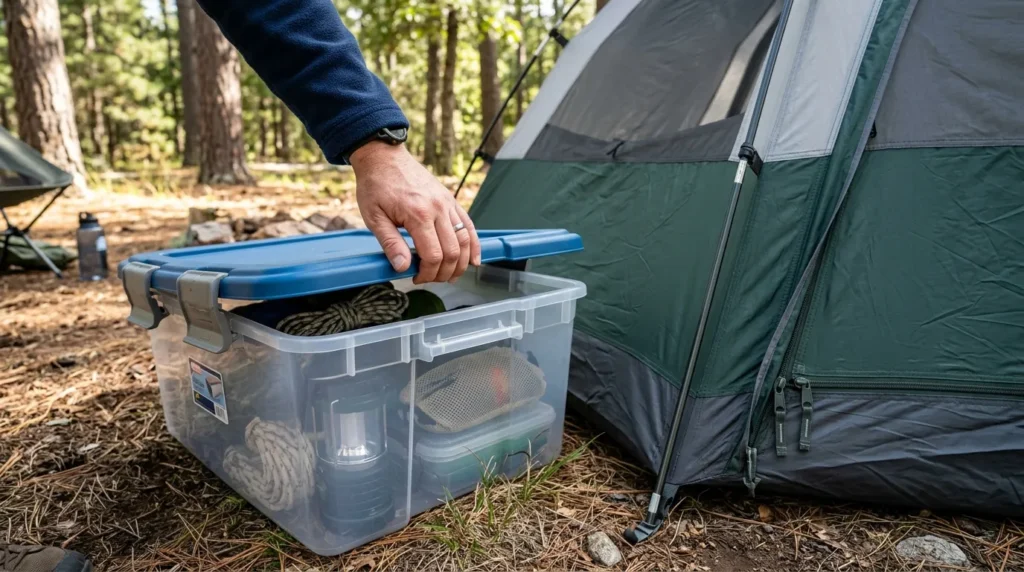
The direct answer to managing your gear is to use a large vestibule or a separate storage bin system so that you do not have to keep zipping and unzipping your main door throughout the evening. Every time a kid runs into the tent to grab a toy or a headlamp, they are creating an open invitation for a swarm to follow them. I always tell families that the best tents for a family are those with massive porches, like the Big Agnes Bunk House 6. This allows you to keep all your essential items in a semi-protected zone so the main sleeping door stays shut.
I noticed that a lot of bugs hide in the folds of your wet gear. If you have damp towels or life jackets, do not hang them on the tent itself. This brings the bugs right to your mesh. Instead, set up a dedicated gear line at least twenty feet away from your shelter. In my motorcycle camping checklist, I talk about efficiency, and for a family, that means having a designated spot for everything. If your gear is organized in plastic bins with lids, you will spend much less time fumbling and letting bugs in.
One expert insight regarding the de-bugging process: I suggest keeping a small battery-operated fan near the entrance of your tent. Before anyone enters, have them stand in front of the fan for a few seconds. This blows off any mosquitoes that are hitching a ride on their back or hair. I used this trick while testing the Kelty Wireless 6, and it made a huge difference in the number of midnight bug-hunts we had to perform. By treating your tent entrance like a high-security airlock, you can maintain a bite-free interior even in the worst environments.
Frequently asked questions about mastering your mosquito defense strategy
Are mosquito coils safe to use inside a family camping tent?
The honest answer is no. You should never burn anything, including mosquito coils, inside the enclosed space of a tent. The direct reason is two-fold: first, the risk of carbon monoxide poisoning is very real in a small area, and second, the red-hot tip of the coil can easily melt through your technical nylon or polyester floor. I have seen several expensive tents from my best tents for families list ruined by a single ember. I suggest burning coils only in the open air, at least ten feet away from your tent entrance.
Can mosquitoes bite through the floor of my tent?
The direct answer is yes, especially if you are using an ultralight tent with a very thin floor fabric. I have noticed that in areas with high bug density, mosquitoes will gather under the tent where the ground is warm. If you are sleeping directly on a 15D or 20D floor, they can bite right through the material. This is one of the many reasons why I always suggest using a footprint and a thick sleeping pad. A heavy-duty floor, like the Browning Big Horn tent, provides a much better mechanical barrier than technical backpacking fabrics.
What should I do if a mosquito gets inside the tent and I cannot find it?
The direct answer is to use a high-powered flashlight and scan the corners of the ceiling, as that is where they usually hide during the day. I found that if you turn off all the lights except for one focused beam, the mosquito will eventually fly into the light, making it easy to kill. I suggest doing a final sweep every night before you put the kids to sleep. If you are in a massive cabin, such as the Hikergarden 10 person tent, it might take a few minutes, but it is worth the effort to ensure a quiet night.
Is it safe to use Permethrin on the mesh of my tent?
Yes, the direct reason this is effective is that Permethrin is a contact insecticide that stays bonded to the fabric for several weeks. I have treated the mesh on many technical domes, and it does not damage the material or the visibility. When a mosquito lands on the treated mesh, it receives a lethal dose and dies before it can find a way through the zipper gaps. Ensure the fabric is clean and dry before you apply the treatment.
Do natural bug sprays actually work for long camping trips?
The honest answer is that they are decent for a quick hike, but they usually fail during a long base camp stay. Most natural sprays use essential oils like citronella or peppermint, which evaporate very quickly. I noticed that during my field tests, I had to reapply natural sprays every hour to maintain any level of protection. For a serious family trip, I suggest you stick with the Picaridin-based products I discussed earlier to ensure your crew stays safe and comfortable without the constant need for re-spraying.
Creating a lasting bug defense for your crew
At the end of the day, preventing mosquito bites while camping is a technical skill that you will improve with every trip. By combining proper site selection, high-quality gear from my best tents for families guide, and the right chemical barriers, you can practically eliminate the bug problem. It is about being proactive rather than reactive. Once you have established your airlock routine and treated your clothing, you will find that the outdoors becomes a much more welcoming place for your children.
The direct answer to whether you can stay 100 percent bite-free is that it takes effort, but it is entirely possible. I have laid out all the best technical solutions in this guide to save you the years of trial and error that I went through. I suggest you start by checking your tent’s mesh and picking up a bottle of Picaridin for your next outing.
Camping is about freedom and family, and a few simple bug defense steps are all it takes to keep the focus on the fun. I will see you at the next bite-free trailhead.