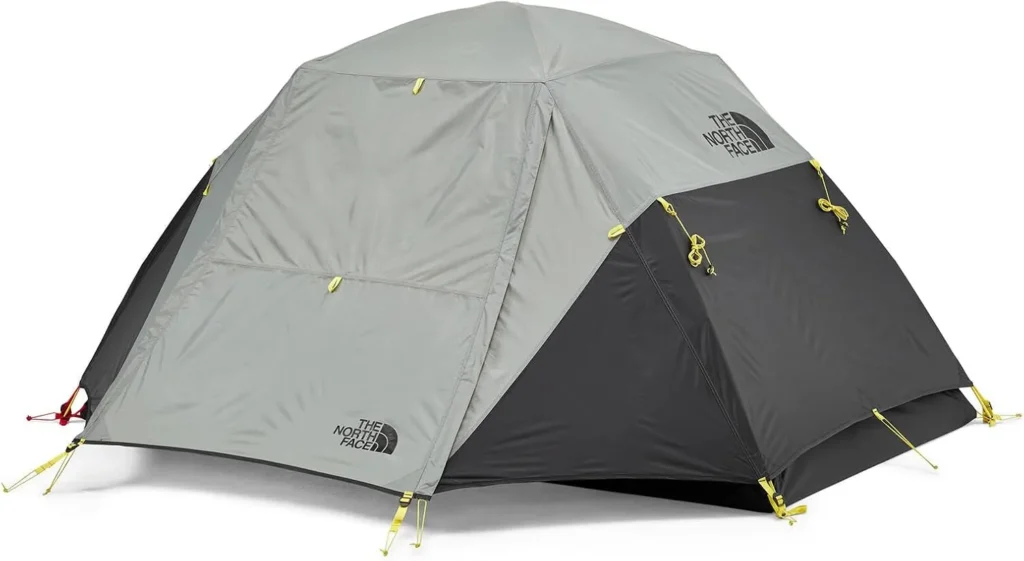
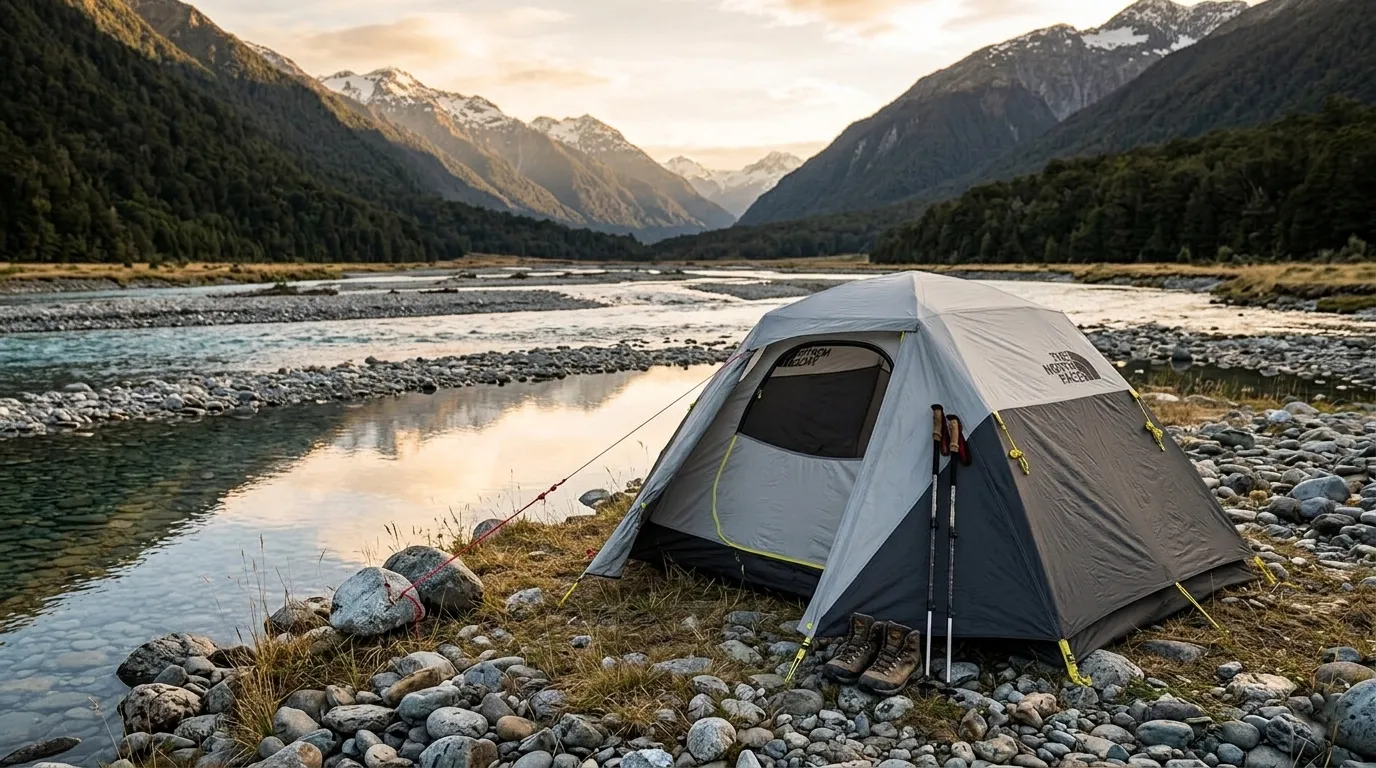

I’ve spent plenty of time talking about high-tech jewelry like the Big Agnes Copper Spur and the specialized storage of the Nemo Dragonfly OSMO, but I’ll be real with you: sometimes I just want a tent that I don’t have to worry about. The North Face Stormbreak 2 is that gear for me. It’s a bombproof dome that has been around forever, and while it isn’t winning any awards for being the lightest or the most packable, it has a level of brand reliability that is hard to ignore. I remember the first time I saw one of these at a rainy rally in the PNW; while the ultralight tents were flapping like crazy in the wind, the Stormbreak looked like it was anchored to the earth.
In my best tent for motorcycle camping guide, I labeled this as the Brand Reliability pick because TNF has been making this model for years without messing up the formula. It’s built with much thicker 75D polyester than the paper-thin fabrics I usually review. For a rider, that means you can toss your heavy boots and metal panniers around inside without feeling like you’re about to poke a hole in a $600 investment. It feels rugged. It feels like it was meant to be strapped to the back of a bike and hauled through the dirt for a decade.
The Bottom Line is that the Stormbreak 2 is for the rider who wants a predictable, high-quality shelter that doesn’t require a master’s degree in engineering to set up. It’s not as fast as the Kelty Late Start 2, and it’s definitely not as stealthy as the Snugpak Scorpion 2, but it’s a solid middle-ground choice. According to the official TNF product details, they designed this for maximum durability and weather protection, and after a few thousand miles with it, I can tell you that the name Stormbreak is actually accurate. It’s the kind of tent that makes me feel like I’ve got a real home at the end of a long day in the saddle.
How does the Stormbreak 2 handle high-wind storms and heavy rain?
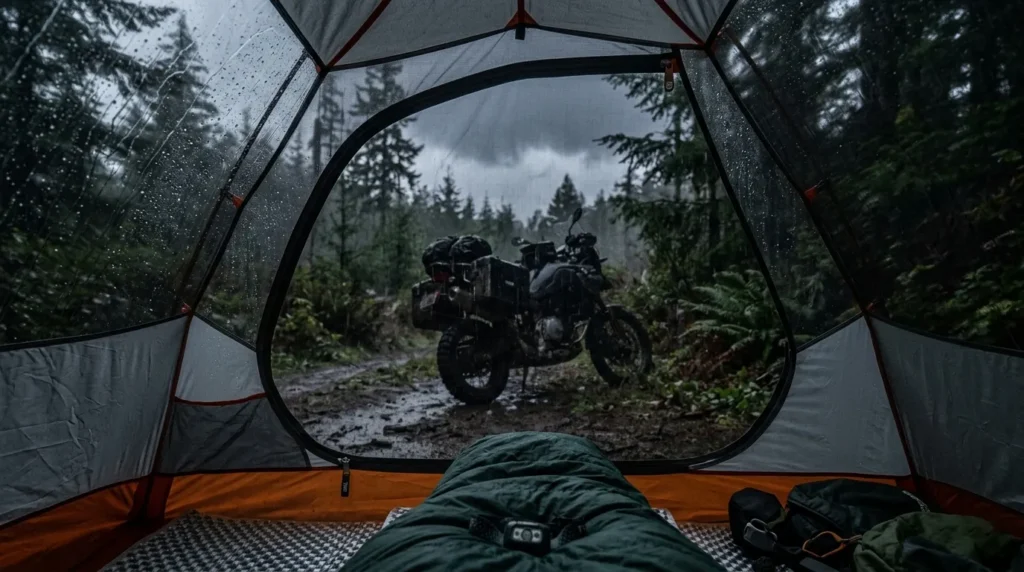
I’ve been in some pretty sketchy situations where the wind was howling so loud I could barely hear my own thoughts, and that is usually when I’m most grateful for a classic dome like the North Face Stormbreak 2. While I love the low-profile wedge of my Snugpak Scorpion 2 for stealth missions, there is something about the symmetrical X-dome design of the Stormbreak that just feels incredibly stable when the weather turns nasty. I remember one night in the high desert of Nevada where the crosswinds were so strong I actually moved my bike to act as a windbreak, but the tent itself barely flinched. The poles are sturdy enough that the tent doesn’t pancake or flap nearly as much as the ultralight tents I’ve tested, which makes for a much quieter night’s sleep.
When it comes to rain, the Stormbreak 2 is a legitimate fortress. The fly is made of a heavy-duty 75D polyester with a 1200mm polyurethane coating. Now, I know 1200mm sounds low if you’re comparing it to the massive 5000mm rating on some of the other gear I’ve reviewed, but the quality of the coating here is what matters. In my experience, North Face’s waterproofing doesn’t mist through even during a heavy, sustained downpour. I sat through a solid six-hour deluge in the Appalachians, and the interior stayed completely bone-dry. According to the technical breakdown of tent waterproofing by MSR, the hydrostatic head rating is only half the story; the way the seams are taped and the way the fly is tensioned are just as important. The Stormbreak has factory-taped seams that are honestly some of the best I’ve seen in this price bracket.
I’ve also found that the rainfly design does a great job of shedding water away from the doors. I’ve complained about indoor rain in other reviews, where water drips into the tent the second you unzip the door, but the Stormbreak has a decent overhang that keeps the entry points sheltered. If you’ve read my best tent for motorcycle camping guide, you know I’m a stickler for ventilation, and even with the fly pulled tight during a storm, the roof vents keep the air moving enough to prevent that swampy condensation feeling. For me, the peace of mind knowing I can ride into a storm and have a dry, stable home waiting for me is exactly why this tent is such a staple for long-distance riders.
How does the 22-inch pack size affect my luggage layout?
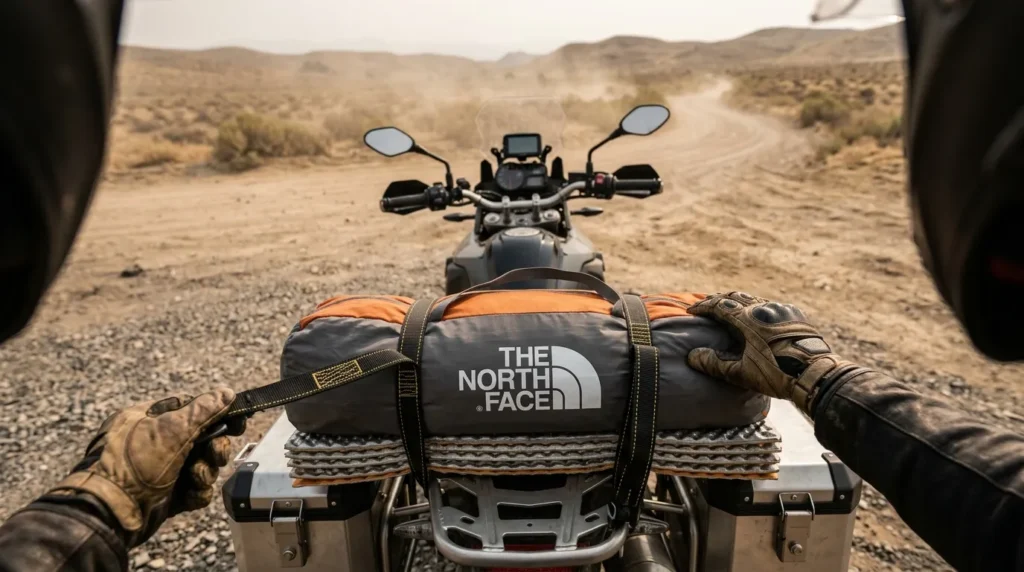
I’m going to be completely upfront with you: the pack size is the single biggest pain in the neck when it comes to the Stormbreak 2. If you’ve already read my Big Agnes Copper Spur review, you know I’m a total fanboy for those tiny 12-inch poles that fit anywhere. Unfortunately, The North Face didn’t get the memo for us riders. The poles on this tent are a massive 22 inches long. That makes it the longest tent in my entire best tent for motorcycle camping guide. Unless you are riding a massive cruiser with giant touring trunks, there is almost zero chance this thing is fitting inside your hard side cases. I’ve tried to angle it every which way in my 45-liter aluminum panniers, and it just doesn’t happen. It’s too wide and too stubborn.
Because of that length, you really have to commit to the top-load lifestyle. I always carry my Stormbreak 2 horizontally across my rear rack or my passenger seat. I’ve found that using a set of Rok Straps is the only way to go because I never trust those cheap, stretchy bungees with a 6-pound tent that wants to slide around. On the bright side, because the outer bag is made of a heavy-duty polyester, I don’t really worry about the road grit or the sun beating on it all day. It’s a tank on the rack, but you definitely feel that extra width when you’re trying to squeeze through a tight gate on a forest trail or maneuvering in a packed parking lot.
If the 22-inch poles of the North Face are just too long for your bike, my Marmot Crane Creek 2P review features a very similar dome with much more manageable 19-inch poles.
One pro-move I’ve started doing to make this more manageable is pulling the poles out of the main bag and storing them separately. I’ll slide the 22-inch poles into a dedicated sleeve and strap them along the frame rail of my bike or even zip-tie them to the inside of my luggage rack. This lets me squash the actual tent fabric and rainfly into a much smaller compression dry bag that actually fits inside my side boxes. It’s a bit of extra work during the morning pack up and go phase, but it helps keep the bike’s center of gravity a lot lower. The total weight is about 5 pounds 14 ounces, so it’s not light. If you’re curious about how to properly balance a heavy load like this, RevZilla’s motorcycle packing guide is a fantastic resource that explains why keeping that weight centered is so critical for your handling.
The North Face is a fortress, but if those 22-inch poles are just too long for your bike, TETON Sports Mountain Ultra 2 features a very similar dome with much more manageable 16-inch poles.
How much room is there inside for a rider and a full gear explosion?
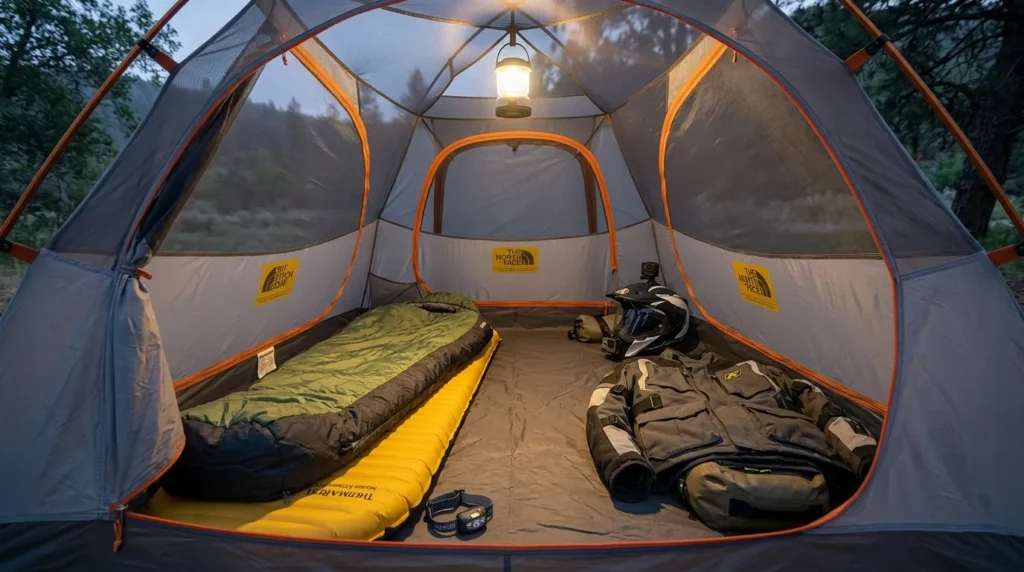
If you have spent any time at all on the road, you know that the second you unzip your panniers at camp, your gear seems to multiply. I call it the gear explosion, and it’s the reason I always tell people in my best tent for motorcycle camping guide that a two-person tent is actually the bare minimum for a solo rider. The North Face Stormbreak 2 handles this better than most because it doesn’t try to be clever with a tapered floor. It’s a true, honest rectangle that measures about 87 by 50 inches. For me, that means I can have my wide sleeping pad on one side and my entire riding kit, helmet, armored jacket, and pants, laid out on the other without feeling like I’m sleeping in a closet.
One thing I really love about this dome is the vertical space. Because it uses two main poles that cross in the center, the peak height is about 43 inches. I can sit up completely straight, change my base layers, and organize my tank bag without my head constantly rubbing against the mesh. It feels way more spacious than the Snugpak Scorpion 2, which always makes me feel a bit claustrophobic. I’ve found that the symmetrical design is also a massive win if you are actually sharing the tent with a partner. You get two massive doors and two vestibules, so nobody has to crawl over anyone else to go for a midnight bathroom break.
The gear storage inside is pretty standard but effective. There are four high pockets in the corners for your headlamp and electronics, which I use every single night to keep my phone and GPS from getting lost in my sleeping bag. According to the official The North Face floor plan, you are getting roughly 30 square feet of interior space. While it isn’t as massive as the Wolf Walker Motorcycle Tent, it strikes a really nice balance for a solo adventure rider. I usually keep my muddy boots in one vestibule and my panniers in the other, which keeps the inner tent floor clean and gives me enough room to actually stretch out. It is just a very livable, comfortable space that respects how much room a human and their motorcycle gear actually need to coexist.
Is the Stormbreak 2 too heavy for a rider who cares about performance?
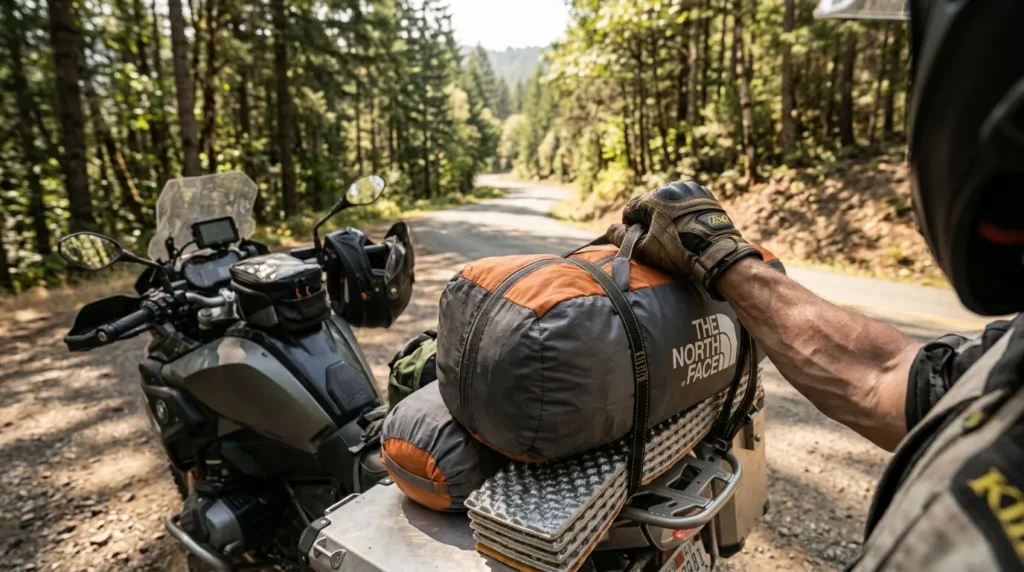
I’ll be the first to tell you that at nearly six pounds, the Stormbreak 2 is no featherweight. If you’ve spent any time reading my Big Agnes Copper Spur review, you know that I’m usually obsessed with shaving every possible ounce off my luggage. In that world, six pounds feels like carrying a brick. But weight is a funny thing when it comes to adventure riding; it’s all about where you put it and what you get in exchange for it. While the Stormbreak 2 is roughly twice the weight of a high-end ultralight setup, it is still only about half the weight of the massive Wolf Walker Motorcycle Tent I tested. For me, it sits in that middle-ground territory where you’re trading flickability for absolute peace of mind during a storm.
When I have this tent strapped to my rear rack, I definitely notice it more than my ultralight gear. If you’re riding a smaller dual-sport bike, that extra weight high up and far back can make the front end feel a bit light, especially when you’re standing on the pegs through a gravel section. I’ve found that I have to be a bit more intentional about my suspension settings when I’m hauling the Stormbreak. According to RevZilla’s breakdown on motorcycle weight limits, even a few extra pounds on the tail can significantly change how a bike tips into a corner. In my best tent for motorcycle camping guide, I always suggest that riders who spend 80% of their time off-road should look for something lighter, but for the street-focused tourer, this weight is a non-issue.
The expert insight here is that the extra weight in the Stormbreak 2 comes from the thicker 75D polyester and the heavy-duty poles. For me, that weight translates to a tent that doesn’t feel fragile. I can be a bit clumsy with it after a long, exhausting day in the saddle and not worry about a zipper snagging or a pole splintering. If you’re touring on a big adventure bike like a GS or a Super Tenere, you won’t even feel this tent. But if you’re trying to keep your bike as light as possible for technical trails, you might find yourself wishing you’d spent the extra money for a more compact setup like the Nemo Dragonfly OSMO 2P. It’s all about finding that balance between your bike’s performance and your own comfort at the end of the day.
Is The North Face Stormbreak 2 the right move for your next tour?
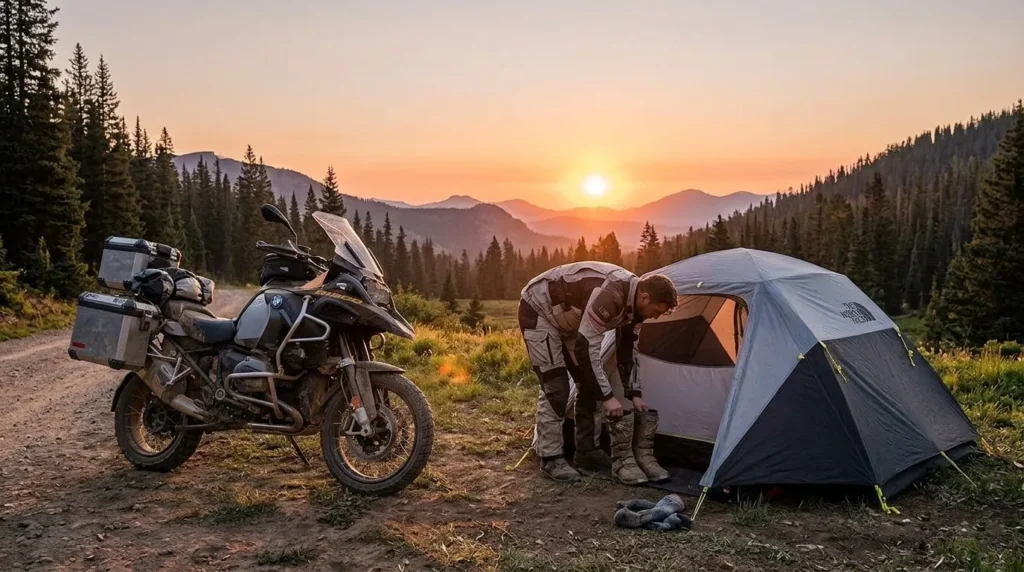
I’ve lived out of a lot of different tents on the road, but I keep coming back to the North Face Stormbreak 2 when I just want something that works without any drama. If you are the type of rider who values a clean, simple design and you don’t mind carrying a bit of extra weight to get that bombproof peace of mind, then this tent is a total win. I’ve found that the dual-door setup and the massive vertical space make it one of the most livable dome tents in my entire best tent for motorcycle camping guide. It doesn’t have the specialized shortstik poles that I raved about in my Big Agnes Copper Spur review, but it makes up for that with sheer durability and a brand name that stands behind its gear.
I’ll be honest: if you are riding a small dual-sport bike and every ounce of weight matters, you should probably look elsewhere. The 22-inch poles are a legitimate hurdle for smaller luggage systems. But if you are on a full-sized adventure bike or a cruiser with a rear rack, the Stormbreak 2 is a fantastic middle-ground hero. It’s significantly more refined and weather-stable than the ALPS Mountaineering Lynx 2 review I recently finished, yet it costs a fraction of the high-end boutique gear. I’ve sat through some nasty storms in this tent and never felt like it was going to let me down.
The expert insight I’ve gained from years of touring is that your gear should disappear into the background so you can focus on the ride. The Stormbreak 2 does exactly that. It is predictable, easy to pitch, and built to handle the grit of the road. I’ve checked the community sentiment on forums like Adventure Rider (ADVrider), and most riders agree that while it’s a bit of a chunk to pack, it is one of the most reliable shelters you can buy for the money. If you want a tent that you can buy once and use for a decade of trips, I really think you’ll be happy with this setup. It’s a classic for a reason, and in 2026, it’s still one of my top recommendations for anyone who values reliability over ultralight specs.
Frequently Asked Questions: What riders want to know about the Stormbreak 2
In my experience, yes, you should. While the 75D polyester floor is much tougher than the paper-thin floors on my Nemo Dragonfly OSMO 2P review, ground moisture is a real factor on long tours. Using the official footprint adds a second layer of defense against those hidden sharp rocks and prevents the bottom of your tent from getting caked in mud. According to the official TNF footprint guide, it’s specifically cut to prevent water from pooling under the tent, which I’ve found is a major win for keeping your sleeping area bone-dry.
This is the number one question I get, and the solution is pretty simple: store them separately. I never keep my poles inside the main tent bag when I’m touring. Instead, I slide the 22-inch poles into a separate protective sleeve and strap them along the frame of my motorcycle or tucked into a side pannier diagonally. This allows the actual tent fabric and rainfly to be squashed down into a much smaller compression sack that fits almost anywhere. It’s a pro move that makes carrying a large dome tent much easier on a bike with limited storage.
It’s surprisingly decent. The Stormbreak 2 has two massive mesh doors and two roof vents that create a chimney effect for airflow. Even when I’ve been camping in the humid Southeast, I didn’t wake up with that stagnant, swampy feeling. The key is to stake out the vestibules as wide as possible to maximize the draft under the fly.
If you are planning on touring two-up, it’s going to be very snug. As I mentioned in my best tent for motorcycle camping guide, I always view a 2-person tent as a 1-person palace for motorcyclists. With two people, your helmets and riding suits will definitely have to live in the vestibules. Because it is a true rectangular floor, you do get more usable space than mummy-style tents, but it is still a backpacking-sized tent at the end of the day.
It is much more stable. Because it uses a classic dome structure with heavy-duty poles, it doesn’t fold over or flap nearly as much as the Big Agnes Copper Spur does in 30mph gusts. I’ve had this tent out in some pretty nasty conditions where the bike was swaying on its kickstand, and the tent felt rock-solid. It might be heavier to pack, but that extra weight in the poles translates directly to a quieter, more secure night’s sleep when the weather turns sour.
Is the Stormbreak 2 right for your next adventure?
If you are a rider who wants a high-quality, reliable shelter from a brand you can actually trust, the North Face Stormbreak 2 is an incredible investment. It’s durable, spacious, and built to handle the unpredictable weather of a long-distance tour. While the 22-inch pack size requires a bit of creative packing, the trade-off in comfort and stability is something you’ll appreciate every single night you’re on the road. It’s a specialized tool for the rider who values longevity over the latest high-tech trends.