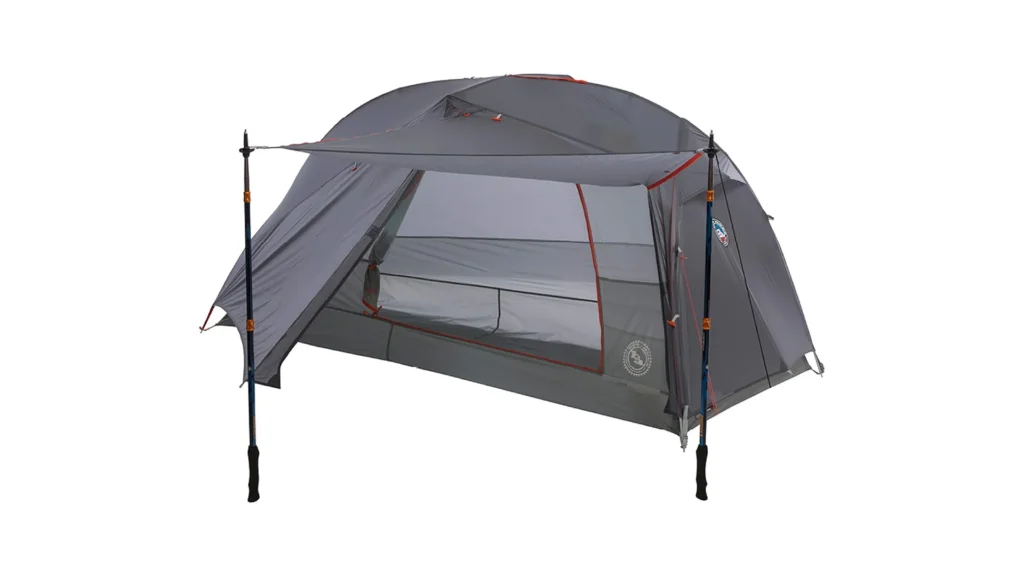
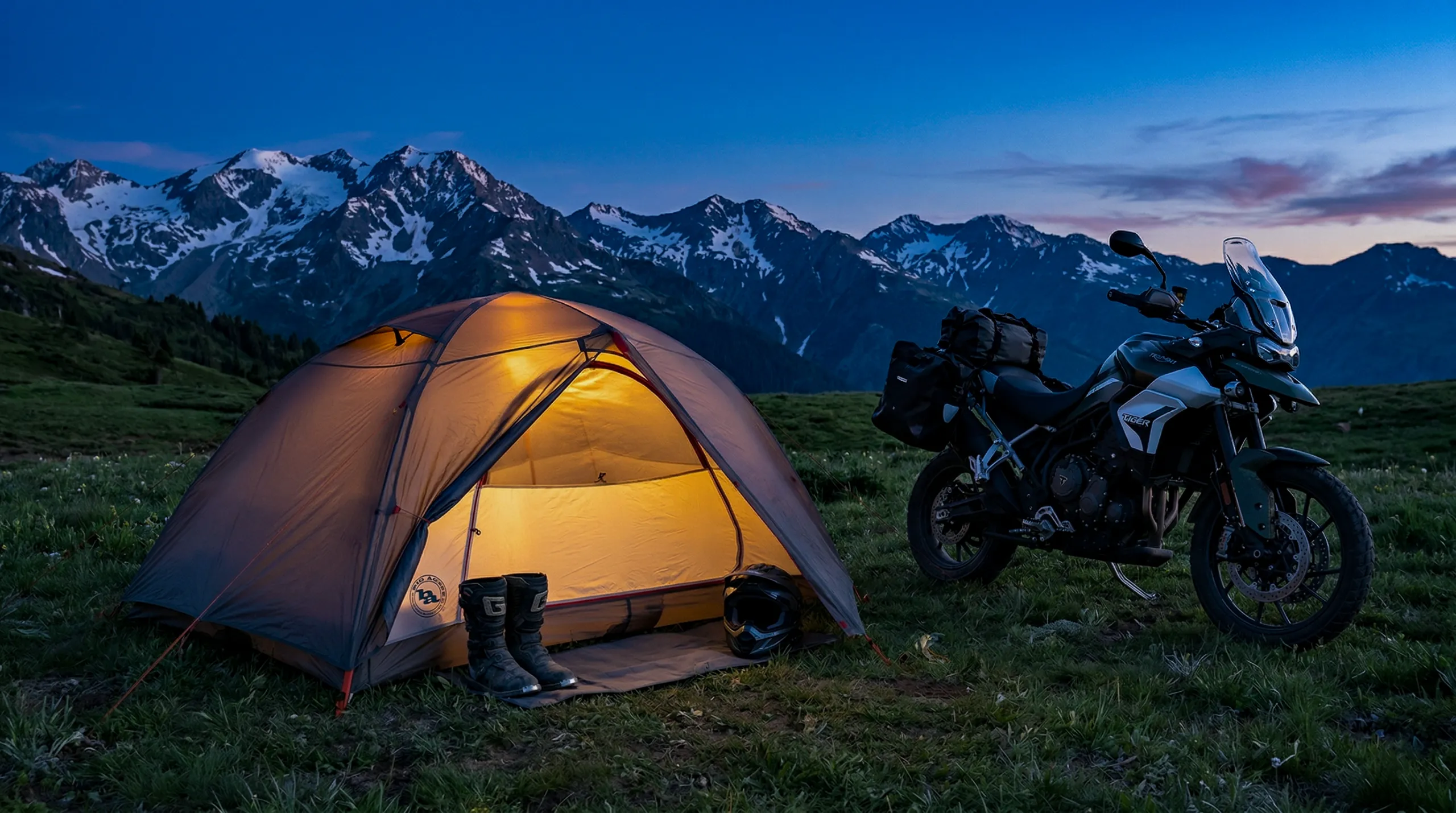

So, you’re looking at the price tag of the Big Agnes Copper Spur HV UL2 Bikepack tent and wondering if I’ve completely lost my mind by recommending it. I totally get it. When I first saw that MSRP, I had that exact same “no way” reaction. I mean, you can buy a decent set of tires or even a project bike for that kind of money.
But after spending a few seasons living out of this thing on various Backcountry Discovery Routes, my perspective on “value” shifted quite a bit. If you’re a casual weekend warrior who only camps once a year at a paved KOA, then yeah, this is probably overkill. But if you’re like me and your idea of a good time is a 2,000-mile loop through the middle of nowhere, the math changes fast.
I honestly think the Big Agnes is the king of packability, but it’s not the only high-end option for riders who have a bit of cash to spend. If you’re more worried about keeping your muddy boots and helmet organized than having the absolute shortest poles, you should definitely check out my Nemo Dragonfly OSMO 2P review. It has a specialized gear tub that handles the ‘gear explosion’ a little differently than this Copper Spur does.
I’ve talked about this before in my massive guide on the 10 best tent for motorcycle camping, and this tent sits at the top for a very specific reason. It isn’t just about the weight, although at roughly three and a half pounds, it’s light enough that my bike’s suspension doesn’t even know it’s there.
The real magic is that Big Agnes actually sat down and listened to what we need as riders. Most tents are built for backpackers who have all the vertical space in the world in their tall hiking packs. As motorcyclists, we have fixed-width panniers and narrow handlebars.
I’ve put this tent through 40mph high-altitude winds in the Rockies and humid coastal rain in the Pacific Northwest. In this review, I’m going to break down why I think this is the “GOAT” (Greatest of All Time) for moto-touring in 2026.
Look, I love the Big Agnes for its tiny pack size, but I know some of you would rather have a portable apartment than a tiny shelter. If you’re willing to carry a bit more weight to get a dedicated bike garage, you should definitely check out my Wolf Walker Motorcycle Tent review to see a completely different way of touring.
I want to talk to you about the tiny details that matter when you’re exhausted, covered in road grime, and just want to crawl into a dry sleeping bag without fighting your gear. Is it perfect? Not quite. The fabric is thinner than a cheap polyester dome, so you have to treat it with a bit of respect. But in terms of “moto-intelligence,” nothing else I’ve tested even comes close to this setup.
According to the official Big Agnes specs, they used proprietary materials specifically to shave weight without sacrificing the structure, and I can tell you from my nights spent in the dirt, it actually works.
How does the ‘Shortstik’ pole design change the way I pack my motorcycle?
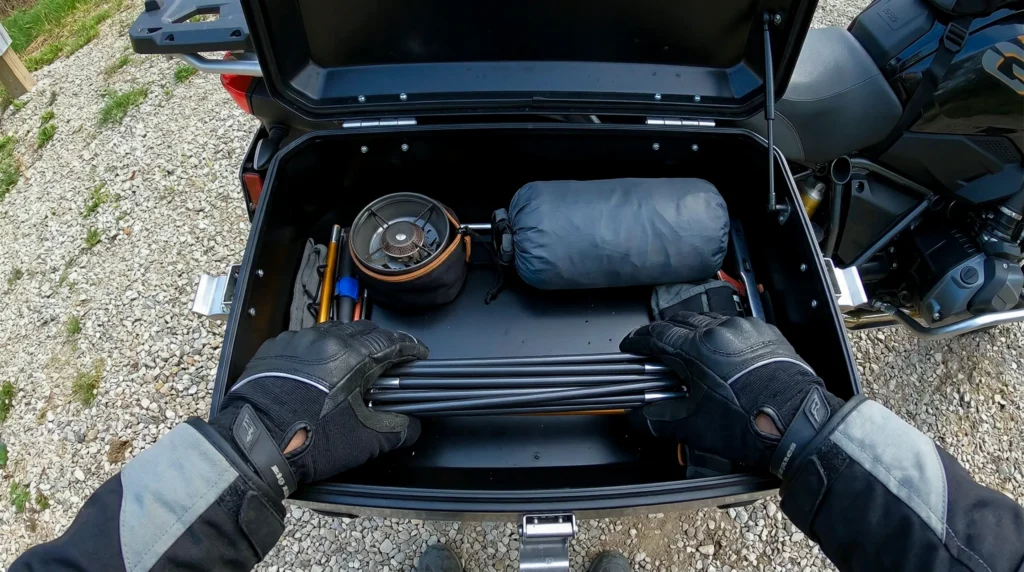
If you’ve ever tried to cram a standard backpacking tent into a hard pannier, you know exactly what I’m talking about when I say it’s a total nightmare. Honestly, it’s one of the biggest “PITA” moments of packing for a trip. Most high-end tents come with pole segments that are 18 to 22 inches long. That’s fine if you’re carrying a 65-liter hiking pack, but if you’re running a set of Touratech or Jesse boxes, those poles usually won’t fit horizontally.
I used to spend way too much time trying to angle my old tent poles diagonally in my side cases, which basically wasted half the storage space. Either that, or I’d have to strap them to the outside of my bike, leaving them exposed to rain, road grime, and anyone with sticky fingers at a gas station.
When I first got my hands on the Copper Spur Bikepack edition, the “Shortstik” poles were the absolute game-changer for me. Big Agnes shortened each individual pole segment to just 12 inches. I can’t even tell you how much of a relief it was to see these things lay perfectly flat at the bottom of my pannier.
Because the poles are so short, the entire tent kit packs down to about the size of a loaf of bread. According to the official Big Agnes product details, these poles are made from DAC Featherlite NSL, which is super high-end stuff that doesn’t sacrifice strength just because it’s shorter.
But it’s not just about the panniers. I’ve found that because the poles are only a foot long, I can actually strap the entire tent directly to my handlebars or even my front forks using the “daisy-chain” webbing on the compression sack. This is huge if you’re a minimalist rider or if you’re running a soft-luggage setup on a dual-sport bike like a DR650 or a CRF300L.
I’ve ridden through some pretty gnarly, bumpy single-track sections with the tent strapped to my bars, and it didn’t budge. Being able to keep the weight of my shelter low and centered, rather than high up on a rear rack, makes a noticeable difference in how the bike handles when things get technical. For me, the Shortstik design isn’t just a marketing gimmick; it’s the most moto-intelligent engineering I’ve seen in a tent in a long time.
Can I actually set this tent up in the dark after an 8-hour day in the saddle?
We’ve all been there. You hit an unexpected detour, your GPS takes you down a “shortcut” that turns out to be a goat track, and by the time you finally roll into your campsite, the sun is long gone and you’re absolutely toasted. Your hands are stiff from being on the bars all day, your back is aching, and the last thing you want is a 20-minute mental puzzle with a pile of mesh and aluminum poles.
Honestly, the setup speed is one of the biggest reasons I keep reaching for the Big Agnes Copper Spur every time I head out. I’ve timed myself on this, and even when I’m brain-fogged from an 8-hour ride, I can have this thing fully pitched and my sleeping pad inflated in under five minutes. It’s a total life-saver when you just want to get off your feet.
What makes it so fast is what Big Agnes calls the “Tip-Stik” construction. If you haven’t used a high-end tent lately, let me tell you, this feature is brilliant for solo riders. Essentially, the corner grommets are designed to “lock” the pole tips into place. In cheaper tents, you usually have to play this annoying game of tug-of-war where one pole tip pops out of the grommet while you’re trying to secure the other side.
With the Copper Spur, once you click a pole into that corner, it stays put. It’s almost like having an extra set of hands helping you out. I remember one night in the Oregon high desert when a storm was rolling in fast; I was frantically trying to get shelter before the skies opened up, and the color-coded webbing made it totally idiot-proof. Gray clips go to gray webbing, and orange clips go to orange. Even in the dim, shaky light of a headlamp, you can’t really mess it up.
The main pole is a single, unified hub-and-spoke system, which means you aren’t digging through a bag for four different loose poles. You just shake it out, and the shock-corded segments practically snap themselves together. Because it’s a fully freestanding design, I don’t even have to worry about finding the perfect dirt to drive a stake into right away.
The Big Agnes is the king of packability, but if you’re looking for something that is significantly faster to set up when you’re exhausted, check out my Kelty Late Start 2 review.
I’ve set this up on gravel pads and even hard-packed desert clay where stakes wouldn’t go in, and it stands perfectly on its own. As I mentioned in my guide on the best tent for motorcycle camping, being able to move your tent around after it’s pitched to find the levelest spot is a luxury you don’t realize you need until you have it.
How much room is there inside for a helmet, armored jacket, and muddy boots?
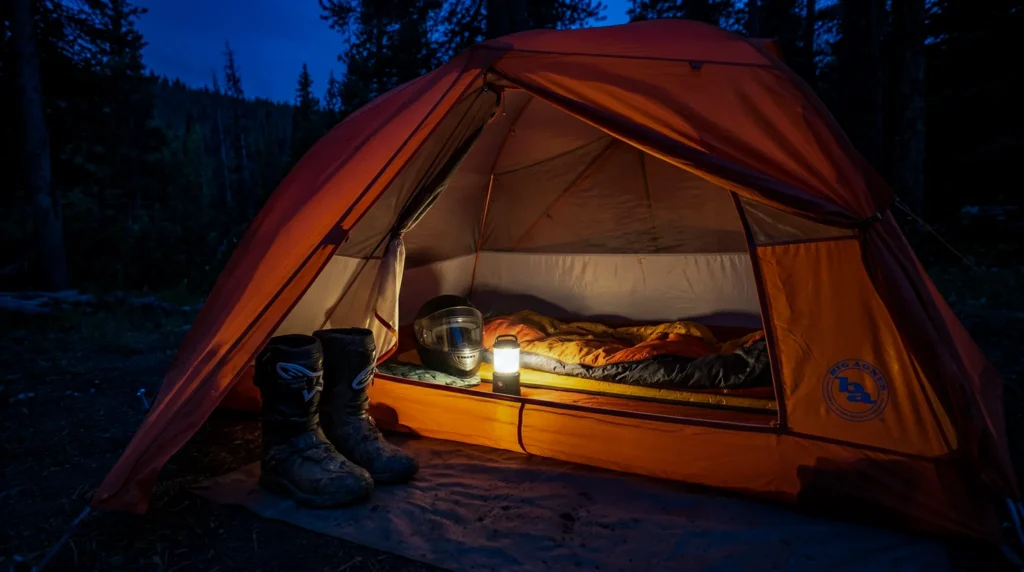
If you’ve ever tried to sleep in a true 1-person tent with all your motorcycle gear, you know it’s basically like trying to sleep inside a coffin with a pile of laundry. It’s miserable. One of the things I love most about the Copper Spur HV UL2 Bikepack is that while it’s technically a “2-person” tent, it’s the perfect size for one rider who has a serious “gear explosion” at the end of the day.
As motorcyclists, we don’t just have a sleeping bag; we have a bulky armored jacket, riding pants, a helmet that costs more than my first car, and boots that are usually covered in whatever the road threw at us that day. If I’m solo, I can spread all that gear out on one side of the tent and still have plenty of room to stretch out on my sleeping pad.
The Big Agnes is awesome, but for those brutally hot desert nights where you want 360-degree airflow, you might want to look at the mesh beast I covered in my TETON Sports Mountain Ultra 2 review.
The interior engineering is what really sets this apart from the cheap Amazon clones. Big Agnes added a 3-D bin “mezzanine” at the foot of the tent, which is basically a massive overhead shelf. I use it to keep my damp riding gloves and base layers off the floor so they can actually air out overnight.
There are also specialized pockets designed specifically to hold your helmet or your tank bag. I’ve found that being able to get my gear off the ground makes the tent feel twice as large as it actually is. According to the official Big Agnes floor plan, you’re looking at about 29 square feet of floor space, which is plenty for a solo rider plus gear, but let’s be real, it’s a bit “cozy” if you’re actually trying to fit two full-sized adults and their riding suits inside.
Then there are the vestibules. You get two of them, and they are deep enough that I can leave my muddy Forma adventure boots outside under cover without worrying about them getting soaked if it downpours. I’ve lived out of this tent for ten days straight on a trip through the Ozarks, and I never felt that “walls are closing in” sensation.
I’ve even sat inside with the door open during a rainstorm, using the “awning-style” vestibule setup (if you have two trekking poles or just some sticks), which let me cook a meal on my Jetboil while staying completely dry. If you want to see how this interior space compares to other top-tier models, you should definitely check out my best tent for motorcycle camping guide where I break down the “Square-Foot-per-Rider” ratio for all the top picks.
Will the Big Agnes Copper Spur keep me dry during a week of heavy rain?
I’ll be totally honest with you: the first time I felt how thin the fabric was on this tent, I was terrified it would leak like a sieve. It’s a 15-to-20 denier double-ripstop nylon, which feels more like a high-end parachute than a traditional tent. But after getting absolutely hammered by a three-day deluge while camping near the Blue Ridge Parkway, I’m a believer.
The short answer is yes, this thing is surprisingly “bomber” in the rain, provided you don’t make the rookie mistake of forgetting the footprint. Because the floor is so thin to save weight and space in your panniers, any sharp rock or stick can poke a hole in it, which is exactly how water finds its way in. If you use the matching footprint, you’re golden.
According to the official Big Agnes technical specs, the fly and floor have a 1,200mm waterproof polyurethane coating. Now, if you’ve been shopping around on Amazon, you’ve probably seen budget tents claiming 3,000mm or even 5,000mm ratings. Don’t let that fool you. Those cheap tents often use heavy, low-quality coatings that crack over time.
Big Agnes uses a silicone-treated nylon that is much more “hydrophobic,” meaning the water beads up and rolls off instantly rather than soaking into the fibers. I’ve sat inside this tent during a literal horizontal rainstorm, and while the walls were vibrating from the wind, not a single drop of mist made it through.
The Big Agnes is the king of packability, but if you’d rather have a bombproof dome that you don’t have to baby as much during a storm, take a look at my The North Face Stormbreak 2 review.
The real secret to staying dry in this tent isn’t just the fabric; it’s the ventilation. Most people think they’re “leaking” when they wake up damp, but usually, it’s just condensation from their own breath. This tent has a dedicated roof vent and “Low Vent” features on the vestibule doors that create a chimney effect.
Even with the rainfly pulled tight, I’ve found that the airflow keeps the interior surprisingly dry. As I mentioned in my guide on the best tent for motorcycle camping, managing moisture is the biggest challenge for moto-campers, especially when you’re bringing damp riding gear inside. This tent handles that better than almost any other ultralight I’ve tested.
I love how small the Big Agnes packs, but let’s be real, the fabric is thin. If you’re heading into a trip where you expect brutal winds or a week of rain, you might want something that feels a bit more bomber. I actually compared the durability of this setup against the legendary workhorse in my MSR Hubba Hubba NX 2 review, and the choice really comes down to your risk tolerance for bad weather.
What is the real difference between the ‘Bikepack’ version and the standard Copper Spur?
The real difference between the “Bikepack” version and the standard Copper Spur comes down to three main things: 12-inch “Shortstik” poles, a heavy-duty compression stuff sack with integrated bike-mounting straps, and specialized interior gear storage for items like helmets. While the standard version is an incredible backpacking tent in its own right, I personally wouldn’t recommend it for motorcycle touring.
The standard version uses poles that are nearly 18 inches long, which, as I’ve already mentioned in my guide on the best tent for motorcycle camping, is the kiss of death for most hard side panniers. If you buy the standard one, you’re almost guaranteed to be strapping your poles to the outside of your bike, which is something I always try to avoid to prevent theft or damage.
One of the coolest features I discovered while using the Bikepack edition is the “burrito-style” stuff sack. Most tents come in a thin nylon bag that you have to stuff perfectly to get it back in. This one has a rugged, waterproof compression sack with daisy-chain webbing along the sides.
I’ve actually used these webbing loops to strap the tent directly to my crash bars on my Tenere 700 using a pair of Rok Straps, and it worked flawlessly. It’s built to take the vibration and wind that comes with being strapped to a bike at 75 mph, which is something a standard backpacking tent bag just isn’t designed for. It feels more like a piece of motorcycle luggage than a tent bag.
Inside the tent, you’re also getting features that the standard version lacks, like the helmet loops and the oversized gear lofts. I didn’t think I’d care about these until I started using them, but being able to clip my helmet to the ceiling or a corner loop keeps it off the floor and away from any moisture that might have snuck in on my muddy boots.
According to the official Big Agnes comparison data, the Bikepack version also features a specialized “solution-dyed” fabric that is significantly more resistant to UV fade. If you’re like me and you occasionally leave your camp set up for a few days while you go off to ride some technical trails, that extra UV protection is a huge long-term win for the longevity of your gear. Essentially, the “Bikepack” label isn’t just a gimmick, it’s a complete rethink of how a tent should function when you’re traveling on two wheels.
I love how small the Big Agnes packs, but let’s be real, that orange rainfly stands out like a neon sign. If you’re planning a trip where you need to stay low-key and blend into the shadows, you should definitely check out my Snugpak Scorpion 2 review. It’s the absolute king of stealth camping for riders who don’t want to be found.
Frequently Asked Questions
In my experience, yes, the footprint is absolutely mandatory. I know it’s annoying to spend an extra $80 after dropping $600 on a tent, but the floor material on the Copper Spur is extremely thin to keep that pack size down. If you pitch this on a gravel pad or even a slightly rocky clearing without a footprint, you’re basically asking for a puncture. I’ve seen some riders try to use a cheap blue tarp from a hardware store, but those are bulky and don’t breathe well. The official Big Agnes footprint is cut perfectly to the tent’s dimensions, which prevents water from pooling between the layers. According to the official Big Agnes footprint guide, using the correct ground cloth can extend the life of your tent floor by several seasons, and I totally agree with that assessment.
“Comfortably” is a relative term here. If you’re a couple who doesn’t mind being very close, then yes, it works. But if you’re two buddies on a trip, you’re going to be bumping elbows all night. As I discussed in my guide on the best tent for motorcycle camping, I always view this as a “1.5-person” tent for motorcyclists. Once you bring a helmet and a riding suit inside, the floor space disappears fast. If you’re planning on riding two-up with a partner, I’d actually suggest looking at the UL3 version of this same tent. It only adds a few more ounces to your panniers but gives you enough breathing room to actually move around without a wrestling match.
It handles it better than almost any other ultralight I’ve slept in. I’ve spent nights in this tent during humid, 100% saturation rainstorms in the South, and I didn’t wake up with a “rainstorm” on the inside of the fly. The dual roof vents and the way the fly is cut high off the ground allows for massive cross-ventilation. I always make sure to stake out the vestibules as wide as possible to maximize that airflow. If you’re curious about how to further reduce moisture, Adventure Rider (ADVrider) has some great community tips on campsite selection that I’ve found very helpful for preventing damp gear in the mornings.
It’s definitely “technical” gear, not a heavy-duty canvas tent. If you’re the type of rider who throws your gear around and doesn’t pay attention to where you’re pitching, you might find it a bit fragile. However, the double-ripstop nylon is surprisingly tough for its weight. I’ve had branches rub against the fly and I haven’t seen a single snag yet. The key is just being mindful of the zippers, don’t force them if they get a bit of dirt in the track.
It really comes down to the “Shortstik” poles and the weight-to-strength ratio. A $150 tent will likely use fiberglass poles that are twice as heavy and break easily in high winds. More importantly, those cheap tents have long pole segments that won’t fit in your side cases. When you’re 50 miles from the nearest paved road and a storm rolls in, you want to know your shelter isn’t going to collapse on you. The Copper Spur is an investment in your safety and comfort during long tours, and in my book, that’s worth every penny.
Final Verdict: Should you buy the Big Agnes Copper Spur for your next motorcycle tour?
After thousands of miles and countless nights in the dirt, my final verdict on the Big Agnes Copper Spur HV UL2 Bikepack is a resounding “yes”, but only if you prioritize packability above everything else.
If you are a rider who values a clean, low-profile luggage setup and you want a tent that can live permanently in the bottom of your pannier or strapped to your bars, there is simply nothing else on the market that competes with this design. The 12-inch poles alone make it the most moto-intelligent piece of gear I own.
I know the Big Agnes price tag is a tough pill to swallow. If you’re just starting out and aren’t ready to drop half a month’s rent on a tent, I spent a lot of time testing a much more affordable tank of a shelter in my ALPS Mountaineering Lynx 2 review. It’s way heavier, but it’ll save you about $450 for gas and tires.
I’ve had a lot of gear come and go over the years, but this tent has survived some of my toughest trips without letting me down. It’s light, it’s fast to set up when I’m exhausted, and it has the specialized storage I need for my expensive riding gear.
The Big Agnes is the king of packability, but if you’d rather save $300 and get a much more durable mid-range shelter, you should definitely check out my Marmot Crane Creek 2P review.
I truly believe that the Bikepack edition isn’t just a label; it’s a specialized tool for people like us who live to explore on two wheels. If you’re tired of fighting with bulky camping gear and want to upgrade to the “Gold Standard,” this is the move. I don’t think you’ll ever go back to standard tent poles after you see how well this fits into a motorcycle-based life.
Ready to upgrade your moto-camping setup?.