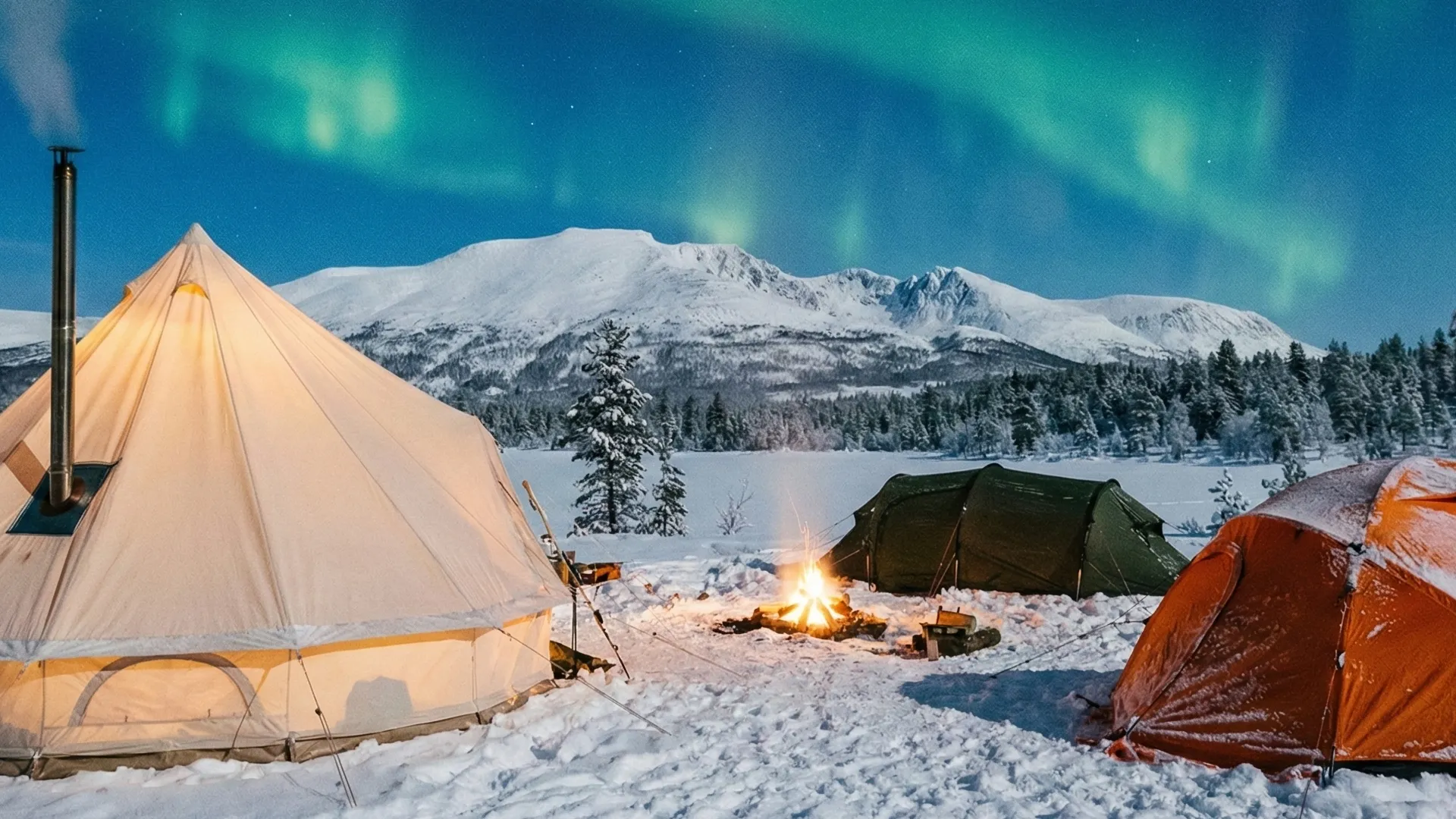

Finding the best tent for winter camping is a fundamentally different challenge than picking a summer shelter. In July, a tent failure means you get wet and maybe a little grumpy; in January, it means you face hypothermia, frostbite, or a life-threatening survival situation. The stakes are higher, the gear is heavier, and the marketing jargon is often dangerously misleading. For the uninitiated, the outdoors in winter can seem like an inhospitable void, but with the correct shelter, it becomes a silent, pristine cathedral of adventure.
Most people assume a 4 seasons tent is just a warmer version of a summer tent with fewer mesh panels. It is not. It is a structural fortress designed to withstand crushing snow loads that would snap fiberglass poles like twigs, gale-force winds that would flatten a dome, and the unique physics of condensation in sub-zero temperatures. Whether you are planning a solo mountaineering push, a family basecamp in the snow, or a hot tent adventure with a wood stove, your choice of shelter is the single most critical safety decision you will make. This guide is designed to provide you with the technical depth and field-tested knowledge required to make that decision with absolute confidence.
In this exhaustive guide, we have compiled the definitive list of the top 10 winter shelters on the market for 2026. We have categorized them by specific use-cases, from budget-friendly bunkers to expedition-grade fortresses, to help you find the best tents for winter camping for your specific adventure style. Beyond the reviews, this guide serves as a masterclass in winter survival, covering the physics of snow loading, the science of hydrostatic head ratings, the art of staying warm when the mercury drops, and the essential skills needed to anchor your home in a frozen landscape.
While this guide focuses strictly on the specialized requirements of the fourth season, if you are looking for a more versatile shelter for year-round use or summer family vacations, be sure to consult our foundational guide to the 10 best camping tents on the market.
Quick Summary: The 2026 Winter Winners
If you need to make a quick decision, here is our cheat sheet. These are the top performers in each category.
| Model | Category | Best For | Price |
|---|---|---|---|
| ALPS Mountaineering Tasmanian 2 | Best Value 4 Seasons | Beginners & Budget | Amazon |
| Kodiak Canvas Truck Bed Tent | Best Winter Truck Tent | Vehicle Camping | Amazon |
| White Duck Regatta | Best Canvas Glamping | Long-Term Stays | Amazon |
| Snugpak Ionosphere | Best Solo Tactical | Stealth & Survival | Amazon |
| Camppal 1 Person | Best Budget Solo | Solo Alpinists | Amazon |
| OneTigris Rock Fortress | Best Lightweight Hot Tent | Mobile Stove Camping | Amazon |
| Black Diamond Eldorado | Best Mountaineering | High-Altitude | Amazon |
| Snugpak Scorpion 3 | Best Tunnel Tent | Severe Storms | Amazon |
| Russian Bear Hot Tent | Best Expedition Basecamp | Extreme Cold | Amazon |
| Browning Glacier | Best Family Winter Tent | Large Groups | Amazon |
Part 1: What Makes a “Winter Tent”?
Before reviewing the products, we must define the criteria. To be considered the best tent for winter camping, a shelter must possess specific architectural features that 3-season tents lack. We discussed this in detail in our 3 season vs 4 season tent guide, but here is the comprehensive summary of the engineering requirements that define winter gear.
1. Snow Shedding Geometry: Fighting Gravity and Static Loads
Flat roofs collapse. It is a simple law of physics that becomes terrifyingly real at 2:00 AM during a blizzard. Wet snow is heavy, weighing approximately 20 to 30 lbs per cubic foot. A standard dome tent with a flat top will accumulate snow until the poles snap or the fabric tears.
The Winter Requirement: A winter tent must use steep walls (like a tipi), geodesic pole crossings (creating triangles of strength), or conical shapes to shed snow actively. You want gravity to do the work, not your arms at 3 AM. The structure must be able to support a static load weight pressing straight down, without deforming. We look for a high number of pole intersection points. In geodesic designs, every time two poles cross and are clipped together, a node of strength is created. The best winter tents for camping often feature five or more crossing points, creating a rigid exoskeleton that shrugs off accumulation.
2. Draft Elimination: Preventing Convection Heat Loss
Summer tents are designed to funnel air. They have gaps between the rainfly and the ground to encourage the chimney effect, moving hot air up and out. In winter, this airflow is your enemy. It strips away the warm layer of air your body generates, a process known as convective heat loss.
The Winter Requirement: Full-coverage rainflies that reach the ground are essential. Furthermore, many elite winter tents feature dedicated snow skirts, extra flaps of fabric at the base that you bury under snow to create a hermetic seal. This dead air space acts as an additional layer of insulation. When the base is sealed, the tent interior can remain 10 to 15 degrees warmer than the outside air just from trapped body heat and radiation.
3. Solid Walls: The Spindrift Barrier
Mesh is for bugs and summer heat. Solid nylon or polyester is for wind and warmth.
The Winter Requirement: The inner tent body should be composed primarily of solid breathable fabric rather than mesh. This serves three vital functions. First, it traps radiant heat. Second, it blocks spindrift, the fine, powder-like snow blown by high winds that can pass through standard insect mesh and coat your sleeping bag in ice. Third, it prevents wind stripping, where gusts penetrate the fly and pull heat directly away from your insulation. Some of the best winter tents for camping feature convertible panels, where you can zip away solid fabric to reveal mesh for summer use, but for true winter safety, the solid wall is king.
4. Pole Strength: The Skeleton of the Shelter
Aluminum or heavy-gauge steel is mandatory. Standard fiberglass, while fine for a backyard in June, shatters in extreme cold. The resin used to bind fiberglass fibers becomes brittle at sub-zero temperatures, leading to catastrophic failure under wind or snow stress.
The Winter Requirement: We prioritize 7000-series aluminum alloys (like 7001 or 7075). These materials have a high yield strength, meaning they can flex significantly under a gust and spring back to their original shape without permanent deformation or snapping. We also evaluate the diameter of the poles. While a backpacking tent might use 8.5mm poles, a family winter tent like the Browning Glacier uses 11mm or thicker poles to handle the increased weight of the structure and potential snow loads.
Part 2: The Best Tent for Winter Camping
We have tested, analyzed, and broken down the top 10 contenders. Each review here represents an exhaustive look at how these structures interact with the physics of sub-zero environments.
1. ALPS Mountaineering Tasmanian 2: The Budget Fortress
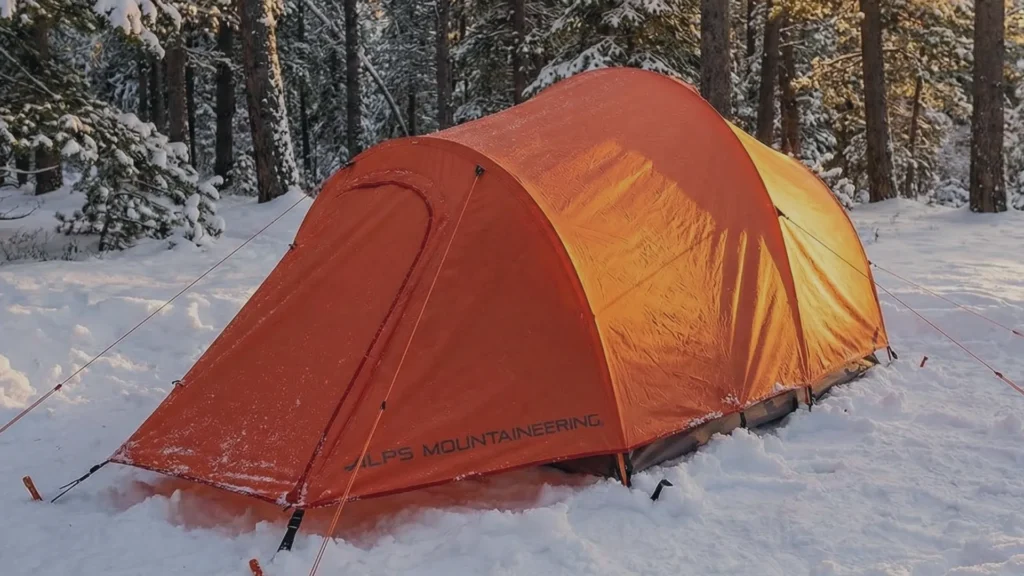
The ALPS Mountaineering Tasmanian 2 is the gateway drug to winter camping. It proves that finding the best tent for winter camping doesn’t require a second mortgage. It attacks the market gap between cheap big box tents and eight-hundred-dollar alpine bunkers.
The Engineering: Most budget 4 seasons tents are just 3-season tents with less mesh and more marketing. The Tasmanian is different. It uses a true 4 seasons geodesic pole structure with 7000-series aluminum. The poles connect via continuous sleeves rather than clips. In our testing, this structure held up to wet snow loads that flattened lesser domes. By distributing the wind stress across the entire length of the pole arch, the Tasmanian stays rigid in 40mph+ winds. The 75D polyester fly fabric is significantly heavier than standard backpacking nylon, providing a massive increase in tear strength when the wind is whipping ice crystals against your shelter.
Livability and Features: Winter camping requires more gear. The Tasmanian accommodates this with two doors and two vestibules. This means you don’t have to crawl over your partner to pee in the middle of a blizzard. The heavy 75D polyester fly handles snow loads well, though it contributes to the heavy pack weight of nearly 8 lbs. This is a tent designed for durability over weight savings. The floor has a 5000mm coating, which is essential when your body weight is pressing your knees into melting snow.
Winter Pro Tip: When pitching the Tasmanian in snow, use the extra-long guy lines to create deadman anchors. Because the tent has a high profile, these anchors are what prevent the wind from deforming the poles during a gust.
The Verdict: It isn’t for summiting Everest, it’s too heavy and bulky for fast solo assaults. But for winter camping in state parks, national forests, or short snowshoe trips where you pull a sled, it is an unbeatable value. It provides 90% of the protection of a high-end tent for 30% of the price. For the beginner, this is the best winter tent for camping without financial risk.
Read our full Alps Mountaineering Tasmanian 2 review for a complete breakdown of its wind tunnel performance.
2. Kodiak Canvas Truck Bed Tent: The Elevated Cabin
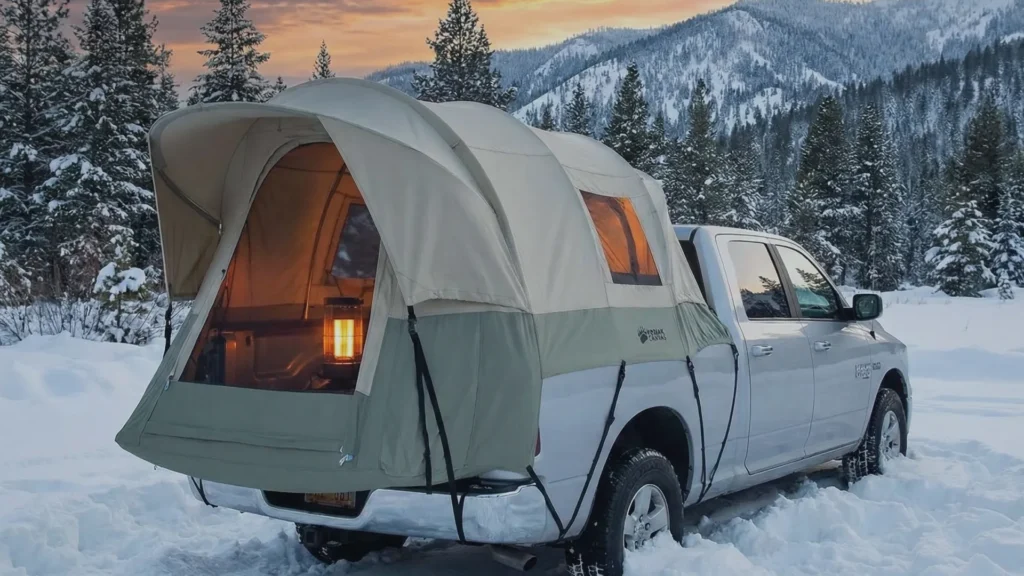
If you own a pickup, the best tent for winter camping might not be a ground tent at all. The Kodiak Canvas Truck Bed Tent gets you off the frozen earth and into a heavy-duty canvas cocoon.
The Engineering: The ground is an infinite heat sink. It will suck the warmth out of you faster than the air will because conduction is more efficient than convection. By sleeping in your truck bed, you eliminate conductive heat loss to the frozen ground. Furthermore, this tent uses Hydra-Shield canvas. Nylon gets brittle in the cold and traps condensation, leading to the phenomenon of indoor rain. Canvas breathes. It retains heat. It creates a dead air space that feels significantly warmer than a plastic tent.
When paired with a foam mattress or carpet kit in your truck bed, the insulation value is transformative. The frame is 3/4 inch steel tubing, which makes it one of the most structurally sound best winter tents for camping on this list.
Livability and Features: The tunnel shape provides excellent headroom, often reaching 5 feet. Because it mounts to the bed rails using C-clamps rather than straps that rub your paint, it is structurally rigid and can handle heavy snow loads that would crush lesser truck tents. It features five windows for excellent ventilation, which is crucial when using a heater. The tailgate extension adds nearly 2 feet of floor space, making it comfortable for tall hunters and campers.
Winter Pro Tip: Line your truck bed with interlocking foam gym mats before setting up the tent. This adds a critical R-value layer between the cold metal of the truck bed and your sleeping pad.
The Verdict: For hunters and overlanders who want a mobile basecamp without the cost of a hard-shell camper or Roof Top Tent, this is the gold standard. It turns your daily driver into a legitimate adventure rig. It is rugged, warm, and built to last a lifetime of harsh hunting seasons.
Read our full Kodiak Canvas Truck Bed Tent Review for installation tips and truck compatibility guides.
3. White Duck Regatta Bell Tent: The Glamping Sanctuary
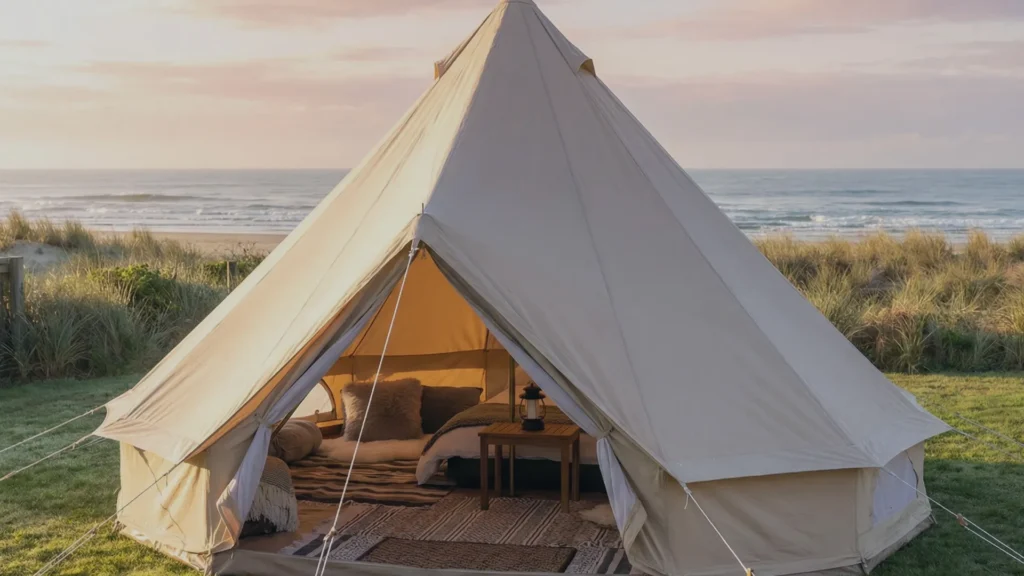
For those who believe winter camping should be comfortable, the White Duck Regatta Bell Tent is the answer. This is a traditional canvas bell tent modernized with water-repellent technology and a stove jack.
The Engineering: This tent defines the best hot tent for winter camping category. It comes standard with a heat-resistant silicone stove jack. Installing a wood stove transforms this from a cold shelter into a 75-degree living room. You can dry your gear, cook dinner in a t-shirt, and sleep without a heavy expedition sleeping bag. The 8.5oz army duck canvas is treated to be water-repellent, mold-resistant, and UV-resistant. It creates a thermal barrier that blocks wind chill entirely. Unlike synthetic tents that feel clammy, the canvas regulates humidity, creating a dry, warm interior climate. The galvanized steel center pole is 1.5 inches thick, designed to support the massive weight of a canvas roof covered in snow.
Livability and Features: The center pole creates a massive ceiling height, allowing you to stand up and walk around. The sheer volume of air inside helps manage condensation. However, it is heavy (60+ lbs) and requires a large footprint for the guy lines. It relies on tension for stability, so you need good ground or specialized snow anchors to stake it out properly. The three large windows feature no-see-um mesh, and the door is wide enough to bring in full-sized cots and camp furniture.
Winter Pro Tip: Always season your canvas before your first winter trip. Hose it down and let it dry twice to ensure the cotton fibers swell and the stitching becomes waterproof.
The Verdict: It is not for hiking. But for a week-long hunting basecamp or a luxury family snow trip, it is the best tent for winter camping if comfort and psychological well-being are your priorities. It turns the wilderness into a home and provides a level of heat safety that nylon cannot match.
Read our full White Duck Regatta Bell Tent Review to see how it handles different stove models.
4. Snugpak Ionosphere: The Tactical Bunker
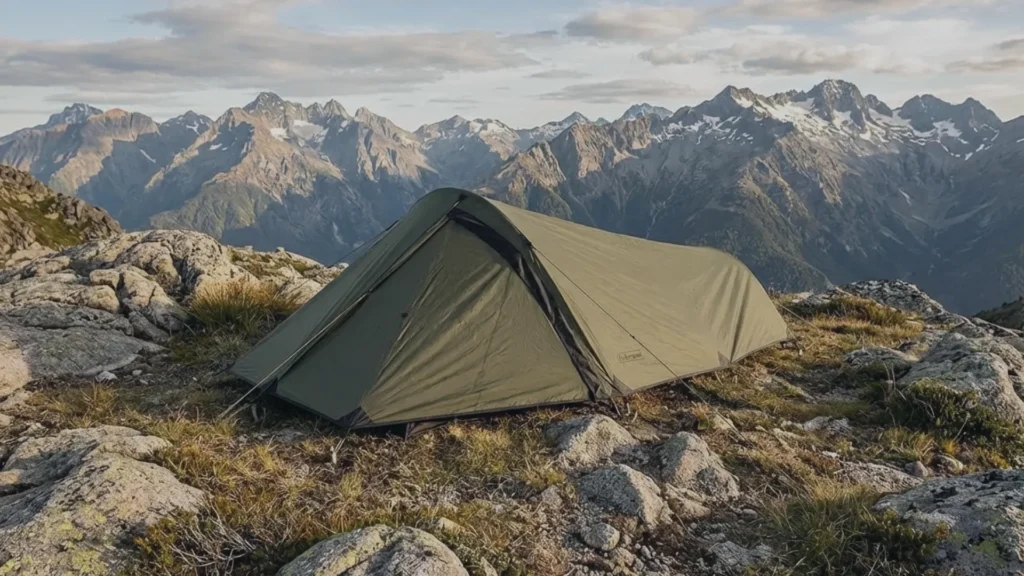
Sometimes the best tent for winter camping is the one that disappears. The Snugpak Ionosphere is a legendary low-profile bivy-tent used by military personnel and bushcrafters who prioritize stealth and survival.
The Engineering: This is a bunker. It is designed to be invisible to the wind. The incredibly low profile (only 28 inches high) means gale-force winds flow right over it rather than pushing against it. It sheds wind load better than almost any other tent on this list. The 5000mm waterproofing rating on the fly and floor is massive. In driving wet snow or freezing rain, this tent stays dry when others wet out. The DAC Featherlite NSL poles are the same ones used in high-end expedition gear, providing immense strength for their weight. The 210t ripstop polyester fly is much tougher than the thin 15D or 20D fabrics found on standard backpacking tents.
Livability and Features: This is a shelter for sleeping, not living. You cannot sit up in it. It is tight. However, for solo survivalists who need to travel fast and light in harsh conditions, its durability and storm-worthiness are unmatched. It creates a warm, compact microclimate that traps body heat effectively because there is less dead air to heat up compared to a larger tent. Gear management is a challenge; your pack will likely need to stay under your legs or outside under a pack cover.
Winter Pro Tip: Because the volume is so low, condensation is a major risk. Always leave the small foot-end vent open, even in the snow, to encourage a draft of fresh air.
The Verdict: If your mission is stealth camping or solo survival in extreme weather, this is your tool. It keeps you alive, dry, and hidden. It is a specialist tool for the solo minimalist who understands that space is a liability in a storm.
Read our full Snugpak Ionosphere Review for a look at its tactical utility in winter.
5. Camppal 1 Person Tent: The Solo Alpinist on a Budget
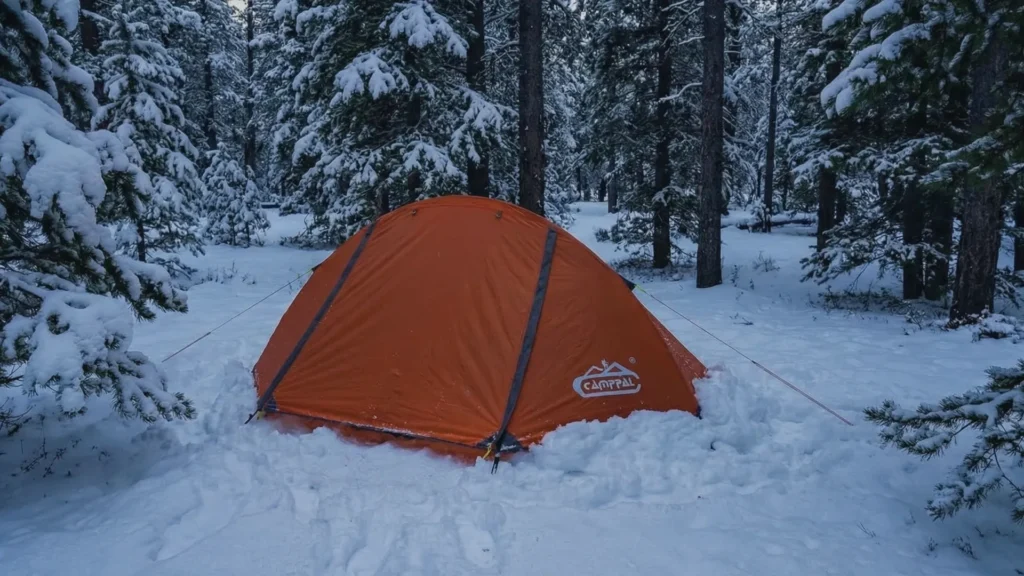
The Camppal 1 Person Tent (Professional Mountain model) is a shocking over-performer. It proves you don’t need to spend six hundred dollars to survive a night in the mountains.
The Engineering: It mimics the architecture of high-end mountain tents, single ridge pole, aerodynamic shape, and solid inner walls, for a fraction of the cost. The single-pole design reduces the number of failure points in freezing conditions (fewer hubs or complex junctions to break). The extended length of over 8 feet is crucial in winter because you sleep with your boots and gear inside to keep them from freezing. The extra length allows you to store gear at your feet without touching the cold, potentially damp walls. The 4000mm waterproof rating on the fly is higher than many tents twice its price.
Livability and Features: It features a 4000mm waterproof fly and a bathtub floor that can handle melting snow puddles. It is slightly heavier than ultralight summer gear, but the durability tradeoff is worth it for winter. The solid inner tent blocks wind chill completely. It provides a level of warmth that a mesh-walled backpacking tent simply cannot match. The bright green or orange colors provide high visibility, which is a safety feature in high-alpine environments where rescue might be necessary.
Winter Pro Tip: The small vestibule is just enough for boots. Dig a small pit under the vestibule in the snow to create a cold sink and give yourself a place to sit while putting your boots on.
The Verdict: The best tent for winter camping for the tall solo hiker on a budget. It is a rugged, no-frills shelter that gets the job done when the snow starts falling. It is a reliable partner for those exploring the backcountry alone without the high-end price tag.
Read our full Camppal 1 Person Tent Review to see its snow load test results.
6. OneTigris Rock Fortress: The Lightweight Heated Hub
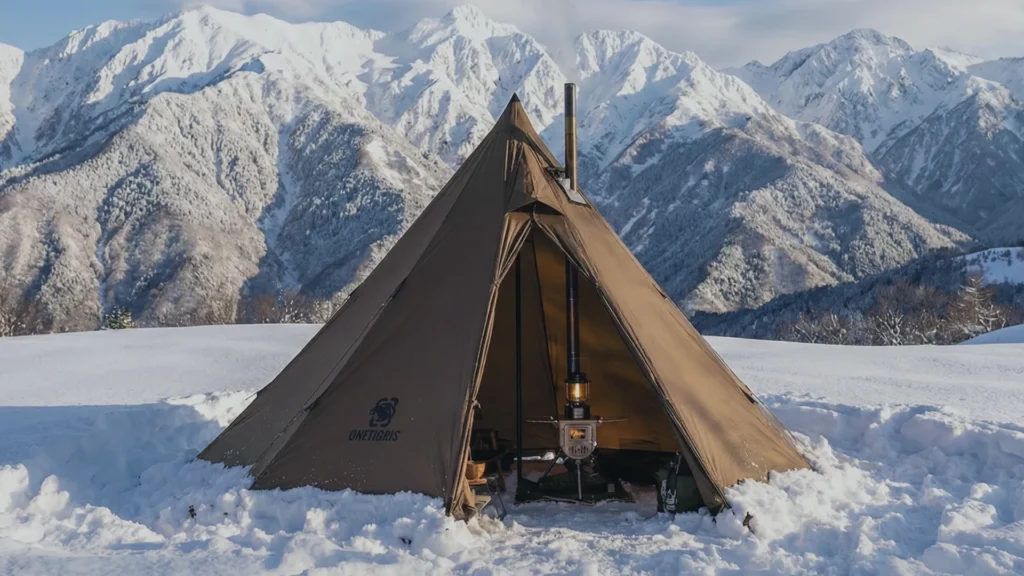
If you want the warmth of a wood stove but can’t carry a 60lb canvas tent, the OneTigris Rock Fortress is your solution. It brings the concept of the best hot tent for winter camping to the mobile backpacker.
The Engineering: It uses 70D coated nylon instead of canvas, dropping the weight to under 10 lbs. This allows you to pull it on a small sled or split it between two backpacks. The 7-sided heptagon design is aerodynamically superior to a square pyramid. It sheds wind from any direction. The steep walls shed snow instantly, preventing roof collapse. The pre-installed stove jack and snow skirts are vital. You pile snow on the skirts to seal the tent to the ground, stopping drafts and stabilizing the structure. This is the best hot tent for winter camping if you prioritize mobility and speed over absolute insulation.
Livability and Features: As a single-wall synthetic tent, condensation can be an issue when the stove is off. However, the dry heat of a wood stove dries out any moisture quickly. It offers standing room at the peak (nearly 8 feet), which is a huge luxury in a tent this light. It can sleep 4 people comfortably without a stove, or 2-3 with a stove and gear. Two doors provide excellent cross-ventilation, making it usable even in the shoulder seasons.
Winter Pro Tip: Carry a small carbon monoxide detector. Because you are sealing the base with snow skirts, oxygen exchange relies entirely on the top vents. Safety is non-negotiable in a hot tent.
The Verdict: The best hot tent for winter camping if mobility and speed are your primary concerns. It allows you to travel deeper into the backcountry while still enjoying the luxury of a heated shelter. It is a game-changer for winter trekking and group missions.
Read our full OneTigris Rock Fortress Review for a guide on selecting the right titanium stove.
7. Black Diamond Eldorado: The Alpine Standard
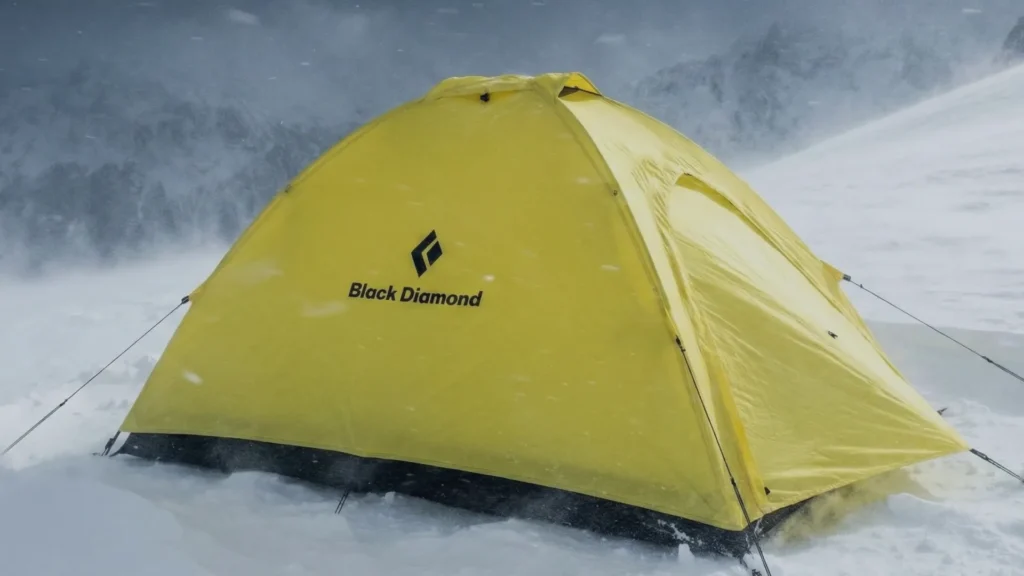
When your destination is a high-altitude peak and failure is not an option, the Black Diamond Eldorado is the standard. It is an ultralight, single-wall bunker designed for the death zone.
The Engineering: It uses proprietary ToddTex fabric. This is an ePTFE membrane similar to Gore-Tex that is waterproof and breathable. This allows it to be a single-wall tent without the condensation issues of cheap nylon. The interior has a fuzzy texture that wicks moisture away from the occupant and catches frost before it falls. The poles pitch inside the tent. This creates a drum-tight structure that doesn’t flap in the wind. It is incredibly quiet in a storm, which is a critical factor for getting sleep at high altitudes. The 2-pole crossover design is simple but refined to handle extreme atmospheric pressure changes.
Livability and Features: It has the smallest footprint of any 2-person tent on this list, designed to fit on narrow ledges or chopped-out snow platforms. It has no vestibule unless added separately, meaning all your gear stays inside with you. It is expensive and specialized. But for alpinists, the weight savings and bombproof reliability make it the best winter tent for camping in extreme mountain environments. The bright yellow color creates a high-morale interior environment during multi-day storm cycles.
Winter Pro Tip: Mastering the internal pole pitch is essential. Practice in your backyard until you can do it in under 3 minutes. In a summit push, speed is survival.
The Verdict: For climbers and serious ski mountaineers who need a shelter that will not fail at 14,000 feet. It is a proven design that has sheltered expeditions on the world’s highest peaks for decades. It is the best winter tent for camping when weight is your enemy but wind is your reality.
Read our full Black Diamond Eldorado Review to understand the maintenance of ToddTex fabric.
8. Snugpak Scorpion 3: The European Storm King
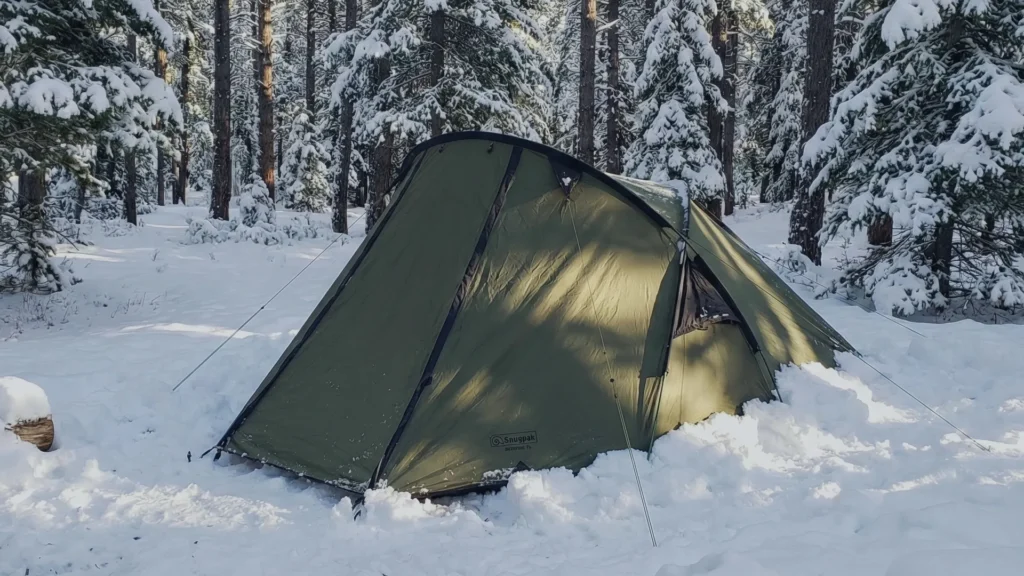
The Snugpak Scorpion 3 is the fly-first fortress. Tunnel tents are favored in Northern Europe and by military units for their ability to withstand severe weather while offering massive vestibules.
The Engineering: The fly-first pitch is the secret weapon here. It allows you to set the tent up in a blizzard or heavy rain without the inner tent ever getting wet. The poles slide into the external fly, and the inner tent remains attached inside. By using three hoops, the tent creates a wind-shedding profile that becomes stronger the harder the wind blows, provided you pitch the tail into the wind. It offers better volume-to-weight ratios than geodesic domes and handles snow accumulation with ease. The 5000mm waterproofing on the fly and floor is massive, ensuring that you stay dry even in melting slush or freezing rain.
Livability and Features: The 5000mm waterproofing is expedition-grade. It is built to military specs, meaning the materials are heavier and tougher than civilian gear. While marketed as a 3-person tent, it is a comfortable 2-person winter shelter with a large vestibule for wet gear storage and cooking in bad weather. The solid inner walls trap heat effectively, and the three vents allow for fine-tuned condensation management.
Winter Pro Tip: The Scorpion 3 relies on tension. Always stake out the tail and head ends perfectly straight to maintain the tunnel shape. Use deadman anchors if the snow is too soft for standard stakes.
The Verdict: The best tent for winter camping if you expect wet, heavy storms and need a dry area to manage gear. It is a tactical shelter that prizes protection above all else and provides a massive psychological boost through its feeling of invulnerability.
Read our full Snugpak Scorpion 3 review for a guide on pitching tunnels in crosswinds.
9. Russian Bear Hot Tent: The Arctic Habitat
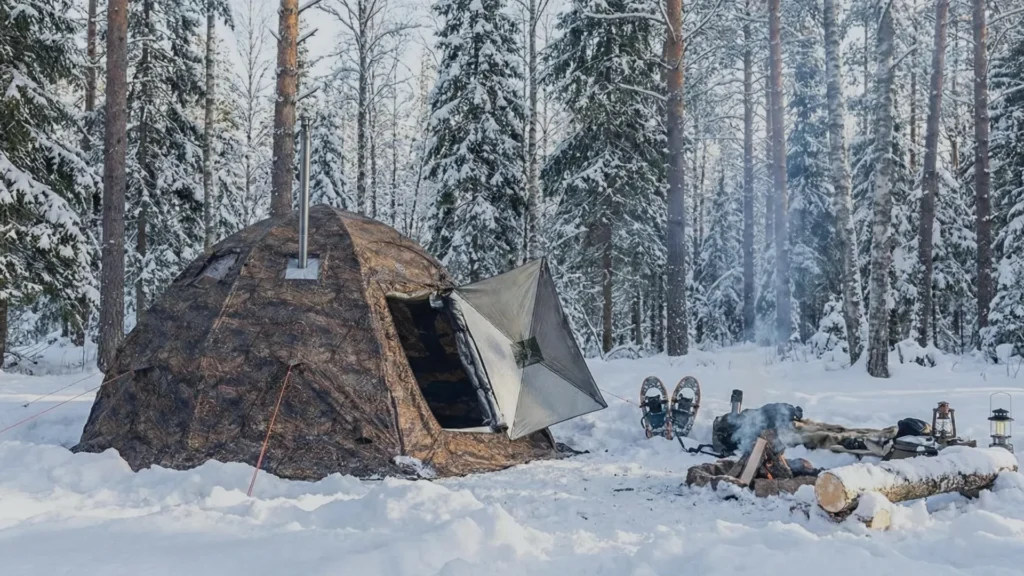
For extreme cold and long-term expedition stays, the Russian Bear Hot Tent (UP-series) is unrivaled. It is a double-layer, pop-up expedition tent designed in one of the coldest regions on earth.
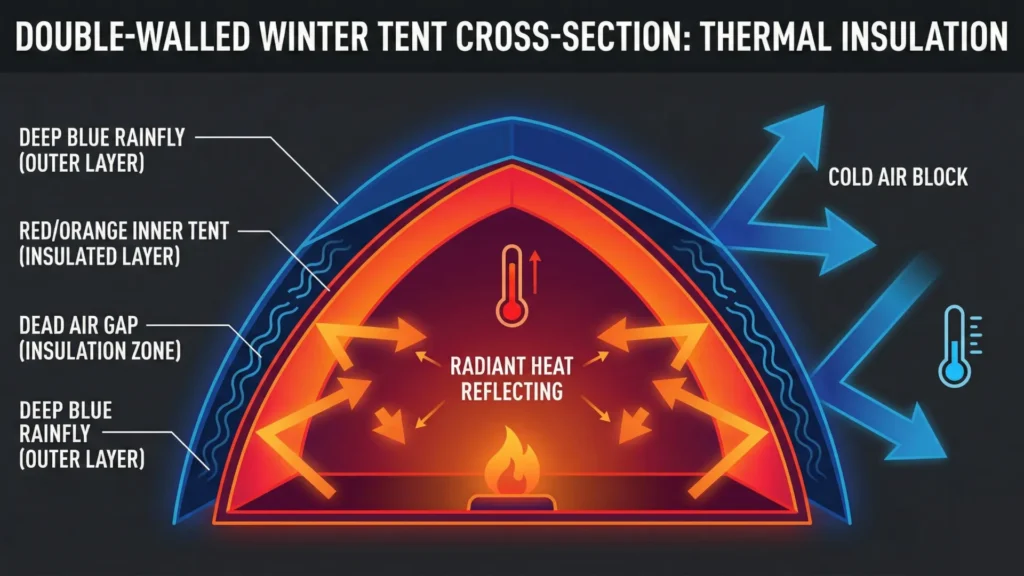
The Engineering: It uses an aviation aluminum umbrella frame that pops up instantly. A single person can go from bag to standing tent in under 3 minutes. The double-layer wall creates a dead air gap that provides massive insulation and eliminates condensation. This air gap acts like a thermos; the inner tent stays warm while the outer tent takes the brunt of the cold. Condensation happens on the outer wall, keeping the inner living space bone dry. The frame is made of solid 10mm aviation aluminum bars, which are significantly stronger than the hollow tubes found in consumer tents.
Livability and Features: It comes with heat shielding for a stove and can even be used for ice fishing with its removable floor cutout. It features near-vertical walls, allowing for the use of cots without touching the fabric. It is heavy (50+ lbs) and bulky, but for car camping, ATV access, or sled-hauling basecamps, it is the ultimate solution for extreme cold survival. The hinged door allows for easy entry and exit without fumbling with frozen zippers.
Winter Pro Tip: The double-wall design creates a vacuum of warmth. When using a wood stove, keep the inner layer zipped tight but crack the outer layer’s vents to ensure the air gap remains fresh and frost-free.
The Verdict: This is the best tent for winter camping if you have the means to transport it. It is a deployable habitat that turns -30 degrees into a cozy evening. It is the king of the basecamp and the best hot tent for winter camping for those who live in the deepest cold.
Read our full Russian Bear Hot Tent Review for a breakdown of the pop-up frame mechanics.
10. Browning Glacier: The Family Winter Bunker
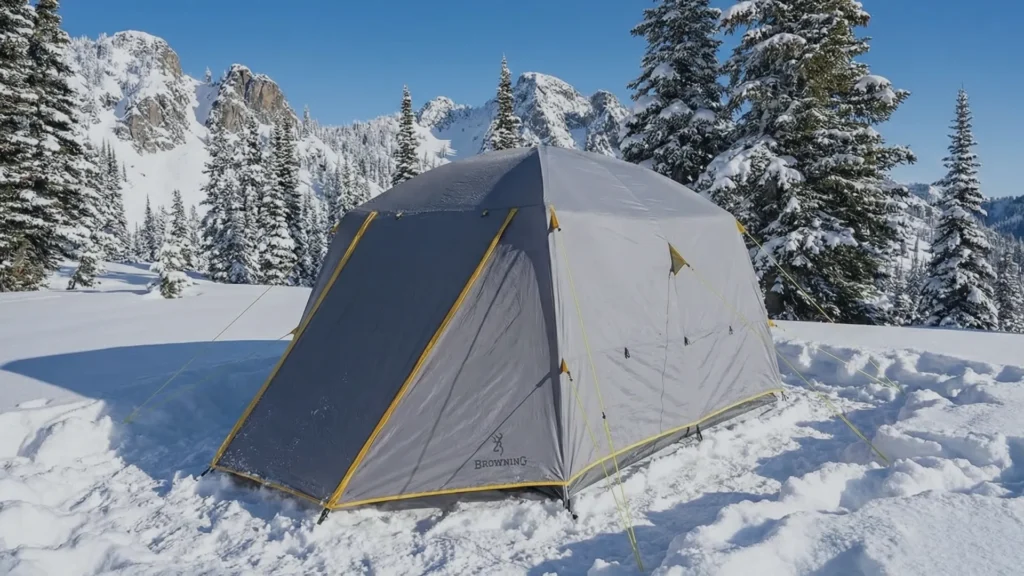
Families need space, and the Browning Glacier delivers it in a 4-season package that remains accessible for those not looking for an expedition-level price tag.
The Engineering: It uses a geodesic 4-pole design that supports heavy snow loads. The crossing poles create triangles of strength that prevent the roof from caving in under wet snow accumulation. It uses heavy 11mm fiberglass poles. While aluminum is generally preferred for mountaineering, these fiberglass poles are exceptionally thick and designed for high-tension loads. For most family camping in 10 to 30-degree weather, these poles provide massive stability at a fraction of the cost. The continuous pole sleeves ensure that wind stress is distributed across the entire fabric surface rather than concentrated on clips.
Livability and Features: With a 6-foot center height, you can stand up to change clothes, a luxury that prevents cabin fever. The fabric is heavy-duty 210D polyester Oxford on the floor, which is far more durable than typical family tents. It features two large vestibules for family gear storage, keeping the sleeping area dry and organized. The solid wall construction keeps the tent much warmer than a standard summer dome. It fits two queen air mattresses with room to walk between them.
Winter Pro Tip: Because the poles are fiberglass, do not over-tension them in extreme cold. They are most flexible between 20°F and 50°F. If camping in sub-zero temps, knock snow off the roof every 3 hours to prevent static load fractures.
The Verdict: For a family wanting to camp in the snow at a state park or trailhead, it is the safest and most comfortable option available. It earns its place as the best winter tent for camping for groups on a budget who want to experience the fourth season.
Read our full Browning Glacier Tent Review for tips on solo setup.
Part 3: The Science of Thermodynamics: Staying Warm in a Tent
Owning the best tent for winter camping is only half the battle. You must understand how heat moves through a shelter to stay comfortable. Heat loss occurs through four primary mechanisms: conduction, convection, radiation, and evaporation.
1. Conduction: The Ground Heat Thief
Conduction is the direct transfer of heat through contact. In winter camping, your body is a 98-degree heater touching a 20-degree tent floor, which is touching 0-degree snow. The snow will win this battle every time. This is why the Kodiak Truck Tent is so effective; it separates you from the frozen earth. On the ground, you need a high R-value sleeping pad (5.0 or higher). We recommend stacking a closed-cell foam pad underneath an inflatable insulated pad. This creates a thermal break that prevents conduction from stripping your warmth.
2. Convection: The Wind Chill Factor
Convection is the transfer of heat by the movement of air. This is the wind chill effect. A breezy 3-season tent with mesh walls allows convection to strip the warm air layer from around your sleeping bag. This is where solid walls and snow skirts come into play. By sealing the tent to the ground, you create a pocket of dead air. Dead air is one of the best insulators in nature. The best winter tents for camping prioritize this dead air pocket to keep you warm.
3. Radiation: Trapping the Glow
Your body constantly radiates infrared heat. In a large, airy tent, this heat radiates away and is lost to the atmosphere. Small, low-volume tents like the Snugpak Ionosphere are warmer because there is less air volume to heat. Double-wall tents like the Russian Bear are even better because the inner wall reflects some of that radiant heat back toward you, while the air gap provides a buffer.
4. Evaporation: The Condensation Paradox
As you breathe and sweat, you release moisture. In a sealed winter tent, this moisture hits the cold walls and condenses. If it stays in the tent, it dampens your down sleeping bag. Wet down loses all its insulation value, leading to rapid cooling. You must vent. It seems counterintuitive to open a window when it is freezing outside, but you need that moisture to escape. The best tent for winter camping will have high-low venting to move moist air out before it can freeze on the walls.
Part 4: Structural Engineering Masterclass: Geodesic vs. Tunnel vs. Tipi
The shape of your tent dictates how it interacts with the environment. There is no perfect shape, only the right shape for the conditions.
Geodesic Domes: The All-Rounder
Geodesic tents use poles that cross at multiple points. This creates triangles, the strongest geometric shape.
- Best For: Heavy snow and variable winds.
- Advantage: They are freestanding, meaning you can pitch them on rock or ice where stakes are hard to drive.
Tunnel Tents: The Wind Specialist
Tunnel tents use hoops that do not cross. They are designed to be aerodynamic.
- Best For: High, sustained winds in one direction (like on a tundra or glacier).
- Advantage: Incredible space-to-weight ratio. They offer huge vestibules for their weight.
Tipi (Pyramid) Tents: The Snow Shedder
Tipis use a single center pole and steep walls. Snow slides off instantly.
- Best For: Heavy snowfall and hot tenting.
- Advantage: Snow slides off instantly. They are the lightest way to get standing room.
Part 5: Winter Camping Masterclass: Essential Survival Skills
Owning the best tent for winter camping is a significant step toward safety, but gear alone cannot compensate for a lack of technical knowledge. In winter, your tent is your life-support system. If you pitch it incorrectly, even a $2,000 mountaineering shelter can become a death trap. This section is designed to turn you from a casual camper into a winter basecamp expert.
1. The Art of the Sintered Platform: Building the Foundation
Never, under any circumstances, pitch your tent on soft, uncompressed powder. As you sleep, the heat from your body will transfer through your sleeping pad and melt the snow beneath you. This creates a phenomenon called post-holing in your sleep, where you wake up in a curved, taco-shaped depression that ruins your back and makes it impossible to move inside the tent. Keep your snowshoes or skis on. Stomp out a flat area roughly 3 feet larger than the footprint of your best winter tents for camping choice. Do not just walk back and forth; use a systematic overlapping pattern to ensure every square inch is packed hard.
Once stomped, let the platform sit for at least 30 to 45 minutes. This allows a process called sintering to occur, where the individual snow crystals bond together through pressure and refreezing. The result is a platform that is as hard as concrete, providing a stable foundation that won’t melt out under your weight.
2. Deadman Anchors: Engineering Stability in Frozen Soil
Standard tent stakes are a joke in deep snow. They pull out like a hot knife through butter the moment the wind picks up. To secure the best tent for winter camping, you must employ deadman anchors. This is the only way to ensure your tent is still there when you return from a day of skiing or hiking. Tie your guy line around a branch, a stuff sack filled with snow, or a dedicated aluminum snow stake. Dig a hole at least 18 inches deep. Bury the object horizontally (perpendicular to the direction of the tent).
Stomp snow on top of the hole and pour a small amount of water over it if the temperatures are low enough to freeze it solid. Let it set for 30 minutes. This anchor is now structurally integrated into the frozen snowpack. When it is time to leave, you will likely need to chop them out with an ice axe or a sturdy shovel.
3. The Cold Sink Trench: Thermodynamics in the Vestibule
If your chosen best winter tent for camping features a vestibule, like the Snugpak Scorpion 3 or the ALPS Tasmanian 2, you have a massive tactical advantage. You can dig a cold sink. Dig a trench inside the vestibule area about 2 feet deep and as wide as the door. This serves two purposes. First, it allows you to sit on the edge of the tent floor with your feet dangling into the pit, making it infinitely easier to put on bulky winter boots or adjust crampons. Second, because cold air is denser than warm air, it naturally flows into the lowest point of the environment.
The coldest air in your tent will settle in that trench, keeping the sleeping area slightly warmer. This is a pro-level move that significantly improves livability during long winter nights.
Part 6: Material Science: The Physics of Cold Weather Fabrics
When evaluating the best winter tents for camping, you will see a barrage of technical numbers and fabric names. Understanding the molecular properties of these materials is essential for choosing a tent that won’t fail when you need it most.
1. The Denier (D) Equation: Strength vs. Weight
Denier measures the weight in grams of 9,000 meters of a fiber. In simple terms, it tells you how thick and heavy the thread is.
- 15D to 20D: Found in ultralight tents like the Big Agnes Copper Spur. These are thin and require extreme care. They can be prone to tearing if a sharp branch or ice chunk hits them under tension.
- 40D to 75D: The sweet spot for the best tent for winter camping candidates. This thickness provides a robust barrier against wind and can handle the weight of snow without stretching to the point of failure.
- 150D to 300D: Found in expedition-grade gear like the Russian Bear or heavy-duty floors. This is essentially bombproof material that can withstand years of abuse on frozen ground.
2. Hydrostatic Head (mm): The Water Pressure Barrier
This rating tells you how much water pressure a fabric can withstand before moisture is pushed through the weave.
- 1200mm to 1500mm: Standard for rain.
- 3000mm to 5000mm: The required standard for the best tent for winter camping. In winter, you are often kneeling on the floor, which creates immense pressure on the fabric against the wet snow. A floor with a 5000mm rating ensures that you don’t force water through the floor and into your insulation.
Part 7: The Hot Tent Revolution: Integrating Fire and Shelter Safely
The best tents for winter camping allow you to fundamentally change your relationship with the cold. Instead of enduring the winter, you enjoy it. However, bringing a wood-burning stove into a fabric structure requires strict safety protocols and technical understanding of combustion.
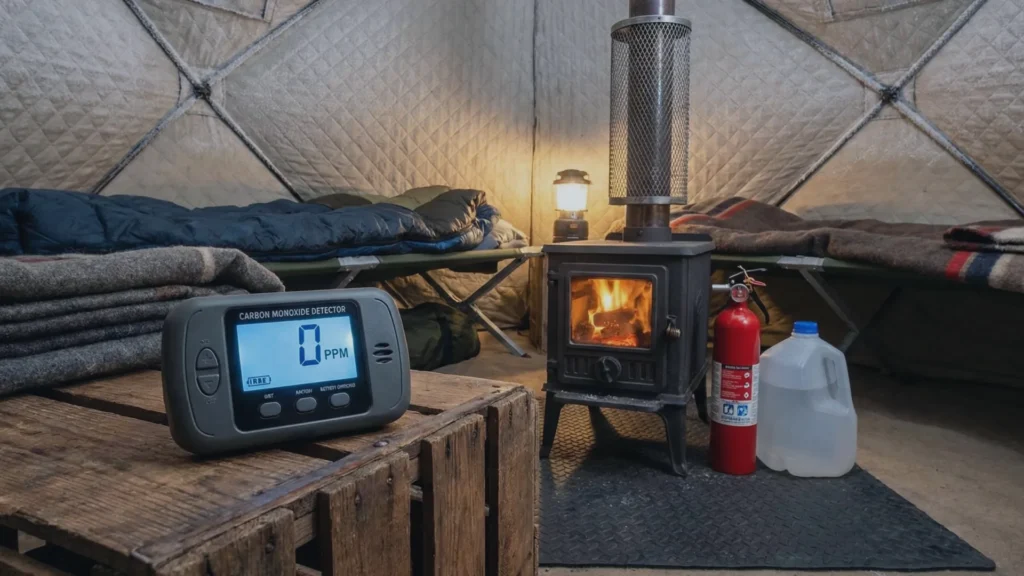
1. The Stove Jack: The Critical Interface
A stove jack is a fire-resistant patch of silicone-coated fiberglass sewn into the tent. It allows a metal chimney pipe to pass through the roof without melting the fabric. When selecting the best hot tent for winter camping, ensure the jack is positioned far enough from the center pole and the walls to prevent radiant heat damage. We recommend checking the stitching around the jack annually, as the weight of the chimney pipe can cause tension tears in the surrounding nylon or canvas.
2. Drafting Physics: The Chimney Effect
A wood stove in a tent relies on a pressure differential. Hot air is less dense than cold air. As the fire heats the air in the stove, it rises through the chimney, creating a vacuum that pulls fresh oxygen in through the stove’s intake vents. This draft is what keeps the fire alive and keeps smoke out of your living space. When you first light a stove, the air in the chimney is cold and heavy. This can cause smoke to back up into the tent. Burn a small piece of paper or a few dry twigs right at the base of the chimney to heat the air and establish the draft before loading the firebox.
3. Fuel Management: The Caloric Value of Winter Wood
Not all wood is created equal. In a small tent stove, you have limited space, and efficiency is everything.
- Hardwoods (Oak, Maple, Birch): These have a higher density and provide more BTUs per volume. They burn longer and create a bed of coals that will keep the best hot tent for winter camping warm for 2-3 hours.
- Softwoods (Pine, Fir, Spruce): These burn fast and hot. They are excellent for starting the fire and heating the tent up quickly in the morning, but they produce more creosote, which can clog your spark arrestor and lead to dangerous chimney fires.
4. Floating the Stove: Preventing the Melt-Down
A hot wood stove radiates massive heat downward. If placed directly on snow, it will melt a pit, become unstable, and eventually tip over, a catastrophic event inside a fabric shelter. Use two green logs (freshly cut from a fallen tree) as a platform for the stove legs. Green wood has a high moisture content and won’t burn through easily. Alternatively, use a piece of plywood or a specialized fireproof mat to distribute the weight and provide insulation between the stove and the snow.
5. Fire Watch Protocols
When using the best hot tent for winter camping, never leave a roaring fire unattended. Embers can pop, or the wind can shift, moving the tent fabric closer to the hot pipe. Establish a fire watch if running the stove overnight, or simply let the fire die down and rely on your high R-value sleeping system for sleep.
Part 8: Psychological Comfort: Staying Sane During the Polar Night
Winter camping involves being confined to your shelter for 12 to 14 hours a day due to the limited sunlight of the winter solstice. If your chosen best tent for winter camping is cramped, dark, or noisy, you will experience a rapid decline in morale and mental focus.
1. Color Theory and Lighting Dynamics
The color of your tent walls significantly impacts your mood. Grey and flat light are common in winter.
- Orange and Yellow (ALPS, Black Diamond): These colors filter the grey light and create a warm, sunny glow inside the tent. This is a massive psychological boost during a multi-day storm. It makes the interior feel warm even if the thermometer says otherwise.
- Dark Green or Grey (Snugpak): These provide better stealth but can feel gloomy and claustrophobic during long winter days. Bring a high-lumen lantern with a warm color temperature (2700K). Avoid harsh blue-white LEDs, which can make the interior feel colder and more sterile, increasing the psychological impact of the winter environment.
2. Space Management: The Wet Zone vs. The Dry Zone
One of the biggest stresses in winter camping is managing wet gear. Once your sleeping bag gets damp, you are in danger. Divide your tent into strict zones. The vestibule is the wet zone for boots, snow-covered jackets, and stove operations. The main tent body is the dry sanctuary. Never bring snow-covered gear into the sleeping area. Use a small brush to sweep every flake of snow off your clothes before you cross the threshold. Maintaining this discipline is the key to a comfortable multi-day trip in the best winter tents for camping.
3. The Verticality Factor: Preventing Cabin Fever
Being able to sit up or stand up is not just a luxury; it is a mental health requirement for long stays. Tents with vertical walls, like the Gazelle T4 or the Browning Glacier, allow you to change clothes, organize gear, and move around without feeling like you are trapped in a coffin. If your best tent for winter camping choice is too small, your cognitive performance will drop as your stress levels rise.
4. Sound dampening in storms
Single-wall tents can be incredibly loud in high winds. The constant snapping of fabric sounds like a machine gun. Double-wall tents or heavy canvas tents like the White Duck Regatta are significantly quieter. For many, the quietness of canvas is worth the weight penalty because it allows for actual rest during a gale.
Part 9: Maintenance and Longevity: Protecting Your Winter Investment
A high-quality best winter tent for camping represents a significant financial investment, often ranging from $250 to $1,500. If you don’t maintain it correctly, the unique coatings and molecular structures that keep you safe will degrade in just a few seasons.
1. The Hydrolysis Threat: The Sticky Fly Syndrome
The waterproof coating on most modern synthetic tents is made of Polyurethane (PU). PU is susceptible to hydrolysis, a chemical breakdown where water molecules bond with the polymer, causing it to become sticky, flake off, and smell like old gym socks. Never store your tent damp. Even a tiny amount of moisture trapped in the folds can trigger hydrolysis in a warm closet. When you return from a trip, set your tent up in a garage or spare room for 48 hours until every seam is bone dry before packing it away in its stuff sack.
2. Zipper Metallurgy and Sub-Zero Care
Winter grit, salt from road spray, and ice are the primary killers of zippers. Periodically clean your zippers with a toothbrush and plain water. Use a silicone-based zipper lubricant (like Gear Aid Zip Care) to keep the sliders moving smoothly. Never force a stuck zipper; in the cold, the metal sliders become brittle and can snap. If a zipper freezes shut, use the warmth of your hands or a warm water bottle to melt the ice before attempting to move it.
3. UV Degradation: The Invisible Molecular Enemy
High-altitude winter sun is incredibly intense. The snow reflects up to 80% of UV radiation back up at your tent. UV rays break the chemical bonds in nylon and polyester, making the fabric “crispy” and prone to tearing like paper. If you are setting up a long-term basecamp, consider throwing a cheap sacrificial tarp over your tent during the peak daylight hours to absorb the UV rays. For mobile camping, this is less of a concern, but it is why we prioritize high-tenacity polyester for basecamp shelters like the Browning Glacier, as it resists UV better than nylon.
4. Pole Elasticity and Cold Fatigue
Aluminum poles have an elastic limit. In extreme cold, this limit changes. Always ensure your pole ferrules (the joints) are fully seated before applying tension. A partially seated joint creates a leverage point that will snap the pole. When breaking down poles, start from the middle to ensure the internal shock cord is stretched evenly, preventing the elastic from losing its “snap” over time.
Best Tent For Winter Camping Q&A
No. In temperatures above 40°F, a 4-season tent is a liability. It is too heavy, too hot, and doesn’t vent well enough to prevent you from soaking in your own sweat. They are specialized tools for sub-freezing conditions. Using a mountaineering bunker in the summer is like wearing a parka to the beach.
This is a battle you can never fully win, but you can mitigate it. You must keep your high vents open. The goal is to move the moist air out of the tent before the dew point is reached on the cold walls. If you are using a best tent for winter camping model with a double wall, the moisture will pass through the inner fabric and freeze on the outer fly, which is much easier to manage than frost falling directly on your face.
Wind shedding. When you are alone, you don’t have anyone to help you stabilize the tent or re-stake anchors in the middle of a midnight gale. A low-profile, aerodynamic shape like the Snugpak Ionosphere is your best friend. Look for a tent that you can pitch easily with one set of hands.
Yes, but with extreme caution. Propane combustion releases water vapor into the air, which will dramatically increase your condensation problems. Furthermore, you must have a CO detector. A wood stove provides dry heat, which actually helps keep the tent dry. Propane is best for short bursts of heat while changing, rather than constant overnight use.
A well-engineered geodesic dome can support several hundred pounds of snow. However, you should never test that limit. The weight of the snow can press the rainfly against the inner tent, causing moisture to transfer to your gear. Static load is the silent killer of tent poles; always clear the roof periodically during a storm.
Yes, especially for single-wall tents like the Black Diamond Eldorado. Factory taping can fail over time, and a manual application of liquid sealer ensures a 100% waterproof barrier. It is a rite of passage for serious winter campers and ensures you know every inch of your shelter’s fabric.
Only in the vestibule and only with massive ventilation. Cooking releases significant amounts of carbon monoxide and massive amounts of moisture. If you must cook inside, keep the door unzipped at the top and have a knife ready to escape the tent if the stove flairs up. Never cook in the main sleeping compartment.
You cannot use standard anchors. You need ice screws (used by ice climbers) or to drill holes and use T-anchors. On a frozen lake, you can often use heavy rocks or logs frozen into the surface snow. In a pinch, you can freeze your stakes into the ice by pouring a little water on them, but you will need to chip them out later.
A winter tent is designed for weekend or week-long trips in cold weather. An expedition tent is designed to be lived in for months on end in the most extreme environments on earth. Expedition tents use significantly heavier fabrics (sometimes double-layered) and more complex pole structures.
Apply a thin layer of silicone lubricant to the zipper teeth before your trip. If they do freeze, do not use pliers. Use the heat from your hands or a warm (not hot) water bottle to melt the ice. Using a tent with a hinged door, like the Russian Bear, eliminates this problem entirely.
Yes, but the dog’s claws are a threat to the floor. Use a heavy-duty floor protector or a tent with a 150D+ floor like the Gazelle or Browning Glacier. Dogs also contribute massive amounts of condensation through their breath, so increase your venting accordingly.
The stove is for comfort; your sleep system is for survival. Always bring a sleeping pad and bag rated for 10 degrees lower than the expected ambient temperature. Never rely on the stove to keep you alive through the night.
Wrapping Up
So, which shelter wins the best tent for winter camping crown?
The search ends when you accurately identify your environment.
For the Solo Stealthist, the Snugpak Ionosphere is an invisible bunker. | For the High-Altitude Climber, the Black Diamond Eldorado is an uncompromising survival pod. | For the Basecamp Hunter, the Russian Bear Hot Tent provides cabin-level luxury and heat. | For the Budget Explorer, the ALPS Tasmanian 2 offers the best protection-to-dollar ratio. | For the Group Trekker, the OneTigris Rock Fortress offers mobile heated sanctuary. |
Winter camping unlocks a silent, pristine world that few people get to see. There are no bugs, no crowds, and the scenery is breathtaking. With the right shelter, you don’t just survive the cold; you master it. Check out our how to plan a camping trip guide to start mapping your path into the fourth season.