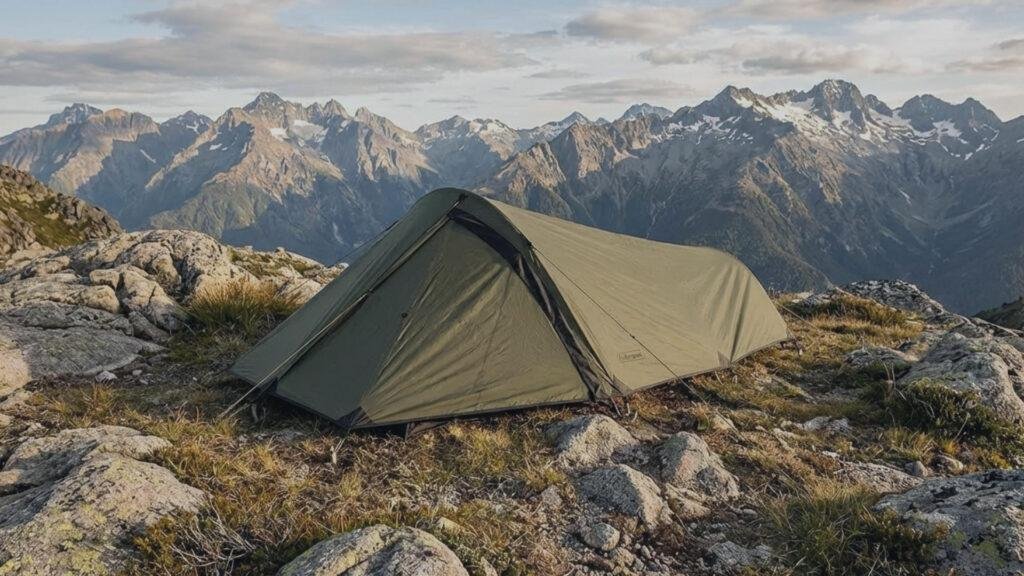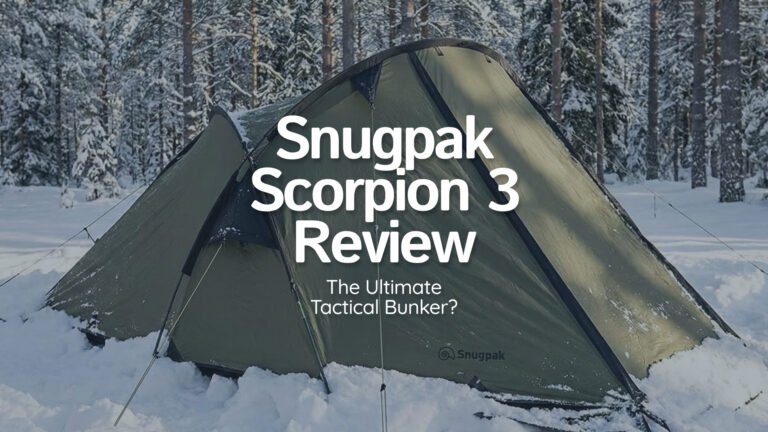


The Snugpak Ionosphere is a piece of gear that immediately signals a different kind of camping experience. When you pull this shelter out of its compression sack, you aren’t just looking at a tent; you are looking at a tactical solution for solo survivalists, stealth campers, and minimalist backpackers. Most tents are designed to be seen, with bright colors and high peaks that stand out against the landscape. This shelter is the opposite. It is designed to vanish.
If you are a solo adventurer who prioritizes a low signature and bombproof reliability over head-height luxury, the Snugpak Ionosphere 1 person tent is likely at the top of your list. It occupies a unique space between a traditional bivy bag and a one-person trekking tent. It offers more protection than a simple bivy but maintains the low profile needed for wild camping in exposed or sensitive areas.
But does the low profile mean you will be cramped beyond comfort? Is the waterproof rating genuinely sufficient for a long, rainy night? And does it truly hold up as a 4-season option in the snow?
In this exhaustive Snugpak Ionosphere review, we are tearing down every technical specification of this specialized shelter. We will analyze its weather resistance in high-wind scenarios, evaluate the internal space for gear management, and compare it against other solo favorites like the Naturehike Cloud Up 1 and the ALPS Mountaineering Lynx 1.
Whether you are a bushcrafter, a military professional, or a thru-hiker looking for a stealthy alternative, this guide will help you decide if the Snugpak Ionosphere one person tent is the right tool for your solo missions.
Quick Verdict
Ideally Suited For: Stealth campers, solo survivalists, and military personnel who need a low-signature, 4-season capable shelter that is incredibly fast to pitch and virtually invisible in the woods.
The Bottom Line: The Snugpak Ionosphere is a specialist’s tool. It is not a tent you buy if you want to stand up and change your clothes. It is a bunker. With its high-quality DAC aluminum poles and a flysheet boasting a 5000mm hydrostatic head, it offers some of the best weather protection in the solo market. While it is snug, its ability to withstand extreme wind and remain hidden makes it a top choice for those who camp where standard tents would fail or be too visible.
- Stealth & Profile: 4.8/5
- Weather Resistance: 4.8/5
- Durability: 5/5
- Ease of Setup: 4.9/5
- Interior Space: 3/5
- Weight-to-Protection Ratio: 4/5
4.4
Overall Score
Pros and Cons
Before we dive into the deep technical details of the Snugpak Ionosphere, here is a quick snapshot of its strengths and weaknesses.
✓ Extreme Stealth: The olive drab color and low profile make it nearly impossible to spot once pitched in a forest or high grass.
✓ High Waterproofing: A 5000mm fly and 5000mm floor provide expedition-level protection against moisture.
✓ DAC Poles: Uses high-end DAC Featherlite NSL aluminum poles, which are the gold standard for strength and weight.
✓ Wind Resistance: Its low shape allows wind to flow over it effortlessly, making it safer in high-altitude storms.
✓ Small Footprint: Can be pitched in tiny clearings where a standard tent like the Coleman Skydome 6 person tent would never fit.
✓ Durability: The 210t ripstop polyester is much tougher than the thin nylon found on ultralight tents.
✕ Limited Headroom: You cannot sit up straight in this tent; it is designed for lying down and sleeping.
✕ Condensation: Being a small, low-volume tent, managing airflow is crucial to prevent moisture buildup on the inner walls.
✕ Weight: At around 3.3 lbs, it is heavier than some ultralight bivy bags, though it offers significantly more features.
✕ No Vestibule: There is no dedicated porch space for wet boots or cooking, meaning gear management must be done inside or under a separate tarp.
Product Specifications
| Feature | Specification |
|---|---|
| Product Name | Snugpak Ionosphere |
| Capacity | 1 Person |
| Flysheet Material | 210t Ripstop Polyester with 5000mm Waterproof Polyurethane Coating |
| Inner Material | 190t Nylon with Polyester Mesh |
| Groundsheet Material | 190t Taffeta Nylon with 5000mm Waterproof Polyurethane Coating |
| Poles | DAC Featherlite NSL Anodized Aluminum |
| Weight | 3.3 lbs (1.52 kg) |
| Packed Size | 19 x 5 inches (48 x 14 cm) |
| Peak Height | 28 inches (70 cm) |
| Length | 104 inches (265 cm) |
| Seasonality | 4 seasons |
| Stakes | 16+2 Alloy Y-Stakes Included |
Architecture and Design: The Bivy-Tent Hybrid
The Snugpak Ionosphere 1 person tent is built on a two-pole tunnel design. This architecture is intentional. By using one larger hoop at the head and one smaller hoop at the feet, Snugpak creates a wedge shape that is incredibly aerodynamic. This is a design philosophy focused on survival rather than leisure.
Low Profile Signature
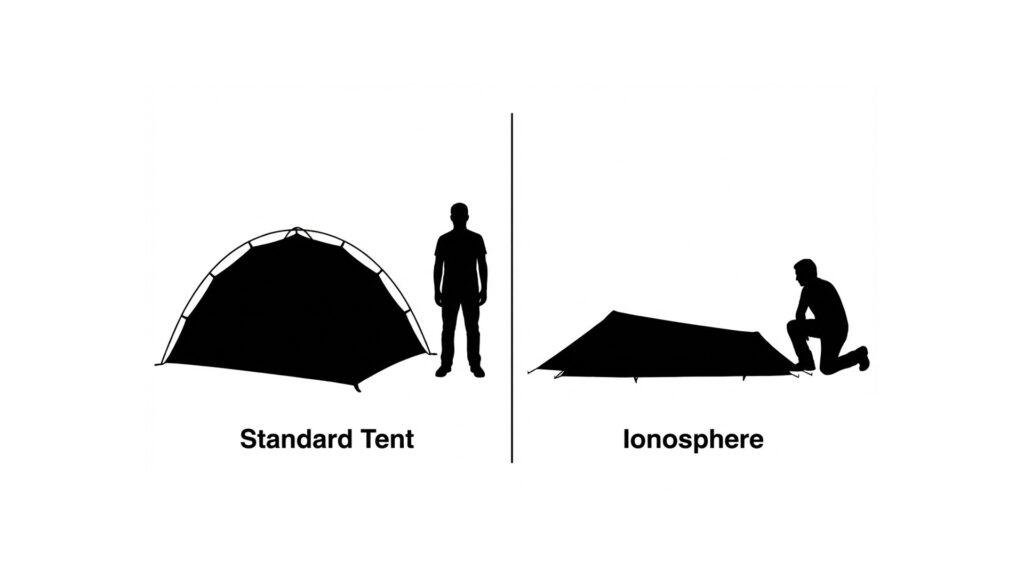
In the tactical world, profile is everything. The Snugpak Ionosphere sits very low to the ground. The maximum height is only 28 inches. For a camper, this means you are sleeping close to the earth. For a stealth camper, this is a massive advantage. You can pitch this tent in a depression or behind a small log, and it will be completely hidden from view.
DAC Pole Quality
Snugpak did not cut corners on the frame. The poles are DAC Featherlite NSL, which are often reserved for much more expensive tents like those from Hilleberg or Big Agnes. These poles are lightweight but have a high yield strength, allowing them to flex under extreme wind loads without snapping. This makes the Snugpak Ionosphere one person tent a legitimate choice for camping in exposed mountain areas where gusts are a constant threat.
Fabric Durability
The choice of 210t ripstop polyester for the flysheet is a nod to durability. While many modern tents use 15D or 20D nylon to save weight, Snugpak opts for a heavier, more abrasion-resistant fabric. This material is less prone to UV degradation and doesn’t sag as much when wet, which is a common issue we discuss in our 3 season vs 4 season tent guide. The polyester construction of the Ionosphere is designed for protection, but it doesn’t offer the natural temperature regulation of heritage materials. For vehicle-based adventurers, the Kodiak Canvas truck bed tent review we recently completed shows how Hydra-Shield canvas can keep you significantly warmer in sub-zero temps.
Weather Resistance: A Solo Bunker
When you are out in the wild alone, your confidence in your gear is paramount. The Snugpak Ionosphere review process reveals a shelter that punches far above its weight class in terms of storm protection.
Waterproofing Performance
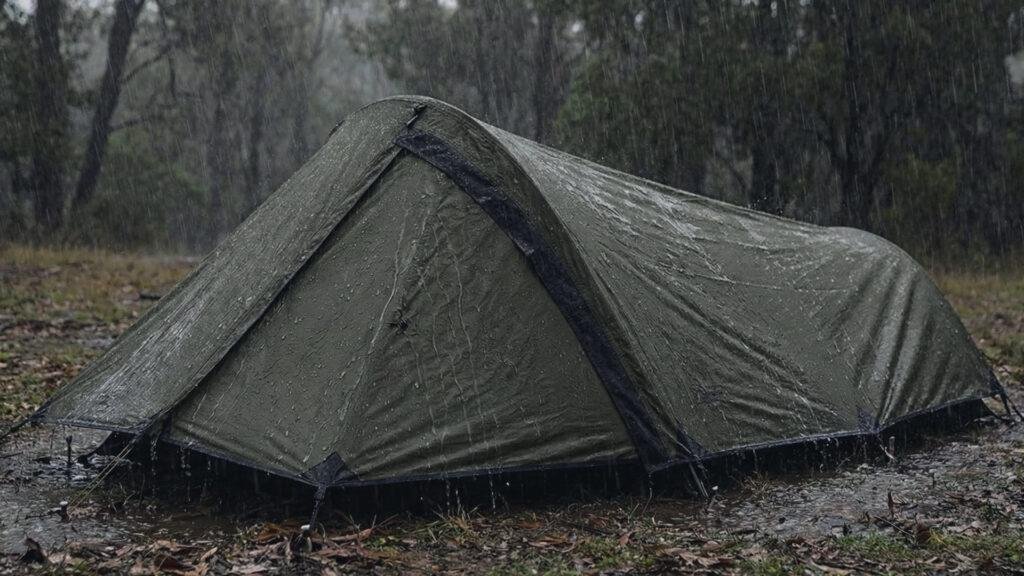
The flysheet and the floor are both rated at 5000mm hydrostatic head. To put that in perspective, many budget tents like the Ozark Trail 6 person tent have ratings of 1200mm or less. A 5000mm rating means the fabric can withstand the pressure of a 5-meter column of water before leaking. In real-world terms, this tent will stay dry in a prolonged, heavy downpour that would eventually soak through a standard 3-season tent.
Wind Shedding
The tunnel shape of the Snugpak Ionosphere is naturally resistant to wind. Because it is so low to the ground, there is very little surface area for the wind to grab. When pitched with the foot end into the wind, the tent slices through the air. This makes it much more stable in a storm than a dome tent like the Coleman Sundome 4 person tent, which has large flat sides that catch the wind like a sail. Understanding a wind chill chart may come in handy if you’re struggling!
Snow Loading
While the Snugpak Ionosphere is a 4-season tent, it is not a mountaineering tent designed to hold feet of heavy snow. The sloping roof will shed some snow, but the relatively flat top of the main hoop can accumulate weight. If you are using this in a blizzard, you will need to periodically knock the snow off the roof from the inside to prevent the poles from deforming. While the Ionosphere handles wind perfectly, its structure can be vulnerable to heavy, wet snow accumulation on the main hoop. If you are expecting a massive blizzard, a tent with more crossing poles, like the Alps Mountaineering Tasmanian 2, offers superior static load support for deep snow.
Interior Space and Livability
This is the section where we must be honest: the Snugpak Ionosphere person waterproof polyester build is tight. It is a 1 person tent in the truest sense of the word.
Sleeping Dimensions
The tent is 104 inches long. This is actually quite generous for a solo tent. Even if you are 6 feet 4 inches tall, you will have plenty of room for your sleeping bag and some gear at your feet. However, the width is only 35 inches at the widest point (the head) and tapers down to 16 inches at the feet. This wedge shape means your movements are restricted. You are essentially in a bivy bag with a frame.
Gear Management
Because there is no vestibule on the Snugpak Ionosphere, all your gear must go inside with you. If you have a large 65L pack, it will be a tight squeeze. Most users find that placing the pack under their legs or at their head works best. If you prefer to have your gear outside, you will need to bring a separate lightweight tarp or a waterproof pack cover.
Storing a full 65L pack inside the Ionosphere requires a disciplined layout. Solo hikers who find this level of gear management too restrictive often prefer a sturdier 3-season crossover like the MSR Elixir 2, which provides dual vestibules for external storage. This is a significant difference compared to the ALPS Mountaineering Lynx 1, which features a dedicated side vestibule for storage.
Headroom Constraints
With a peak height of 28 inches, you cannot sit up. You can prop yourself up on your elbows to read or eat, but that is the limit. If you are someone who feels claustrophobic in tight spaces, this tent is not for you. It is important to remember that this is a tactical sleeper, not a living room. If your priority is a glamping-style experience where you can stand up and use a wood stove, you would be better served by a massive shelter like the White Duck Regatta Bell Tent.
Setup: Fast and Intuitive
One of the great joys of the Snugpak Ionosphere is how quickly it goes up. When you are tired after a long day of hiking or need to set up camp quickly to avoid being spotted, a complex setup is your enemy.
The Pitching Process
The Snugpak Ionosphere one person tent is an “inner first” pitch. This means you pitch the mesh inner body first and then throw the flysheet over the top.
- Stake the Inner: Lay out the black mesh inner tent and stake the four corners.
- Insert Poles: Slide the two DAC poles through the continuous sleeves on the inner tent. The larger pole goes at the head, the smaller at the foot.
- Pop Up: Insert the pole tips into the grommets at the corners. The tent will stand up instantly.
- Throw Fly: Drape the olive flysheet over the poles.
- Buckle and Tension: Use the color-coded buckles to attach the fly to the corners and tension the guy lines.
The entire process takes less than 5 minutes for an experienced user. Because the tent is so low, you aren’t fighting the wind during setup as much as you would with a taller tent like the Gazelle T4 Hub Tent.
Stakes and Guy Lines
Snugpak includes 16 alloy Y-stakes. These are high-quality stakes that hold well in most soil types. To get the best wind performance, you must use the guy lines on the sides and the head/foot ends. This creates a drum-tight structure that sheds rain and wind with minimal flapping.
Condensation: The Solo Tent Challenge
Every solo tent faces the challenge of condensation. Because the interior volume is so small, your breath can quickly saturate the air. If the moisture has nowhere to go, it condenses on the cold walls and drips onto your sleeping bag.
The Double-Wall Solution
The Snugpak Ionosphere is a double-wall tent. The inner body is made mostly of mesh. This allows moisture to pass through the mesh and condense on the inside of the flysheet. This keeps the water away from your body. This is a much better system than single-wall bivy bags, where you often wake up in a puddle of your own breath.
Managing Airflow
To prevent condensation from building up on the flysheet, you must ensure airflow. The Snugpak Ionosphere review highlights that there is a gap between the fly and the ground. This allows cool air to be sucked in at the base. At the head end, there is a small vent that can be propped open to let warm air escape. On calm, humid nights, you may still see some moisture, but compared to other solo bivy-tents, the Ionosphere performs admirably.
Durability and Construction Quality
Snugpak is a brand with deep roots in the military and outdoor industries. They understand that gear needs to be reliable. The Snugpak Ionosphere one person tent reflects this philosophy.
Ripstop Polyester
The use of 210t ripstop polyester for the fly is a smart choice for a “rough use” tent. It has a high tear strength and resists UV damage better than the ultralight nylons used in tents like the Naturehike Cloud Up 2. If you are bushcrashing or camping in rocky areas, you can be much more confident in this fabric.
Reinforced Stress Points
Every point where a pole inserts or a guy line attaches is heavily reinforced. The stitching is tight and consistent, and all seams are factory-taped for waterproofness. This is a tent built to last for years of frequent use, not a “disposable” budget tent.
The Groundsheet
The floor is made of 190t Taffeta Nylon with a 5000mm coating. It is thick and feels durable. However, because it is a solo tent and you will be putting all your weight on a small area (your knees or elbows), we still recommend using a groundsheet or the Snugpak Ionosphere 1 person tent dedicated footprint if you can find it. This protects that critical waterproof coating from sharp sticks and stones.
Comparison: Snugpak Ionosphere vs. The Competition
To provide a balanced Snugpak Ionosphere review, we must look at how it stacks up against other solo shelters.
Snugpak Ionosphere vs. Naturehike Cloud Up 1
The Naturehike Cloud Up 1 is a popular ultralight solo tent.
- Choose Naturehike if: You want to sit up, you want a vestibule, and you are focused on the absolute lightest weight for thru-hiking.
- Choose Snugpak if: You want better wind resistance, higher waterproofing, and extreme stealth. The Snugpak is a tougher, more tactical shelter, while the Naturehike is a traditional hiking tent.
Snugpak Ionosphere vs. ALPS Mountaineering Lynx 1
The ALPS Mountaineering Lynx 1 is a freestanding solo tent.
- Choose ALPS if: You want the easiest setup, a side entry door, and a dedicated gear vestibule. It is more comfortable for casual camping.
- Choose Snugpak if: You are camping in high-wind environments or need to stay hidden. The Lynx is much taller and catches more wind.
Snugpak Ionosphere vs. MSR Elixir 2
While the MSR Elixir 2 is a 2-person tent, many solo campers consider it for the extra space.
- Choose MSR if: You are car camping or doing short hikes and want luxury space and a freestanding design.
- Choose Snugpak if: You are doing a solo survival mission or tactical training where weight and profile are the priority.
Real-World Usage Scenarios
The Stealth Camper
If you are wild camping in an area where you want to remain unseen, the Snugpak Ionosphere is your best friend. Its olive color blends perfectly into the undergrowth. You can pitch it late and be gone early without anyone ever knowing you were there. The low profile means you don’t even need a large clearing; a small patch of grass between some bushes is enough.
The Solo Hunter
For the hunter who needs a lightweight basecamp, this tent is excellent. It is tough enough to handle being moved every day and the 5000mm waterproofing keeps you dry during long days of rain. The lack of a vestibule is a downside for wet gear, but many hunters pair this with a small tarp to create a dry cooking area.
The High-Wind Adventurer
If you are camping on a ridge or an exposed moor, wind is your biggest enemy. A traditional dome tent would be battered and potentially collapsed. The Snugpak Ionosphere 1 person tent stays low and aerodynamic. It won’t flap as loudly, and it won’t deform in the gusts. It provides a level of peace of mind that is rare in solo tents.
Maintenance and Care
To ensure your Snugpak Ionosphere person waterproof polyester shelter lasts for a decade or more, you must take care of it.
- Dry Before Storage: This is the most important rule. Never pack your tent away wet. Moisture trapped in the folds will lead to mold and mildew, which will eat through the waterproof coating. If you have to pack it wet in the field, set it up at home immediately to dry. Refer to our guide on how to clean a tent with mold if you ever forget this step.
- Clean Zippers: Sand and grit are the enemies of zippers. After a trip to a sandy area, use a toothbrush to clean the zipper teeth. This prevents them from jamming or separating.
- Pole Care: Wipe your DAC poles down after a trip, especially if you were near saltwater. This prevents corrosion and ensures the shock cord stays elastic.
- Avoid Harsh Chemicals: Never wash your tent in a washing machine or with harsh detergents. Use plain water and a soft sponge to wipe off dirt.
Important Considerations Before Buying
The “Bivy” Feel
You must be comfortable with the bivy-style experience. The Snugpak Ionosphere is not a room; it is a sleeping space. If you like to hang out in your tent, read books comfortably, or change your clothes while standing, you will hate this tent. It is designed for the person who spends their time outside and only enters the tent to sleep.
Gear Management
Because there is no vestibule, you must be disciplined with your gear. You need to know exactly where everything is in the dark. If your gear is wet, it will be coming into the tent with you. Consider using a waterproof pack liner or a separate bivy for your bag to keep the interior of the tent as dry as possible.
Packed Size
The Snugpak Ionosphere 1 person tent packs down to 19 x 5 inches. This is quite small and will fit into the bottom of most 40L-50L backpacks. The weight of 3.3 lbs is manageable for solo trips, but it is not “ultralight” in the modern sense. You are carrying extra weight for the durability of the polyester and the strength of the DAC poles.
Frequently Asked Questions (FAQs)
Yes, it is rated as a 4-season tent. Its low profile and high-end DAC poles allow it to handle high winds and snow better than most solo tents. However, it is not a mountaineering tent designed for extreme snow accumulation. For more on the differences, see our 3 season vs 4 season tent guide.
No. Most adults will not be able to sit up straight. The peak height is only 28 inches. You can prop yourself up on your elbows, but that is the extent of the vertical space.
Absolutely. With a 5000mm rating on both the fly and the floor, the Snugpak Ionosphere is one of the most waterproof solo tents available. It is designed to withstand the harsh, wet conditions found in the UK and Northern Europe.
A practiced user can pitch the tent in about 5 minutes. The two-pole tunnel design is very intuitive.
No, a groundsheet is usually sold separately. Given the thinness of any tent floor, we highly recommend using one to prolong the life of your tent.
Only a very small dog. A large dog like a Lab or Golden Retriever would be very cramped. If you camp with a dog, you might want to consider the MSR Elixir 2 for the extra floor space.
It is one of the best tents on the market for stealth camping. The olive drab color and extremely low profile make it very difficult to spot in natural environments.
Wrapping Up
The Snugpak Ionosphere is a masterclass in tactical shelter design. It doesn’t try to be everything to everyone. It doesn’t offer a screen room like the Coleman Weathermaster 6 or the massive interior of a Teton Mesa canvas tent. Instead, it focuses on three things: stealth, durability, and weather resistance.
If you are a solo traveler who wants a shelter that can disappear into the woods and stand firm in a mountain storm, this is the tent for you. It is built with high-quality materials that justify its weight and price. While the interior is snug, the protection it provides is unrivaled in the solo bivy-tent category.
For those who prioritize survival and low-signature camping, the Snugpak Ionosphere is a highly recommended piece of equipment. It turns the wilderness into your private, hidden bunker.
Choosing the right shelter often comes down to the specific mission at hand. While the Snugpak Ionosphere is a highly specialized tactical tool for solo survivalists, it occupies just one corner of the outdoor market. If you are still weighing your options between a low-profile bunker like this and a more traditional dome or cabin-style shelter, we recommend checking out our comprehensive guide on the Best Camping Tents to see how different architectures compare in real-world conditions.