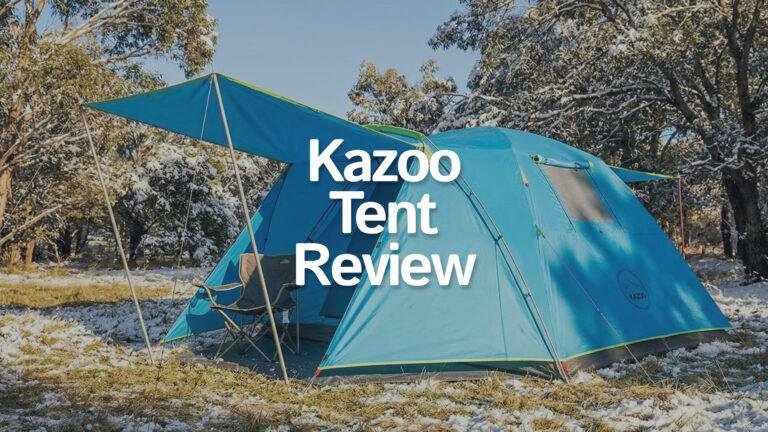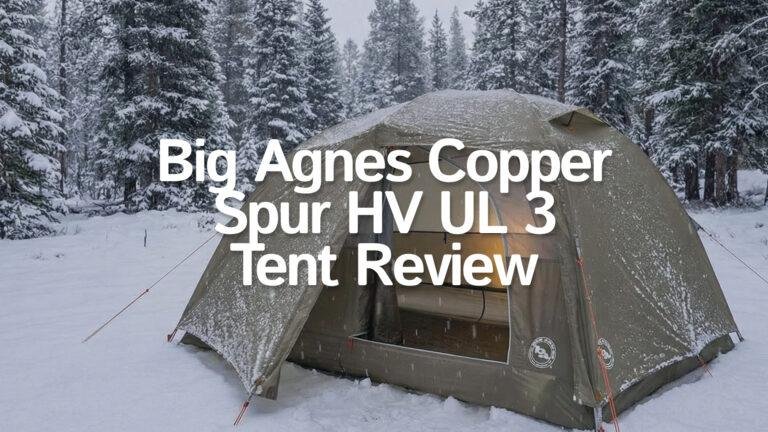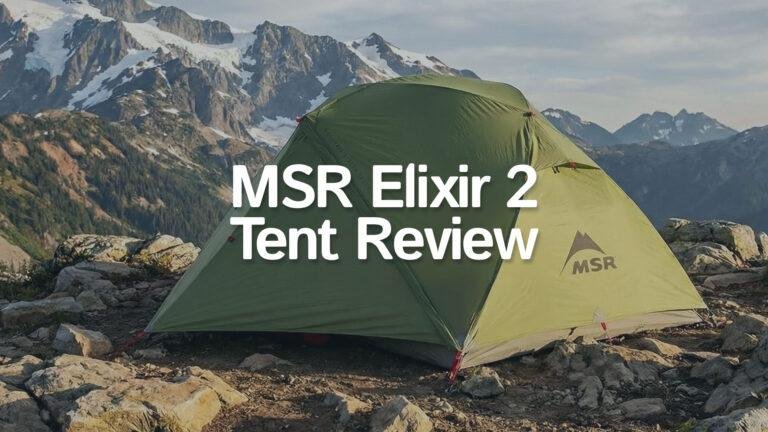

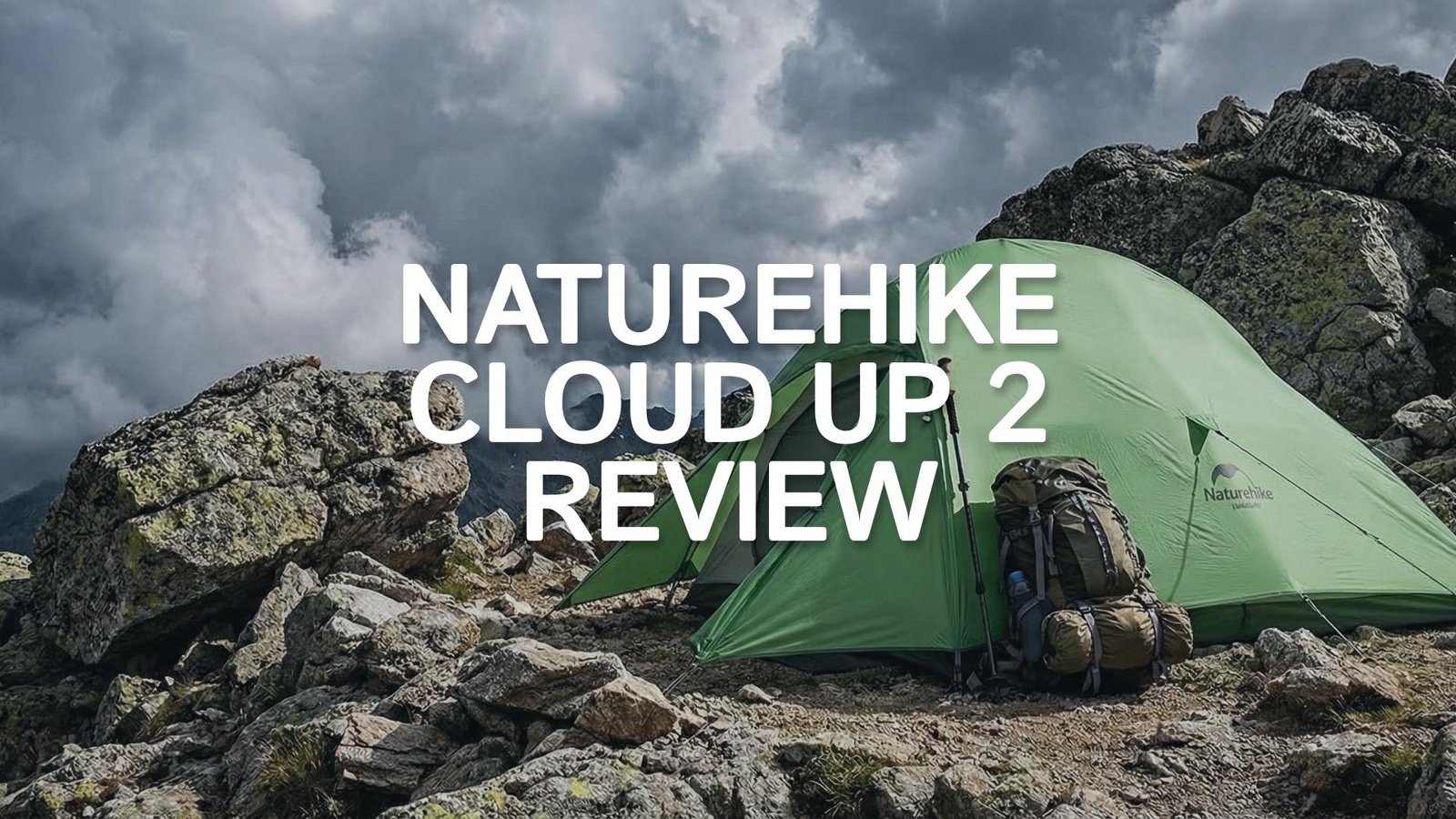
Ten years ago, if you walked into a campsite with a tent bought from a Chinese website, “serious” hikers would laugh at you. You were expected to mortgage your house for a Big Agnes or an MSR Hubba Hubba if you wanted to survive the night.
Then the Naturehike Cloud Up 2 arrived.
It didn’t just arrive; it kicked down the door of the ultralight gear world. It offered 90% of the performance of a $400 tent for a fraction of the price. It forced established brands to sweat. But is it actually any good, or is it just cheap?
I have spent the last few months testing the Naturehike Cloud Up 2 in conditions it probably wasn’t designed for: muddy Oregon trails, gusty ridge lines, and soaking wet weekends. Unlike my recent tests of massive family shelters like the Coleman Skydome 6 Person Tent, this test was about shaving grams and surviving with minimalism.
In this Naturehike Cloud Up 2 review, I am going to be brutally honest about its front-entry gymnastics, its condensation quirks, and whether it’s truly robust enough for the backcountry.
The Bottom Line Up Front (BLUF)
The Verdict: The Naturehike Cloud Up 2 is arguably the best value entry-level backpacking tent on the planet. It is lightweight, shockingly waterproof, and comes with a free footprint (something big brands charge $50 for). It is an unapologetic clone of the Big Agnes Fly Creek, and for most beginners, it performs just as well.
- Weather Resistance: 4.5 / 5
- Ease of Setup: 4.8 / 5
- Livability/Space: 3.8 / 5
- Durability: 4 / 5
- Value for Money: 4.9 / 5
4.4
Overall Score
The Catch: It is a “coffin” for two people. The single front entry forces you to crawl over your partner to pee at night. Ventilation can be tricky in humid conditions, and the 20D fabric requires care. It is a palace for one person, but a relationship test for two.
Pros
✓ Insane Value: You get a silicone-coated nylon tent for the price of a Walmart car camping tent.
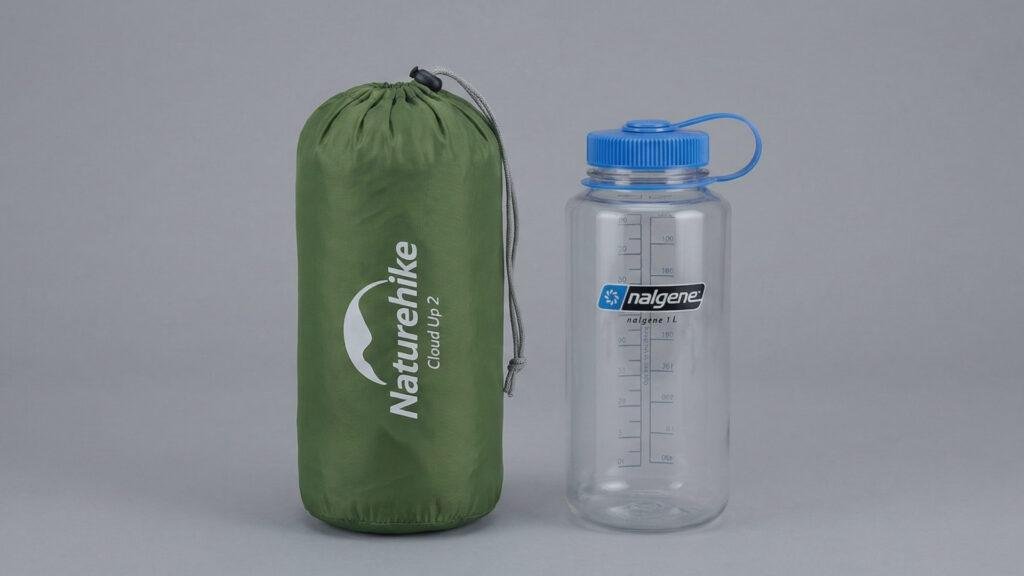
✓ Ultralight(-ish): At ~3.5 lbs (trail weight), it is light enough for serious multi-day hikes.
✓ Free Footprint: Naturehike includes the ground sheet in the box. This protects the thin floor.
✓ Waterproofing: The 4000mm rating on the 20D version is overkill. It sheds water like oil.
✓ Freestanding: The Y-pole structure stands on its own, making it easy to pitch on rocky ground.
✓ Easy Setup: Color-coded poles and clips make it pitchable in under 5 minutes.
Cons
✕ Front Entry: The single door at the head is awkward. Getting in and out requires yoga moves.
✕ Tight Squeeze: It is technically a 2-person tent, but better suited for 1 person + gear.
✕ Condensation: Older models lacked a rear vent. Ensure you get the “Upgraded” version with the vent.
✕ Thin Materials: 20D nylon is delicate. Watch out for sharp rocks and thorns.
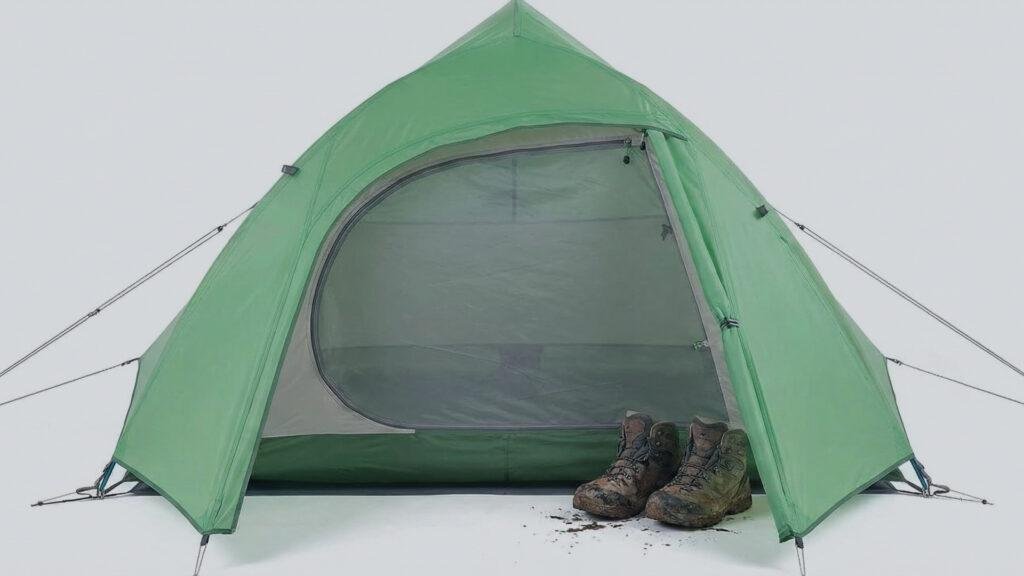
✕ Small Vestibule: Barely enough room for two pairs of boots and one pack.
Technical Specifications: 20D vs 210T
Before you buy, you need to know that there are two versions of this tent. They look identical in photos but are very different in hand.
| Feature | 20D Version (Recommended) | 210T Version (Budget) |
|---|---|---|
| Fabric | 20D Nylon (Silicone Coated) | 210T Polyester |
| Color | Usually Grey or Light Green | Usually Orange or Green |
| Waterproof Rating | PU 4000mm | PU 3000mm |
| Total Weight | ~3.8 lbs (1.7 kg) | ~4.6 lbs (2.1 kg) |
| Price | Higher ($130-$160) | Lower ($100-$120) |
| Durability | Lighter but requires care | Heavier and more abrasion resistant |
Caution: Spend the extra money for the 20D Version. If you are learning what to pack when camping, you know that saving a pound of weight on your back is worth its weight in gold. The silicone coating also lasts longer than the PU coating on the polyester version.
Design: The Big Agnes Clone
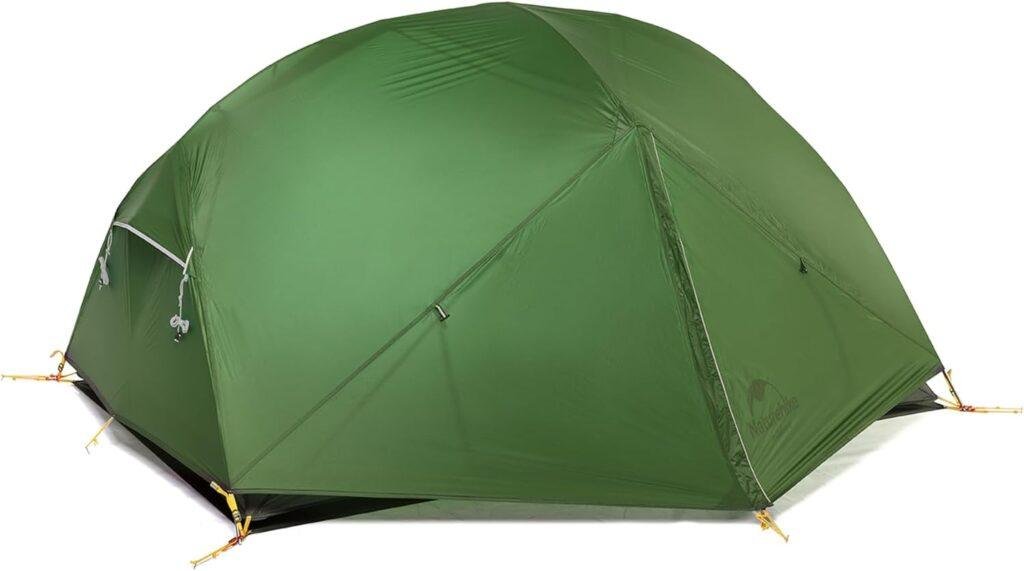
Let’s address the elephant in the room. The Naturehike Cloud Up 2 is a clone of the Big Agnes Fly Creek. The geometry, the single pole hub, and the front entry are nearly identical.
Why does this design work? It tapers at the feet to save weight. It uses a single hub to make setup foolproof. It sheds wind beautifully because of its low profile.
Why does this design fail? The front entry. In a side-entry tent (like the Naturehike Mongar), you can sit up and swing your legs out. In Cloud Up 2, you have to crawl into it headfirst like a burrowing animal. If there are two of you, the person in the back has to crawl over the person in the front to get out.
Setup: The “Y-Pole” System
Setting up this tent is a breeze, even if you are exhausted after 15 miles on the trail. It is “semi-freestanding,” meaning the pole structure holds the tent up, but you must stake out the foot corners to maximize volume.
- Lay it out: Put down the footprint (included!) and the inner tent.
- Assemble the Pole: It is one single aluminum spine that branches into a “Y” shape at the rear.
- Clip it: Insert the pole ends into the grommets and clip the inner tent to the spine.
- Fly On: Throw the rainfly over, buckle it at the corners, and this is critical, guy it out.
Because the tent walls are steep, if you don’t use the guy lines on the sides, the fly will touch the inner mesh. This causes condensation transfer. Read my guide on how to make tent camping more comfortable to understand why keeping your inner walls dry is priority number one.
Livability: The Cozy Coffin
Is it a 2-person tent? Yes.
Is it a comfortable 2-person tent? No.
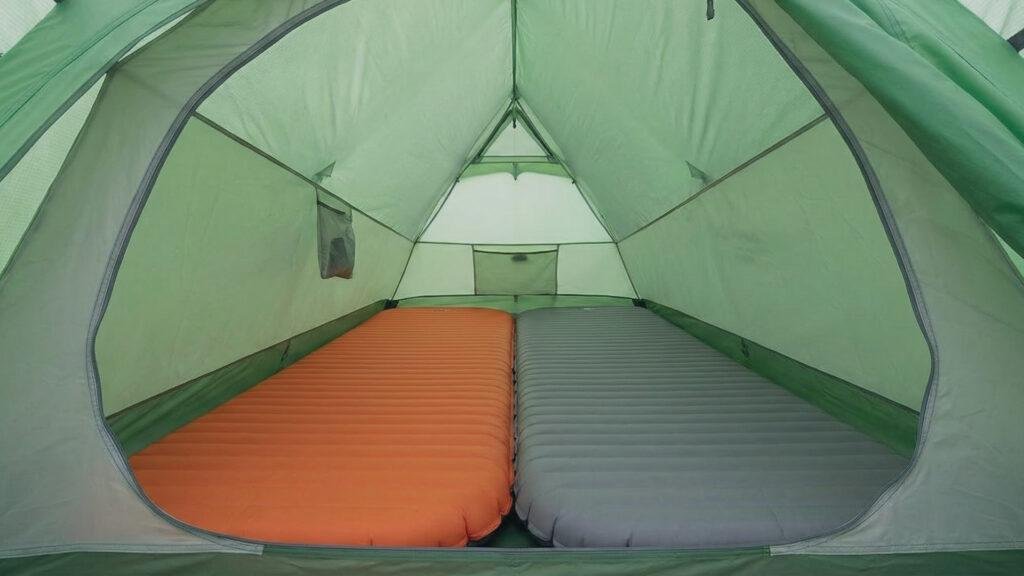
The floor width is roughly 49 inches at the head and tapers to 40 inches at the feet. Standard sleeping pads are 20 inches wide. Two pads will fit, but they will overlap slightly or touch the walls.
- Solo Hiker: This tent is a palace. You can bring your pack inside, spread out your map, and sleep diagonally.
- Couples: You better like each other. You will be shoulder-to-shoulder. If one person is broad-shouldered, the other one is getting squished.
- Dog Owners: Fine for one person + dog. Impossible for two people + dog.
Weather Performance: Rain, Wind, and Condensation
This is where budget tents usually fall apart. I took the Cloud Up 2 into a nasty coastal squall to see if it would leak.
Rain Protection
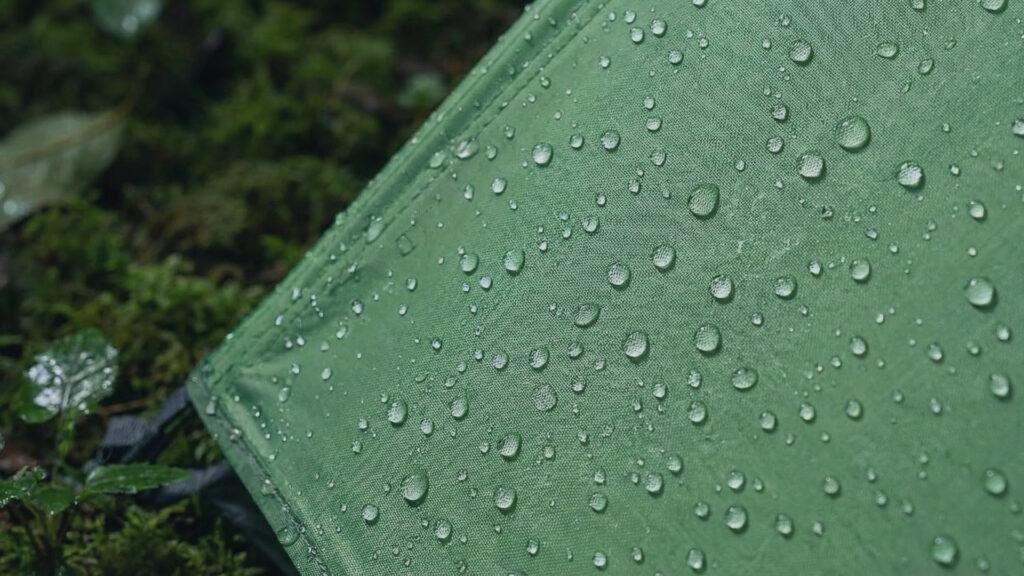
The 20D silicone-coated nylon is impressive. Water beads up and rolls off instantly. The seams are factory taped. I experienced zero leakage through the fly even after 8 hours of steady rain.
However, Silnylon sags when wet. This is a property of the fabric. After a few hours of rain, the fly might sag and touch the inner tent. You need to get out and re-tension the guy lines. This is annoying, but normal for nylon tents.
Wind Stability
Aerodynamically, the Cloud Up 2 is a wedge. If you pitch the foot of the tent into the wind, it slices through gusts effortlessly. If the wind hits the broad side, it will deform, but the aluminum poles are flexible enough to bounce back. If you are asking, is tent camping safe in high winds? With this tent, yes, provided you stake it out properly.
Condensation
The older version of this tent had zero vents. It was a sweatbox. The Upgraded Version (which is what you should buy) has a small vent at the rear and tie-outs on the sides to pull the fly away from the mesh.
Even with the vent, single-door tents struggle with airflow. On humid nights, expect some moisture on the inside of the fly. Keep your sleeping bag away from the walls to avoid soaking the footbox.
Durability: Handle with Care
To get the weight down to 3.5 lbs, Naturehike uses 20D (Denier) fabric. For comparison, the Core 9 Person Instant Cabin Tent uses 68D fabric. The Cloud Up 2 material feels like tissue paper.
It is stronger than it looks (ripstop nylon is amazing), but it is not puncture-proof.
The Zippers: They use decent zippers, but they are small (#3 size). Do not yank them. Keep them clean.
The Floor: It is thin. I strongly recommend always using the included footprint. If you camp on gravel or pine needles without it, you will get pinholes. If you ever find mold developing because you packed it wet, check my guide on how to clean a tent with mold. This fabric is sensitive to harsh scrubbers.
Comparisons: What Else Should You Buy?
Naturehike Cloud Up 2 vs. Big Agnes Fly Creek HV UL
- Big Agnes: Weighs ~2 lbs. Costs $300+. Thinner materials (15D).
- Naturehike: Weighs ~3.8 lbs. Costs $135. Thicker materials (20D).
- Verdict: Unless you are thru-hiking the PCT and counting every gram, save the $200 and get the Naturehike. The weight difference is noticeable but manageable for weekend warriors.
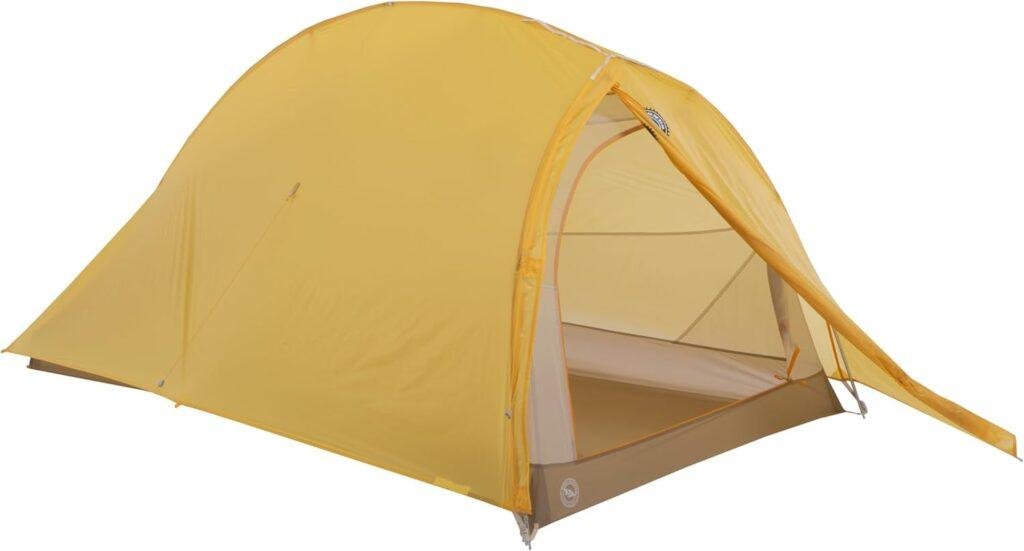
Big Agnes Fly Creek HV UL Bikepack – Ultralight Bike-Packing Tent
Naturehike Cloud Up 2 vs. Naturehike Mongar 2
- Mongar 2: Side entry, two doors, two vestibules. Heavier (~4.5 lbs).
- Cloud Up 2: Front entry, one door, one vestibule. Lighter (~3.8 lbs).
- Verdict: If you are hiking solo, get the Cloud Up 2 to save weight. If you are hiking with a partner, get the Mongar 2. The dual doors save relationships.
Naturehike Mongar 2 Person 3 Season Camping Tent Ultralight Backpacking Tent for Hiking Cycling
For budget backpackers, this is a solid choice. To see how it compares to premium options or ultralight alternatives, check our guide to the best camping tents.
Who is this Tent For?
The Ideal User
- The Solo Backpacker: You want luxury space for one person without carrying a heavy tent.
- The Beginner: You want to start backpacking but are scared of the $400 price tags at REI.
- The Scout: Perfect for Boy Scouts/Girl Scouts who need their own reliable shelter.
The Wrong User
- The Claustrophobic Couple: Seriously, don’t do it. You will hate the front entry.
- The Car Camper: If you are camping near your car, buy something bigger like the Coleman Skydome. There is no need to suffer in a tiny tent if you aren’t carrying it.
- The Winter Camper: While sturdy, the mesh inner makes it too drafty for snow camping. Read how to stay warm camping in a tent for better 4-season strategies.
Essential Accessories
The tent comes ready to rock, but a few tweaks make it better:
- Better Stakes: The included aluminum V-stakes are actually pretty good! But carrying 4 extra MSR Groundhogs for the critical guy lines is smart.
- Gear Loft: There is a hook inside for a light, but adding a small mesh gear loft (often sold separately) helps organize glasses and phones.
- Tyvek Sheet: If you want to go ultra-ultralight, ditch the heavy included footprint and cut a piece of Tyvek house wrap to size.
Note: Some people ask can you tent camp in an RV site with this? Yes, and the small footprint fits anywhere. Just be careful on the gravel pads, use that footprint!
FAQ: Frequently Asked Questions
Yes! Unlike almost every American brand, Naturehike includes a custom-sized ground sheet in the bag. This is a massive value add.
It is “semi-freestanding.” The main body stands up on its own, but the foot corners will collapse inward if not staked out. You need at least 2 stakes for the feet to get the full volume.
Yes, but it is tight. You can fit one large 65L pack and a pair of boots. If you have two people, the second pack might need to stay outside (bring a pack cover) or be jammed inside under your legs.
No, it’s just heavier and bulkier. If you are on a strict budget (under $100), it works fine. But the 20D version is significantly better for backpacking due to weight savings.
Look at the back of the rainfly. If there is a small guy-out point in the center of the rear panel and a vent near the top, it is the upgraded version. Also, the upgraded version has a “Y” pole hub at the back, whereas the old version just had a single pole spine.
Some users report a “fishy” smell when first unpacking silnylon tents. This is normal for some coatings. Air it out in your backyard for 24 hours and the smell disappears.
Yes, but it requires practice. You can lay the fly out first and clip the inner tent to it from underneath. It is fiddly, but possible. Check my guide on how to plan a camping trip for more wet weather tips.
Conclusion: The Verdict
The Naturehike Cloud Up 2 is a legend for a reason. It democratized lightweight backpacking. It proved that you don’t need to be rich to hike the Pacific Crest Trail.
Is it perfect? No. The front entry is annoying, and the interior is tight. But when you look at the price tag, those complaints fade away. If you are a solo hiker looking to drop pounds from your pack without dropping a fortune, this is the tent to buy.
See you on the trail!