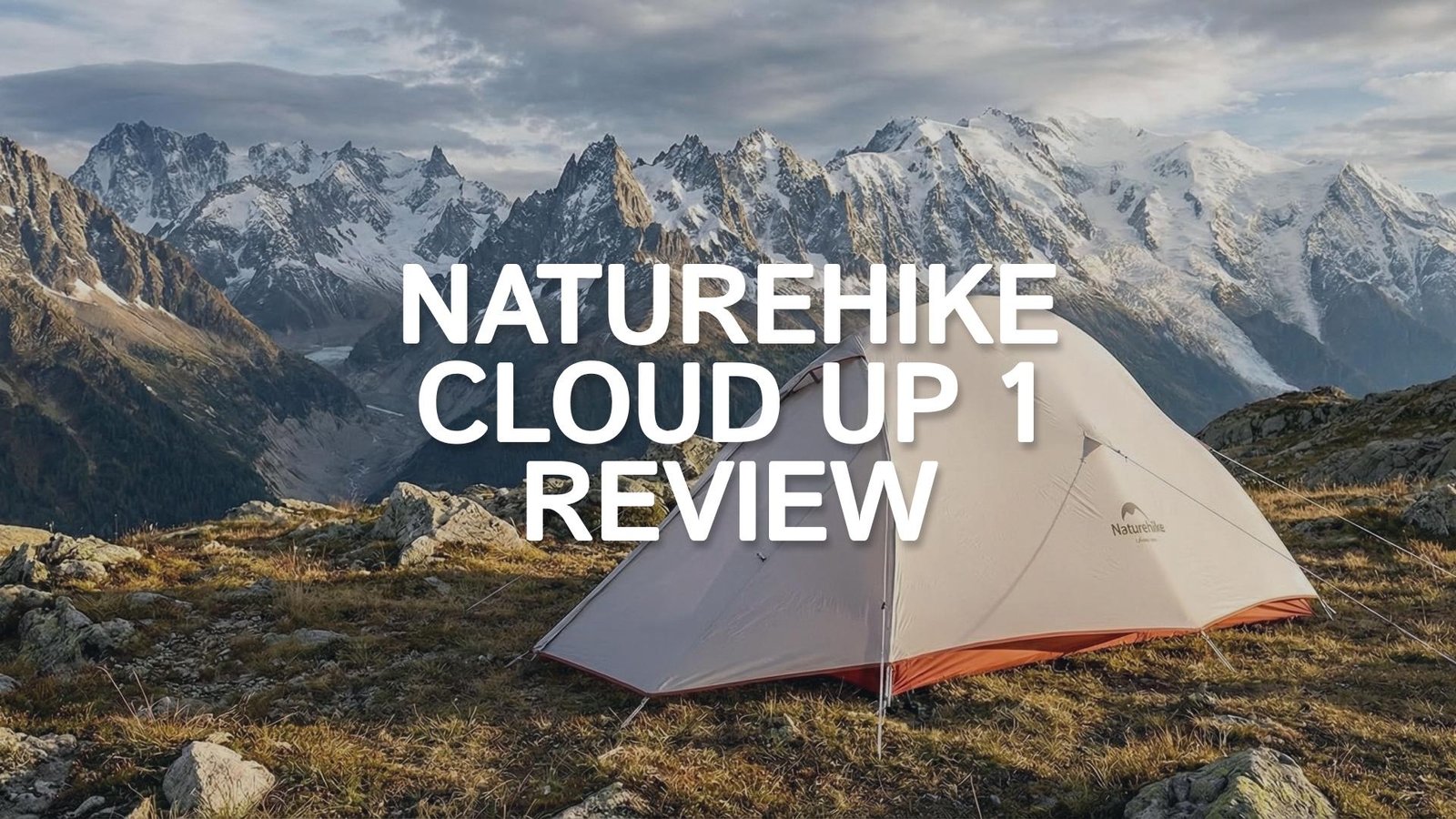

There is a specific kind of freedom that comes with solo backpacking. You don’t have to wait for anyone. You don’t have to share your snacks. And you certainly don’t have to carry a massive tent designed for three people just to get some sleep.
For years, if you wanted a dedicated 1-person ultralight tent, you had to spend $350 on a Big Agnes Fly Creek or suffer in a claustrophobic bivvy sack. Then came Naturehike Cloud Up 1. It promised the same specs as the big American brands for a third of the price.
I recently reviewed the Naturehike Cloud Up 2, and I called it the budget king of backpacking. But the 1-person version is a different beast. It is lighter, smaller, and let’s be honest, much tighter. Is it a legitimate shelter for serious solo hikers, or is it just a glorified coffin?
In this Naturehike Cloud Up 1 review, I took the upgraded “Pro” version (20D Nylon) into the wilderness to see if I could survive a weekend without getting soaking wet or going crazy from the lack of space.
The Bottom Line Up Front (BLUF)
The Verdict: The Naturehike Cloud Up 1 (Pro 20D) is the best bang-for-your-buck solo tent on the market, period. At roughly 3.3 lbs (packed) and often under $130, it beats almost anything else in its weight class. The materials are robust, and the weatherproofing is legit.
- Weather Resistance: 4.5 / 5
- Ease of Setup: 4.8 / 5
- Livability/Space: 3 / 5
- Durability: 4 / 5
- Value for Money: 4.9 / 5
4.2
Overall Score
The Catch: It is small. If you are over 6’0″ or broad-shouldered, it will feel tight. The front-entry design requires crawling, and the vestibule is barely large enough for boots and a pack. It is perfect for smaller hikers or minimalists, but larger hikers should just buy the Cloud Up 2 for the extra 8 ounces of weight.
Pros
✓ Ultralight Price: You get near-ultralight performance for a fraction of the cost of premium brands.
✓ Small Footprint: You can pitch this tent on a tiny ledge or between tight trees where larger tents won’t fit.
✓ Free Footprint: Naturehike includes the ground sheet, adding massive value and protection.
✓ Storm Worthy: The low profile sheds wind effortlessly. The 20D silicone nylon is highly waterproof.
✓ Freestanding: The Y-pole spine allows it to stand up on rocky ground before staking out the corners.
✓ Packability: It packs down to the size of a large loaf of bread.
Cons
✕ The Coffin Factor: It is narrow. You cannot spread out. It is strictly for sleeping.
✕ Front Entry: Crawling in head-first is annoying, especially in the rain or with muddy boots.
✕ Limited Headroom: You can only sit up in one specific spot near the door.
✕ Condensation: Like all small tents, breath moisture builds up quickly if you don’t ventilate well.
✕ Vestibule Size: It’s tiny. Your pack will likely be pressing against the inner mesh door.
Technical Specifications: Pro vs. Standard
It is crucial to know what you are buying. The link I reviewed is the Cloud Up 1 Pro (20D). There is also a cheaper “Standard” (210T) version. Here is why you want the Pro.
| Feature | Cloud Up 1 Pro (20D) | Cloud Up 1 Standard (210T) |
|---|---|---|
| Fabric | 20D Silicone Coated Nylon | 210T Polyester |
| Waterproof Rating | PU 4000mm (Better) | PU 3000mm (Good) |
| Trail Weight | ~2.6 lbs (1.2 kg) | ~3.3 lbs (1.5 kg) |
| Packed Weight | ~3.3 lbs (with footprint) | ~3.9 lbs (with footprint) |
| Pole Material | 7001 Aluminum Alloy | 7001 Aluminum Alloy |
| Floor Size | 83″ x 43″ (tapers to 30″) | Same |
Advice: Always choose the 20D Nylon (Pro) version. The weight savings are significant for a solo hiker, and the silicone coating lasts longer than the PU coating on the polyester version. When learning what to pack when camping, saving a pound on your shelter allows you to bring better food or a warmer sleeping bag.
Design: The Solo Shelter Philosophy
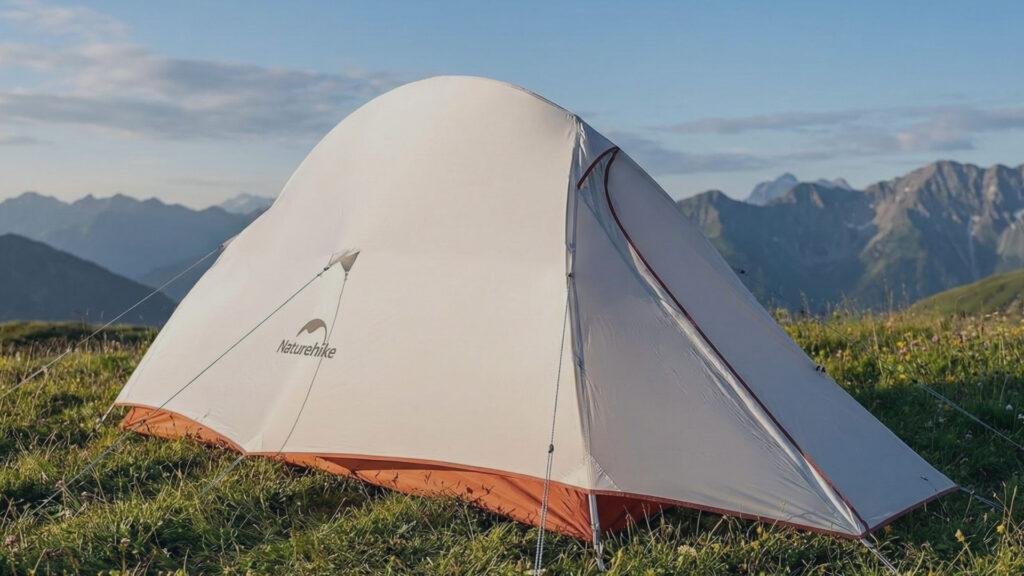
The Naturehike Cloud Up 1 is designed with one goal: to keep you dry while weighing as little as possible. It uses a single hubbed pole system that branches into a “Y” at the rear. This creates a semi-freestanding structure.
The “Coffin” Reality Check
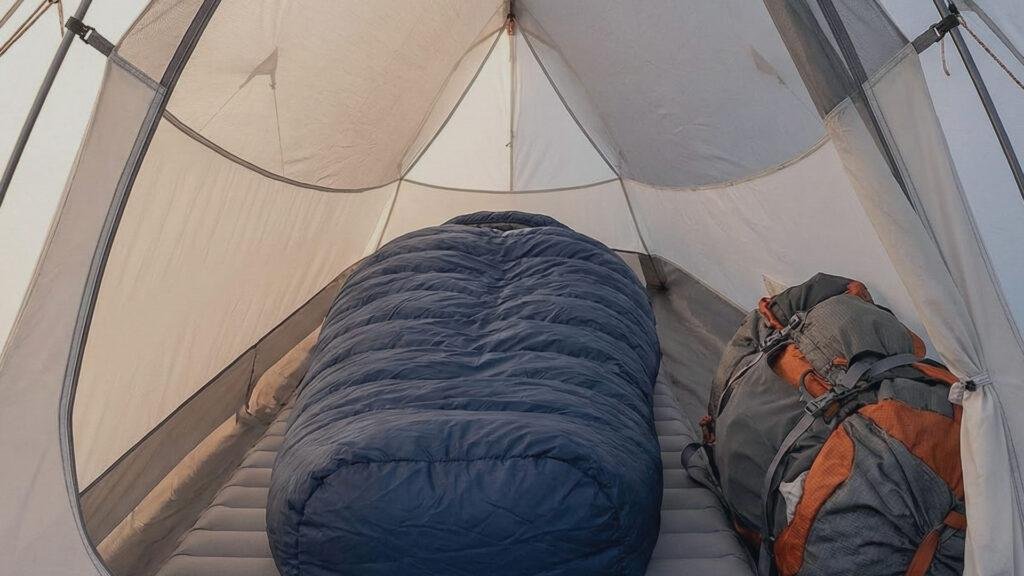
Let’s not sugarcoat it. This tent is small. The floor width at the head is roughly 43 inches, but it tapers aggressively to about 30 inches at the feet.
Livability: You can fit a standard sleeping pad and have a few inches on the side for your phone and headlamp. That’s it. Your backpack will likely need to stay in the vestibule or be wedged under your legs. If you are claustrophobic, this is not the tent for you. Look at the Naturehike Cloud Up 2 instead; it effectively serves as a luxury 1-person palace.
The Front Entry
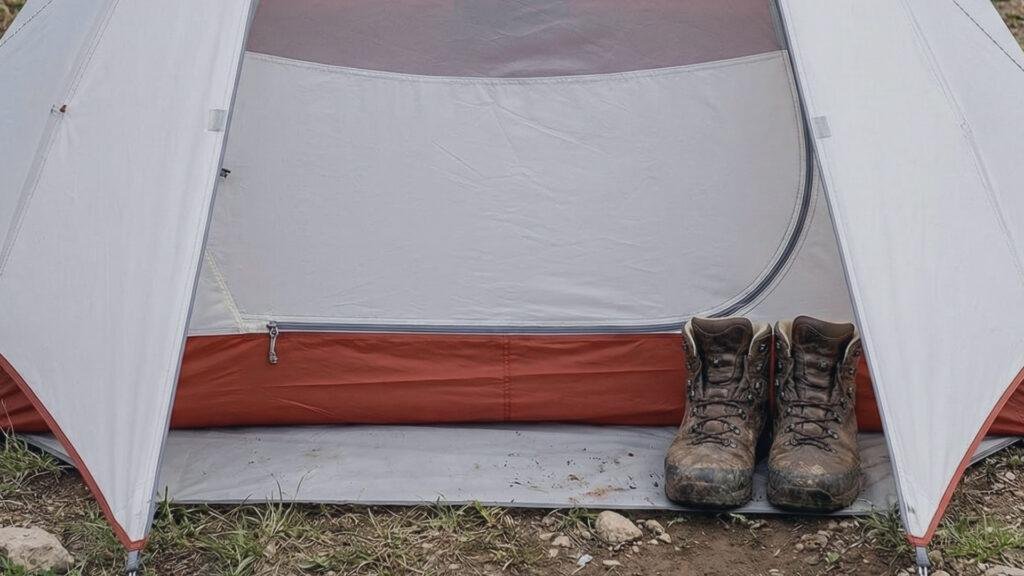
Like the Big Agnes Fly Creek it copies, the Cloud Up 1 has a single door at the head. To get in, you crawl. To get out, you crawl. This is fine for sleeping, but if you are trying to cook in the rain or put your boots on, it is awkward. It requires flexibility.
Setup: Fast and Foolproof
One of the best things about this tent is how fast it goes up. I timed myself: 3 minutes and 45 seconds from bag to pitched.
- Lay out footprint & inner: Stake the corners.
- Assemble pole: It’s one single piece. Snap it together.
- Insert & Clip: Put pole tips in grommets, clip the inner tent to the spine.
- Fly & Guy: Throw the fly over, buckle it, and guy out the sides.
Because it is so small, you can set it up in tight spaces, between roots, on narrow ridgelines, or in stealth spots where a Coleman Sundome 4 would never fit. Is tent camping safe when solo? Being able to pitch discreetly and quickly adds a layer of safety.
Weather Performance: Tiny but Mighty
Smaller tents are inherently stronger in the wind because they have less surface area. The Cloud Up 1 is an aerodynamic wedge.
Wind Stability
I pitched this on an exposed ridge with 25mph gusts. While larger tents were flapping like flags, the Cloud Up 1 barely shuddered. If you stake out the guy lines properly, it can handle serious weather. The low profile lets the wind pass right over it.
Rain Protection
The 20D Silnylon is fantastic. I encountered a heavy downpour, and the interior stayed dry. The bathtub floor rises high enough to prevent splashback.
The Caveat: The vestibule is small. If you leave your pack in the vestibule, make sure it isn’t pressing against the mesh door, or it might get damp from splash or condensation transfer.
Condensation Management
Small tents heat up fast (good for warmth!) but collect moisture fast (bad for sleeping bags). The Pro version has a rear vent and guy-out points to pull the fly away from the mesh. It handles condensation better than the older models, but on humid nights, expect some dampness on the fly. Keep your down sleeping bag away from the walls.
Durability: 20D vs The World
The fabric is thin. That is the trade-off for the light weight. However, it is a ripstop weave. I have dragged it over pine needles and rocks without issue, largely thanks to the included footprint. Never leave the footprint at home. It is the shield that keeps your floor waterproof.
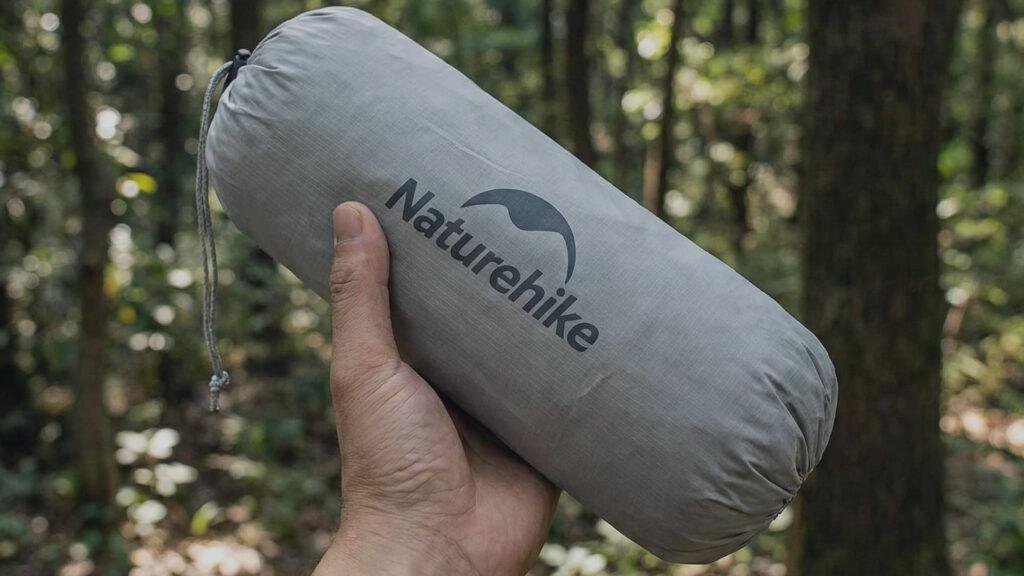
Care Tip: If you pack it wet, silnylon can develop mildew. As soon as you get home, set it up to dry. Read my guide on how to clean a tent with mold if you make the mistake of leaving it in the stuff sack for a week.
Comparison: Cloud Up 1 vs. Cloud Up 2
This is the most common question I get. “Should I get the 1P or the 2P for solo hiking?”
Naturehike Cloud Up 1 (1P)
- Weight: ~3.3 lbs packed.
- Space: Tight. Just for sleeping.
- Warmth: Warmer because your body heat fills the small volume efficiently. Check how to stay warm camping in a tent, for why smaller volume is better in winter.
- Best For: Minimalists, fast-packers, smaller hikers.
Naturehike Cloud Up 2 (2P)
- Weight: ~3.8 lbs packed.
- Space: Luxury for one. Room for pack inside.
- Difference: Only about 0.5 lbs heavier.
- Verdict: Unless you are counting every single gram, I usually recommend the Cloud Up 2 for solo hikers. The extra 8 ounces gives you double the space, which is worth it for comfort. Buy the Cloud Up 1 only if you are strictly cutting weight.
This is a great solo shelter, but is it better than a freestanding ALPS tent? We pit them head-to-head in our best camping tents roundup.
Who Should Buy This Tent?
The Ideal User
- The Thru-Hiker on a Budget: You want to hike the AT or PCT but can’t afford a $600 Zpacks tent. This will survive the journey.
- The Bikepacker: The short pole segments (approx 16 inches) fit easily between handlebars or in panniers.
- The Scout/Teenager: A perfect first backpacking tent for a scout who wants independence.
The Wrong User
- The Tall Hiker: If you are over 6’0″, your feet will touch the sloping roof. Get the Cloud Up 2 or Mongar.
- The Dog Owner: There is zero room for a dog unless it is a Chihuahua.
- The Car Camper: Why suffer in a coffin? If you are near your car, get the Coleman Skydome or even the Sundome 4 for space.
Essential Accessories
To maximize the Naturehike Cloud Up 1, consider these additions:
- Reflective Guy Lines: The included lines are okay, but upgrading to highly reflective cord prevents you from tripping over them in the dark.
- Gear Loft: There is a hook, but adding a small mesh loft helps organize glasses and phones in the tight space.
- Compression Sack: The included bag is a roll-top dry bag style, which is great, but you can compress this tent down to the size of a grapefruit with a compression sack.
Note: Can you use this at an RV site? Yes. If you are wondering, can you tent camp in an RV site with a 1-person tent? Absolutely. It takes up so little room you can pitch it on the grass strip behind the pad easily.
FAQ: Frequently Asked Questions
The “trail weight” (tent + fly + poles) is closer to 2.6 lbs. The “packed weight” (adding stakes, footprint, bags) is around 3.3 to 3.5 lbs. For a $130 tent, this is exceptional.
It is “semi-freestanding.” The spine supports the tent, but the rear corners must be staked out to give the footbox its width. In a pinch on a wooden platform, you can pitch it without stakes, but it will be narrow at the feet.
Yes, provided you treat it with respect. Don’t wear boots inside. Clear the ground of sharp sticks. Always use the footprint.
A “Wide” pad (25 inches) will fit, but it will take up almost the entire width of the floor. You won’t have room on the sides for gear.
Barely. It fits muddy boots and maybe a 50L pack if you lean it carefully. Do not expect to cook in the vestibule unless you are very careful about ventilation and fire safety.
The Fly Creek UL1 is lighter (approx 2 lbs) but costs $350+. The Cloud Up 1 is heavier (approx 3.3 lbs) but costs ~$130. Design-wise, they are 95% identical. You are paying for the lighter materials with Big Agnes.
Wrapping Up
The Naturehike Cloud Up 1 is a marvel of budget engineering. It strips away everything you don’t need to give you exactly what you do: a safe, dry, lightweight place to sleep.
It isn’t a palace. It’s a shelter. But for solo hikers who want to go further and lighter without emptying their bank account, it is the best option available today. It proves that ultralight backpacking belongs to everyone, not just the wealthy.
See you on the trail!