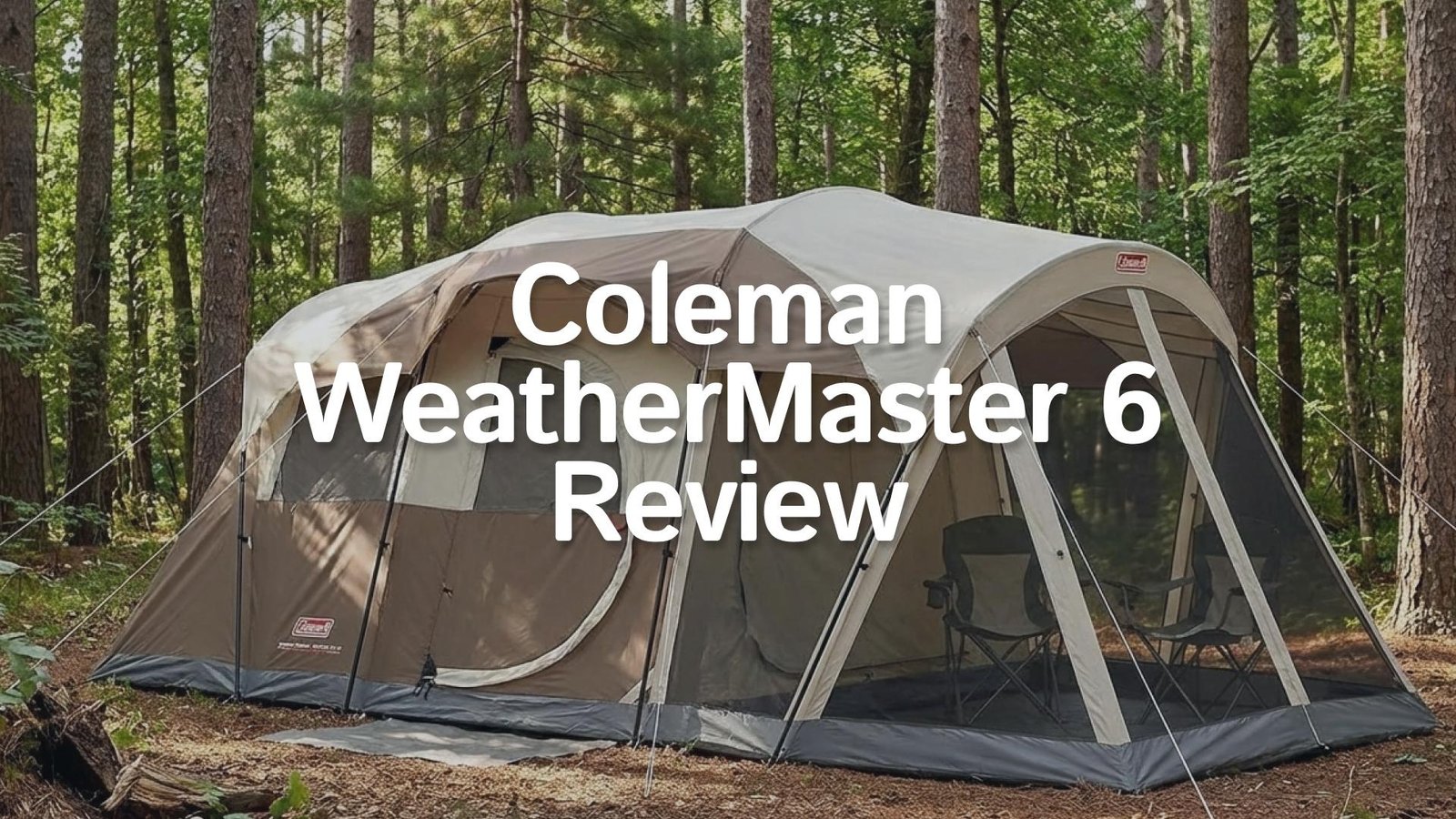

If you are looking for a detailed Coleman WeatherMaster 6 review, you have come to the right place. Finding a tent that balances sleeping space with a usable living area is one of the hardest parts of planning a family camping trip.
We have all been there: you arrive at the campsite, set up your shelter, and immediately get swarmed by mosquitoes. You retreat inside the hot, stuffy sleeping cabin, wishing you had somewhere to sit that was outdoors but bug-free.
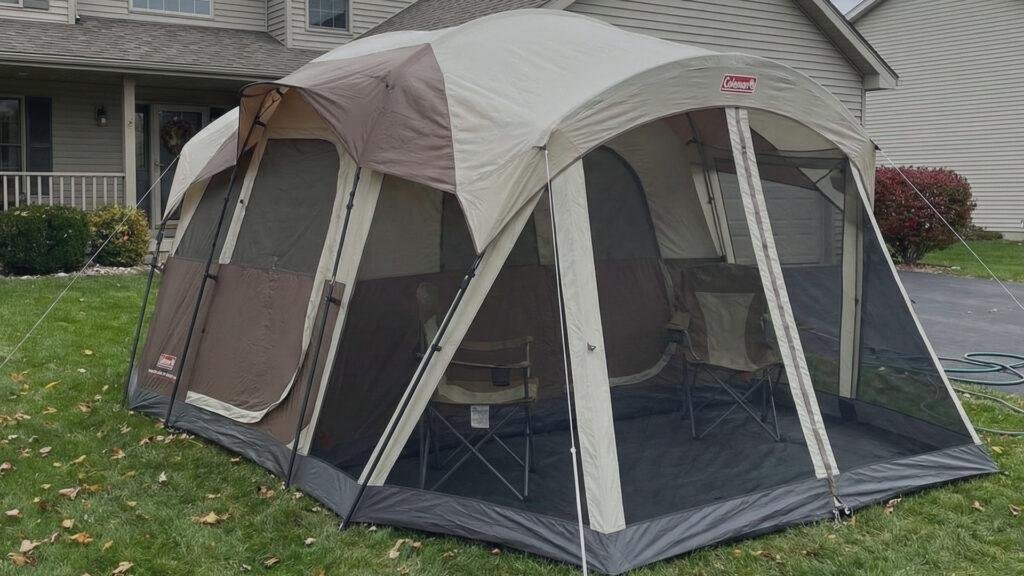
That is exactly the problem the Coleman WeatherMaster 6 Person Tent with Screen Room aims to solve. It is not just a place to sleep; it is a two-room sanctuary designed to give you a front porch in the wilderness.
In this comprehensive review, we are going to tear down every feature of this massive shelter. We will analyze its weather resistance, the practicality of that famous hinged door, and whether the screen room is a game-changer or a gimmick.
We will also compare it against some of the other heavy hitters we have reviewed, like the Core 9 Instant Cabin and the Coleman Skydome 6, to see if this classic model still holds the crown for family comfort.
Quick Verdict
Ideally Suited For: Families of 3-5 people who camp in summer weather and prioritize bug protection over speed of setup.
The Bottom Line: The Coleman WeatherMaster 6 is the “minivan” of tents; practical, spacious, and designed entirely for family convenience. Its screen room is a standout feature that provides a rare bug-free lounge area, and the hinged door is arguably the best door design on the market for kids.
However, it is heavy, takes patience to set up, and isn’t built for severe storms. If you want a comfortable basecamp for fair-weather weekends, this is a fantastic value. If you need something that pitches in 2 minutes, look elsewhere.
- Space & Comfort: 5/5
- Weather Resistance: 3.8/5
- Ease of Setup: 3.5/5
- Ventilation: 5/5
- Durability: 4.2/5
4.3
Overall Score
Pros and Cons
Before we dive into the nitty-gritty details, here is a quick snapshot of what makes this tent shine and where it might fall short for your specific needs.
✓ Spacious Screen Room: Provides a floorless, bug-free area for lounging, dining, or storing wet gear without dirtying the sleeping area.
✓ Hinged Door: The patented rigid door swings open and shut like a real door, making it incredibly easy for kids and adults to enter and exit.
✓ Excellent Ventilation: Large angled windows can be kept open even during light rain, promoting airflow and reducing condensation.
✓ Roomy Interior: The main cabin easily fits two queen-size airbeds with walking room to spare.
✓ High Center Height: With a peak height of 6 feet 8 inches, almost everyone can stand up straight inside.
✓ E-Port Access: Makes it simple to bring electrical power inside for charging devices or running a fan.
✕ Heavy and Bulky: Weighing over 32 pounds, this is strictly a car camping tent and takes up significant trunk space.
✕ Screen Room Rain Vulnerability: The screen room does not have rain panels or a sealed floor, so it can get wet during storms.
✕ Setup Time: It uses a traditional pole setup which takes significantly longer than instant tents like the Core 9 or Gazelle T4.
✕ Fiberglass Poles: While sturdy, fiberglass poles can be prone to splintering under extreme stress compared to aluminum.
Product Specifications
| Feature | Specification |
|---|---|
| Product Name | Coleman WeatherMaster 6-Person Tent with Screen Room |
| Sleep Capacity | 6 People (Fits 2 Queen Airbeds) |
| Dimensions | 17 ft x 9 ft (Total Footprint) | 11 ft x 9 ft (Main Room) | 6 ft x 9 ft (Screen Room) |
| Center Height | 6 ft 8 in (80 inches) |
| Weight & Packed Size | 32 lbs (14.5 kg) | 41 in x 10 in x 9 in |
| Estimated Setup Time | 20–30 Minutes (First time) | 15–20 Minutes (Experienced) |
| Recommended Setup Crew | 2 People (Solo setup is difficult due to pole tension) |
| Pole Material | 19mm Steel (Legs), 11mm Fiberglass (Roof), 6.3mm Fiberglass (Hinged Door) |
| Fabric Materials | 75D Polyester Taffeta (Body/Fly), 68D Polyester Mesh, 1000D Polyethylene (Floor) |
| Waterproofing | WeatherTec System with welded floors and inverted seams |
| Ventilation | 6 Angled Windows + Mesh Roof (Variflo System) |
| Door Configuration | 1 Hinged Front Door, 1 Standard Zippered Back Door |
| Internal Storage | Mesh gear pockets sewn into walls (No gear loft included) |
| Power Access | Zippered E-Port for electrical cords |
The Screen Room: A Game Changer for Families
The defining feature of the Coleman WeatherMaster 6 is undoubtedly the attached screen room. If you read our article on how to plan a camping trip, you know that anticipating the environment is key. If your environment includes mosquitoes, flies, or gnats, this screen room converts your camping experience from a battle for survival into a relaxing vacation.
The screen room measures 9 feet by 6 feet. It is distinct from the sleeping area, separated by a zippered internal door. This layout is brilliant for several reasons. First, it acts as a “mudroom.” You can take off muddy boots and wet raincoats in the screen room before entering the dry sleeping zone. This helps keep the inner tent pristine, which is a major tip we often share when discussing how to clean a tent with mold prevention in mind. Keeping moisture and dirt out is step one.
However, it is important to manage expectations. The screen room is floorless. This is a design choice that allows rain to drain directly into the ground rather than pooling on a tarp. While this makes it excellent for sitting in chairs, it is not an extra sleeping room during rainy weather. If you plan to have someone sleep there, you will need a cot and perfect weather, as the mesh walls do not have zip-up privacy panels or storm flaps. It is a lounge, not a bedroom.
Interior Space and Livability
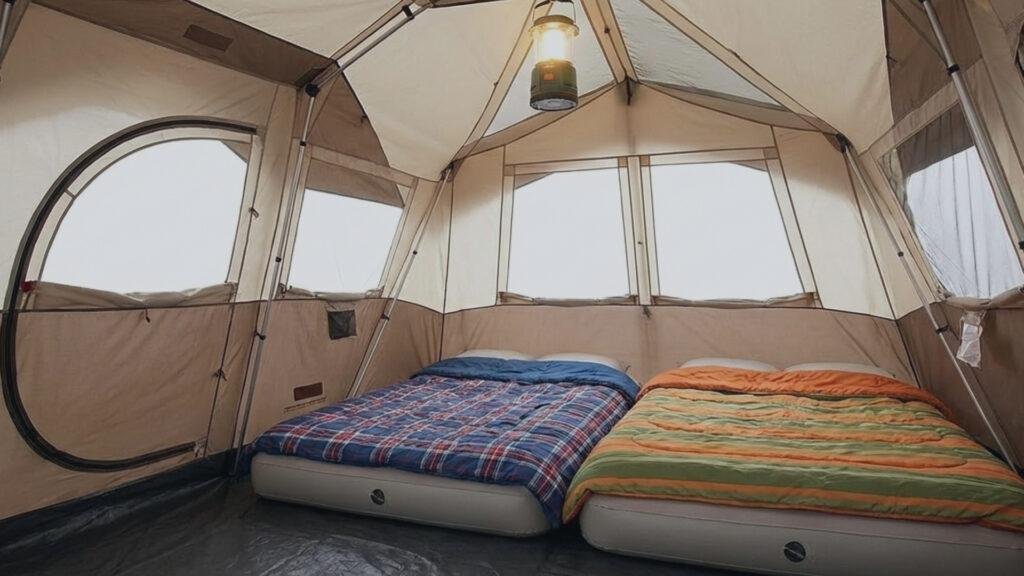
When you step through the screen room and into the main cabin, you are greeted by a massive 11-by-9-foot sleeping area. For a family of four, this feels like a palace. You can easily fit two queen-sized air mattresses side-by-side and still have a narrow alleyway for luggage.
The verticality of the walls is a significant advantage over dome-style tents like the Coleman Sundome 4 person tent. While the Sundome is a great budget starter tent, its sloping walls can make the interior feel cramped for adults. The WeatherMaster, by contrast, uses a cabin-style frame with steeper walls, maximizing the usable square footage.
The center height is 6 feet 8 inches. Unless you are an NBA player, you will be able to stand up straight to change clothes, which is a luxury you simply cannot appreciate until you have tried to wriggle into jeans while lying down in a small trekking tent like the Naturehike Cloud Up 1.
The Famous Hinged Door
We cannot write a Coleman WeatherMaster 6 review without highlighting the hinged door. It sounds like a minor detail, but practically, it is revolutionary. Traditional fabric doors require you to unzip and zip every single time you enter or exit. In a family scenario with kids running in and out 50 times an hour, the zippers often get snagged, or worse, kids leave them unzipped, letting bugs in.
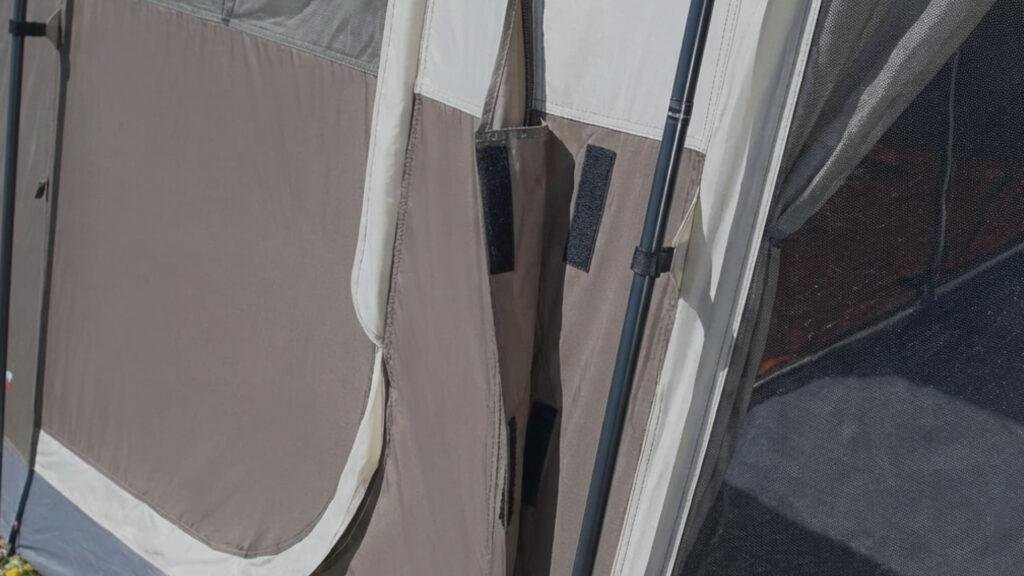
The WeatherMaster features a rigid pole that slides into the door fabric, allowing it to swing open and stick shut with velcro tabs. It functions just like the door at your house. You can just push through it, and it closes behind you. For parents, this peace of mind is worth the price of admission alone.
Weather Resistance: The WeatherTec System
Coleman markets their waterproofing under the banner of the “WeatherTec System“. But what does that actually mean for you when a storm rolls in?
The system relies on inverted seams and welded floors. Traditional tent floors are stitched together, creating needle holes that water can seep through. Coleman melts the floor material together, eliminating needle holes entirely in the critical bottom areas. During our research, we found that this “bathtub” style floor is highly effective at keeping ground moisture out.
However, the rainfly design on the WeatherMaster 6 is minimal. It covers the mesh roof of the main cabin but does not extend all the way down the sides or cover the screen room mesh. This is a trade-off. It provides excellent ventilation but makes the tent vulnerable in high winds with sideways rain. If you are asking is tent camping safe in a severe thunderstorm with this tent, the answer is yes, structurally it will hold, but you might get some misting inside if the wind is blowing rain directly into the exposed windows.
The screen room is the weak point in heavy weather. Because the rainfly does not cover the screen walls, rain will enter the screen room. Since the floor is open to the ground, this is generally fine, but it means you cannot store gear there that needs to stay 100% dry during a downpour.
Ventilation and Airflow
One of the biggest challenges discussed in our guide on how to stay warm camping in a tent is condensation. Ironically, the best way to stay dry and warm is often better airflow to prevent your breath from freezing on the walls.
The WeatherMaster excels here. It features Coleman’s “Variflo” adjustable ventilation system. The windows are angled in such a way (reverse angle) that you can actually keep them partially unzipped even while it is raining, provided the wind isn’t driving the rain upward. This constant airflow helps mitigate the “greenhouse effect” that plagues many large polyester tents.
The entire roof of the main cabin is mesh. On clear nights, you can remove the rainfly for stargazing. While it might not offer the panoramic, uninterrupted views of a specialized stargazing hub like the Gazelle T4 hub tent, it is still a wonderful feature for summer camping.
Setup and Ease of Use
If you are coming from an instant tent background, perhaps having used the Core 9 Person Instant Cabin Tent, the setup of the WeatherMaster will feel like a step back in time. This is a traditional pole-and-sleeve tent.
The setup involves sliding long fiberglass poles through fabric sleeves on the roof and connecting them to steel leg poles. While Coleman has implemented a color-coded system (Insta-Clip attachments) to reduce confusion, it is undeniably a two-person job. A solo parent will struggle to raise the main structure without bending the poles.
Step-by-Step Setup Guide
Since this process can be tricky for first-timers, here is the most efficient way to pitch the WeatherMaster 6:
- Lay the Foundation: Unroll the tent body on flat ground. Orient the screen room towards your desired view. Stake down the corners of the main sleeping cabin first (pull them taut!).
- Assemble the Poles: Connect all the shock-corded poles. You will have two long fiberglass poles (for the main roof), one shorter fiberglass pole (for the screen room roof), and several steel poles (for the legs).
- Raise the Main Roof: Insert the two long fiberglass poles into the color-coded sleeves on the roof in an “X” pattern.
- Insert the Legs: Insert the steel leg poles into the pin connectors at the base of the tent, then connect the top of the legs to the fiberglass roof poles. The tent will stand up at this point.
- Clip it Up: Attach the plastic “Insta-Clips” on the tent body to the poles to give the structure shape.
- Screen Room Extension: Slide the shorter fiberglass pole through the screen room sleeve. Connect the front legs and stake out the screen room corners.
- Rainfly: Throw the rainfly over the top (this is easier with two tall people). Hook the fly to the rings at the base of the legs.
- The Door: Finally, slide the thin fiberglass pole into the door sleeve to create the rigid hinged door.
The steel legs provide a rigid, sturdy frame that feels more substantial than the all-fiberglass structures of cheaper tents like the Ozark Trail 6 person tent. This added weight and complexity contribute to the tent’s stability in wind, but it does mean you will be spending more time pitching camp and less time relaxing upon arrival.
Durability and Materials
The tent body is made from 75D polyester taffeta. This is a standard, mid-range fabric. It is durable enough for family use and occasional dog claws, but it is not bombproof. If you compare it to the heavy-duty canvas of the Teton Mesa canvas tent, the WeatherMaster feels lightweight and thin.
However, canvas tents cost three to four times as much and weigh nearly 80 pounds. For the price point, the WeatherMaster’s material quality is appropriate.
One area to watch is the fiberglass roof poles. Fiberglass can degrade over time, especially if left in the sun for extended periods, and can splinter if snapped. We recommend handling the poles with care during setup. Do not force them through the sleeves; push them, do not pull, to avoid separating the shock cord.
Comparison: WeatherMaster 6 vs. The Competition
To truly understand the value of the Coleman WeatherMaster 6 person tent, we need to stack it up against the other tents we have analyzed in our pillar series.
Coleman WeatherMaster 6 vs. Coleman Skydome 6
We previously reviewed the Coleman Skydome 6 person tent. The Skydome is a newer design that features pre-attached poles for a faster setup (under 10 minutes). The Skydome also has nearly vertical walls, similar to the WeatherMaster.
- Winner for Speed: Skydome 6.
- Winner for Comfort: WeatherMaster 6. The Skydome lacks the screen room and the rigid hinged door. If you plan to spend time hanging out at the campsite, the WeatherMaster offers a superior “living” experience, whereas the Skydome is mostly just for sleeping.
Coleman WeatherMaster 6 vs. Core 9 Person Instant Cabin
The Core 9 Person Instant Cabin Tent is the king of convenience. You can set it up in 60 seconds. It is also larger, sleeping 9 people versus the WeatherMaster’s 6.
- Winner for Convenience: Core 9.
- Winner for Bug Protection: WeatherMaster 6. The Core 9 is one giant room. If bugs get in when you open the door, they are in your sleeping bag. The WeatherMaster’s two-room design (screen room + sleep room) creates an airlock effect that keeps the sleeping area much bug-free.
Comparison to Smaller Options
Ideally, you know you need a 6-person tent. But if you are hesitating and thinking about downsizing, consider the trade-offs.
A smaller option like the Coleman Sundome 4 person tent is significantly cheaper and easier to set up. But you lose the standing height. In the Sundome, you are crawling. In the WeatherMaster, you are walking.
If you are looking at solo options for some reason, perhaps for a scout trip, the ALPS Mountaineering Lynx 1 is a fantastic freestanding tent. But comparing the Lynx 1 to the WeatherMaster is apples and oranges. One is a backpacker’s survival tool; the other is a family’s portable vacation home.
Even the Naturehike Cloud Up 2, which is spacious for a backpacking tent, would fit entirely inside the screen room of the WeatherMaster with room to spare. This highlights just how much luxury space you are paying for with the Coleman 6-person model.
The screen room is a unique feature. See if this trade-off is worth it compared to the instant setup of the Core 9 in our comprehensive best camping tents review.
Real World Usage Scenarios Coleman WeatherMaster 6
The Family Car Camping Trip
This is the WeatherMaster’s natural habitat. Imagine pulling up to a state park. You unload the trunk. You set up the tent. The kids claim the back corner for their sleeping bags. You set up two camp chairs in the screen room. As the sun sets and the mosquitoes come out, you retreat to the screen room to play cards, protected by the mesh. This separation of spaces makes family friction much lower.
The Couple with Dogs
For a couple, this tent is a mansion. You can fit a queen blow-up mattress in the main room and use the rest of the space for a changing area and gear storage. The screen room becomes the dog’s domain. It is a perfect spot to put the dog’s water bowl and bed, allowing them to see outside and smell the breeze without wandering off or getting muddy paws on your bed linens.
The Festival Goer
If you are attending a multi-day music festival, the screen room is clutch. It gives you a shaded area to recover from the sun during the day. However, be mindful of the footprint. At 17×9 feet, this tent is huge. Some festival plots are small. Make sure you check the campsite size restrictions before bringing this beast.
Important Considerations Before Buying
Transportation
You are not hiking with this tent. Period. It packs down into a carry bag that is roughly the size of a large duffel bag and weighs 32 pounds. It takes up a significant amount of trunk space. If you have a small sedan and a family of four, check our guide on what to pack when camping to ensure you can fit this tent alongside your cooler and sleeping bags.
Pitching Surface
Because of the screen room, you need a large, flat area. If the ground is uneven, the screen room walls might sag, or the hinged door might not align perfectly. This tent performs best on the manicured pads of established campgrounds, rather than rough, dispersed camping spots.
Cold Weather
This is a 3-season tent, but it leans heavily towards summer. The abundant mesh ceiling and screen room mean it does not retain heat well. If you are camping in late autumn, you will need to rely on high-quality sleeping bags. Read our guide on how to stay warm camping in a tent for tips on insulation, but know that this tent is designed for ventilation, not insulation.
Maintenance and Care
To ensure your Coleman WeatherMaster 6 lasts for years, proper care is essential.
- Waterproofing: While the WeatherTec system is good, we recommend sealing the seams with a seam sealer spray after the first season of use. Focus on the rainfly seams and the floor corners.
- Drying: Never pack the tent away wet. Mold will destroy the waterproofing coating. If you must pack it wet to leave camp, set it up in your backyard immediately when you get home to dry it out. Refer to our article on how to clean a tent with mold if you accidentally neglect this step.
- Zipper Care: The zippers are the most mechanical part of the tent. Keep them clean of sand and grit. The hinged door reduces zipper usage, which actually extends the life of the main door zipper significantly.
How to Make the Most of the Screen Room
Since the screen room is the main selling point, here are a few tips to maximize its utility:
- Bring an Outdoor Rug: Since the screen room is floorless, lay down a breathable outdoor rug or a piece of AstroTurf. This keeps the dust down and makes it nicer to walk on in socks.
- Use it as a Kitchen: You can set up your camp kitchen tables in the screen room to keep flies away from your food prep. However, never use a gas stove or grill inside the screen room. Even with mesh walls, the fire risk is too high, and carbon monoxide can still accumulate if the wind is still. Cook outside, eat inside the screen room.
- Wet Gear Storage: Install a portable clothesline across the screen room to dry out swimsuits and towels. They get the breeze but are protected from direct sun and curious raccoons.
Is Tent Camping Safe in the Coleman WeatherMaster 6?
New campers often ask is tent camping safe regarding wildlife. The WeatherMaster offers a good level of psychological security. The screen room acts as a buffer zone. If a raccoon is sniffing around your cooler (which you should have locked in your car, not your tent!), they encounter the screen room first, not your sleeping head.
However, the screen mesh is not bear-proof. No fabric tent is. Always follow proper food storage protocols. The physical size of the WeatherMaster can be a deterrent to smaller animals, but it also has a large profile in the wind. Guy it out properly to ensure it is safe from structural collapse during gusts.
Can You Tent Camp in an RV Site with Coleman WeatherMaster 6?
We touched on this in our article, can you tent camp in an RV site? The answer is usually yes, and the WeatherMaster 6 is one of the few tents that doesn’t look out of place in an RV park. Its size and “porch” layout mimic the awning setup of many RVs. Just be sure to use a heavy-duty footprint if you are pitching on the gravel pads often found at RV sites to protect the polyethylene floor from punctures.
Frequently Asked Questions (FAQs)
Yes, the screen room on the Coleman WeatherMaster 6 does not have a sewn-in floor. It is open to the ground. This allows for drainage but means bugs can potentially crawl under the edges if the ground is uneven. Many campers place a tarp or outdoor rug down for added comfort.
Yes, but it will take up a lot of space. The packed dimensions are approximately 41 x 10 x 9 inches. It fits in a trunk, but you might have to angle it. It is significantly longer than the packed size of a backpacking tent like the Naturehike Cloud Up 1.
The sleeping cabin is water-resistant thanks to the WeatherTec system and rainfly. However, the screen room is not waterproof. Rain will blow through the screens, and the floor is open. We recommend waterproofing the rainfly with a spray before your first big trip for extra peace of mind.
It is difficult. The poles are long and under tension. We strongly recommend two people for the setup. If you need a tent that one person can set up easily, consider the Gazelle T4 Hub Tent or the Core 9 Instant Cabin instead.
The hinged door uses a vertical fiberglass pole that slides into a sleeve on the door’s edge. This gives the fabric rigidity. The door then pivots on fabric hinges and is held shut by velcro and a zipper. It is a patented Coleman feature that users universally love.
No, the Coleman WeatherMaster 6 does not come with a separate footprint. We highly recommend purchasing a 10×10 tarp for the main room and a smaller 6×8 tarp for the screen room to protect the bottom of the tent.
We generally advise against using gas heaters inside tents due to carbon monoxide risks. However, since this tent has an E-Port, you can safely run an extension cord to an electric ceramic heater. Just ensure you keep the heater away from the walls and gear. The tent is very airy, so retaining heat will be a challenge.
Why Buy the Coleman WeatherMaster 6?
If you prioritize comfort and livability over speed of setup, the Coleman WeatherMaster 6 is a winner. It is the closest thing to a cabin in a bag. The screen room transforms the camping experience by providing a bug-free social zone that other tents simply lack.
While the Ozark Trail 6 person tent might save you money, it lacks the durability and the WeatherTec features. While the Coleman Skydome 6 is faster to pitch, it lacks the porch.
The WeatherMaster sits in a sweet spot: it is affordable enough for a family budget but feature-rich enough to make Mom and Dad comfortable. The ability to sit in a chair, drink coffee, and read a book without swatting a single mosquito is a luxury that, once experienced, is hard to give up.
Wrapping Up
The Coleman WeatherMaster 6 Person Tent with Screen Room remains a top contender in the family camping market for one reason: it solves the bug problem without forcing you inside a hot sleeping cabin. It offers massive space, vertical walls that allow standing, and the convenience of a hinged door.
It is not a tent for hikers. It is not a tent for mountain storms. It is a tent for families who want to create memories in state parks and campgrounds with a level of comfort that mimics home. If you have the trunk space and 20 minutes to spare for setup, the reward is a campsite castle that will be the envy of your neighbors.
For those needing a quick getaway shelter, look at our reviews of instant tents. But for the ultimate “long weekend” family basecamp, the Coleman WeatherMaster 6 is highly recommended.